Monthly Archives: April 2012

Give All To Love

Last night, I was teaching about antebellum Amercan culture, one of my favorite topics.  In fact I have a passion for nineteenth century culture: art, literature, poetry, philosophy, etc. A major part of antebellum culture in America is the transcendentalist movement. I actually find most of the transcendentalists to be a bit crazy with their touchy-feely commune with nature philosophy. It’s a bit too much flower child/hippie, before hippies even existed. Take Thoreau’s Walden Pond experiment and his passion for talking to vegetables. Or better yet, the founder of the utopian community Fruitlands, Bronson Alcott, the father of Louisa May Alcott. I scoffed at some of his educational techniques while discussing him last night, particularly his rejection of corporal punishment for what he termed “vicarious atonement,” a method of child discipline in which Alcott had naughty children spank him. When his own daughters misbehaved, Alcott went without dinner.

There are two figures in the Transcendentalist movement which I greatly admire: Ralph Waldo Emerson and Margaret Fuller. Often mocked as an egotist, Margaret Fuller once said: “I know all the people worth knowing in America, and I find no intellect comparable to my own.” She did indeed possess one of 19th century America’s towering minds and she was a truly remarkable woman. As for the former, Emerson should be considered one of Americas greatest philosophers and admired if for nothing else but his essay Self-Reliance.  So for the poem this Tuesday, I thought I would present you one of Emerson’s poems which is a beautiful capsule of his philosophy.

Give All To Love
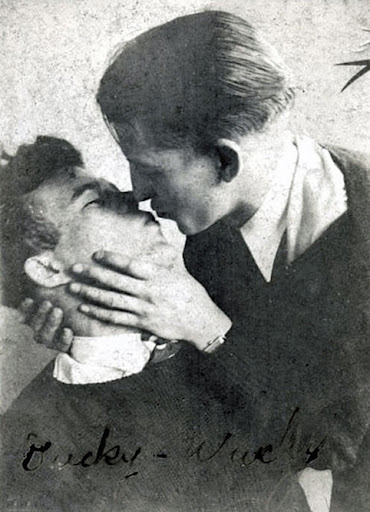
Give all to love;
Obey thy heart;
Friends, kindred, days,
Estate, good fame,
Plans, credit, and the muse;
Nothing refuse.

‘Tis a brave master,
Let it have scope,
Follow it utterly,
Hope beyond hope;
High and more high,
It dives into noon,
With wing unspent,
Untold intent;
But ’tis a god,
Knows its own path,
And the outlets of the sky.
‘Tis not for the mean,
It requireth courage stout,
Souls above doubt,
Valor unbending;
Such ’twill reward,
They shall return
More than they were,
And ever ascending.

Leave all for love;—
Yet, hear me, yet,
One word more thy heart behoved,
One pulse more of firm endeavor,
Keep thee to-day,
To-morrow, for ever,
Free as an Arab
Of thy beloved.
Cling with life to the maid;
But when the surprise,
Vague shadow of surmise,
Flits across her bosom young
Of a joy apart from thee,
Free be she, fancy-free,
Do not thou detain a hem,
Nor the palest rose she flung
From her summer diadem.

Though thou loved her as thyself,
As a self of purer clay,
Tho’ her parting dims the day,
Stealing grace from all alive,
Heartily know,
When half-gods go,
The gods arrive.

From: Emerson, Ralph Waldo.  Early Poems of Ralph Waldo Emerson. New York, Boston, Thomas Y. Crowell & Company: 1899. Introduction by Nathan Haskell Dole. 

Emerson, as a poet, carries common themes throughout his works. In comparing this poems to an essay such as Self Reliance, the ideas of conviction, confidence, respect, choice, and a handful of others resonate throughout. “Give All to Love” relates to Self Reliance in subject and message. Emerson’s own thoughts about various aspects of human nature become apparent, and each concept stems from the basic idea of relying on one’s self.

In “Give All to Love,” Emerson reiterates from Self Reliance that a person should respect the beliefs of others, including the changes they make. In Self Reliance, he says, “If you can love me for what I am, we shall be the happier. If you cannot, I will seek to deserve that you should.” And, in “Give All to Love,” he writes

Free be she, fancy-free,Do not thou detain a hem,Nor the palest rose she flungFrom her summer diadem.

The idea that the beliefs of any one person are sacred to that person is present in both quotations. The respect for change and acceptance of it, as well as differing thought, is central.

Common themes run through any author’s works, especially when the comment on humanity and existence. Here, Emerson portrays his own Self-Reliance in his ability to express and discuss such issues. Since his ideas often seemingly contradict one another, his speech comes across with the same indefinable quality as in the soul and nature itself. One thing is true, however: Emerson believes in what he says, and he says it often in many different contexts, hoping that the reader will only gain understanding from his writing.



A War Against LGBT Students?

As if adolescence wasn’t already hard enough, LGBT students in Louisiana have a new reason to fear for their existence. State sanctioned bullying of high school students is beyond reprehensible and leave it to Louisiana, such a bastion of cutting edge educational practices (written in the most sarcastic tone that you can muster in your mind), to attempt to make exclusion, discrimination, and bullying a state law. A Louisiana State Senate committee approved legislation Thursday that would allow charter schools to refuse to admit students on the basis of their ability to speak English, their sexual orientation or other factors. I have never been a fan of the idea of charter schools. I think that public schools should learn to use their money more wisely. It’s one thing for a child to attend a private school, whether their parents are paying for it or whether they are on an academic or athletic scholarship, but it is something very different for a state to divert funds from public school to private because the state is unable to do their job effectively.  However, if charter schools are going to continue to exist, then they should be held up to a higher standard, as they were created to do.

State Sen. A.G. Crowe, R-Slidell, said his bill is designed to ensure that executive branch agencies and local governments stop including bans on discrimination against characteristics not listed in state law as a condition for private companies to do business with their agencies. Crowe forgets that these are not just any private companies, but companies created to provide a quality education, something that I do not believe can be accomplished without also teaching tolerance. The Louisiana Department of Education contracts with those seeking charter schools were the chief examples cited during testimony for Senate Bill 217. Of course, Louisiana Gov. Bobby Jindal did not respond to requests for comment about calls to unilaterally strip the anti-discriminatory language from the department’s contract criteria. Jindal has a stellar record when it comes to education. A couple of years ago as he was giving a commencement address at a college where a friend of mine works, he promised more funding and showed his excitement over great things he saw in the college’s future, while at the same exact moment, he had his secretary send a previously prepared email telling the college that their budget would be cut by 30 percent.

On the other side, state Sen. Ed Murray, the only “no” in the 5-1 vote by the Senate Labor and Industrial Relations committee, said the possibility of SB217 becoming law and negating the anti-discriminatory prohibitions in charter school contracts is “really scary.” Murray said, “I can’t believe that at the same time we as a Legislature are passing bills that expand school choice, that we would also allow charter schools to deny admission based solely on a child’s ability to speak English well enough or play basketball well enough.”

In the breathtakingly simpleton attitude of too many state legislators, Crowe said, “The focus is really simple, it says stick to the law.” State law currently forbids discrimination on the basis of race, religion, national ancestry, age, sex or disability. If the Louisiana Legislature wants to expand that list to specifically protect people from discrimination on the basis of sexual orientation — or anything else — legislators should pass a law, Crowe said.

Randy Trahan, an LSU law professor, testified on Crowe’s behalf that anti-discrimination language that carries the force of law is becoming more and more prevalent in government agency procedures. Only the Legislature has authority to pass laws, he said. Trajan claimed that “The executive branch has gone rogue.” One of those executive branch agencies gone rogue is the state Department of Education, he said.

Leslie Ellison, of New Orleans, testified she refused to sign a charter school contract with the state Department of Education because it required her company to promise not to discriminate against gays and others, criteria that are not listed in state law. The Louisiana Department of Education “doesn’t have the right to insert” its own opinions into a state contract, Ellison said. In my opinion, if Leslie Ellison wants to teach discrimination in schools, then she has no business in education. In fact, she should be nowhere near children at all.

The Education Department provision states: “Charter schools may not discriminate on the basis of race, color, national origin, creed, sex, ethnicity, sexual orientation, mental or physical disability, age, ancestry, athletic performance, special need proficiency in the English language or in a foreign language, or academic achievement in admitting students, nor may charter schools set admissions criteria that are intended to discriminate or that have the effect of discriminating on any of these bases.” The purpose of charter schools was to provide a better education and educational environment for children, which is what is in line with what the Louisiana Education Department’s charter school provision is meant to provide. If they choose to begin discriminating, then what is the purpose of charter schools in the first place.

Gene Mills, who heads Louisiana Family Forum, said after the hearing that “we’re sending a message” for Jindal to strip the provision from his Education Department’s contract criteria. Louisiana Family Forum is a coalition of religious groups that lobby the legislature on social and other issues. Jindal did not respond Thursday to four requests for comment about the policy. However, Jindal’s press secretary, Frank Collins, wrote in an email, “We’re against discrimination, but we don’t believe in special protections or rights.” once again, Jindal is talking out of both sides of his mouth, contradicting himself and just flat out lying.

State Superintendent of Education John White also did not respond to a request for comment. His spokeswoman, Rene Greer, wrote in an email: “The Department is reviewing the bill in relation to its current charter authorization process.”

Louisiana charter schools receive about 18 percent of their funding (at least from what I could determine with a little research) from the federal government. If schools are going to be allowed to discriminate in their admission policies, they should be subject to the same rules as all other institutions receiving federal funding and not be allowed to discriminate in any way. The Supreme Court has ruled that school programs and organizations cannot discriminate, so charter schools should not be allowed to discriminate either. In fact, if Louisiana Senate Bill 217 passes and is signed into law by Governor Jindal, then President Obama and the U.S. Department of Education should revoke all federal funding from Louisiana schools.

SOURCES:


Happy Easter!

Easter, which celebrates Jesus Christ’s resurrection from the dead, is Christianity’s most important holiday. It has been called a moveable feast because it doesn’t fall on a set date every year, as most holidays do. Instead, Christian churches in the West celebrate Easter on the first Sunday following the full moon after the vernal equinox on March 21. Therefore, Easter is observed anywhere between March 22 and April 25 every year. Orthodox Christians use the Julian calendar to calculate when Easter will occur and typically celebrate the holiday a week or two after the Western churches, which follow the Gregorian calendar.

The exact origins of this religious feast day’s name are unknown. Some sources claim the word Easter is derived from Eostre, a Teutonic goddess of spring and fertility. Other accounts trace Easter to the Latin term hebdomada alba, or white week, an ancient reference to Easter week and the white clothing donned by people who were baptized during that time. Through a translation error, the term later appeared as esostarum in Old High German, which eventually became Easter in English. In Spanish, Easter is known as Pascua; in French, Paques. These words are derived from the Greek and Latin Pascha or Pasch, for Passover. Jesus’ crucifixion and resurrection occurred after he went to Jerusalem to celebrate Passover (or Pesach in Hebrew), the Jewish festival commemorating the ancient Israelites’ exodus from slavery in Egypt. Pascha eventually came to mean Easter.

For Jesus’ mother, his disciples and his followers, Jesus’ death was a tragedy. You can imagine that all hope was naturally gone. We today can face the same feeling. Many times in life, with a current homophobic Republican presidential campaign, the increasing rise of anti-gay homophobic groups, and everything that is going on in the world — war, famine, disease, natural disasters, discrimination, and hate — there can be a loss of hope and faith. Yet the resurrection gives us hope that no matter what has died in our lives, no matter how much faith and hope we have lost, we can experience hope, we can overcome and regain whatever we have lost in our lives.

Our hope includes the knowledge that evil does not win. – Sometimes today, it seems that the bad guy often wins. Sometimes it seems that the one who cheats, the one who lies, the one who steps on others to get ahead, is the one who prospers. Far too often, I read of this person cheating or that one (or catching a student cheating) or another kid, gay or otherwise, who has been bullied, lost hope, and committed suicide. How often do we read of politicians cheating, or working to make sure their businesses get the good contract? It seems that there is no hope for the little guy, the one who lives right, to ever get ahead.

With a positive attitude that through God we can accomplish anything, we truly can make the world a better place. With hope that springs eternal, just as the flowers in spring show the rebirth of the earth, we can be assured that God’s promises will deliver a better day, a rebirth our faith. The promise that Jesus would rise from the grave on the third day is remembered every Easter Sunday, it is the greatest sacrifice God could give for our sins. When we are baptized is done in symbolic reverence as our old body dies in its watery grave to be reborn and rise,from the dead as Christ did for our sins.

I hope that each of you feels the hope in the rebirth that Easter brings to us today. May God’s love eternally bless you.


Moment of Zen: Reflection on Sacrifice

For God so loved the world, that he gave his only begotten Son, that whosoever believeth in him should not perish, but have everlasting life.

John 3:16 (KJV)

John 3:16 is one of the most widely quoted verses from the Christian Bible, and has been called the most famous Bible verse. It has also been called the “Gospel in a nutshell”.

The verse occurs in a narrative taking place in Jerusalem. Nicodemus, a member of sanhedrin, comes to talk with Jesus, whom he calls Rabbi. Jesus’ miracles have convinced Nicodemus that Jesus is sent from God. In reply, Jesus answered, “Very truly I tell you, no one can enter the kingdom of God unless they are born of water and the Spirit. Flesh gives birth to flesh, but the Spirit gives birth to spirit.”(John 3:5-6) John 3:16 summarizes Jesus’ lesson to Nicodemus: that belief in Jesus is the path to eternal life.


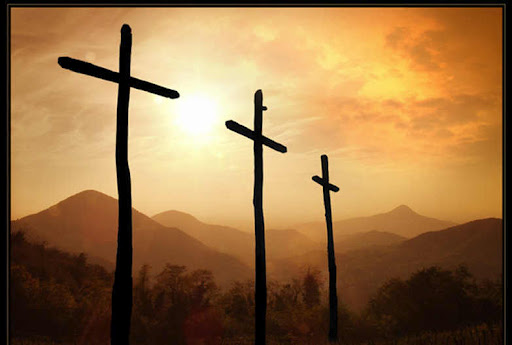
Good Friday

1Then Pilate therefore took Jesus, and scourged him.
2And the soldiers platted a crown of thorns, and put it on his head, and they put on him a purple robe,
3And said, Hail, King of the Jews! and they smote him with their hands.
4Pilate therefore went forth again, and saith unto them, Behold, I bring him forth to you, that ye may know that I find no fault in him.
5Then came Jesus forth, wearing the crown of thorns, and the purple robe. And Pilate saith unto them, Behold the man!
6When the chief priests therefore and officers saw him, they cried out, saying, Crucify him, crucify him. Pilate saith unto them, Take ye him, and crucify him: for I find no fault in him.
7The Jews answered him, We have a law, and by our law he ought to die, because he made himself the Son of God.
8When Pilate therefore heard that saying, he was the more afraid;
9And went again into the judgment hall, and saith unto Jesus, Whence art thou? But Jesus gave him no answer.
10Then saith Pilate unto him, Speakest thou not unto me? knowest thou not that I have power to crucify thee, and have power to release thee?
11Jesus answered, Thou couldest have no power at all against me, except it were given thee from above: therefore he that delivered me unto thee hath the greater sin.
12And from thenceforth Pilate sought to release him: but the Jews cried out, saying, If thou let this man go, thou art not Caesar’s friend: whosoever maketh himself a king speaketh against Caesar.
13When Pilate therefore heard that saying, he brought Jesus forth, and sat down in the judgment seat in a place that is called the Pavement, but in the Hebrew, Gabbatha.
14And it was the preparation of the passover, and about the sixth hour: and he saith unto the Jews, Behold your King!
15But they cried out, Away with him, away with him, crucify him. Pilate saith unto them, Shall I crucify your King? The chief priests answered, We have no king but Caesar.
16Then delivered he him therefore unto them to be crucified. And they took Jesus, and led him away.
17And he bearing his cross went forth into a place called the place of a skull, which is called in the Hebrew Golgotha:
18Where they crucified him, and two other with him, on either side one, and Jesus in the midst.
19And Pilate wrote a title, and put it on the cross. And the writing was JESUS OF NAZARETH THE KING OF THE JEWS.
20This title then read many of the Jews: for the place where Jesus was crucified was nigh to the city: and it was written in Hebrew, and Greek, and Latin.
21Then said the chief priests of the Jews to Pilate, Write not, The King of the Jews; but that he said, I am King of the Jews.
22Pilate answered, What I have written I have written.
23Then the soldiers, when they had crucified Jesus, took his garments, and made four parts, to every soldier a part; and also his coat: now the coat was without seam, woven from the top throughout.
24They said therefore among themselves, Let us not rend it, but cast lots for it, whose it shall be: that the scripture might be fulfilled, which saith, They parted my raiment among them, and for my vesture they did cast lots. These things therefore the soldiers did.
25Now there stood by the cross of Jesus his mother, and his mother’s sister, Mary the wife of Cleophas, and Mary Magdalene.
26When Jesus therefore saw his mother, and the disciple standing by, whom he loved, he saith unto his mother, Woman, behold thy son!
27Then saith he to the disciple, Behold thy mother! And from that hour that disciple took her unto his own home.
28After this, Jesus knowing that all things were now accomplished, that the scripture might be fulfilled, saith, I thirst.
29Now there was set a vessel full of vinegar: and they filled a spunge with vinegar, and put it upon hyssop, and put it to his mouth.
30When Jesus therefore had received the vinegar, he said, It is finished: and he bowed his head, and gave up the ghost.
31The Jews therefore, because it was the preparation, that the bodies should not remain upon the cross on the sabbath day, (for that sabbath day was an high day,) besought Pilate that their legs might be broken, and that they might be taken away.
32Then came the soldiers, and brake the legs of the first, and of the other which was crucified with him.
33But when they came to Jesus, and saw that he was dead already, they brake not his legs:
34But one of the soldiers with a spear pierced his side, and forthwith came there out blood and water.
35And he that saw it bare record, and his record is true: and he knoweth that he saith true, that ye might believe.
36For these things were done, that the scripture should be fulfilled, A bone of him shall not be broken.
37And again another scripture saith, They shall look on him whom they pierced.
38And after this Joseph of Arimathaea, being a disciple of Jesus, but secretly for fear of the Jews, besought Pilate that he might take away the body of Jesus: and Pilate gave him leave. He came therefore, and took the body of Jesus.
39And there came also Nicodemus, which at the first came to Jesus by night, and brought a mixture of myrrh and aloes, about an hundred pound weight.
40Then took they the body of Jesus, and wound it in linen clothes with the spices, as the manner of the Jews is to bury.
41Now in the place where he was crucified there was a garden; and in the garden a new sepulchre, wherein was never man yet laid.
42There laid they Jesus therefore because of the Jews’ preparation day; for the sepulchre was nigh at hand.

John 19
King James Version (KJV)


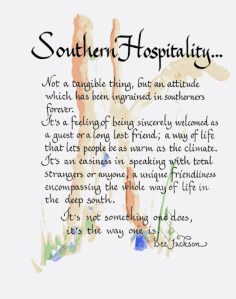
Southern Hospitality

Wishing you magnolia mornings and sweet tea afternoons.
Thank goodness for lazy warm days, with some sweet tea and southern hospitality.  I am very much looking forward to my day off tomorrow.  I’m glad the school gives us Good Friday as a holiday.
SAVANNAH PRINTS AND CALLIGRAPHY BY DEE JACKSON

Some Life Lessons from a School Assembly

At school, we recently had a group of prisoners from the local prison work release center come to speak to witness to the students about how the mistakes you make in life can lead to serious consequences, in their case prison. When I was in high school there was a similar program where prisoners told their story to students to discourage them from going down the wrong road. I will always remember the story of one of the women who witnessed to us in high school. She had been with a group of people who chose to rob a house. When they broke into the house, an elderly woman was home. They tied her up and then taped her mouth shut. What they did not know was that she had a health problem in which she could not breath through her nose. The elderly woman died and the robbers went to prison. The young woman had no idea, or intent, that taping the elderly woman’s mouth would kill her; however, that piece of tape cost her the prime of her life. She spent the best years of her life in prison.

The prisoners who came to our school were two young white men and an older black man. I know that I am probably about to be classified as a bleeding heart liberal, but my heart went out to these young men. Each had been caught up in circumstances in which better self-esteem and willpower may have afforded them a better life. I have to admit that the first speaker, a tall young white man, did not speak into the microphone and since I was in the back of the room, I could not hear him well.

The second young man was a small very cute blond guy with blue eyes. He was well spoken and did a very good job speaking to us and answering questions. He looked like he could have been one of our students and this made quite an impression. He had been with some friends, the wrong kind of friends, who chose one night to rob a store for a little fun. He did not know what they planned at the time, but since he was in the getaway car when the robbery occurred, he was convicted for being an accomplice. He also made the point that to the guys (remember this is a mostly white private school) that you did not want to be a small attractive white guy in the largely white African-American population of the Alabama penal system. He basically said when there are no women around, you become the woman.

I know there is a lot of gay porn about prisons and I know that as gay men that men having sex with each other is not a problem for us, but it was obvious that as a straight man, this was not what this young man had enjoyed in prison. I think that all of us would agree that forced sexual contact is not something that would be a pleasant experience. This was only one of the things that he described as the terrors of prison life. Not being able to see his family, the food, the structured schedule, and the lack of privacy were all some of the difficulties that he described. His remorse was quite real, and I did feel sympathy for him.

The older black man who spoke third told his story of being in prison for a second time. The most poignant part of his story was when he told the kids that their parents, teachers, and other authority figures made rules to protect them, not out of some sense of arbitrary authority. He told the students that it is when they make up their own rules that they find trouble. When it becomes trouble with the law, their parents won’t be able to help them. They can’t get them out of trouble and it only takes one small wrong turn, one circumstance where they should have chosen another choice, or one wrong choice that can’t be undone and you lose all your freedoms.

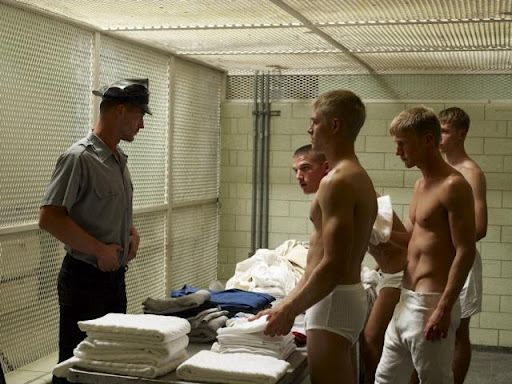
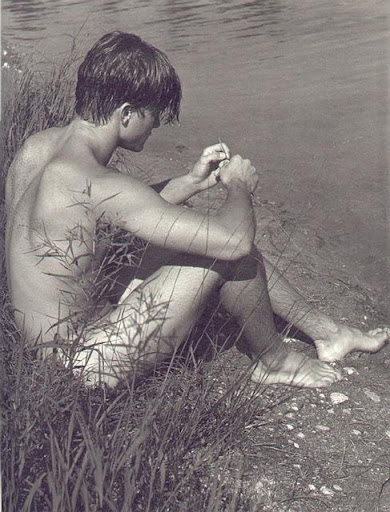
These three men presented a powerful message about the choices we make in life. While most of us won’t find ourselves in situations that might send us to prison, we do have situations when we as gay men have to make certain decisions. One of the most important of those decisions is about safer sex. Safe sex is hot, check out the picture after the jump (NSFW) if you don’t believe me. More importantly, it can save your life. Just one time can lead to contracting HIV, herpes, or any number of STDs. While some can be cured with antibiotics, research has yet to find a cure for viruses such as HIV, herpes, or HPV.

In the gay culture we can also fall to peer pressure of other kinds: drugs and alcohol being prime examples. Drugs and alcohol cause a lack of inhibitions which may be great for getting over nervousness, but they can lead us to do stupid things. I am not a teetotaler by any means, but I do my best not to overindulge, especially when I am driving. Driving under the influence can lead not only to harm to you, but also to others, and you might find yourself in prison like the guys men who came to speak to us at school.


Summer in the South

Summer in the South
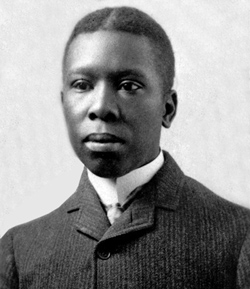
By Paul Laurence Dunbar

The Oriole sings in the greening grove
As if he were half-way waiting,
The rosebuds peep from their hoods of green,
Timid, and hesitating.
The rain comes down in a torrent sweep
And the nights smell warm and pinety,
The garden thrives, but the tender shoots
Are yellow-green and tiny.
Then a flash of sun on a waiting hill,
Streams laugh that erst were quiet,
The sky smiles down with a dazzling blue
And the woods run mad with riot.

Paul Laurence Dunbar

Born on June 27, 1872, Paul Laurence Dunbar was one of the first African-American poets to gain national recognition. His parents Joshua and Matilda Murphy Dunbar were freed slaves from Kentucky. His parents separated shortly after his birth, but Dunbar would draw on their stories of plantation life throughout his writing career. By the age of fourteen, Dunbar had poems published in the Dayton Herald. While in high school he edited the Dayton Tattler, a short-lived black newspaper published by classmate Orville Wright.

Despite being a fine student, Dunbar was financially unable to attend college and took a job as an elevator operator. In 1892, a former teacher invited him to read his poems at a meeting of the Western Association of Writers; his work impressed his audience to such a degree that the popular poet James Whitcomb Riley wrote him a letter of encouragement. In 1893, Dunbar self-published a collection called Oak and Ivy. To help pay the publishing costs, he sold the book for a dollar to people riding in his elevator.

Later that year, Dunbar moved to Chicago, hoping to find work at the first World’s Fair. He befriended Frederick Douglass, who found him a job as a clerk, and also arranged for him to read a selection of his poems. Douglass said of Dunbar that he was “the most promising young colored man in America.” By 1895, Dunbar’s poems began appearing in major national newspapers and magazines, such as The New York Times. With the help of friends, he published the second collection, Majors and Minors (1895). The poems written in standard English were called “majors,” and those in dialect were termed “minors.” Although the “major” poems outnumber those written in dialect, it was the dialect poems that brought Dunbar the most attention. The noted novelist and critic William Dean Howells gave a favorable review to the poems in Harper’s Weekly.

This recognition helped Dunbar gain national and international acclaim, and in 1897 he embarked on a six-month reading tour of England. He also brought out a new collection, Lyrics of Lowly Life (1896). Upon returning to America, Dunbar received a clerkship at the Library of Congress in Washington, DC, and shortly thereafter he married the writer Alice Ruth Moore. While living in Washington, Dunbar published a short story collection, Folks from Dixie, a novel entitled The Uncalled, and two more collections of poems, Lyrics of the Hearthside and Poems of Cabin and Field (1899). He also contributed lyrics to a number of musical reviews.

In 1898, Dunbar’s health deteriorated; he believed the dust in the library contributed to his tuberculosis and left his job to dedicate himself full time to writing and giving readings. Over the next five years, he would produce three more novels and three short story collections. Dunbar separated from his wife in 1902, and shortly thereafter he suffered a nervous breakdown and a bout of pneumonia. Although ill and drinking too much in attempt to soothe his coughing, Dunbar continued to write poems. His collections from this time include Lyrics of Love and Laughter (1903), Howdy, Howdy, Howdy (1905), and Lyrics of Sunshine and Shadow (1905). These books confirmed his position as America’s premier black poet. Dunbar’s steadily deteriorating health caused him to return to his mother’s home in Dayton, Ohio, where died on February 9, 1906, at the age of thirty-three.


My South

In the last couple of weeks, I’ve had a number of emails, comments, and conversations about life in the South. I am the first to admit that I have a love/hate relationship with my section of the United States, so I thought I would explain some of what I love and some of what I hate about the South.

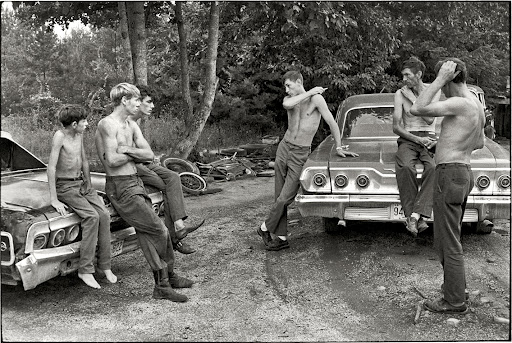
Photograph by William Gedney

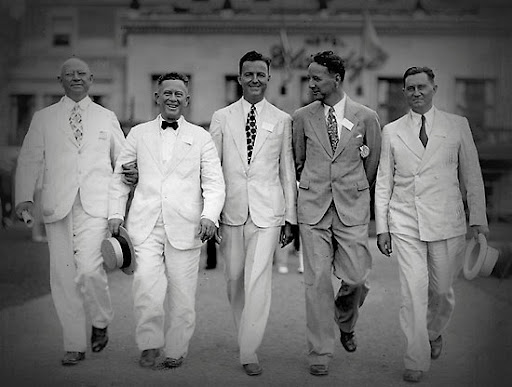
I love the beauty of the South. First of all, there is nothing more beautiful than a country boy, what a friend of mine would call a “preppy cowboy” or what I call a “preppy redneck.” Either way, a man of this distinction has certain qualities that I find beyond perfection. He will obviously be handsome, generally with a six-pack, but then again he might just have a six-pack in his hand and have a ever-so-slight beer belly (a measure of a man who knows how to have a good time). Without a doubt he must have a Southern lilt to his voice, an accent that is sure to drive you wild with the softness and gentleness of his soothing words. He must also have impeccable manners; no matter how rough around the edges, he knows his manners and follows them when it counts. Many people find southern manners to be a tad annoying, but no true gentleman is without them, and when he shows them off, he is sure to make you melt. A true Southern gentleman will go to any length not to offend someone, but he also knows when to speak his mind and let someone know, in the most gentle way possible, when they have committed a social wrong. He will never embarrass someone on purpose, and he will not only be honorable in all occasions, but make sure that your honor remains intact.

Southern Gentlemen

Beyond the men and manners, the South is one of the most beautiful areas of North America. From the white sandy beaches on the Gulf of Mexico to the verdant mountains of the Appalachians, the beauty of the South is breathtaking. The lakes, rivers, ponds, and streams provide a gentle cool reprieve from the heat of the long hot summers. The azaleas, magnolias, camellias, jasmine, honeysuckle, wisteria, and the myriad of other flowers provide the smells of the great outdoors of the South. The smells of the rural south bring a simplicity to childhood memories: newly plowed soil, fresh cut grass, a recently cut tree–pine, oak, pecan, etc., a just ripened fruit–peaches, blackberries, apples, pears, etc. Your senses come alive in the South.

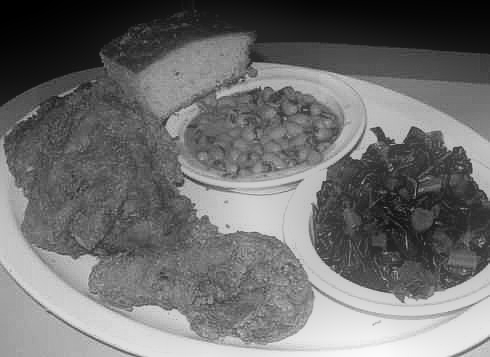
Fried Chicken, Turnips, Black-Eyed Peas, and Cornbread

Then there is the food. Life would hardly be worth living without the tastes of Southern home cooking. Chicken ‘n Dumplins, fried chicken, a salt cured ham, mama’s macaroni and cheese, most anything fried, those are the foods of my world. That does not even begin to include all of the fresh grown vegetables, pink-eye purple hull peas being one of my favorites. Of course, there must be bread with any southern meal, usually cornbread (never sweet) or buttermilk biscuits, like only grandmama can make. It takes a lifetime to learn to cook this way. You are taught from a young age, watching mama and grandmama cook. They are the true master chefs of the world because the include the most important ingredient, and I’m not talking butter, but love. The love that goes into their cooking and the joy that it brings is an ingredient that not just anyone can provide.

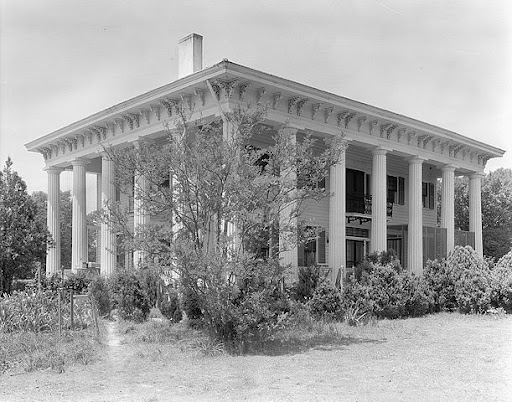
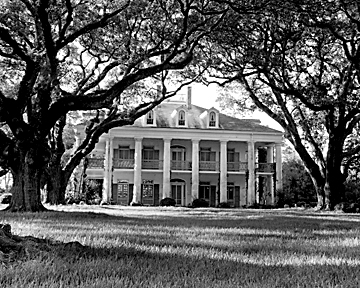
Antebellum Plantation

There are also the small towns where everyone knows each other and will do what they can to help in any way. The beauty of antebellum architecture. The ability to walk into a store or place of business and the person behind the counter knows you by name and knows how best to help you, and always with a smile on their face. The sense of community and family are ever present around you. It’s that small town feel and sense of community that makes the South a wonderful place to live.

Oak Alley Plantation

Those things above are the bright and sunny parts of the South that make it such a wonderful place to live. But it is not always so wonderful. The South has always had a dark side, one that I am afraid will never go away. Bigotry and hatred of those things that don’t fit into the neat little packages above will always find this darker side. Wherever in the South you live, whether it is a mostly white region of the mountainous regions or the majority black areas of the Black Belt and Mississippi Delta, the minority population will face bigotry, and it does not matter about race when you are in the minority, even when your white. Race is not the only issue in the South. Religious bigotry is alive and well. Catholics and Jews are not as welcomed in certain parts of the Protestant dominated South. You will be shunned if you are not a regular churchgoer in the more rural areas. Sexual ‘immorality’ becomes the feeder of gossip, and homosexuality has a long way before it will be widely accepted in the South.

Governor George Wallace stands defiant at the University of Alabama

The South is full of those who judge. The South has its own codes of morality, and you have three choices: fit in, be shunned, or leave. The South has as many gay men as any other part of the country, yet more seem to be in the closet. As Tim Gunn says on Project Runway, we “make it work.”. Being different is one of the hardest things in the South to face, but you learn who you can trust with your secret and who you can’t and you make the best of it or move to an area, such as a larger city, where the people are more accepting.

New Orleans French Quarter

Lastly, one of the worst things about the South for me personally is the heat. The winters are often mild and I looks forward to the reprieve it brings from the often repressive heat of late spring through early fall. As someone said to me the other day, the humidity is so thick that you don’t need to drink water because you breath enough in already. My thought on the heat is that in the winter you can put on enough clothes to be warm, but in the summer you can’t legally take off enough clothes to be cool. Thank God for air conditioning, I don’t know that I could survive without it.

Magnolia

Overall, I love the South, and quite honestly if those who don’t fit in, i.e. gay men like myself, don’t stay, then we cannot make the effective changes that are necessary. There will always be the darker side of the South, but by standing our ground and fighting the good fight, we can make that darker side hide in the shadows instead of us. We need to do with the South’s darker side what Southerners have often done with their family secrets, put them in the attic and throw away the key. It can only be done if we stay and fight for change. We need to throw out the bad and keep the good.

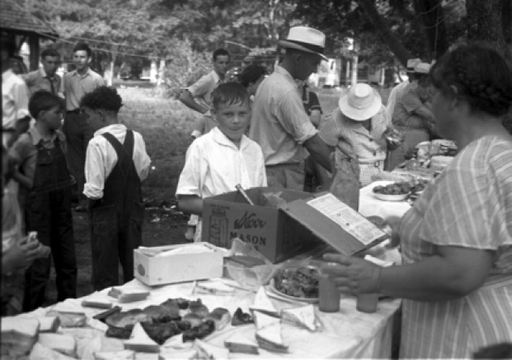
Residents of Penderlea Homesteads enjoy a Sunday school picnic in 1937.

To me, the South is hot summers.  The South is humidity that completely defeats the purpose of a hairdo.  The South is sweet tea, lakes and the Mighty Mississippi, old houses, mosquitos, dirt roads, watermelon and peaches and pears, comfort food like cornbread and grits.  The South is catfish and swimming holes and tire swings and slow talking, front porches and bare feet.

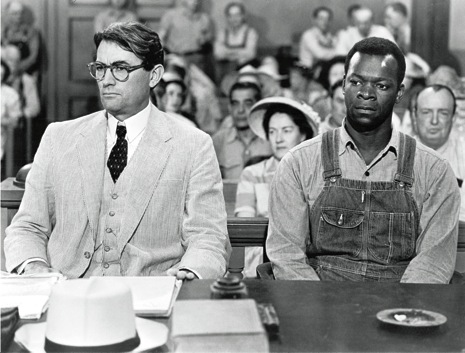
From To Kill a Mockingbird

The South is William Faulkner, Louis Armstrong, Rosa Parks, Atticus Finch, Zora Neale Hurston, Thomas Jefferson, Johnny Cash, Helen Keller, Elvis Presley, and Tennessee Williams.  The South are those who have made it such a wonderful place.  Those who tell it’s stories, who sing the songs, who cook the food. These are the people who make up the South and make it such a special place to live.


A Prayer in Spring

A Prayer in Spring 
by Robert Frost
Oh, give us pleasure in the flowers to-day;
And give us not to think so far away
As the uncertain harvest; keep us here
All simply in the springing of the year.
Oh, give us pleasure in the orchard white,
Like nothing else by day, like ghosts by night;
And make us happy in the happy bees,
The swarm dilating round the perfect trees.
And make us happy in the darting bird
That suddenly above the bees is heard,
The meteor that thrusts in with needle bill,
And off a blossom in mid air stands still.
For this is love and nothing else is love,
The which it is reserved for God above
To sanctify to what far ends He will,
But which it only needs that we fulfil.
The Tulip Magnolia Tree, as seen in the picture above, is a marvelous tree planted for its ornamental value and is one of my favorite things to see in the spring. Its scientific name is Magnolia Soulangiana. There are several varieties, but they are all very spectacular and similar in growing characteristics. This tree is deciduous, meaning that it loses its leaves and hibernates during the winter, with new buds of leaves and flowers forming each spring.  I love driving by a house with one of these trees in full bloom.  For me, they are always breathtaking.