Category Archives: Pride

Soaring on Wings Like Eagles

Have you not known? Have you not heard?
The Lord is the everlasting God,
    the Creator of the ends of the earth.
He does not faint or grow weary;
    his understanding is unsearchable.
He gives power to the faint
    and strengthens the powerless.
Even youths will faint and be weary,
    and the young will fall exhausted,
but those who wait for the Lord shall renew their strength;
    they shall mount up with wings like eagles;
they shall run and not be weary;
    they shall walk and not faint.

—Isaiah 40:28-31

Pride Month is often a season of celebration, joy, and visibility. Yet for many LGBTQ+ people, it is also a reminder of the long journey we have traveled. Some of us have faced rejection, isolation, discrimination, or the painful struggle of reconciling our faith with our identity. There are days when the weight of those experiences can leave us feeling exhausted.

Isaiah’s words speak directly to weary hearts. The prophet was writing to people who knew hardship and uncertainty. They longed for deliverance and wondered if God had forgotten them. Into that weariness, God offered a promise: those who place their hope in the Lord will find renewed strength.

Notice that Isaiah does not promise that the journey will be easy. He does not say that God’s people will never grow tired or face challenges. Instead, he promises that God will sustain them through those difficulties. Strength is renewed not because the road disappears, but because God walks beside us on it.

For LGBTQ+ Christians, this promise can be especially meaningful. Many of us have spent years hearing voices that told us we were not enough, that we did not belong, or that God could not love us as we are. Yet Scripture tells a different story. The psalmist reminds us, “I praise you, for I am fearfully and wonderfully made” (Psalm 139:14). Our worth is not determined by the opinions of others but by the God who created us.

When we grow weary from defending our dignity or seeking acceptance, we can remember Jesus’ invitation: “Come to me, all you that are weary and are carrying heavy burdens, and I will give you rest” (Matthew 11:28). Christ does not place additional burdens upon us; he offers rest, grace, and belonging.

The Apostle Paul also reminds us that God’s power is revealed through human weakness: “My grace is sufficient for you, for power is made perfect in weakness” (2 Corinthians 12:9). The struggles we face do not separate us from God. Instead, they can become places where God’s sustaining presence is most clearly experienced.

Pride Month is a celebration of authenticity, courage, and resilience. It is a testimony to generations of LGBTQ+ people who kept moving forward despite opposition and fear. Like Isaiah’s vision of soaring eagles, we are reminded that God gives us the strength to rise above the forces that seek to diminish us.

And as we journey together, we remember Paul’s assurance that “there is no longer Jew or Greek, there is no longer slave or free, there is no longer male and female; for all of you are one in Christ Jesus” (Galatians 3:28). In God’s family, our differences do not divide us; they enrich the beautiful diversity of creation.

Wherever you find yourself today—celebrating, struggling, healing, or simply trying to keep moving forward—know that God has not abandoned you. The same God who strengthened the weary exiles, welcomed the outcast, and raised Christ from the dead continues to renew and sustain God’s people.

You may be tired. You may be discouraged. But you are not alone. God is with you, renewing your strength for the journey ahead.


Moment of Zen: Pride 🏳️‍🌈


A Long Friday

It’s finally Friday, but instead of my usual work-from-home Friday, I’ll be at the museum today. I have a tour to give this morning. Normally, I look forward to giving tours, but I’m not particularly looking forward to this one. Part of the reason is that I’m still dealing with a migraine. The other reason is that it’s a long tour. Earlier this week, on Tuesday evening, I gave three tours back-to-back over a two-hour period. Today it’s just one group, but it will still be two hours—an hour in the museum followed by another hour in the basement collections.

The one advantage is that it’s a small group, so I won’t have to project my voice the way I do for larger tours. I can speak in a normal conversational tone, which should make things a little easier. I probably shouldn’t admit this, but I’m also not the biggest fan of the teacher bringing the group. Hopefully, the students will make up for that.

One thing I’ve learned over the years is that when I’m actively giving a tour, I can usually set the migraine aside for a while. Focusing on the visitors, the artifacts, and the stories helps me push through the pain. The downside is that once the tour is over, I usually crash, and the migraine comes back even stronger. If that happens today, I should be able to head home afterward, which is something I’m definitely looking forward to.

I don’t have any real plans for the weekend, and honestly, that sounds perfect. I need the chance to rest and hopefully get this migraine under control. If I’m feeling well enough, I may drive up to Burlington to see Grogu and the Mandalorian, but that will depend entirely on how I’m feeling.

I hope everyone has a wonderful weekend. Sunday marks the anniversary of the Stonewall Riots, and there will be Pride celebrations and parades taking place across the country this weekend. If you attend one, have fun, celebrate safely, and take a moment to remember those who came before us—the LGBTQ+ people who were forced to hide who they were, who risked everything to live authentically, and whose courage made it possible for so many of us to celebrate openly today. We owe them a debt of gratitude that should never be forgotten.


Walking the Narrow Path

“Enter through the narrow gate, for the gate is wide and the road is easy that leads to destruction, and there are many who take it. For the gate is narrow and the road is hard that leads to life, and there are few who find it.” 

— Matthew 7:13-14

For many LGBTQ+ people, living authentically can feel like walking a narrow path.

Some of us come to understand who we are at an early age. Others spend years, even decades, struggling to accept ourselves. Some never find the freedom to live openly at all. The path toward authenticity is often difficult, especially when society, family, or even the church tells us that who we are is somehow wrong.

The younger generations, fortunate as many are, may not fully understand the burdens carried by those who came before them. There was a time when loving someone of the same gender could lead to arrest. There was a time when LGBTQ+ people were classified as mentally ill. Then came the AIDS epidemic, bringing unimaginable grief and fear. Many people who were already marginalized found themselves blamed for their suffering. Rather than offering compassion, too many Christians offered condemnation.

Yet when I read the Gospels, I cannot imagine Jesus responding that way.

When I think about how Jesus would have responded during the AIDS crisis, I think of people like Ruth Coker Burks. While many turned away in fear, she chose compassion. She visited the sick, comforted the dying, buried those whose families would not claim them, and treated people with the dignity that every child of God deserves. As Christians, we believe that the Holy Spirit dwells within us, guiding us toward the love and compassion of God. In Ruth’s life, that presence was evident. Filled with the Holy Spirit, she became an instrument of God’s grace to people who had been abandoned by nearly everyone else. Through her hands, Christ touched those who were suffering. Through her words, Christ offered comfort. Through her presence, Christ reminded people that they were never abandoned by God.

The narrow path Jesus describes is not a path of exclusion. It is not a path of self-righteousness or judgment. It is the path of love, mercy, truth, and courage. For many LGBTQ+ Christians, walking that path means refusing to live in shame. It means trusting that God’s love is greater than the voices that tell us we do not belong. It means following Christ even when doing so requires us to stand apart from popular opinion, religious prejudice, or political pressure.

For some LGBTQ+ people, the wider road would be easier. It would be easier to hide who we are. It would be easier to deny ourselves in order to gain acceptance from those who reject us. It would be easier to remain silent in the face of prejudice or to abandon our faith altogether after being wounded by the church. Yet the narrow path calls us to something greater. It calls us to live truthfully, to love courageously, and to trust that God walks beside us even when the journey is difficult.

But the narrow path is not meant to keep us hidden.

After teaching his followers about the way of God’s kingdom, Jesus told them, “You are the light of the world. A city built on a hill cannot be hid” (Matthew 5:14).

For generations, LGBTQ+ people were told to remain invisible. We were told to hide our relationships, hide our identities, and hide our stories. Growing up in the South, that often meant becoming the family member no one talked about directly. You were the uncle who never married, a “confirmed bachelor,” or perhaps you had a “roommate” to whom you seemed unusually devoted. Maybe you moved away to New Orleans, Atlanta, New York City, or somewhere like Vermont, where life felt a little safer and a little freer. The family might acknowledge your existence, but not your truth. You were welcome, so long as certain things remained unsaid.

Pride Month stands in direct opposition to that demand for silence. Visibility is not about seeking attention. It is about refusing to return to the shadows.

When critics ask, “Why do LGBTQ+ people have to be so visible?” they often fail to understand the history behind that visibility. Pride is not a declaration that we are better than anyone else. It is a declaration that we will no longer be ashamed of who God created us to be.

When we live openly and honestly, we become a light for others who are still struggling. We show young people that they are not alone. We show those living in fear that there is hope on the other side of shame. Like the city on a hill, our lives become visible reminders that authenticity and faith can coexist. Every time we choose truth over fear, compassion over judgment, and love over hatred, our light shines a little brighter.

And when we finally step into that light, we discover something remarkable.

The Apostle Paul writes, “So then you are no longer strangers and aliens, but you are citizens with the saints and also members of the household of God” (Ephesians 2:19).

Many LGBTQ+ Christians have spent years feeling like strangers in the church. We have sat in pews wondering whether there was truly a place for us. We have listened to sermons that made us feel unwelcome. We have questioned whether God could really love us as we are.

Paul’s words answer those fears.

In Christ, we are not outsiders looking in through the window. We are not guests who are merely tolerated. We are citizens of God’s kingdom and members of God’s household. We belong.

The journey of faith for many LGBTQ+ Christians begins on a narrow path. It leads us out of fear and shame and into the light of authenticity. And there, standing openly in that light, we discover that we were never strangers to God at all. We were beloved members of God’s family from the very beginning.

As you reflect on this passage, consider how you can walk the narrow path in your own life this week. Where are you being called to choose compassion over judgment, truth over fear, or love over silence? How can you be a light for someone who feels alone, rejected, or unseen?

Perhaps it is offering encouragement to someone who is struggling. Perhaps it is speaking up when others are treated unfairly. Perhaps it is simply living authentically and faithfully, allowing others to see that being LGBTQ+ and following Christ are not contradictory.

The example of Ruth Coker Burks reminds us that extraordinary acts of faith often begin with simple acts of kindness. The same Holy Spirit that guided her life dwells within all who seek to follow Christ. We may not all be called to do what she did, but we are all called to see the humanity in others, to offer compassion where there is suffering, and to remind people—through our words and actions—that they are loved.

This Pride Month, walk the narrow path with courage. Let your light shine. And remember that in Christ, you are no stranger. You are a beloved member of the household of God.


Pride Without Sin

“There is no fear in love; but perfect love casts out fear, because fear involves torment. But he who fears has not been made perfect in love.”

— 1 John 4:18 

Every June, many Christians raise objections to Pride Month. One of the most common arguments is that “pride is a sin.” At first glance, that may seem like a reasonable concern. After all, Scripture repeatedly warns against pride. Yet the word pride can mean very different things depending on how it is used.

The pride condemned in Scripture is arrogance, self-exaltation, and the belief that we are better than other people. Proverbs warns us, “Pride goes before destruction, And a haughty spirit before a fall” (Proverbs 16:18). James echoes this teaching when he writes, “God resists the proud, But gives grace to the humble” (James 4:6).

This kind of pride places self above God and above others. It is rooted in ego, superiority, and self-glorification. Christians should reject this kind of pride because it stands in opposition to the humility that Christ taught and embodied.

However, LGBTQ+ Pride is something very different.

For generations, LGBTQ+ people were taught that they should be ashamed of who they are. Many were told they were broken, unworthy, sinful simply for existing, or somehow less deserving of love and dignity than others. Shame became a burden that countless people carried throughout their lives.

Pride Month arose as a response to that shame.

LGBTQ+ Pride is not about declaring ourselves superior to anyone else. It is about rejecting the lie that we should hate ourselves. It is about accepting ourselves as God created us and affirming the dignity that God has placed within every human being.

Pride Month is not about placing ourselves above others. It is about standing up after generations of being told to bow our heads in shame.

This understanding fits beautifully with the message of 1 John 4:18. Fear and shame are close companions. Many LGBTQ+ Christians know what it is like to fear rejection, fear condemnation, fear abandonment, and fear that God could never truly love them. Yet John reminds us that God’s perfect love casts out fear.

When we truly embrace God’s love, we no longer have to live in fear of being rejected by Him. We no longer have to carry the shame that others have placed upon us. God’s love frees us to live honestly and authentically before Him.

Paul reminds us of this truth in one of the most beloved passages in Scripture:

“For I am persuaded that neither death nor life, nor angels nor principalities nor powers, nor things present nor things to come, nor height nor depth, nor any other created thing, shall be able to separate us from the love of God which is in Christ Jesus our Lord.”—Romans 8:38–39

Nothing can separate us from God’s love—not prejudice, not rejection, not misunderstanding, and not the labels others place upon us.

Throughout His ministry, Jesus consistently restored dignity to people whom society marginalized and shamed. He welcomed tax collectors, spoke with Samaritans, touched lepers, defended women condemned by others, and invited all people into relationship with Him. Again and again, Jesus moved toward those whom society pushed away.

He also gave His followers a simple command:

“A new commandment I give to you, that you love one another; as I have loved you, that you also love one another. By this all will know that you are My disciples, if you have love for one another.” —John 13:34–35

Notice that Jesus did not command us to shame one another. He commanded us to love one another.

As Christians, we are called to reject both sinful pride and destructive shame. Humility does not mean thinking poorly of ourselves. True humility means recognizing that every good thing comes from God and that every person bears the image of God.

God calls us to humility, but He does not call us to self-hatred.

When LGBTQ+ Christians celebrate Pride Month, many are not celebrating arrogance. They are celebrating survival. They are celebrating authenticity. They are celebrating the freedom to live without shame and fear. Most importantly, they are celebrating the truth that they are beloved children of God.

As we enter Pride Month, may we remember that God’s perfect love casts out fear. May we reject both arrogance and shame. May we walk humbly with God while embracing the dignity He has given us. And may we never forget that nothing can separate us from the love of Christ.

In a world that often teaches fear, rejection, and shame, God’s message remains one of hope, acceptance, and love. We are known by God. We are loved by God. And through Christ, we are invited to live not in fear, but in the freedom of His perfect love.


Love One Another Deeply

“Be kindly affectionate to one another with brotherly love, in honor giving preference to one another.” — Romans 12:10 (NKJV)

Tomorrow marks the beginning of Pride Month. Across the world, LGBTQ+ people will celebrate their identities, honor those who fought for equality, and remember those whose courage made it possible for many of us to live more openly today.

Before Pride Month begins, however, it is worth reflecting on the foundation upon which any healthy community must be built: love.

In Romans 12:10, Paul writes:

“Be kindly affectionate to one another with brotherly love, in honor giving preference to one another.”

At the heart of Christian living is a call to love one another deeply, generously, and selflessly. That command applies not only to our churches and families but also to the relationships and communities we build as LGBTQ+ people.

The phrase “kindly affectionate” speaks of genuine warmth and care for others. It is not merely tolerance or politeness. It is a love that values another person and seeks their well-being. Likewise, “brotherly love” points to the bonds that unite us in friendship, fellowship, and mutual support.

Jesus gave a similar command when He said:

“This is My commandment, that you love one another as I have loved you.”

And the Apostle John reminds us:

“Beloved, let us love one another, for love is of God; and everyone who loves is born of God and knows God.” — 1 John 4:7

These verses do not place limits on who may love or who is worthy of love. Instead, they point us toward a God whose very nature is love and who calls us to reflect that love in our relationships with others.

For many gay men, there is something especially meaningful in the connection between romantic love and brotherly love. Strong same-sex relationships are often built upon both. The man we love is frequently not only a romantic partner but also a trusted friend, confidant, companion, and source of strength. Romantic affection and deep friendship are often woven together in ways that enrich and strengthen both.

Scripture offers many examples of profound devotion between people. One of the most famous is the friendship between David and Jonathan. After Jonathan’s death, David mourned:

“I am distressed for you, my brother Jonathan; You have been very pleasant to me; Your love to me was wonderful, surpassing the love of women.” — 2 Samuel 1:26 (NKJV)

Whatever conclusions people draw about the nature of their relationship, Scripture clearly presents it as one marked by loyalty, sacrifice, affection, and devotion. They honored one another and remained faithful to one another despite tremendous personal risk.

That same spirit should characterize all our relationships today. Whether we are single, dating, married, or surrounded by friends and chosen family, God calls us to be people who love deeply and honor one another generously.

Pride Month is often misunderstood by those outside the LGBTQ+ community. At its best, Pride is not about arrogance or self-centeredness. Rather, it is a rejection of shame and a celebration of the truth that every person is created by God and worthy of dignity and respect. It is about building communities where people are welcomed instead of rejected, supported instead of isolated, and loved instead of condemned.

Paul writes later in this same chapter:

“Be of the same mind toward one another.” — Romans 12:16

And Jesus tells us:

“By this all will know that you are My disciples, if you have love for one another.” — John 13:35

As we prepare to enter Pride Month, may we remember that Christian love is more than a feeling. It is a commitment. It is choosing to care for one another, support one another, and honor one another as beloved children of God.

May we be kindly affectionate toward one another with brotherly love. May we give preference to one another in honor. And may the love we share—between friends, partners, spouses, and chosen family—reflect the boundless love of the God who first loved us.


Glitter, Ghouls, and Freedom

Halloween has long been a favorite holiday among the LGBTQ+ community — and not just because we throw some of the best parties. There’s something deeper in the way Halloween gives us permission to express, to transform, and to celebrate authenticity through disguise.

For many queer people, Halloween was the first time we felt truly free to explore our identities without judgment. A night when gender norms loosen, when costumes become art, and when imagination takes precedence over expectation. A boy could be a witch, a girl could be a pirate, and everyone could sparkle. For one glorious evening, the rigid rules of “should” and “shouldn’t” fall away.

For some, it’s also the first night they ever try drag. Halloween has long been a socially acceptable opportunity for a man to dress as a woman — or vice versa — without fear of ridicule or punishment. I remember one fraternity member at a university in southern Louisiana wearing a tight red dress one Halloween. He looked stunning as a woman, though it was obvious he was a man. The outfit was completed with red high heels that matched his dress, and even drunk, he managed to walk surprisingly well in them. Maybe he’d lost a bet or was doing it for laughs, as frat guys often do — but maybe, just maybe, he was testing what it felt like to be someone completely different. For many in the queer community, that first night in drag isn’t just a costume; it’s a spark of recognition.

It’s also about visibility. Before Pride parades became mainstream, Halloween was one of the few times queer people could appear in public dressed how they wanted, holding hands with whom they wanted, and not face immediate suspicion. The costumes and masks offered protection — and in that protection came liberation.

And of course, there’s the theatrical side. LGBTQ+ culture has always celebrated performance, wit, and style. Drag, camp, and creativity are natural extensions of Halloween’s spirit. We don’t just wear costumes — we embody characters. We turn the night into an act of joyful self-expression and defiance.

One city that takes this to dazzling extremes is New Orleans, where Halloween and queer culture intertwine like nowhere else. The French Quarter becomes a spectacle of light, music, and unapologetic queerness. I’ve been there on Halloween, and it can be gloriously wild. I once sat in a restaurant when a woman dressed as Lady Godiva rode by on an actual horse, covered only by her long blonde wig. Some Lady Godivas wear flesh-colored bodysuits. This one did not. The crowd cheered, laughed, and applauded — it was outrageous, beautiful, and perfectly New Orleans.

In a world that too often tells us to tone it down, Halloween tells us to turn it up. Glitter isn’t just decoration; it’s declaration. The holiday invites us to celebrate who we are — or who we dream of being — without apology.

So when you see a queer Halloween party filled with drag queens dressed as vampires, muscle boys in angel wings, and lesbians in matching superhero capes, remember: it’s not just fun. It’s freedom.

Queer Halloween celebrations — from the French Quarter to Fire Island — transform the night into a glittering stage of self-expression and pride.

🎃 Happy Halloween, everyone! Be safe, be fabulous, and let your true self shine — costume or not.

🌈 And remember — in many ways, Halloween walked so Pride could run.


Labor Day and the Work of Equality

Labor Day is meant to honor the dignity of work and those who labor to build better lives for themselves and their families. For the LGBTQ+ community, this day also reminds us of the struggles—and victories—hard won in workplaces across the country. From the first people who risked everything by being openly queer at work, to those who organized for equal protections, to today’s advocates fighting for trans rights in the workplace, our labor has always included not just our jobs, but the fight to be recognized fully as ourselves.

It can be easy to forget that for so long, queer people could be fired simply for who they were—or still can in too many places. Labor Day, then, isn’t just about wages and hours, but about fairness, dignity, and opportunity. It’s about remembering that “the work of equality” is ongoing, and each generation takes up its part of the task.

So today, as we enjoy the holiday, let’s also honor the countless LGBTQ+ workers—teachers, nurses, artists, soldiers, and so many others—who make our world brighter and stronger. And let’s commit ourselves to a future where every person’s work, and every person’s identity, is respected.

Happy Labor Day, friends. 🌈✊🏽


🌈 Bold, Beloved, and Called

“But you are a chosen race, a royal priesthood, a holy nation, God’s own people, in order that you may proclaim the mighty acts of him who called you out of darkness into his marvelous light.”

— 1 Peter 2:9 


“For God did not give us a spirit of fear, but of power and of love and of self-discipline.”

— 2 Timothy 1:7 


“Love is patient, love is kind… It bears all things, believes all things, hopes all things, endures all things. Love never fails.”

— 1 Corinthians 13:4, 7–8 

As Pride Month draws to a close, we are invited not to retreat—but to rise. We should not pack away our rainbow flags or tuck away our truths—we should plant them firmly in the soil of our daily lives. We have explored who we are (fearfully and wonderfully made). We’ve reclaimed the image of God within us (queerly reflected). We’ve healed what shame tried to break, found boldness in our truth, and committed to growing where we are planted. now, we turn to three things that comes next.

We are called to serve God.

Jesus’ words in Matthew 5:16 (“Let your light shine before others, so that they may see your good works and give glory to your Father in heaven.”) offer a powerful commission: Let your light shine. Not dimmed for the comfort of others. Not hidden behind polite silence. But out in the open. Joyfully. Authentically. As a witness to what God has done in and through us.

Scripture tells us that we are a royal priesthood, a holy people, God’s own. That’s not conditional. That’s not for someone else. That’s for us. We are called not in spite of who we are, but because of who we are. We are called out of shame and silence, out of marginalization and fear, into God’s marvelous light. Our queerness, our tenderness, our truth—they are not spiritual liabilities. They are spiritual gifts.

Through God’s gift, we are bold.

For many LGBTQ+ Christians, Pride has historically been about survival—holding onto life, faith, and hope in a world that tried to silence us. And that survival has been sacred. But now, we are called to more than surviving. We are called to joy. To deep, radiant, unashamed joy.

Paul writes in Philippians 4:4, “Rejoice in the Lord always; again, I will say, Rejoice.”  Not only when things are easy. Not only when we’re safe. But always. Because joy—real joy—is an act of spiritual resistance. It’s a declaration that we are still here, still beloved, and still building something beautiful. It takes courage to live openly as an LGBTQ+ Christian. It takes courage to love ourselves in a world that taught us to hide. It takes courage to believe that the Spirit speaks through our lives.

But here’s the truth: we were not given a spirit of fear. We were given the Spirit of power—to stand tall. The Spirit of love—to resist hate with grace. The Spirit of self-discipline—to hold fast to our faith even when others misunderstand it. Holy boldness is not loud arrogance. It is quiet faithfulness. It is showing up fully, beautifully, honestly—day after day. Pride is not just a celebration. It is a declaration: We are still here, and we are still beloved.

We are love in motion.

Love is not just a feeling—it is a force. It bears burdens. It holds space. It speaks truth. And LGBTQ+ love is no less holy than any other. In fact, many of us have learned how to love through rejection, through hiding, through longing. We have had to fight to love ourselves, to love one another, and to believe that God loves us too.

Our lives as LGBTQ+ Christians are not a detour from faith—it is a testament to it. Our honesty, our resilience, our capacity for love—these are lamps lit by the Spirit. When we love openly, we reflect the God who is love. When we celebrate joyfully, we reflect the God who rejoices over creation. When we live truthfully, we reflect the Christ who never apologized for healing, embracing, and breaking the rules to welcome the outcast.

We are not just welcome in the Church—we are vital to its witness. Our pride doesn’t end with the parade. It continues in our daily living, in our compassion, in our courage to shine. So now, let that love flourish. Let it speak. Let it heal. Whether you’re single, partnered, celibate, dating, married, or questioning—you carry within you the kind of love that “never fails.” Love that transforms. Love that reflects God.

God calls us to be courageous. He made us part of His royal priesthood. He called us into the light—not despite our queerness, but through it. He gives us boldness to live as He created us. God gives us strength to resist shame, and tenderness to love others as He love us. We carry His love—patient, kind, and enduring—into a world that so desperately needs it, especially in this climate of hate that seems to permeate our political, secular, and, far too often, religious worlds.

We are chosen. We are courageous. We are love in motion.

As Pride Month ends, may our truth continue to shine, our love continues to grow, and our calling becomes ever clearer. Let the world see what God is doing through us—a radiant reflection of bold, beloved queerness.

🌈🏳️‍🌈🏳️‍⚧️


The First Pride Was a Riot

In the early hours of June 28, 1969, something extraordinary happened on a quiet stretch of Christopher Street in New York City. After years—decades—of police harassment, social invisibility, and the criminalization of queer existence, a group of drag queens, trans women, gay men, and lesbians refused to be silent. When officers raided the Stonewall Inn—a dingy, Mafia-run gay bar in Greenwich Village—the community inside and outside the bar erupted in defiance. What followed were six nights of protest, resistance, and righteous rage. The Stonewall Riots weren’t the beginning of LGBTQ+ activism, but they were the spark that ignited a global fire.

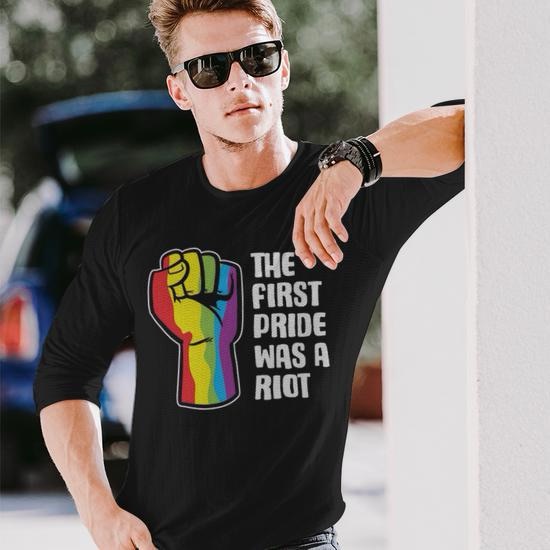
“The First Pride Was a Riot.” That slogan adorns t-shirts, protest signs, and banners today as a reminder that our liberation was not handed to us—it was demanded. It was thrown back in the faces of billy clubs, shouted in the streets, and carved into the consciousness of a country that would rather not have seen us at all. Marsha P. Johnson, Sylvia Rivera, Stormé DeLarverie—names that should be shouted from rooftops—were part of this uprising. They fought not just for acceptance, but for dignity. For survival.

The summer of 1969 marked a turning point. In the year that followed, LGBTQ+ organizations across the U.S. multiplied, and on the anniversary of Stonewall in 1970, the first Pride marches were held in New York, Chicago, and Los Angeles. These were not corporate-sponsored festivals with rainbow floats. They were loud, political, and unapologetic marches for visibility, safety, and rights.

Stonewall happened in a cultural moment when the world was already in upheaval: the Civil Rights Movement, the Women’s Liberation Movement, and anti-Vietnam War protests were reshaping the American political landscape. The gay rights movement joined that chorus—and for a time, especially into the 1970s, it began to sing with joy and newfound sexual freedom. The 1970s became a decade of exploration and visibility. Gay men in particular embraced a new culture of liberation: discos pulsed with rhythm and energy, bathhouses became places not of shame but of connection, and artists, writers, and activists pushed boundaries in the public eye.

But the joy of that revolution would come under brutal siege in the 1980s with the emergence of the AIDS crisis. As friends and lovers died in staggering numbers, the government remained indifferent, slow, and cruelly silent. The queer community rallied again—not just to mourn, but to fight. Groups like ACT UP and the Gay Men’s Health Crisis forced a reluctant nation to see us, to acknowledge our grief and fury. Stonewall had taught us how to protest. AIDS taught us how to organize for our lives.

And still, here we are.

Today, we celebrate Pride with parades, with community, and yes, with joy—but we cannot forget the riot that began it. Nor can we ignore the threats we continue to face. In this current political climate, with a Republican administration openly hostile to LGBTQ+ rights, we are watching hard-won freedoms come under attack. Trans healthcare, anti-discrimination protections, even the right to teach honest history in schools are being stripped away state by state. Pride is not just a celebration—it is a protest. A defiance. A promise that we will not go back.

The Stonewall Riots were not polished, pretty, or corporatized. They were angry, spontaneous, and necessary. We owe our thanks to those brave souls who threw bricks, linked arms, and stood their ground. And we honor them best not just with rainbows—but with resistance.

So wear that shirt with pride: The First Pride Was a Riot. And remember why.

🏳️‍🌈⸻🏳️‍🌈

What does Pride mean to you this year? How do you honor the history while living in the now? Share your reflections in the comments below.