Monthly Archives: February 2014

There may be chaos still around the world

20140218-002156.jpg

There may be chaos still around the world
by George Santayana

There may be chaos still around the world,
This little world that in my thinking lies;
For mine own bosom is the paradise
Where all my life’s fair visions are unfurled.
Within my nature’s shell I slumber curled,
Unmindful of the changing outer skies,
Where now, perchance, some new-born Eros flies,
Or some old Cronos from his throne is hurled.
I heed them not; or if the subtle night
Haunt me with deities I never saw,
I soon mine eyelid’s drowsy curtain draw
To hide their myriad faces from my sight.
They threat in vain; the whirlwind cannot awe
A happy snow-flake dancing in the flaw.

About This Poem
George Santayana is regarded as one of the most prominent champions of critical realism, and is a central figure in the era now called Classical American Philosophy. His first published work was a book of poetry titled Sonnets and Other Verses.

George Santayana was a Spanish-born American philosopher, critic, essayist, novelist, and poet. He received his PhD from Harvard and became a faculty member in 1889. During his tenure at Harvard, Santayana’s students included Conrad Aiken, T. S. Eliot, Robert Frost, and Wallace Stevens. In 1912, Santayana moved to Europe and never returned to the United States. He died in 1952, a few months before his 89th birthday.


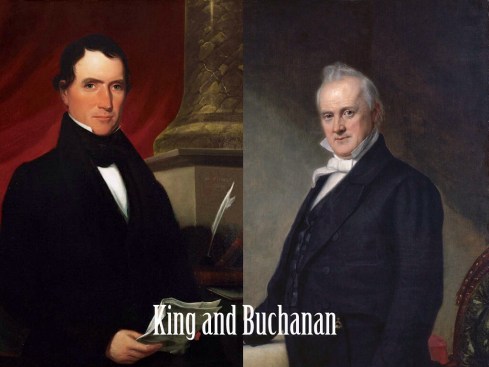
King and Buchanan: America’s Gay VP and President?

20140216-204129.jpg

In honor of Presidents’ Day, let’s discuss two men, a US president and vice-president who may have been gay. While Abraham Lincoln has stolen the limelight with rumors about his furtive sex life, some historians have proclaimed that America’s first gay president was really his predecessor, the now-obscure James Buchanan. (He was the 15th president, serving from 1857 to 1861). Buchanan is the only bachelor to ever have held America’s top office, and his private life raised many eyebrows while he was alive. There are some who think that, yes, there was a gay president. Historian James W. Loewen is one of those who thinks that both James Buchanan (15th President of the United States) and William Rufus King (13th Vice President of the United States) were not only gay but also lovers.

More than 150 years before America elected its first black president, Barack Obama, it most likely had its first gay president, James Buchanan (1791-1868). Buchanan, a Democrat from Lancaster County, Pa., was a lifelong bachelor (throughout American history this was often code for homosexual). He served as president from 1857-61, tumultuous years leading up to the Civil War. Loewen has done extensive research into Buchanan’s personal life, and he’s convinced Buchanan was gay. Loewen is the author of the acclaimed book Lies Across America which examines how historical sites inaccurately portray figures and events and Lies My Teacher Told Me which examines how history books have been marred by an embarrassing combination of blind patriotism, mindless optimism, sheer misinformation, and outright lies.

In 1819, Buchanan was engaged to Ann Caroline Coleman, the daughter of a wealthy iron manufacturing businessman and sister-in-law of Philadelphia judge Joseph Hemphill, one of Buchanan’s colleagues from the House of Representatives. Buchanan spent little time with her during the courtship: he was extremely busy with his law firm and political projects during the Panic of 1819, which took him away from Coleman for weeks at a time. Conflicting rumors abounded, suggesting that he was marrying her for her money, because his own family was less affluent, or that he was involved with other women. Buchanan never publicly spoke of his motives or feelings, but letters from Ann revealed she was paying heed to the rumors.

After Buchanan paid a visit to the wife of a friend, Ann broke off the engagement. She died soon afterward, on December 9, 1819. The records of a Dr. Chapman, who looked after her in her final hours, and who said just after her death that this was “the first instance he ever knew of hysteria producing death”, reveal that he theorized, despite the absence of any valid evidence, the woman’s demise was caused by an overdose of laudanum, a concentrated tincture of opium.

His fiancée’s death struck Buchanan a terrible blow. In a letter to her father, which was returned to him unopened, Buchanan wrote “It is now no time for explanation, but the time will come when you will discover that she, as well as I, have been much abused. God forgive the authors of it […] . I may sustain the shock of her death, but I feel that happiness has fled from me forever.” The Coleman family became bitter towards Buchanan and denied him a place at Ann’s funeral. Buchanan vowed he would never marry, though he continued to be flirtatious. Some pressed him to seek a wife; in response, Buchanan said, “Marry I could not, for my affections were buried in the grave.” He preserved Ann Coleman’s letters, keeping them with him throughout his life; at his request, they were burned upon his death.

“I’m sure that Buchanan was gay,” Loewen said. “There is clear evidence that he was gay. And since I haven’t seen any evidence that he was heterosexual, I don’t believe he was bisexual.” According to Loewen, Buchanan shared a residence with William Rufus King, a Democratic senator from Alabama, for several years in Washington, D.C. Loewen also said Buchanan was “fairly open” about his relationship with King, causing some colleagues to view the men as a couple. For example, Aaron Brown, a prominent Democrat, writing to Mrs. James K. Polk, referred to King as Buchanan’s “better half,” “his wife” and “Aunt Fancy … rigged out in her best clothes.” Brown may have been trying to slander King in this letter. He was a friend of the Polks and was James K. Polk’s law partner, but he was also an early proponent of secession after his years as Governor of Tennessee. Most accounts by historians of King’s political career portray him as a moderate southerner who supported slavery while emerging as a strong unionist. King voiced opposition calls by some of his fellow southerners for the South to secede from the United States during the tense decade prior to the Civil War. King was always considered a moderate Democrat who was a staunch Unionist, which probably led to some political disagreements between Brown and King.

William Rufus DeVane King, the 13th United States vice president, has the distinction of having served in that office for less time than any other vice president and for being the only U.S. official to be sworn in on foreign soil. He died of tuberculosis on April 18, 1853, just 25 days after being sworn into office while in Cuba on March 24, 1853. Some historians have speculated that King holds yet another distinction — the likely status of being the first gay U.S. vice president and possibly one of the first gay members of the U.S. House of Representatives and the U.S. Senate.

King (1786-1853) served in the House of Representatives from North Carolina for six years beginning in 1811 and later served in the Senate from the newly created state of Alabama from 1819-44, when he became U.S. minister to France. He returned to the Senate in 1848, where he served until he resigned after winning election in November 1852 as vice president on the ticket of Franklin Pierce.

When in 1844 King was appointed minister to France, he wrote Buchanan, “I am selfish enough to hope you will not be able to procure an associate who will cause you to feel no regret at our separation.” Loewen also said a letter Buchanan wrote to a friend after King went to France shows the depth of his feeling for King. “I am now solitary and alone, having no companion in the house with me,” Buchanan wrote. “I have gone a wooing to several gentlemen, but have not succeeded with any one of them. I feel that it is not good for man to be alone; and should not be astonished to find myself married to some old maid who can nurse me when I am sick provide good dinners for me when I am well, and not expect from me any very ardent or romantic affection.” Loewen said their relationship — though interrupted due to foreign-service obligations — ended only with King’s death in 1853.

Even though his vice presidency was short, fraught with illness, and uneventful, William King is remembered as a perceptive decision maker with the utmost integrity … and also, possibly, as the nation’s only gay Vice President! There is no direct evidence that William R. King was in any kind of relationship with President James Buchanan, who was also a bachelor. However, they were referred to as “Siamese twins” by many people in Congress (which was a slang for homosexuals in those days.) Also, King was the only unmarried vice president in history. King actually lived as Buchanan’s house companion for many, many years. Andrew Jackson invented the nicknames “Miss Nancy” and “Aunt Fancy” for King, while Aaron V. Brown referred to King as “Buchanan’s wife.” The only evidence that could have been salvaged were the numerous letters written back and forth between the two.

Some of the contemporary press also speculated about Buchanan’s and King’s relationship, but the two men’s nieces destroyed their uncles’ correspondence, leaving some questions about their relationship; but the length and intimacy of surviving letters illustrate “the affection of a special friendship”, and Buchanan wrote of his “communion” with his housemate. In May 1844, during one of King’s absences that resulted from King’s appointment as minister to France, Buchanan wrote to a Mrs. Roosevelt, “I am now ‘solitary and alone’, having no companion in the house with me. I have gone a wooing to several gentlemen, but have not succeeded with any one of them. I feel that it is not good for man to be alone, and [I] should not be astonished to find myself married to some old maid who can nurse me when I am sick, provide good dinners for me when I am well, and not expect from me any very ardent or romantic affection.”

Circumstances surrounding Buchanan’s and King’s close emotional ties have led to speculation that Buchanan was homosexual. Buchanan’s correspondence during this period with Thomas Kittera, however, mentions his romance with Mary K. Snyder. In Buchanan’s letter to Mrs. Francis Preston Blair, he declines an invitation and expresses an expectation of marriage. The only President to remain a bachelor, Buchanan turned to Harriet Lane, an orphaned niece, whom he had earlier adopted, to act as his official hostess.

Loewen said many historians rate Buchanan as one of the worst U.S. presidents. Buchanan was part of the pro-slavery wing of the Democratic Party, and corruption plagued his administration. But Loewen said those flaws shouldn’t discourage members of the LGBT community from acknowledging Buchanan’s status as a gay man. “If we only admit that really great people are gay, what kind of history is that?” Truthfully though, even the letters written by Buchanan do not really point to more than merely a great friendship and affection that was common between men of the nineteenth century, especially during a time when women were still seen as intellectual inferiors.

A lifelong bachelor, King lived for 15 years in the home of future U.S. president James Buchanan while the two served in the Senate. In a time when Congress was only in session part of the year, and senators often returned home when not in session, it would not have been that unusual for two senators to share a home. King’s relationship with Buchanan, who was from Pennsylvania, could have been a factor in Buchanan’s sympathy for the South.

From the research I have done about King, he seems to be a fairly boring and moderate politician, as most Vice Presidents in history have been. Like many men of his status, he traveled widely in Europe during his life, often as a diplomat. He also sent his nephews and nieces to Europe as well to round out their education. The only evidence I have seen is what Brown stated to Mrs. Polk in his letter and in the way that Buchanan pines for him in his letters.

Is this really enough evidence to be the proof that Loewen claims to have? I personally think that either man would be a wonderful addition to the list of LGBT historical figures, especially King, who I have long admired. What do you think?


How to Love Your Enemies

20140215-232908.jpg

“You have heard that it was said, ‘An eye for an eye and a tooth for a tooth.’ But I say to you, Do not resist the one who is evil. But if anyone slaps you on the right cheek, turn to him the other also. And if anyone would sue you and take your tunic, let him have your cloak as well. And if anyone forces you to go one mile, go with him two miles. Give to the one who begs from you, and do not refuse the one who would borrow from you.”
“You have heard that it was said, ‘You shall love your neighbor and hate your enemy.’ But I say to you, Love your enemies and pray for those who persecute you, so that you may be sons of your Father who is in heaven. For he makes his sun rise on the evil and on the good, and sends rain on the just and on the unjust. For if you love those who love you, what reward do you have? Do not even the tax collectors do the same? And if you greet only your brothers, what more are you doing than others? Do not even the Gentiles do the same? You therefore must be perfect, as your heavenly Father is perfect.”

Matthew 5:38-48

Here’s a joke: A priest is giving a homily based on Jesus’s command to love your enemies.

“Now,” he says, “I’ll bet that many of us feel as if we have enemies in our lives,” he says the congregation. “So raise your hands,” he says, “if you have many enemies.” And quite a few people raise their hands. “Now raise your hands if you have only a few enemies.” And about half as many people raise their hands. “Now raise your hands if you have only one or two enemies.” And even fewer people raised their hands. “See,” says the priest, “most of us feel like we have enemies.”

“Now raise your hands if you have no enemies at all.” And the priest looks around, and looks around, and finally, way in the back, a very, very old man raises his hand. He stands up and says, “I have no enemies whatsoever!” Delighted, the priest invites the man to the front of the church. “What a blessing!” the priest says. “How old are you?

“I’m 98 years old, and I have no enemies.” The priest says, “What a wonderful Christian life you lead! And tell us all how it is that you have no enemies.”

“All the bastards have died!”

Most of us, sadly, go through life with, for better or worse, and no matter how hard we try, a few people we may feel are our “enemies.” Or, more broadly, people seem to hate us. There are people whom we’ve offended and to whom we’ve apologized, but who refuse to accept our apologies. There are people at work who we’ve angered, who are jealous of us or who have set themselves against us. There are people in our families who hold a grudge against us for some mysterious reason that we can never comprehend. And there are people who seem to dislike us or wish us ill for no good reason. It’s a sad part of human life.

And it’s a hard part of life. And sometimes, when we hear Jesus telling us to love our enemies, it seems to make things even harder.

In the Gospel of Matthew (5:38-48), Jesus contrasts what his disciples had heard in the past with what they must practice as his followers. “You have heard that it was said, ‘An eye for an eye.’ But I say to you offer no resistance to one who is evil,” he says. “You have heard that it was said that you must love your neighbors and hate your enemies. But I say to you love your enemies.” Jesus is trying to move the disciples beyond what they knew into a realm of practice that will help them follow Jesus, to live according to a new law, the law of love.

But there’s a problem: it seems impossible! How are we supposed to love our enemies sincerely? Are we really supposed to pray for … whom? For people who hate us because we are gay? For people who work against us because they think we are sinners? For people who want us to fail because they don’t want us to have equality? It seems almost masochistic — a surefire recipe for psychological disaster.

A few things might help us understand what Jesus means. Now, I’m not going to water down these passages, but as in all the Gospel narratives, it’s important to understand the context of Jesus’s comments, and how they may have been understood in his time.

For example, when Jesus talks about someone turning the other cheek, many Scripture scholars feel that he’s talking about a particular act. The Gospel of Matthew specifies that the “right cheek.” This means the blow comes from the back of the assailant’s left hand, and therefore constitutes an insult not a violent assault. So some scholars say that when Jesus says the “other cheek,” the idea is that when you’re insulted by a slap on the cheek you should turn away and not retaliate. It’s not so much an invitation for someone to keep hitting you as it is for you not to retaliate. So that may help us understand things.

Likewise, the word Jesus used when he talks about loving your enemies is not the same word that is used in other discussions of love. In ancient Greek, the language of the Gospels, there are three words for love: first, philios, which was a kind of fraternal or friendly love (and where we get the word Philadelphia) and second, eros, a romantic love.

But the word Jesus uses here is the third kind of love, agape, a sort of unconquerable benevolence or invincible goodwill. We’re supposed to agape our enemies. Jesus is asking us to agape people no matter what they do to us, no matter how they treat us, no matter how they insult us. No matter what their actions we never allow bitterness against them to invade our hearts, but will treat them with goodwill.

So it doesn’t mean that we have to love our enemies the same way that we speak about “falling in love” with someone or the way we love our family members. It simply means we must open our hearts to them.

And pray for them, too. In my experience, it’s easier to agape someone you dislike (or who dislikes you) when you pray for them. Because when you pray for them, God often opens your heart to seeing people the way that God sees them, rather than the way you see them. And you can often have pity for people who may be filled with anger toward you.

But even when you understand all these things, and even if you read Scripture commentaries, these remain difficult things to hear. Even harder to follow. Loving your enemies and pray for those who persecute you is hard. I remember several years ago when Westboro Baptist Church came to my grad school to protest with all of their hateful signs. I wanted to be there protesting against them, yet what I ended up doing was going and praying for them. I prayed that God would show them the error of their ways. I prayed that God would teach them about love and help them realize that God hates no one. God truly does love us all, even those who spew hate.

Over the course of many years, in light of that experience, and in light of meditating on the Gospels, I realized three things about loving your enemies.

First of all, some people may simply dislike you. So it’s useless to try to “get” them to like you, much less to love you. It’s useless to try to change them. You can be open to reconciliation, but you have no control over whether someone will reconcile with you. Part of this process is embracing your own powerlessness. Letting go is paramount.

Second, turning away from insults, hatred and contempt and “offering the other cheek” is emotionally healthy. Now, some schools of psychology say that you should always give vent to anger (rather than let it fester) but always responding with bitter and abusive language or vengefulness is rather a childish thing to do. Only a baby gives vent to his or her anger all the time. You can acknowledge your anger, perhaps express frustration you have in a calm way, but you don’t have to respond in kind.

Basically, and to put it less elegantly than Jesus, if your enemy behaves like a jerk toward you, there’s no reason you have to act like a jerk toward him.

Third, loving your enemies and praying for those who persecute you is liberating. Too often we can find ourselves in pitched battles with the people who hate us, always seeking the upper hand, always noting who’s up and who’s down, always analyzing every slight. You see this in families and even in office environments, where people are trapped into cycles of vengefulness. It wears both parties down and dehumanizes everyone involved. I’ve seen my own mother, for example, whose hatred toward those who she feels has wronged her utterly destroyed by the inability to forgive and suffers from severe depression; since she has discovered that I am gay, her hatred toward the LGBT has intensified far beyond what it ever was before. Jesus is offering us a way out of all that, a way to forgive those who we feel wronged by and to turn to love instead.

So what Jesus is telling us is hard, but it’s not impossible. And it’s necessary, too, because ultimately he is inviting us not only to forgiveness and charity but to something else: freedom and happiness. So you have heard that it was said, and you have heard that it was said to you by Jesus, who wants you to be happy.


Moment of Zen: Acceptance

20140214-223952.jpg

Acceptance can be elusive at times, and finding acceptance can be quite a struggle, but when you find it, it makes your heart soar, because you are no longer alone. It can be the acceptance of many different things, but I’m sure for most of my readers, it is the acceptance of our sexuality. After publicly coming out, Ricky Martin said, “These years in silence and reflection made me stronger and reminded me that acceptance has to come from within and that this kind of truth gives me the power to conquer emotions I didn’t even know existed.”


How Do I Love Thee?

20140213-221515.jpg

How Do I Love Thee? (Sonnet 43)
Elizabeth Barrett Browning

How do I love thee? Let me count the ways.
I love thee to the depth and breadth and height
My soul can reach, when feeling out of sight
For the ends of being and ideal grace.
I love thee to the level of every day’s
Most quiet need, by sun and candle-light.
I love thee freely, as men strive for right.
I love thee purely, as they turn from praise.
I love thee with the passion put to use
In my old griefs, and with my childhood’s faith.
I love thee with a love I seemed to lose
With my lost saints. I love thee with the breath,
Smiles, tears, of all my life; and, if God choose,
I shall but love thee better after death.

Though I usually only post poems on Tuesday, but what is more appropriate for Valentine’s Day than this beautiful love sonnet. It’s one of my favorite poems and was first published by Elizabeth Barrett Browning in her book Sonnets from the Portuguese (1850). Most critics agree that Barrett Browning wrote the sonnets, not as an abstract literary exercise, but as a personal declaration of love to her husband, Robert Browning (who was also an important Victorian poet). Perhaps the intimate origin of the sonnets is what led Barrett Browning to create an imaginary foreign origin for them. But whatever the original motives behind their composition and presentation, many of the sonnets immediately became famous, establishing Barrett Browning as an important poet through the 19th and 20th centuries. Phrases from Barrett Browning’s sonnets, especially “How do I love thee?,” have entered everyday conversation, becoming standard figures of speech even for people who have never read her poetry.

I wanted to post this poem for all those that I love, including my wonderful readers. I think that my favorite part of this poem is “if God choose, I shall but love thee better after death.” How wonderful is that line. We know that all things will be greater in heaven than on earth, so to be able to love better after death, implies to me that the love in life is as great a love as can be imagined. Only in heaven could it be greater. That’s a powerful statement of love. I have family and friends that I love with all of my heart, and I hope that one day I will find that love in a romantic way. If you have found that love, I admire you and am jealous. If you haven’t, then I hope that you too will find it someday.

For those like me who are single on Valentine’s Day, it can seem so lonely, but there is one thing I have learned over the years: you must love yourself. Before you can truly love someone else, you have to first love yourself. If there are things about yourself that you don’t love, you will never allow yourself to be loved in the way we all deserve to be loved. So love yourself, and allow yourself to be loved, too. So to ultimately answer Browning’s question, “How do I love thee?” I must love myself first so that I can love you more.

Happy Valentine’s Day!


TMI QUESTIONS: THE WINTER OLYMPICS

20140212-231236.jpg

I don’t do these TMI posts from Sean at Just A Jeep Guy every week, but on occasion, I see a topic that I can’t resist. Since I’ve been wanting to do a post on the Olympics, this one was a no brainer. I wanted to answer the question. I hope you enjoy my answers.

THE WINTER OLYMPIC GAMES

1. In general (we’ll get to the politics in a few) do you watch the Winter Olympics?

Yes, especially since nearly everything else on TV has been reruns. I quite enjoy he spirit of the Olympics, not to mention that so many of the athletes are so impossibly good looking.

2. Winter or Summer?

I prefer the summer games, mainly because of men’s swimming, diving, and gymnastics. Though all the Lycra outfits are nice during the Winter Olympics, you just can’t beat a speedo, unless they went back to the original “uniform” of the Olympics, which was to be nude.

3. What are your favorite winter events? Do you follow any of them outside the game?

Though I love figure skating, speed skating will always have a special place in my heart, because Dan Jansen was a hero of mine when I was younger. I will never forget his gold at the 1994 Lillehammer Winter Olympics. That being said, I do love watching figure skating. It is one of the few women’s sports that I enjoy almost as much as the men’s competition.

4. Which sport needs to stay and which one needs to go?

I think most of the sports need to stay. The only ones that I have a problem with is the snowboarding events. I don’t think it is an established enough sport to really be an Olympic event. Now Curling, I don’t understand at all, but it has a long history, so I don’t think it should go, no matter how odd or boring it is. I really can’t think of an event that should be gone.

5. Which is the weirdest sport?

Curling is by far the weirdest sport. Some might think the biathlon (skiing and shooting), but most sports have a basis in military training and this is by far the most obvious.

6. What is your POV on boycotting The Olympics by countries and or athletes?

I think that boycotting the Olympics is absolutely contrary to the meaning of the Olympics. It is a time of peace and celebration, so for me, boycotting the Olympics is turning your back on the true spirit of the games.

7. Are you boycotting NBC or any Olympic sponsors?

No, I am not.

8. Do you think boycotts are effective?

No, I think that boycotts are not particularly effective unless it is done on a massive scale, and it’s hard to get enough people to agree on an issue in order to protest it.

9. If you were an athlete what would you do?

This question can be answered on many levels:

A) Would I boycott? No, I would not, and I don’t think it’s fair to,ask athletes who’ve spent years training, to wait another four years, especially if they are at their peak.
B) What sport would I compete in? If I were fearless and in great shape, I’d probably be a ski jumper because it looks like they are flying. Then again, that’s a bit if, because I’m afraid of heights.
C) What would I do? I’d use my charm and Olympic body to make gay sex an Olympic event. Just kidding, but that would be fun. There are lots of stories of bed hopping in the Olympic Villages.


Panic in the Locker Room?

20140211-224040.jpg

I saw a short excerpt of this Op-Ed piece by Frank Bruni on Justin O’Shea’s blog and after reading it, I new I needed to share it with you guys. It fits so perfectly with my thinking about negative reactions of athletes to gays men in their locker rooms. Quite honestly, have you ever heard women complain about lesbians in the locker rooms? I certainly haven’t, so I think Bruni hits the nail on the head when he writes that homophobic athletes need to “woman up.” As comedian Sheng Wang said (and a quote that is often misattributed to Betty White):

Why do people say “grow some balls”? Balls are weak and sensitive. If you wanna be tough, grow a vagina. Those things can take a pounding.

Panic in the Locker Room!
A news flash for every straight man out there: You’ve been naked in front of a gay man.

In fact you’ve been naked, over the course of your life, in front of many gay men, at least if you have more than a few years on you. And here you are — uninjured, uncorrupted, intact. The earth still spins. The sun rises and sets.

Maybe it was in gym class, long ago. Maybe at the health club more recently. Or maybe when you played sports at the high school level, the college level, later on. Whether we gay guys are one in 10 or one in 25, it’s a matter of chance: At some point, one of us was within eyeshot when you stripped down.

And you know what? He probably wasn’t checking you out. He certainly wasn’t beaming special gay-conversion gamma rays at you. That’s why you weren’t aware of his presence and didn’t immediately go out and buy a more expensive moisturizer and a disc of Judy Garland’s greatest hits. His purpose mirrored yours. He was changing clothes and showering. It’s a locker room, for heaven’s sake. Not last call at the Rawhide.

On Sunday evening, in a story in The Times by John Branch and on ESPN, a college football star named Michael Sam came out. Because Sam is almost certain to be drafted, he could soon be the first openly gay active player in the National Football League — in any of the four major professional sports in the United States.

Most reactions from the sports world were hugely positive, even inspirational.

Some were not.

“It’d chemically imbalance an N.F.L. locker room,” an N.F.L. personnel assistant, speaking anonymously, said to Sports Illustrated. I think steroids, Adderall and painkillers have already done a pretty thorough job of that, and on the evidence of his comment, they’ve addled minds in the process.

Sports Illustrated quoted an unnamed assistant coach who also brought up the fabled sanctum of Tinactin and testosterone. “There’s nothing more sensitive than the heartbeat of the locker room,” he said. “If you knowingly bring someone in there with that sexual orientation, how are the other guys going to deal with it?”

To his question, a few of my own: When did the locker room become such a delicate ecosystem? Is it inhabited by athletes or orchids? And how is it that gladiators who don’t flinch when a 300-pound mountain of flesh in shoulder pads comes roaring toward them start to quiver at the thought of a homosexual under a nearby nozzle? They may be physical giants, but at least a few of them are psychological pipsqueaks.

And they’re surprisingly blunt and Paleolithic. When NFL Network’s Andrea Kremer recently brought up the possibility of an openly gay player with Jonathan Vilma, a New Orleans Saints linebacker, he said: “Imagine if he’s the guy next to me and, you know, I get dressed, naked, taking a shower, the whole nine, and it just so happens he looks at me.”

“How am I supposed to respond?” Vilma added.

Well, a squeal would be unmanly, Mace might not be enough and N.F.L. players tend to use their firearms away from the stadium, so I’d advise him to do what countless females of our species have done with leering males through history. Step away. Move on. Dare I say woman up?

Or Vilma could use a line suggested by the sports journalist Cyd Zeigler on the website Outsports.com: “I’m so telling your boyfriend you stole a peek.”

The anxiety about the locker room makes no sense in terms of the kind of chaotic setting it often is, with all sorts of people rushing through, including reporters of both sexes. It’s a workplace, really, and more bedlam than boudoir.

The anxiety depends on stereotypes of gay men as creatures of preternatural libido. (Thanks, but I lunge faster for pasta than for porn.)

And it’s illogical. “Every player knows that they are playing or have played with gay guys,” John Amaechi, a former pro basketball player who came out after his retirement, told me. It’s just that those gay guys didn’t or haven’t identified themselves. Why would doing so make them a greater threat? Wouldn’t an openly gay athlete have a special investment in proving that there’s zero to worry about?

Michael Sam proved as much at the University of Missouri, where teammates learned of his sexual orientation before their most recent season. They finished 12-2, and are publicly praising him so far. Nothing about trembling or cowering in the showers.

The person who raises that fear, Amaechi said, “is a bigot finally falling over the cliff and grasping for any straw that might keep their purchase. When every rational argument is gone, you go with that.”

Source: http://www.nytimes.com/2014/02/11/opinion/bruni-panic-in-the-locker-room.html?emc=eta1&_r=1


For I will consider my Cat Jeoffry

20140210-214335.jpg

Jubilate Agno, Fragment B, [For I will consider my Cat Jeoffry]
Christopher Smart

For I will consider my Cat Jeoffry.
For he is the servant of the Living God, duly and daily serving him.
For at the first glance of the glory of God in the East he worships in his way.
For is this done by wreathing his body seven times round with elegant quickness.
For then he leaps up to catch the musk, which is the blessing of God upon his prayer.
For he rolls upon prank to work it in.
For having done duty and received blessing he begins to consider himself.
For this he performs in ten degrees.
For first he looks upon his forepaws to see if they are clean.
For secondly he kicks up behind to clear away there.
For thirdly he works it upon stretch with the forepaws extended.
For fourthly he sharpens his paws by wood.
For fifthly he washes himself.
For sixthly he rolls upon wash.
For seventhly he fleas himself, that he may not be interrupted upon the beat.
For eighthly he rubs himself against a post.
For ninthly he looks up for his instructions.
For tenthly he goes in quest of food.
For having considered God and himself he will consider his neighbor.
For if he meets another cat he will kiss her in kindness.
For when he takes his prey he plays with it to give it a chance.
For one mouse in seven escapes by his dallying.
For when his day’s work is done his business more properly begins.
For he keeps the Lord’s watch in the night against the adversary.
For he counteracts the powers of darkness by his electrical skin and glaring eyes.
For he counteracts the Devil, who is death, by brisking about the life.
For in his morning orisons he loves the sun and the sun loves him.
For he is of the tribe of Tiger.
For the Cherub Cat is a term of the Angel Tiger.
For he has the subtlety and hissing of a serpent, which in goodness he suppresses.
For he will not do destruction if he is well-fed, neither will he spit without provocation.
For he purrs in thankfulness when God tells him he’s a good Cat.
For he is an instrument for the children to learn benevolence upon.
For every house is incomplete without him, and a blessing is lacking in the spirit.
For the Lord commanded Moses concerning the cats at the departure of the Children of Israel
from Egypt.
For every family had one cat at least in the bag.
For the English Cats are the best in Europe.
For he is the cleanest in the use of his forepaws of any quadruped.
For the dexterity of his defense is an instance of the love of God to him exceedingly.
For he is the quickest to his mark of any creature.
For he is tenacious of his point.
For he is a mixture of gravity and waggery.
For he knows that God is his Saviour.
For there is nothing sweeter than his peace when at rest.
For there is nothing brisker than his life when in motion.
For he is of the Lord’s poor, and so indeed is he called by benevolence perpetually–Poor Jeoffry!
poor Jeoffry! the rat has bit thy throat.
For I bless the name of the Lord Jesus that Jeoffry is better.
For the divine spirit comes about his body to sustain it in complete cat.
For his tongue is exceeding pure so that it has in purity what it wants in music.
For he is docile and can learn certain things.
For he can sit up with gravity, which is patience upon approbation.
For he can fetch and carry, which is patience in employment.
For he can jump over a stick, which is patience upon proof positive.
For he can spraggle upon waggle at the word of command.
For he can jump from an eminence into his master’s bosom.
For he can catch the cork and toss it again.
For he is hated by the hypocrite and miser.
For the former is afraid of detection.
For the latter refuses the charge.
For he camels his back to bear the first notion of business.
For he is good to think on, if a man would express himself neatly.
For he made a great figure in Egypt for his signal services.
For he killed the Icneumon rat, very pernicious by land.
For his ears are so acute that they sting again.
For from this proceeds the passing quickness of his attention.
For by stroking of him I have found out electricity.
For I perceived God’s light about him both wax and fire.
For the electrical fire is the spiritual substance which God sends from heaven to sustain the
bodies both of man and beast.
For God has blessed him in the variety of his movements.
For, though he cannot fly, he is an excellent clamberer.
For his motions upon the face of the earth are more than any other quadruped.
For he can tread to all the measures upon the music.
For he can swim for life.
For he can creep.

Lines 695-768 from Fragment B of Jubilate Agno by Christopher Smart.

HRH is back to her old self and seems to be fully recovered from her illness. She still needs to gain weight. The poor old girl is just skin and bones, having lost so much weight during her illness. However, she’s back to eating, and she’s regained her kingdom. She is bossing around human and animal alike. I don’t know what made her mad at the other cats last night, but she was really bossing them around.

I’m glad to see that she is recovering well. Last night she could tell I had a headache, and she laid behind my head and nudged my head with hers and patted my head with her paw. Cats always seem to be aware of when their human companions are under the weather. My previous cat Calico (who loved to be the ripe old age of 18), always knew when I was sick and would cuddle up to me to comfort me as a kid. People can say what they will about cats, but with all their aloofness, they are very empathetic creatures. I think one of the things I love most about cats is that they are much like me, sometimes they want to cuddle, and sometimes, they just want to be left alone.

Christopher Smart’s Jeoffry is a wonderful look at the eccentricities of cats, and though it is a long poem, it really is worth a full reading of it. Christopher Smart was born on April 11, 1722 in Shipbourne, Kent, England. His father, a steward on the estate of Lord Vane, died when Smart was eleven. Smart attended the Durham School and was later educated at Pembroke College, Cambridge University, where he was well known for his Latin verses.

The Odes of Horace would remain influential throughout Smart’s career; he translated The Works of Horace in 1756. After college, Smart earned a living in London editing and writing copy for periodicals and composing songs for the popular theater. During this time, he became known for his reckless drinking and spending habits; he was arrested for debt in 1747. In 1752 he published his first collection, Poems on Several Occasions, and married Anna Maria Carnan. They had two daughters.

In the 1750s Smart developed a form of religious mania that compelled him to continuous prayer. Samuel Johnson remarked, “My poor friend Smart showed the disturbance of his mind by falling upon his knees, and saying his prayers in the street, or in any other unusual place.” In 1756 he published Hymn to the Supreme Being, on Recovery from a Dangerous Fit of Illness. However, from that time onward, Smart was confined, with one brief Intermission, until 1763 in St. Luke’s Hospital and then in Mr. Potter’s Madhouse in Bethnal Green.

During his confinement he wrote what many see as his most original and lasting works—A Song to David, and the lengthy manuscript of Jubilate Agno. The last five years of Smart’s life were marked by increasing debt and need; he was arrested again for debt in 1770 and died the following year.

Smart is best known for A Song to David (1763), which praises the author of the Psalms as an archetype of the Divine poet. Although in its own time the poem was greeted largely with confusion, later poets such as Browning and Yeats would single out this poem for its affirmation of spirituality in an increasingly materialistic world.

In this respect Smart has been considered as a forerunner to poets such as John Clare and William Blake. Smart is also known for his distinctive and often anthologized homage to his cat, Jeoffry. This poem comes from the surviving fragments of Jubilate Agno, which was also written during his confinement but not published in a definitive edition until 1954.

The surviving fragments of Jubilate Agno are composed in a series of antiphonal verses beginning either with the word let or for. Smart envisions himself as “the Lord’s News-Writer—the scribe-evangelist” spreading the Word. The poem is both a personal and philosophical diary and it presents an encyclopedic gathering of obscure lore, genealogy, and wordplay. Startling alterations of tone and juxtaposition of material as well as a careful attention to the quotidian energize Jubilate Agno.

Smart’s work has captured the attention of contemporary artists such as Benjamin Britten, Allen Ginsberg, and Theodore Roethke.


SEC Defensive Player of the Year Comes Out!

20140209-225754.jpg

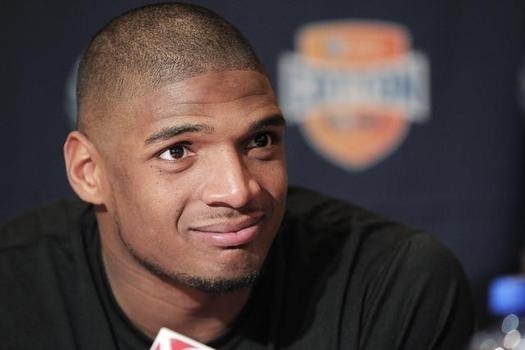
Missouri All-American Michael Sam says he is gay, and the defensive end could become the first openly homosexual player in the NFL. In interviews with ESPN, The New York Times and Outsports that were published Sunday, Sam said his teammates and coaches at Missouri have known since August.

“I am an openly, proud gay man,” he said.

The 255-pound Sam participated in the Senior Bowl in Mobile, Ala., last month after leading the SEC in sacks (11.5) and tackles for loss (19), and he is projected to be a mid-round NFL draft pick.

“It’s a big deal. No one has done this before. And it’s kind of a nervous process, but I know what I want to be … I want to be a football player in the NFL,” he said in the interviews.

There have been numerous NFL players who have come out after their playing days, including Kwame Harris and Dave Kopay.

Last year, NBA player Jason Collins announced he was gay after the season. Collins, a 35-year-old backup center, was a free agent and has not signed with a new team this season. MLS star and U.S. national team player Robbie Rogers also came out a year ago.

Division III Willamette kicker Conner Mertens, a redshirt freshman, said last month he was bisexual.

“We admire Michael Sam’s honesty and courage,” the NFL said in statement. “Michael is a football player. Any player with ability and determination can succeed in the NFL. We look forward to welcoming and supporting Michael Sam in 2014.”

A year ago, NFL teams were rightfully criticized for asking potential draft picks questions on the order of “Do you have a girlfriend?” This year, Sam will save them the trouble of having to ask.

If Jason Collins demolished one barrier last year — declaring that he was gay within days of finishing his 12th NBA season — Sam laid ruin to another by coming out before the draft. Where Collins is a Stanford grad from Los Angeles, Sam is more than a decade younger and hails from Hitchcock, Texas (pop. 7,200). And unlike Collins — who surprised his twin brother with his revelation — Sam’s sexuality was not a closely guarded secret at Missouri. Sam says he came out to his Missouri teammates last August. Coaches and classmates also knew he was gay well before today. Multiple sources have told Sports Illustrated that Sam strongly considered making an announcement late last summer and was willing to play his senior season as an openly homosexual athlete. (He decided against it at the last minute.)

Word of Sam’s intentions to come out spread beyond Mizzou. Last month, an SI writer approached Sam at the Senior Bowl and asked whether he would like to collaborate on a piece about his sexuality. Sam politely demurred, but he hardly appeared troubled or surprised by the inquiry. He assured the writer that it was okay that he had asked and added matter-of-factly, “It’s going to be a big deal no matter who I do it with.”

It’s telling, too, that no one in Sam’s orbit “outed” him, enabling him to tell his story on his terms and timetable. At some level this is a story about a generation gap. Sam and his cohort were raised in the era of Will & Grace and Modern Family, not The Brady Bunch, let alone My Three Sons. Friends, coaches and teammates all invoked the same line: It just wasn’t a big deal.

“I didn’t realize how many people actually knew, and I was afraid that someone would tell or leak something out about me,” Sam told ESPN. “I want to own my truth. … No one else should tell my story but me.”

Before coming out to all his teammates and coaches, Sam said he told a few close friends and dated another Missouri athlete who was not a football player.

“Coaches just wanted to know a little about ourselves, our majors, where we’re from, and something that no one knows about you,” Sam said. “And I used that opportunity just to tell them that I was gay. And their reaction was like, ‘Michael Sam finally told us.'”

Missouri coach Gary Pinkel said in a statement Sunday night he was proud of Sam and how he represented the program.

“Michael is a great example of just how important it is to be respectful of others, he’s taught a lot of people here first-hand that it doesn’t matter what your background is, or your personal orientation, we’re all on the same team and we all support each other,” Pinkel said. “If Michael doesn’t have the support of his teammates like he did this past year, I don’t think there’s any way he has the type of season he put together.”

Missouri linebacker Donovan Bonner has been a teammate of Sam’s for five years.

“We knew of his status for 5 years and not one team member, coach, or staff member said anything says a lot about our family atmosphere,” Bonner tweeted.

As for where Sam will get drafted, consider that he is the 11th man to win the SEC Defensive Player of the Year award. Each of the previous 10 winners was drafted prominently, eight in the first round. If Sam is not drafted, LGBT football fans should protest and shout to the top of their lungs about discrimination. There is no tougher conference in the NCAA than the SEC. To be named the SEC Defensive Player of the Year is no small feat, and it shows that Sam is a great player and should be drafted by the NFL. It’s time for the NFL to show that they do not discriminate because someone is out and proud. LGBT youth need to know that they have role models. As proud as I am of Conner Mertens who came out as bisexual, Sam would make a major statement as the first openly gay NFL player.

Sam is a trailblazer and, by definition, that means embarking with no map or template. Nevertheless, he has equipped himself. His team of advisors includes Howard Bragman, an L.A. publicist with experience helping celebrities come out. Sam met with Collins in L.A. and spoke to Ayanbadejo. Last week plans were also afoot to put Sam together with former NFL cornerback Wade Davis, who came out in 2012, and Robbie Rogers, the openly gay L.A. Galaxy midfielder. As more athletes come out, a community of support has formed and fortified.

This we know: All the inevitable homophobic tweets and slurs will be offset by overwhelming support. As state after state recognizes marriage equality and Google devotes its daily “doodle” to protest Russia’s homophobic legislation, and even the sitting Pope appears to accept homosexuality, figures like Sam are respected far more than they’re reviled. For whatever short-term grief or dissonance he may encounter; for however many NFL teams decline to draft him; for whatever catcalls he hears in stadiums and in the trenches; he will be celebrated globally.

“Any stigma is fading,” said Martina Navratilova, one of the first in the lineage of openly gay athletes. “It’s all becoming a question of when not if. The next when is an active gay athlete. It’s happening brick-by-brick, and pretty soon, we’ll have the whole house.” She then took a second to chuckle in happy disbelief. “We’ve hit this tipping point, this flood, this … I don’t know what the term is.”

Actually, there is a word for this: progress.


Farther Along

20140208-221838.jpg

Jesus answered him, “What I am doing you do not understand now, but afterward you will understand.”
John 13:7

Farther Along
By W. A. Fletcher

Tempted and tried, we’re oft made to wonder
Why it should be thus all the day long;
While there are others living about us,
Never molested, though in the wrong.

Farther along we’ll know more about it,
Farther along we’ll understand why;
Cheer up, my brother, live in the sunshine,
We’ll understand it all by and by.

Sometimes I wonder why I must suffer,
Go in the rain, the cold, and the snow,
When there are many living in comfort,
Giving no heed to all I can do.

Farther along we’ll know more about it,
Farther along we’ll understand why;
Cheer up, my brother, live in the sunshine,
We’ll understand it all by and by.

Tempted and tried, how often we question
Why we must suffer year after year,
Being accused by those of our loved ones,
E’en though we’ve walked in God’s holy fear.

Farther along we’ll know more about it,
Farther along we’ll understand why;
Cheer up, my brother, live in the sunshine,
We’ll understand it all by and by.

Often when death has taken our loved ones,
Leaving our home so lone and so drear,
Then do we wonder why others prosper,
Living so wicked year after year.

Farther along we’ll know more about it,
Farther along we’ll understand why;
Cheer up, my brother, live in the sunshine,
We’ll understand it all by and by.

“Faithful till death,” saith our loving Master;
Short is our time to labor and wait;
Then will our toiling seem to be nothing,
When we shall pass the heavenly gate.

Farther along we’ll know more about it,
Farther along we’ll understand why;
Cheer up, my brother, live in the sunshine,
We’ll understand it all by and by.

Soon we will see our dear, loving Savior,
Hear the last trumpet sound through the sky;
Then we will meet those gone on before us,
Then we shall know and understand why.

Farther along we’ll know more about it,
Farther along we’ll understand why;
Cheer up, my brother, live in the sunshine,
We’ll understand it all by and by.

The lyrics to the song were written in 1911 by Rev. W. A. Fletcher, an itinerant preacher, while he was traveling to the Indian Territories by train. Fletcher was feeling depressed because his wife, Catherine Louise Emmett Fletcher of Cleburne, Texas, was expecting their first-born child in a few weeks and he wouldn’t be present for the occasion. He felt that his priorities were with his ministry in the Indian Territories and wrote the lyrics to reflect his frame of mind at the time. Sitting next to him on the train was J. R. Baxter, a gospel music promoter who was quite taken with the lyrics that Fletcher was writing and offered him $2.00 for them. Mr. Baxter subsequently had them put to music and the song has been quite popular in the gospel music arena ever since.

The song deals with a Christian’s dismay at the apparent prosperity of the wicked, when contrasted with the suffering of the righteous. The repeated theme is that, “farther along” (in Heaven, perhaps), the truth will be revealed. Some songs are truly comforting, and for me this is one of them. No matter how bad things may be in life, if we keep our faith and we don’t change the goodness of our character, then heaven will be ours someday.