

…hand and neck and shoulder and hip, but mostly in my right hand.
I had to go to the clinic my university uses for worker’s comp. What a nightmare! Actually, it wasn’t too bad, but I was there for over three hours and then had to go over to the hospital for x-rays. The provider I saw at the clinic was supposed to call me yesterday afternoon with the result. She never called. However, because I use MyChart for my doctor and the hospital is part of the same network as him (all under the University of Vermont), I received the radiology report. I had to look up most of the words in the gobbledygook that was in the report, but I apparently have a small fracture in my right wrist. My other aches and pains appear to be bruises and muscle strain. Hopefully, I’ll hear from the clinic this morning. Because of the impending snowstorm, I’m not for sure if I’ll go into work today or not. It’s according to how much snow is on my car when it’s time to leave. If there is a fair amount, I won’t be able to go in because I won’t be able to clean it off one handed, or at least not one handed with my left hand. I use my right hand for most everything.

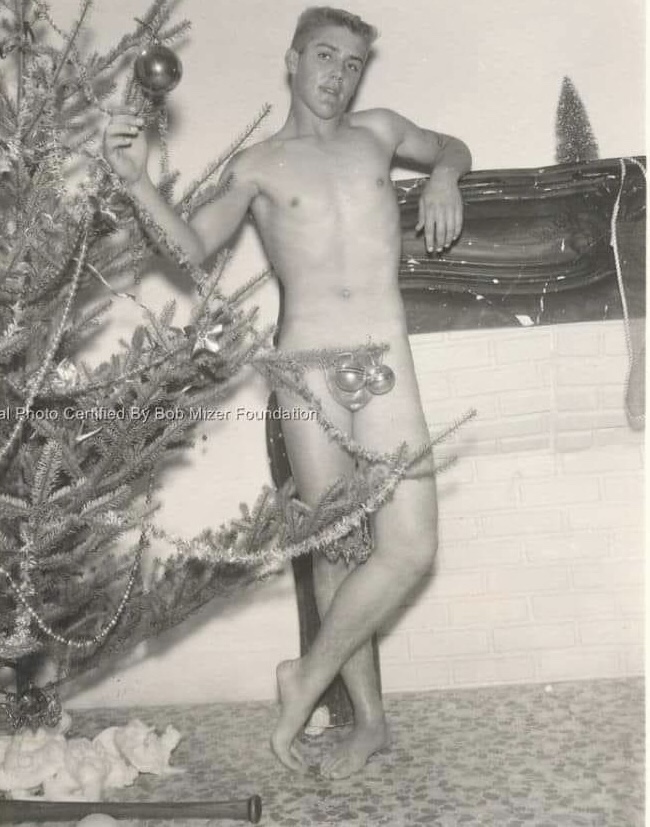
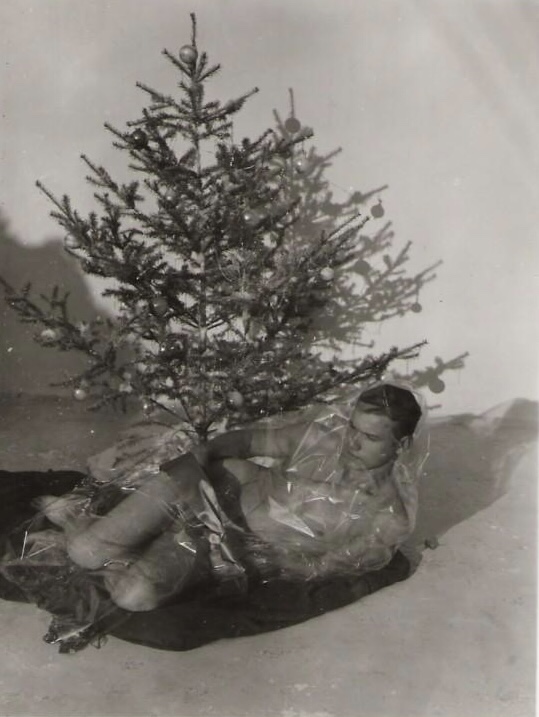
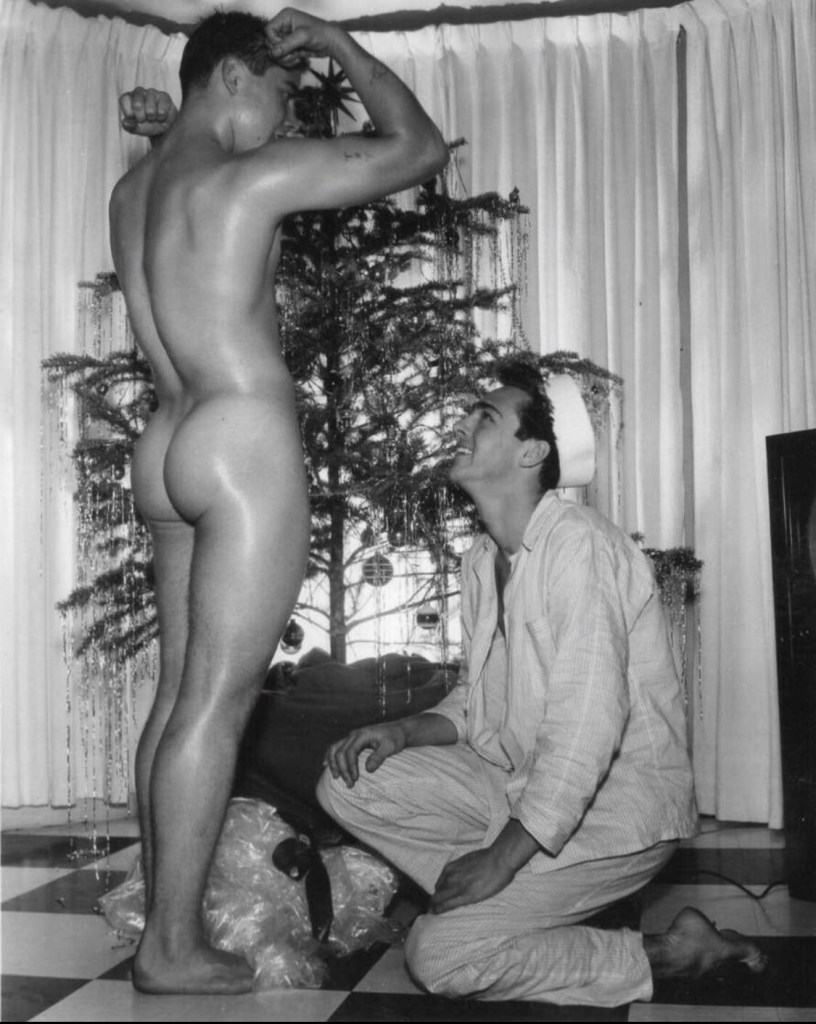
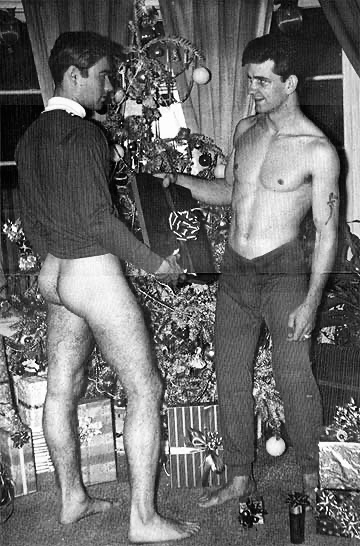
While I know that the 12 Days of Christmas are the twelve days after Christmas, I enjoy posting Christmas photos for the twelve days leading up to Christmas. Here is Day 1.

I really don’t have anything worth writing today. I had a migraine yesterday, and I’d just like to stay in bed today. I have to work today though because I have a meeting at 11. Such is life.

The Shivering Beggar
By Robert Graves – 1895-1985
Near Clapham village, where fields began,
Saint Edward met a beggar man.
It was Christmas morning, the church bells tolled,
The old man trembled for the fierce cold.
Saint Edward cried, “It is monstrous sin
A beggar to lie in rags so thin!
An old gray-beard and the frost so keen:
I shall give him my fur-lined gaberdine.”
He stripped off his gaberdine of scarlet
And wrapped it round the aged varlet,
Who clutched at the folds with a muttered curse,
Quaking and chattering seven times worse.
Said Edward, “Sir, it would seem you freeze
Most bitter at your extremities.
Here are gloves and shoes and stockings also,
That warm upon your way you may go.”
The man took stocking and shoe and glove,
Blaspheming Christ our Saviour’s love,
Yet seemed to find but little relief,
Shaking and shivering like a leaf.
Said the saint again, “I have no great riches,
Yet take this tunic, take these breeches,
My shirt and my vest, take everything,
And give due thanks to Jesus the King.”
The saint stood naked upon the snow
Long miles from where he was lodged at Bowe,
Praying, “O God! my faith, it grows faint!
This would try the temper of any saint.
“Make clean my heart, Almighty, I pray,
And drive these sinful thoughts away.
Make clean my heart if it be Thy will,
This damned old rascal’s shivering still!”
He stooped, he touched the beggar man’s shoulder;
He asked him did the frost nip colder?
“Frost!” said the beggar, “no, stupid lad!
’Tis the palsy makes me shiver so bad.”
About the Poem
The Saint Edward referred to in this poem is Edward the Confessor (c. 1003 – 5 January 1066), one of the last Anglo-Saxon English kings. As king, Edward developed a reputation for living a simple, pious lifestyle and being generous with the poor. Some reports indicate that he longed for a monastic life and took a vow of celibacy, as he and his wife never had children. He was associated with legends including a story from towards the end of his life. Edward was riding by a church in Essex and an old man asked for alms. As the king had no money to give, he drew a large ring off his finger and gave this to the beggar. A few years later two pilgrims were travelling in the Holy Land and became stranded. They were helped by an old man, and when he knew they came from England, he told them he was St John the Evangelist and asked them to return the ring to Edward telling him that in six months he would join him in heaven. The story is one of fourteen scenes from the king’s life – real and legendary – carved on a mid-15th-century stone screen in Westminster Abbey. Also shown are his birth, his coronation, Christ appearing to Edward at Mass, and the dedication of a church, assumed to be the Abbey.
While Edward spent much of his life in exile in France, particularly Normandy, Edward’s love for the region of his childhood can be seen in one of his greatest architectural achievements, the building of Westminster Abbey. The story goes that Edward vowed that if he should return safely from exile in Normandy to his kingdom, he would make a pilgrimage to St Peter’s, Rome. But once on the throne he found it impossible to leave his subjects, and the Pope released him from his vow on condition that he should found or restore a monastery to St Peter. This led to the building of a new church in the Norman style to replace the Saxon church at Westminster.
The king’s piety had greatly endeared him to his people, and he came to be regarded as a saint long before he was officially canonized as Saint and Confessor by Pope Alexander III in 1161. His nickname reflects the traditional image of him as unworldly and pious. Edward’s reputation for piety and charity was widespread, and he was viewed with great veneration, even being considered a patron saint of England. In 1139, the prior of Westminster Abbey traveled to Rome to ask the pope to canonize Edward, but the appeal was rejected amid political disputes. Edward was buried in Westminster Abbey, which was completed shortly before his death. His body remains there today, although the abbey is now an Anglican church.
About the Poet
On July 24, 1895, Robert Graves was born in Wimbledon, near London. His father, Alfred Perceval Graves, was a Gaelic scholar and minor Irish poet. His mother, Amalie von Ranke Graves, was a relation of Leopold von Ranke, one of the founding fathers of modern historical studies. One of ten children, Robert was greatly influenced by his mother’s puritanical beliefs and his father’s love of Celtic poetry and myth. As a young man, he was more interested in boxing and mountain climbing than studying, although poetry later sustained him through a turbulent adolescence. Graves received his early education at a series of six preparatory schools, including King’s College School in Wimbledon, Penrallt in Wales, Hillbrow School in Rugby, Rokeby School in Kingston upon Thames and Copthorne in Sussex, from which last in 1909 he won a scholarship to Charterhouse.
Robert Graves was bisexual, having intense romantic relationships with both men and women, though the word he coined for it was “pseudo-homosexual.” Graves was raised to be “prudishly innocent, as my mother had planned I should be.” His mother, Amy, forbade speaking about sex, save in a “gruesome” context, and all skin “must be covered.” At his days in Penrallt, he had “innocent crushes” on boys; one in particular was a boy named Ronny, who “climbed trees, killed pigeons with a catapult and broke all the school rules while never seeming to get caught.” At Charterhouse, an all-boys school, it was common for boys to develop “amorous but seldom erotic” relationships, which the headmaster mostly ignored. Graves described boxing with a friend, Raymond Rodakowski, as having a “a lot of sex feeling.” And although Graves admitted to loving Raymond, he would dismiss it as “more comradely than amorous.” In his fourth year at Charterhouse, Graves met “Dick” (George “Peter” Harcourt Johnstone) with whom he would develop “an even stronger relationship.” Johnstone was an object of adoration in Graves’s early poems.
In 1913 Graves won a scholarship to continue his studies at St. John’s College, Oxford, but in August 1914 he enlisted as a junior officer in the Royal Welch Fusiliers. He fought in the Battle of Loos and was injured in the Somme offensive in 1916. While convalescing, he published his first collection of poetry, Over the Brazier. By 1917, though still an active serviceman, Graves had published three volumes. In 1918, he spent a year in the trenches, where he was again severely wounded.
During the war, Johnstone remained a “solace” to Graves. Despite Graves’s own “pure and innocent” view of Johnstone, Graves’s cousin Gerald wrote in a letter that Johnstone was: “not at all the innocent fellow I took him for, but as bad as anyone could be”. Johnstone remained a subject for Graves’s poems despite this. Communication between them ended when Johnstone’s mother found their letters and forbade further contact with Graves. Johnstone would later be arrested for attempting to seduce a Canadian soldier, which removed Graves’s denial about Johnstone’s infidelity, causing Graves to collapse.
In January 1918, at the age of twenty-two, he married eighteen-year-old Nancy Nicholson, with whom he was to have four children. Traumatized by the war, he went to Oxford with his wife and took a position at St. John’s College. Graves’s early volumes of poetry, like those of his contemporaries, deal with natural beauty and bucolic pleasures, and with the consequences of the First World War. Over the Brazier and Fairies and Fusiliers earned Graves his reputation as an accomplished war poet. After meeting the American poet and theorist Laura Riding in 1926, Graves’s poetry underwent a significant transformation.
In 1927, Graves and his first wife separated permanently, and in 1929 he published Goodbye to All That, an autobiography that announced his psychological accommodation with the residual horror of his war experiences. Shortly afterward, he departed to Majorca with Laura Riding. In addition to completing many books of verse while in Majorca, Graves also wrote several volumes of criticism, some in collaboration with Riding. During that period, he evolved his theory of poetry as spiritually cathartic to both the poet and the reader. Although Graves claimed that he wrote novels only to earn money, it was through these that he attained status as a major writer in 1934, with the publication of the historical novel I, Claudius, and its sequel, Claudius the God and His Wife Messalina. (During the 1970’s, the BBC adapted the novels into an internationally popular television series.)
At the onset of the Spanish Civil War in 1936, Graves and Riding fled Majorca, eventually settling in America. In 1939, Laura Riding left Graves for the writer Schuyler Jackson; one year later Graves began a relationship with Beryl Hodge that was to last until his death.
After World War II, Graves returned to Majorca, where he lived with Hodge and continued to write. By the 1950s, Graves had won an enormous international reputation as a poet, novelist, literary scholar, and translator. In 1962, W. H. Auden went as far as to assert that Graves was England’s “greatest living poet.” From 1961 to 1966, Graves returned to England to serve as a professor of poetry at Oxford. In the 1970s his productivity fell off; and the last decade of his life was lost in silence and senility. Robert Graves died in Majorca in 1985, at the age of ninety.

“Moreover, if your brother sins against you, go and tell him his fault between you and him alone. If he hears you, you have gained your brother.”
—Matthew 18:15
I am a people pleaser. It’s ultimately why I am going home this year for Christmas. I am sure that I am not the only one who is enough of a people pleaser who find themselves with a difficult family over the holidays. I am just going to do my best to not let my temper get the better of me. Proverbs 15:1 says, “A soft answer turns away wrath, but a harsh word stirs up anger.” So, I will try to keep my answers soft and avoid stirring up anger. However, I know I can be pushed too far, and no matter how much I try, I won’t be able to keep my mouth shut
Yet, I am a people pleaser at heart. Being a southerner who believes in being a gentleman with good manners, I was doomed to be a people pleaser. Even if I don’t like the person, I hate them being upset with me. Sometimes, this is to my own detriment. I tried my best to please my family for over forty years, but I never have been able to, and I doubt I ever will. I have said this before, but I feel like I wasted much of my life trying to please others. If I am going to please others, I’d rather do it in a more intimate way that I will also enjoy, if you know what I mean. But I am getting off subject.
Whenever conflicts arise, I most often do my best to make it go away. I will take back what I just said, I’ll change the subject, I’ll even apologize, whatever it takes. Which often meant that even in situations where I should be leaning into a conflict; situations where I am standing up for someone or when I should be standing up for myself, I instead try to appease the other person so I can make my own discomfort go away.
I’ve learned to be more assertive and to do what is right for me, not what everyone else thinks is right for me. I am not completely there yet, though I am genuinely trying. Even so, I still feel that sometimes it’s best to just surrender or at least compromise to keep the peace. In the Star Trek: Deep Space Nine episode “The Way of the Warrior,” Worf tells the Chancellor Gowron of the Klingon Empire, “Kahless himself said, ‘Destroying an empire to win a war is no victory…'” The same is true for us in life, destroying ourselves to prove a point or win an argument is no victory. Compromise is sometimes necessary, but sometimes compromise is also not an option. This can be true in politics also, but again that’s a discussion for another time.
Over the years I’ve gotten a lot better about not immediately acquiescing. Now if I get a text, call, or email that sends my heart rate through the roof I wait before replying. If someone says something that hurts my feelings, I am more likely not going to say anything, but my passive aggressive southern nature usually will come out. A pointed stare can say much more than words ever could. I learned that as a teacher. However, I do try to listen more to my feelings, and so, I don’t always shove them aside just to make other people happy.
I am becoming much better about standing up for myself, especially at work. When I feel strongly about being wronged or have a strong opinion that goes against the grain, I craft a thoughtful email response that lays out my thoughts on the matter or decide exactly what I am going to say in person before I say it to my boss. I usually let someone else read over the email before I send it, and I have some people I use as a sounding board for when I know it has to be done verbally. It can be hard, but my boss is also a people pleaser who is also averse to conflict, so he knows that if I buck the system, I have thought long and hard about it and I am very serious. Usually, he seems my side of things.
I think we all have to take up for ourselves. We can’t always be a pushover or try to please everyone. At some point we have to stand up for ourselves and for what is right. It’s always best to be honest. Psalm 34:13 says, “Keep your tongue from evil, and your lips from speaking deceit.”


 | vandycolt on Feet, Faith, and 4 a.m. |
 | noisilycool3bc985058… on Feet, Faith, and 4 a.m. |
| noisilycool3bc985058… on Pic of the Day |
 | Joe on Pic of the Day |
| vandycolt on Pic of the Day |




As an Amazon Associate I earn from qualifying purchases. So, if you click on a link that takes you to Amazon.com, I may earn a commission.
Trust me, it isn’t much, but every little bit helps.






 The Closet Professor