








If this guy was in Vermont today, he’d (sadly) be wearing pants. As I write this, it’s 9°F (-12.78°C). The wind is making it feel like 0°F (-17.78°C). This weekend Vermont (and most of the northeast) is expected our heaviest snowfall yet. Where I am, the current prediction is 6.25”, but that number keeps changing. Luckily, it is expected to mostly fall during Sunday morning and be a dry powdery snow. Our last major snowfall was a wet heavy snow, which is a lot more work to clear off my car. The good thing about the snow being expected on Sunday is that I don’t have to go anywhere and when I do have to return to work on Monday, the roads should be clear. When the snow stops Sunday, I’ll go outside and clear off my car so I don’t have to do it Monday morning. Anyway, I’m just looking forward to (mostly) staying in and staying warm.

As my vacation continues, I plan to do nothing today. I don’t plan to go anywhere or do anything. I’ll probably turn on the tv as background noise, but there really isn’t anything I’m dying to watch. I may get a burst of energy at some point, but it doesn’t feel likely at this point. I had a hard time waking up this morning, even though I went to bed early last night. Isabella even gave up trying to wake me up. I finally did get up, fed her, and made my breakfast. I just want to take it easy today.
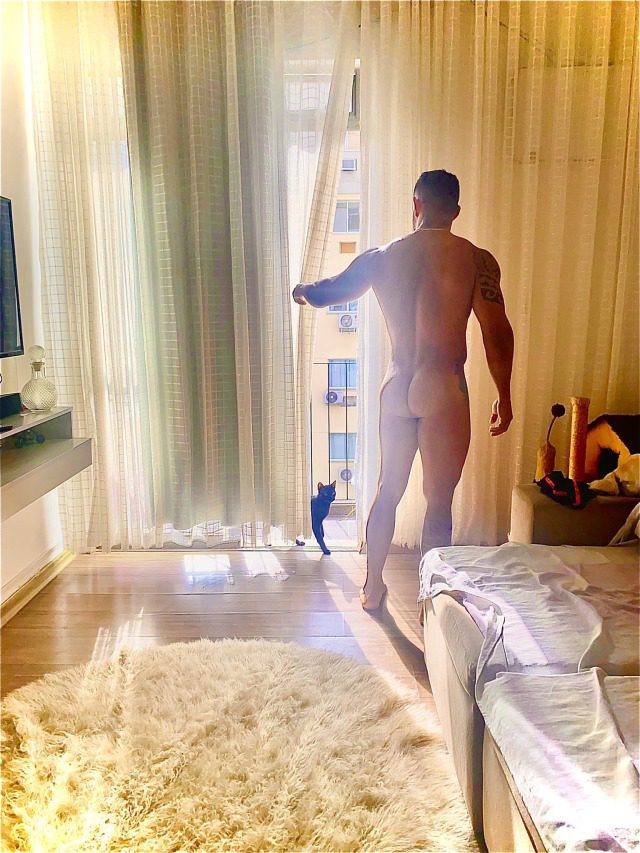
Amazingly, Isabella seems to have turned a new leaf since the new year and has not been so persistent in waking me up early. Partly, I think it’s because I came in so late after being out for New Year’s Eve that it threw off her schedule. Yesterday, she also let me sleep in and let me wake up on my own a little after 5 am. This morning, she not only did not wake me (a bad dream did that), but she let me sit in the side of the bed for a bit before she began nudging me to get up and feed her. I hope I haven’t jinxed myself, and this will continue. We’ll see how it goes.
This morning, I’m headed over to New Hampshire for my next Botox treatment for my migraines. I still miss my old neurologist and am a bit apprehensive about seeing a new person, but that won’t be until March. Today, I’ll be seeing a new person who’ll administer my Botox injections. The one who did it before was a lot slower than my previous neurologist had been, and thus, it was more painful. We’ll see how it goes today.
Lastly, I’ve decided to take this whole week as vacation time (though today will count as a sick day). Everyone else took time off before the holiday, but I had to stay at the museum because someone had to do it. Therefore, I decided to extend my holiday a few more days. I don’t have any particular plans, though I was hoping to see a friend that I’ve been trying to make the time to see, but so far, our schedules just haven’t matched up. We’ll see how if that will happen.

Winter Song
By Wilfred Owen
The browns, the olives, and the yellows died,
And were swept up to heaven; where they glowed
Each dawn and set of sun till Christmastide,
And when the land lay pale for them, pale-snowed,
Fell back, and down the snow-drifts flamed and flowed.
From off your face, into the winds of winter,
The sun-brown and the summer-gold are blowing;
But they shall gleam with spiritual glinter,
When paler beauty on your brows falls snowing,
And through those snows my looks shall be soft-going.
About this Poem
“Winter Song,” unpublished at the time of Wilfred Owen’s death, was first collected in The Poems of Wilfred Owen (Chatto & Windus, 1931). In “Wilfred Owen’s Influence on Three Generations of Poets,” published in The Modern Review, vol. 242, no. 3 (September 1978), Sasi Bhusan Das, former director of the Institute of English in Calcutta, writes, “[T]he idea of spiritual rebirth in Owen’s ‘Winter Song’ is confirmed by the next few lines of its first stanza: ‘And when the land lay pale for them, pale-snowed, / Fell back, and down the snow-drifts flamed and flowed.’ [. . .] It will be further noted that in his ‘Winter Song’ Owen also sings of a symbolic spring [. . .] in the same manner as [T. S.] Eliot in the opening passage of ‘Little Gidding’ does of the ‘Midwinter spring.’ Thus, in a sense, Owen’s ‘Winter Song,’ like Eliot’s passage, is a song of ‘Midwinter spring’ which is ‘sempiternal’ for it is not in ‘time’s covenant’ but ‘suspended in time.’” Jon Stallworthy, professor emeritus at the University of Oxford, notes in his titular biography of Owen that the poem is one of two “addressed to Arthur Newboult, the seven-year-old son of Edinburgh friends.”
About the Poet
On March 18, 1893, Wilfred Edward Salter Owen was born in Shropshire, England. After the death of his grandfather in 1897, the Owen family moved to Birkenhead, where Owen was educated at the Birkenhead Institute. After another move in 1906, he continued his studies at the technical school in Shrewsbury. Interested in the arts at a young age, Owen began writing poetry as a teenager.
In 1911, Owen matriculated at London University, but after failing to receive a scholarship, he spent a year as a lay assistant to a vicar in Oxfordshire. In 1913, he went on to teach in France at the Berlitz School of English, where he met the poet Laurent Tailhade. He returned from France in 1915 and enlisted in the Artists Rifles. After training in England, Owen was commissioned as a second lieutenant in the Manchester Regiment in 1916.
Owen was wounded in combat in 1917 and, diagnosed with shell shock, was evacuated to Craiglockhart War Hospital near Edinburgh. There, he met another patient, poet Siegfried Sassoon, who served as a mentor and introduced him to well-known literary figures such as Robert Graves and H. G. Wells.
It was at this time Owen wrote many of his most important poems, including “Anthem for Doomed Youth” and “Dulce et Decorum Est.” His poetry often graphically illustrated the horrors of warfare, the physical landscapes that surrounded him, and the human body in relation to those landscapes. His verse stands in stark contrast to the patriotic poems of war written by earlier poets of Great Britain, such as Rupert Brooke. A gay man, Owen also often celebrated male beauty and comradery in his poems.
Owen rejoined his regiment in Scarborough in June 1918, and, in August, he returned to France. In October he was awarded the Military Cross for bravery at Amiens. He was killed on November 4, 1918, while attempting to lead his men across the Sambre-Oise canal at Ors. He was twenty-five years old. The news reached his parents on November 11, Armistice Day.
While few of Owen’s poems appeared in print during his lifetime, TheCollected Poems of Wilfred Owen (New Directions, 1963), with an introduction by Sassoon, was first published in December 1920 and reissued several times. Owen has since become one of the most admired poets of World War I. A review of Owen’s poems published on December 29, 1920, just two years after his death, read, “Others have shown the disenchantment of war, have unlegended [sic] the roselight and romance of it, but none with such compassion for the disenchanted nor such sternly just and justly stern judgment on the idyllisers.”
About Owen’s post-war audience, the writer Geoff Dyer said,
To a nation stunned by grief, the prophetic lag of posthumous publication made it seem that Owen was speaking from the other side of the grave. Memorials were one sign of the shadow cast by the dead over England in the twenties; another was a surge of interest in spiritualism. Owen was the medium through whom the missing spoke.

Ringing in the new year with friends at New Queers Eve was a lot of fun, but I got home and in bed just after 1:30 am. Having now fed Isabella, I’m going back to bed.
Happy New Year!


 | noisilycool3bc985058… on Coffee, Snow, and a Good … |
| noisilycool3bc985058… on Boldly Watching Before Wo… |
 | iameverywhere1 on Pic of the Day |
| noisilycool3bc985058… on When Time Stands Still? |
| noisilycool3bc985058… on Adjusting to the Clock |




As an Amazon Associate I earn from qualifying purchases. So, if you click on a link that takes you to Amazon.com, I may earn a commission.
Trust me, it isn’t much, but every little bit helps.





 Joe
Joe
 The Closet Professor