

If you would like to see the unedited version of this image, click HERE.
My sympathies go out to my friends in the South who will be dealing with snow and ice today. It has been snowing here for a week and very cold with windchills as low as -9 where I live, but most of the snow has not been accumulating more than a dusting. Burlington was experiencing whiteout conditions yesterday, but we just had light snow because the mountains stopped most of the snow from the west. Some places on the eastern side of the mountains received snow, but where I live, it’s been only a dusting. Tomorrow, we may get 1-2” of snow, but that doesn’t compare to northern Alabama who will get 2-4” of snow. My weather app actually says 7-8”, but that’s not what the meteorologists down there are forecasting, Even if they get 1-2”, it’s more like us getting 8-12” because they are just not prepared for winter weather. No one has snow tires, and I’d be surprised if very many people are aware there is such a thing as snow tires. Some places have a supply of salt and sand for the roads, but only the state has plows, so only the state roads get plowed. In other words, if a person lives in a rural area, they will be stuck in their homes. Roads are usually closed, which means if you get out on the roads and have an accident, insurance will not cover it, and trust me from experience, anyone who gets out on the roadways will have an accident. The last time I experienced a winter storm in Alabama, the roads were covered in nearly an inch of ice. It was tricky to even walk on the roads, let alone drive on them. Every car I saw went into a ditch. The good thing is that it should not be a long lasting winter weather event; the temperatures should reach the lower 40s by tomorrow. That being said, there will most likely be massive power outages due to the weight of the ice bringing down power lines. Rural areas in Alabama losing power is no different from rural areas in Vermont losing power, you could be without electricity for days.
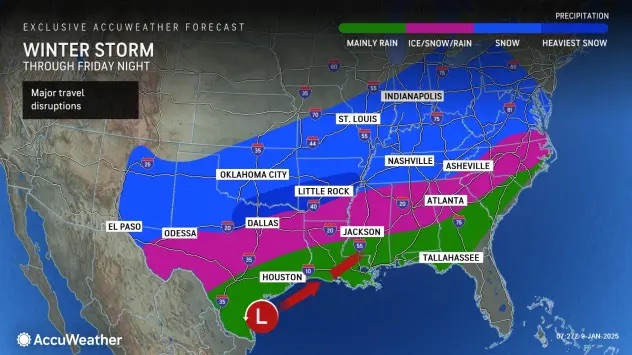
If you are wondering, my family lives in the southern half of Alabama, so they should experience rain but no snow. As bad as it is when North Alabama gets snow, they do get snow more often than South Alabama. In my lifetime, I can think of only four major winter weather events in the area of Alabama I grew up in. We’ve had more hurricanes and tropical storms than we’ve had winter storms with ice/snow accumulation. South Alabama is not prepared at all for winter weather, and it usually means you are stuck wherever you are for days, usually without electricity, because the crews to restore power also can’t get out until the icy conditions are gone.

The students are back on campus, and classes start today. Because I’m teaching a Tuesday/Thursday class, today will be my first day of class. I think my university has the strangest schedule. It seems ridiculous to start classes on a Thursday. I know they have to have a certain number of class days, but they could have started on a Monday and extend the last day of class two more days. It’s also odd that they have exams every day of the week, including Saturday and Sunday. In fact, my final exam is scheduled for a Sunday morning.
I’m nervous about my first day of class, but I always am, no matter what I’m teaching. I pray it goes well. I plan for the first day of class to be a get-to-know each other discussion, and I’m not the best at leading discussions. However, I feel like this is the best way to introduce them to the subject of the course. I just hope I can get them to talk. That’s always the hardest part. I think it will help that there is no right or wrong answer. I’ll see how it goes.

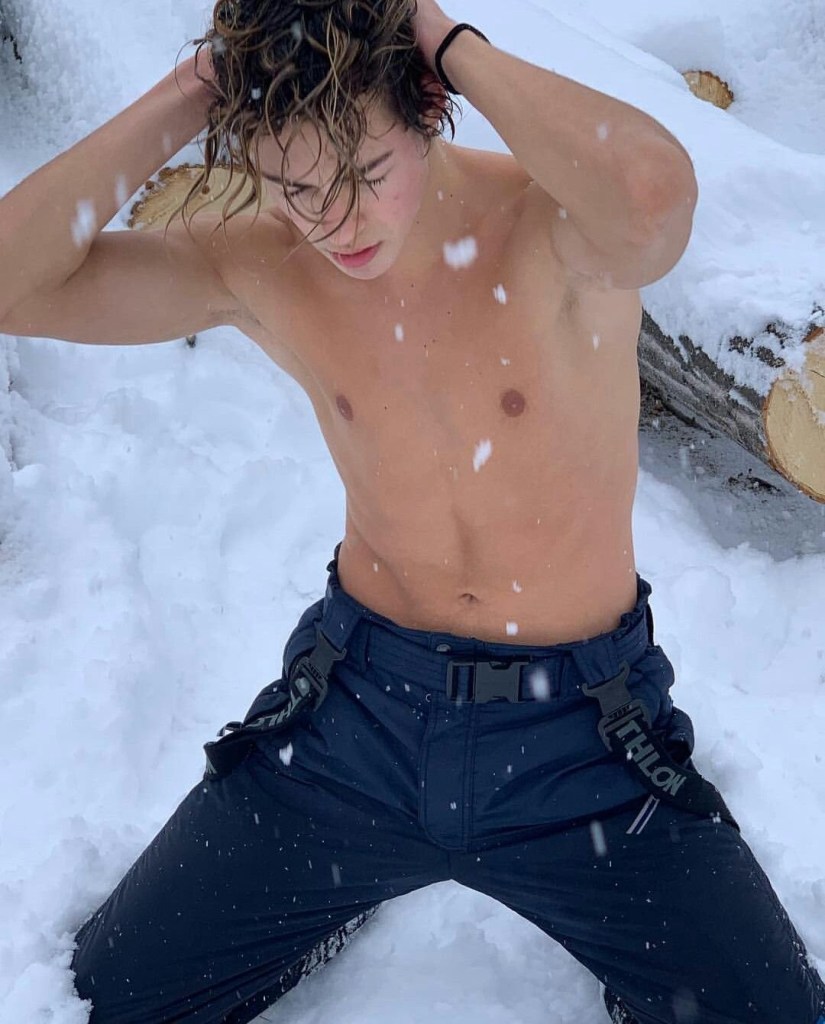
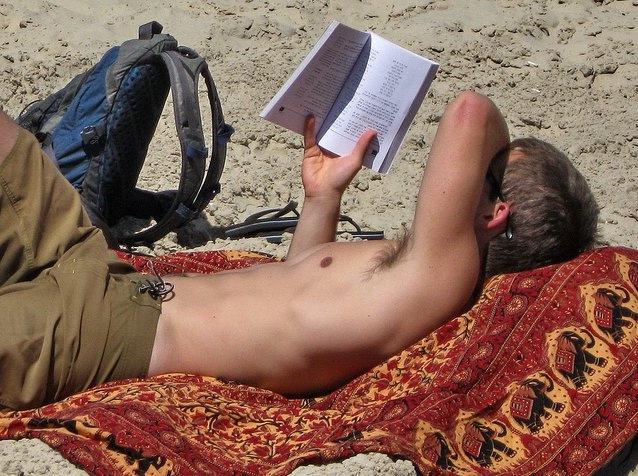
Because of appointments on the next two Friday, I changed my usual work from home day from Friday to Wednesday this week and the next. I have a virtual meeting this morning, so I can’t spend my WFH day like the guy above. I’ll actually have to get dressed, but after that, I can have a more relaxed day. I’m really happy I’m working from home today because I woke with a migraine this morning. Also, the heat at the museum hasn’t been keeping up with the outside temperature since we got back from break, and I’ve been freezing in my office this week. I’m looking forward to a day when I can be comfortable in my surroundings. Anyway, that’s it for me today. At least the week is halfway over.

Our Real Work
By Wendell Berry
It may be that when we no longer know what to do
we have come to our real work,
and that when we no longer know which way to go
we have come to our real journey.
The mind that is not baffled is not employed.
The impeded stream is the one that sings.
About the Poem
Last night, I asked my friend Casey what his favorite poem is, and he sent me this poem. I was not overly familiar with Wendell Berry, but I thought this poem was just so beautiful. Casey said, “Wendell Berry holds a special place in my heart, because he is an agrarian and his vision of agriculture as taking care of God’s land is beautiful.” The beauty of nature and the belief that God created something as beautiful as the Earth we live on, is truly a wonder in itself.
Berry’s poem “Our Real Work” reflects his deep philosophical and ecological concerns, as well as his belief in the power of humility, intuition, and a deeper connection with life and nature. The poem suggests that uncertainty is not a sign of failure or inadequacy but rather a threshold to deeper meaning and purpose. When we are lost or confused, we may be closer to discovering our true selves and the work we are meant to do. This counters a cultural obsession with certainty, productivity, and control.
Berry contrasts superficial busyness with “our real work” and “our real journey.” These phrases imply a calling beyond societal expectations or material goals. It is only when we lose the sense of direction imposed by external forces that we can connect with something more authentic and profound. The line “The impeded stream is the one that sings” encapsulates the idea that resistance or difficulty can produce beauty, depth, and creativity. Without challenges, life and the mind become stagnant. Struggle is essential to growth, much like obstacles in a stream create its melody. The poem’s emphasis on bafflement and challenge suggests that meaningful engagement requires more than logical thinking. Berry calls for a holistic approach, engaging intuition, creativity, and openness to mystery.
As a farmer and environmentalist, Berry often draws from natural imagery to express his ideas. The stream becomes a metaphor for the human condition, with its impediments giving rise to its “song”—a symbol of life’s beauty and richness born of struggle. “Our Real Work” encourages readers to embrace uncertainty, trust in the process of struggle, and find fulfillment not in achieving clear outcomes but in engaging with life authentically. It suggests that by letting go of the need for control, we can align with a deeper, more intuitive sense of purpose.
About the Poet
Wendell Berry is an acclaimed American poet, essayist, novelist, environmental activist, and farmer. Berry was born on August 5, 1934, in Henry County, Kentucky. He earned his bachelor’s and master’s degrees in English from the University of Kentucky. As a poet, he is celebrated for his eloquent and thoughtful exploration of themes like community, nature, sustainability, and the human connection to the land. He has been a prominent voice in contemporary literature, offering insights into both the beauty and fragility of life, while advocating for ecological responsibility and local living.
After some time teaching and writing in various locations, Berry returned to Kentucky in the mid-1960s, settling on a farm in Port Royal. This return to the land became central to his life and work. Berry is a fierce advocate for sustainable agriculture, criticizing industrial farming practices and highlighting the importance of caring for the earth. His writings celebrate the values of rural living and interconnected, self-sustaining communities. Berry often critiques consumerism, technological dependence, and the alienation of individuals from nature and one another. As a devout Christian, Berry’s work often explores moral and spiritual questions, urging readers to live responsibly and ethically, and as a farmer himself, he writes with intimate knowledge of the joys and challenges of working with the earth.
Wendell Berry remains a significant and influential figure in literature and environmental thought. His work speaks to the interconnectedness of humanity and the natural world, offering a powerful critique of industrialized modern life while providing a vision of harmony, responsibility, and hope.


 | furbirdsqueerly on Pic of the Day |
 | Joe on Pic of the Day |
 | noisilycool3bc985058… on Pic of the Day |
 | vandycolt on Moment of Zen: Reading |
| noisilycool3bc985058… on Pic of the Day |




As an Amazon Associate I earn from qualifying purchases. So, if you click on a link that takes you to Amazon.com, I may earn a commission.
Trust me, it isn’t much, but every little bit helps.










 The Closet Professor