

Monthly Archives: June 2025
Rough Weekend

It’s been a rough one.
This weekend has been full of pain—head, back, and stomach—and not the kind that fades with a good night’s sleep. The headache is, unfortunately, part of my usual chronic migraine pattern. For me, pain doesn’t like to travel alone. When something flares up in my body, it often invites a migraine along for the ride. And this time, it brought friends.
For the past week or so, I’ve been dealing with lower back pain. It ebbs and flows—sometimes tolerable, sometimes so intense I can barely move around the house. I’ve had worse episodes in the past, but that doesn’t make this one any easier. I’ve been using a heating pad, and while it gives me temporary relief, it’s just that—temporary.
To make matters worse, a bout of stomach pain decided to join the party. No clue if the three are connected or just coinciding at the most inconvenient time. Either way, it’s made for a miserable few days.
Today, I’m taking a sick day. I need to rest, let the heating pad do its magic, and take a muscle relaxer to see if I can ease this back pain. If I’m not better tomorrow, I’ll be giving my doctor a call. I know when it’s time to stop pushing through and start taking care of myself properly.
I hope your Monday is starting out much better than mine. Wishing each of you a healthy, pain-free start to the week.

🌈 Bold, Beloved, and Called
“But you are a chosen race, a royal priesthood, a holy nation, God’s own people, in order that you may proclaim the mighty acts of him who called you out of darkness into his marvelous light.”
— 1 Peter 2:9
“For God did not give us a spirit of fear, but of power and of love and of self-discipline.”
— 2 Timothy 1:7
“Love is patient, love is kind… It bears all things, believes all things, hopes all things, endures all things. Love never fails.”
— 1 Corinthians 13:4, 7–8
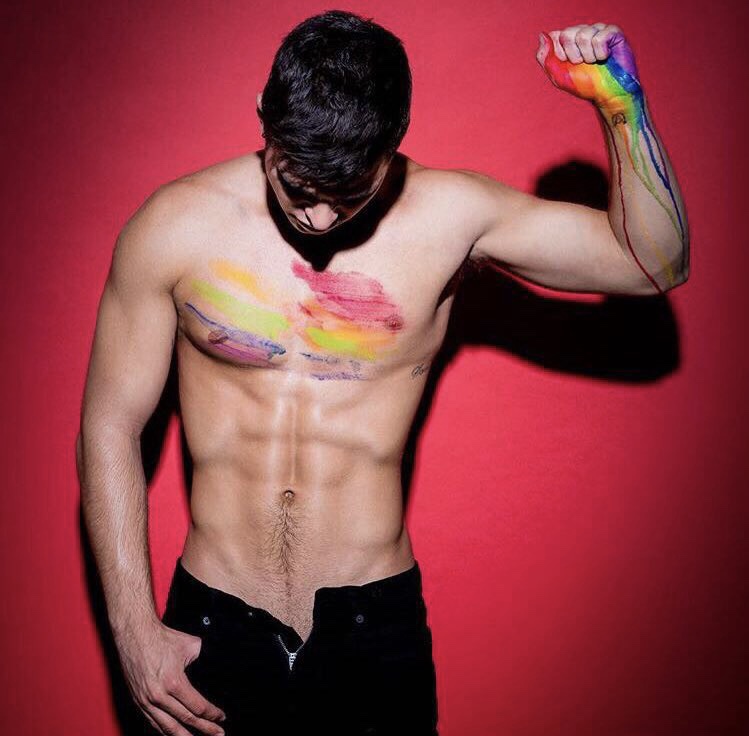
As Pride Month draws to a close, we are invited not to retreat—but to rise. We should not pack away our rainbow flags or tuck away our truths—we should plant them firmly in the soil of our daily lives. We have explored who we are (fearfully and wonderfully made). We’ve reclaimed the image of God within us (queerly reflected). We’ve healed what shame tried to break, found boldness in our truth, and committed to growing where we are planted. now, we turn to three things that comes next.
We are called to serve God.
Jesus’ words in Matthew 5:16 (“Let your light shine before others, so that they may see your good works and give glory to your Father in heaven.”) offer a powerful commission: Let your light shine. Not dimmed for the comfort of others. Not hidden behind polite silence. But out in the open. Joyfully. Authentically. As a witness to what God has done in and through us.
Scripture tells us that we are a royal priesthood, a holy people, God’s own. That’s not conditional. That’s not for someone else. That’s for us. We are called not in spite of who we are, but because of who we are. We are called out of shame and silence, out of marginalization and fear, into God’s marvelous light. Our queerness, our tenderness, our truth—they are not spiritual liabilities. They are spiritual gifts.
Through God’s gift, we are bold.
For many LGBTQ+ Christians, Pride has historically been about survival—holding onto life, faith, and hope in a world that tried to silence us. And that survival has been sacred. But now, we are called to more than surviving. We are called to joy. To deep, radiant, unashamed joy.
Paul writes in Philippians 4:4, “Rejoice in the Lord always; again, I will say, Rejoice.” Not only when things are easy. Not only when we’re safe. But always. Because joy—real joy—is an act of spiritual resistance. It’s a declaration that we are still here, still beloved, and still building something beautiful. It takes courage to live openly as an LGBTQ+ Christian. It takes courage to love ourselves in a world that taught us to hide. It takes courage to believe that the Spirit speaks through our lives.
But here’s the truth: we were not given a spirit of fear. We were given the Spirit of power—to stand tall. The Spirit of love—to resist hate with grace. The Spirit of self-discipline—to hold fast to our faith even when others misunderstand it. Holy boldness is not loud arrogance. It is quiet faithfulness. It is showing up fully, beautifully, honestly—day after day. Pride is not just a celebration. It is a declaration: We are still here, and we are still beloved.
We are love in motion.
Love is not just a feeling—it is a force. It bears burdens. It holds space. It speaks truth. And LGBTQ+ love is no less holy than any other. In fact, many of us have learned how to love through rejection, through hiding, through longing. We have had to fight to love ourselves, to love one another, and to believe that God loves us too.
Our lives as LGBTQ+ Christians are not a detour from faith—it is a testament to it. Our honesty, our resilience, our capacity for love—these are lamps lit by the Spirit. When we love openly, we reflect the God who is love. When we celebrate joyfully, we reflect the God who rejoices over creation. When we live truthfully, we reflect the Christ who never apologized for healing, embracing, and breaking the rules to welcome the outcast.
We are not just welcome in the Church—we are vital to its witness. Our pride doesn’t end with the parade. It continues in our daily living, in our compassion, in our courage to shine. So now, let that love flourish. Let it speak. Let it heal. Whether you’re single, partnered, celibate, dating, married, or questioning—you carry within you the kind of love that “never fails.” Love that transforms. Love that reflects God.
God calls us to be courageous. He made us part of His royal priesthood. He called us into the light—not despite our queerness, but through it. He gives us boldness to live as He created us. God gives us strength to resist shame, and tenderness to love others as He love us. We carry His love—patient, kind, and enduring—into a world that so desperately needs it, especially in this climate of hate that seems to permeate our political, secular, and, far too often, religious worlds.
We are chosen. We are courageous. We are love in motion.
As Pride Month ends, may our truth continue to shine, our love continues to grow, and our calling becomes ever clearer. Let the world see what God is doing through us—a radiant reflection of bold, beloved queerness.
🌈🏳️🌈🏳️⚧️







The First Pride Was a Riot
In the early hours of June 28, 1969, something extraordinary happened on a quiet stretch of Christopher Street in New York City. After years—decades—of police harassment, social invisibility, and the criminalization of queer existence, a group of drag queens, trans women, gay men, and lesbians refused to be silent. When officers raided the Stonewall Inn—a dingy, Mafia-run gay bar in Greenwich Village—the community inside and outside the bar erupted in defiance. What followed were six nights of protest, resistance, and righteous rage. The Stonewall Riots weren’t the beginning of LGBTQ+ activism, but they were the spark that ignited a global fire.
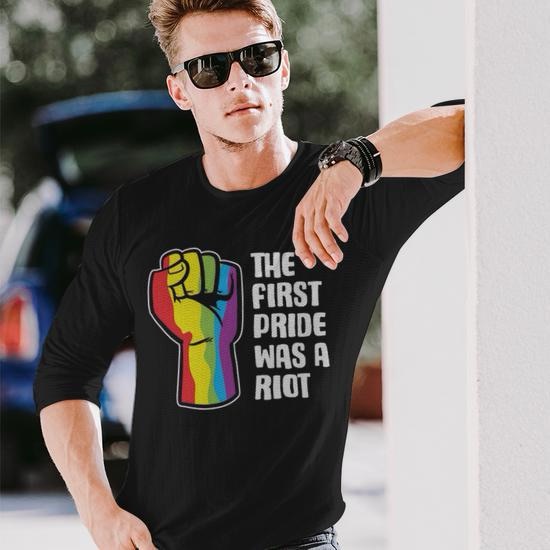
“The First Pride Was a Riot.” That slogan adorns t-shirts, protest signs, and banners today as a reminder that our liberation was not handed to us—it was demanded. It was thrown back in the faces of billy clubs, shouted in the streets, and carved into the consciousness of a country that would rather not have seen us at all. Marsha P. Johnson, Sylvia Rivera, Stormé DeLarverie—names that should be shouted from rooftops—were part of this uprising. They fought not just for acceptance, but for dignity. For survival.
The summer of 1969 marked a turning point. In the year that followed, LGBTQ+ organizations across the U.S. multiplied, and on the anniversary of Stonewall in 1970, the first Pride marches were held in New York, Chicago, and Los Angeles. These were not corporate-sponsored festivals with rainbow floats. They were loud, political, and unapologetic marches for visibility, safety, and rights.
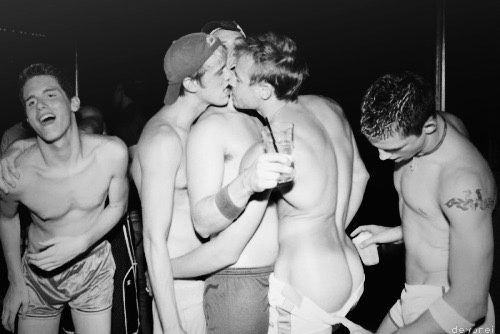
Stonewall happened in a cultural moment when the world was already in upheaval: the Civil Rights Movement, the Women’s Liberation Movement, and anti-Vietnam War protests were reshaping the American political landscape. The gay rights movement joined that chorus—and for a time, especially into the 1970s, it began to sing with joy and newfound sexual freedom. The 1970s became a decade of exploration and visibility. Gay men in particular embraced a new culture of liberation: discos pulsed with rhythm and energy, bathhouses became places not of shame but of connection, and artists, writers, and activists pushed boundaries in the public eye.
But the joy of that revolution would come under brutal siege in the 1980s with the emergence of the AIDS crisis. As friends and lovers died in staggering numbers, the government remained indifferent, slow, and cruelly silent. The queer community rallied again—not just to mourn, but to fight. Groups like ACT UP and the Gay Men’s Health Crisis forced a reluctant nation to see us, to acknowledge our grief and fury. Stonewall had taught us how to protest. AIDS taught us how to organize for our lives.
And still, here we are.
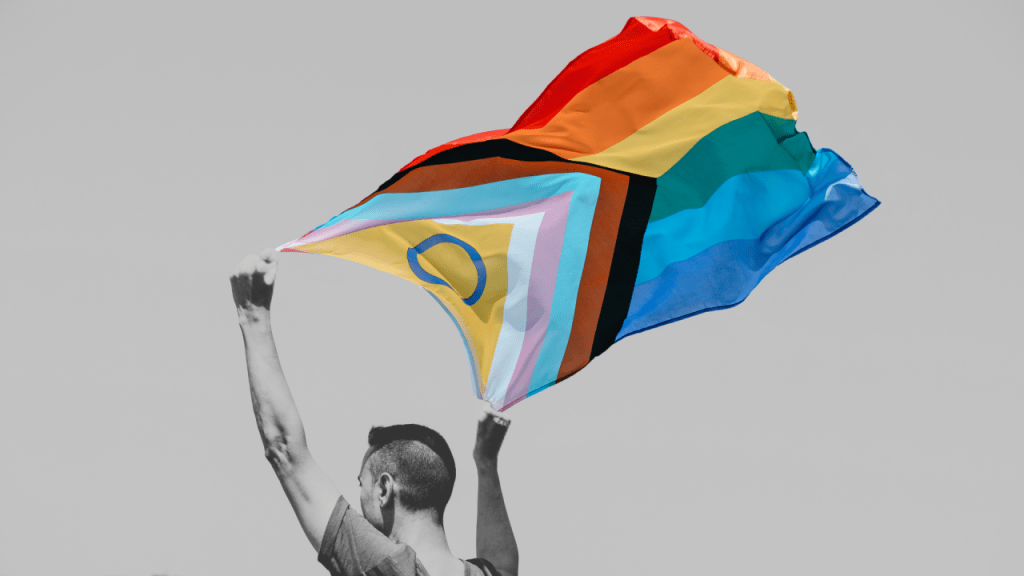
Today, we celebrate Pride with parades, with community, and yes, with joy—but we cannot forget the riot that began it. Nor can we ignore the threats we continue to face. In this current political climate, with a Republican administration openly hostile to LGBTQ+ rights, we are watching hard-won freedoms come under attack. Trans healthcare, anti-discrimination protections, even the right to teach honest history in schools are being stripped away state by state. Pride is not just a celebration—it is a protest. A defiance. A promise that we will not go back.
The Stonewall Riots were not polished, pretty, or corporatized. They were angry, spontaneous, and necessary. We owe our thanks to those brave souls who threw bricks, linked arms, and stood their ground. And we honor them best not just with rainbows—but with resistance.
So wear that shirt with pride: The First Pride Was a Riot. And remember why.
🏳️🌈⸻🏳️🌈
What does Pride mean to you this year? How do you honor the history while living in the now? Share your reflections in the comments below.




Authors
Recent Comments
Mark Douglas Budka on Gates noisilycool3bc985058… on Pic of the Day Anonymous on Sleeping In Joe on Pic of the Day noisilycool3bc985058… on Pic of the Day Top Posts & Pages




Amazon Associate

As an Amazon Associate I earn from qualifying purchases. So, if you click on a link that takes you to Amazon.com, I may earn a commission.
Trust me, it isn’t much, but every little bit helps.

 Joe
Joe


 The Closet Professor