

Monthly Archives: January 2026
Stopping by Woods on a Snowy Evening

Stopping by Woods on a Snowy Evening
By Robert Frost
Whose woods these are I think I know.
His house is in the village though;
He will not see me stopping here
To watch his woods fill up with snow.
My little horse must think it queer
To stop without a farmhouse near
Between the woods and frozen lake
The darkest evening of the year.
He gives his harness bells a shake
To ask if there is some mistake.
The only other sound’s the sweep
Of easy wind and downy flake.
The woods are lovely, dark and deep.
But I have promises to keep,
And miles to go before I sleep,
And miles to go before I sleep.
About the Poem
There are poems that announce themselves loudly, and then there are poems that arrive quietly—almost unnoticed—yet linger with us long after we’ve finished reading. “Stopping by Woods on a Snowy Evening” is very much the latter. It asks us to slow down, to pause, to notice the beauty of stillness in a world that rarely allows it.
This short poem has become one of the most beloved in American literature not because it explains itself, but because it leaves space—for reflection, longing, and a kind of gentle ache that feels deeply human.
Published in 1923, “Stopping by Woods on a Snowy Evening” describes a speaker who pauses during a winter journey to watch snow fall silently in the woods. The moment is hushed, intimate, almost secret. There is no audience, no obligation—just the speaker, the horse, and the softly filling woods.
What makes the poem so powerful is its tension. The woods are described as “lovely, dark and deep”—inviting, restful, and perhaps a little dangerous. They offer escape, quiet, even surrender. But the speaker does not remain. Instead, the poem ends with the now-famous lines:
But I have promises to keep,
And miles to go before I sleep.
Those lines can be read many ways. On the surface, they suggest responsibility and duty. Beneath that, though, is a more complicated emotional truth: the recognition that rest and peace are desirable, but not always possible—not yet.
For many readers, the poem becomes a meditation on temptation, obligation, exhaustion, or even mortality. It doesn’t resolve those tensions. It simply names them—and then moves on.
For LGBTQ+ readers, “Stopping by Woods on a Snowy Evening” can resonate in particularly meaningful ways.
The woods—beautiful, hidden, and private—can feel like a metaphor for inner truth or unspoken desire. They are a place away from watchful eyes, where one can pause and simply be. For those who have lived parts of their lives unseen or unacknowledged, that moment of stopping can feel deeply familiar.
And yet, the poem does not allow the speaker to stay. There are promises to keep. Expectations. Roles. Responsibilities. Many LGBTQ+ people know this tension well—the pull between authenticity and obligation, between rest and resilience, between longing and survival.
What’s striking, though, is that the poem does not judge the pause. The stopping itself is not framed as wrong. It is necessary. It is human. The speaker is allowed that moment of beauty and stillness before continuing on.
In that sense, the poem offers a quiet kind of grace. It reminds us that even when we must keep moving, even when the world demands our labor and endurance, we are still allowed moments of rest, reflection, and beauty. We are allowed to stop—if only briefly—and acknowledge what calls to us from within.
Sometimes faith, poetry, and queerness meet not in declarations, but in silence. In the hush of falling snow. In a pause on a dark road. In a recognition that the journey is long—and that rest, when it comes, is holy.
And still, gently, we go on.
About the Poet
Robert Frost is often remembered as a poet of rural New England, plain speech, and traditional forms. That reputation, while accurate, can also be misleading. Frost’s work is rarely simple. Beneath its conversational tone lie psychological depth, ambiguity, and emotional restraint.
While Frost did not publicly identify as queer, modern readers and scholars have long noted the emotional intensity of his male friendships and the recurring themes of solitude, secrecy, and inner division in his work. As with many writers of his era, what could not be openly named often found expression indirectly—through landscape, silence, and restraint.
Frost lived much of his life balancing contradictions: public success and private grief, traditional forms and modern anxieties, belonging and isolation. He experienced profound personal loss, including the deaths of several children and ongoing struggles with depression within his family.

Back to Reality (and Back to the Cold)

Today is my first day back at work after being off for the past two weeks for the holiday break. The museum and campus have been closed since Christmas Eve, and I also took the entire week of Christmas off to go home to Alabama. It’s been a rare stretch of unbroken rest—especially at night. For two weeks, I slept deeply and easily, the kind of sleep that makes you forget how precious it actually is.
Of course, when I really needed a good night’s sleep, it didn’t happen.
I went to bed early last night, partly because I’ve had a severe migraine for three nights in a row. I fell asleep quickly, but around 1 a.m., a strange noise woke me up. Normally, I’d assume it was Isabella on a feline overnight prowl, but she was sound asleep on top of me—and the noise startled her awake too. It sounded like a woodpecker in slow motion, or something cracking through ice. I looked out the window but couldn’t see anything. After a trip to the bathroom, I went back to bed, but the noise continued, and sleep came only in fragments for the rest of the night.
That made it especially hard to get up when Isabella began her determined campaign at 4 a.m. to remind me that breakfast exists. I managed to fend her off until about 5:15, but anyone with a cat knows that once you’re half-awake like that, real sleep is pretty much over. I spent that time suspended in that strange in-between state—neither fully asleep nor fully awake—aware that the day ahead was going to be a bit of a slog.
It’s currently –1 degree outside, which means the car will take some convincing before it’s warm enough to be tolerable. To add to the ambiance, I was notified yesterday that the heat in the museum hasn’t been working properly and it was hovering around 60 degrees. The system is controlled from another building, and while facilities has been notified, even if something has been adjusted, it takes time for a large, cold building to warm up—especially when it’s this cold outside.
Thankfully, I have an illicit little space heater under my desk, so I should at least be able to keep my office reasonably warm. Today will likely be spent catching up on emails, untangling the loose ends that always pile up during time away, and easing myself back into the rhythm of work.
It’s not the most graceful return, but it’s a return nonetheless. Some days are about productivity. Others are about endurance. Today feels firmly in the latter category.

Waking to the Light

“The light shines in the darkness, and the darkness did not overcome it.”
— John 1:5
There is something tender about the first morning of a new year. The world has not changed overnight, and yet everything feels slightly quieter—like the pause just before we open our eyes. A new year does not arrive with fanfare so much as with light: soft at first, steady, and persistent.
John’s Gospel opens not with commands or expectations, but with illumination. The light shines in the darkness, John tells us, and the darkness does not defeat it. Light does not argue with the dark; it simply appears. It reveals what is already there. As we wake to a new year, we are not asked to banish every shadow—only to notice that light is already present.
For many LGBTQ+ people of faith, waking up has not always felt safe. Some of us learned early to keep parts of ourselves hidden, to move carefully through the world, half-awake and half-guarded. And yet the Gospel insists that God meets us not in denial or fear, but in revelation. Light, in John’s telling, is not exposure meant to harm—it is truth meant to heal.
Luke’s Gospel offers a quieter image of beginning. On the road to Emmaus, two disciples walk together, confused and grieving, unsure of what comes next. Jesus joins them on the journey, though they do not recognize him at first. They walk, they talk, they tell their story—and only later do they realize they were never walking alone (Luke 24:13–16). Sometimes new beginnings do not feel like clarity. Sometimes they feel like movement—one step, then another—before understanding catches up.
The first Sunday of a new year does not demand certainty. It invites attentiveness. It invites us to notice who is walking beside us, even when we do not yet have the language for what is unfolding.
And then, in John’s Gospel again, we hear the words Jesus speaks to frightened disciples huddled behind locked doors: “Peace be with you” (John 20:19). These are not words spoken to people who have it all together. They are spoken into fear, into uncertainty, into a room full of people unsure how to go on. Peace, here, is not the absence of trouble—it is the presence of Christ.
As we wake to a new year, peace does not mean that everything will be easy or resolved. It means that we are not abandoned to face it alone.
So open your eyes slowly. Let the light reach you where you are. Take the next step on the road in front of you, even if you do not yet see the destination. And receive the quiet promise spoken at the threshold of this year: peace is already here.
May this new year find you waking—not to pressure or fear—but to light, to companionship, and to a peace that meets you exactly as you are.
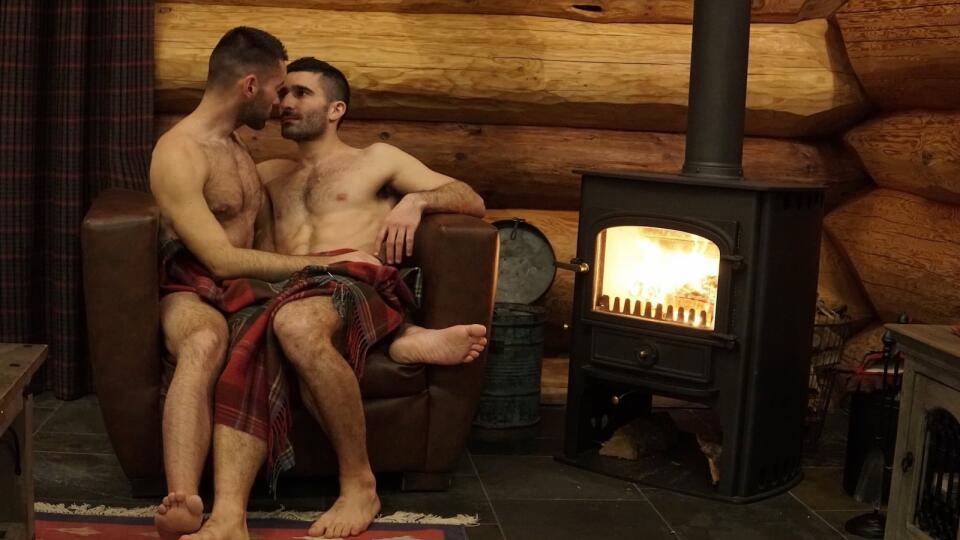
Moment of Zen: Fireside

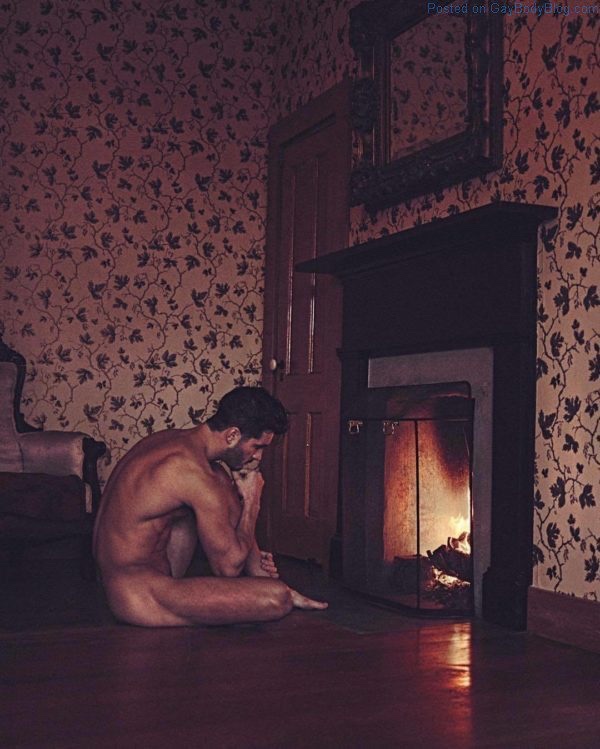
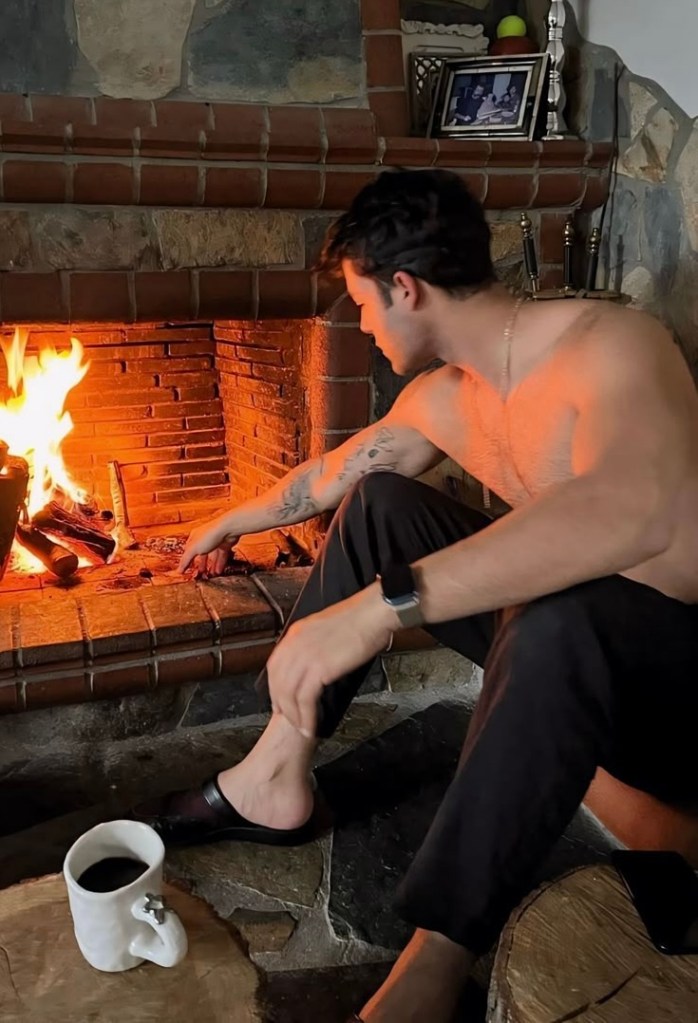
It’s been bitterly cold here lately. Last night, my apartment felt especially unforgiving—one of those nights when no number of layers quite does the trick. I found myself wishing I were curled up in front of a fireplace, mug of hot chocolate in hand, wrapped in a man’s arms. But at this moment, honestly, just the fire would be enough.






Nothing Urgent

January 2 has always felt more honest to me than January 1. Usually though, it means returning to work. Thankfully, with today being a Friday, that isn’t the case.
The first day of the year comes with noise—fireworks, declarations, promises shouted into the dark. January 2 arrives more softly. The calendar has turned, but life hasn’t quite rushed back in yet.
I’m easing into the morning with a cup of coffee, enjoying the stillness before the day really begins. Now that Isabella is fed and has settled back into her post-breakfast routine, I’m seriously considering returning to my warm bed for a little while longer. It’s currently 0 degrees outside my window, and that feels like a perfectly reasonable plan.
I’m not feeling the need for big resolutions or sweeping declarations. Right now, this moment—quiet, warm, and unhurried—feels like enough. The year is new, but there’s no rush to sprint into it.
If anything, I’m reminding myself that beginning gently is still beginning. Rest counts. Taking things one day at a time counts. Listening to what your body and mind need—especially in the depths of winter—counts.
So if today feels slow or unremarkable, that’s okay. January 2 doesn’t demand anything heroic of us. Sometimes the best way to welcome a new year is with a warm bed, a fed cat, and the knowledge that there’s time.
I hope your year is starting in whatever way you need it to.


Authors
Recent Comments
vandycolt on Feet, Faith, and 4 a.m. noisilycool3bc985058… on Feet, Faith, and 4 a.m. noisilycool3bc985058… on Pic of the Day Joe on Pic of the Day vandycolt on Pic of the Day Top Posts & Pages



Amazon Associate

As an Amazon Associate I earn from qualifying purchases. So, if you click on a link that takes you to Amazon.com, I may earn a commission.
Trust me, it isn’t much, but every little bit helps.

 Joe
Joe


 The Closet Professor