Author Archives: Joe

About Joe

Unknown's avatar
I began my life in the South and for five years lived as a closeted teacher, but am now making a new life for myself as an oral historian in New England. I think my life will work out the way it was always meant to be. That doesn't mean there won't be ups and downs; that's all part of life. It means I just have to be patient. I feel like October 7, 2015 is my new birthday. It's a beginning filled with great hope. It's a second chance to live my life…not anyone else's. My profile picture is "David and Me," 2001 painting by artist Steve Walker. It happens to be one of my favorite modern gay art pieces.

Heated Rivalry Scored… Repeatedly

Every now and then, a book series grabs hold of me so completely that I find myself staying up far too late because I have to read just one more chapter. That’s exactly what happened when I picked up Rachel Reid’s Game Changers series—starting with the first two books, Game Changer and Heated Rivalry. I’ll be honest: hockey romances are not usually my favorite subgenre of m/m romance. But these books completely won me over. They’re steamy, full of heart, and emotionally rich in all the best ways. They’re the kind of novels that make you sigh one moment and fan yourself the next.

If you haven’t read Rachel Reid before, she’s a Canadian author widely loved for her blend of erotic heat and emotional tenderness. Her Game Changers novels focus on professional hockey players navigating fame, pressure, identity, and love—with characters so well developed that you can’t help falling for them. Reid has become one of the standout voices in contemporary LGBTQ+ romance, and it’s easy to see why.

It was actually the new television adaptation, Heated Rivalry, that convinced me to pick up the books. I checked out the series when it premiered and immediately fell for its production quality—and let’s be honest, the steaminess. The adaptation stays remarkably close to the novels, even lifting some dialogue straight from the page. Episode three, which adapts Game Changer, deviates more (condensing an entire book into 50 minutes will do that), but it still captures the heart of the story. And yes, the sex scenes absolutely live up to the hype.

After devouring the first two books, I’m now reading Tough Guy, book three. I’m enjoying it, even if it isn’t hooking me quite as deeply as the first two. I’m looking forward to continuing the series, especially books four and five (Common Goal and Role Model). But the book I’m especially eager to reach is the sixth, The Long Game, which returns to the couple from Heated Rivalry and continues their story. I’ve heard nothing but glowing praise.

One of the joys of the TV adaptation is its casting. Shane Hollander is played by Hudson William, and Ilya Rozanov is portrayed by Connor Storrie. Their chemistry is electric, and the show gives them the time and space to build a believable, aching, deeply sensual connection. François Arnaud, who plays Scott Hunter, is openly bisexual and has long been a visible voice for LGBTQ+ representation. And Robbie G.K., who plays the impossibly cute Kip Grady, steals nearly every scene he’s in. There isn’t much publicly available about his personal life aside from the fact that he appears to be single, but he brings a joyful, queer-coded energy to the role that fans immediately latch onto.

The show is also notable for its broader LGBTQ+ representation behind the scenes. Reporting from Out highlights that multiple queer actors and creators are involved in the project, helping shape a series that treats queer romance with sincerity, playfulness, respect, and heat. It’s refreshing to see a production that doesn’t shy away from the eroticism of the source material while still leaning into its emotional beats.

If you enjoy sports romances, queer love stories, or simply beautifully crafted television, I highly recommend picking up Game Changer, Heated Rivalry, and the rest of the Game Changers series—and definitely give the TV adaptation a try. Even if hockey isn’t normally your thing, this series might just charm you the way it did me.

And honestly? It’s just a whole lot of fun.

The series debuted on Crave with a two-episode premiere on November 28, 2025, followed by weekly episodes, with the finale airing on December 26. In advance of the program’s television premiere, the first episode received a preview screening at the 2025 Image+Nation festival on November 23, 2025. The series was released by HBO Max in the United States and Australia, Sky in New Zealand, and Movistar Plus+ in Spain.



Pic of the Day


Walk in the Light

“I am the light of the world. Whoever follows me will never walk in darkness but will have the light of life.”

—John 8:12

Jesus’ declaration that He is the light of the world is more than a statement of identity—it is an invitation. His light is not harsh or exposing, but comforting and revealing, helping us see the truth of who we are in God’s love. When Christ shines into our lives, He illuminates not only the path before us but the very goodness God has planted within us.

As LGBTQ+ Christians, many of us know intimately what darkness feels like. We’ve endured seasons when rejection or silence made the world seem shadowed. Yet even there, we can echo the assurance of Psalm 23:4: “Even though I walk through the valley of the shadow of death, I will fear no evil, for You are with me.” Darkness may surround us at times, but it never defines the journey. God walks with us, and Christ’s light guides us through valleys that once felt unending.

What makes Jesus’ words even more extraordinary is that He shares this light with us. In the Sermon on the Mount, He tells His followers, “You are the light of the world,” affirming that we bear His radiance in our lives. He goes on to say that “a city set on a hill cannot be hidden,” reminding us that God never intended for us to shrink or conceal our true selves. Our gifts, our love, our queerness—these are not shadows to hide but reflections of the beauty God has woven into us.

When Jesus urges us to let our light shine before others, He invites us into authenticity rather than performance. Our compassion, courage, honesty, and resilience become expressions of the divine light entrusted to us. Even in difficult moments, when we choose hope over despair or gentleness over anger, we shine in ways that help others glimpse God’s presence.

And the Gospel of John offers a sustaining promise: “The light shines in the darkness, and the darkness has not overcome it.” Whatever shadows we face—whether from others or within ourselves—Christ’s light remains steady and untouchable. Because it lives within us, we, too, cannot be extinguished.

As we move through this Advent season, we remember that God has always used light to guide people toward hope. Just as the Star of Bethlehem led the magi to the Christ child, that same divine light still beckons us today—shining in our lives, shining through our love, and leading us ever closer to the heart of God. May you walk in that light with confidence, knowing it has already claimed you, warmed you, and made you radiant.


Pic of the Day


Moment of Zen: White Briefs

There’s something timeless and undeniably sexy about a man in just a pair of white briefs.


Pic of the Day


A Dream Interrupted (By a Diva in Fur)

Isabella can be a bit of a needy diva at times—lovable, adorable, and absolutely convinced that my entire existence revolves around her schedule. This morning she woke me up just before 5 a.m., demanding breakfast with all the urgency of someone who had not been fed in minutes. I obliged, of course, and then crawled straight back into bed. I was originally supposed to be in the office this morning, but my class got rescheduled, which means a work-from-home day for me.

I fell asleep again almost instantly and drifted into the loveliest dream. In it, I was snuggled up next to a very handsome man—the kind of hot guy who makes your subconscious say, “Yes, let’s stay here.” He was straight in the dream, but we were sharing a bed anyway. Somehow the night had ended with us in nothing but our underwear, my head on his bare chest, his arm around me, the whole moment soft and warm and unexpectedly intimate.

When we woke up like that, dream-me stayed blissfully half asleep until he leaned down, kissed the top of my head, and murmured, “Good morning, lazy bones.” I made one of those half-asleep groans that means, I refuse to move, and he just pulled me closer. We drifted back to sleep like that—sweet, slow, and yes, very arousing. I was rock hard in the dream… and in real life, too. It was that good.

But of course, Isabella does not approve of me going back to bed once she has declared morning officially underway. After her first breakfast, she decided she needed my attention—or, more accurately, a second breakfast. Instead of enjoying more of my dream, I was summoned back to consciousness by a diva cat with very firm beliefs about my responsibilities.

And now? Isabella is curled up in the corner of the living room sound asleep, looking perfectly content, while I’m sitting on the couch writing this post.

Sigh.

Sometimes I wonder who’s actually in charge around here—but I already know the answer.


Pic of the Day


The Rise and Fall of Toronto’s Alexander Wood Statue

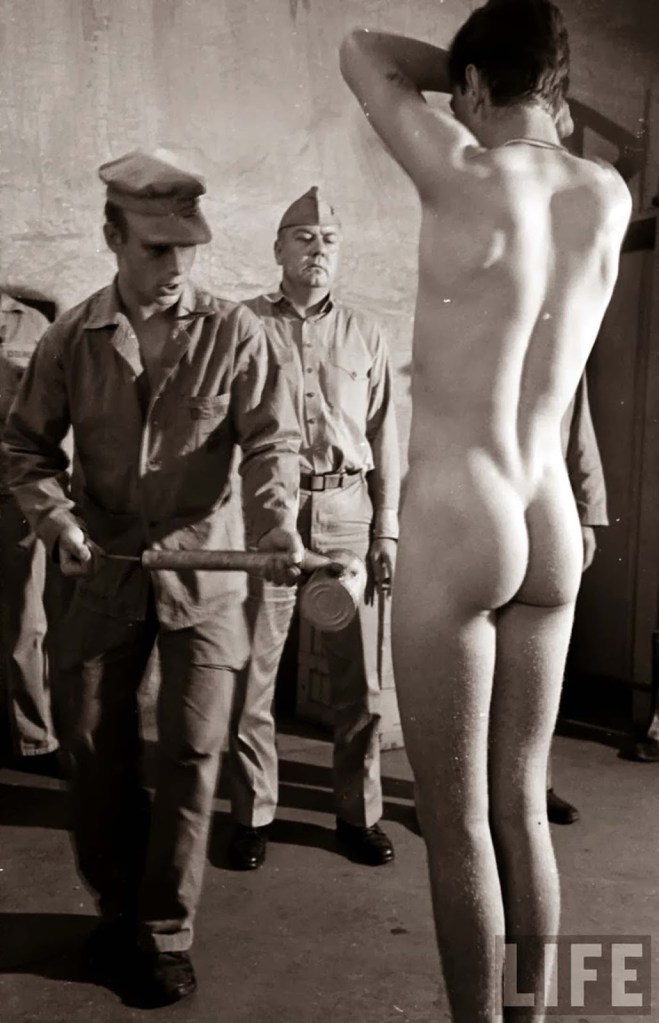
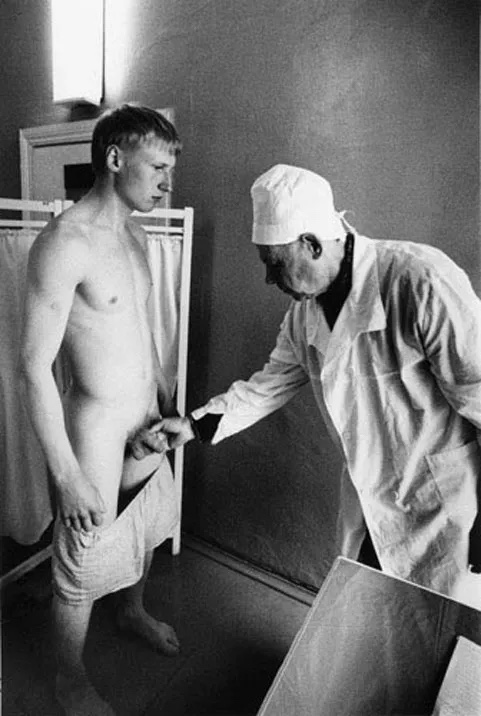
Yesterday, while reading, I came across a reference that stopped me in my tracks: gay men in Toronto rubbing the bare butt on a statue for luck. As both a gay man and a museum person, that kind of detail lights up every curiosity circuit in my brain. The scene also reminded me of the old military practice of the “short arm inspection”—the venereal disease check that required soldiers to line up and present themselves for examination. Little moments of sexualized institutional history like that have always existed in the margins, half whispered but universally known.

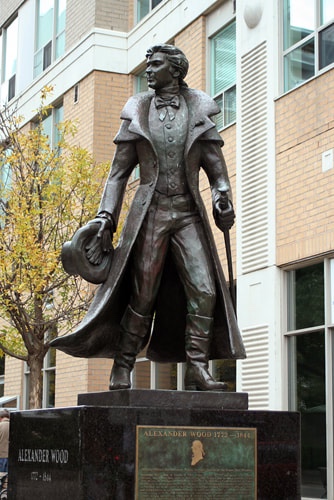
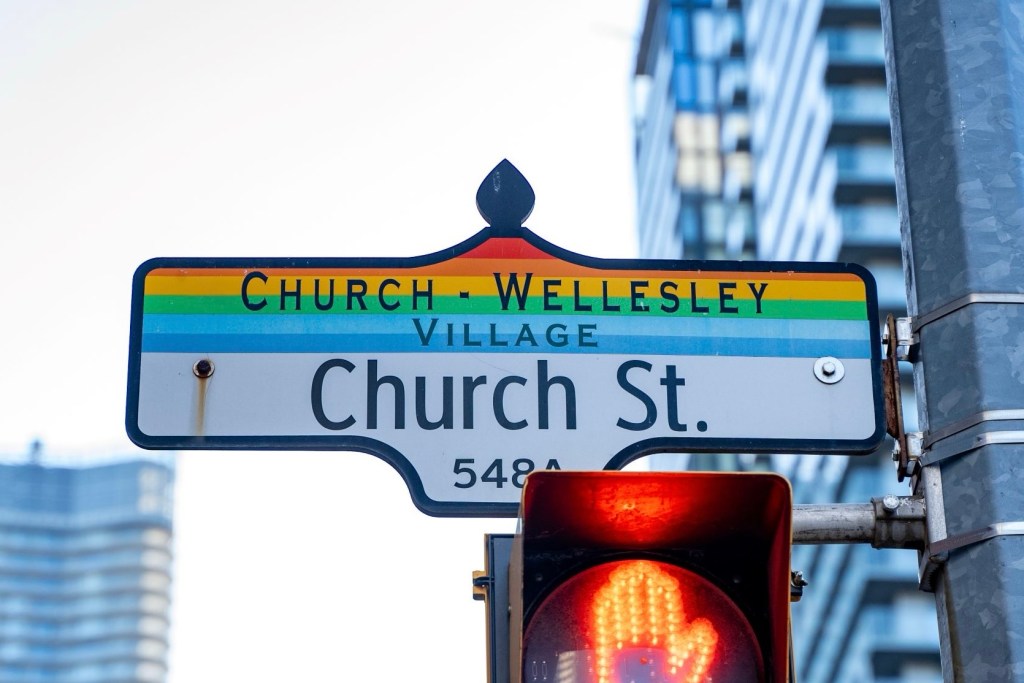
And so it seemed fitting that the statue in question was the Alexander Wood monument that once stood in Toronto’s Church and Wellesley Village—a monument rooted in its own scandal of inspection, accusation, and rumor.

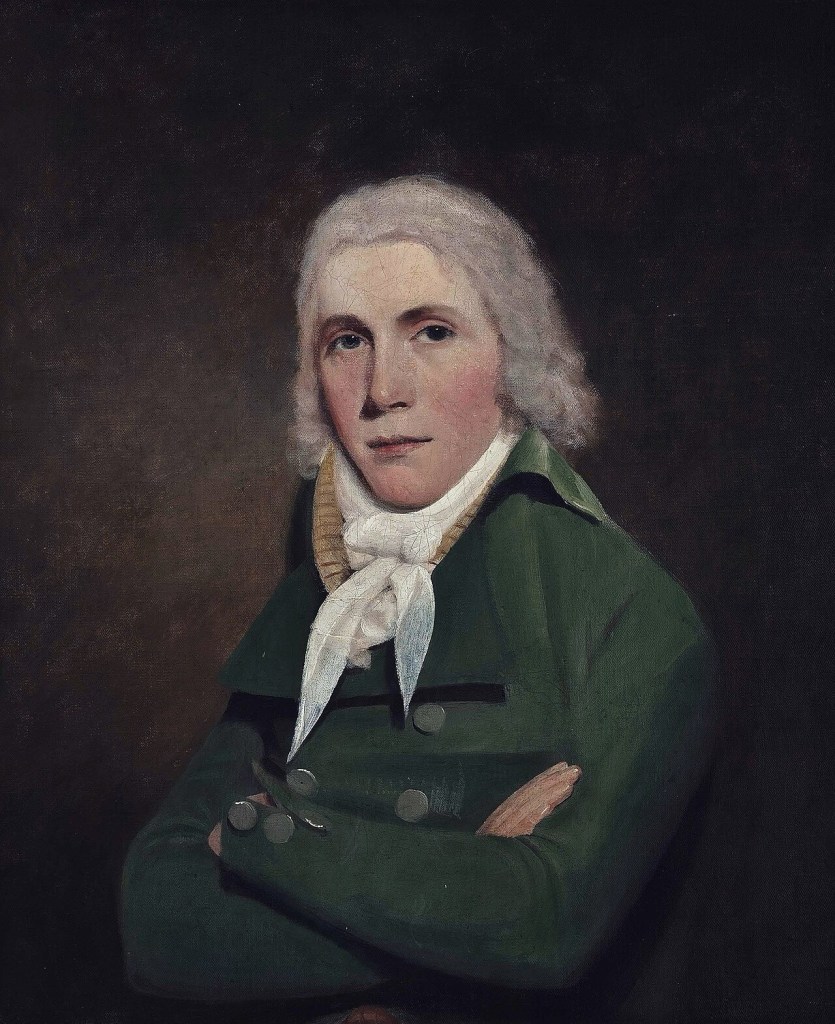
Alexander Wood (1772–1844) was a Scottish merchant and magistrate who became a prominent figure in early Toronto (then York). He served in several civic roles and was involved in shaping the young colony. But today, he’s remembered primarily for a scandal that forever marked his reputation—and later, queer history.

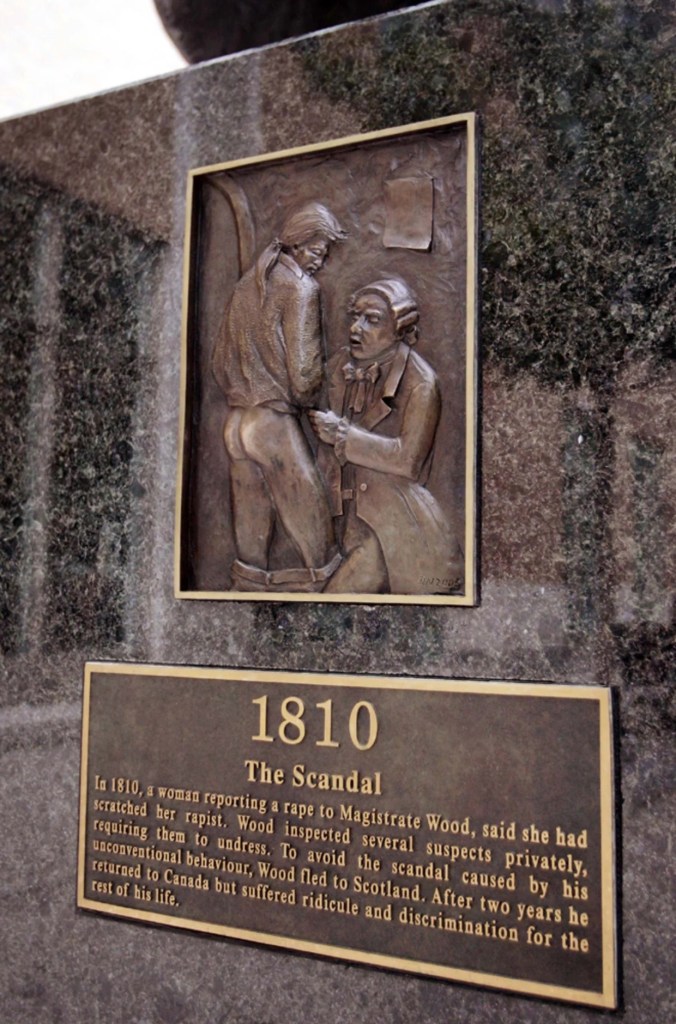
In 1810, a young woman named Miss Bailey claimed she had been sexually assaulted. Her description was vague, but she insisted she could identify the assailant by marks on his genitals.

As a magistrate, Wood investigated the case, questioning several male suspects. Historical accounts state that he personally inspected their genitals to look for corroborating marks.

This highly unusual method sparked gossip and ridicule.

What makes the incident even murkier is that many historians doubt the woman’s existence altogether. Some believe “Magdalena Nagle” may have been invented—either by Wood, his rivals, or the community at large. The absence of solid records fueled speculation in his own time and afterwards.

Regardless, the scandal led to public humiliation and accusations—spoken and unspoken—about Wood’s sexuality. Though never charged with wrongdoing, he fled temporarily to Scotland before quietly returning to his life in Upper Canada.

In 2005, Toronto’s LGBTQ+ community sought to commemorate queer history in public space. Although Wood’s sexual orientation is not documented, many queer historians reclaimed him as a possible queer ancestor—a man punished socially for perceived sexual deviance long before there was a vocabulary to defend himself.

Thus the community commissioned a statue honoring both his life and his place in queer memory.

lThe bronze sculpture, created by Del Newbigging, depicted Wood in early-19th-century attire—not a military uniform, but the formal dress of a gentleman of his era. His pose was confident, with one hand tucked behind him and the other holding a walking stick.

At the base of the statue was a plaque showing an engraved tableau: a young militia soldier with his pants partially lowered, presenting his bare buttocks for Wood’s infamous inspection. That image wasn’t part of the main statue—it was the plaque that made the scandal visually explicit.

And then came the charmingly queer detail: Newbigging openly stated that he modeled the soldier’s butt on the backside of his own partner.

A gift of love, art, and cheeky community pride.

The Village quickly embraced the statue with a sense of humor. Gay men began rubbing the bare butt on the plaque for luck, and as is always the case with bronze, repeated contact polished the metal to a gleaming shine. What started as a joke became a familiar ritual—a flirtatious, communal wink at queer history.

Placed at the entrance of Church and Wellesley, the statue served as a landmark for Toronto’s queer community. It stood in a district deeply associated with LGBTQ+ identity, activism, and resilience, marking the neighborhood with a figure reclaimed from historical shaming.

For many, it symbolized both pride and solidarity—a public monument that didn’t hide the queer interpretation but made it impossible to ignore.

Over time, the statue’s presence became more complicated. Some critiques focused on its campy sexualization or the historical uncertainty of Wood’s queerness. But a more serious criticism emerged:

Alexander Wood served on the Society for Converting and Civilizing the Indians and Propagating the Gospel Among Destitute Settlers in Upper Canada—an organization whose mission and practices were part of the colonial machinery that later contributed to the development of the Indian residential school system in Canada.

For Indigenous activists and allies, Wood’s connection to early assimilationist institutions made him an inappropriate figure for public commemoration. This dimension of his legacy was long overlooked but gained prominence in recent years as Canada confronted the deep harms of residential schools.

The statue thus became not only a queer symbol but also a site of contested memory.

When the site was sold to a condominium developer in 2022, community groups requested that the statue be relocated rather than removed. But issues of ownership, cost, and ongoing controversy complicated the process.

The statue was taken down quietly.

Placed in storage.

And ultimately destroyed—a loss that felt abrupt and painful to those who viewed it as a cornerstone of Village identity.

The Alexander Wood statue existed at the crossroads of queer reclamation, artistic expression, colonial history, and community identity. Its destruction leaves a literal void in the Village streetscape—a reminder that public memory is fragile and often shaped by forces beyond our control.

The polished bronze butt on the plaque may be gone, but the story remains:

of queer history reclaimed, contested, celebrated, and sometimes lost

And maybe that is the nature of queer memory itself—surviving in the stories we continue to tell.


Pic of the Day