
I do not want to go to work today. I woke up with a bit of a migraine and would have preferred to stay in bed. However, I have a few things I have to do this morning, but I may leave early if my migraine doesn’t improve.

I do not want to go to work today. I woke up with a bit of a migraine and would have preferred to stay in bed. However, I have a few things I have to do this morning, but I may leave early if my migraine doesn’t improve.
“For since the creation of the world God’s invisible qualities—his eternal power and divine nature—have been clearly seen, being understood from what has been made, so that people are without excuse.”
— Romans 1:20 (NIV)
I have never understood how someone could look around at the wonders of this world—the towering mountains, the delicate pattern of a snowflake, the mysterious depths of the oceans—and think, “Nothing but natural evolution is involved in the creation of all this beauty.” It seems impossible to me that all of this could be the result of mere happenstance. From the moment I was first aware of the world’s complexity and grandeur, I have believed that God’s hand was present in it all, guiding creation with care and intention.
I believe in evolution. There is ample evidence of it, and I do not believe the world is only four thousand years old, as strict creationists insist. Scientific discovery does not diminish my faith; instead, it enlarges my awe. To me, evolution is not a threat to God’s existence—it is a testament to His brilliance. A world that adapts, grows, and changes is far more magnificent than one that appeared rigid and finished. Creation was not a single act frozen in time, but a symphony, still unfolding under the quiet direction of a divine Composer.
And yet, my faith has not been without struggles. There have been seasons where I asked painful questions: Why, God?Why is there pain written into the bodies of newborns? Why are some born to suffer? Why was I given a body and a heart that do not always align with the world’s easy expectations? And perhaps most piercingly—why did You make me gay, when life would have been simpler, smoother, quieter if You had not?
In those moments of questioning, it would be easy to believe that creation was left adrift, as some philosophies suggest. During the Enlightenment, many embraced deism, a belief that God set the universe in motion like a master clockmaker and then stepped back, no longer involved in the daily unfolding of events. Many of the United States’ Founding Fathers were deists, believing that God could be known through nature and reason but doubting divine intervention in human affairs.
I understand the temptation of that view. And in part, I agree: I believe God set the laws of the universe into motion with extraordinary wisdom and creativity. Yet unlike the deists, I believe He still intervenes—not always, not predictably, but lovingly and purposefully. He has not abandoned His creation. He has not abandoned me.
When my heart wavers, I turn again to the promises written in Scripture. I cling to the words of Jeremiah 29:11: “For I know the plans I have for you,” declares the Lord, “plans to prosper you and not to harm you, plans to give you hope and a future.”
I am not a mistake. You are not a mistake. We are part of a creation that, though marred by brokenness and mystery, still sings of a Creator whose fingerprints are everywhere. When I look inward, when I look outward, I see Him. His eternal power and divine nature have been clearly seen—from the beginning until now—and though I do not understand all His ways, I trust that His plan is full of hope, even when the path is hard.Today, may we open our eyes and see anew. slow down. Look closely. Listen carefully. Let the marvels of creation draw you nearer to the Creator. May we look upon the world, and even our own complicated selves, and recognize the divine artistry that we are part of in this universe. In doing so, we honor Him—and we fulfill a yearning that has been written into our souls since the beginning of time.
I am using up one of my vacation days today and had hoped to sleep a bit later than usual. Isabella had a different agenda and, as usual, woke me up at an ungodly hour to feed her. I always have the intention of feeding her and going back to bed, but it rarely works out that way. Luckily, since I have the day off I can take a nap later if I want to.
I have a couple of small errands to run today and a few things to do around my apartment, but otherwise, I plan to either read or write. I’ve had a story developing in my head and I want to “put pen to paper” as the saying goes. It’s more a fun exercise for me than anything else, and I’m enjoying it: the research, the character development, and creating a story.
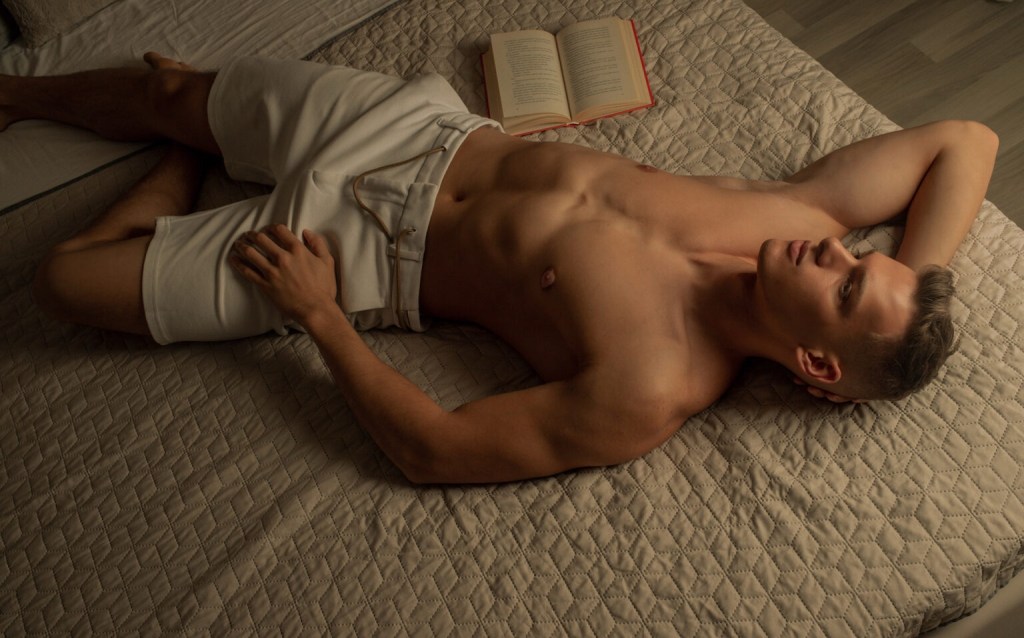
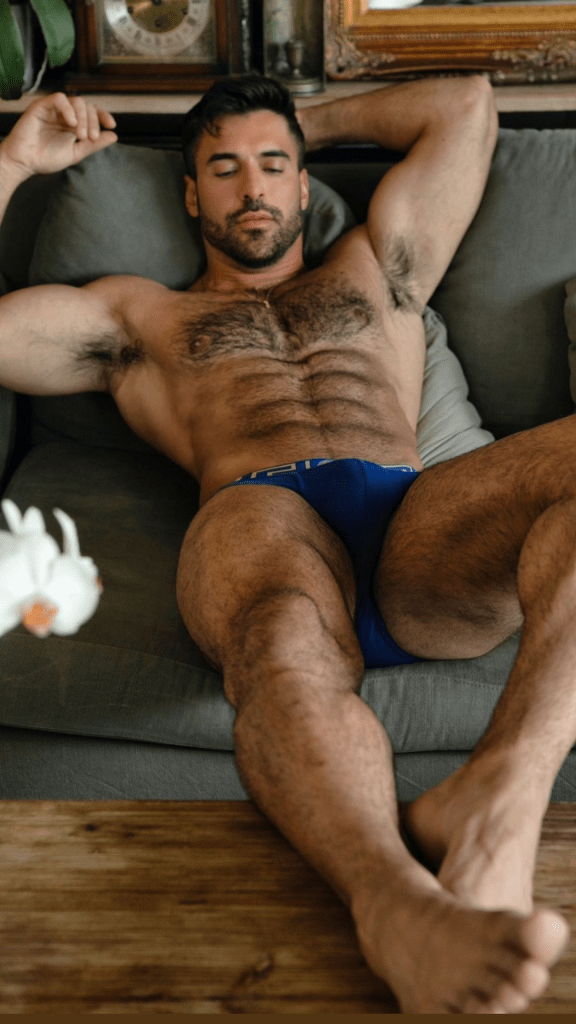
Anyway, I plan to do some reading, though I also have some grading that needs to be done before grades are due Tuesday. It is highly likely that at some point I’ll be like the guy in the picture:asleep on my bed with the book I was reading by my side.
Have a great weekend, everyone!
As I wrote this, I am watching the news and about to start getting ready for work. I took a vacation day yesterday trying to use up accumulated vacation time before I lose it at the end of the fiscal year (May 31). I will also be taking a vacation day tomorrow, but today I have to work. I’d have preferred to take my vacation days consecutively, but the schedules of my coworkers does not allow for that. I’m not thrilled about going to work today, but I have a few things I need to do, especially grading for my class before the semester ends. I’m a little behind in my grading.
If anyone was wondering about how the ultrasound went on Monday, they did find some stiffening of my liver which could cause problems later. My doctor said that there isn’t much to worry about at this point because it is still mild and reversible, but he wants to be aggressive in treatment and is sending me to a gastroenterologist. There is one locally, who my doctor says is the best around and has a specialty in liver disease. I don’t have an appointment yet to see this doctor, but my referral has been sent. I was initially very distressed at the results of the ultrasound, and I messaged my doctor asking how worried I should be. He called me and put my mind at ease. I am so fortunate to have a doctor who is so caring and one that I can talk to openly and honestly. I’ve had friendly doctors before, but no one I ever felt as comfortable and as confident with than I do my current doctor. Anyway, I’ll keep you posted when I know more. Right now, there isn’t much to tell.
And finally, here is your Isabella pic of the week. She let me sneak up on her while she was sleeping and take this picture. The first time I tried to take it, she looked up at me with an annoyed expression, but then, went back to sleep as cats so often do.

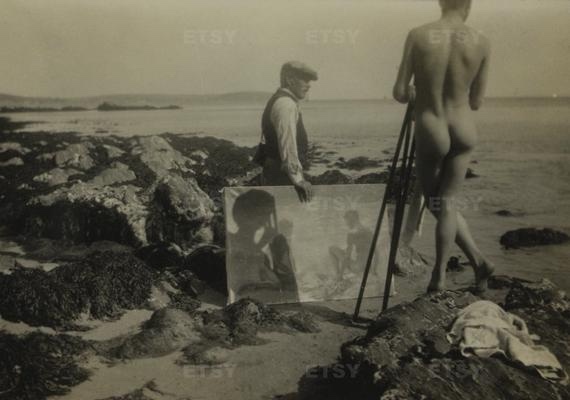
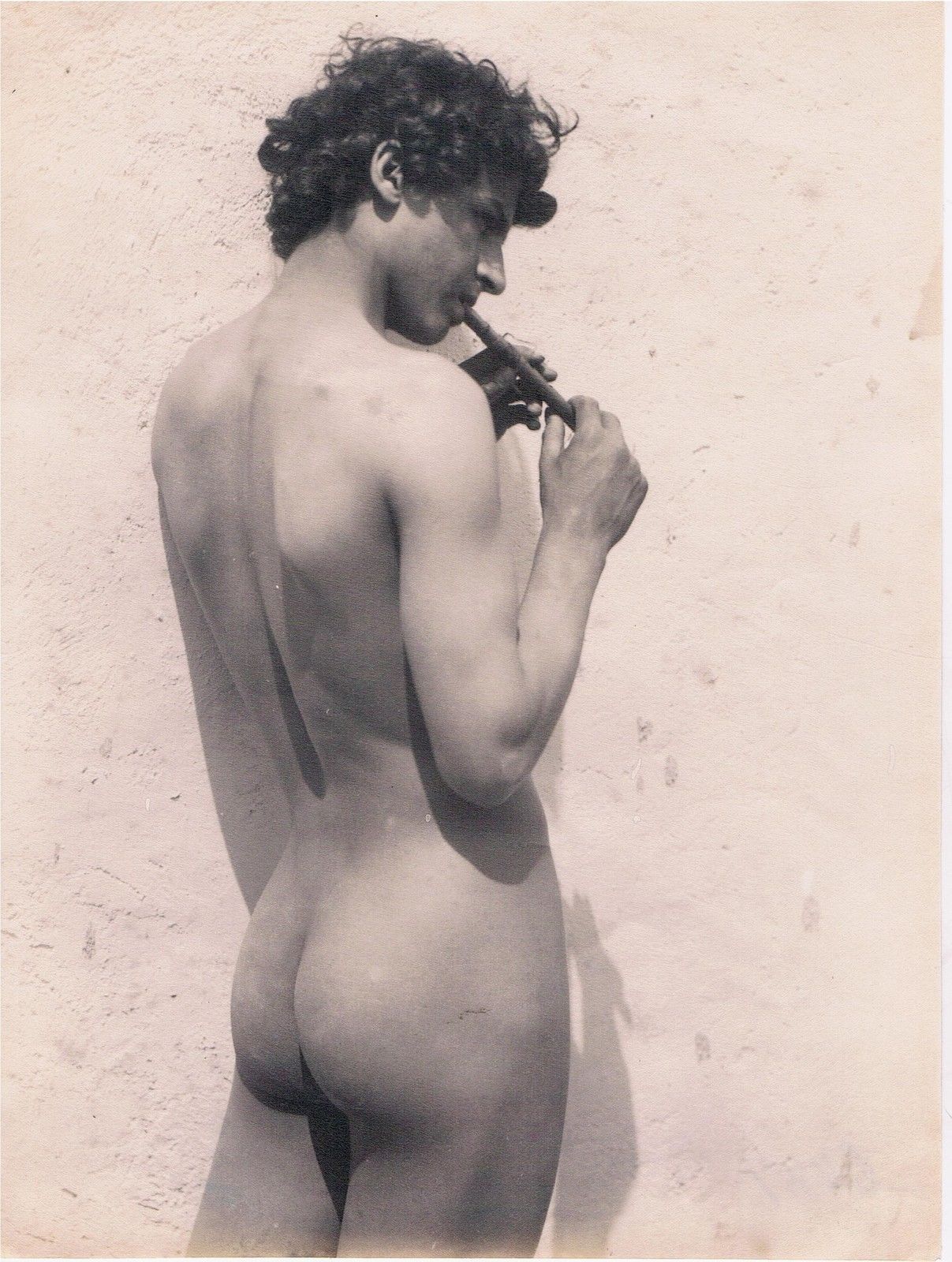
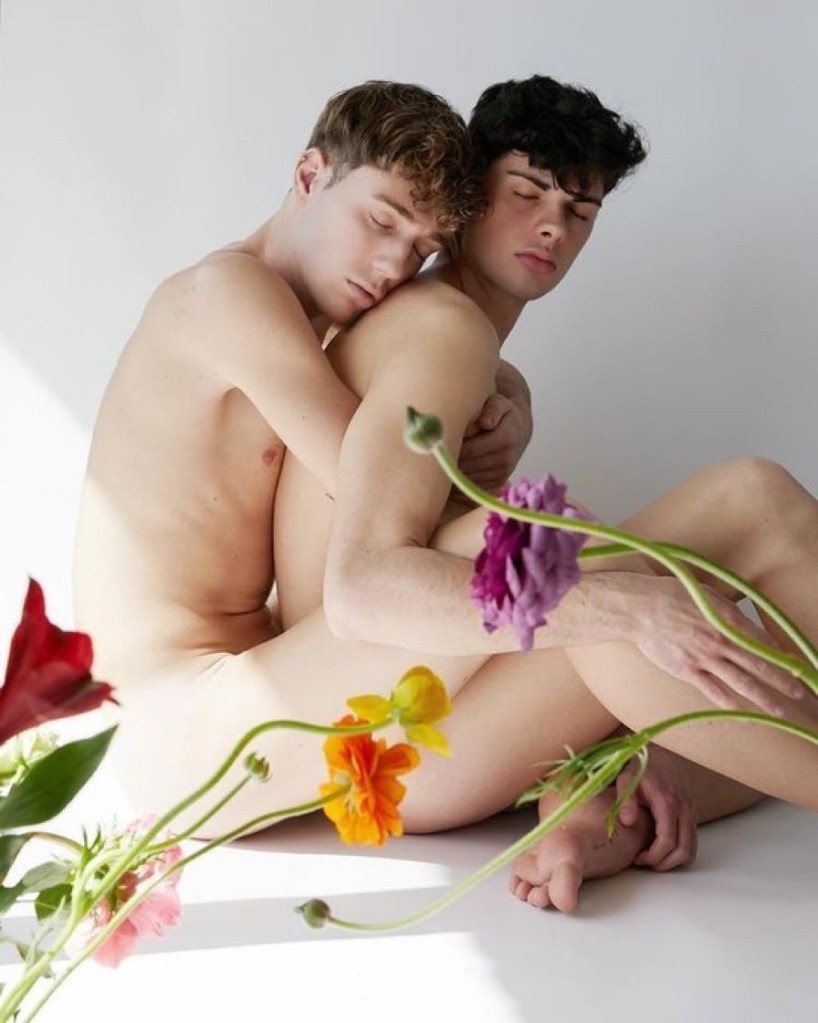
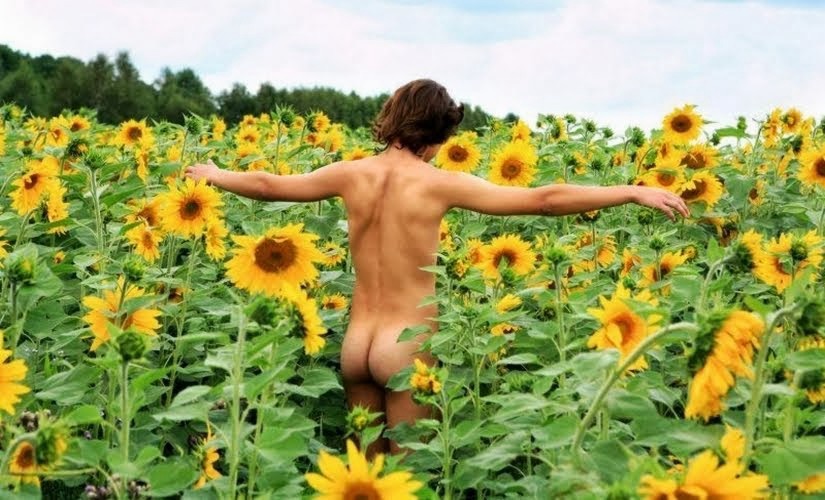
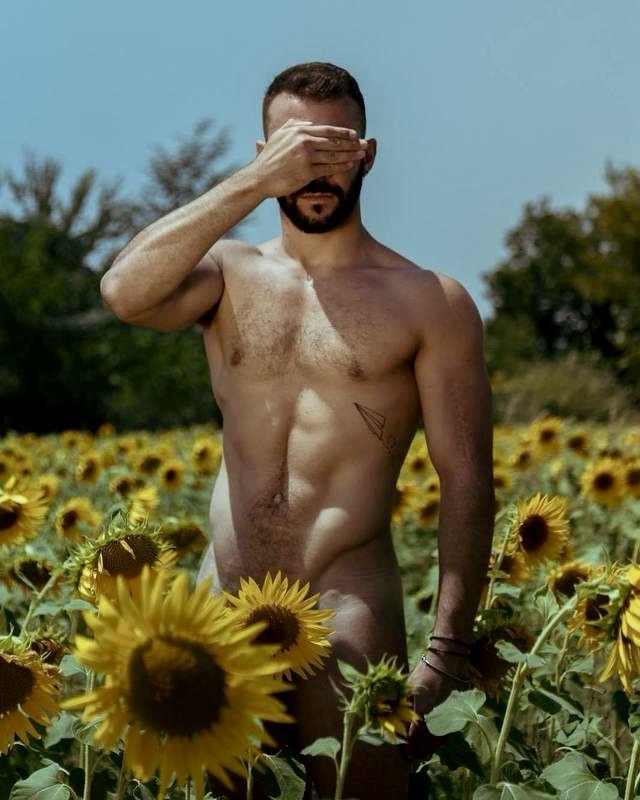
The photography of the male nude occupies a rich and multifaceted space in visual history. From its emergence in the 19th century to its entwinement with queer identity and sexual liberation in the 20th, the male nude has been variously categorized as artistic, erotic, art-erotic, or pornographic. These categories—though often overlapping—are shaped by aesthetic choices, social context, and the photographer’s intent. While definitions remain fluid, understanding their distinctions helps trace the evolution of male imagery, censorship, and desire across time.

Artistic male nudes are rooted in classical ideals of beauty, proportion, and human form. These works typically present the male body as a timeless object of contemplation rather than sexual desire. Photographers such as Wilhelm von Gloeden and Guglielmo Plüschow, working in late 19th-century Italy, produced pastoral, sepia-toned images of nude youths posed against ancient ruins or natural landscapes. The subjects, often draped in togas or standing in contrapposto, evoke Hellenistic sculpture. The aesthetic was elevated, not erotic framed as reference for artists or scholars.
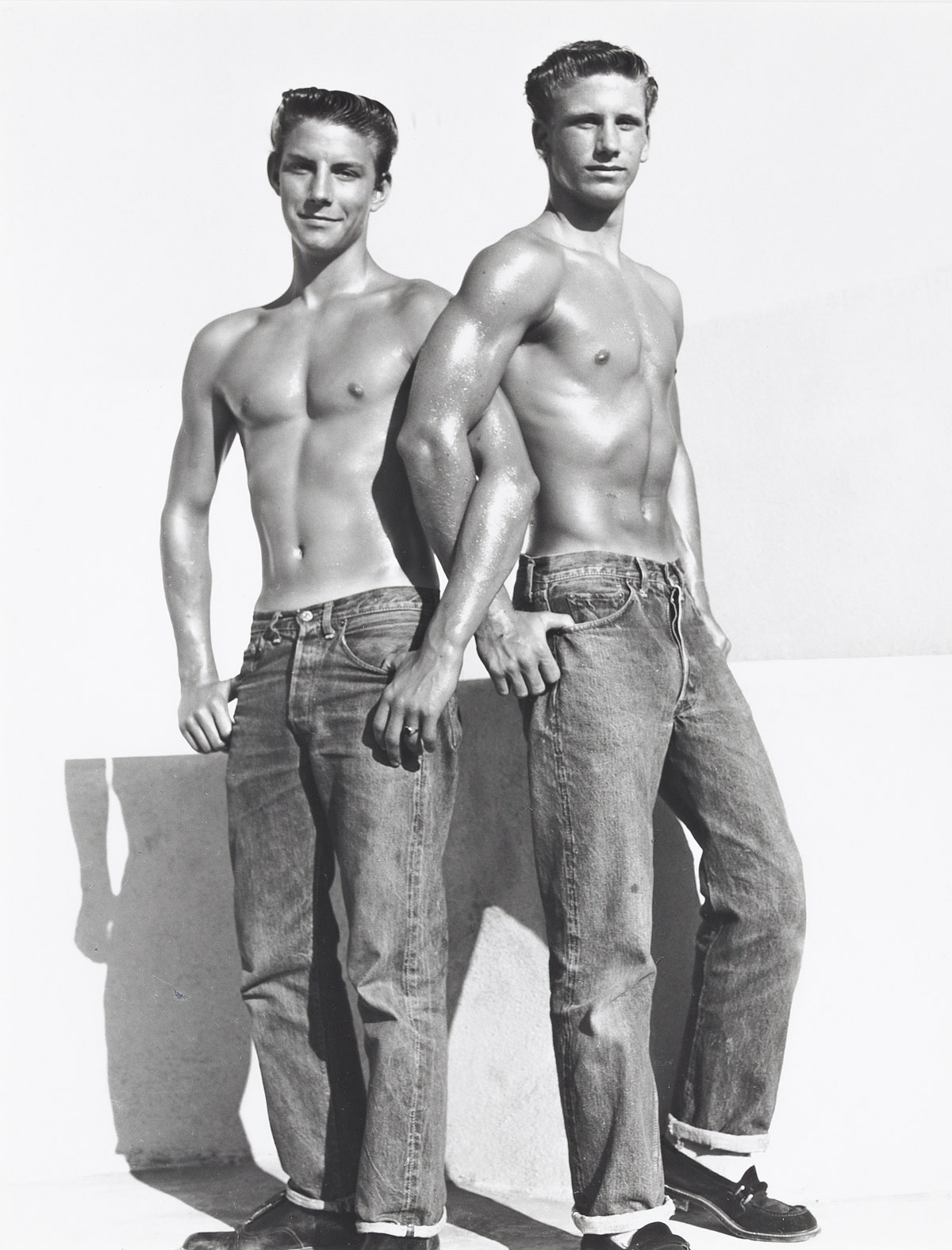

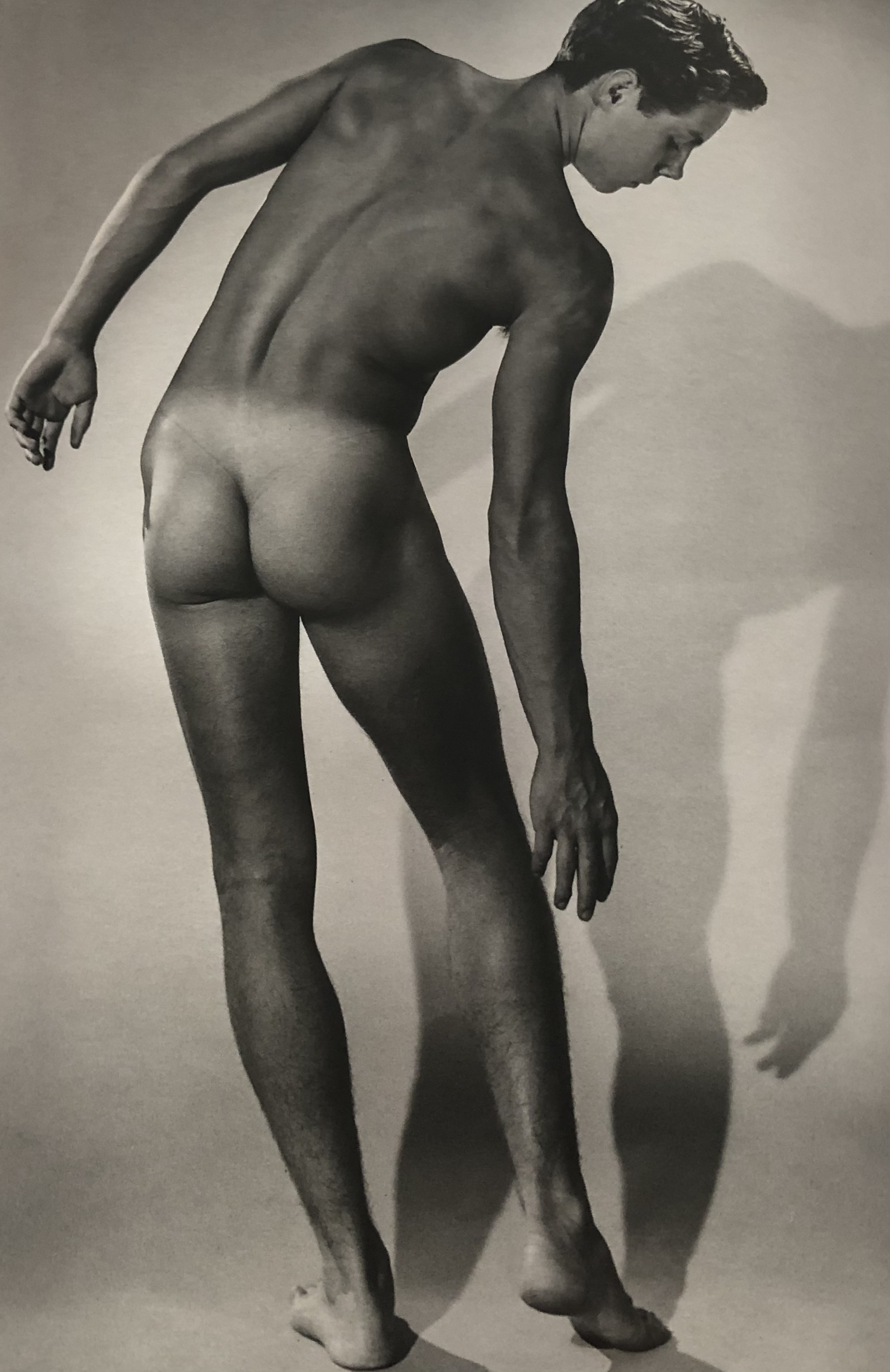
Erotic male nudes, by contrast, are designed to evoke desire. While still avoiding explicit content, they emphasize sensuality and allure. Studios like the Athletic Model Guild, founded by Bob Mizer in 1945, epitomize this genre. Mizer’s models were often young, muscular, and photographed in minimal attire—usually posing straps. Though presented as ‘model studies’ or athletic reference images, they were unmistakably charged with homoerotic appeal. A classic example is AMG model Jim Grant in 1949, his body carefully composed for aesthetic and erotic impact.
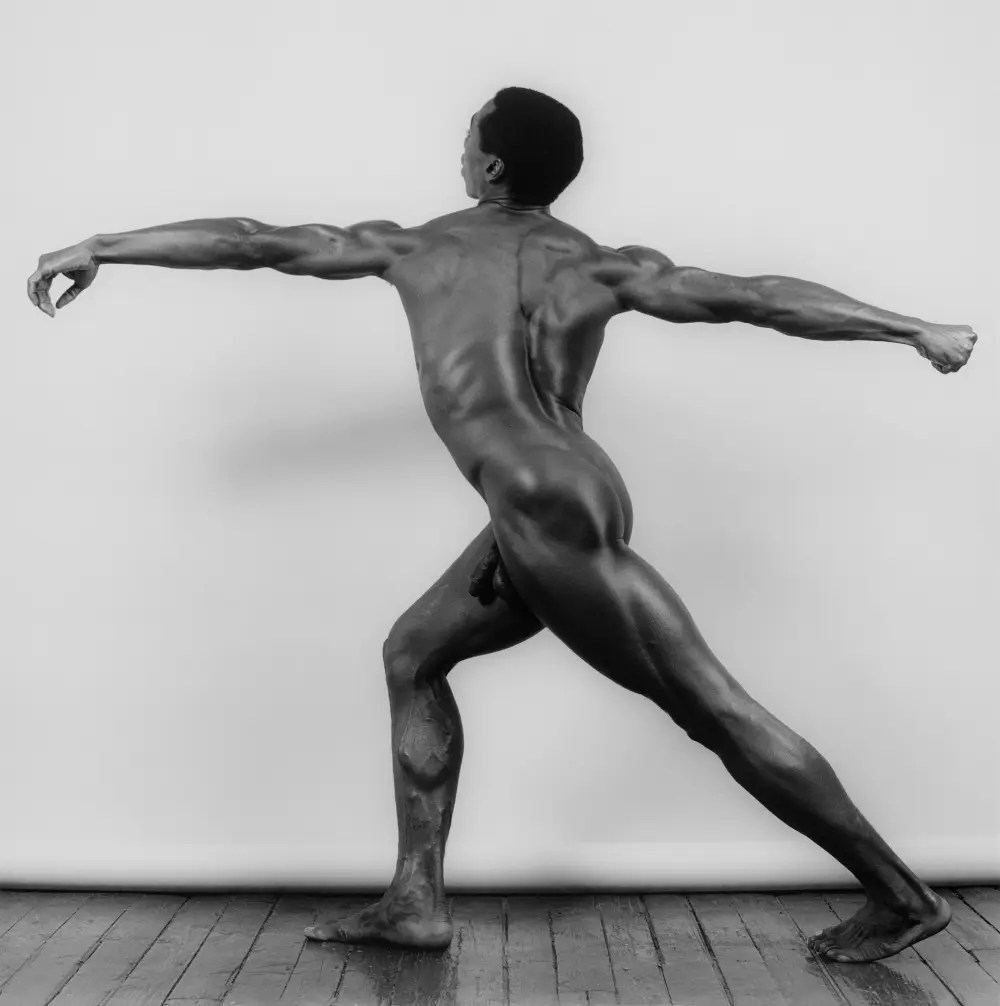
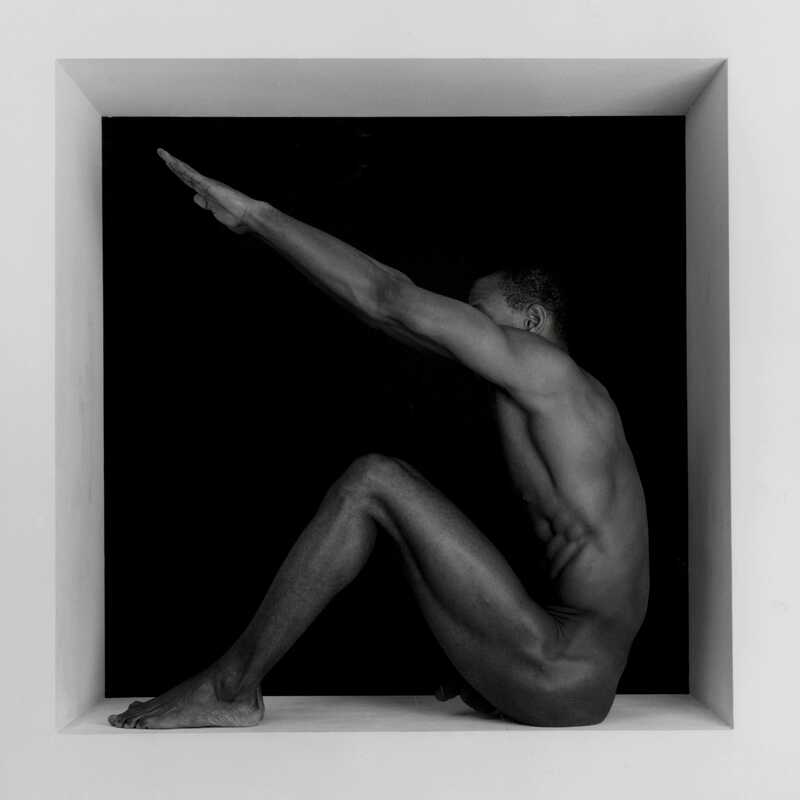

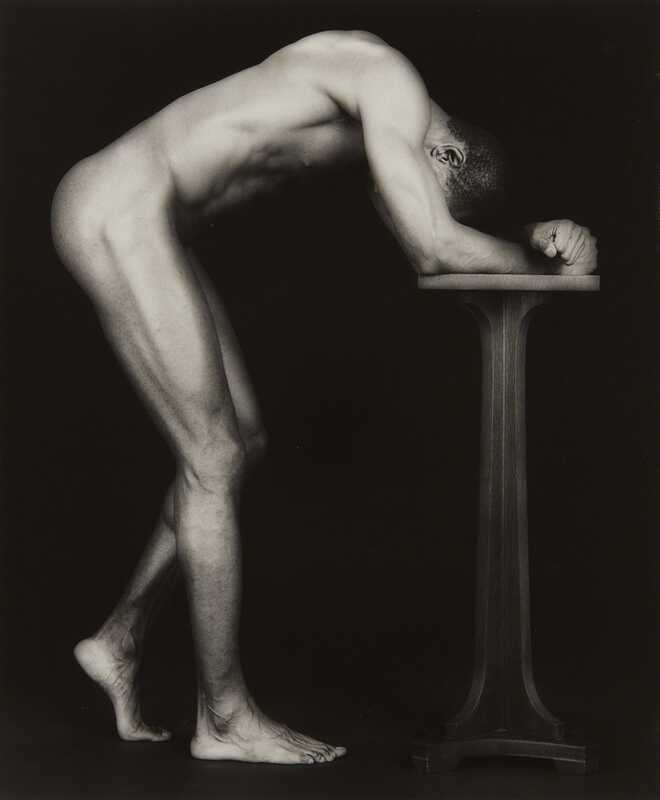
Between these poles lies the hybrid category of art-erotic nudes—images that deliberately blend aesthetic ambition with erotic suggestion. Photographer Robert Mapplethorpe redefined this space in the 1970s and ’80s. His studio portraits of Black male nudes, leather-clad figures, and homoerotic still lifes challenged museum conventions while embracing overt sensuality. His 1986 photograph of bodybuilder Thomas—posed like a neoclassical statue but fully exposed—is both starkly erotic and compositionally exquisite. Earlier precedents include F. Holland Day’s portrait of Nicola Giancola as St. Sebastian, which straddle martyrdom and homoerotic reverence.
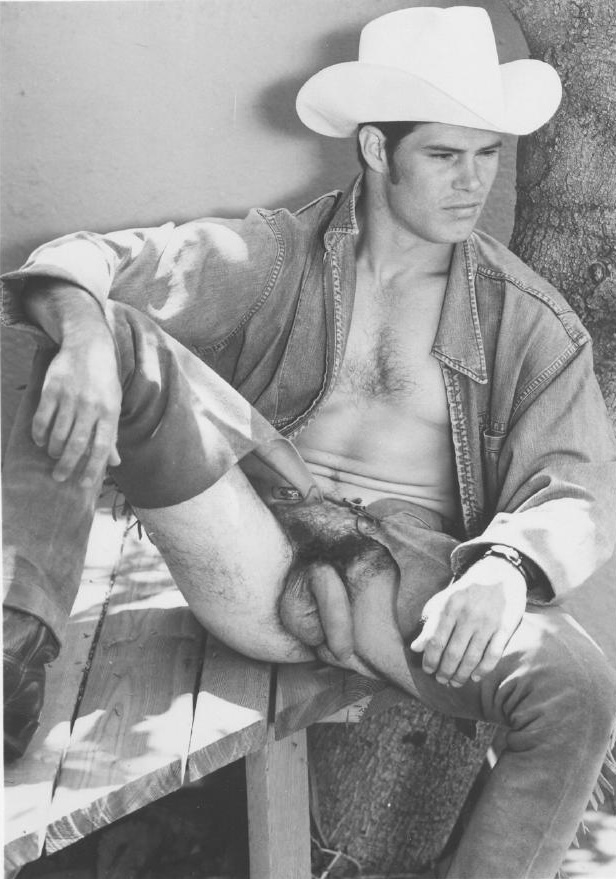
Still photo pornography occupies the far end of the spectrum, with imagery created explicitly for sexual arousal. With the loosening of obscenity laws in the 1960s and 1970s, studios like COLT, Falcon, and Target began publishing full-frontal male photography, often themed around working-class or hypermasculine fantasies. A 1970s COLT photo set of model Buddy Houston, fully nude and posed as a cowboy, exemplifies this genre. Here, the goal is no longer suggestion or metaphor, but direct sexual gratification—often accompanied by narratives or visual cues designed to stimulate.

These categories—artistic, erotic, art-erotic, and pornographic—are best understood as points along a continuum rather than rigid definitions. A single image might be interpreted differently depending on the viewer, setting, or historical moment. In 1964 United States Supreme Court Justice Potter Stewart described his threshold test for obscenity in Jacobellis v. Ohio by saying:
I shall not today attempt further to define the kinds of material I understand to be embraced within that shorthand description [“hard-core pornography”], and perhaps I could never succeed in intelligibly doing so. But I know it when I see it, and the motion picture involved in this case is not that.
In gallery spaces, an image may be framed as art; in private, it may serve a different function altogether. For LGBTQ+ audiences, especially during eras of repression, these images carried layered meanings: as mirrors of desire, acts of defiance, and moments of recognition. Their legacy continues to shape how we view the male body, beauty, and freedom.


 | Joe on Pic of the Day |
 | Benny S on Pic of the Day |
 | noisilycool3bc985058… on Pic of the Day |
 | iameverywhere1 on Pic of the Day |
| Joe on Pic of the Day |




As an Amazon Associate I earn from qualifying purchases. So, if you click on a link that takes you to Amazon.com, I may earn a commission.
Trust me, it isn’t much, but every little bit helps.


 The Closet Professor