Sergeant Aaron Lopez-Stoner, assigned to the Third U.S. Infantry Regiment (The Old Guard), conducts his last walk at the Tomb of the Unknown Soldier at Arlington National Cemetery, January 15, 2017. (Staff Sergeant Terrance D. Rhodes/US Army)
The Unknown Soldier By Melvin B. Tolson
I was a minuteman at Concord Bridge, I was a frigate-gunner on Lake Erie, I was a mortarman at Stony Ridge, I fought at San Juan Hill and Château Thierry, I braved Corregidor and the Arctic Sea: The index finger brings democracy.
These States bred freedom in and in my bone— Old as the new testament of Plymouth Bay. When the Founding Fathers laid the Cornerstone And rued the thirteen clocks that would not say The hour on the hour, I nerved myself with them Under the noose in the hand of the tyrant’s whim.
I’ve seen the alien ships of destiny Plow the sea mountains between the hemispheres. I’ve seen the Gulf Stream of our history Littered with derelicts of corsair careers. I’ve heard the watchman cry, “The bars! The bars!” When midnight held the funeral of stars.
I saw horizontal States grow vertical, From Plymouth Harbor to the Golden Gate, Till wedged against skyscapes empyreal Their glories elbowed the decrees of fate. These States bred freedom in and in my bone: I hymn their virtues and their sins atone.
The tares and wheat grow in the self-same field, The rose and thorn companion on the bush, The gold and gravel cuddle in the yield, The oil and grit and dirt together gush. The Gordian knot to be or not to be Snares not the free.
My faith props the tomorrows, for I know The roots of liberty, tough-fibered, feed On the blood of tyrants and martyrs; the judas blow Tortures the branches till they twist and bleed; And yet no Caesar, vitamined on loot, Can liberty uproot!
I am the Unknown Soldier: I open doors To the Rights of Man, letters incarnadine. These shrines of freedom are mine as well as yours; These ashes of freemen yours as well as mine. My troubled ghost shall haunt These States, nor cease Till the global war becomes a global peace.
__________________________
World War I—known at the time as “The Great War”—officially ended when the Treaty of Versailles was signed on June 28, 1919, in the Palace of Versailles outside the town of Versailles, France. However, fighting ceased seven months earlier when an armistice, or temporary cessation of hostilities, between the Allied nations and Germany went into effect on the eleventh hour of the eleventh day of the eleventh month. For that reason, November 11, 1918, is generally regarded as the end of “the war to end all wars.”
Veterans Day, which is tomorrow, originated as “Armistice Day” on Nov. 11, 1919, the first anniversary of the end of World War I. Congress passed a resolution in 1926 for an annual observance, and Nov. 11 became a national holiday beginning in 1938. Veterans Day pays tribute to all American veterans—living or dead—but especially gives thanks to living veterans who served their country honorably during war or peacetime.
__________________________
The Tomb of the Unknown Soldier
The Tomb of the Unknown Soldier is a monument dedicated to deceased U.S. service members whose remains have not been identified. It is located in Arlington National Cemetery in Virginia, United States. The World War I “Unknown” is a recipient of the Medal of Honor, the Victoria Cross, and several other foreign nations’ highest service awards. The U.S. Unknowns who were interred are also recipients of the Medal of Honor, presented by U.S. presidents who presided over their funerals. The monument has no officially designated name.
Dozens of countries have a Tomb of the Unknown Soldier. These tombs are a monument dedicated to the services of unknown soldiers interred at the monument and to the common memories of all soldiers killed in war. These tombs can be found in many nations and are usually high-profile national monuments. Throughout history, many soldiers have died in war with their remains being unidentified. Following World War I, a movement arose to commemorate these soldiers with a single tomb, containing the body of one such unidentified soldier.
Many of these Tombs of the Unknown are usually guarded by honorary sentinels at all times. At the Tomb of the Unknown Soldier in Arlington National Cemetery, the tomb guards are soldiers of the United States Army. It is considered one of the highest honors to serve as a Sentinel at the Tomb of the Unknowns. Fewer than 20 percent of all volunteers are accepted for training and of those only a fraction pass training to become full-fledged Tomb Guards. The soldier “walking the mat” does not wear rank insignia, so as not to outrank the Unknowns, whatever their ranks may have been. Non-commissioned officers (usually the Relief Commander and Assistant Relief Commanders), do wear insignia of their rank when changing the guard only. They have a separate uniform (without rank) that is worn when they actually guard the Unknowns or are “posted.” The duties of the sentinels are not purely ceremonial. The sentinels will confront people who cross the barriers at the tomb or whom they perceive to be disrespectful or excessively loud.
__________________________
About the Poet
Melvin B. Tolson (February 6, 1898 – August 29, 1966) was an American poet, educator, columnist, and politician. As a poet, he was influenced both by Modernism and the language and experiences of African Americans, and he was deeply influenced by his study of the Harlem Renaissance. Known for his complex, visionary poetry, Melvin B. Tolson was one of America’s leading Black poets.
Tolson was born in 1898 in Moberly, Missouri. He earned a bachelor’s degree from Lincoln University in Chester County, Pennsylvania in 1924 and a master’s degree in English and comparative literature from Columbia University in 1940. In 1947, Liberia appointed him as poet laureate. He is the author of numerous works, including the poetry collections Harlem Gallery: Book One, The Curator (1965), Libretto for the Republic of Liberia(1953), and Rendezvous with America (1944), and the plays Black Boy (1963) and Black No More (1952).
Tolson had a vibrant teaching career. In Marshall, Texas, he taught English and speech at Wiley College, where he led an award-winning debate team. From 1947 to 1965, he was a professor of English, speech, and drama at Langston University, a historically black college in Langston, Oklahoma.
Massive personality defects ruled out listening to other people. Narcissistic to a degree, he presented himself to his subordinates and to the public as all-knowing—he could reel off an array of statistics (not all accurate) —and all-wise. A master of the media of his day—newspapers and state-controlled radio—he ruled on the basis of intuition and extemporization. He acted on the spur of the moment, always sensitive to the need to be seen as other leaders’ equal. Rarely did anyone ever try to talk him out of a chosen course, and when they did so they failed. You couldn’t reason with him. He made bad choices, disregarded warnings his country was not up to the demands he was making of it, and turned a blind eye to economic realities. Many of the failures and setbacks were his fault—though not all of them. Had he lived to write his memoirs, he would no doubt have railed against incompetent generals and inadequate subordinates. That would have been a smokescreen. You might almost think I was writing about Donald Trump, but in fact, this is a description of Benito Mussolini.
Following Donald Trump’s release from his three-night stay at Walter Reed Hospital to relieve symptoms of the coronavirus, he flew back to the White House (WH) on Marine One, exited the military helicopter, and ascended the steps leading to the WH second-floor balcony. Once there, he instantly removed his face mask as he turned to the flash cameras and camcorders below. Occasionally visibly gasping for air, he posed in the style of Benito Mussolini with an arrogant gaze and his head held high.
This current El Douche has much more in common with the actual Italian Il Duce than readily meets the eye and ear. While many of the social, political, and economic conditions differ today in the United States from Italy during the first half of the last century, some parallels persist. Trump rises to the level, and possibly surpasses, Mussolini’s arrogant swagger and all-consuming narcissism and sociopathy though I suspect Mussolini would beg to differ. Both figures are legendary for their predatory womanizing and frequent extra-marital affairs.
Both leaders had trouble telling the truth in their utterances and their consciousness. Not letting the facts get in the way is the basis of both their political strategies. According to Nazi chief propagandist Joseph Goebbels, “If you tell a lie big enough and keep repeating it, people will eventually come to believe it.” In Mussolini’s case, he came to believe his lies; it’s difficult to believe Donald Trump actually believes his, but he just may be so deluded that he does. Both could be placed into the category of “Machiavellian” in their single-mindedness, scheming, conspiracy-driven, unscrupulous, and vicious actions to advance their careers and enact their policies. To them, the ends justify the means no matter who gets hurt. It’s all about power and machismo.
Trump, however, differs significantly from Mussolini in terms of interest and achievement in intellectual pursuits. Mussolini prided himself on his scholarly endeavors and command of multiple languages. He acted on strong ideological beliefs. On the other hand, Trump acts on concerns for winning at all costs regardless of ideological positions. The only book he has admitted to reading was a book of Adolf Hitler’s speeches. While he claims to love the Bible, Trump cannot tell you a single thing within the sacred text.
Even though he is amoral and shows no signs of being a Christian, Trump received enthusiastic support from evangelicals who claimed he was the modern-day King David, a flawed womanizer who God is said to have loved anyway. Evangelicals also support Trump over his stance against abortion rights. As a socialist youth, Mussolini declared himself an atheist and railed against the Catholic Church. After taking power, Mussolini began working to pander to the Catholic Church to gain wider support. He outlawed freemasonry, exempted the clergy from taxation, cracked down on artificial contraception, campaigned for an increased birth rate, raised penalties for abortion, restricted nightlife, regulated women’s clothing, and banned homosexual acts among adult men. Despite having many mistresses, he also put in place harsh punishments for adultery. In 1929 Mussolini signed an agreement with the Vatican under which the Church received authority over marriage and was compensated for property seized decades earlier. Similar to evangelicals today who support Trump, Pope Pius XI referred to Mussolini as the “man whom providence has sent us.”
When Donald J. Trump became the 45th President of the United States, the man who called himself a “populist” lost the popular vote to Hillary Clinton. Over three million more voters did not support the draconian policies and vile language he uttered during the campaign. But White ultra-nationalist, fascist leaders, evangelicals, and many of their followers supported the Trump candidacy and celebrated his victory. For example, a white nationalist conference held on November 19, 2016, at the Ronald Reagan Building headlined by neo-Nazi Richard Spencer, greeted attendees with a tribute to then-President-elect Trump shouting “Hail Trump! Hail victory!” from the stage. Then, before all in attendance, Spencer gestured in a traditional Nazi straight-arm salute.
Another example is when Trump defended the white nationalists who protested in Charlottesville saying they included “some very fine people on both sides,” while expressing sympathy for their demonstration against the removal of a statue of Confederate General Robert E. Lee. In August 2020, Trump addressed the baseless, far-right QAnon conspiracy theory saying he didn’t know much about the online community and its followers other than “they like me very much.” In response to a question about the conspiracy community, Trump added, “I heard that these are people who love our country.” When a reporter partially summed up the conspiracy theory to him — that it revolves around a false narrative that Trump is leading a secret, government-led charge against pedophiles, cannibals, and satanic worshippers — Trump responded: “Is that supposed to be a bad thing?” Trump said, “If I can help save the world from problems, I’m willing to do it.” He’s willing to do anything to stay in power. And, let’s not forget he refused in the first presidential debate to denounce white supremacists and instead told the violent far-right, neo-fascist and male-only Proud Boys to “stand back and stand by.”
Once identifying himself as a Democrat, but never unequivocally disavowing himself from white nationalists, Trump has transformed himself into the mouthpiece of the extreme far-right wing of the Republican Party. Once a staunch socialist, Benito Mussolini was denounced by the Italian Socialist Party for advocating Italy’s involvement in World War I which countered the Party’s stance on neutrality. Mussolini severely transformed his political stance, and later, he became one of the chief architects of the fascist movement. Before his election, Trump had tapped Steve Bannon, former editor of the far-right Breitbart News, as his campaign director, and before firing him, elevated Bannon into the White House to function as his chief policy advisor, a position that does not require Senate confirmation. Bannon once boasted that Breitbart News serves as the mouthpiece for the so-called “alt-right,” a less odious and misleading term for white nationalists.
As President, Trump rolled back many of the rights and protections that minorities have tirelessly fought for over the past decades: affordable and quality health care, reproductive rights, voting rights, citizenship rights, anti-torture guarantees, rights of unreasonable search and seizure, rights of assembly, disability rights, LGBTQ+ rights in the military, free speech and freedom of the press rights, freedom of and from religion while attacking marriage equality. Now, with the Senate confirmation of the conservative judge Amy Coney Barrett to the Supreme Court seemingly imminent, he has the chance to continue these policies through the courts long after he has been driven from office.
Trump’s continual cries against “Islamic jihadist terrorists” as the number one threat to our nation (even as the FBI says racially-motivated violent extremists in the U.S. are the primary national threat). He issued presidential executive orders banning travel into the U.S. by six majority Muslim nations, called for U.S. Muslims to be placed on a “national registry,” and should be under surveillance to track their movements. These acts de facto “racializes” Muslims. I would not put it past Trump to call for passbooks, like in Apartheid South Africa, for American Muslims and others whom Trump deems a threat to him and his supporters.
Before becoming the Italian fascist dictator, Mussolini believed nationalism superseded class distinctions as opposed to a focus in socialism on class struggle which he had previously accepted. He argued that a vanguard of elites must lead society which would ultimately suppress democracy, and that the state must control “proper linguistic and racial confines.” Though Mussolini’s theories on “race” centered on the culture of a people as opposed to Nazism’s reliance on biology, he did assert a “natural law” thesis that “stronger” people had the right to dominate the “inferior.” Remember, Trump and his father Fred refused some years ago to rent their properties to black people, and too, his racist representations of Mexican people who attempted to come into the United States across the border.
Later, serving as Italy’s youngest Prime Minister in 1922 at the age of 39, Mussolini helped establish the secret police, outlawed labor strikes, and facilitated a one-party dictatorship. Favoring the wealthy classes and forming a virtual oligarchy, he passed legislation making it easier for privatization, deregulation of business and industry, and the dismantling of labor unions. Trump has proposed and forwarded similar policy directives including using the military to keep him in power and sending government agents into cities to attack and detain protesters without due process. Will his apparent parallels with Benito Mussolini hold – and even strengthen – during his presidency, or will he pleasantly surprise us by pivoting to become a healer of the national wounds he cut into the body politic throughout his career up to now? We all know Trump will never be a healer, only a divider. His divisive and derogatory nature is what seems to energize him.
If you are interested in further comparisons between Benito Mussolini and Donald Trump, look no further than their sons-in-law: Galeazzo Ciano and Jared Kushner. Both had similar privileged backgrounds before they married the daughters of Mussolini and Trump. Their fathers-in-law elevated them to positions in the respective administrations, and neither appeared to be qualified for their elevated stature. While there are many similarities, in contrast to Kushner, Ciano attempted to act as a moderating voice in Mussolini’s ear by warning the Italian leader their military was utterly ill-equipped for any serious and possibly prolonged war effort. He attempted to serve as a voice of reason throughout Italy’s doomed involvement. In response to questioning his authority, Mussolini summarily ordered his son-in-law’s execution on the charge of treason on February 6, 1943, before Mussolini was ultimately rounded up and killed by Italian socialist partisans. Kushner, likely, won’t succumb to the same fate, as he continues to act as Trump’s lapdog. He pushed forth Trump’s policies of denying the COVID-19 pandemic’s seriousness and even went so far as to attempt to block aid to “blue states.”
When affairs were going well, Mussolini considered Ciano a trusted advisor. As conditions increasingly deteriorated, and as Ciano advised a different course – specifically for his father-in-law to sign a separate peace with the allies to spare the country needless loss of life and devastation — Mussolini only distrusted Ciano more and accused him of treason. Trump has shown he will do the same thing to his cronies if they displease him as Jeff Sessions, Michael Cohen, John Bolton, and many others did. The Trump administration has been a revolving door of people as Trump dismissed one after the other for the slightest disagreement.
The lesson of this history? Choose your leaders with great care, for they can do real and lasting damage.
Autumn Song By Paul Verlaine – 1844-1896 Translated by Arthur Symons
When a sighing begins In the violins Of the autumn-song, My heart is drowned In the slow sound Languorous and long
Pale as with pain, Breath fails me when The hours toll deep. My thoughts recover The days that are over, And I weep.
And I go Where the winds know, Broken and brief, To and fro, As the winds blow A dead leaf.
Chanson d’automne By Paul Verlaine – 1844-1896
Les saglots longs Des violons De l’automne Blessent mon coeur D’une langueur Monotone.
Tout suffocant Et blême, quand Sonne l’heure, Je me souviens Des jours anciens Et je pleure;
Et je m’en vais Au vent mauvais Qui m’emporte Deçà, delà, Pareil à la Feuille morte.
About the Poem:
“Chanson d’automne” (“Autumn Song”) is a poem by Paul Verlaine (1844–1896), one of the best known in the French language. It is included in Verlaine’s first collection, Poèmes saturniens, published in 1866 (see 1866 in poetry). The poem forms part of the “Paysages tristes” (“Sad landscapes”) section of the collection.
In World War II lines from the poem were used to send messages from Special Operations Executive (SOE) to the French Resistance about the timing of the forthcoming Invasion of Normandy. In preparation for Operation Overlord, the BBC’s Radio Londres had signaled to the French Resistance with the opening lines of “Chanson d’Automne” were to indicate the start of D-Day operations under the command of the Special Operations Executive. The first three lines of the poem, “Les sanglots longs / des violons / de l’automne” (“Long sobs of autumn violins”), would mean that Operation Overlord was to start within two weeks. These lines were broadcast on June 1, 1944. The next set of lines, “Blessent mon coeur / d’une langueur / monotone” (“wound my heart with a monotonous languor”), meant that it would start within 48 hours and that the resistance should begin sabotage operations, especially on the French railroad system; these lines were broadcast on June 5 at 23:15.
In 1940, Charles Trenet made changes to the words of the poem in order to change it into a song. There has been speculation that it was the popularity of his version that led to the use of the poem by SOE.
In the last week since Trump was released from Walter Reed, there have been speculations about the effects COVID-19 may have had on his mental health. Part of the speculation has been because his doctor was caught lying to the press and the number of lies Trump and his administration routinely tells. All of the lies naturally have a lot of people questioning the truth about Trump’s health. The problem with someone lying in almost everything they say makes it hard to believe them even when they may be telling the truth. Think of the fable, “The Boy Who Cried Wolf.” Of course, Trump is not the first president to lie about his health, and he is unlikely to be the last.
The most significant issue is that we are only now beginning to understand the long-term effects of COVID-19. COVID-19 has been compared to the 1918 Spanish flu epidemic since it began spreading around the world. Luckily, medicine has progressed considerably since 1918, and it is unlikely to cause the number of worldwide deaths that the Spanish flu caused. Five hundred million people were infected with the Spanish flu, which was one-third of the world’s population at the time. Estimates of deaths range from 17 million to 50 million to as high as 100 million. Hopefully, an effective vaccine will be found before too long, and millions of lives will be saved.
Just as with Trump contracting COVID-19, the president of the United States also caught the Spanish flu in 1919 while at the Paris Peace Conference. Several members of the American delegation got influenza, and, like COVID-19, influenza can be transmitted before symptoms appear. Some of my readers may know this, but the United States’ involvement in the First World War is my academic specialty. So, I am very familiar with Woodrow Wilson and the Paris Peace Conference, which was an integral part of my master’s thesis. However, I am embarrassed to say that I had not previously known that Wilson contracted the Spanish flu. I knew he had a stroke while trying to convince Americans to support the United States joining the League of Nations, but there is much more to the story.
On Thursday, April 3, 1919, Wilson suddenly fell ill. White House physician Cary Grayson noted he was seized by “violent paroxysms of coughing, which were so severe and frequent that it interfered with his breathing,” followed by such other symptoms as high fever. Grayson tried to keep the illness secret, but word leaked out that Wilson was sick, and Grayson lied, insisting Wilson simply had a bad cold. Afraid of another leak, Grayson wrote a note to be hand-delivered to Wilson’s chief of staff, which said, “That night was one of the worst through which I have ever passed. I was able to control the spasms of coughing, but his condition looked very serious.”
Like the 1918 flu virus, COVID-19 impacts virtually every organ in the body, including the brain. Most problematic are cardiovascular and neurological impacts. For COVID-19, cardiovascular complications, including stroke, are so common that some experts consider this and not the lung, the primary problem. And according to a study in Annals of Neurology, 25 percent of patients have some neurological dysfunction, and 7 percent have “impaired consciousness.” Another study in Clinical Neurology and Neurosurgery found 36.4 percent of patients to have neurological symptoms. In 1918, it was much the same. The single most comprehensive study of the 1918 pandemic concluded, “The effect of the influenza virus on the nervous system is hardly second to its effect on the respiratory tract. … From the delirium accompanying many acute attacks to the psychoses that develop as ‘post-influenzal’ manifestations, there is no doubt that the neuropsychiatric effects of influenza are profound.”
For Wilson and the world, the effects were indeed profound. He became paranoid, convinced he was being spied on. Herbert Hoover, who was at the time, was in charge of the American food relief efforts for the devastated Europe, believed Wilson’s mind lost “resiliency” and its ability to reason clearly “in coming to conclusions.” Others made similar comments. Nonetheless, after five days in bed and too ill to go out, Wilson insisted on rejoining the peace negotiations. British and French Prime Ministers David Lloyd George and Georges Clemenceau — whose nickname was “the tiger” — came to his room. They, too, found a different man. Lloyd George commented on Wilson’s “nervous and spiritual breakdown in the middle of the Conference.”
Nothing in Wilson’s prior history suggests he would compromise on any principle. Before his illness, he had insisted upon “peace without victory,” his Fourteen Points, and supporting self-determination around the world. But over the next few days, he gave way on almost every point to Clemenceau and agreed to a peace deal that punished Germany and preserved other nations’ imperial ambitions. Historians agree that the treaty contributed significantly to the rise of Adolf Hitler and the start of World War II. A few months later, Wilson’s influenza attack very likely contributed to his debilitating stroke while campaigning across the country to get the support of the American people for the Versailles Treaty.
Today, the case mortality for a 65 to 74-year-old man — Trump is 74 — is 3.1 percent and somewhat higher for those who required oxygen, as Trump did, so the odds of recovery are strongly in his favor, especially given his immediate treatment with remdesivir and experimental monoclonal antibodies, and now dexamethasone (treatments most Americans do not have access to). But recovery may leave him not only fatigued for an extended time but also with an increased chance of stroke or neurological impacts. Since being released from the hospital, Trump’s judgment has been more in question than ever. Trump could just be desperate because he is behind in the polls, and thus he has increased his efforts to give credence to his base’s wild conspiracy theories. His recent appearances on Fox News and Rush Limbaugh show him seemingly more unhinged than ever. Whatever is going on with the president’s health may take years, if ever, for us to find out the extent of his COVID-19 infection and its effects. Only time will tell, but one thing is for sure, we cannot allow him to get reelected.
The day is cold, and dark, and dreary; It rains, and the wind is never weary; The vine still clings to the mouldering wall, But at every gust the dead leaves fall, And the day is dark and dreary.
My life is cold, and dark, and dreary; It rains, and the wind is never weary; My thoughts still cling to the mouldering Past, But the hopes of youth fall thick in the blast, And the days are dark and dreary.
Be still, sad heart! and cease repining; Behind the clouds is the sun still shining; Thy fate is the common fate of all, Into each life some rain must fall, Some days must be dark and dreary.
Henry Wadsworth Longfellow (1807-82) is best known for “The Song of Hiawatha.” He also wrote many other celebrated poems. And then there’s ‘The Rainy Day’, which isn’t numbered among his most famous. But it is one of the finest poems written about rain, so deserves a few words of analysis for that reason alone.
Rain and misery are two certainties in life, at least in the New England that Longfellow knew so well. Longfellow’s poem uses the rain/misery connection to offer a misconception about life. In the first stanza, Longfellow talks of the rain and wind outside. He uses the second stanza to discuss the internal, miserable weather raging within his heart. For the final stanza, he shifts from simply describing his mood to the authoritative, as he commands his heart to be of good cheer and remember that, although it may be raining now, the sun is still shining behind the clouds, though he can’t currently see it. When we’re miserable or sad, it can be very difficult to recall happiness, to remember what’s now out of sight. In his penultimate line, we find the most famous line in this poem: ‘Into each life some rain must fall.’ Misery is part of a common lot of humanity. Oscar Wilde is quoted as saying, “When it rains look for rainbows when it’s dark look for stars.” Longfellow might have been well-advised to listen to Wilde’s advice.
There Will Come Soft Rains By Sara Teasdale
(War Time)
There will come soft rains and the smell of the ground, And swallows circling with their shimmering sound;
And frogs in the pools singing at night, And wild plum trees in tremulous white,
Robins will wear their feathery fire Whistling their whims on a low fence-wire;
And not one will know of the war, not one Will care at last when it is done.
Not one would mind, neither bird nor tree If mankind perished utterly;
And Spring herself, when she woke at dawn, Would scarcely know that we were gone.
Unlike the majority of Teasdale’s war poems, “There Will Come Soft Rains” has not been entirely forgotten. Three decades after its initial publication, in the wake of World War II, Ray Bradbury featured the poem as the foundation of a similarly post-apocalyptic short story, also titled “There Will Come Soft Rains,” in his 1950 novel The Martian Chronicles. In his re-appropriation, Bradbury portrays a future world that has been destroyed by mankind’s heedless progress, in a gruesome fashion that I don’t want to discuss. Bradbury’s story shares with Teasdale’s poem the terrifying insight that mankind is no longer connected, organically, to the natural world. The only species capable of mass, mechanized, self-destruction, humans are utterly alone, detached from a natural world that no longer even notices we are there. Imported into the futuristic world of 2057, Teasdale’s words become bitterly ironic. As early as World War I, Bradbury implies, mankind had been warned.
The poem awakens that old sentimental longing to return to a state of deep connectedness with nature. It even deploys a set of familiar stylistic markers that seem to have been borrowed directly from a nineteenth-century aesthetic economy. The poem’s alliteration, for instance — “whistling their whims,” “feathery fire”— and the sing-song rhymes— “ground/sound,” “night/white,” “fire/wire,” all evoke a sense of comforting gentility. But this veneer of conventional sentimentality merely heightens the profound impact of nature’s heartlessness. The poem’s sweet, sentimental quality and its tranquil, idyllic descriptors are deceiving. Ultimately, all of our sentimental feelings about “frogs” and “wild-plum trees,” as well as the language through which we have constructed those myths of a connection to nature, are tossed, mockingly, back at us. The reader is led to believe that the “soft rains” will signal our own renewal and that the birds will sing to celebrate our salvation.
The poem challenges those idyllic fantasies with the reality of a natural world dominated by indifference, motivated only by its own survival, and oblivious to the existence or extinction of man. However, Teasdale locates a kernel of hope in this harsh vision. Devoted exclusively to its own survival, nature, in Teasdale’s conception, proffers no comfort to mankind, but can, nonetheless, provide the key to our own preservation. Rather than a retreat into an irrecoverable, idealized past. Teasdale was influenced to write this poem by reading Charles Darwin’s 1859 book On the Origin of Species. In such, she was urging her audience to adopt the ways of nature—to focus more whole-heartedly on their own survival.
“There Will Come Soft Rains” first appeared in Harper’s Monthly Magazine in July 1918—less than two months after the passage of the Sedition Act. Meant to strengthen the provisions of the already-repressive Espionage Act, the Sedition Act of May 16, 1918, was designed to quash American opposition to the war, outlawing “virtually all criticism of the war or the government.” Following its passage, anthologies and magazines continued to publish a small number of anti-war poems, but only if the poems were strategically nonspecific in their critique and refrained from offering a political alternative to the war. This climate of censorship casts a different light on the apparent obliqueness of Teasdale’s anti-war poems. Rather than a limitation, their historical imprecision might be what enabled their circulation at the height of World War I. It is possible, in fact, that Teasdale’s cultivation of a demure, “poetess” persona might have, contradictorily, enabled her to publish anti-war poetry more freely.
Lieutenant (Junior Grade) Weedon E. Osborne United States Navy (Dental Corps)
By now, I think we’ve all heard the president’s disparaging remarks about veterans. In an article in The Atlantic, Jeffrey Goldberg wrote that numerous witnesses heard Trump make excuses for not visiting the Aisne-Marne American Cemetery in 2018. Trump was to visit there on November 10, 2018 to mark the armistice’s 100th anniversary of the end of World War I. This coincided with the 243rd birthday of the Marine Corps. One of Trump’s excuses was the rainy weather might mess up his hair, his fucking hair. It looks like shit on the best of days, and he’s worried what a little rain might do to it! Officially, he said, “the helicopter couldn’t fly” and the Secret Service wouldn’t drive him there. All of the other world leaders drove there, but Trump couldn’t be bothered, saying, “Why should I go to that cemetery? It’s filled with losers.”
While many of you might not know about the importance of the Aisne-Marne American Cemetery, most of you know I’m a World War I historian. I want to tell you why that cemetery is significant. It is located 53.5 miles outside of Paris (roughly an hour-long drive) and contains the headstones of 2,289 soldiers of the American Expeditionary Force (AEF) mostly from the Battle of Belleau Wood, and the larger campaign in the Marne Valley. One of those “losers” was Lt. Weedon Osborne of Chicago, a Medal of Honor recipient. His citation for the medal reads:
For conspicuous gallantry and intrepidity at the risk of his life above and beyond the call of duty while attached to the Fifth Regiment, United States Marines, in actual conflict with the enemy and under fire during the advance on Bouresche, France on June 6 1918. In the hottest of the fighting when the Marines made their famous advance on Bouresche at the southern edge of Belleau Wood, Lieutenant (j.g.) Osborne threw himself zealously into the work of rescuing the wounded. Extremely courageous in the performance of this perilous task, he was killed while carrying a wounded officer to a place of safety. By his exceptional fortitude, inspiring initiative, and selfless devotion to duty, Lieutenant (j.g.) Osborne reflected great credit upon himself and upheld the highest traditions of the United States Naval Service. He gallantly gave his life for his country.
Osborne was obviously no “loser.” He had “exceptional fortitude, inspiring initiative, and selfless devotion to duty,” which Donald Trump does not. He selflessly sought to aid the wounded during the Battle of Belleau Wood, and was killed while carrying an injured officer to safety on June 6, 1918.
Alongside the Battles of Fallujah, Khe Sanh, Chosin, and Iwo Jima, the Battle of Belleau Wood occupies a hallowed place in U.S. Marine Corps lore and history. Every U.S. Marine knows the famous quotes from the Marines fighting in the 1918 battle: “Retreat, hell we just got here!” by Capt. Lloyd Williams who received three Silver Star citations and a Purple Heart, and “C’mon you sons-of-bitches, do you want to live forever?” by Gunnery Sgt. Dan Daley one of only nineteen men to have received the Medal of Honor twice.
The battlefield of Belleau Wood lays about five miles west of the town of Château-Thierry the site of another AEF battle. Looking at the strategic context in early 1918, Belleau Wood was only a small piece of a major campaign that saw the American forces help French and British armies stem the onslaught of the massive German Spring Offensive. On March 21, the Germans launched their attack along the Western Front in France. This was made possible because a peace treaty with the new Russian Bolshevik government had freed up German units deployed on the Eastern Front. The German leadership hoped the influx of 50 divisions could overwhelm the Allied forces in France bringing the war to an end before millions of American reinforcements could cross the Atlantic. The Spring Offensive nearly reached Paris coming close enough to shell the city. The loss of Paris would have likely resulted in a German victory in WWI. However, while the German offensive made significant gains in the first few weeks of the battle, they began to falter by May during the Aisne Offensive. The German assault was weakened because American units like the 2nd Division and its 4th Marine Brigade joined the fray to stop the Germans at the Battle of Belleau Wood.
After three weeks of intense combat, a report announced the 4th Marine Brigade’s success with the message, “Belleau Wood now U.S. Marine Corps entirely.” The French government renamed it Bois de la Brigade de Marine to honor the incredible sacrifices and fierce struggles there and awarded members of the 4th Marine Brigade the French Croix de Guerre. Although a victory for the Americans, the Battle of Belleau Wood exacted a heavy toll on the 4th Marine Brigade. Of its complement of 9,500 men, the brigade suffered 1,000 killed in action, and 4,000 wounded, gassed, or missing equaling a 55 percent casualty rate.
General Pershing, commander of the AEF said, “The deadliest weapon in the world is a United States Marine and his rifle.” Pershing also said, “the Battle of Belleau Wood was for the U.S. the biggest battle since Appomattox and the most considerable engagement American troops had ever had with a foreign enemy.” The battle had been brutal. “It has been a living hell,” Lt. Clifton B. Cates, 24, a future Marine Corps commandant wrote to his mother. “We were shelled all night with shrapnel and gas shells. [….] It was mustard gas and a lot of the men were burned.” It was a battle that changed the Marine Corps. “For all intents and purposes, the old warriors of the U.S. Marine Corps were virtually wiped out,” wrote historian, George B. Clark.
In a separate conversation on the 2018 trip, Trump referred to the 1,811 soldiers and Marines who lost their lives at Belleau Wood as “suckers” for getting killed. Trump also asked aides, “Who were the good guys in this war?” He couldn’t understand why the United States would intervene on the side of the Allies. While I realize the U.S. entry into WWI is complicated and controversial, Woodrow Wilson’s Fourteen Points stated the principles for peace that were to be used for negotiations to end World War I, and are a good starter for understanding the entry of the United States into the Great War. The ideas expressed by Wilson’s Fourteen Points included free trade, open diplomacy, national self-determination, and the League of Nations; ideas which remain as relevant today as they were a century ago. Wilson transformed the primary objective of American foreign policy from isolation to internationalism.
Trump could learn a lot from Wilson, whose vision of a world made safe and prosperous by the collective action of all nations, is a cornerstone of U.S. diplomacy. Instead of looking to Wilson for his positive attributes, Trump is more closely aligned with Wilson’s negative characteristics. Wilson tolerated no dissent during the war, and authorized serious violations of Americans’ civil liberties in his quest for victory. Playing to his base, Trump has incessantly targeted the most vulnerable. His anti-immigrant measures began with the Muslim ban. He has separated families, detained individuals who posed no threat to others or risk of flight, sought to deny asylum because they were directly contrary to the statute, and attempted to rescind protected status for the Dreamers.
Sadly, Wilson’s zest for humanitarian justice did not extend to African-Americans. He supported segregation in government departments and did little to stop the waves of anti-black violence and race riots that swept over the land during his administration particularly in the years after the war. In the present day, Trump praised white supremacists in Charlottesville as “very fine people” and referred to African countries as “shitholes.” His Justice Department sought to back off from consent decrees requiring police to treat their citizens with equal respect and dignity. And he has done nothing to help ease the current racial tensions in the United States instead fanning the flames of his conservative base by disparaging the Black Lives Matter movement.
For those who might not believe the allegations in The Atlantic article, look at the statements he’s made about military personnel in interviews and speeches. He has no respect for anyone who might do something selfless because he cannot fathom doing something that would not benefit him personally. To quote The Atlantic article:
“He can’t fathom the idea of doing something for someone other than himself,” one of Kelly’s friends, a retired four-star general, told me. “He just thinks that anyone who does anything when there’s no direct personal gain to be had is a sucker. There’s no money in serving the nation.” Kelly’s friend went on to say, “Trump can’t imagine anyone else’s pain.”
Retired Navy Admiral James Stavridis shared The Atlantic article on Twitter and described the military’s cemeteries as “sacred shrines to those who have given everything.” Stavardis suggested the lack of denials by John Kelly and retired Marine General Jim Mattis, Trump’s former Chief of Staff and Defense Secretary respectively were notable. Senior and former military leaders have struggled with how to respond to a report that Trump referred to U.S. service members killed in combat as “losers,” as the president attacked the allegations as “fake news.” The only thing fake here is Trump’s patriotism.
Trump lacks empathy when he lashes out at critics. Instead, he reaches for petty insults. His contempt for service and heroism extends to events throughout history. Trump finds the notion of military service challenging to understand, and volunteering to serve especially incomprehensible. Remember, the president has never served in the military but claims his attendance at New York Military Academy was an equivalent to military service. He also made the idiotic statement comparing his efforts to avoid contracting sexually transmitted diseases to the Vietnam War saying it constituted his “personal Vietnam.”
And if you still think he’s not lying when he denies the allegations in The Atlantic article, he can’t even tell the simple truth about the 2018 trip. Trump told reporters over the weekend he “called home” to Melania at the time and told her how upset he was for not being able to visit the cemetery. Trump claimed, “I spoke to my wife and I said, I hate this. I came here to go to that ceremony. And to the one the following day which I did go to. I feel terribly. And that was the end of it.” The truth about this is he couldn’t have “called home” because Melania was on the same trip and was scheduled to attend the cemetery visit with him!
And what did Trump do instead of visiting the Aisne-Marne American Cemetery? He spent hours on that Saturday afternoon holed up watching television inside the U.S. ambassador’s residence. Later that night, Trump and Melania had dinner with French President Emanuel Macron. He could watch TV and have a fancy dinner, but he could not be bothered to visit a cemetery for soldiers who died in one of the United States’ most significant battles in World War I. He is a total disgrace. He needs to be voted out of office along with all of those who have supported him, because, without the Senate’s support, he would not still be our president.
While I find Trump’s remarks and lack of empathy for our military men and women deplorable, I find it even more upsetting that Fox News and his rabid base do not believe The Atlantic article could contain any truth. Saturday, my mother called. I think you know by now she is a loyal Trump supporter. After asking me if I had called her because she had three phone calls she couldn’t answer and doesn’t know how to use Caller ID, she began to tell me, “I just told your sister that we need to pray that Donald Trump is reelected.” To which I, in turn, brought up the allegations in The Atlanticarticle. Her response was, “You don’t believe that mess, do you?” I told her, “Why wouldn’t I believe it? Considering what he has said in the past about veterans, and especially since he called John McCain a loser.” His base doesn’t care what he does as long as he is part of the Republican Party.
My mother is not the only one to claim The Atlantic article is fake news. Saturday evening, Fox News host Jeanine Pirro called the claims “absurd,” and Greg Gutfeld, another Fox News host, called the Atlantic’s story “a hoax” and “a scam” that was “created in a lab.” However, Fox News seems to be divided on whether the claims are valid. Fox’s national security correspondent, Jennifer Griffin, confirmed the allegations. Conor Powell, a former Fox News foreign correspondent, backed up Griffin’s report saying, “Jennifer is a straight shooter and always pursues reporting with the goal of uncovering the truth.” Anchor Neil Cavuto then endorsed Griffin’s work. “Jennifer, you are a very good reporter,” he told her. Then, addressing his audience, he said, “She’s pretty scrupulous when it comes to making sure all the I’s are dotted, all the t’s are crossed.” Senior Political Analyst for Fox News, Brit Hume tweeted, “This is bullshit. Jen plays it straight and always has.” Hume’s tweet was in response to a tweet by Steve Milloy, a Fox News contributor, who claimed Griffin was suffering from Stockholm Syndrome. Maybe, just maybe, some Fox News enthusiasts and Trump supporters will see the light and realize the article was not a hoax.
Let’s vote for someone who cares about our veterans. Someone who is the father of a veteran. Vote for Biden on November 3, 2020.
P.S. I felt this post was more important and timely than my usual Tuesday poetry post. The poetry post will be postponed until tomorrow.
Labor Day is celebrated each year on the first Monday in September. It was born amid violence and unrest over oppressive working conditions. For many, Labor Day weekend signals the end of summer and an opportunity to host a barbecue or head to the beach one final time. This year, I pray that the barbecues and beach trips will be done with socially-distancing. I fear it won’t be, and there will be a major spike in COVID-19 cases.
This usually festive national holiday—celebrated every year in the United States and Canada on the same day—has revolutionary origins. Labor Day was originally commemorated through parades, political speeches, and labor union activities but was born amid rising unrest over oppressive working conditions—and a massive strike that threatened to turn violent. It feels strange to celebrate Labor Day when so many are out of a job because of the pandemic. This year, we not only need to celebrate those who keep our country running, but also, we need to remember those who aren’t able to work right now.
By the late 19th century, the Industrial Revolution had made working life miserable for people around the world. In many places, workers labored for at least 12 hours a day six days a week in mines, factories, railroads, and mills. Children were especially exploited as cheap laborers who were less likely to strike. Sweatshops locked workers in small, crowded spaces, and punished them for talking or singing as they worked. Outrage at these conditions galvanized the burgeoning labor movement, which organized strikes and rallies in the 1860s and 1870s. In addition to shorter workdays and safer conditions, workers fought for recognition of their contributions.
In the wake of a printers strike in April 1872—which saw 10,000 people march through the streets of Toronto to appeal for a shorter work week—Canadian cities began to host annual parades in honor of workers. Ten years later, the U.S. followed suit. On September 5, 1882, New York City union leaders organized what is now considered the nation’s first Labor Day parade. Ten thousand workers marched along city streets in an event culminating in a picnic, speeches, fireworks, and dancing. Organizers proclaimed the day “a general holiday for the workingmen of this city.” They continued to host the parade in the years after, and in 1884 the event was fixed on the first Monday in September.
More than a century after the first Labor Day observance, there is still some doubt as to who first proposed the holiday for workers. Some records show that Peter J. McGuire, general secretary of the Brotherhood of Carpenters and Joiners and a co-founder of the American Federation of Labor, was first in suggesting a day to honor those “who from rude nature have delved and carved all the grandeur we behold.” But McGuire’s place in Labor Day history has not gone unchallenged. Many believe that Matthew Maguire, a machinist, not Peter McGuire, founded the holiday. Recent research seems to support the contention that Matthew Maguire, later the secretary of Local 344 of the International Association of Machinists in Paterson, N.J., proposed the holiday in 1882 while serving as secretary of the Central Labor Union in New York. What is clear is that the Central Labor Union adopted a Labor Day proposal and appointed a committee to plan a demonstration and picnic.
New York’s Labor Day parade wasn’t an official holiday. Participants had to take unpaid leave. The movement to declare Labor Day an official holiday began in the late 1880s. In 1887, Oregon became the first state to designate a Labor Day holiday, followed later that year by Colorado, Massachusetts, New Jersey, and New York. Yet the first Monday in September wasn’t the only option for celebrating workers’ rights. An alternative had emerged in 1886: May Day.
May Day, which is now observed in countries across the world, is also called International Workers’ Day, but actually originated in the U.S. On May 1, 1886, in what came to be known as the Haymarket Riot, workers flooded Chicago streets to demand an eight-hour workday. The demonstrations lasted for days, punctuated by scuffles between workers and police. On May 4, after police ordered a crowd to disperse, a bomb detonated. Seven police officers and up to eight civilians were killed. The perpetrator was never identified.
In 1889, an international gathering of socialists in Paris officially declared May Day a holiday honoring workers’ rights. Although it gained steam internationally and was backed by some U.S. labor unions, President Grover Cleveland feared May Day “would become a memorial to the Haymarket radicals.” He pressed state legislatures to select the September date instead. By 1894, about half of U.S. states had adopted Labor Day.
It would take another clash in the American Midwest to make Labor Day a federal holiday. On May 11, 1894, workers at the Pullman Palace Car Company, a railroad car manufacturer near Chicago, went on strike to protest their low wages and 16-hour workdays. On June 22, members of the powerful American Railway Union (ARU) joined their struggle by refusing to move Pullman’s cars from one train to another, thus crippling rail traffic across the country. In Washington, D.C., politicians sought to placate the labor movement. At the time, federal legislation to designate Labor Day a public holiday had been languishing in Congress for 10 months after U.S. Senator James Kyle, a Populist from South Dakota, had introduced it in August 1893. To appease the strikers and their supporters, the Senate quickly passed the bill on June 22, the same day the ARU joined the Pullman strike. The bill passed the House four days later and President Cleveland signed it into law on June 28, 1894. Although the holiday is often described as a conciliatory gesture at a time of crisis, Cleveland was hardly an ally to the Pullman strikers. On July 3, just days after signing the bill, he ordered federal troops to Chicago to end the boycott. Furious strikers began to riot, and on July 7, national guardsmen fired into a mob and killed as many as 30 people.
In spite of its bloody aftermath, the creation of a Labor Day holiday made waves. In Canada, Prime Minister John Thompson also faced mounting pressure from the labor movement. On July 23, 1894, less than a month after the U.S. bill had passed, Thompson followed Cleveland’s lead in designating the first Monday in September an official holiday for workers.
But the holiday did not improve conditions for the people it sought to honor and was little more than lip service from politicians. As the U.S. House Committee on Labor said in its 1894 report on the legislation: “So long as the laboring man can feel that he holds an honorable as well as a useful place in the body politic, so long will he be a loyal and faithful citizen.” It would take another 44 years for the U.S. to set a minimum wage, mandate a shorter workweek, and limit child labor with the 1938 Fair Labor Standards Act.
Whatever the intentions, the creation of a holiday devoted solely to workers was nonetheless an important achievement for the labor movement. “Labor Day marks a new epoch in the annals of human history,” wrote Samuel Gompers, president of the American Federation of Labor, in the New York Times in 1910. “Among all the festive days of the year…there is not one which stands so conspicuously for social advancement of the common people as the first Monday in September.”
On a more personal note, Labor Day is a depressing day for me this year. It falls on the birthday of a friend of mine who died; he was one of the few people I could tell anything to and not be judged for it. That means a lot because I internalize a lot of stuff that I really should talk to friends or family about, but sometimes I just fear that I will be judged for my feelings. When things are really bothering me or even when I have exciting news, I don’t want those things to be trivialized, and I have had that happen a lot. I am also not a perfect person, but I don’t like to be beaten up over my imperfections. My friend never did any of those things, and I miss him so much. It’s been nearly five years, and while things have gotten better, I still miss him tremendously.
This year also marks the first year that my town is not having its annual Labor Day Weekend celebrations. Usually, the town square is filled with carnival-like games and food trucks, and constant live entertainment can be heard all over town. Yet, this year, it is so quiet. The weekend always culminates on Labor Day with a parade. Honestly, there isn’t much to the parade. It’s your average small-town parade, except that the entire Corps of Cadets at my university marches in the parade in their uniforms. If you combine all the other parade groups and floats together, they wouldn’t equal the size of the Corps. It is by far one of the most impressive sights in town as they march in perfect unison down the street. I will miss seeing the Corps this year because they are quarantined on campus in an effort to keep them safe from the pandemic. It will just be a quiet Monday here for me, at least that’s the plan.
It started 81 years ago yesterday with the German invasion of Poland and ended 75 years ago today with Japan signing the Instrument of Surrender. World War II was the bloodiest conflict in human history. The world breathed an enormous collective sigh of relief. Celebrations broke out across the free world as a result of the war finally and truly being over. The dark war years gave birth to a new, optimistic future as the world looked hopefully towards an existence without world wars and massive human suffering.
Seventy-five years ago today, the formal ceremonies marking Japan’s surrender, took place aboard the USS Missouri. Early on Sunday, September 2, 1945, aboard the new 45,000-ton battleship USS Missouri and before representatives of nine Allied nations, the Japanese signed their surrender. At the ceremony, General Douglas MacArthur stated that the Japanese and their conquerors did not meet “in a spirit of mistrust, malice or hatred but rather, it is for us, both victors and vanquished, to rise to that higher dignity which alone benefits the sacred purposes we are about to serve.”
Despite these words, none of the high-ranking officers saluted any of the Japanese delegates. General Carl A. Spaatz later revealed that US planes had been ready with bombs to halt any last-minute treacherous act by Japan. Seeing a deck full of high-ranking Allied officers on the USS Missouri might have presented a tempting target for a final suicide attack.
Why was the USS Missouri chosen as the location for the Japanese surrender to take place? After all, the battleship had served for less than a year in the Pacific War. It was the last battleship commissioned into the United States Navy, although not the last laid down. The Missouri participated in several operations in the last year of the war, including the bombardments of Iwo Jima, Okinawa, and Japan. For the rest of the time, she escorted US carrier groups, protecting them from attacks. In May 1945, the Missouri became the flagship for Admiral Bull Halsey’s 3rd Fleet. In this capacity, Missouri led the Allied armada that entered Tokyo Bay on August 29, 1945.
Numerous distinguished ships were present at the surrender. The USS South Dakota had perhaps the most illustrious record among the battleships, having served in the Pacific theater since 1942. The USS West Virginia had survived Pearl Harbor. The HMS Duke of York and the HMS King George V each had sunk a German battleship (the Scharnhorst and the Bismarck, respectively). The Japanese ship HIJMS Nagato and a few other Japanese ships were also present. The ships most responsible for the Allied victory over Japan, the fleet carriers of the US Navy, remained at sea during the surrender, in effect guaranteeing Japanese compliance. The single most deserving ship, USS Enterprise, had suffered kamikaze damage late in the war and was off the coast of Washington state.
So, why the Missouri, a ship that had a respectable but not particularly distinguished war record? The quickest answer is that she was the Third Fleet’s flagship and that it made the most sense to have the surrender ceremony on the flagship. Also, President Harry S Truman had a personal connection with the ship. His daughter, Margaret, had christened the hull at its launching, and Truman hailed from Missouri, which is the likely reason for the ship being chosen. It is also worth noting that Missouri had more available deck space than most of the other options.
With the USS Missouri in Tokyo Bay as the setting, the Japanese representatives signed the official Instrument of Surrender, prepared by the War Department, and approved by President Truman. It set out in eight short paragraphs the complete capitulation of Japan. The opening words, “We, acting by command of and in behalf of the Emperor of Japan,” signified the importance attached to the Emperor’s role by the Americans who drafted the document. The short second paragraph went straight to the heart of the matter: “We hereby proclaim the unconditional surrender to the Allied Powers of the Japanese Imperial General Headquarters and of all Japanese armed forces and all armed forces under Japanese control wherever situated.”
The Japanese envoys Foreign Minister Mamoru Shigemitsu and General Yoshijiro Umezu signed their names on the Instrument of Surrender. The time was recorded as 4 minutes past 9 o’clock. Afterward, General Douglas MacArthur, Commander in the Southwest Pacific and Supreme Commander for the Allied Powers, also signed. He accepted the Japanese surrender “for the United States, Republic of China, United Kingdom, and the Union of Soviet Socialist Republics, and in the interests of the other United Nations at war with Japan.”
After the formal surrender, investigations into Japanese war crimes began quickly, and many members of the imperial family pressured Emperor Hirohito to abdicate. However, at a meeting with the Emperor later in September, General MacArthur assured him he needed his help to govern Japan, and so Hirohito was never tried. Legal procedures for the International Military Tribunal for the Far East were issued on January 19, 1946, without any imperial family member being prosecuted. Following the signing of the instrument of surrender, several other surrender ceremonies took place across Japan’s remaining holdings in the Pacific from September 2-12.
The logistical demands of the surrender were formidable. After Japan’s capitulation, more than 5.4 million Japanese soldiers and 1.8 million Japanese sailors were taken prisoner by the Allies. The damage done to Japan’s infrastructure, combined with a severe famine in 1946, further complicated the Allied efforts to feed the Japanese POWs and civilians. It was not until 1947 that all prisoners held by the United States and Great Britain were repatriated. As late as April 1949, China still held more than 60,000 Japanese prisoners.
The state of war between most of the Allies and Japan officially ended when the Treaty of San Francisco took effect six and a half years later on April 28, 1952. Japan and the Soviet Union formally made peace four years later, when they signed the Soviet–Japanese Joint Declaration of 1956.
In his speech announcing the signing of the Instrument of Surrender, Truman honored the sacrifices made during the war:
Our first thoughts, of course — thoughts of gratefulness and deep obligation — go out to those of our loved ones who have been killed or maimed in this terrible war. On land and sea and in the air, American men and women have given their lives so that this day of ultimate victory might come and assure the survival of a civilized world. No victory can make good their loss.
We think of those whom death in this war has hurt, taking from them fathers, husbands, sons, brothers, and sisters whom they loved. No victory can bring back the faces they long to see.
Only the knowledge that the victory, which these sacrifices have made possible, will be wisely used can give them any comfort. It is our responsibility – ours, the living – to see to it that this victory shall be a monument worthy of the dead who died to win it.
Indeed, we should never forget the sacrifices of the men and women who died in the Second World War.
I don’t often write book reviews on this blog. I used to write them with more frequency years ago, but now I only review one or two books a year at most. However, when I do post a book review, it’s because there is something significant I want to relay to my readers. Such is the case with the following book. I finished reading Bosom Friends: The Intimate World of James Buchanan and William Rufus King by Thomas J. Balcerski a few days ago. It is a fascinating account of the perceptions of masculinity in the early 1800s, and how those perceptions have evolved over time. Here is the book’s description from Amazon.com:
The friendship of the bachelor politicians James Buchanan (1791-1868) of Pennsylvania and William Rufus King (1786-1853) of Alabama has excited much speculation through the years. Why did neither marry? Might they have been gay? Or was their relationship a nineteenth-century version of the modern-day “bromance”?
In Bosom Friends: The Intimate World of James Buchanan and William Rufus King, Thomas J. Balcerski explores the lives of these two politicians and discovers one of the most significant collaborations in American political history. He traces the parallels in the men’s personal and professional lives before elected office, including their failed romantic courtships and the stories they told about them. Unlikely companions from the start, they lived together as congressional messmates in a Washington, DC, boardinghouse and became close confidantes. Around the nation’s capital, the men were mocked for their effeminacy and perhaps their sexuality, and they were likened to Siamese twins. Over time, their intimate friendship blossomed into a significant cross-sectional political partnership. Balcerski examines Buchanan’s and King’s contributions to the Jacksonian political agenda, manifest destiny, and the increasingly divisive debates over slavery, while contesting interpretations that the men lacked political principles and deserved blame for the breakdown of the union. He closely narrates each man’s rise to national prominence, as William Rufus King was elected vice-president in 1852 and James Buchanan the nation’s fifteenth president in 1856, despite the political gossip that circulated about them.
While exploring a same-sex relationship that powerfully shaped national events in the antebellum era, Bosom Friendsdemonstrates that intimate male friendships among politicians were–and continue to be–an important part of success in American politics.
In the American Historical Review, the leading peer reviewed journal for books on American History, Andrew L. Slap, Professor of History at East Tennessee State University, wrote:
“Balcerski impressively balances the personal and the worldly to produce an original and engaging study both of two men and of the wider antebellum world which they lived in and helped shape….This is certainly the definitive account of the intimate friendship between Buchanan and King. In addition, Balcerski makes important original contributions to our understanding of male friendships and politics in the antebellum United States. This is an excellent first book from a promising young scholar.”
Thomas J. Balcerski is an Associate Professor of History at East Connecticut State University who specializes in Early American History, Manhood and Gender, and U.S. Presidents and First Ladies. Bosom Friends shows his expertise in the study of Manhood and Gender as the book spends a considerable amount of time discussing intimate male friendships in the antebellum period, how those friendships were used by early American politicians, and how such a close friendship could be used against them. From the outset, Balcerski tells the reader he is not going to make a case for the sexuality of Buchanan or King. Instead, he aims to use the historical record to tell about the “bosom friendship” of these two men. The Cambridge Dictionary describes a bosom friend as a friend that you like a lot and have a very close relationship with; someone you can be very close with and confide everything in. It seems this is what Buchanan and King had for a number of years while they lived in the same boardinghouses.
The two men were so close they were referred to as the Siamese Twins. Political opponents often attacked their manhood and suggested they were romantically involved. But were they? In my opinion, they most likely were not sexual partners. I suspect King may have been romantically invested in Buchanan, but it doesn’t appear Buchanan felt the same way. King was described as handsome and fashionably dressed. Some even compared him to Lord Byron. He was said to have been the epitome of manners, and a perfect example of Southern male chivalry right down to his involvement in several near duels. Buchanan, on the other hand, was always flirting with younger women. Furthermore, Buchanan appeared to hold friendships in high esteem when it would help him politically. His friendship with King seems to have been strongest when King was most powerful politically. When the tables were turned with Buchanan’s appointment as Secretary of State, and King’s appointment as Minister to France, King became Buchanan’s subordinate and their relationship began to deteriorate.
By the mid-1840s and early-1850s, King and Buchanan both vied for the offices of Vice President or President on the Democratic ticket. Instead of their tight friendship, their political ambitions seemed to get in the way. King supported Buchanan’s aspirations to higher office, but when King was nominated for Vice President, Buchanan largely kept silent. King was the first to hold one of the two top elected positions, but he never really served after he was elected. He died just six weeks after being sworn in as Vice President. Buchanan received the 1856 nomination for President, which proved disastrous for the nation as he saw the break-up of the country under his watch.
The book brought up two questions for me: 1) Was there a romantic relationship between King and Buchanan? and 2) What would have happened if King had lived to see the Civil War? The first is left up to the reader to decide, and the second isn’t addressed at all as this is not a “what if” type of book. Unlike some historians of Buchanan, Balcerski keeps to the facts and leaves conjecture to the reader. Little archival information on King still exists. There is one box of King Family Papers at the Alabama Department of Archives and History, but little else except in the Papers of James Buchanan. Both men had nieces who tried to preserve their uncles’ legacies. Buchanan’s niece was far more successful at preserving his documents, but not at rehabilitating his reputation. King’s plantation, Chestnut Hill, just outside of Selma in what was King’s Bend, was burned and ransacked during the Civil War as Union troops advanced through Alabama from Selma to Montgomery. King’s niece wrote to Buchanan’s niece stating there was a box of letters her uncle had received from Buchanan, but they were at the old plantation home. She had recently relocated to Camden, Alabama, and whatever happened to those letters is lost to history. They could have burned or perished in one of the frequent area floods of the plantation. Some have speculated the nieces burned the letters containing the most intimate details, but that is supposition. There is no proof.
The fact is King’s personal life has mostly been lost to history. One thing that remains, Buchanan is the only one of the two who seemed to show any regular interest in a woman. King supposedly fell instantly in love when he met the future Czarina of Russia, Maria Feodorovna. He repeated throughout his life he had loved once but could not love again when retelling the story of the meeting. So, to answer the question whether Buchanan and King were a romantic couple, you’ll have to read the book and decide. It does seem to be the definitive book on the relationship and is free of any bias.
Now comes my own speculation. If King had lived through the Civil War, would he have been chosen as the Confederate President instead of Jefferson Davis? He was certainly the most powerful and influential Southern politician of his time. If he had been chosen, I think it is unlikely he would have moved the capital from Montgomery to Richmond. Could the Confederate capital having a more central location changed the course of the war? Would it have influenced Virginia’s decision to secede? There is no doubt King was pro-slavery, but he was also an ardent unionist. So, would he have had enough influence to calm the tempers of the day? With his intimate friend Buchanan as President, could he have even helped prevent the war? One thing is certain, had King lived through the Civil War, he would have been at the heart of the secession crisis. The question is, what side would he have been on and what role would he have played?
If you have an interest in American political history in the years preceding the Civil War, I think you would enjoy this book. Also, if you want a better understanding of early American male bonding and masculinity, you will also enjoy this book. There are still questions about King and Buchanan, but those questions are ultimately unanswerable due to the lack of historical resources. We have no idea what went on in the bedrooms of these two politicians, but I suspect it is unlikely anything happened as they always lived with other people in their various boardinghouses. My ultimate suggestion, then, is to just read the book and enjoy it.
Here’s a piece of trivia for you: the land where King’s plantation, Chestnut Hill, once occupied is now owned by Buchanan Lumber Mobile Inc. of Mobile, Alabama.
For short biographies of the two men, click “Continue reading” to see the rest of the post.
Warning: This is a long poem, but one of the most famous of the eighteenth century. The importance of this poem and the reason for choosing it is in the comments below.
An Elegy Wrote in a Country Churchyard
By Thomas Gray
The Curfeu tolls the Knell of parting Day, The lowing Herd wind slowly o’er the Lea, The Plow-man homeward plods his weary Way, And leaves the World to Darkness, and to me.
Now fades the glimmering Landscape on the Sight, And all the Air a solemn Stillness holds; Save where the Beetle wheels his droning Flight, And drowsy Tinklings lull the distant Folds.
Save that from yonder Ivy-mantled Tow’r The mopeing Owl does to the Moon complain Of such, as wand’ring near her sacred Bow’r, Molest her ancient solitary Reign.
Beneath those rugged Elms, that Yew-Tree’s Shade, Where heaves the Turf in many a mould’ring Heap, Each in his narrow Cell for ever laid, The rude Forefathers of the Hamlet sleep.
The breezy Call of Incense-breathing Morn, The Swallow twitt’ring from the Straw-built Shed, The Cock’s shrill Clarion, or the echoing Horn, No more shall rouse them from their lowly Bed.
For them no more the blazing Hearth shall burn, Or busy Houswife ply her Evening Care: No Children run to lisp their Sire’s Return, Or climb his Knees the envied Kiss to share.
Oft did the Harvest to their Sickle yield, Their Furrow oft the stubborn Glebe has broke; How jocund did they drive their Team afield! How bow’d the Woods beneath their sturdy Stroke!
Let not Ambition mock their useful Toil, Their homely Joys, and Destiny obscure; Nor Grandeur hear with a disdainful Smile, The short and simple Annals of the Poor.
The Boast of Heraldry, the Pomp of Pow’r, And all that Beauty, all that Wealth e’er gave, Awaits alike th’ inevitable Hour. The Paths of Glory lead but to the Grave.
Forgive, ye proud, th’ involuntary Fault, If Memory to these no Trophies raise, Where thro’ the long-drawn Isle and fretted Vault The pealing Anthem swells the Note of Praise.
Can storied Urn or animated Bust Back to its Mansion call the fleeting Breath? Can Honour’s Voice provoke the silent Dust, Or Flatt’ry sooth the dull cold Ear of Death!
Perhaps in this neglected Spot is laid Some Heart once pregnant with celestial Fire, Hands that the rod of Empire might have sway’d, Or wak’d to Extacy the living Lyre.
But Knowledge to their Eyes her ample Page Rich with the Spoils of Time did ne’er unroll; Chill Penury repress’d their noble Rage, And froze the genial Current of the Soul.
Full many a Gem of purest Ray serene The dark unfathom’d Caves of Ocean bear: Full many a Flower is born to blush unseen, And waste its Sweetness on the desart Air.
Some Village-Hampden, that with dauntless Breast The little Tyrant of his Fields withstood; Some mute inglorious Milton here may rest, Some Cromwell guiltless of his Country’s Blood.
Th’ Applause of list’ning Senates to command, The Threats of Pain and Ruin to despise, To scatter Plenty o’er a smiling Land, And read their Hist’ry in a Nation’s Eyes,
Their Lot forbad: nor circumscrib’d alone Their growing Virtues, but their Crimes confin’d; Forbad to wade through Slaughter to a Throne, And shut the Gates of Mercy on Mankind;
The struggling Pangs of conscious Truth to hide, To quench the Blushes of ingenuous Shame, Or heap the Shrine of Luxury and Pride With Incense, kindled at the Muse’s Flame.
Far from the madding Crowd’s ignoble Strife, Their sober Wishes never learn’d to stray; Along the cool sequester’d Vale of Life They kept the noiseless Tenor of their Way.
Yet ev’n these Bones from Insult to protect Some frail Memorial still erected nigh, With uncouth Rhimes and shapeless Sculpture deck’d, Implores the passing Tribute of a Sigh.
Their Name, their Years, spelt by th’ unletter’d Muse, The Place of fame and Elegy supply: And many a holy Text around she strews, That teach the rustic Moralist to die.
For who to dumb Forgetfulness a prey, This pleasing anxious Being e’er resign’d, Left the warm Precincts of the chearful Day, Nor cast one longing ling’ring look behind!
On some fond Breast the parting Soul relies, Some pious Drops the closing Eye requires; Even from the Tomb the Voice of Nature cries Awake, and faithful to her wonted Fires.
For thee, who, mindful of th’ unhonour’d Dead, Dost in these lines their artless Tale relate; If chance, by lonely Contemplation led, Some hidden Spirit shall inquire thy Fate,
Haply some hoary-headed Swain may say, “Oft have we seen him at the Peep of Dawn Brushing with hasty Steps the Dews away To meet the Sun upon the upland Lawn.
“There at the Foot of yonder nodding Beech That wreathes its old fantastic Roots so high, His listless Length at Noontide wou’d he stretch, And pore upon the Brook that babbles by.
“Hard by yon Wood, now smiling as in Scorn, Mutt’ring his wayward Fancies he wou’d rove; Now drooping, woeful wan, like one forlorn, Or craz’d with Care, or cross’d in hopeless Love.
“One Morn I miss’d him on the custom’d Hill, Along the Heath and near his fav’rite Tree; Another came; nor yet beside the Rill, Nor up the Lawn, nor at the Wood was he.
“The next with Dirges due in sad Array, Slow thro’ the Church-way Path we saw him born. Approach and read (for thou can’st read) the Lay, Grav’d on the Stone, beneath yon aged Thorn.”
THE EPITAPH. Here rests his Head upon the Lap of Earth A Youth to Fortune and to Fame unknown: Fair Science frown’d not on his humble Birth, And Melancholy mark’d him for her own.
Large was his Bounty, and his Soul sincere, Heav’n did a Recompence as largely send: He gave to Mis’ry all he had, a Tear: He gain’d from Heav’n (’twas all he wish’d) a Friend.
No farther seek his Merits to disclose, Or draw his Frailties from their dread Abode, (There they alike in trembling Hope repose) The Bosom of his Father and his God.
About the Poem
Thomas Gray’s famous poem “An Elegy Wrote in a Country Churchyard” was written in 1750. The poem was composed at a time of change within English poetry when poets were trying to move away from the influence of John Milton and Edmund Spenser. While Gray avoids obvious imitation, there is no mistaking the Spenserian tone of a sober melancholy. The Elegy became the single most popular eighteenth-century poem, endlessly reprinted and eventually memorized by millions of schoolchildren.
The poem’s origins are unknown, but it is believed to have been partly inspired by Gray’s thoughts following the death of the poet Richard West in 1742. Gray wrote a number of poems to West, expressing his love and his increasing agony over his sexuality. Both men were homosexual in a time when being a “sodomite” carried a possible death sentence if convicted. Critics have said that the depressive quality of the Elegy, which oddly makes it so pleasant to many readers, stems not merely from Gray’s specific grief at the loss of West (the “friend” of the epitaph) some fifteen years earlier, but also from the ongoing suppression of his homosexual identity. The nature of the speaker’s “sensibility” has come under renewed scrutiny, as several critics have argued that the term was virtually code for “homosexuality” at this time, and that the Elegy’s speaker finds in the unrealized potential of the dead a parallel for his own homosexual desires.
I chose this poem today because I have been reading Bosom Friends: The Intimate World of James Buchanan and William Rufus King by Thomas J. Balcerski. The book looks at the friendship of the bachelor politicians James Buchanan (1791-1868) of Pennsylvania and William Rufus King (1786-1853) of Alabama which has excited much speculation through the years. Why did neither marry? Were they gay? Or was their relationship a very intimate, but not a romantic friendship. I am only about a third of the way through the book, but the life of King definitely seems suspicious.
King was one of the founders of Selma, Alabama, the state’s first U.S. Senator, and Vice President of the United States in 1853, a position he held for only 45 days. He is the only Vice President to take the oath of office outside of the United States and to never serve as Vice President in Washington. King was ill with tuberculosis and had traveled to Cuba in an effort to regain his health. Because of this, he was unable to make it back to Washington for the inauguration. Shortly after taking the oath of office, he returned to his home near Selma, where he died before returning to Washington to assume the vice presidency.
Like the poet Thomas Gray, King never married. Neither even seems to have formed any meaningful attachments to women. King always said that he had loved but once and could never love again. The story goes that in 1816, he became the Secretary of the Legation for William Pinkney during Pinkney’s appointment as Minister to Russia and special diplomatic mission in Naples. While at the Court of St. Petersburg, King claimed that when he set his eyes on the future Czarina Maria Feodorovna, he instantly fell in love and almost committed a diplomatic faux pas when, as the King family tradition has it, he passionately kissed the hand of the future czarina, a risky move that could have landed him in serious jeopardy. This instance is the only time he admitted to having any romantic feelings for a woman, and it occurred halfway around the world where no one could confirm or deny the story. He would often relate this story when his bachelorhood was questioned.
King and Buchanan lived together for a number of years but separated when King became the U.S. Minister to France. King wrote Buchanan from Paris: “I am selfish enough to hope you will not be able to procure an associate who will cause you to feel no regret at our separation. For myself, I shall feel lonely in the midst of Paris, for here I shall have no Friend with whom I shall commune as with my own thoughts.”
Around the same time, Buchanan wrote a letter to a friend complaining about being alone and not being able to find the right gentleman partner:
“I am now ‘solitary and alone,’ having no companion in the house with me. I have gone a wooing to several gentlemen, but have not succeeded with any one of them. I feel that it is not good for man to be alone; and should not be astonished to find myself married to some old maid who can nurse me when I am sick, provide good dinners for me when I am well, and not expect from me any very ardent or romantic affection.”
While Buchanan at times did try to find a wife, it appears that King never did. King was known to be one of the most fashionable and handsome men in Washington. He was also known to be very fastidious in his appearance. King was a lover of literature and often quoted poetry in his letters. In one such letter, he quoted the poem above. Being well versed in literature, King was likely to have known the same-sex desires alluded to in Gray’s “An Elegy Wrote in a Country Churchyard.” Rumors have circulated for nearly two hundred years that William Rufus King was gay, and I suspect there is some truth to the rumors. Buchanan on the other hand may have been bisexual, or he simply pursued women to further his political aspirations. However, both men were politicians in a Washington that had few women and bachelorhood was seen as an advantage because a man did not have a family to worry about at home. It was not until Andrew Jackson’s presidency that women began to come with their husbands to Washington and create an exclusive social atmosphere for the women of Washington’s political elite, an event that took many years to come to fruition.
Whether King and Buchanan were lovers or merely very intimate friends, they certainly turned heads at the time and fostered a great deal of speculation. Much of their letters to one another were destroyed by family members; however, the length and intimacy of the surviving letters illustrate the affection of a special friendship between King and Buchanan, with no way to know for certain whether it was a romantic relationship.

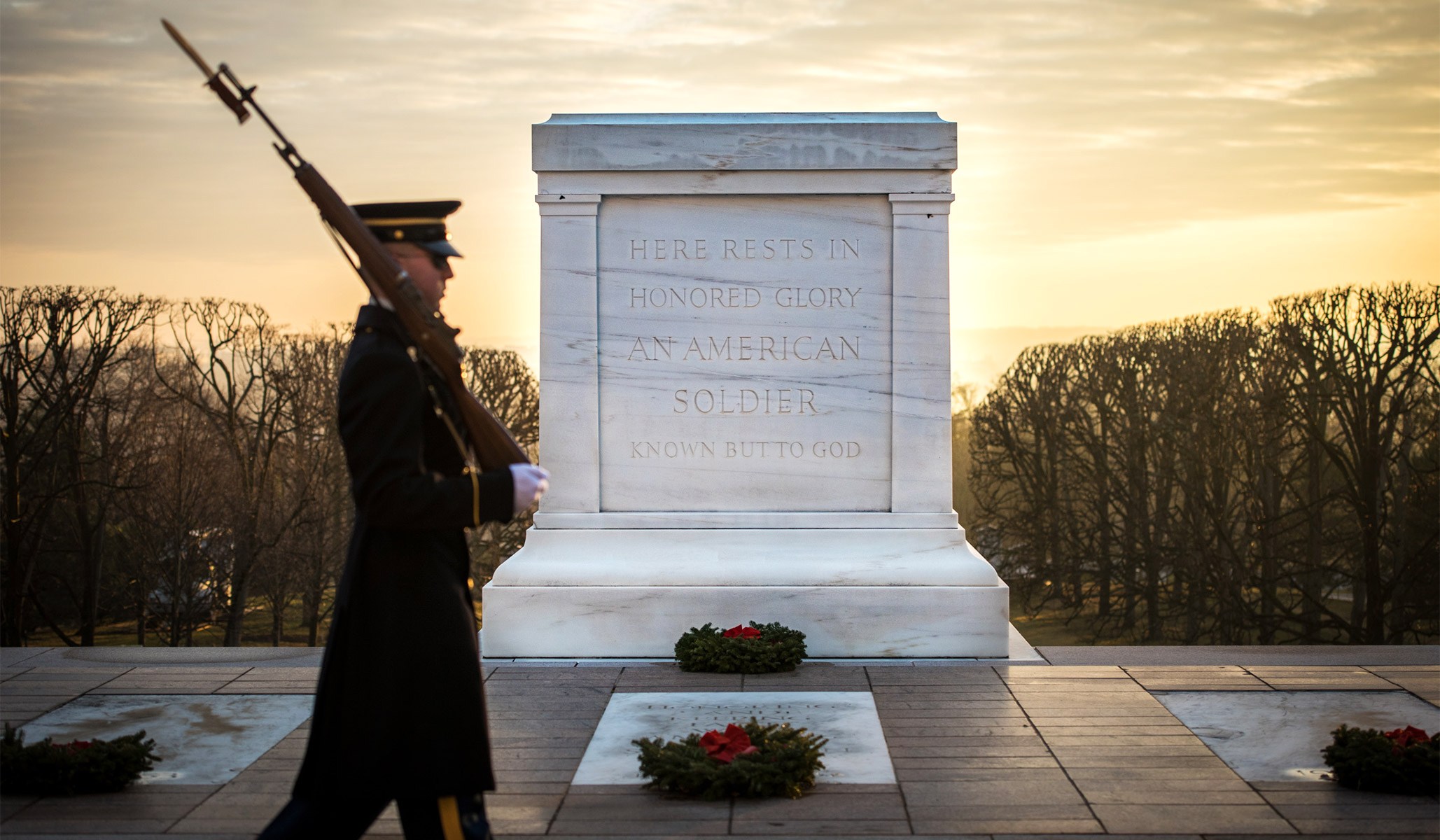



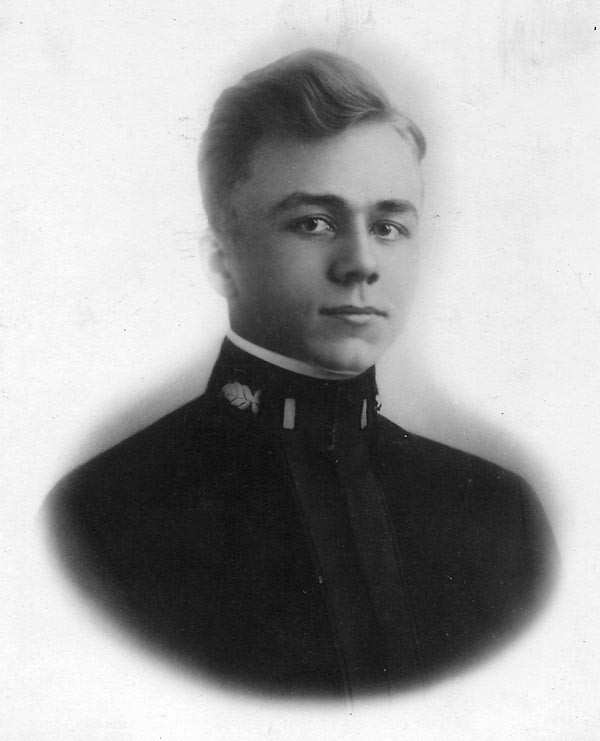
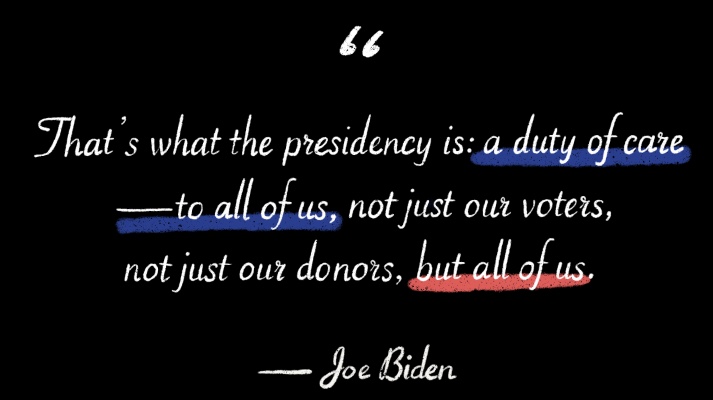

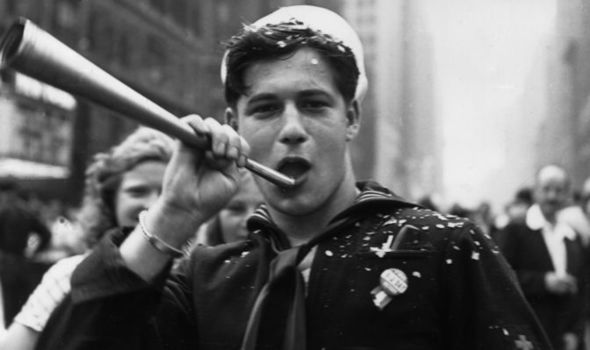
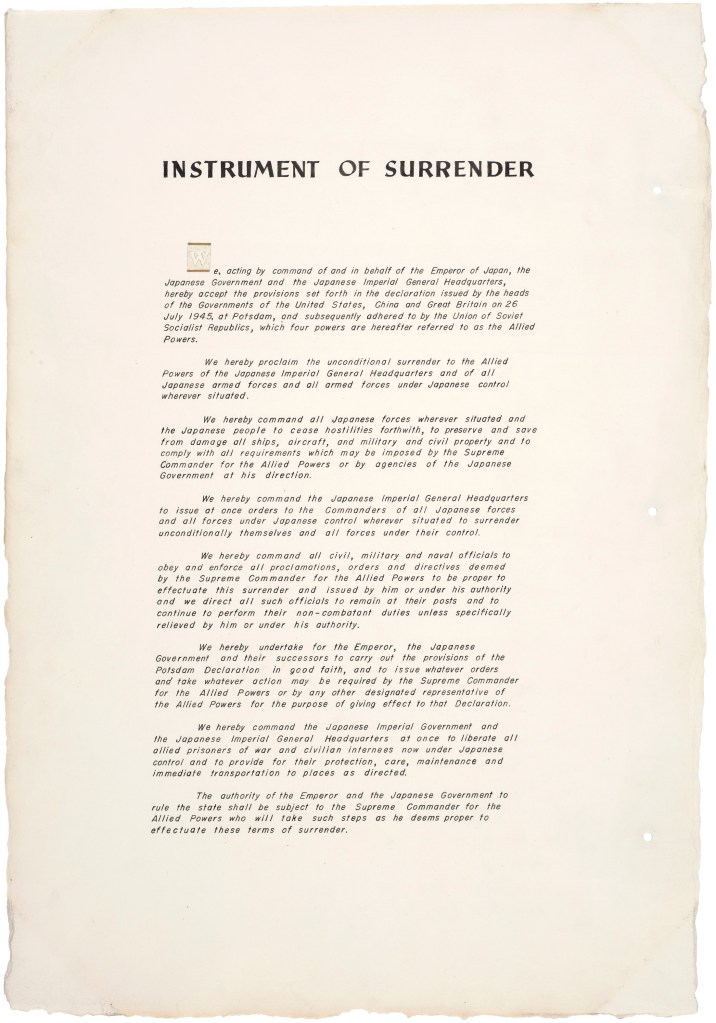


 Joe
Joe




 The Closet Professor