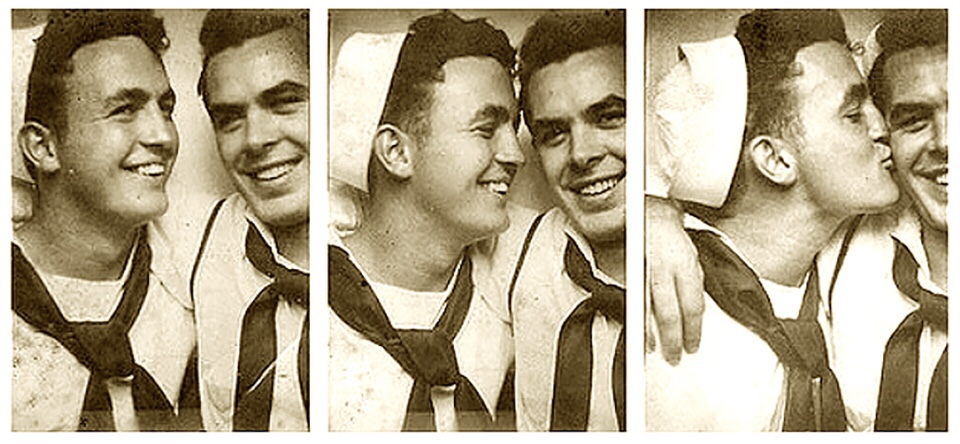
Two unknown American sailors in a photo booth. Image courtesy of Friends of the National WWII Memorial.
The Fateful Day By Fremont “Cap” Sawade
‘Twas the day before that fateful day, December Sixth I think they say. When leave trucks passed Pearl Harbor clear The service men perched in the rear. No thought gave they, of things to come. For them, that day, all work was done. In waters quiet of Pearl Harbor Bay, The ships serene, at anchor lay.
Nor did we give the slightest thought Of treacherous deeds by the yellow lot. Those men whose very acts of treason, Are done with neither rhyme nor reason. For if we knew what was in store We ne’re would leave that day before. For fun and drink to forget the war Of Britain, Europe, and Singapore.
For all of us there was no fear This time of peace and Christmas cheer. Forget the axiom, might is right, Guardians of Peace, were we that night. We passed the sailors in cabs galore, Those men in white who came ashore. But some will ne’re be seen again, In care-free fun, those sailor men.
The Sabbath Day dawned bright and clear, A brand of fire ore the lofty spear, Of Diamond Head, Hawaii’s own. A picture itself that can’t be shown, Unless observed with naked eye, That makes one look, and stop, and sigh. What more could lowly humans ask To start upon their daily task.
The men asleep in barracks late, Knew no war, that morn at eight. The planes on fields, their motors cold, Like sheep asleep among the fold. The ships at anchor with turbines stilled, Their crews below in hammocks filled. And faint, as tho it were a dream, A sound steels on upon this scene.
A drone of many red tipped things, The Rising Sun upon their wings. Those who saw would not believe, And those that heard could not conceive. A single shocking, thundering roar, Followed by another and many more. To rob the sleep from weary eyes, Or close forever those that died.
A hot machine gun’s chattering rattle, Mowed men down like herds of cattle. A bomb destroys an air plane hangar, The planes within will fly no more. Bombs explode upon a ship, Blasting men into the deep, To sink without the slightest thought Of what brought on this hell they caught.
What seems like years, the horrible remains, Blasting men and ships and planes. And just as quick as they had come, Away they went, their foul deeds done. To leave the burning wreckage here, The scorching hulks of dead ships there. And blasted forms of dying men, Alive in hell, to die again.
At night the skies were all but clear, The rosy glow of a white hot bier, Showed on clouds the havoc wrought, And greedy flames the men still fought. But from the ruins arose this cry, That night from those who did not die, “Beware Japan we’ll take eleven, For every death of December Seven.”
And from that day there has arisen, A cry for vengeance, in storms they’re driven. This fateful day among the ages, Shall stand out red in Hist’rys pages. Those men whom homefolk held so dear, Will be avenged, have no fear. And if their lives they gave in vain, Pray, I too, may not remain.
About the Poet and the Poem
Fremont “Cap” Sawade, who passed away at age 94 in 2016, wrote this the poem right after Pearl Harbor. Sawade was assigned to an Army anti-aircraft regiment in Honolulu on liberty, having breakfast the morning of the attack on Pearl Harbor eighty years ago today. Loud explosions sent him racing to his base in a cab. He could see the Japanese planes flying low, dropping bombs, and strafing battleships with machine gun fire. Back at Camp Malakole, Sawade ducked for cover when the Japanese Zeros strafed it. The attack caught the Americans completely off guard. Sawade said his unit didn’t even have ammunition for their big guns.
Two days later, with the wreckage of the Pacific Fleet still smoking, he sat at a desk at Hickam Field and started writing a poem. He’d never written one before. He hasn’t written one since. But over the next week, this one flowed out of him. He called it “The Fateful Day.” It captures how idyllic life was, before the attack. How lucky the service members felt to wake up every day with a view of Diamond Head. The poem captures their surprise, and then their anger at the Japanese, including a slur that was common then, offensive now. It captures the horror — “A hot machine gun’s chattering rattle/Mowed men down like herds of cattle” — and the raw thirst for vengeance.
He came home from the war to his native San Diego, worked a variety of jobs, including 10 years as a building inspector for the city of El Cajon. He got married, raised a family, and lived in Rancho Bernardo with his wife, Gloria. Over the years, he showed the poem to a few friends. He shared it a time or two in military newsletters. But the truth is he never thought it was anything special. However, today, nearly 80 years after he wrote it, it serves as a primary source for the thoughts of the men who lived through the attack on Pearl Harbor that fateful Sunday morning.
Yesterday, I was reading an article in The New Yorker by Morgan Meis about the discovery of the world’s oldest cave painting. It was a fascinating story of how an archeological team in Indonesia’s island of Sulawesi was exploring a remote valley. There were no roads into the valley, and there was nothing on their maps to suggest a way through the bush and mountain peaks. It sounded like a real archeological adventure into the unknown. Their maps show few signs of habitation in the valley. The team asked for directions anytime they encountered anyone, and they felt as if they were continually lost. Eventually they were able to find a path through a cave that led into this hidden valley, which the archeologists continue to call the “secret valley”—a term they use to protect the caves, which they don’t want to be easily found. The Lascaux cave found in Montignac, France was closed to the public in 1963, because their condition was deteriorating due to the exhalations of the 1,200 visitors per day, the presence of light, and changes in air circulation creating problems that threatened the preservation of the cave. Keeping the Indonesian valley secret is the only way at this time to preserve what the archeological team found.
The area of the secret valley was inhabited by an especially isolated group of Bugis people, an ethnic group of southern Sulawesi who I found to be a very interesting people because they recognize five separate genders. These Bugis claimed never to have seen a single Westerner in their valley. Something I will get back to in a minute. The archeological team began to explore the caves in the area and, a few days later, one of the archeologists entered one of them alone. There he found a spectacular painting of a Sulawesi warty pig, a medium-sized, hairy boar with small pointy ears and short legs. Near the rear of the pig was painted silhouettes of two human hands. The archeologist recognized that the artwork was very old, but just how old, he did not know. Technology was rough in to test the age of the painting using uranium-series dating. The answer was astonishing: the painting of the warty pig was at least 45,500 years old. This makes it the oldest known example of figurative cave art in the world. The cave paintings at Lascaux are estimated at around 17,000 years. The famous animal paintings in the Chauvet cave, of France, previously thought to be the oldest, are dated at around thirty-five thousand years old; the Sulawesi warty pig outdoes them by roughly ten thousand years.
All of this was fascinating, but what struck me about the article was one sentence: “The area was inhabited by an especially isolated group of Bugis people, an ethnic group of southern Sulawesi who recognizes five separate genders.” While the cave paintings are fascinating and add to the history of early humans, I find the concept of societies that accept more than two genders to be interesting, and I knew I had to do more research on this.
The Bugis people are the most numerous of the three major ethnic groups of South Sulawesi, Indonesia, with about 3 million people. Most Bugis are Muslim, but many pre-Islamic rites continue to be honored in their culture, including the view that gender exists on a spectrum. In contrast to the idea of only two genders (male and female), Bugis society recognizes five genders: makkunrai, oroané, bissu, calabai, and calalai. The concept of five genders has been a key part of their culture for at least six centuries. Oroané are comparable to cisgender men, makkunrai to cisgender women, calalai to transgender men, and calabai to transgender women, while bissu are androgynous or intersex and revered shamans or community priests.
Native American societies often recognized three genders: male, female, and two spirit similar to the Bugis concept of bissu. For one to be considered bissu, all aspects of gender must be combined to form a whole. It is believed that you are born with the propensity to become a bissu, revealed in a baby whose genitalia are ambiguous. These ambiguous genitalia need not be visible; a normative male who becomes a bissu is believed to be female on the inside. This combination of sexes enables a ‘meta-gender’ identity to emerge. However, ambiguous genitalia alone do not confer the state of being a bissu. The person must also learn the language, songs and incantations, and have a gift for bestowing blessings in order to become bissu. They must remain celibate and wear conservative clothes.
Bugis society has a cultural belief that all five genders must coexist harmoniously; but by 2019 the numbers of bissu had declined dramatically, after years of increasing persecution and the tradition of revering bissu as traditional community priests. Bissu have mostly survived by participating in weddings as maids of honor and working as farmers as well as performing their cultural roles as priests. Hardline Islamic groups, police, and politicians have all played their part in Indonesia’s increased harassment and discrimination of nonheterosexuals. After independence in 1949, the ancient Bugis kingdoms were incorporated into the new republic and bissus’ roles became increasingly sidelined. A regional Islamic rebellion in South Sulawesi led to further persecution. As the atmosphere became increasingly hostile to nonheterosexuals, fewer people were willing to take on the role of bissu.
According to the Bugis gender system, calabai are generally assigned male at birth but take on the role of heterosexual females. Their fashions and gender expression are distinctly feminine but do not match that of “typical” heterosexual women. Calabai embrace their femininity and live as women, but do not think of themselves as female, nor wish to be female or feel trapped in a male’s body, and they are respected by society. They are supported by family, and men accept them as males, living in feminine embodiment. The calalai are assigned female at birth but take on the roles of heterosexual males. They dress and present themselves as men, hold masculine jobs and typically live with female partners to adopt children.
The concept of five genders is not as fluid as a full spectrum of gender. The Bugis concept is more rigid than many who reject the idea of a gender binary. Along with cisgender males and cisgender females are transgender men and transgender women, nonbinary, genderfluid, genderqueer, and agender individuals, among many other possible definitions. Some experts suggest that there may be 100 genders or more and different cultures may use different identifications for one gender or another. The key, advocates suggest, is not pinning down a definitive list of gender possibilities but to be accepting of everyone’s declared gender.
For generations, millions of Americans have answered the call to serve — taking the sacred oath to defend and preserve our Nation’s ideals of liberty and democracy. These patriots represent the best of us. On Veterans Day, we honor their service, dedication, and valor and are forever grateful for their sacrifice.
Our Nation has only one truly sacred obligation: to properly prepare and equip our service members when we send them into harm’s way and to care for them and their families when they return home. For our 19 million veterans, that means ensuring that they have access to the support and resources for a future of security, opportunity, and dignity. This is even more important as we continue to recover from the global COVID-19 pandemic.
Our obligation to support our Nation’s veterans and their families is personal for me and the entire Biden family, and I remain committed to ensuring that every veteran receives the care and support they have earned. The recently passed bipartisan Infrastructure Investment and Jobs Act will create millions of good jobs for veterans and grow opportunities for veteran-owned businesses. My Build Back Better framework also prioritizes improvements to VA health care, ensuring that every veteran — including our often-underserved female and LGBTQ+ veterans — receives competent, world-class health care through the Department of Veterans Affairs. Last month, the White House Gender Policy Council released the first-ever United States Strategy for Gender Equity and Equality, which included the unique needs and contributions of women service members and veterans. And the Department of Veterans Affairs is also working to get every eligible veteran the information and opportunity they need to register and vote, protecting their voice in the democracy they fought to preserve.
Ensuring veterans have timely access to services and benefits is at the center of my Administration’s commitment to fulfilling our sacred obligation. This includes addressing the adverse health effects of service-related exposures. In August, the Department of Veterans Affairs announced it will begin processing disability claims for respiratory conditions connected to exposure during military service in Southwest Asia and other areas. My Administration also added three conditions to the list of those presumptively associated with exposure to Agent Orange, ending the long wait for disability benefits for many Vietnam era veterans. In the coming months, we are committed to taking additional action to address potential adverse health effects associated with military environmental exposures.
So many of our veterans carry the scars from their service — both visible and invisible — and it is our Nation’s responsibility to help them heal. Too many veterans and service members have considered suicide or taken their own lives, and addressing this tragedy is a national responsibility. That is why I have made military and veteran suicide prevention a top priority, and earlier this month, I released a new comprehensive, cross-sector public health strategy to reduce military and veteran suicide. Implementing this approach will unite us around a common mission and accelerate meaningful improvements in suicide prevention programs, helping us live up to our sacred obligation to those who have served in our Nation’s Armed Forces.
Fulfilling our Nation’s promise to our veterans and military families, caregivers, and survivors is not only a moral imperative — it is crucial to our national security and to maintaining the finest military the world has ever known. We are a Nation that keeps our promises. That is why my Administration is dedicated to a whole-of-government approach in responding to the needs of our veterans and their families, caregivers, and survivors.
Through the First Lady’s work with Joining Forces — the White House initiative to support veteran and military families, caregivers, and survivors — my Administration is addressing employment and entrepreneurship, military and veteran child education, and health and well-being for veteran families. Earlier this year, the First Lady met with military and veteran families to learn how we can better support and prioritize their needs, and in September, Joining Forces and the National Security Council released a report outlining the first round of Administration-wide commitments and proposals that support veteran and military families, caregivers, and survivors. These efforts will honor our sacred obligation to support our veteran families and ensure they receive the resources they need to thrive.
On Veterans Day, we honor our Nation’s veterans, who have given so much to protect our freedoms and the freedom of others around the globe. They represent the highest ideals of our country. While we can never fully repay the debt we owe these heroes, we will honor their service and provide them the care and support they deserve. We also salute and show gratitude for all who ensure our Armed Forces remain strong, united, and unmatched.
In respect and recognition of the contributions our veterans and their families, caregivers, and survivors have made to the cause of peace and freedom around the world, the Congress has provided (5 U.S.C. 6103(a)) that November 11 of each year shall be set aside as a legal public holiday to honor our Nation’s veterans.
NOW, THEREFORE, I, JOSEPH R. BIDEN JR., President of the United States of America, do hereby proclaim November 11, 2021, as Veterans Day. I encourage all Americans to recognize the valor, courage, and sacrifice of our veterans through appropriate ceremonies and private prayers. I call upon Federal, State, and local officials to display the flag of the United States of America and to participate in patriotic activities in their communities. And I call on all Americans, including civic and fraternal organizations, places of worship, schools, and communities, to support this day with commemorative expressions and programs.
IN WITNESS WHEREOF, I have hereunto set my hand this ninth day of November, in the year of our Lord two thousand twenty-one, and of the Independence of the United States of America the two hundred and forty-sixth.
Macbeth, Act IV, Scene I [Round about the cauldron go] By William Shakespeare
The three witches, casting a spell
Round about the cauldron go; In the poison’d entrails throw. Toad, that under cold stone Days and nights hast thirty one Swelter’d venom sleeping got, Boil thou first i’ the charmed pot.
Double, double toil and trouble; Fire burn and cauldron bubble.
Fillet of a fenny snake, In the cauldron boil and bake; Eye of newt, and toe of frog, Wool of bat, and tongue of dog, Adder’s fork, and blind-worm’s sting,
Lizard’s leg, and howlet’s wing, For a charm of powerful trouble, Like a hell-broth boil and bubble.
Double, double toil and trouble; Fire burn and cauldron bubble.
Scale of dragon, tooth of wolf, Witches’ mummy, maw and gulf Of the ravin’d salt-sea shark, Root of hemlock digg’d i’ the dark,
Liver of blaspheming Jew, Gall of goat, and slips of yew Sliver’d in the moon’s eclipse, Nose of Turk, and Tartar’s lips, Finger of birth-strangled babe Ditch-deliver’d by a drab, Make the gruel thick and slab: Add thereto a tiger’s chaudron, For the ingredients of our cauldron.
Double, double toil and trouble; Fire burn and cauldron bubble.
The Three Witches, also known as the Weird Sisters or Wayward Sisters, are characters in William Shakespeare’s Macbeth. They have always been one of my favorite parts of the play. I used to love teaching Macbeth and reading the witches’ parts aloud. The witches are one of the most striking and memorable aspects of Macbeth. However, many of the witch scenes in the play were most likely not written by Shakespeare at all. They were taken from another play, by Thomas Middleton, and added to Macbeth by Shakespeare’s acting company after he had died. They draw heavily on the conventional theatrical stereotypes of Shakespeare’s time, giving us witches that are sometimes scary, sometimes silly, which is how they’ve been played since then, although often directors try to make them as frightening as possible.
Shakespeare’s historical source for the events of the play, Holinshed’s Chronicles, says that the witches who appeared to Macbeth and Banquo looked like “creatures of elder world,” and that many people thought they were “the goddesses of destiny.” This is in keeping with the way the witches refer to themselves in their dialogue: they call themselves “the weïrd sisters,” where “weïrd” comes from the Old English term wyrd, meaning “fate” or “destiny.” And the primary power that the witches have in the play is indeed the ability to prophesy about what will happen in the future.
Shakespeare’s Macbeth was written not long after King James VI of Scotland became James I of England in 1603, and James’ interest in the subject of witchcraft undoubtedly influenced the play. Of all the plays that Shakespeare wrote during the reign of James I, who was patron of Shakespeare’s acting company, Macbeth most clearly reflects the playwright’s relationship with his sovereign. Scottish history and legend contain a real life King Duncan, who was really murdered by Macbeth (the real Macbeth apparently was a decent king— that wouldn’t have really worked for Shakespeare’s play though). Banquo, too, was apparently a real figure. King James claimed descendance through him, so in Macbeth, when the Weird Sisters tell Banquo that “thou shalt get [beget] kings, though thou be none,” Shakespeare was really trying to help legitimize James’s place on the Scottish throne— he was saying that Banquo’s descendants deserve to be king, therefore James has a rightful claim to the throne.
Macbeth contains many supernatural elements, including the witches. James I was an avid scholar of all things strange, weird, and superstitious. In 1597, the king published a book called Daemonologie; it was a study of witchcraft, necromancy, demons, werewolves, vampires, and all sorts of other spooky things. In fact, much of the witchcraft in Macbeth was actually taken directly from Daemonologie, probably as a form of flattery to the king himself. It goes further than that, though. Witchcraft seems to have been a real obsession of James, as he was heavily involved in a series of witch trials in 1590. James had become convinced of the danger of witchcraft when he sailed to Copenhagen in 1590 to marry Princess Anne, sister of the King of Denmark. During their return to Scotland, they experienced terrible storms and had to shelter in Norway for several weeks before continuing. The admiral of the escorting Danish fleet blamed the storm on witches. Several nobles of the Scottish court were implicated, and soon more than a hundred suspected witches in North Berwick in Scotland were arrested. Supposedly, James believed a coven of witches were trying to personally attack him, which was high treason, so James had them tracked down, forced them to confess to witchcraft, tortured them, and had them burned at the stake. So it’s no wonder that the witches in Macbeth are so demented and evil! Shakespeare wanted to make it clear that he was on the king’s side in the whole witch debacle.
This is why I love the witches in Macbeth. There is so much history and intrigue in the play, though exaggerated and twisted to fit the purposes of Shakespeare. So remember, when your standing around your cauldron this Halloween:
Double, double toil and trouble; Fire burn and cauldron bubble.
Museums with a particular specialty, such as the one that I work for which has a mission to preserve our university’s history, use eBay on a regular basis for acquisitions. We have alumni who have searches set up to acquire items for the museum, and we also consistently search eBay for new acquisitions. Sometimes, it is the only way to get certain items. We also use various brick and mortar auction houses for acquiring art and objects related to the museum’s mission.
Recently, eBay has shifted company policy in ways that will make acquisitions of gay material, especially erotica difficult. While this will not affect our collecting abilities, it does hinder other museums who are collecting items that may be considered on the fringes of society. About twenty years ago, the historian Vi Johnson won an eBay auction for a numbered first edition of “Sex Life in England Illustrated,” by Iwan Bloch, an early sexologist. Johnson recalled that, afterward, she was chatting to the buyer she had bid against thinking she’s made a new friend she could talk to about finding erotica. However, the other bidder thought she was collection for the same reason he was. The rival bidder was a buyer for right wing groups intent on buying and destroying erotica. Johnson was horrified as any true historian would be. So, Johnson dedicated herself to preserving the histories of sexuality and making them accessible. “I swore that if I could find it, grab it, steal it, buy it, borrow it, beg it, I was going to save it,” she said.
Johnson and her wife, Jill Carter, now count some forty thousand books and artifacts in their queer-focused Carter/Johnson Leather Library and Collection, located in Newburgh, a suburb of Evansville, Indiana. Early acquisitions came through friends and friends of friends within the BDSM scene, but, for years, Johnson has depended heavily on eBay to learn what’s available and for acquisitions. (We do the same thing with material about our university). The collection comprises thousands of books, magazines, posters, art, club and event pins, newspapers, event programs and ephemera showing leather, fetish, S/M erotic history. The collection has spilled over from Johnson and Carter’s single-level brick home into a second house. Johnson recently set up a “Scholar’s Room” in the new house to welcome researchers who desire to study the archive.
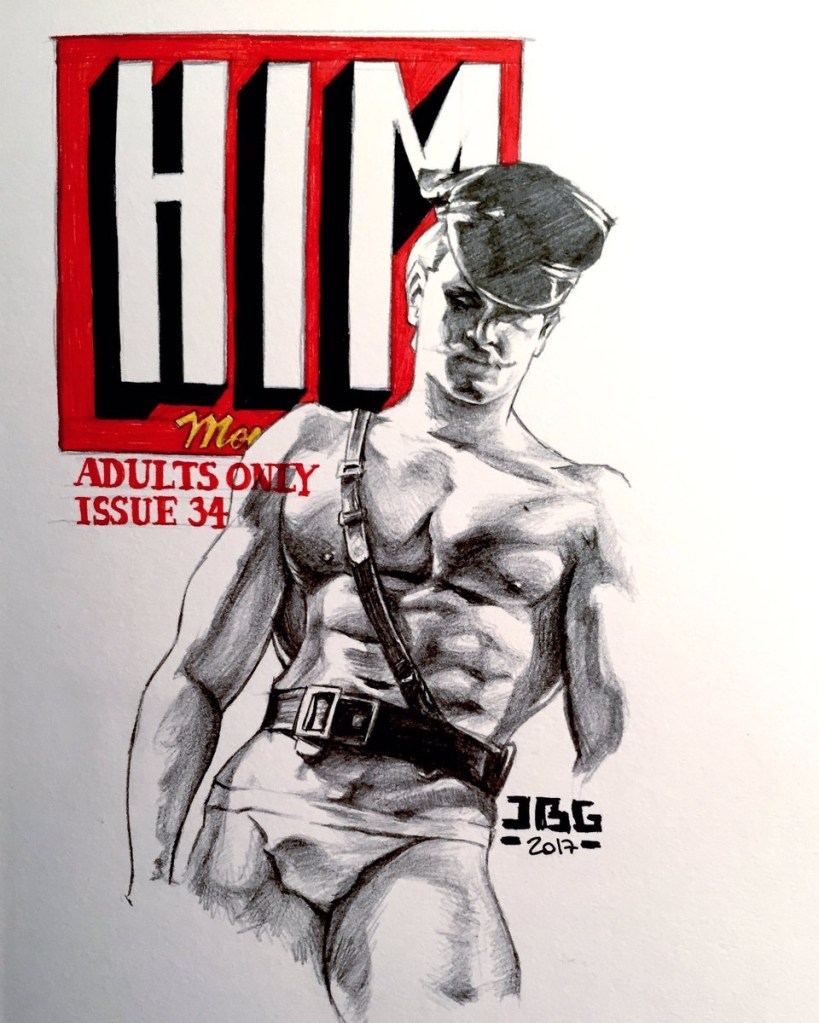
When in May, eBay banned the sale of “sexually oriented materials”—including magazines, movies, and video games—and closed its “Adults Only” category to new listings in the United States, they largely ended the collecting of material through eBay for museums like Johnson and Carter’s. There are a few explicit exemptions to the new eBay policy, including Playboy, Penthouse, the gay art zine Butt, and the satirical, women-run erotica magazine On Our Backs. “Nude art listings that do not contain sexually suggestive poses or sexual acts are allowed,” the policy states. Materials falling afoul of such distinctions—which could presumably include anything from reproductions of Michelangelo’s “The Expulsion from Paradise” to back copies of Black Inches—are, apparently, now outside the bounds of acceptable behavior on eBay.
The ban appears to be related to the House’s Fight Online Sex Trafficking Act and the Senate’s Stop Enabling Sex Trafficking Act, known together as fosta–sesta, an effort by victim’s-rights advocates and right-wing activists to crack down on sex work. One feature of the legislative package was to make Web sites liable for hosted content that might “promote or facilitate the prostitution of another person.” After the former twice impeached president signed fosta–sesta into law, in 2018, Craigslist shut down its personals listings, Tumblr banned sexual content, Facebook prohibited the formation of groups organized around sexual encounters, and Instagram ramped up its policing of user content, especially that which includes any hint of human nudity. Also of possible relevance: eBay recently began using the Dutch fintech company Adyen for electronic payment services, which refuses to participate in the sale of adult materials. Similar concerns by payout providers were reportedly at the center of the recent decision by OnlyFans to ban sexual content—a move they reversed after considerable outcry led by the sex workers who, in large part, helped the company build a valuation of some one billion dollars.
In researching his book “Bound Together: Leather, Sex, Archives, and Contemporary Art,” Andy Campbell, an associate professor of critical studies at the Roski School of Art and Design, used both eBay and the Johnson/Carter Library, in addition to other archives around the country. “Bound Together” argues that queer archives are particularly precarious, as they often lack institutional support structures, and their content is at odds with community guidelines. Yet, by making queer culture accessible, they also increase the likelihood of that more positive erasure: assimilation.
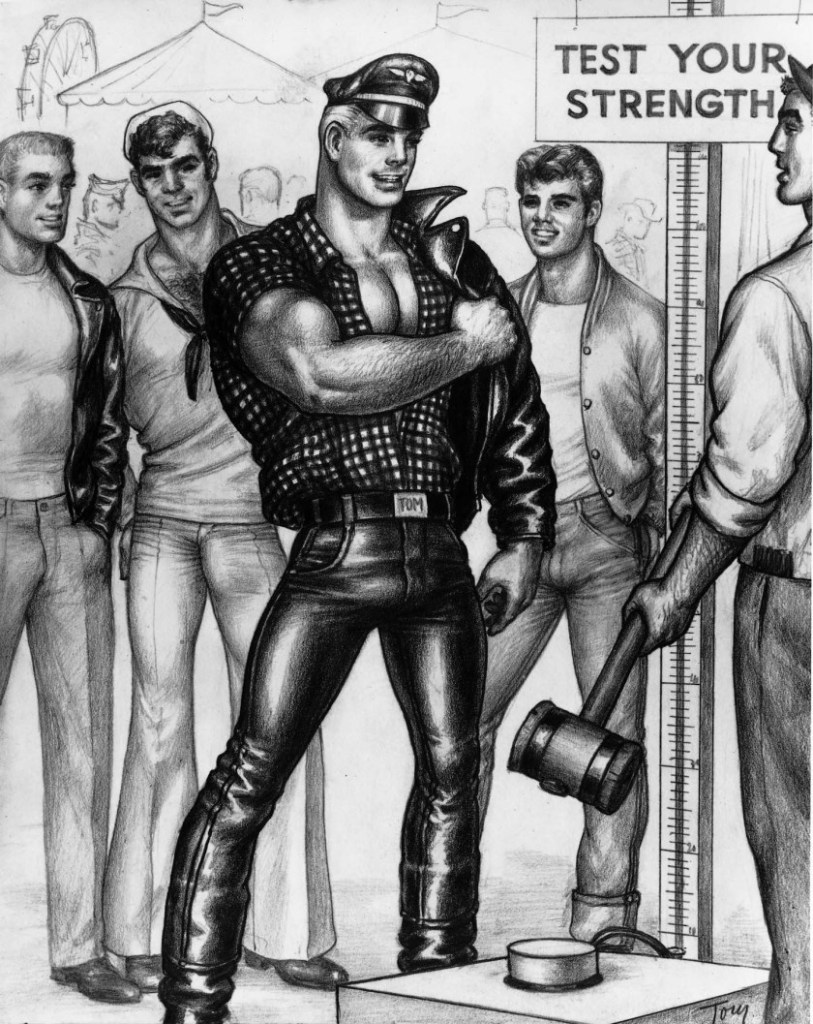
As marginalized communities become more assimilated into the mainstream, Johnson’s archive, the Leather Archive and Museum in Chicago, the Tom of Finland Foundation, the GLBT Historical Society, and those like them stand as “proof of who did it, what was done, and who was there.” But no one knows how much more of this history remains to be discovered and preserved. So much of the history of marginalized communities has been lost or destroyed. It is one of the reasons that I am a major proponent of oral histories, because we can talk to the people who were part of the LGBTQ+ community, the leather community, or the many other communities that are often deemed perverse. We can get their stories. Sadly, because of the AIDS pandemic, too many of those stories have been lost, and because of that, the material they left behind is even more crucial to collect and preserve.
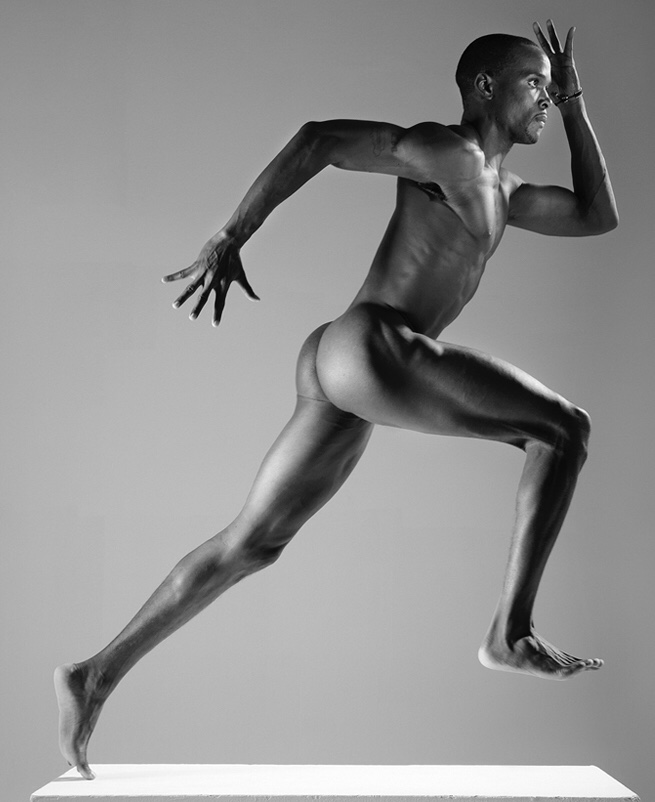
If the modern Olympic Games ran true to the strict customs of ancient Greece, they might well today have been called the “Naked Games”. From the early 8th century BC, Olympic athletes competed in the nude. There are indisputable records going back to Athenian philosopher Plato in the 5th century BC and even Homer’s Iliad, as well as many explicit drawings that confirm it was common practice for all male track and field athletes to take part naked. This included the often-dangerous sports of discus throwing, wrestling, boxing, and horse racing without protective clothing.
There was a version of protection used by the Ancient Greeks, but one that would be odd to us today to be considered much protection. To protect the penis during wrestling matches and other contact sports, the men would tie a string known as a kynodesme around the tip of their foreskin enclosing their glans, thus keeping the glans safe. The kynodesme could then either be attached to a waist band to expose the scrotum or tied to the base of the penis so that the penis appeared to curl upwards.
The only exception to the nudity rule seems to have been for charioteers, who wore long white tunics. The words gymnastics and gymnasium are based on the Greek adjective gymnos, which means lightly-clad or naked. For non-charioteers, the only adornment on the athletes’ bronzed, muscular torsos would have been the gleam of olive oil with which they ritually anointed themselves.
Some historians have believed that the reason for competing nude was to make sure that women did not compete. According to one legend, it was discovered that a woman had competed and won, so it was decreed that athletes would compete nude from that point on to make sure that only men competed in the Olympics. It was also said that this was done to make sure that non-Greeks, particularly Jews or others who practiced circumcision, could not compete. Only a man who was uncircumcised was allowed to compete.
According to Dionysius of Halicarnassus, a writer in the 1st century BCE, Greek athletes did not compete in the nude until the 15th Olympiad in 720 BCE, more than 2700 years ago. That was more than half a century after the birth of the first Olympic Games, which originated in Olympia, in southern Greece, in 776 BCE. A Spartan runner named Acanthus was said to have set the fashion by appearing without the customary loincloth. Two hundred years later, the origin of this practice of nudity was attributed to another sprinter, Osippus, who won the one-stade footrace (about 200 yards) at the Olympics of 720 BCE. It was said he realized that a naked man could run faster than one impeded by a loincloth.
In the 7th century CE, more than 1300 years later, writer Isidore of Seville suggested that during a race in Athens, one of the runners had the bad luck to trip over his own loincloth when it slipped down. A magistrate in charge of the games ordered a new ruling that athletes should compete in the nude. The historian Thucydides, who lived at the end of the 5th century BCE, wrote that it was the “Spartans who were the first to play games naked, to take off their clothes openly and to rub themselves down with olive oil after their exercise. In ancient times even at the Olympic Games the athletes used to wear coverings for their loins and indeed this practice was still in existence not very many years ago.”
Women were not completely excluded from the Olympics. While married women were not allowed to participate in, or to watch, the ancient Olympic Games, unmarried women could attend the competition, and the priestess of Demeter, goddess of fertility, was given a privileged position next to the Stadium altar. During the classic period in Greece (500–323 BCE), women were allowed to participate in sporting events in Sparta, and there were two other events for sportswomen from other parts of Greece, Athens and Delos.
The closest thing to a women’s version of the Ancient Olympics were the Heraean Games, a separate festival honoring the Greek goddess Hera, which was held to demonstrate the athleticism of young, unmarried women. The athletes, with their hair hanging freely and dressed in special tunics that cut just above the knee and bared their right shoulder and breast, competed in footraces. The track shortened to about one-sixth the length of the men’s track in the Olympic Stadium. It’s uncertain if men were barred from these all-female races. Little is known about this festival other than what was written by Pausanias, a 2nd century CE Greek traveler. He mentions it in his description of the Temple of Hera in the Sanctuary of Zeus and says that it was organized and supervised by a committee of sixteen women from the cities of Elis. The festival took place every four years, when a new peplos, a body-length garment established as typical attire for women in ancient Greece, was woven and presented to Hera inside her temple.
It wasn’t that women were discouraged from sports in general; physical fitness was highly valued by women in Greece. A few women have been documented driving chariots, owning horses that won Olympic competitions, swimming, juggling, performing acrobatics, and potentially even wrestling. Spartan women were well-known for promoting physical education, believing good fitness assisted in healthy childbirth. By the first century CE, female athletic competitions were common under the Roman Empire. The first woman recorded to have won an event in the Olympics was Kyniska (or Cynisca) of Sparta, the daughter of Eurypontid king, Archidamus II, and the full sister of King Agesilaus (399–360 BCE). She won the four-horse chariot race in 396 and again in 392.
For you, brethren, have been called to liberty; only do not use liberty as an opportunity for the flesh, but through love serve one another.
—Galatians 5:13
Today is the 245th anniversary of the Declaration of Independence. Churches across America will likely sing “God Bless America,” “America the Beautiful,” and “The Battle Hymn of the Republic.” The songbook from my church did not have the “patriotic songs” section found in the Baptists, Methodist, or Presbyterian hymnals of my youth, so we never sang these songs in my church. We only sang very traditional hymns, like “Rock of Ages,” “Amazing Grace,” etc. Nothing adorned the knotty pine walls of the small church I grew up in. The only decoration in the church was a side table with a large Bible on a lower shelf and a vase of flowers on top. Two very plain simple cane bottomed deacon chairs sat behind the pulpit. It was the only church I knew with such simple décor. The Southern Baptist church where I was forced to attend vacation Bible school every summer was far more elaborate. Behind the pulpit stood the Christian flag and the American flag. The same was true of the Presbyterian church where I had piano recitals and the Pentecostal church my best friend attended.
Politics or patriotism rarely made an appearance in my church, but it did in many other churches across the country. In many churches, patriotism and religion have been interwoven into their theology. These churches believe in a Christian faithfulness where God desires America to do great, to be great, has ordained America to be at the top, and that America has been baptized by the Church. While this is not something I was taught or ever believed, it’s unrealistic for us not to realize that in the United States, Christianity and patriotism are seemingly inextricably woven together. As the world changes and equality and acceptance grows, the United States will no longer be able to claim (whether it was ever true or not) that America is a beacon of freedom, “the land of the free and the home of the brave.” If we do not either follow the ethical tenets of most religions, including the teachings of Christ or throw off the chains of the uniquely American version of Christianity, then America will fall further and further behind the quest for human rights for all.
Even though the First Amendment of the U.S. Constitution says, “Congress shall make no law respecting an establishment of religion, or prohibiting the free exercise thereof,” religion has been intricately laced in with American history. In 1630, the first ships of the Great Puritan Migration sailed to the New World, led by John Winthrop. During the crossing, Winthrop preached a sermon entitled “A Model of Christian Charity.” He told his followers that they had entered a covenant with God according to which he would cause them to prosper if they maintained their commitment to God. In doing so, their new colony would become a “City upon a Hill,” meaning that they would be a model to all the nations of Europe as to what a properly reformed Christian commonwealth should look like. Since then, politicians have used the “city upon a hill” analogy for political purposes to push for American exceptionalism.
“A Model of Christian Charity” serves as an important text in United States history, conveying the optimistic, confident, community-focused mindset in which the New England colonies were founded. Perry Miller, a historian considered one of the founders of American Studies, wrote that the sermon “stands at the beginning of [the] consciousness” of the American mind. Several figures in U.S. politics—beginning as early as John Adams—have referenced this text in public speeches when trying to convey themes of unity and idealism, most often citing the symbol of “a city upon a hill.” In his 1980 Election Eve speech, Ronald Reagan asserted his belief that “Americans…are every bit as committed to that vision of a shining city on a hill, as were those long-ago settlers.” More recently, public figures have utilized the sermon to argue how far the United States has strayed from its values. In his blistering critique of the then-presidential candidate and future twice impeached and disgraced former president, 2012 Republican presidential nominee Mitt Romney posited that “[Hair Führer’s] personal qualities would mean that America would cease to be a shining city on a hill.” The disgraced former president tried his hardest to destroy the United States, ironically, with the help of American evangelicals.
However, most politicians do not pay attention to the rest of Winthrop’s sermon. They focus on the “city upon a hill,” but not on the rest of the message. Winthrop used logical reasoning combined with a sympathetic nature to make his point to the new Puritan settlers. To remove this work’s central arguments about love and relationships is to lose the sense of the whole completely. The Governor laid out his argument for charity and decent human behavior in the community. While exceptionalism was one of the sermon’s themes, Winthrop explained how God chose the few people on the boats to go to America to carry out their mission. He also mentioned how the rest of the world would watch them. This is the part that politicians have always latched onto, but they often ignore the other main points of the sermon. Winthrop believed that charity, giving to others who need help—not only the poor but also the community—would make the new lands the “city upon a hill” in his view of exceptionalism. Winthrop also believed that communalism reflected the Puritan ideals of “love, unity, and charity.” He mentioned that people have different things to offer each other, and this induced a need for each other, helping the community. He also said that different types of people were on the ship during the sermon but had the same goal of serving God. This was also represented by people being different parts of one body. Through his use of language connected to women’s work, such as “knit,” Winthrop suggests the importance of women in holding the community together. It’s amazing how much is forgotten by the politicians who use a small part of the sermon for their purposes.
Many patriotic evangelical Christians use the Bible to defend their ideas that God is pro-government (or, more specifically, He favors their preferred brand of government). They often use Matthew 22:21, in which Jesus says, “Render therefore to Caesar the things that are Caesar’s, and to God the things that are God’s.” It’s a radical statement publicly declaring that Caesar and Rome weren’t God. Most Roman emperors advocated the belief that they were gods and should be worshiped. In this passage, Jesus is warning us to avoid such thinking.
Romans 13:1 is also often used by people to defend their political allegiances: Let every soul be subject to the governing authorities. For there is no authority except from God, and the authorities that exist are appointed by God. But these texts have a significant caveat, where the authors presuppose that this “submitting” is coinciding—and never contradicting—the supreme call to love God and love others. This becomes obvious when looking at other passages that explicitly say so, such as Matthew 22: 36-40:
“Teacher, which is the great commandment in the law?” Jesus said to him, “‘You shall love the Lord your God with all your heart, with all your soul, and with all your mind.’ This is the first and great commandment. And the second is like it: ‘You shall love your neighbor as yourself.’ On these two commandments hang all the Law and the Prophets.”
Christians using Romans 13 as a defense to support various political viewpoints at the expense of loving others are also ignoring the words of Peter in Acts 5:29 when he tells the apostles, “We must obey God rather than men” and the teachings of Jesus himself when he proclaimed in Matthew 6:24, “no one can serve two masters.” Separating patriotism and Christianity is difficult for many modern American Christians to comprehend because they often incorporate nationalism and patriotism into much of their religious expression and even their faith. Churches celebrating the Fourth of July by adorning their sanctuaries with American flags and incorporating America and American nationalism into songs of worship would have been alarming and even considered blasphemous for the very first followers of Jesus.
The challenge for Christians is to simultaneously honor the virtues of sacrifice, service, and freedom without idolizing American exceptionalism and Christian nationalism, celebrating bravery without romanticizing violence, and realizing that our salvation comes from the sacrifices of Jesus and not the wars of men. For those raised in churches that interwove Christianity with patriotism, it may not seem a big deal that our country’s flag stands alongside a pastor onstage but try to imagine the apostle Paul and the earliest churches pledging their allegiance to Caesar and the conquering legions who were slaughtering anybody who stood in their way. As citizens of the United States, we’re trying to follow Christ within a similar context as the earliest Christians—living within a powerful empire and susceptible to state-sponsored religion, where it’s socially, politically, and economically advantageous to adhere to certain political beliefs and leaders—even to the point of becoming a pseudo-theocracy.
Unfortunately, Christians have been historically gullible to nationalistic “Christianity.” They often treat our faith as a civic religion to establish a voting bloc and create enough influence to legislate laws, gain wealth, and consolidate power rather than sacrificially serve and love others. The American version of Christianity often perverts the life and mission of Jesus because instead of forgiving enemies, the state spends billions of dollars to kill them, instead of caring for the poor, we villainize them, instead of accepting the foreigner we ban them, and instead of helping the oppressed we further alienate them. While it’s clearly possible to be both an American and a Christian, we must realize that the goals of our country’s government and those of Christ are rarely the same and often directly contradict each other, especially under Republican administrations.
Many right-wing politicians and evangelicals Christians are terrified of the phrase “separation of church and state.” The problem with the comingling of church and state is that only one brand of religion gets instituted for all people in the country. In America, it is often the perverted version of American Christianity that tries to legislate our morals and bodies. Suppose American Christianity had latched onto the charity, communalism, and unity in Winthrop’s “A Model of Christian Charity” instead of American exceptionalism. In that case, the link between religion and politics might not be so bad, and that’s why the First Amendment of the U.S. Constitution says, “Congress shall make no law respecting an establishment of religion, or prohibiting the free exercise thereof.” The Founding Fathers knew that when it came to church and state if you gave an inch, religious leaders would take a mile. There had to be a clear separation of church and state.
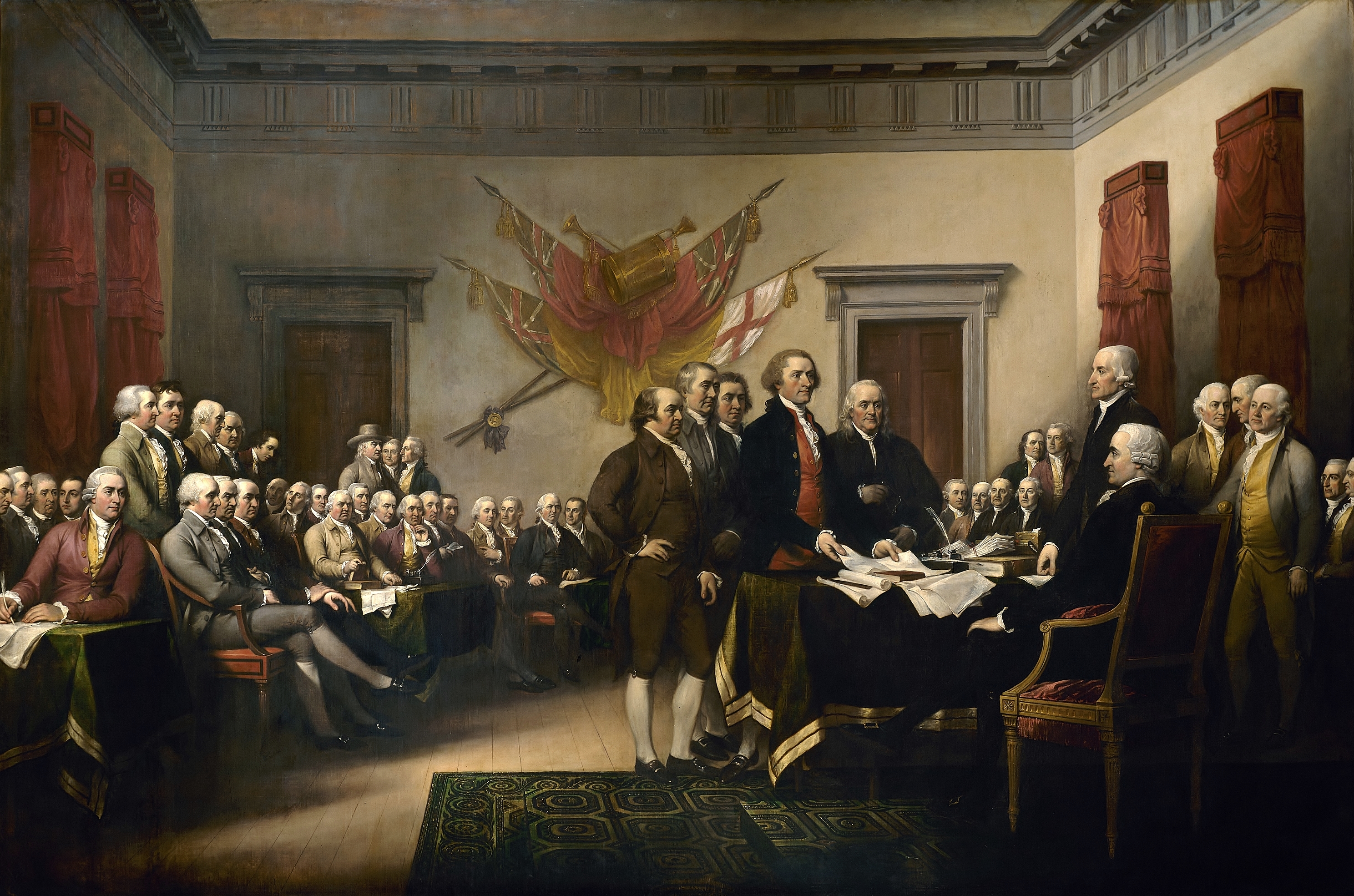
Two hundred forty-five years ago today, fifty-six delegates to the Second Continental Congress put their signature to the following words:
When in the Course of human events, it becomes necessary for one people to dissolve the political bands which have connected them with another, and to assume among the powers of the earth, the separate and equal station to which the Laws of Nature and of Nature’s God entitle them, a decent respect to the opinions of mankind requires that they should declare the causes which impel them to the separation.
We hold these truths to be self-evident, that all men are created equal, that they are endowed by their Creator with certain unalienable Rights, that among these are Life, Liberty and the pursuit of Happiness.–That to secure these rights, Governments are instituted among Men, deriving their just powers from the consent of the governed, –That whenever any Form of Government becomes destructive of these ends, it is the Right of the People to alter or to abolish it, and to institute new Government, laying its foundation on such principles and organizing its powers in such form, as to them shall seem most likely to effect their Safety and Happiness. Prudence, indeed, will dictate that Governments long established should not be changed for light and transient causes; and accordingly all experience hath shewn, that mankind are more disposed to suffer, while evils are sufferable, than to right themselves by abolishing the forms to which they are accustomed. But when a long train of abuses and usurpations, pursuing invariably the same Object evinces a design to reduce them under absolute Despotism, it is their right, it is their duty, to throw off such Government, and to provide new Guards for their future security.–Such has been the patient sufferance of these Colonies; and such is now the necessity which constrains them to alter their former Systems of Government. The history of the present King of Great Britain is a history of repeated injuries and usurpations, all having in direct object the establishment of an absolute Tyranny over these States. To prove this, let Facts be submitted to a candid world.
As we go into the holiday weekend, I hope we will all remember these words from the Declaration of Independence:
We hold these truths to be self-evident, that all men are created equal, that they are endowed by their Creator with certain unalienable rights, that among these are life, liberty and the pursuit of happiness.
Many Americans who claim to believe in “their Creator” want to deny LGBTQ+ Americans, and other marginalized groups, our unalienable rights of life, liberty and the pursuit of happiness and deny us the equality that Jefferson wrote was “self-evident.” Those same people claim there is some secret gay agenda, when in truth we just want life, liberty, and the ability to pursue our happiness. We want the right to live our lives without fear and without the tormenting hatred of others. We want the liberty to be liberated from our oppressors who claim we don’t have the same rights as everyone else. We want the ability to pursue our happiness and to love each other. We simply want what all Americans want. There is no “gay agenda,” but there is a human agenda.
Other tripartite mottos like “Life, Liberty and the pursuit of Happiness” include “liberté, égalité, fraternité” (liberty, equality, fraternity) in France; “Einigkeit und Recht und Freiheit” (unity, justice and liberty) in Germany and “peace, order, and good government” in Canada. It is also similar to a line in the Canadian Charter of Rights: “life, liberty, security of the person.”
The phrase can also be found in Chapter III, Article 13 of the 1947 Constitution of Japan, and in President Ho Chi Minh’s 1945 declaration of independence of the Democratic Republic of Vietnam. An alternative phrase “life, liberty, and property,” is found in the Declaration of Colonial Rights, a resolution of the First Continental Congress. The Fifth Amendment and Fourteenth Amendment to the United States Constitution declare that governments cannot deprive any person of “life, liberty, or property” without due process of law. Also, Article 3 of the Universal Declaration of Human Rights reads, “Everyone has the right to life, liberty, and security of person.”
The civil rights leader Fannie Lou Hamer told the National Women’s Political Caucus in Washington in 1971 that black and white women had to work together toward freedom for all. “Now, we’ve got to have some changes in this country,” she told the group. “And not only changes for the black man, and only changes for the black woman, but the changes we have to have in this country are going to be for liberation of all people–because nobody’s free until everybody’s free.” Shes 100 percent correct, “Nobody’s free until everybody’s free.”
I hope you all have a wonderful and relaxing weekend.
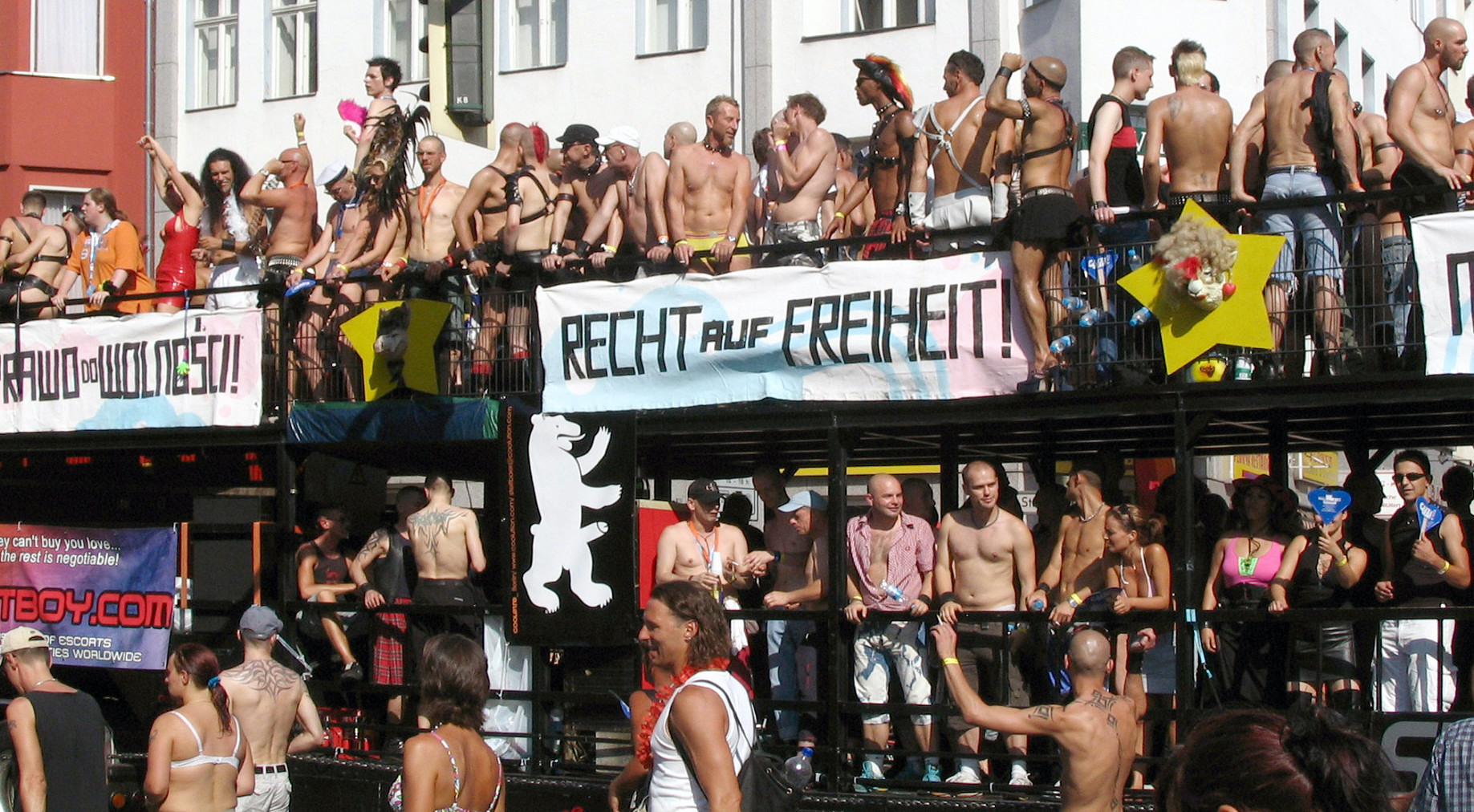
Aside from the street festivals, corporate platitudes, and sex parties, LGBTQ+ Pride is meant to be a living embodiment of LGBTQ+ history. The tradition started in June 1970 as a commemoration of the 1969 riots at the Stonewall Inn, when queer people rebelled against police harassment in New York City. But the history we remember remains myopically focused on the United States. The LGBTQ+ past on display each June is a heroic one with familiar, American milestones: the tragedies of the Lavender Scare and the AIDS crisis offset by the triumphs of Stonewall and marriage equality. This story has even become part of the progressive narratives of American democracy. In his second inaugural address, President Barack Obama declared, “The most evident of truths—that all of us are created equal—is the star that guides us still; just as it guided our forebears through Seneca Falls, and Selma, and Stonewall.”
This heroic narrative is, of course, incomplete. The U.S.-centric story of LGBTQ+ liberation ignores that sexual minorities abroad have fought just as hard and sometimes faced even greater discrimination. When we look beyond the United States, it becomes clear that liberation is far from the inevitable end of a progress narrative. Rather it is a local, subjective, and ever-changing project. LGBTQ+ rights have come with hard fought battles and the progress can sometimes be very slow.
If we look at some other countries, we see that LGBTQ+ liberation didn’t even start in the United States, and we have often lagged behind. Germany is a particularly compelling place to examine. The term homosexual comes from the German language. The term ‘homosexuality’ was coined in the late 19th century by an Austrian-born Hungarian psychologist, Karoly Maria Benkert, who wrote extensively on the subject. In his pamphlets, Kertbeny argued that the Prussian sodomy law, Paragraph 143 (which later became Paragraph 175 of the penal code of the German Empire), violated the “rights of man.”
In Berlin in 1919, Germany, Doctor Magnus Hirschfeld co-founded the Institut für Sexualwissenschaft (Institute for Sex Research), a pioneering private research institute and counseling office. That same year, Different from the Others, one of the first explicitly gay films, was released. Magnus Hirschfeld had a cameo in the film and partially funded its production. In 1922, Dora Richter became the first transgender woman to undergo gender reassignment surgery in Hirschfeld’s Institute, the first operation of its kind in the world. Then on October 16, 1929, a Reichstag Committee voted to repeal Paragraph 175. The Social Democrats and other leftist parties backed the repeal, while the Catholic Center party and other right-wing parties opposed the repeal.
Berlin has a long history of gay culture and influence on popular entertainment, and in the 1920s the city was the Gay Capital of Europe. In 1896 the world’s first gay magazine started in Berlin, called Der Eigene (“The Self-Owning”). During the 1920s and 1930s the world’s first gay village was in Berlin’s Schöneberg. Gay and lesbian bars and nightclubs flourished, as did queer artistic expression through films, music, and print publications. Cabaret singer Claire Waldoff and actress Marlene Dietrich lived and worked in Berlin’s queer neighborhoods during this time. The first gay demonstration anywhere occurred in Berlin in 1922.
The Nazis’ rise to power prevented the implementation of the vote on Paragraph 175 and ended the gay culture of Berlin. In 1933, the Nazi Party banned homosexual groups. Gay men were sent to concentration camps, and the Nazis burned the library of Magnus Hirschfeld’s Institute for Sexual Research and destroy the Institute. The first use of the pink triangle for gay men in Nazi concentration camps came in 1937. Then in 1945, when Allied forces liberated the Nazi concentration camps by Allied forces, but those interned for homosexuality were not freed and were required to serve out the full term of their sentences under Paragraph 175.
After World War II, Germany was divided by the Cold War and charted two very different paths when it came to gay liberation. In 1949, the country formally split into democratic West Germany and communist East Germany. Yet, of the two, it was the liberal democracy that continued Nazi-era persecution of gay men. Over the course of the 20 years between 1949 and 1969, West German courts convicted more than 50,000 queer men under Nazi statutes that remained on the books. East Germany began to repeal parts of Paragraph 175, and in 1968, Paragraph 175 is largely ignored in East Germany, decriminalizing homosexual acts over the age of 18. West Germany followed in 1969.
Groups of same-sex desiring men who labeled themselves homophiles (a word they thought sounded more respectable than homosexual) cropped up in West Germany in the early 1950s. Unlike similar groups in the United States and other western European countries, however, they quickly faded. By 1960, they had all but disappeared. There was no Stonewall moment in West Germany, nor any memorable stand against the oppressive policing and sexual morality of those early postwar decades.
Instead, West German politicians reformed the laws banning homosexual conduct in 1969 as part of a broader revision of the penal code. After this legislative change, new gay and lesbian bars, saunas, and periodicals soon arose. A radical liberation movement also appeared in those years. But it was strikingly different from its cousin in the United States. Its members opposed the commercial gay scene, viewing it as a barrier to the kind of solidarity that would be necessary to win real social and political change. The groups attacked gay publications, denouncing them as nothing more than “masturbation templates.”
When it came to politics, the movement also diverged from the center-left alliance that arose between LGBTQ+ activists and the Democratic Party in the United States. Over the course of the 1970s, West German activists enjoyed their greatest support from the centrist Free Democratic Party, but activists ultimately had little success pushing their policies in the federal government. They grew cynical about the possibilities of parliamentary politics. As a result, LGBTQ+ West Germans never fully came together behind any of the major parties, even after German reunification in 1990, and they continue to divide their votes across the political spectrum.
During the AIDS crisis of the 1980s, West German history also diverged from the U.S. path. Whereas the Reagan administration stayed silent and let LGBTQ+ Americans perish, the West German government, in particular federal health minister Rita Süssmuth, partnered with AIDS self-help groups to circulate information about the disease and safer sex. West Germany never shut down its gay saunas and still managed to bring infection rates down dramatically over the course of the decade. Because of the government’s success fighting AIDS, radical groups like ACT UP played a much smaller part in the German activist scene.
If, by the end of the 1980s, West Germany’s activists were far less politically radical than those in other countries, they had nonetheless managed both to preserve their subculture and find ways to collaborate with politicians and bureaucrats. West German LGBTQ+ activism was not characterized by the same triumphal moments or catastrophic setbacks as the American version, but nonetheless forged a kind of liberation no less real than that in the United States.
Yet this distinctive West German history is largely forgotten, submerged beneath the dominant U.S. narrative — even in Germany. The annual Berlin Pride celebration is known as Christopher Street Day, named for the Stonewall Inn’s address. Even by the mid-1980s, activists and historians, dispirited by a lack of parliamentary political victories, had begun to compare West Germany’s liberation movement unfavorably with that in the United States.
The East German experience with gay liberation was yet more surprising. Although most Westerners assumed such activism could not possibly have been successful in a communist state, by the end of the 1980s, East Germany could realistically lay claim to being one of the most sexually progressive countries on Earth. In the 1970s, gay men and lesbians began to organize together in East Berlin. While the Stasi, the secret police, denied the group the right to organize in public, these tenacious women and men coordinated house parties, steamboat cruises, and birthday dinners. In the middle of the decade, the East German LGBTQ+ communnity met Charlotte von Mahlsdorf, a trans woman who ran a museum in one of East Berlin’s outer neighborhoods. She offered them the museum’s basement to host their activities, and for several years they “bopped and danced like it was 1904.” This arrangement lasted until 1978, when the East Berlin police forbade the group to continue meeting.
But only a few years later, lesbian and gay activists mobilized again, this time under the umbrella of the Protestant Church, the only nominally independent organization in the communist state. Spreading rapidly across the country, they pressured the government to change laws and social policies, such as allowing gay men to serve in the military, repealing a law that set a higher age of consent for gay and lesbian sex, and making it easier for same-sex partners to find housing together. The government tried cracking down on the groups, but to no avail: They continued to grow in size and number. So worried was the Stasi that its functionaries convinced the East German government to accede to activists’ demands. Stasi officials began circulating memos in 1985 insisting that government bodies address gay men and lesbians’ “humanitarian problems,” that is, taking their complaints seriously.
As a result, change came rapidly. The government equalized the age of consent, years before most other countries, including West Germany and the United States. It promulgated a policy allowing openly gay men to serve in the military. LGBTQ+ people were given the right to seek sexual and mental health counseling. The East German government greenlighted the first gay feature film, “Coming Out,” which premiered Nov. 9, 1989—the night East Germans breached the Berlin Wall. Local governments began sanctioning LGBTQ+ organizations and staging gay disco nights.
In the years after reunification, these two distinct German paths converged. The principal LGBTQ+ organization in Germany today was founded by East German activists in 1990 and the West German federal states abolished the last vestiges of their antigay statutes as a direct result of East Germany’s more progressive lawmaking. The West German subculture began to bleed into the Eastern lands, in particular East Berlin, which has become synonymous with queer nightlife in recent decades.
The point is not that East or West Germany achieved a liberation better than that in the United States, but rather that LGBTQ+ life and activism took distinctive forms in different local and national contexts. The American version of LGBTQ+ liberation is not the only history we should pay attention to. Germany led the way for many years before the United States began its LGBTQ+ liberation movement. When America was undergoing the Lavender Scare, East Germany was relaxing laws against homosexuality.
Back in November 2001 while I was in my second year of graduate school, I attended my first academic conference (the Annual Meeting of the Southern Historical Association) in New Orleans, Louisiana. We stayed at the historic Fairmont Hotel (now The Roosevelt New Orleans). The hotel was beautiful and luxurious. I have been in love with the city of New Orleans since I first visited it in the late 1990s. The first time I went was at Halloween, which was an eye-opening experience. The next time I went was to tour Loyola University New Orleans College of Law because I was considering attending law school there. Ultimately, I decided to get my master’s in history instead of a law degree. The third time I went was for the Annual Meeting of the Southern Historical Association in 2001. It was also the first time I went to a gay bar.
I came out for the first time to a close friend of mine and her boyfriend at a party during graduate school in Spring 2001. This friend and I were staying together at the Fairmont for the conference, and she wanted to take me to a gay bar, since I’d never been to one before. I remember walking into Oz at the corner of Rue St. Anne and Bourbon Street. You can read more about this in a post I wrote in August 2020 titled “Coming Out and My First Gay Bar.” New Orleans was a great place to experience a gay bar for the first time because the city has a rich gay history. New Orleans seems to have always been a mecca for the LGBTQ+ in the South.
The city has always championed the arts and celebrated culture, which has fostered a lively gay social scene and drew many LGBTQ+ artists and performers to the French Quarter (aka Vieux Carré), home to Café Lafitte in Exile, one of America’s oldest gay bars. The longest running gay event, the Fat Monday Luncheon, kicked off in 1949, and the oldest gay social organization, the Steamboat Club, was launched in 1953. During Labor Day Weekend, Southern Decadence draws more than 180,000 LGBTQ+ partiers to New Orleans.
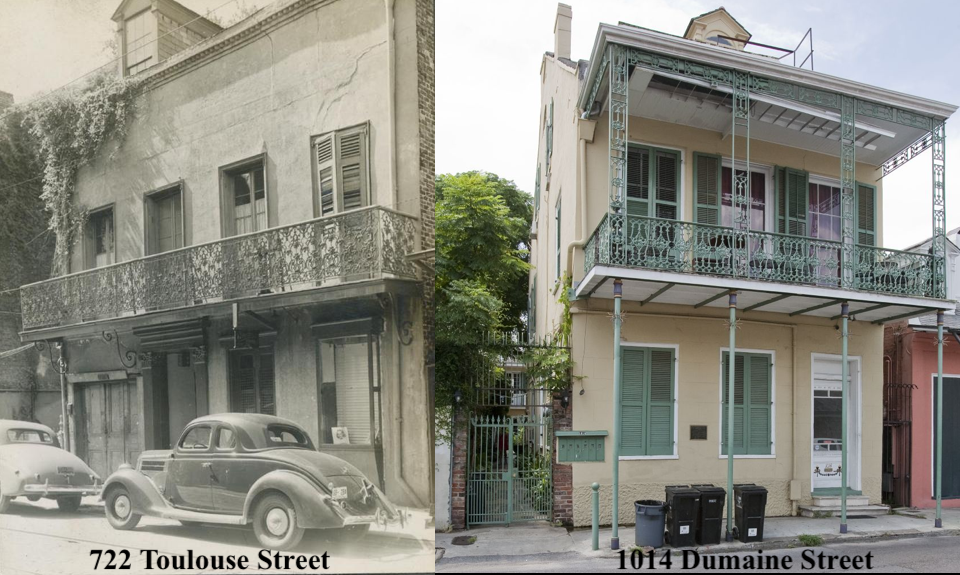
Notable gay locals and residents included Tennessee Williams, who came here in 1938 and wrote “A Streetcar Named Desire” from his home at 1014 Dumaine Street. Pioneering photographer Frances Benjamin Johnston retired to New Orleans in 1940, living in her Bourbon Street townhouse until her death in 1952. Ellen DeGeneres, a native of nearby Metairie, emceed the New Orleans Mr. and Ms. Gay Pride Contest in 1981, long before she came out publicly in 1997. It has also been home to a number of LGBTQ+ writers particularly Poppy Z. Brite (author of the Liquor novel series) and one of my favorite authors, Greg Herren (author of the Scotty Bradley and Chanse MacLeod mysteries).
I have always had a romanticized version of New Orleans in my head. I used to dream of living in a townhouse in the French Quarter much like Tennessee Williams’ Dumaine Street home or his first home on Toulouse Street. Williams lived in two homes on Toulouse Street, 722 Toulouse Street and 708 Toulouse Street, where he lived in 1941 and according to Tennessee Williams and the South by Kenneth Holditch and Richard Leavitt, “he was evicted as the result of an incident involving sailors.” We can only imagine what that incident was; I suspect it was quite salacious.
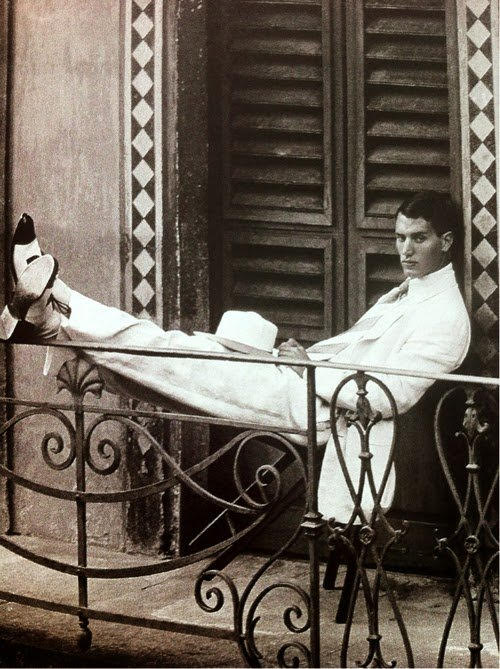
My dream home would have a wrought iron balcony that I could sit on like the picture at the top of the post. It would have one of those iconic courtyards that so many homes in the French Quarter. However, after living in New England for over five years now, I prefer the weather here better and now I tend to dream of living in a historic home Montreal, Boston, or any number of larger cities in the Northeast. I can still dream of a vacation home in New Orleans, but I’ll need to win the lottery first.





 Joe
Joe





 The Closet Professor