
Category Archives: Miscellaneous
When Time Stands Still?
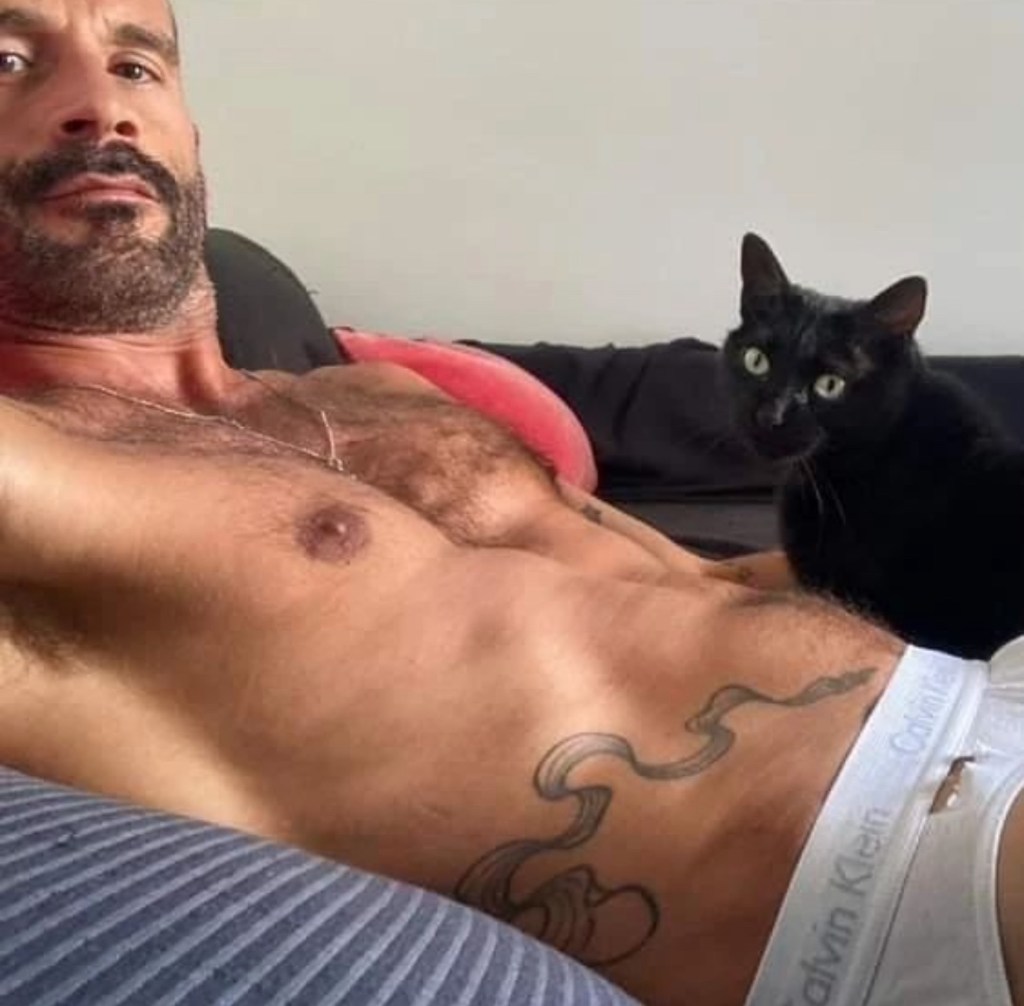
This morning began with a bit of confusion—or at least it felt like confusion in the middle of the night.
At some point I woke up and glanced over at my Amazon Echo. The clock read 11:18 p.m. Isabella was already trying to wake me up, which seemed odd. She usually doesn’t start her morning routine quite that early. I remember thinking, Why on earth is she trying to get me up at 11:18? I just went to bed.
For a moment, I wondered if something was wrong. Years ago, Isabella had a habit of waking me in the middle of the night if my blood sugar dropped too low. It was uncanny how she seemed to know when something wasn’t right. But that hasn’t happened in years, so I mostly dismissed the thought and drifted back to sleep.
A while later, Isabella was back at it—more insistent this time. When I looked at the Echo again, it still said 11:18 p.m. That’s when things started to feel a little strange. Surely that much time hadn’t passed and it was still 11:18.
So I picked up my phone.
4:21 a.m.
Ah.
Apparently time had not, in fact, frozen in my bedroom.
I tapped the screen of the Echo, which took a moment or two to wake up and think about its life choices before finally updating the display to the correct time and date. As best as I can tell, the device had simply frozen overnight and needed a little nudge to catch back up with reality.
Still, it made for a rather confusing moment. There I was thinking Isabella had decided that 11:18 p.m. was now an appropriate time to start the day.
To be fair, she probably knew exactly what time it was all along. Cats run on a very precise internal schedule that revolves around breakfast, attention, and making sure their humans don’t oversleep.
The Echo may have gotten stuck in the past, but Isabella clearly did not.
And judging from how determined she was to wake me, she would like it noted that 4:21 a.m. is already past breakfast time.
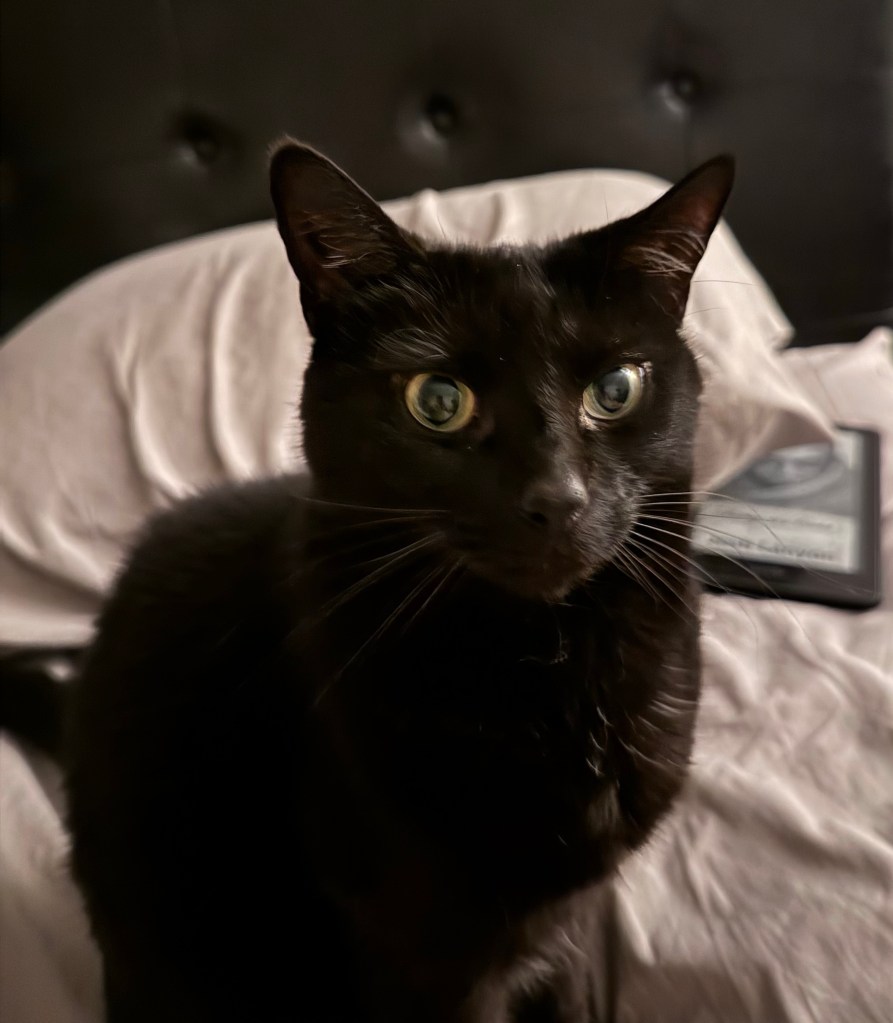
An Isabella Pic of the Week:

Adjusting to the Clock

Isabella and I are not adjusting to the time change very well. She only started trying to wake me up this morning after the living room light—set on a timer—turned on at 5:00 a.m. Apparently, that’s when she realized she’d overslept.
I’m used to getting up at 4:30 a.m. at the latest, which gives me plenty of time to write my blog post without rushing through coffee and breakfast. I still have enough time this morning, but it feels rushed because today is my first day back at work after my vacation.
Maybe next year I’ll remember this and take the week after the time change off instead. That might be the smarter strategy.
I know I have a mountain of emails waiting for me, but hopefully it won’t be too bad of a day.
Have a great week, everyone.
Friday… But Not the Kind I Like

It’s Friday again. Normally, I say thank goodness it’s Friday, but I’m not really feeling that today because it’s the last day of my vacation week. I still have the weekend before I go back on Monday, but that’s not quite the same. I always have the weekend off. It’s the return to the routine on Monday that makes the end of vacation feel a little bittersweet.
It’s always hard to go back after a long vacation. I do love my job, but I’m not always thrilled with some of my coworkers (okay, “not always thrilled” might be an understatement, but I’m trying to be nice). I wish I looked forward to seeing and working with all of my colleagues, but that’s not always the case. I enjoy working with people outside the museum much more—though I will admit that our marketing team and catering department can both be a pain in my ass from time to time. To be fair, not everyone on the marketing team is unpleasant.
Anyway, I’m just “in a mood” this morning, as my mother would say. Fortunately, there’s still coffee, the weekend, and Isabella to keep me company. Maybe by Monday morning I’ll be feeling a little more charitable toward my coworkers… maybe.
I hope everyone has a wonderful and relaxing weekend!
The Sounds of the South

There are certain sounds that immediately take me back to where I grew up in Alabama. I don’t mean music or voices or anything human-made. I mean the sounds of the natural world—the birds, the animals, and the nighttime chorus that filled the woods and riverbanks. For those of us who grew up in the South, these sounds are part of our memory in a way that never really leaves us.
My parents still live on a quiet cove along a river in Alabama. It’s the kind of place where wildlife is simply part of the landscape. You might not see everything that lives around you, but you certainly hear it. Southern nights have their own orchestra—owls hooting in the trees, frogs and insects humming in the darkness, and sometimes the distant bellow of an alligator rolling across the water.
One of the most unforgettable sounds is the call of the Great Horned Owl. It’s the classic owl sound—the deep “hoo-hoo” that carries through the woods at night. If you’ve ever heard it echo across water or through tall pines, you know how haunting it can be. They are large birds too. When you see one up close, standing upright on a branch, they can look enormous, almost prehistoric. My dad jokingly calls them “horny owls,” because of the tufts of feathers that stick up like horns from their heads.
If you answer their hoot with one of your own, sometimes they will fly closer to investigate. I have seen them land in nearby trees, curious about the stranger calling in their territory. It’s impressive, but also just unsettling enough to make you aware that you are not the only creature awake in the dark.
But the Great Horned Owl is not the only eerie sound of a Southern night. Screech owls live throughout the South, and their calls can be downright chilling. Despite the name, they often don’t screech at all. Instead, they make a trembling, haunting trill or a descending whinny that sounds almost ghostly in the darkness. When you’re lying awake in the woods and hear that sound drifting through the trees, it can raise the hair on the back of your neck.
Then there are the animals you rarely see but always hear. Alligators don’t usually come near my parents’ house, but farther down the river you can see them from a boat. Even when you can’t see them, you can sometimes hear them bellowing across the water at night. It’s a deep, vibrating sound that seems to roll through the darkness. If you’ve never heard it before, it can be a little unnerving. The South has a way of reminding you that nature is still very much alive around you.
Not all the sounds of the South are frightening. Some are simply part of the rhythm of the landscape.
One of my favorites is the whip-poor-will. People often hear its call exactly as its name suggests—“whip-poor-will.” When I was growing up, though, we had our own interpretation. To us it sounded like “Chip fell out of the white oak.” Once you hear it that way, it’s hard to hear anything else.
Then there is the bobwhite quail. Anyone who has spent time in southern fields knows that whistle. The male’s call really does sound like “Bob White!” It’s one of those bird calls that even people who don’t know birds can recognize immediately. The baby quail are especially adorable. You will sometimes see them walking along behind their mother in a neat little line, like a feathery parade moving through the grass. If they suddenly flush from a field, they burst up all at once, and for a moment they look like big brown bumblebees buzzing away across the field. They are surprisingly round birds when you see them take off like that.
Marshes and riverbanks bring another familiar voice: the red-winged blackbird. If you’ve ever camped near wetlands, you’ve probably heard its liquid, trilling call coming from the reeds. I first learned that sound while camping at Fort Pickens along the Gulf Coast, surrounded by marshes and coastal wildlife. Later I realized that the same birds show up far from the coast too. Occasionally I see them here in Vermont, which always feels like a little reminder of home.
Mockingbirds deserve a mention too. They are practically a symbol of Alabama, thanks to Harper Lee’s To Kill a Mockingbird. The birds themselves are famous for their ability to imitate other sounds, including other birds and sometimes even mechanical noises. I remember living in Mississippi and having a mockingbird outside my window that had learned to imitate a neighbor’s car alarm. It would sit in the crepe myrtle tree and loudly repeat that alarm sound in the early morning hours.
They are also fiercely protective parents. If you get too close to a mockingbird nest, they will often dive bomb you repeatedly until you move away from their chicks.
My grandfather used to say there was nothing wrong with killing a mockingbird because “they’re a damned nuisance!” Whether you find them charming or annoying, there’s no denying that they add their own unique voice to the Southern soundscape.
And of course there are the sounds that belong to both North and South. Ducks and geese honking across the water are just as familiar in Vermont as they are in Alabama. Their voices carry over ponds and rivers in a way that feels universal, part of the shared language of wetlands everywhere.
It’s funny how these sounds stay with us. Years later, you can hear a single call—a whip-poor-will at dusk, a bobwhite in a field, or the distant hoot of an owl—and suddenly you are transported back to a different place and time.
For those of us who grew up in the South, the landscape had its own language. The woods spoke at night, the marshes sang during the day, and the river carried voices across the water.
And once you learn that language, you never really forget it.
What about you? What wildlife sounds immediately take you back to where you grew up? I’d love to hear what voices from nature still echo in your memories.
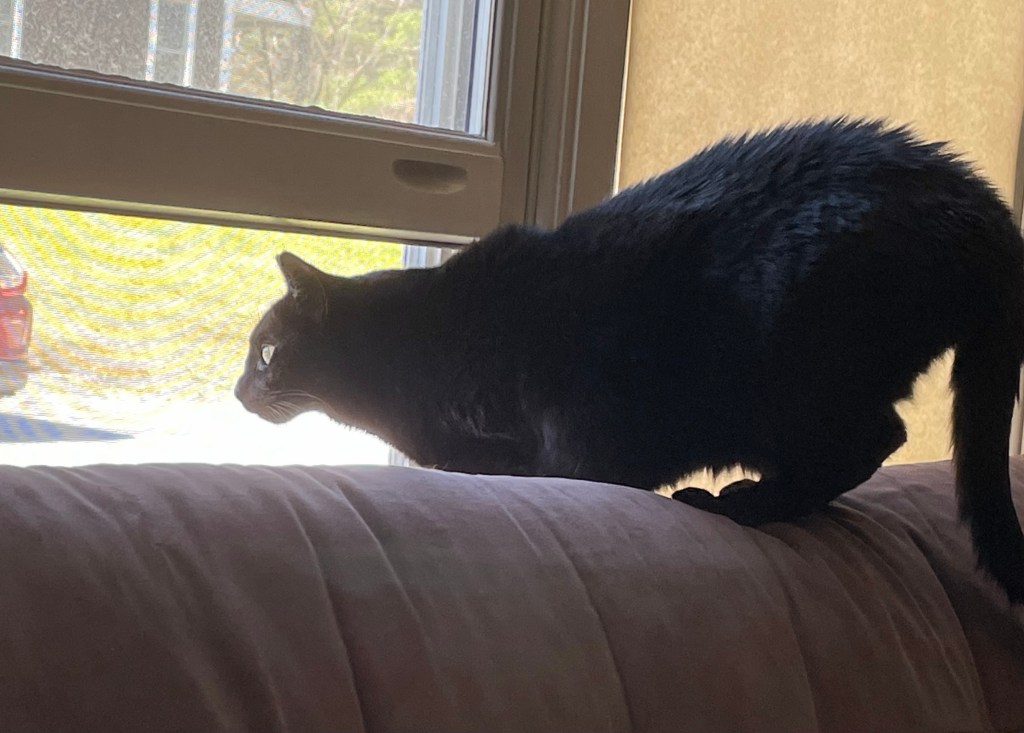
Isabella has her own favorite sound of nature—the robin. For some reason, robins fascinate her more than any other bird. When she sees one perched on the railing outside the window, she immediately runs over to watch it. Sometimes the two of them will simply stare at each other for several minutes, the robin calmly perched outside while Isabella crouches inside like a tiny black panther ready to pounce. Eventually the robin gets bored and flies away, which seems to irritate Isabella greatly, as if the hunt ended before it really began.
My Love

My Love
By Bruce Nugent
My love has hair
Like midnight,
But midnight fades to dawn.
My love has eyes
Like starlight,
But starlight fades in morn.
My love has a voice
Like dew-fall,
But dew-fall dies at a breath.
My love has love
Like life’s all,
But life’s all fades in death.
There is something exquisitely fragile about this poem. It is brief. It is lyrical. It feels almost like a hush between night and morning. And yet, beneath its simplicity lies a quiet depth—especially for LGBTQ+ readers.
Nugent never specifies the gender of “my love.” In the 1920s, that ambiguity mattered. It was protective, yes—but it was also expansive. It allowed queer readers to recognize themselves in the poem without explanation or apology. The beloved exists purely as beloved.
About the Poem
Structurally, the poem is built on a pattern of comparison followed by inevitability:
Midnight → dawn
Starlight → morning
Dew-fall → breath
Life → death
Each image is beautiful. Each image is temporary.
Midnight is lush and enveloping—but it yields to daylight.
Starlight dazzles—but disappears at sunrise.
Dew glistens—but vanishes with warmth.
Life itself—however full—ends.
At first glance, the poem can feel almost mournful. Everything fades. Every beautiful thing is subject to time.
But the emotional power of the poem lies in tension. The speaker does not diminish the beloved because these things fade. Instead, he elevates them by comparing them to fleeting wonders. The beloved is aligned with the most luminous, delicate moments in nature—the kinds of beauty that feel almost sacred precisely because they cannot last.
The repetition of “My love has…” creates intimacy and insistence. The speaker lingers over physical attributes—hair, eyes, voice—before arriving at the final stanza: “My love has love / Like life’s all.” That line deepens the poem. The beloved is not merely beautiful; the beloved embodies love itself.
And yet, even that—“life’s all”—fades in death.
Rather than nihilism, the poem reads as an acknowledgment of impermanence. It recognizes that love exists within time, within bodies, within a world that changes. For queer readers—especially those who have known love constrained by secrecy, distance, or social pressure—the awareness of fragility can feel familiar. Love can feel luminous and precarious at the same time.
Nugent’s tone remains gentle throughout. There is no bitterness, no rage—only clear-eyed tenderness. The beauty of the beloved is described without ornamented excess. The poem trusts its images. Midnight. Starlight. Dew. Life. They are enough.
What makes this poem linger is its honesty about time. It does not promise permanence. It does not deny mortality. Instead, it suggests that beauty and love are made more intense by their fleeting nature.
Midnight matters because it ends.
Starlight dazzles because it disappears.
Dew captivates because it will not last.
So too with love.
In just twelve lines, Nugent captures something universal: to love is to embrace what is luminous and fragile at once. And in doing so, he leaves us with a quiet truth—the fact that something fades does not make it less beautiful. It makes it precious.
About the Poet
Bruce Nugent (1906–1987) was a writer, artist, and an important voice of the Harlem Renaissance. He moved in the same creative circles as Langston Hughes and other luminaries of the period, but what distinguishes Nugent is his openness about queer desire—something remarkably rare for the time.
His short story Smoke, Lilies and Jade is often cited as one of the earliest published works by an African American writer to portray same-sex attraction with directness. While many writers of the era coded or obscured queer themes, Nugent allowed them to surface with surprising clarity.
As a Black gay man in early 20th-century America, Nugent navigated multiple layers of marginalization. His work frequently blends vulnerability and boldness—soft imagery paired with radical presence. Simply writing love poetry that could be read as queer was an act of quiet defiance.
“My Love” may appear modest in scale, but its existence speaks volumes. It offers beauty without justification. It does not defend love; it simply names it.
A Lazy Monday Morning

There is nowhere I need to be today, nothing I have to do today, and nobody I need to see today. In fact, that’s true for the whole week. I’m on vacation.
No, I’m not going anywhere—unless you count going to Burlington today to do a little shopping. Our fiscal year comes to a close at the end of May, and I have vacation leave I need to use. I used to basically take off the entire month of May, but my current boss won’t allow that, so now I take time here and there to use it up. The only real travel I have planned is my trip to Montreal at the end of April, which I’m very much looking forward to.
This morning, when Isabella woke me up at 4 a.m., I got up and fed her, then went back to bed. Usually, I have to stay up once I’m awake, but it was -3 degrees outside, and crawling back under the covers felt like the wiser choice. I ended up sleeping until after 6 a.m., which is why this post is a little later than usual.
Today, I can leisurely drink my coffee, have some toast, and just do whatever I feel like doing. In an hour or so, I’ll shower and get dressed before heading up to Burlington for the day. It’s supposed to be a beautiful, sunny day. The high will only be 22 degrees, but it’s not supposed to be windy, and with the sun it should feel closer to 27. Practically balmy.
I have a few things I’m looking for, but mainly I’m on the hunt for a birthday present for a friend. She always gets me something thoughtful for my birthday and Christmas, and I never quite know what to get her in return. I used to love going into Ten Thousand Villages on Church Street—Burlington’s pedestrian-only marketplace—but they closed their physical stores and operate only online now. Still, there are a few quirky shops left to explore.
No alarms, no meetings, no deadlines—just coffee, sunshine, and a little Burlington wandering. That’s all, folks!
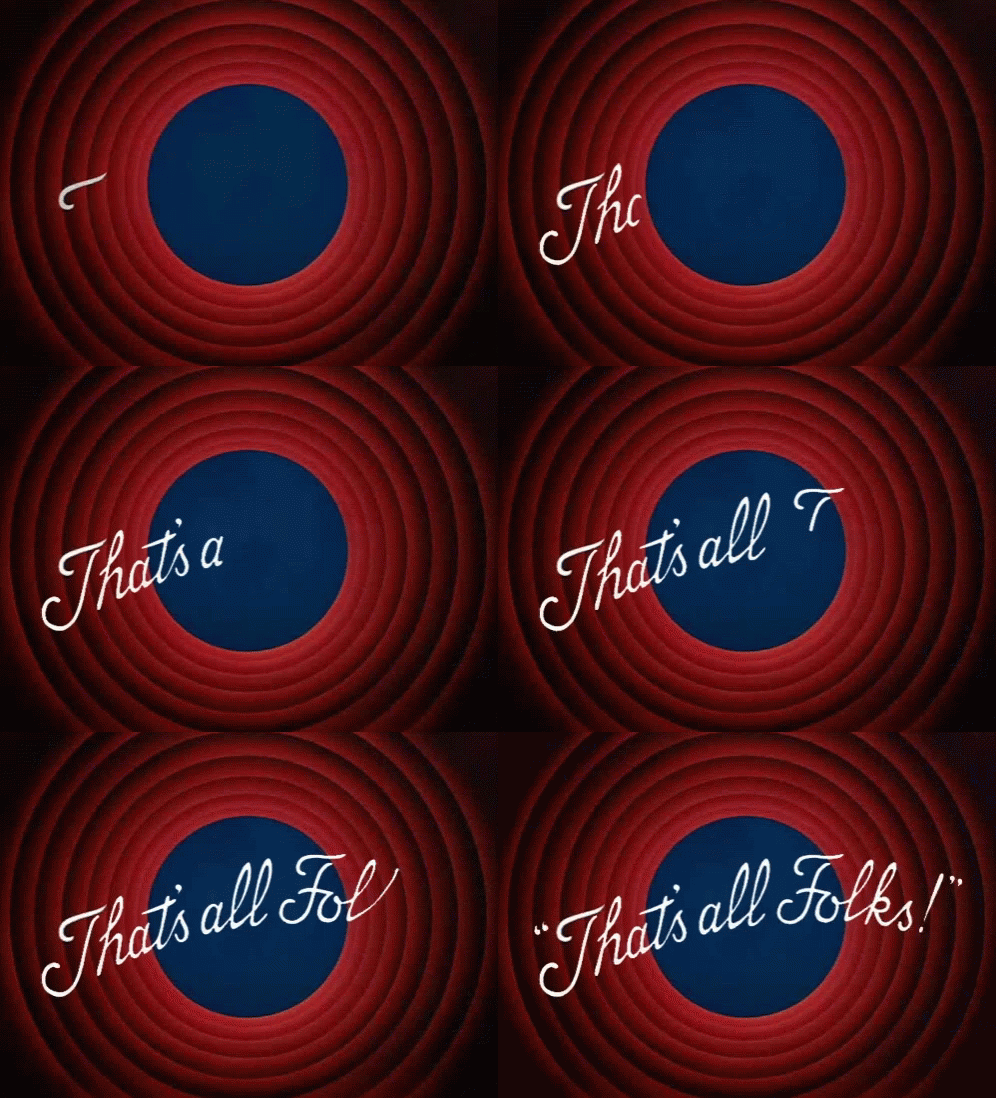
Have a great week, everyone! — I know I plan to.
Finally Friday

Thank goodness it’s Friday—and I’m working from home today. I’m off all next week for spring break and had some vacation time to use, so I’m really looking forward to a full week to relax and recharge.
Sorry this is posting a little later than usual. I got distracted this morning and almost forgot altogether, so I’m keeping this one short and sweet.
I hope everyone has a wonderful weekend!
The Calm before the Storm

I’m so glad it’s Friday — and even more glad that I’m working from home today.
It’s not that this week has been terrible. The early part of it was a bit rough, but once I settled into a project and stayed busy, things evened out. Sometimes the best remedy for stress is simply having something meaningful to focus on.
That said, I have zero desire to go anywhere today. I woke up with a headache, which almost certainly means a storm is rolling in this evening. My migraines are usually more accurate than the local meteorologist when it comes to predicting the weather. If my head starts throbbing, you can safely assume precipitation is on the way.
Isabella has already been fed and is currently enjoying her very important post-breakfast nap. She takes that ritual very seriously. Since the house is quiet and I have the luxury of being home, I think I might follow her example and go back to sleep for a little while before officially starting my day.
Sometimes listening to your body is the most productive thing you can do.
I hope you all have a restful, peaceful weekend — whether you’re braving the storm or staying cozy inside.


Authors
Recent Comments
noisilycool3bc985058… on Pic of the Day stupendousflower271b… on Ten Years Ago noisilycool3bc985058… on Ten Years Ago noisilycool3bc985058… on Pic of the Day noisilycool3bc985058… on Pic of the Day Top Posts & Pages



 Joe
Joe


 The Closet Professor