

I’ve never been much of a fan of modernist poetry. Too often, it feels esoteric—odd for the sake of odd. When I used to teach American Literature, I would show my students two classic examples from Ezra Pound:
L’Art, 1910
by Ezra Pound
Green arsenic smeared on an egg-white cloth,
Crushed strawberries! Come, let us feast our eyes.
A splash of color, yes, but more like a cryptic painter’s note than a poem—striking yet emotionally opaque.
And then his most famous imagist fragment:
In a Station of the Metro
by Ezra Pound
The apparition of these faces in the crowd;
Petals on a wet, black bough.
Haunting, yes, but abstract and slippery, more an intellectual exercise than a window into human feeling.
Sixteen words about a piece of art with colors of green and red, fourteen words about a metro station—striking, but also elusive.
So when The American Academy of Poets’ Poem-a-Day recently featured Alfred Kreymborg’s “Those Everlasting Blues,” I expected something similar—another cryptic fragment of modernism. Instead, I was taken aback. This poem spoke to me in a way I didn’t anticipate. Beneath its simple diction and repetition, I heard the cry of a heart broken by longing. And in that ache, I recognized something deeply personal.
Since beginning this blog, I’ve been blessed with many wonderful friendships, like my cherished bond with Susan. But there have also been two men who, in different ways, claimed my heart. One lived far away and struggled with a debilitating illness; when he passed, I mourned but had known it was inevitable. The other’s loss, though, nearly destroyed me. He was a fragile young man who had begun to rebuild his life, and though he loved someone else, he also loved me—and I him. We spoke every day, ending each night with “I love you.” Then a tragic car accident cut his life short, and with it, a piece of my own heart.
Reading Kreymborg’s poem, I felt all of that loss return—the “everlasting blues” of loving someone you cannot keep. It reminded me that poetry’s power isn’t in being clever or obscure, but in giving voice to the things we ourselves can barely name.
Those Everlasting Blues
By Alfred Kreymborg
There ain’t gonna be
any more
mad parties
between
you and me
and it ain’t
gonna be
because I
love you less
but love you more.
And there ain’t
gonna be
any more
sad parties
between us two
because I’m
gonna forget
what I want
till I see
what I want
is you.
And I ain’t
gonna find
what you are
till I find
what it is
that you want
of me
and how
am I
gonna see
what it is
till all
of myself
loves you.
And I don’t
really love
you though I
love you more
than the world
till I learn
to swallow
whatever
you’d like
me to do.
And I ain’t
gonna down
whatever
that little
may be
till I love
me less and
love you more
and love you
for yourself
alone.
If there ain’t
gonna be
any loving
just you
alone
then it’s up
to me to
be taking
myself and
moving myself
off home.
And I’ll
be dragging
what’s left of me
to my lonely
room in the blue
and never
come back
and never
crawl back
till I’m through
just hugging
me.
And I ain’t
no I ain’t
gonna stop
doing that as
I ought to do
till I’m ab-
solutely and
positively
in love and
in love with
you.
And when I’ve
done that and
done only that
and done all of that
for you
you’ll hear me
on the doorstep
ringing at the
doorbell
for one more
party for two.
With nothing
mad in it
nothing sad
in it but
a long glad
lifelong spree
with me myself
loving you yourself
and you
loving me
for me.
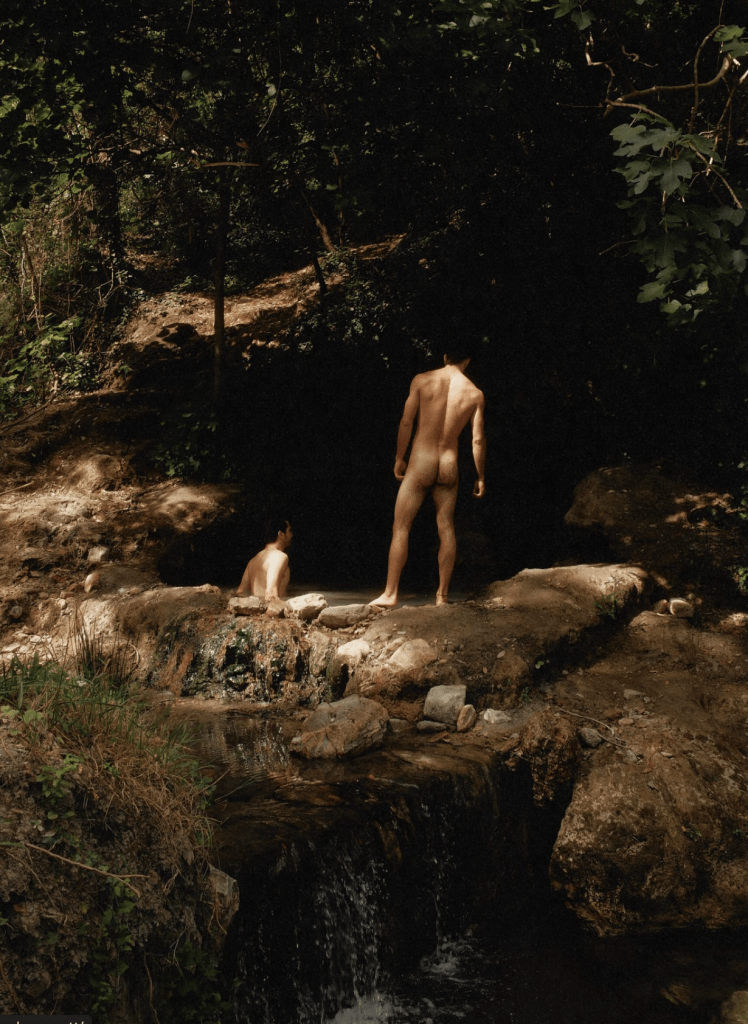
When reading Alfred Kreymborg’s “Those Everlasting Blues” today, it’s easy to feel the poem pulsing with queer longing. The speaker aches for someone elusive, desired but never quite possessed. The repetition of “blues” and the sense of yearning that never resolves can strike a modern queer reader as deeply familiar: the pain of unspoken desire, of wanting someone who cannot—or will not—be fully yours.
Even though the poem is voiced as a woman’s lament for a man, nothing in the language itself insists on a heterosexual relationship. In fact, if we strip away the assumed gendering, the poem reads seamlessly as one man mourning his infatuation with another. Kreymborg’s plain, conversational diction keeps the focus on raw feeling rather than social convention, which makes the poem ripe for queer reinterpretation.
This is the power of queer reading: taking texts from the past and listening for the silences, the undercurrents, and the ways desire breaks through the boundaries of its time. For many queer readers today, Kreymborg’s “blues” could be the blues of any marginalized love—aching, unending, and yet profoundly human.
So does this mean Kreymborg himself was gay? Not necessarily. Biographically, there is no evidence he engaged in same-sex relationships. But “Those Everlasting Blues” belongs to his 1916 collection Manhattan Men, where he frequently wrote in other voices—shifting genders, adopting dramatic personae, and speaking through masks.
This “gender ventriloquism” was part of the larger modernist toolbox. Early twentieth-century poets often experimented with persona and dramatic monologue, inspired by classical models and energized by the free verse movement. Ezra Pound spoke through medieval troubadours, H.D. adopted mythic figures like Eurydice and Helen, and T.S. Eliot gave voice to Prufrock and Tiresias. For Kreymborg, writing in a woman’s voice allowed him to explore emotional registers that might have been difficult to express directly.
While his original intent may not have been queer, his willingness to blur identity in poetry—speaking as “the other”—is what allows queer readers to hear themselves in his work. The fluidity of voice makes his poetry feel like a space where hidden or forbidden desires could be expressed indirectly.
Whether or not Alfred Kreymborg personally shared the “everlasting blues” of same-sex longing, his poem gives us a vessel to pour that experience into. That is the beauty of queer reading: recognizing how art transcends the limits of biography and becomes a space where new meanings—our meanings—can flourish.
About the Poet
Alfred Kreymborg (1883–1966) was an American poet, playwright, editor, and anthologist who played a key role in the rise of literary modernism in New York. A central figure in Greenwich Village’s bohemian scene, he was the founding editor of Others: A Magazine of the New Verse (1915–1919), which introduced American audiences to avant-garde voices like Marianne Moore, William Carlos Williams, Wallace Stevens, and Mina Loy.
Kreymborg’s career was eclectic—he wrote poetry, drama, fiction, and memoirs, and even performed on mandolin in experimental productions. His work was often overshadowed by his more famous contemporaries, but he was a connector and promoter of new voices at a time when American poetry was breaking free from strict formal traditions.
Importantly, Kreymborg moved in circles that included many queer and queer-adjacent writers: Hart Crane, Djuna Barnes, and others who challenged conventional ideas of gender, sexuality, and identity in literature. While there is no evidence that Kreymborg himself identified as gay, his friendships and collaborations with these writers placed him in a cultural moment where queer creativity thrived beneath the surface.









 Joe
Joe





 The Closet Professor