

The Christmas Wreath
By Anna de Brémont
Oh! Christmas wreath upon the wall,
Within thine ivied space
I see the years beyond recall,
Amid thy leaves I trace
The shadows of a happy past,
When all the world was bright,
And love its magic splendour cast
O’er morn and noon and night.
Oh! Christmas wreath upon the wall,
’Neath memory’s tender spell
A wondrous charm doth o’er thee fall,
And round thy beauty dwell.
Thine ivy hath the satiny sheen
Of tresses I’ve caressed,
Thy holly’s crimson gleam I’ve seen
On lips I oft have pressed.
Oh! Christmas wreath upon the wall,
A mist steals o’er my sight.
Dear hallow’d wreath, these tears are all
The pledge I now can plight
To those loved ones whose spirit eyes
Shine down the flight of time;
Around God’s throne their voices rise
To swell the Christmas Chime!
About the Poem
There is something quietly powerful about a Christmas wreath. We hang it almost without thinking—on a door, above a mantel, in a hallway we pass through every day. And yet, as Anna de Brémont reminds us, the wreath becomes far more than decoration. It becomes a frame for memory.
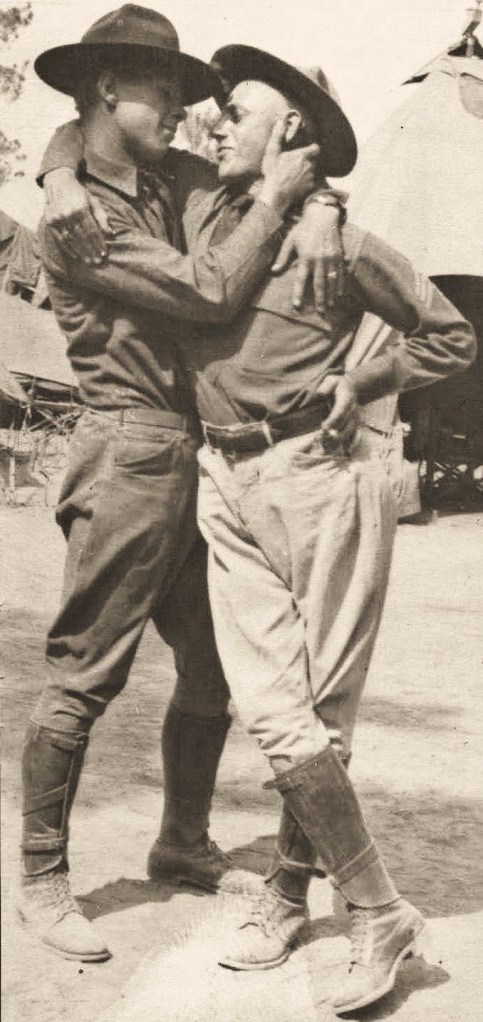
For many LGBTQ+ people, Christmas is a season layered with complexity. It holds beauty and warmth, but also silence—loves once hidden, names never spoken aloud, affections carefully guarded. Some of our most meaningful relationships lived in the margins of what was considered acceptable, even as they shaped us deeply and truthfully.
The wreath in this poem holds those memories without judgment. Its ivy and holly recall touch and intimacy—hair once caressed, lips once kissed—loves that were real, even if they could not always be visible. De Brémont does not apologize for this remembering. She sanctifies it.
As the poem moves toward its close, grief and hope meet. Those we loved, and sometimes lost too soon or too quietly, are not erased. Their presence is gathered into something eternal. Their voices, the poem tells us, now rise in the Christmas chime around God’s throne.
For those of us who have ever wondered whether our love was too much, too different, or too inconvenient to be holy, this poem offers a quiet reassurance: love remembered with tenderness is never wasted. It endures. It is held. It belongs.
This Christmas, may the wreaths we hang remind us not only of tradition, but of truth—that love, in all its forms, is worthy of remembrance, and that nothing genuine is ever outside the reach of grace.
In “The Christmas Wreath,” Anna de Brémont transforms a familiar holiday symbol into a vessel of remembrance. The evergreen wreath—traditionally a sign of eternal life—becomes a mirror through which the speaker revisits love, intimacy, and loss.
The ivy and holly are not merely decorative. They take on human qualities:
- ivy becomes the “satiny sheen / Of tresses I’ve caressed”
- holly recalls the “crimson gleam” of beloved lips
This is a deeply embodied poem. Memory is tactile. Love is remembered through touch, color, and physical closeness.
In the final stanza, the poem shifts heavenward. The wreath no longer holds only memory—it becomes a bridge between worlds. The speaker’s tears are not despairing, but devotional, offered as a sacred pledge to loved ones whose voices now join the “Christmas Chime” around God’s throne.
The poem does not deny grief; it sanctifies it.
About the Poet
Anna de Brémont (1859–1922) was an American poet, novelist, and playwright whose work often explored themes of love, longing, memory, and emotional interiority. Writing at the turn of the 20th century, she was part of a literary moment that valued lyricism and personal reflection—especially in poetry intended for quiet reading rather than public performance.
While not widely read today, de Brémont’s poetry resonates with modern readers for its emotional clarity and its willingness to hold tenderness and sorrow in the same breath. Her Christmas poetry, in particular, avoids sentimentality, instead offering a mature meditation on love that endures beyond time.
* * *
Perhaps that is why we hang wreaths year after year. Not just to celebrate the season—but to remember. To honor love that shaped us. To trust that nothing truly cherished is ever lost.May this season hold space for both your joy and your longing. Both belong.










 Joe
Joe





 The Closet Professor