Category Archives: Poetry

Sonnet 18

Shall I compare thee to a summer’s day? (Sonnet 18)
William Shakespeare, 1564 – 1616

Shall I compare thee to a summer’s day?
Thou art more lovely and more temperate.
Rough winds do shake the darling buds of May,
And summer’s lease hath all too short a date.
Sometime too hot the eye of heaven shines,
And often is his gold complexion dimmed;
And every fair from fair sometime declines,
By chance, or nature’s changing course, untrimmed;
But thy eternal summer shall not fade,
Nor lose possession of that fair thou ow’st,
Nor shall death brag thou wand’rest in his shade,
When in eternal lines to Time thou grow’st.
     So long as men can breathe, or eyes can see,
     So long lives this, and this gives life to thee.
Summer begins tomorrow.


Near Miss

Near Miss

Fanny Howe
I almost met you
On a Saturday
In Gloucester.
The wind blew easterly.
There was a jar of mums
On a table near the window.

Their yellows were calling
To each other.

Place-names
Were put back
In the pencil drawer
Before I noticed your shadow.

About This Poem

“This is a poem composed by the words themselves, calling out their sounds to each other. Compared to them, listless human longing for an unknown friend amounts to nothing. I can say that the name Gloucester, so resonant in my mind, set off the poem in the first place.”
—Fanny Howe

This poem remind me of the “Missed Connections” section on Craig’s list. Some are very funny to read. I’ve often wondered if they worked.


D-Day

I must return
I must go back to Normandy
to look out upon the sea,
Where once a great armada
carried troops, including me.

I must go back to Omaha
to walk along the shore,
and let my mind go back in time
to when there was a war.

When I go back I know I’ll mourn,
and shed some tears and feel the pain.
But I must go back and reminisce,
and think, and pray for those who there remain.

For they, too, were out upon that sea,
and then they died in Normandy.
Now from their graves above the shore,
they’ll keep their watch out on that sea, forever more.

I must go back to Normandy,
and, with them, once more,
look out upon that sea.

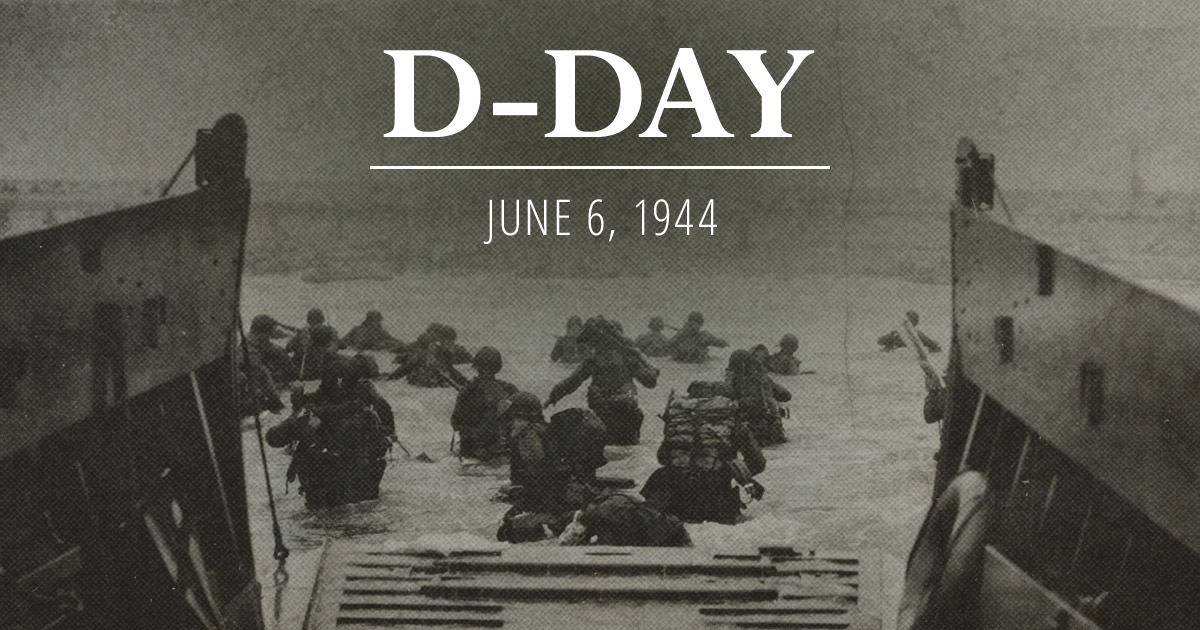
Sergeant Frank J. Wawrynovic landed on Omaha Brach on D-Day with C Company of the First Battalion, 115th Regiment, 29th Division. On June 17, he was wounded while scouting ahead of the American line in an orchard near the Norman city of St. Lô. He was evacuated, hospitalized for nearly two years, and discharged with a medical disability. After the war he returned to school and had a successful business career. Over the years he and his wife, Stella, gave very generous support to a variety of charities and non-profit organizations, including Normandy Allies. Many years after the war, his thoughts returned to that episode, leading him to write the poem shown above. He died in 2005, and his wife followed him in 2013.

D-Day occurred 73 years ago today and led to the liberation of Europe from Hitler’s Nazi regime.


The Phantoms For Which Clothes Are Designed

The Phantoms for Which Clothes Are Designed

by Chase Twichell

Sewing patterns are designed for imaginary
people, based on average measurements
taken in the 1930s by the WPA

and adjusted over the decades by the Industry.

I sew a Misses 14, designed for a woman
5’5” to 5’6”, 36/28/38,

which is to say no one,

so I alter the pattern to fit a phantom of me
instead of a phantom of her.

She doesn’t need any more dresses.
About This Poem

“I do a lot of sewing (clothes). Construction is easy compared to fitting, which is basically math coupled with anticipating how a fabric will behave in 3-D. I’ve probably made a hundred dresses that are perfect on the hanger but don’t fit well enough to wear into the world.”—Chase Twichell


Trees

TREES

by JOYCE KILMER

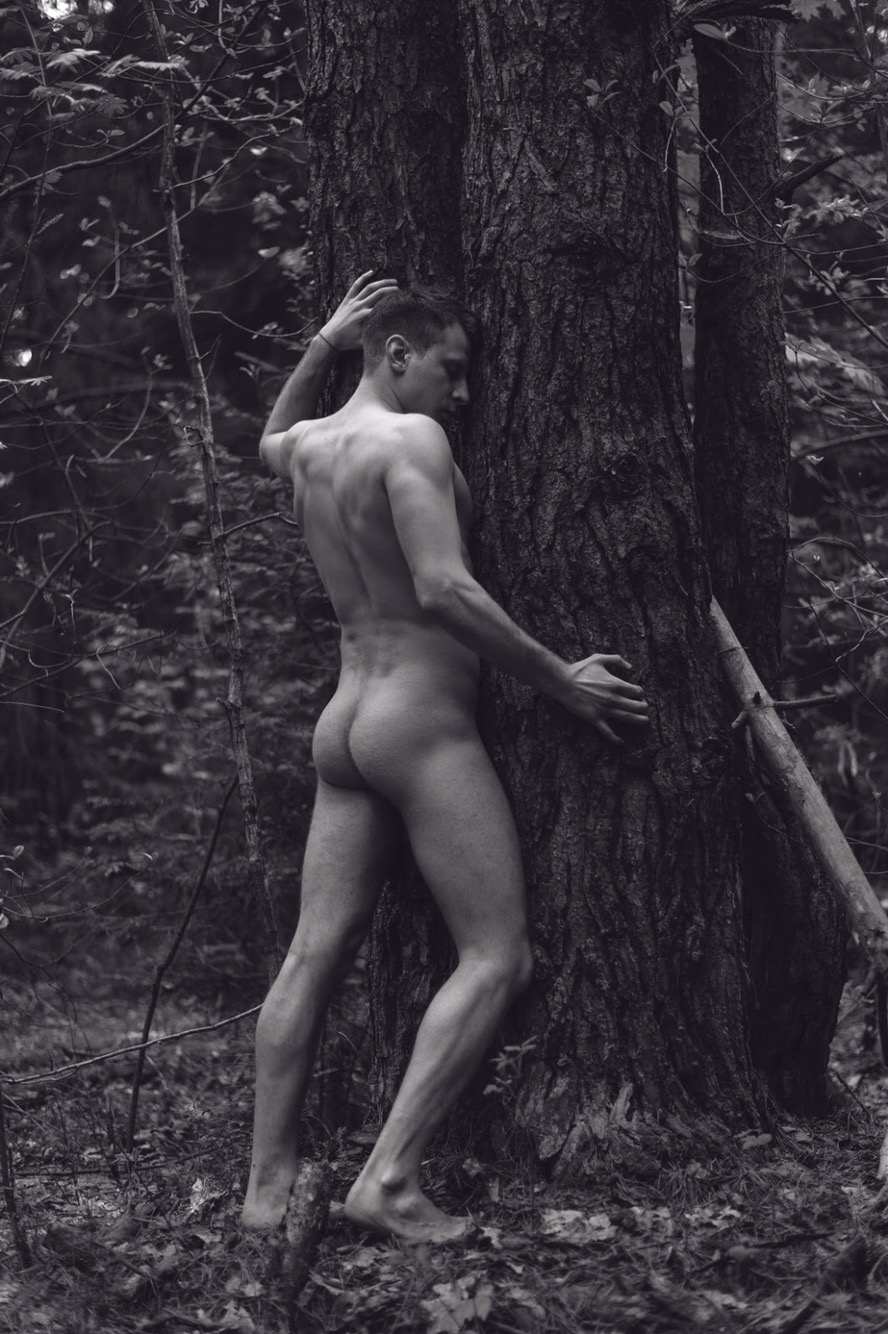
“I think that I shall never see
A poem lovely as a tree.

A tree whose hungry mouth is prest
Against the earth’s sweet flowing breast;

A tree that looks at God all day,
And lifts her leafy arms to pray;

A tree that may in Summer wear
A nest of robins in her hair;

Upon whose bosom snow has lain;
Who intimately lives with rain.

Poems are made by fools like me,
But only God can make a tree.”


Instructions on Not Giving Up

Instructions on Not Giving Up
by Ada Limón

More than the fuchsia funnels breaking out
of the crabapple tree, more than the neighbor’s
almost obscene display of cherry limbs shoving
their cotton candy-colored blossoms to the slate
sky of Spring rains, it’s the greening of the trees
that really gets to me. When all the shock of white
and taffy, the world’s baubles and trinkets, leave
the pavement strewn with the confetti of aftermath,
the leaves come. Patient, plodding, a green skin
growing over whatever winter did to us, a return
to the strange idea of continuous living despite
the mess of us, the hurt, the empty. Fine then,
I’ll take it, the tree seems to say, a new slick leaf
unfurling like a fist to an open palm, I’ll take it all.

About This Poem

“It was a hard winter. My whole body raged against it. But right as the world feels uninhabitable, something miraculous happens: the trees come back. I wanted to praise that ordinary thing as a way of bringing myself back too.”
—Ada Limón

Ada Limón is the author of Bright Dead Things (Milkweed Editions, 2015). She teaches in the low-residency MFA prog


Dreams

Dreams
by Helen Hunt Jackson

Mysterious shapes, with wands of joy and pain,
Which seize us unaware in helpless sleep,
And lead us to the houses where we keep
Our secrets hid, well barred by every chain
That we can forge and bind: the crime whose stain
Is slowly fading ’neath the tears we weep;
Dead bliss which, dead, can make our pulses leap—
Oh, cruelty! To make these live again!
They say that death is sleep, and heaven’s rest
Ends earth’s short day, as, on the last faint gleam
Of sun, our nights shut down, and we are blest.
Let this, then, be of heaven’s joy the test,
The proof if heaven be, or only seem,
That we forever choose what we will dream!


Afternoon on a Hill


Afternoon on a Hill
By Edna St. Vincent Millay

I will be the gladdest thing
    Under the sun!
I will touch a hundred flowers
    And not pick one.

I will look at cliffs and clouds
    With quiet eyes,
Watch the wind bow down the grass,
    And the grass rise.

And when lights begin to show
    Up from the town,
I will mark which must be mine,
    And then start down!


Gay Haiku

I don’t understand
You love it when I do that–
Wait, no.  That’s Stephen.

Remember when I
Said I disliked oral sex?
I meant just with you.

My seventh birthday;
I weep at Barbie’s Dream House.
How could you not know?

The salmon’s divine,
But I’m afraid we can’t stay–
I screwed our waiter.

He’s gorgeous, witty
And stimulating.  Please, God,
Let him be a top.

EDIT: These are all from “Gay Haiku” by Joel Derfner. 


Tears, Idle Tears

Tears, Idle Tears
Lord Alfred Tennyson, 1809 – 1892

Tears, idle tears, I know not what they mean,
Tears from the depth of some divine despair
Rise in the heart, and gather to the eyes,
In looking on the happy autumn-fields,
And thinking of the days that are no more.

Fresh as the first beam glittering on a sail,
That brings our friends up from the underworld,
Sad as the last which reddens over one
That sinks with all we love below the verge;
So sad, so fresh, the days that are no more.

Ah, sad and strange as in dark summer dawns
The earliest pipe of half-awakened birds
To dying ears, when unto dying eyes
The casement slowly grows a glimmering square;
So sad, so strange, the days that are no more.

Dear as remembered kisses after death,
And sweet as those by hopeless fancy feigned
On lips that are for others; deep as love,
Deep as first love, and wild with all regret;
O Death in Life, the days that are no more!