Category Archives: Poetry

Nothing Twice 

Nothing Twice
by Wislawa Szymborska (1923 – 2012)

Nothing can ever happen twice.
In consequence, the sorry fact is
that we arrive here improvised
and leave without the chance to practice.

Even if there is no one dumber,
if you’re the planet’s biggest dunce,
you can’t repeat the class in summer:
this course is only offered once.

No day copies yesterday,
no two nights will teach what bliss is
in precisely the same way,
with precisely the same kisses.

One day, perhaps some idle tongue
mentions your name by accident:
I feel as if a rose were flung
into the room, all hue and scent.

The next day, though you’re here with me,
I can’t help looking at the clock:
A rose? A rose? What could that be?
Is it a flower or a rock?

Why do we treat the fleeting day
with so much needless fear and sorrow?
It’s in its nature not to stay:
Today is always gone tomorrow.


I Don’t Believe You

I don’t believe you.
When you tell me something must be wrong with you,
that you feel broken or less than good enough,
and that you are the reason you are alone.
I don’t believe you.
You see yourself through the cracked lenses,
of another persons life and some how expect me
to see you the same way they did.
You don’t believe me,
when i say you’re everything you should be
and that all the things and all the pieces
are in all the right proportions.
You don’t believe me.
I see you with my own eyes,
unclouded by the self doubt you feel
and what i see is clear:
You’re beautiful.
A wonder.
A treasure that could never be replaced.
You, yes you, just as you are.
You are someone I wish to know.
You are someone I place value in.
YOU are someone that a person like me,
would love to call my own.
You don’t believe me when I tell you these things,
and I will never believe those things about you.

Unknown Author 


To An Athlete Dying Young

To An Athlete Dying Young
A. E. Housman, 1859 – 1936

The time you won your town the race
We chaired you through the market-place;
Man and boy stood cheering by,
And home we brought you shoulder-high.

To-day, the road all runners come,
Shoulder-high we bring you home,
And set you at your threshold down,
Townsman of a stiller town.

Smart lad, to slip betimes away
From fields where glory does not stay,
And early though the laurel grows
It withers quicker than the rose.

Eyes the shady night has shut
Cannot see the record cut,
And silence sounds no worse than cheers
After earth has stopped the ears:

Now you will not swell the rout
Of lads that wore their honours out,
Runners whom renown outran
And the name died before the man.

So set, before its echoes fade,
The fleet foot on the sill of shade,
And hold to the low lintel up
The still-defended challenge-cup.

And round that early-laurelled head
Will flock to gaze the strengthless dead,
And find unwithered on its curls
The garland briefer than a girl’s.

Chris Mears (pictured above) suffered a ruptured spleen in January 2009 while he was training in Sydney for the Youth Olympic Festival. He was suffering from glandular fever but was not displaying the usual symptoms. His organs were squeezed by swelling, and further aggravated by the impact of his dives. This caused his spleen to rupture. After losing two litres of blood and being given a 5% chance of survival by doctors upon admission to the hospital, he was told it was likely he would never dive again. For several days he was kept alive by medical intervention and his platelet count was at 2. Upon discharge, Mears remained in Australia until fit to fly. However his family returned to their hotel room one morning to find him having a seizure on the floor. Mears suffered a 7-hour seizure in total which led to a three-day coma. Usually someone suffering something of this scale would be expected to have suffered irretrievable brain-damage and physical disabilities. He later described arguing with the doctors telling him it was Thursday, that he was certain it was still Monday. Despite being told that he would never dive again, Mears made a slow introduction back into diving, and went on to compete eighteen months later at the 2010 Commonwealth Games in India. He does however still to this day have a trademark 30-cm scar down the middle of his abdomen, curtailing his abdominal movement. At this year’s Olympics, Mears showed just how well he could dive with the best by winning gold in the men’s synchronized 3m springboard.


It Couldn’t Be Done

It Couldn’t Be Done
Edgar Guest, 1881 – 1959

Somebody said that it couldn’t be done,
But he with a chuckle replied
That “maybe it couldn’t,” but he would be one
Who wouldn’t say so till he’d tried.
So he buckled right in with the trace of a grin
On his face. If he worried he hid it.
He started to sing as he tackled the thing
That couldn’t be done, and he did it.

Somebody scoffed: “Oh, you’ll never do that;
At least no one ever has done it”;
But he took off his coat and he took off his hat,
And the first thing we knew he’d begun it.
With a lift of his chin and a bit of a grin,
Without any doubting or quiddit,
He started to sing as he tackled the thing
That couldn’t be done, and he did it.

There are thousands to tell you it cannot be done,
There are thousands to prophesy failure;
There are thousands to point out to you one by one,
The dangers that wait to assail you.
But just buckle in with a bit of a grin,
Just take off your coat and go to it;
Just start in to sing as you tackle the thing
That “cannot be done,” and you’ll do it.

The 2016 Summer Olympic Games are taking place from August 5 to August 21 in Rio de Janeiro, with a long roster of events from archery, fencing, and sailing to basketball, boxing, soccer, and tennis. Get in the spirit by reading a poem on the triumph of the human spirit. We all know some of these athletes were told that they could never make it to the Olympics but they did. Take the 41 year old gymnast from Uzbekistan who was told she was too old, but is competing in her 7th Olympics. Don’t let anyone tell you that something cannot be done, because with perseverance, it can be done.


He would not stay for me, and who can wonder

He would not stay for me, and who can wonder
A. E. Housman, 1859 – 1936

He would not stay for me, and who can wonder?
He would not stay for me to stand and gaze.
I shook his hand, and tore my heart in sunder,
And went with half my life about my ways.


Whom You Love

Whom You Love
By Joseph O. Legaspi

“Tell me whom you love, and I’ll tell you who you are.” – Creole Proverb

The man whose throat blossoms with spicy chocolates
Tempers my ways of flurrying
Is my inner recesses surfacing
Paints the bedroom blue because he wants to carry me to the skies
Pear eater in the orchard
Possesses Whitmanesque urge & urgency
Boo Bear, the room turns orchestral
Crooked grin of ice cream persuasion
When I speak he bursts into seeds & religion
Poetry housed in a harmonica
Line dances with his awkward flair
Rare steaks, onion rings, Maker’s on the rocks
Once-a-boy pilfering grenadine
Nebraska, Nebraska, Nebraska
Wicked at the door of happiness
At a longed-for distance remains sharply crystalline
Fragments, but by day’s end assembled into joint narrative
Does not make me who I am, entirely
Heart like a fig, sliced
Peonies in a clear round vase, singing
A wisp, a gasp, sonorous stutter
Tuning fork deep in my belly, which is also a bell
Evening where there is no church but fire
Sparks, particles, chrysalis into memory
Moth, pod of enormous pleasure, fluttering about on a train
He knows I don’t need saving & rescues me anyhow
Our often-misunderstood kind of love is dangerous
Darling, fill my cup; the bird has come to roost

Joseph O. Legaspi was born in the Philippines, where he lived before immigrating to Los Angeles with his family at age twelve. He received a BA from Loyola Marymount University and an MFA from New York University’s Creative Writing Program. Legaspi is the author of Imago (CavanKerry Press, 2007), winner of a Global Filipino Literary Award. He is the recipient of a 2001 poetry fellowship from the New York Foundation for the Arts, and in 2004 he cofounded Kundiman, a nonprofit organization serving Asian American poetry. He works at Columbia University and lives in New York City.


Mother o’ Mine

Mother o’ Mine
By Rudyard Kipling, 1865 – 1936

If I were hanged on the highest hill,
Mother o’ mine, O mother o’ mine!
I know whose love would follow me still,
Mother o’ mine, O mother o’ mine!

If I were drowned in the deepest sea,
Mother o’ mine, O mother o’ mine!
I know whose tears would come down to me,
Mother o’ mine, O mother o’ mine!

If I were damned of body and soul,
I know whose prayers would make me whole,
Mother o’ mine, O mother o’ mine!

This poem seemed appropriate since my mother just visited me in Vermont and Rudyard Kipling lived in Vermont for a number of years. In fact, it was in Vermont that he wrote The Jungle Book and Captain Courageous.


Experience 

Experience
By Carl Sandburg

This morning I looked at the map of the day
And said to myself, “This is the way! This is the way I will go;
Thus shall I range on the roads of achievement,
The way is so clear—it shall all be a joy on the lines marked out.”
And then as I went came a place that was strange,—
’Twas a place not down on the map!
And I stumbled and fell and lay in the weeds,
And looked on the day with rue.

I am learning a little—never to be sure—
To be positive only with what is past,
And to peer sometimes at the things to come
As a wanderer treading the night
When the mazy stars neither point nor beckon,
And of all the roads, no road is sure.

I see those men with maps and talk
Who tell how to go and where and why;
I hear with my ears the words of their mouths,
As they finger with ease the marks on the maps;
And only as one looks robust, lonely, and querulous,
As if he had gone to a country far
And made for himself a map,
Do I cry to him, “I would see your map!
I would heed that map you have!”


America

America
By Claude McKay

Although she feeds me bread of bitterness,
And sinks into my throat her tiger’s tooth,
Stealing my breath of life, I will confess
I love this cultured hell that tests my youth!
Her vigor flows like tides into my blood,
Giving me strength erect against her hate.
Her bigness sweeps my being like a flood.
Yet as a rebel fronts a king in state,
I stand within her walls with not a shred
Of terror, malice, not a word of jeer.
Darkly I gaze into the days ahead,
And see her might and granite wonders there,
Beneath the touch of Time’s unerring hand,
Like priceless treasures sinking in the sand.

About This Poem

“America” was first published in The Liberator in December of 1921. It appeared in McKay’s collection Harlem Shadows (Harcourt, Brace and Company, 1922).


Dancing Queen

Dancing Queen
ABBA

You can dance, you can jive, having the time of your life
See that girl, watch that scene, digging the Dancing Queen

Friday night and the lights are low
Looking out for the place to go
Where they play the right music, getting in the swing
You come in to look for a king
Anybody could be that guy
Night is young and the music’s high
With a bit of rock music, everything is fine
You’re in the mood for a dance
And when you get the chance…

You are the Dancing Queen, young and sweet, only seventeen
Dancing Queen, feel the beat from the tambourine
You can dance, you can jive, having the time of your life
See that girl, watch that scene, digging the Dancing Queen

You’re a teaser, you turn ’em on
Leave them burning and then you’re gone
Looking out for another, anyone will do
You’re in the mood for a dance
And when you get the chance…

You are the Dancing Queen, young and sweet, only seventeen
Dancing Queen, feel the beat from the tambourine
You can dance, you can jive, having the time of your life
See that girl, watch that scene, digging the Dancing Queen

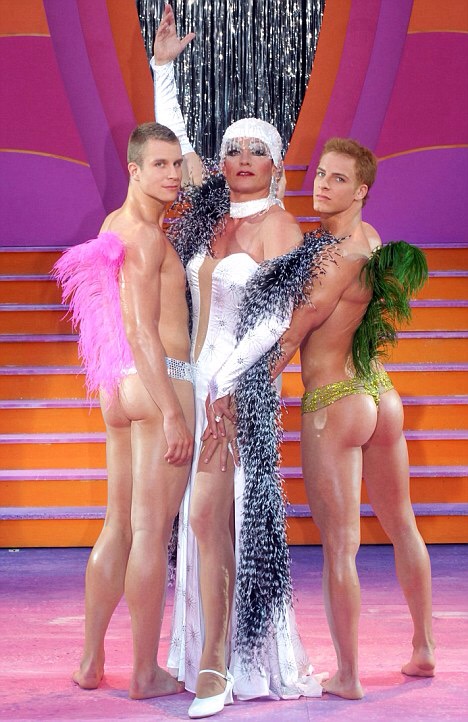
I love ABBA. You can always sing along to their music. Since the release of “Dancing Queen,” it has been adopted by the LGBT community, and remains one of the most ubiquitous “gay anthems.” I had a host of gay anthems I could have chosen from, including “Born This Way” by Lady Gaga, or a classic like “Somewhere Over the Rainbow” sung by Judy Garland, but since I’d chosen three disco songs, I chose to stick with disco.

In the early hours of June 28, 1969, forty-seven years ago today, riots broke out at the Stonewall Inn in New York City. If you don’t know much about the Stonewall Riots or you just want to refresh you memory, click on this link (STONEWALL) and you’ll be taken to a series of blog posts that emerged from a paper I once wrote on the subject. We’ve come a very long way since 1969.