
Category Archives: Poetry

To E

m14.jpg

To E
by Sara Teasdale

The door was opened and I saw you there
And for the first time heard you speak my name.
Then like the sun your sweetness overcame
My shy and shadowy mood; I was aware
That joy was hidden in your happy hair,
And that for you love held no hint of shame;
My eyes caught light from yours, within whose flame
Humor and passion have an equal share.

How many times since then have I not seen
Your great eyes widen when you talk of love,
And darken slowly with a fair desire;
How many time since then your soul has been
Clear to my gaze as curving skies above,
Wearing like them a raiment made of fire.


I’m not sure who the “E” in Sara Teasdale’s life was, but I know who the five E’s that have been in my own life. Three are no longer of this earth. One I lost back in November, and I mourn the loss of my greatest confidant and friend each and every day. The antidepressants and anti-anxiety medicine that I take keeps away the darkest of thoughts that I still feel, but they only keep them at a distant shadow. The other two were my father’s parents. I lost Grandaddy first nearly fifteen years ago, and Grandmama nearly three years ago. I think of the three of them all the time. Grandmama and my friend E, I think of everyday.  The two of them loved me unconditionally. True unconditional love is a rare thing to every find.

Another E was a great companion and boyfriend who I gave up for a new life and new job. Luckily, we have remained friends, and I still keep in touch with him. The other E is my sweet little Edith, a bobtail calico kitten who I remember looked into my eyes when I went to rescue her from an animal shelter. She is a loyal and sweet friend who I wish was here in Vermont with me, but she is safely living the life of a queen with my aunt.

Five E’s that I love. Five E’s that I miss. Five E’s that I will see again. Three in heaven, two when I return to Alabama.


Headaches

65 by Kendric Tonn.jpg

Headaches
Marilyn Hacker, 1942

Wine again. The downside of any evening’s
bright exchanges, scribbled with retribution :
stark awake, a tic throbs in the left temple’s
site of bombardment.

Tortured syntax, thorned thoughts, vocabulary
like a forest littered with unexploded
cluster bombs, no exit except explosion
ripping the branches.

Stacks of shadowed books on the bedside table
wall a jar of Tiger Balm. You grope for its
glass netsuke hexagon. Tic stabs, dull pain
supercedes voices,

stills obsessive one-sided conversations.
Turn from mouths you never will kiss, a neck your
fingers will not trace to a golden shoulder.
Think of your elders —

If, in fact, they’d died, the interlocutors
who, alive, recede into incoherence,
you would write the elegy, feel clean grief, still
asking them questions

— though you know it’s you who’d provide the answers.
Auden’s Old People”s Home, Larkin’s The Old Fools
are what come to mind, not Yeats. In a not-so
distant past, someone

poured a glass of wine at three in the morning,
laid a foolscap pad on the kitchen table,
mind aspark from the long loquacious dinner
two hours behind her,

and you got a postcard (a Fifties jazz club)
next day across town, where she scrawled she’d found the
tail-end of a good Sancerre in the fridge and
finished the chapter.

Now she barely knows her friends when you visit.
Drill and mallet work on your forehead. Basta!
And it is Màrgaret you mourn for.. Get up,
go to the bathroom.

You take the drugs. Synapses buzz and click.
You turn the bed lamp on, open a book :
vasoconstrictor and barbiturate
make words in oval light reverberate.
The sky begins to pale at five o’clock.

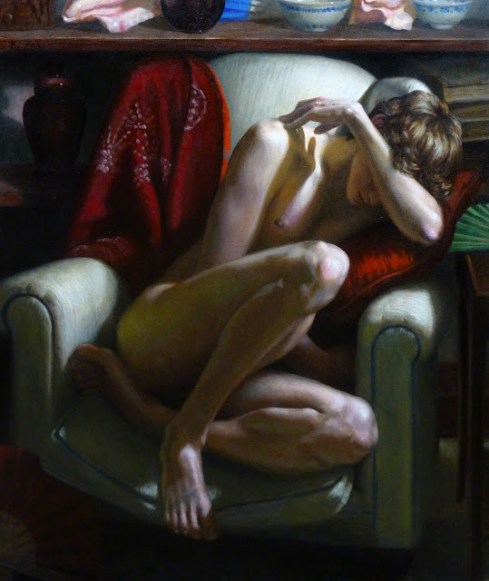
Since this tooth began to ache, I have been having pretty awful headaches. They come and go, but when they come they come with a vengeance. There are a lot of parts of this poem that speak to how I feel with a headache.


World Poetry Day

another_country_02282016_04.jpg

The rhythm of the tongue brings wordless music into the air; it is in poetry that the human essence is refined to such ritualistic purity. It’s in the steady beats, the sonorous rise-and-fall of speech; for a moment it appears as if all the mysteries of the world have unlocked themselves to our private view.

It’s these works which are celebrated on World Poetry Day, falling on 21 March (yesterday), in which UNESCO recognizes the moving spirit of poetry and its transformative effect on culture.

In honor of these celebrations, below is a small collection of parts of poems from 25 of the greatest poets and some of the most powerful words written in poetic form in history.

Emily Dickinson
‘Because I could not stop for Death’

Because I could not stop for Death,
He kindly stopped for me;
The carriage held but just ourselves
And Immortality

Oscar Wilde
‘To My Wife’

And when wind and winter harden
All the loveless land,
It will whisper of the garden,
You will understand

Gwendolyn MacEwen
‘Dark Pines Under Water’

But the dark pines of your mind dip deeper
And you are sinking, sinking, sleeper
In an elementary world; There is something down there and you want it told

T.S Eliot
‘The Hollow Men’

This is the way the world ends
not with a bang but a whimper

Sylvia Plath
‘Lady Lazarus’

Out of the ash I rise
With my red hair
And I eat men like air

‘Daddy’

At twenty I tried to die
And get back, back, back to you.
I thought even the bones would do.
But they pulled me out of the sack,
And they stuck me together with glue

Wilfred Owen
‘Dulce et Decorum est’

Bent double, like old beggars under sacks,
Knock-kneed, coughing like hags, we cursed through sludge,
Till on the haunting flares we turned our backs
And towards our distant rest began to trudge.

Neruda
‘Sonnet XVII’

I love you as certain dark things are to be loved
in secret, between the shadow and the soul.

Margaret Atwood
‘Variation on the Word Sleep’

I would like to be the air
that inhabits you for a moment
only. I would like to be that unnoticed
& that necessary

e e cummings
‘the boys i mean are not refined’

they speak whatever’s on their mind
they do whatever’s in their pants
the boys i mean are not refined
they shake the mountains when they dance

Walt Whitman
‘O Captain! My Captain!’

O Captain! my Captain! our fearful trip is done;
The ship has weather’d every rack, the prize we sought is won

‘Leaves of Grass’

I bequeath myself to the dirt to grow from the grass I love
If you want me again look for me under your boot-soles

Allen Ginsberg
‘Song’

The weight of the world
is love
Under the burden
of solitude,
under the burden
of dissatisfaction
the weight,
the weight we carry
is love

‘Howl’
I saw the best minds of my generation destroyed by madness, starving hysterical naked,
dragging themselves through the negro streets at dawn looking for an angry fix
angelheaded hipsters burning for the ancient heavenly connection to the starry dynamo in the machinery of night

Maya Angelou
‘I Know Why The Caged Bird Sings’

The caged bird sings with a fearful trill
Of things unknown but longed for still
And his tune is heard on the distant hill
For the caged bird sings of freedom

‘Still I Rise’

You may write me down in history
With your bitter, twisted lies,
You may trod me in the very dirt
But still, like dust, I’ll rise

William Butler Yeats
‘The Second Coming’

The blood-dimmed tide is loosed, and everywhere
The ceremony of innocence is drowned;
The best lack all conviction, while the worst
Are full of passionate intensity ‘

Edna St. Vincent Millay
‘Dirge Without Music’

Down, down, down into the darkness of the grave
Gently they go, the beautiful, the tender, the kind;
Quietly they go, the intelligent, the witty, the brave.
I know. But I do not approve. And I am not resigned

Alexander Pope
‘Eloisa to Abelard’

How happy is the blameless vestal’s lot!
The world forgetting, by the world forgot.
Eternal sunshine of the spotless mind!
Each pray’r accepted, and each wish resign’d

William Shakespeare
‘Sonnet 116’

Love is not love Which alters when it alteration finds,
Or bends with the remover to remove:
O no; it is an ever-fixed mark,
That looks on tempests, and is never shake

Ezra Pound
‘A Girl’

Tree you are,
Moss you are,
You are violets with wind above them.
A child – so high – you are,
And all this is folly to the world

Charles Bukowski
‘The Unblinking Grief’

you are much more than simply dead
I am a dish for your ashes
I am a fist for your vanished air
the most terrible thing about life
is finding it gone

Elizabeth Barrett Browning
‘Sonnet 43’

How do I love thee? Let me count the ways.
I love thee to the depth and breadth and height
My soul can reach, when feeling out of sight
For the ends of being and ideal grace.

Shel Silverstein
‘Masks’

She had blue skin,
and so did he.
He kept it hid
and so did she.
They looked for blue
their whole life through.
Then passed right by—
and never knew

Dylan Thomas
‘Do Not Go Gentle Into That Good Night’

Do not go gentle into that good night,
Old age should burn and rave at close of day;
Rage, rage against the dying of the light

Samuel Taylor Coleridge
‘The Rime of the Ancient Mariner’

Water, water, every where,
And all the boards did shrink;
Water, water, every where
Nor any drop to drink

Langston Hughes
‘Let America Be America Again’

I am the poor white, fooled and pushed apart
I am the Negro bearing slavery’s scars
I am the red man driven from the land,
I am the immigrant clutching the hope I seek –
And finding only the same old stupid plan
Of dog eat dog, of mighty crush the weak

Siegfried Sassoon
‘Suicide in the Trenches’

You smug-faced crowds with kindling eye
Who cheer when soldier lads march by,
Sneak home and pray you’ll never know
The hell where youth and laughter go

Robert Frost
‘Nothing Gold Can Stay’

So Eden sank to grief,
So dawn goes down to day.
Nothing gold can stay.

‘The Road Not Taken’

Two roads diverged in a wood, and I—
I took the one less traveled by,
And that has made all the difference.


Why They Went

image

Why They Went
Elizabeth Bradfield

that men might learn what the world is like at the spot where the sun does not decline in the heavens.
—Apsley Cherry-Garrard

Frost bitten. Snow blind. Hungry. Craving
fresh pie and hot toddies, a whole roasted
unflippered thing to carve. Craving a bed
that had, an hour before entering,
been warmed with a stone from the hearth.

Always back to Eden—to the time when we knew
with certainty that something watched and loved us.
That the very air was miraculous and ours.
That all we had to do was show up.

The sun rolled along the horizon. The light never left them.
The air from their warm mouths became diamonds.
And they longed for everything they did not have.
And they came home and longed again.

Elizabeth Bradfield is the author of Approaching Ice (Persea, 2010), which was a finalist for the James Laughlin Award from the Academy of American Poets, and Interpretive Work (Arktoi, 2008), which won the 2009 Audre Lorde Prize and was a finalist for a Lambda Literary Award. Her poems have appeared in The Atlantic Monthly, Poetry, The Believer, Orion as well as many anthologies, and she is a former Wallace Stegner Fellow. Founder and editor of the grassroots-distributed and guerilla-art-inspired Broadsided Press (broadsidedpress.org), she works as a naturalist and lives on Cape Cod.


A Dream Within a Dream

IMG_3236.jpg

A Dream Within a Dream
By Edgar Allan Poe

Take this kiss upon the brow!
And, in parting from you now,
Thus much let me avow —
You are not wrong, who deem
That my days have been a dream;
Yet if hope has flown away
In a night, or in a day,
In a vision, or in none,
Is it therefore the less gone?
All that we see or seem
Is but a dream within a dream.

I stand amid the roar
Of a surf-tormented shore,
And I hold within my hand
Grains of the golden sand —
How few! yet how they creep
Through my fingers to the deep,
While I weep — while I weep!
O God! Can I not grasp
Them with a tighter clasp?
O God! can I not save
One from the pitiless wave?
Is all that we see or seem
But a dream within a dream?

“A Dream Within a Dream” is a poem written by Edgar Allan Poe, first published in 1849. The poem is 24 lines, divided into two stanzas. The poem questions the way one can distinguish between reality and fantasy, asking, “Is all that we see or seem but a dream within a dream?”

The poem dramatizes a confusion in watching the important things in life slip away. Realizing he cannot hold on to even one grain of sand leads to his final question that all things are a dream. The poem references “golden sand,” an image derived from the 1848 finding of gold in California.

In 1827, Poe enlisted in the U.S. Army under the name “Edgar A. Perry.” He did well as a soldier, rising to the rank of sergeant major. He also continued to write. A book of his poetry was published anonymously (the author being listed only as “A Bostonian”). In April 1829, he entered the U.S. Military Academy at West Point. A few months later, he published his second book of poetry, Al Aaraaf, Tamerlane and Minor Poems.

Poe soon realized that West Point wasn’t for him. He decided to get himself kicked out of school, which he successfully accomplished by refusing to attend chapel or classes. Poe tried hard to get kicked out of West Point, and in 1831, he succeeded. Rumor is that the final straw came when he reported for drill wearing belts for his cartridges, a smile and nothing else. While officially, he was court martialed on “Charge 1 . . . Gross neglect of Duty” and “Charge 2 . . . Disobedience of Orders.” He was court-martialed and dismissed. “The army does not suit a poor man — so I left W. Point abruptly,” he later wrote, “and threw myself upon literature as a resource. I became first known to the literary world thus.” Poe published several anonymous short stories plus another book of poems. Almost immediately after he left West Point, his brother Henry died of tuberculosis.

Poe began (and finished) his career as a starving writer. Though John Allan had remarried a wealthy woman, he refused to support his foster son, who was constantly asking for money. “It has now been more than two years since you have assisted me, and more than three since you have spoken to me,” Poe wrote in his final letter to his foster father in 1833. “If you will only consider in what a situation I am placed you will surely pity me — without friends, without any means, consequently of obtaining employment, I am perishing — absolutely perishing for want of aid. . . . For God’s sake pity me, and save me from destruction.” John Allan did not respond. And when he died on 27 March 1834, Allan omitted his adopted son from his will entirely.

I used Edgar Allan Poe today, because yesterday and today, I spent touring West Point as my job and to my knowledge, Poe was the most famous poet to attend West Point.

West Point Graduation

Cadets march to graduation ceremonies at the United States Military Academy at West Point, N.Y., Saturday, May 31, 2008. (AP Photo/Mike Groll)


Dear March – Come in – (1320)

IMG_3467

Dear March – Come in – (1320)

Emily Dickinson, 1830 – 1886


Dear March – Come in –

How glad I am –

I hoped for you before –

Put down your Hat –

You must have walked –

How out of Breath you are –

Dear March, how are you, and the Rest –

Did you leave Nature well –

Oh March, Come right upstairs with me –

I have so much to tell –


I got your Letter, and the Birds –

The Maples never knew that you were coming –

I declare – how Red their Faces grew –

But March, forgive me –

And all those Hills you left for me to Hue –

There was no Purple suitable –

You took it all with you –


Who knocks? That April –

Lock the Door –

I will not be pursued –

He stayed away a Year to call

When I am occupied –

But trifles look so trivial

As soon as you have come


That blame is just as dear as Praise

And Praise as mere as Blame –

About this poet

Emily Dickinson was born on December 10, 1830, in Amherst, Massachusetts. She attended Mount Holyoke Female Seminary in South Hadley, but only for one year. Throughout her life, she seldom left her home and visitors were few. The people with whom she did come in contact, however, had an enormous impact on her poetry. She was particularly stirred by the Reverend Charles Wadsworth, whom she first met on a trip to Philadelphia. He left for the West Coast shortly after a visit to her home in 1860, and some critics believe his departure gave rise to the heartsick flow of verse from Dickinson in the years that followed. While it is certain that he was an important figure in her life, it is not clear that their relationship was romantic—she called him “my closest earthly friend.” Other possibilities for the unrequited love that was the subject of many of Dickinson’s poems include Otis P. Lord, a Massachusetts Supreme Court judge, and Samuel Bowles, editor of the Springfield Republican.

By the 1860s, Dickinson lived in almost complete isolation from the outside world, but actively maintained many correspondences and read widely. She spent a great deal of this time with her family. Her father, Edward Dickinson, was actively involved in state and national politics, serving in Congress for one term. Her brother, Austin, who attended law school and became an attorney, lived next door with his wife, Susan Gilbert. Dickinson’s younger sister, Lavinia, also lived at home for her entire life in similar isolation. Lavinia and Austin were not only family, but intellectual companions for Dickinson during her lifetime.

Dickinson’s poetry was heavily influenced by the Metaphysical poets of seventeenth-century England, as well as her reading of the Book of Revelation and her upbringing in a Puritan New England town, which encouraged a Calvinist, orthodox, and conservative approach to Christianity.

She admired the poetry of Robert and Elizabeth Barrett Browning, as well as John Keats. Though she was dissuaded from reading the verse of her contemporary Walt Whitman by rumors of its disgracefulness, the two poets are now connected by the distinguished place they hold as the founders of a uniquely American poetic voice. While Dickinson was extremely prolific as a poet and regularly enclosed poems in letters to friends, she was not publicly recognized during her lifetime. The first volume of her work was published posthumously in 1890 and the last in 1955. She died in Amherst in 1886.

Upon her death, Dickinson’s family discovered forty handbound volumes of nearly 1,800 poems, or “fascicles” as they are sometimes called. Dickinson assembled these booklets by folding and sewing five or six sheets of stationery paper and copying what seem to be final versions of poems. The handwritten poems show a variety of dash-like marks of various sizes and directions (some are even vertical). The poems were initially unbound and published according to the aesthetics of her many early editors, who removed her unusual and varied dashes, replacing them with traditional punctuation. The current standard version of her poems replaces her dashes with an en-dash, which is a closer typographical approximation to her intention. The original order of the poems was not restored until 1981, when Ralph W. Franklin used the physical evidence of the paper itself to restore her intended order, relying on smudge marks, needle punctures, and other clues to reassemble the packets. Since then, many critics have argued that there is a thematic unity in these small collections, rather than their order being simply chronological or convenient. The Manuscript Books of Emily Dickinson (Belknap Press, 1981) is the only volume that keeps the order intact.

My favorite piece of trivia about Dickinson is that she wrote on what in music is called common time or four-four time (4/4 beat).  Nearly all of her poems can be sang to any song with common time, such as “The Battle Hymn of the Republic,” “The Yellow Rose of Texas,” and the theme to “Gilligan’s Island.” Try it with the poem above.


The Awakening

image

The Awakening
By James Weldon Johnson

I dreamed that I was a rose
That grew beside a lonely way,
Close by a path none ever chose,
And there I lingered day by day.
Beneath the sunshine and the show’r
I grew and waited there apart,
Gathering perfume hour by hour,
And storing it within my heart,
Yet, never knew,
Just why I waited there and grew.

I dreamed that you were a bee
That one day gaily flew along,
You came across the hedge to me,
And sang a soft, love-burdened song.
You brushed my petals with a kiss,
I woke to gladness with a start,
And yielded up to you in bliss
The treasured fragrance of my heart;
And then I knew
That I had waited there for you.

About This Poem

“The Awakening” was published in Johnson’s book Fifty Years and Other Poems (Cornhill Company, 1917).

James Weldon Johnson was born on June 17, 1871, in Jacksonville, Florida. In 1920 he became the national organizer for the NAACP. Johnson’s works include Fifty Years and Other Poems (Cornhill Company, 1917) and Saint Peter Relates an Incident: Selected Poems (The Viking Press 1935). He died on June 26, 1938.


The Road Not Taken

The Road Not Taken

Robert Frost, 1874 – 1963

Two roads diverged in a yellow wood,
And sorry I could not travel both
And be one traveler, long I stood
And looked down one as far as I could
To where it bent in the undergrowth;

Then took the other, as just as fair,
And having perhaps the better claim,
Because it was grassy and wanted wear;
Though as for that the passing there
Had worn them really about the same,

And both that morning equally lay
In leaves no step had trodden black.
Oh, I kept the first for another day!
Yet knowing how way leads on to way,
I doubted if I should ever come back.

I shall be telling this with a sigh
Somewhere ages and ages hence:
Two roads diverged in a wood, and I–
I took the one less traveled by,
And that has made all the difference.

Everyone can quote those final two lines. But everyone, writes David Orr in his book “The Road Not Taken” (Penguin Press), gets the meaning wrong.

The poem is praised as an ode of individuality, to not follow the pack even though the path may be more difficult.

Except Frost notes early in the poem that the two roads were “worn . . . really about the same.” There is no difference. It’s only later, when the narrator recounts this moment, that he says he took the road less traveled.

“This is the kind of claim we make when we want to comfort or blame ourselves by assuming that our current position is the product of our own choices (as opposed to what was chosen for us, or allotted to us by chance),” Orr writes.

“The poem isn’t a salute to can-do individualism,” he continues. “It’s a commentary on the self-deception we practice when constructing the story of our own lives.”

Wrongly referred to by many as “The Road Less Traveled,” the poem’s true title, “The Road Not Taken,” references regret rather than pride. That’s by design. Frost wrote it as somewhat of a joke to a friend, English poet Edward Thomas.

In 1912, Frost was nearly 40 and frustrated by his lack of success in the United States. After Thomas praised his work in London, the two became friends, and Frost visited him in Gloucestershire. They often took walks in the woods, and Frost was amused that Thomas always said another path might have been better. “Frost equated [it] with the romantic predisposition for ‘crying over what might have been,’ ” Orr writes, quoting Frost biographer Lawrance Thompson.

Frost thought his friend “would take the poem as a gentle joke and protest, ‘Stop teasing me,’ ” Thompson writes.

He didn’t. Like readers today, Thomas was confused by it and maybe even thought he was being lampooned.

One Edward Thomas biographer suggested that “The Road Not Taken” goaded the British poet, who was indecisive about joining the army.

“It pricked at his confidence . . . the one man who understood his indecisiveness most acutely — in particular, toward the war — appeared to be mocking him for it,” writes Matthew Hollis.

Thomas enlisted in World War I, and was killed two years later.

Orr writes that “The Road Not Taken” is “a thoroughly American poem. The ideas that [it] holds in tension — the notion of choice, the possibility of self-deception — are concepts that define . . . the United States.”

It is also, as critic Frank Lentricchia writes, “the best example in all of American poetry of a wolf in sheep’s clothing.”

I have always equated this poem with what Jesus says during the Sermon on the Mount about the narrow gate. In Matthew 7:13-14, Jesus says “13 “Enter through the narrow gate; for the gate is wide and the road is easy that leads to destruction, and there are many who take it. 14 For the gate is narrow and the road is hard that leads to life, and there are few who find it.”

Frost’s religious beliefs have long been speculated upon. Raised by a mother who was a follower of Swedenborgianism, a Swedish mystical belief, many of Frost’s biographers have noted his apparent atheism or agnosticism. But he was deeply interested in Christianity.

Axinn Professor of English and Creative Writing at Middlebury College and a prominent Frost scholar Jay Parini said that “Robert Frost called himself an ‘Old Testament Christian. Which meant he was really more focused on the Torah and the old Biblical stories. Things like the Book of Job, the first five books of Moses, the Book of Proverbs and the Psalms were hugely important to Frost as a poet, a man and a thinker.”


How Do I Love Thee? (Sonnet 43)


How Do I Love Thee? (Sonnet 43)
Elizabeth Barrett Browning
How do I love thee? Let me count the ways.
I love thee to the depth and breadth and height
My soul can reach, when feeling out of sight
For the ends of being and ideal grace.
I love thee to the level of every day’s
Most quiet need, by sun and candle-light.
I love thee freely, as men strive for right.
I love thee purely, as they turn from praise.
I love thee with the passion put to use
In my old griefs, and with my childhood’s faith.
I love thee with a love I seemed to lose
With my lost saints. I love thee with the breath,
Smiles, tears, of all my life; and, if God choose,
I shall but love thee better after death.

What is more appropriate for the week before Valentine’s Day than this beautiful love sonnet.  It’s one of my favorite poems and was first published by Elizabeth Barrett Browning in her book Sonnets from the Portuguese (1850).  Most critics agree that Barrett Browning wrote the sonnets, not as an abstract literary exercise, but as a personal declaration of love to her husband, Robert Browning (who was also an important Victorian poet). Perhaps the intimate origin of the sonnets is what led Barrett Browning to create an imaginary foreign origin for them. But whatever the original motives behind their composition and presentation, many of the sonnets immediately became famous, establishing Barrett Browning as an important poet through the 19th and 20th centuries. Phrases from Barrett Browning’s sonnets, especially “How do I love thee?,” have entered everyday conversation, becoming standard figures of speech even for people who have never read her poetry.

I wanted to post this poem for all those that I love, including my wonderful readers.  I think that my favorite part of this poem is “if God choose, I shall but love thee better after death.”  How wonderful is that line.  We know that all things will be greater in heaven than on earth, so to be able to love better after death, implies to me that the love in life is as great a love as can be imagined.  Only in heaven could it be greater.  That’s a powerful statement of love.  I have family and friends that I love with all of my heart, and I hope that one day I will find that love in a romantic way.  If you have found that love, I admire you and am jealous.  If you haven’t, then I hope that you too will find it someday.

For those like me who are single on Valentine’s Day, it can seem so lonely, but there is one thing I have learned over the years: you must love yourself.  Before you can truly love someone else, you have to first love yourself.  If there are things about yourself that you don’t love, you will never allow yourself to be loved in the way we all deserve to be loved.  So love yourself, and allow yourself to be loved, too. So to ultimately answer Browning’s question, “How do I love thee?” I must love myself first so that I can love you more.

Election Day, November, 1884

image


Election Day, November, 1884
By Walt Whitman, 1819 – 1892

If I should need to name, O Western World, your powerfulest scene and show,
‘Twould not be you, Niagara—nor you, ye limitless prairies—nor your huge rifts of canyons, Colorado,
Nor you, Yosemite—nor Yellowstone, with all its spasmic geyser-loops ascending to the skies, appearing
and disappearing,
Nor Oregon’s white cones—nor Huron’s belt of mighty lakes—nor Mississippi’s stream:
—This seething hemisphere’s humanity, as now, I’d name—the still small voice vibrating—America’s
choosing day,
(The heart of it not in the chosen—the act itself the main, the quadriennial choosing,)
The stretch of North and South arous’d—sea-board and inland—Texas to Maine—the Prairie States—Vermont,
Virginia, California,
The final ballot-shower from East to West—the paradox and conflict,
The countless snow-flakes falling—(a swordless conflict,
Yet more than all Rome’s wars of old, or modern Napoleon’s:) the peaceful choice of all,
Or good or ill humanity—welcoming the darker odds, the dross:
—Foams and ferments the wine? it serves to purify—while the heart pants, life glows:
These stormy gusts and winds waft precious ships,
Swell’d Washington’s, Jefferson’s, Lincoln’s sails.

The United States presidential election of 1884 was the 25th quadrennial presidential election, held on Tuesday, November 4, 1884. It saw the first election of a Democrat as President of the United States since the election of 1856. The campaign was marred by exceptional political acrimony and personal invective.

New York Governor Grover Cleveland narrowly defeated Republican former United States Senator James G. Blaine of Maine to break the longest losing streak for any major party in American political history: six consecutive presidential elections.

The issue of personal character marked was paramount in the 1884 campaign. Blaine had been prevented from getting the Republican presidential nomination during the previous two elections because of the stigma of the “Mulligan letters”: in 1876, a Boston bookkeeper named James Mulligan had located some letters showing that Blaine had sold his influence in Congress to various businesses. One such letter ended with the phrase “burn this letter”, from which a popular chant of the Democrats arose – “Burn, burn, burn this letter!” In just one deal, he had received $110,150 (over $1.5 million in 2010 dollars) from the Little Rock and Fort Smith Railroad for securing a federal land grant, among other things. Democrats and anti-Blaine Republicans made unrestrained attacks on his integrity as a result. Their slogan was “Blaine, Blaine, James G. Blaine, the continental liar from the State of Maine.” Cleveland, on the other hand, was known as “Grover the Good” for his personal integrity; in the space of the three previous years he had become successively the mayor of Buffalo, New York, and then the governor of the state of New York, cleaning up large amounts of Tammany Hall’s graft.

Commentator Jeff Jacoby notes that, “Not since George Washington had a candidate for president been so renowned for his rectitude.” In July the Republicans found a refutation buried in Cleveland’s past. Aided by sermons from an opportunistic preacher named George H. Ball, they charged that Cleveland had fathered an illegitimate child while he was a lawyer in Buffalo. When confronted with the scandal, Cleveland’s immediately instructed his supporters to “Above all, tell the truth.” Cleveland admitted to paying child support in 1874 to Maria Crofts Halpin, the woman who claimed he fathered her child, named Oscar Folsom Cleveland. Halpin was involved with several men at the time, including Cleveland’s friend and law partner, Oscar Folsom, for whom the child was named. Cleveland did not know which man was the father; he assumed responsibility because he was the only bachelor among them. Shortly before election day, The Republican media published an affidavit from Halpin in which she stated that until she met Cleveland her “life was pure and spotless”, and “there is not, and never was, a doubt as to the paternity of our child, and the attempt of Grover Cleveland, or his friends, to couple the name of Oscar Folsom, or any one else, with that boy, for that purpose is simply infamous and false.” Republican cartoonists across the land had a field day.

Cleveland’s campaign decided that candor was the best approach to this scandal: it admitted that Cleveland had formed an “illicit connection” with the mother and that a child had been born and given the Cleveland surname. They also noted that there was no proof that Cleveland was the father, and claimed that, by assuming responsibility and finding a home for the child, he was merely doing his duty. Finally, they showed that the mother had not been forced into an asylum; her whereabouts were unknown. Blaine’s supporters condemned Cleveland in the strongest of terms, singing “Ma, Ma, Where’s my Pa?” (After Cleveland’s victory, Cleveland supporters would respond to the taunt with: “Gone to the White House, Ha, Ha, Ha.”) However, the Cleveland campaign’s damage control worked well enough and the race remained a tossup through Election Day. The greatest threat to the Republicans came from reformers called “Mugwumps” who were angrier at Blaine’s public corruption than at Cleveland’s private affairs.

In the final week of the campaign, the Blaine campaign suffered a catastrophe. At a Republican meeting attended by Blaine, a group of New York preachers castigated the Mugwumps. Their spokesman, Reverend Dr. Samuel Burchard, made this fatal statement: “We are Republicans, and don’t propose to leave our party and identify ourselves with the party whose antecedents have been rum, Romanism, and rebellion.” Blaine did not notice Burchard’s anti-Catholic slur, nor did the assembled newspaper reporters, but a Democratic operative did, and Cleveland’s campaign managers made sure that it was widely publicized. The statement energized the Irish and Catholic vote in New York City heavily against Blaine, costing him New York state and the election by the narrowest of margins. New York decided the election, awarding Governor Cleveland the state’s 36 electors by a margin of just 1,047 votes out of 1,171,312 cast.

The Election of 1884 is one of the most fascinating to me. The other is the election of 1912 when a Democrat won again for the first time since Cleveland’s second term, which by the way was nonconsecutive the only such candidate to do so in history. The 1912 election was a rare four-way contest. Incumbent President William Howard Taft was renominated by the Republican Party with the support of its conservative wing. After former President Theodore Roosevelt failed to receive the Republican nomination, he called his own convention and created the Progressive Party (nicknamed the “Bull Moose Party”). It nominated Roosevelt and ran candidates for other offices in major states. Democrat Woodrow Wilson was finally nominated on the 46th ballot of a contentious convention, thanks to the support of William Jennings Bryan, the three-time Democratic presidential candidate who still had a large and loyal following in 1912. Eugene V. Debs, running for a fourth time, was the nominee of the Socialist Party of America.

Wilson won the election, gaining a large majority in the Electoral College and winning 42% of the popular vote, while Roosevelt won 27%, Taft 23% and Debs 6%. Wilson became the only elected president from the Democratic Party between 1892 and 1932, and the second of only two Democrats to be elected president between 1860 and 1932. This was the last election in which a candidate who was not a Republican or Democrat came second in either the popular vote or the Electoral College, and the first election in which all 48 states of the contiguous United States participated.