
 |
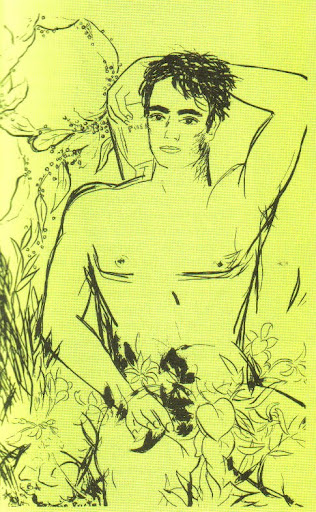
| Photograph by Gregorio Prieto Muñoz (1897-1992), born in Valdepeñas, Spain, he was one of the lovers of Federico Garcia Lorca. I love how the man is superimposed with the tree trunks. |
|
|||||||||||||||||
|
| Photograph by Gregorio Prieto Muñoz (1897-1992), born in Valdepeñas, Spain, he was one of the lovers of Federico Garcia Lorca. I love how the man is superimposed with the tree trunks. |
|
|||||||||||||||||

Wayne Jarus lives near Toronto, Canada and discovered an interest in poetry while trying to write songs. He prefers structured poetry styles and enjoys writing poems about nature.

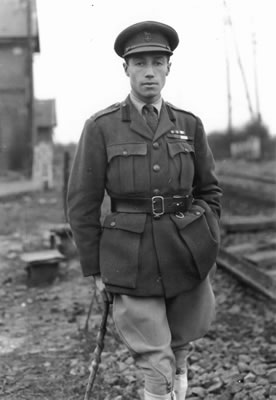
An English war poet, Sassoon was also known for his fictionalised autobiographies, praised for their evocation of English country life.
Siegfried Sassoon was born on 8 September 1886 in Kent. His father was part of a Jewish merchant family, originally from Iran and India, and his mother part of the artistic Thorneycroft family. Sassoon studied at Cambridge University but left without a degree. He then lived the life of a country gentleman, hunting and playing cricket while also publishing small volumes of poetry.
In May 1915, Sassoon was commissioned into the Royal Welsh Fusiliers and went to France. He impressed many with his bravery in the front line and was given the nickname ‘Mad Jack’ for his near-suicidal exploits. He was decorated twice. His brother Hamo was killed in November 1915 at Gallipoli.
In the summer of 1916, Sassoon was sent to England to recover from fever. He went back to the front, but was wounded in April 1917 and returned home. Meetings with several prominent pacifists, including Bertrand Russell, had reinforced his growing disillusionment with the war and in June 1917 he wrote a letter that was published in the Times in which he said that the war was being deliberately and unnecessarily prolonged by the government. As a decorated war hero and published poet, this caused public outrage. It was only his friend and fellow poet, Robert Graves, who prevented him from being court-martialled by convincing the authorities that Sassoon had shell-shock. He was sent to Craiglockhart War Hospital in Edinburgh for treatment. Here he met, and greatly influenced, Wilfred Owen. Both men returned to the front where Owen was killed in 1918. Sassoon was posted to Palestine and then returned to France, where he was again wounded, spending the remainder of the war in England. Many of his war poems were published in The Old Huntsman (1917) and Counter-Attack (1918).
After the war Sassoon spent a brief period as literary editor of the Daily Herald before going to the United States, travelling the length and breadth of the country on a speaking tour. He then started writing the near-autobiographical novel Memoirs of a Fox-hunting Man (1928). It was an immediate success, and was followed by others including Memoirs of an Infantry Officer (1930) and Sherston’s Progress (1936). Sassoon had a number of homosexual affairs but in 1933 surprised many of his friends by marrying Hester Gatty. They had a son, George, but the marriage broke down after World War Two.
He continued to write both prose and poetry. In 1957, he was received into the Catholic church. He died on 1 September 1967.
 |
| Courtesy of Indiana University |
WHAT think you I take my pen in hand to record?
The battle-ship, perfect-model’d, majestic, that I saw pass the offing to-day under full sail?
The splendors of the past day? Or the splendor of the night that envelopes me?
Or the vaunted glory and growth of the great city spread around me?—No;
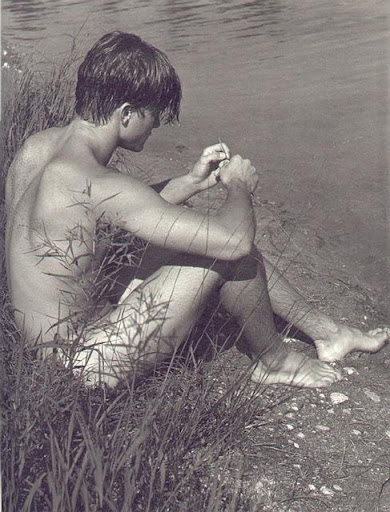
But I record of two simple men I saw to-day, on the pier, in the midst of the crowd, parting the parting of dear friends;
The one to remain hung on the other’s neck, and passionately kiss’d him,
While the one to depart, tightly prest the one to remain in his arms.
An excerpt from this poem is featured in my post for tomorrow, so stay tuned.
 Last night, I was teaching about antebellum Amercan culture, one of my favorite topics. In fact I have a passion for nineteenth century culture: art, literature, poetry, philosophy, etc. A major part of antebellum culture in America is the transcendentalist movement. I actually find most of the transcendentalists to be a bit crazy with their touchy-feely commune with nature philosophy. It’s a bit too much flower child/hippie, before hippies even existed. Take Thoreau’s Walden Pond experiment and his passion for talking to vegetables. Or better yet, the founder of the utopian community Fruitlands, Bronson Alcott, the father of Louisa May Alcott. I scoffed at some of his educational techniques while discussing him last night, particularly his rejection of corporal punishment for what he termed “vicarious atonement,” a method of child discipline in which Alcott had naughty children spank him. When his own daughters misbehaved, Alcott went without dinner.
There are two figures in the Transcendentalist movement which I greatly admire: Ralph Waldo Emerson and Margaret Fuller. Often mocked as an egotist, Margaret Fuller once said: “I know all the people worth knowing in America, and I find no intellect comparable to my own.” She did indeed possess one of 19th century America’s towering minds and she was a truly remarkable woman. As for the former, Emerson should be considered one of Americas greatest philosophers and admired if for nothing else but his essay Self-Reliance. So for the poem this Tuesday, I thought I would present you one of Emerson’s poems which is a beautiful capsule of his philosophy.
Give All To Love
Give all to love;
Obey thy heart;
Friends, kindred, days,
Estate, good fame,
Plans, credit, and the muse;
Nothing refuse.
‘Tis a brave master,
Let it have scope,
Follow it utterly,
Hope beyond hope;
High and more high,
It dives into noon,
With wing unspent,
Untold intent;
But ’tis a god,
Knows its own path,
And the outlets of the sky.
‘Tis not for the mean,
It requireth courage stout,
Souls above doubt,
Valor unbending;
Such ’twill reward,
They shall return
More than they were,
And ever ascending.
Leave all for love;—
Yet, hear me, yet,
One word more thy heart behoved,
One pulse more of firm endeavor,
Keep thee to-day,
To-morrow, for ever,
Free as an Arab
Of thy beloved.
Cling with life to the maid;
But when the surprise,
Vague shadow of surmise,
Flits across her bosom young
Of a joy apart from thee,
Free be she, fancy-free,
Do not thou detain a hem,
Nor the palest rose she flung
From her summer diadem.
Though thou loved her as thyself,
As a self of purer clay,
Tho’ her parting dims the day,
Stealing grace from all alive,
Heartily know,
When half-gods go,
The gods arrive.
From: Emerson, Ralph Waldo. Early Poems of Ralph Waldo Emerson. New York, Boston, Thomas Y. Crowell & Company: 1899. Introduction by Nathan Haskell Dole.
Emerson, as a poet, carries common themes throughout his works. In comparing this poems to an essay such as Self Reliance, the ideas of conviction, confidence, respect, choice, and a handful of others resonate throughout. “Give All to Love” relates to Self Reliance in subject and message. Emerson’s own thoughts about various aspects of human nature become apparent, and each concept stems from the basic idea of relying on one’s self.
In “Give All to Love,” Emerson reiterates from Self Reliance that a person should respect the beliefs of others, including the changes they make. In Self Reliance, he says, “If you can love me for what I am, we shall be the happier. If you cannot, I will seek to deserve that you should.” And, in “Give All to Love,” he writes
Free be she, fancy-free,Do not thou detain a hem,Nor the palest rose she flungFrom her summer diadem.
Common themes run through any author’s works, especially when the comment on humanity and existence. Here, Emerson portrays his own Self-Reliance in his ability to express and discuss such issues. Since his ideas often seemingly contradict one another, his speech comes across with the same indefinable quality as in the soul and nature itself. One thing is true, however: Emerson believes in what he says, and he says it often in many different contexts, hoping that the reader will only gain understanding from his writing.

Summer in the South
By Paul Laurence Dunbar
The Oriole sings in the greening grove
As if he were half-way waiting,
The rosebuds peep from their hoods of green,
Timid, and hesitating.
The rain comes down in a torrent sweep
And the nights smell warm and pinety,
The garden thrives, but the tender shoots
Are yellow-green and tiny.
Then a flash of sun on a waiting hill,
Streams laugh that erst were quiet,
The sky smiles down with a dazzling blue
And the woods run mad with riot.
Paul Laurence Dunbar
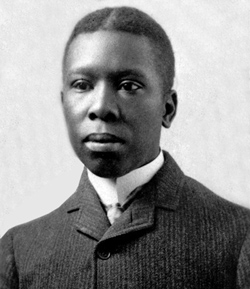
Born on June 27, 1872, Paul Laurence Dunbar was one of the first African-American poets to gain national recognition. His parents Joshua and Matilda Murphy Dunbar were freed slaves from Kentucky. His parents separated shortly after his birth, but Dunbar would draw on their stories of plantation life throughout his writing career. By the age of fourteen, Dunbar had poems published in the Dayton Herald. While in high school he edited the Dayton Tattler, a short-lived black newspaper published by classmate Orville Wright.
Despite being a fine student, Dunbar was financially unable to attend college and took a job as an elevator operator. In 1892, a former teacher invited him to read his poems at a meeting of the Western Association of Writers; his work impressed his audience to such a degree that the popular poet James Whitcomb Riley wrote him a letter of encouragement. In 1893, Dunbar self-published a collection called Oak and Ivy. To help pay the publishing costs, he sold the book for a dollar to people riding in his elevator.
Later that year, Dunbar moved to Chicago, hoping to find work at the first World’s Fair. He befriended Frederick Douglass, who found him a job as a clerk, and also arranged for him to read a selection of his poems. Douglass said of Dunbar that he was “the most promising young colored man in America.” By 1895, Dunbar’s poems began appearing in major national newspapers and magazines, such as The New York Times. With the help of friends, he published the second collection, Majors and Minors (1895). The poems written in standard English were called “majors,” and those in dialect were termed “minors.” Although the “major” poems outnumber those written in dialect, it was the dialect poems that brought Dunbar the most attention. The noted novelist and critic William Dean Howells gave a favorable review to the poems in Harper’s Weekly.
This recognition helped Dunbar gain national and international acclaim, and in 1897 he embarked on a six-month reading tour of England. He also brought out a new collection, Lyrics of Lowly Life (1896). Upon returning to America, Dunbar received a clerkship at the Library of Congress in Washington, DC, and shortly thereafter he married the writer Alice Ruth Moore. While living in Washington, Dunbar published a short story collection, Folks from Dixie, a novel entitled The Uncalled, and two more collections of poems, Lyrics of the Hearthside and Poems of Cabin and Field (1899). He also contributed lyrics to a number of musical reviews.
In 1898, Dunbar’s health deteriorated; he believed the dust in the library contributed to his tuberculosis and left his job to dedicate himself full time to writing and giving readings. Over the next five years, he would produce three more novels and three short story collections. Dunbar separated from his wife in 1902, and shortly thereafter he suffered a nervous breakdown and a bout of pneumonia. Although ill and drinking too much in attempt to soothe his coughing, Dunbar continued to write poems. His collections from this time include Lyrics of Love and Laughter (1903), Howdy, Howdy, Howdy (1905), and Lyrics of Sunshine and Shadow (1905). These books confirmed his position as America’s premier black poet. Dunbar’s steadily deteriorating health caused him to return to his mother’s home in Dayton, Ohio, where died on February 9, 1906, at the age of thirty-three.

I recently came across a new poet. He is a follower of my blog, so I checked out his blog, ALICANTINO del MUNDO. His poetry shows not only the beauty of the Spanish language but the depths of an artists soul. Manuel Vicente S.C. is the poet, and I instantly fell in love with the beauty of his poetry. I hope that you will find Manuel’s poetry as beautiful as I have. I have posted his poem APRENDIENDO VIDA in its beautiful original language. Though I do not believe that my translation (with the help of Google Translate) can do justice for his beautiful prose, but I have attempted to do my best. I hope that you enjoy.

APRENDIENDO VIDA
Manuel Vicente S.C.
He recorrido muchos caminos
donde he respirado polvo ajeno que levantaban otras vidas
que pasaban rozando la mía
y yo siempre quedaba en la cuneta esperando una buena alma
que se apiadara de mi cuando el barro ya me cubría hasta las rodillas.
Pero aprendí a buscar guaridas
cuando la luna me sorprendía en los caminos solitarios.
Aprendí a cobijarme al abrigo de otros cuerpos
cuando el frío me calaba hasta los huesos.
He dormido en muchas camas extrañas
a las que nunca volví.
He grabado muchos ojos en mis pupilas.
Ojos por los que hubiera matado.
He amanecido en calles extrañas y
me he bebido el licor de todos los bares.
Muchas veces he jurado en vano
y he asegurado delante del interesado
que nunca volvería a hacerlo.
Pero nunca cumplí mi palabra.
Volví a tropezar mil veces en la misma piedra.
Volví a recorrer caminos inciertos, vacios, cotidianos
y volví a llenarme de luna llena.
Busqué los caminos que llevan al mar
intentando buscar un refugio.
Intentando dejar mis huellas en la arena por si tú salias a buscarme.
LEARNING LIFE
Manuel Vicente S.C.
I have traveled many roads
where I breathed dust that raised other lives outside
mine that skimming
and I was always in the gutter waiting for a good soul
to take pity on me when the mud already covered my knee.
But I learned to look for hideouts
I was surprised as the moon on lonely roads.
I learned to take shelter in the lee of other bodies
when the cold was soaked to the bone.
I slept in many strange beds
of those who never came back.
I recorded many eyes in my eyes.
Eyes which have killed him.
I dawned on strange streets
I have drunk the liquor of all bars.
Many times I have sworn in vain
and have assured before the interested
would never do.
But I never kept my word.
I returned to stumble a thousand times in the same stone.
Again I go uncertain roads, empty, everyday
and returned to fill a full moon.
I searched the roads leading to the sea
trying to find a shelter.
Trying to leave my footprints in the sand if you are looking for me.

How does a person say “I love you” in our post-ironic age and not sound greeting-card vapid? In “You, Therefore,” Reginald Shepherd (b. 1963) manages the trick. He doesn’t avoid romantic clichés: you’ll find the moon and stars, scads of flowers, a rain-speckled bower, the heaving sea, strawberries, and a soft-focus snowbound bedroom vignette. Shepherd takes these hoary materials, however, and presents them with the awkwardness, stuttering, and pseudologic of a man choked by passion. The poem is a single meandering sentence with peculiar repetitions (“if I say to you, ‘To you I say’”); faulty grammar (“you” are “a kind of dwell and welcome”); odd puns (“you . . . have come to be my night”—oh Lancelot!); overheated sound play (“like the sea, salt-sweet . . . trees and seas have flown away”); and attempts to qualify or take back things just asserted (“the snow was you, / when there was snow”). The style saves the subject by roughening and skewing it, giving it the feel of authenticity (a little like antiquing a piece of furniture, perhaps). Shepherd conveys persuasively the way somebody can “fall from the sky” into your life and renew it utterly, giving you the home you’d been seeking for years.
You, Therefore
By Reginald Shepherd
For Robert Philen
You are like me, you will die too, but not today:
you, incommensurate, therefore the hours shine:
if I say to you “To you I say,” you have not been
set to music, or broadcast live on the ghost
radio, may never be an oil painting or
Old Master’s charcoal sketch: you are
a concordance of person, number, voice,
and place, strawberries spread through your name
as if it were budding shrubs, how you remind me
of some spring, the waters as cool and clear
(late rain clings to your leaves, shaken by light wind),
which is where you occur in grassy moonlight:
and you are a lily, an aster, white trillium
or viburnum, by all rights mine, white star
in the meadow sky, the snow still arriving
from its earthwards journeys, here where there is
no snow (I dreamed the snow was you,
when there was snow), you are my right,
have come to be my night (your body takes on
the dimensions of sleep, the shape of sleep
becomes you): and you fall from the sky
with several flowers, words spill from your mouth
in waves, your lips taste like the sea, salt-sweet (trees
and seas have flown away, I call it
loving you): home is nowhere, therefore you,
a kind of dwell and welcome, song after all,
and free of any eden we can name
Reprinted from Fata Morgana by Reginald Shepherd, published by the University of Pittsburgh Press. Copyright © 2007 by Reginald Shepherd.
Source: Fata Morgana (2007)
Reginald Shepherd
Poet and editor Reginald Shepherd was born in New York City in 1963 and grew up in the Bronx. He earned a BA from Bennington College and studied at Brown University and the Iowa Writers’ Workshop. His first collection, Some Are Drowning (1994), won the Associated Writing Program’s Award in Poetry; his fourth, Otherhood (2003), was a finalist for the Lenore Marshall Poetry Prize; and his last book, Fata Morgana (2007), won a Silver Medal in the Florida Book Awards. Shepherd’s work is known for its elegance, beauty, and critical acumen. As Ron Silliman wrote in a tribute to Shepherd, who died in 2008, “Shepherd took from all schools and created something entirely his own.” Shepherd was the author of a book of essays, Orpheus in the Bronx: Essays on Identity, Politics, and the Freedom of Poetry (2008), and the editor of two anthologies, The Iowa Anthology of New American Poetries (2004) and Lyric Postmodernisms (2008). He was also an active blogger, helping to shape an emerging forum for poetics.

Oscar and Bosie, as his friends called Lord Alfred Douglas, met in Chelsea when Bosie was 22 and Wilde 15 years his elder. Oscar immediately became enamored with Bosie who was thrilled that such a literary genius was interested in him. Bosie referred to Wilde as “the most chivalrous friend in the world” and was willing to forsake his birthright for the friendship. They exchanged letters, with some of Wilde’s containing what could be interpreted as expressions of passionate love.
“It is a marvel that those red-roseleaf lips of yours should be made no less for the madness of music and song than for the madness of kissing,” Wilde wrote to Lord Alfred in 1893. “Your slim gilt soul walks between passion and poetry.”
Bosie knew of Wilde’s affection for him early on and succeeded in using it to his advantage. He relied on Wilde’s money when his own ran out and would pout and threaten self-injury when Wilde complained of his behavior or criticized his literary skills. For the length of their relationship, Lord Alfred used Oscar’s love for him as a means to get what he wanted. In the end, Wilde sacrificed himself to protect Lord Alfred, who remained a loyal, yet manipulative, friend.
For Wilde, who was much more low-key about his sexuality, it was a love-hate relationship, almost akin to the moth and flame. He lusted for Lord Alfred, but knew that Bosie would only hurt him. His head told him the cost of Bosie’s love was too expensive, his heart considered it a bargain.
“Wilde wanted a consuming passion,” Ellman wrote. “He got it and was consumed by it.”
When Wilde was put on trial for his homosexuality, Edward Carson questioned Wilde about two poems written by Lord Douglas that appeared in the issue of The Chameleon that contained Wilde’s “Phrases and Philosophies for the Use of the Young.” The two poems were “Two Loves” and “In Praise of Shame.”
Two Loves
Lord Alfred Douglas
I dreamed I stood upon a little hill,
And at my feet there lay a ground, that seemed
Like a waste garden, flowering at its will
With buds and blossoms. There were pools that dreamed
Black and unruffled; there were white lilies
A few, and crocuses, and violets
Purple or pale, snake-like fritillaries
Scarce seen for the rank grass, and through green nets
Blue eyes of shy peryenche winked in the sun.
And there were curious flowers, before unknown,
Flowers that were stained with moonlight, or with shades
Of Nature’s willful moods; and here a one
That had drunk in the transitory tone
Of one brief moment in a sunset; blades
Of grass that in an hundred springs had been
Slowly but exquisitely nurtured by the stars,
And watered with the scented dew long cupped
In lilies, that for rays of sun had seen
Only God’s glory, for never a sunrise mars
The luminous air of Heaven. Beyond, abrupt,
A grey stone wall. o’ergrown with velvet moss
Uprose; and gazing I stood long, all mazed
To see a place so strange, so sweet, so fair.
And as I stood and marvelled, lo! across
The garden came a youth; one hand he raised
To shield him from the sun, his wind-tossed hair
Was twined with flowers, and in his hand he bore
A purple bunch of bursting grapes, his eyes
Were clear as crystal, naked all was he,
White as the snow on pathless mountains frore,
Red were his lips as red wine-spilith that dyes
A marble floor, his brow chalcedony.
And he came near me, with his lips uncurled
And kind, and caught my hand and kissed my mouth,
And gave me grapes to eat, and said, ‘Sweet friend,
Come I will show thee shadows of the world
And images of life. See from the South
Comes the pale pageant that hath never an end.’
And lo! within the garden of my dream
I saw two walking on a shining plain
Of golden light. The one did joyous seem
And fair and blooming, and a sweet refrain
Came from his lips; he sang of pretty maids
And joyous love of comely girl and boy,
His eyes were bright, and ‘mid the dancing blades
Of golden grass his feet did trip for joy;
And in his hand he held an ivory lute
With strings of gold that were as maidens’ hair,
And sang with voice as tuneful as a flute,
And round his neck three chains of roses were.
But he that was his comrade walked aside;
He was full sad and sweet, and his large eyes
Were strange with wondrous brightness, staring wide
With gazing; and he sighed with many sighs
That moved me, and his cheeks were wan and white
Like pallid lilies, and his lips were red
Like poppies, and his hands he clenched tight,
And yet again unclenched, and his head
Was wreathed with moon-flowers pale as lips of death.
A purple robe he wore, o’erwrought in gold
With the device of a great snake, whose breath
Was fiery flame: which when I did behold
I fell a-weeping, and I cried, ‘Sweet youth,
Tell me why, sad and sighing, thou dost rove
These pleasent realms? I pray thee speak me sooth
What is thy name?’ He said, ‘My name is Love.’
Then straight the first did turn himself to me
And cried, ‘He lieth, for his name is Shame,
But I am Love, and I was wont to be
Alone in this fair garden, till he came
Unasked by night; I am true Love, I fill
The hearts of boy and girl with mutual flame.’
Then sighing, said the other, ‘Have thy will,
I am the love that dare not speak its name.’
In Praise of Shame
Last night unto my bed bethought there came
Our lady of strange dreams, and from an urn
She poured live fire, so that mine eyes did burn
At the sight of it. Anon the floating fame
Took many shapes, and one cried: “I am shame
That walks with Love, I am most wise to turn
Cold lips and limbs to fire; therefore discern
And see my loveliness, and praise my name.”
And afterwords, in radiant garments dressed
With sound of flutes and laughing of glad lips,
A pomp of all the passions passed along
All the night through; till the white phantom ships
Of dawn sailed in. Whereat I said this song,
“Of all sweet passions Shame is the loveliest.”
At the trial, Wilde was asked if he saw any improper suggestions in the two poems. Wilde’s response to Carson’s question as to what was “the love that dare not speak its name” provided one of the most memorable moments of a memorable trial.
What is “the love that dares not speak its name?”
Wilde: “The love that dares not speak its name” in this century is such a great affection of an elder for a younger man as there was between David and Jonathan, such as Plato made the very basis of his philosophy, and such as you find in the sonnets of Michelangelo and Shakespeare. It is that deep spiritual affection that is as pure as it is perfect. It dictates and pervades great works of art, like those of Shakespeare and Michelangelo, and those two letters of mine, such as they are. It is in this century misunderstood, so much misunderstood that it may be described as “The love that dares not speak its name,” and on that account of it I am placed where I am now. It is beautiful, it is fine, it is the noblest form of affection. There is nothing unnatural about it. It is intellectual, and it repeatedly exists between an older and a younger man, when the older man has intellect, and the younger man has all the joy, hope and glamour of life before him. That it should be so, the world does not understand. The world mocks at it, and sometimes puts one in the pillory for it.
Since Saturday is St. Patrick’s day, I wanted to post poetry by Ireland’s most famous literary homosexual. The poems above are by Lord Alfred Douglas, Wilde’s lover, but I also wanted to add a poem by Wilde himself, and this is one of my favorites.
The True Knowledge
Oscar Wilde
Thou knowest all; I seek in vain
What lands to till or sow with seed –
The land is black with briar and weed,
Nor cares for falling tears or rain.
Thou knowest all; I sit and wait
With blinded eyes and hands that fail,
Till the last lifting of the veil
And the first opening of the gate.
Thou knowest all; I cannot see.
I trust I shall not live in vain,
I know that we shall meet again
In some divine eternity.


 | vandycolt on A Quiet, Rainy Morning |
 | Joe on Rains and Migraines |
 | Bruce on Rains and Migraines |
 | noisilycool3bc985058… on Pic of the Day |



As an Amazon Associate I earn from qualifying purchases. So, if you click on a link that takes you to Amazon.com, I may earn a commission.
Trust me, it isn’t much, but every little bit helps.


 The Closet Professor