Category Archives: Poetry

On His Queerness

On His Queerness

When I was young and wanted to see the sights,
They told me: ‘Cast an eye over the Roman Camp
If you care to.
But plan to spend most of your day at the Aquarium –
Because, after all, the Aquarium –
Well, I mean to say, the Aquarium –
Till you’ve seen the Aquarium you ain’t seen nothing.’

So I cast my eye over
The Roman Camp –
And that old Roman Camp,
That old, old Roman Camp
Got me
Interested.

So that now, near closing-time,
I find that I still know nothing –
And am still not even sorry that I know nothing –
About fish.

— Christopher Isherwood

For a biography of Christopher Isherwood, click on “Read More” below.

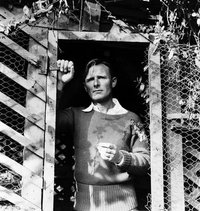
Christopher Isherwood (1904-1986) was a British-born American writer who worked in many genres, including fiction, drama, film, travel, and autobiography. He was especially esteemed for his stories about Berlin in the early 1930s.
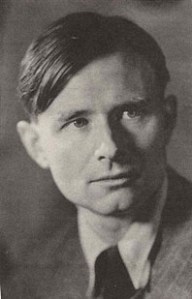

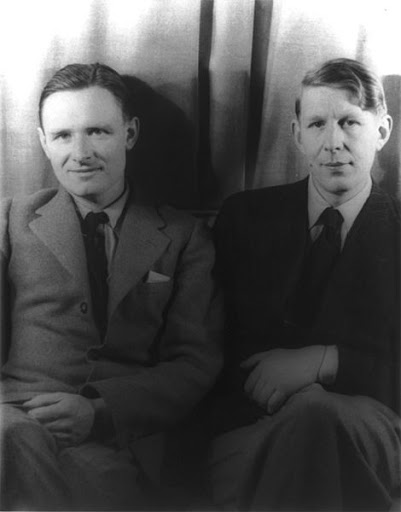
The son of a career military officer, Christopher Isherwood was born in High Lane, Cheshire, England, on August 26, 1904. He attended the Repton School from 1919 to 1922 and Cambridge University from 1924 to 1925. His university year was significant because it was at Cambridge that he met Wystan Hugh Auden, with whom he later collaborated on several literary projects, and because it was there that he became a practicing homosexual, an orientation which played an important role in his personal and artistic life.

Leaving the university without a degree, Isherwood worked for a year as the secretary to French violinist Andre Mangeot and as a private tutor in London. In his spare hours he worked on his first novel, which was published as All the Conspirators in 1928.

Scenes of a Crumbling Germany

In 1929 he went to Germany to visit Auden, who was living there, and was attracted to life in the crumbling Weimar Republic, and particularly to the sexual freedom that existed. As he so succinctly put it in his 1976 book Christopher and His Kind 1929-1939, “Berlin meant Boys.” He was not long in establishing a liaison with Berthold “Bubi” Szczesny, a bisexual ex-boxer, which lasted until Szczesny was forced to leave the country. Among the young men he met subsequently was one from the working class section of Berlin; he took a room with this boy’s family for a time and so became familiar with day-to-day living among the urban proletariat.

At first his stay in Germany was financed through an allowance provided by his only wealthy relative, his uncle Henry Isherwood. His uncle was also homosexual and seemed happy to assist his nephew in the quest for companions. Eventually, however, Uncle Henry stopped his remittances, and Isherwood paid his way by tutoring in English; in this way he met Berliners from the upper classes.

All this provided background for his most successful work, The Last of Mr. Norris (1935), Sally Bowles (1937), and Goodbye to Berlin (1939), all collected under the title The Berlin Stories in 1945. In these novellas and short stories he presented an in-depth portrait of life in Germany’s capital as the republican center collapsed, the Communists tried desperately to stem the rightist tide, and the Nazis came to power.

He began in “A Berlin Diary (Autumn 1930)” with an almost offhand observation about Fráulein Hippi, a student whom the narrator is tutoring in English: “Like everyone else in Berlin, she refers continually to the political situation, but only briefly, with a conventional melancholy…. It is quite unreal to her.” In “Sally Bowles,” he mentioned the closing of two major banks and noted: “One alarmist headline stood out boldly, barred with blood-red ink: ‘Everything Collapses’.”

In “The Nowaks,” about a working class family, he described their neighborhood in this way: “The entrance to the Wassertorstrasse was … a bit of old Berlin, daubed with hammers and sickles and Nazi crosses and plastered with tattered bills….” The political pressures are seen increasing in “The Landauers,” about a well-to-do Jewish family: “One night in October 1930, about a month after the Elections, there was a big row on the Leipzigerstrasse. Gangs of Nazi toughs turned out to demonstrate against the Jews. They … smashed the windows of all the Jewish shops.” Finally, in “A Berlin Diary (Winter 1932-33),” the narrator observes: “Schleicher has resigned. Hitler has formed a cabinet…. Nobody thinks it can last until the spring.”
The Berlin stories were picked up by playwright John van Druten, who was struck by a sentence in “A Berlin Diary (Autumn 1930)”: “I am a camera, with its shutter open, quite passive, recording not thinking.” He wrote the play I Am a Camera, centering on Sally Bowles, of whom Alan Wilde wrote: “Sally’s charm is her naíveté, … her total capacity for self-deception and self-contradiction, … her ability to accommodate herself to each new situation….” I Am a Camera in turn became the musical Cabaret (1967), with book by Joe Masteroff and lyrics by Fred Ebb, which was produced both on stage and in film.

Isherwood of course became fluent in German and got acquainted, as did Auden, with the expressionist drama of such important figures as Ernst Toller, Georg Kaiser, and Bertolt Brecht. This led the two British artists to collaborate on three expressionist plays: The Dog Beneath the Skin (1935), The Ascent of F6 (1937), and A Melodrama in Three Acts: On the Frontier (1938), of which the first two are generally considered the more successful.

Move to the United States

Isherwood and Auden travelled to China in 1938 and in 1939 worked together on Journey to a War. In that same year, the year World War II began, both came to America, a move which made them anathema to many Britons. Indeed, even three years later in Put Out More Flags novelist Evelyn Waugh, christening them Parsnip and Pimpernell, commented, “What I don’t see is how these two can claim to be contemporary if they run away from the biggest event in contemporary history.”

During World War II Isherwood wrote scripts for Metro-Goldwyn-Mayer, Warner Brothers, and 20th Century Fox film studios; worked for a year in a refugee center in Haverford, Pennsylvania; and became a resident student of the Vedanta Society of Southern California and co-editor of the group’s magazine Vedanta and the West.

He became increasingly involved in the Vedantist religion, editing the volumes Vedanta for the Western World in 1945 and Vedanta for Modern Man in 1951 and writing An Approach to Vedanta in 1963, Ramakrishna and His Disciples in 1965, and Essentials of Vedanta in 1969. He explained its basic tenets in the 1963 work as follows: “We have two selves – an apparent, outer self and an invisible, inner self. The apparent self claims to be an individual and as such, other than all other individuals…. The real self is unchanging and immortal.”

Isherwood did not confine himself solely to religious writings, however. He authored such novels as Prater Violet (1945), The World in the Evening (1954), A Single Man (1964), and A Meeting by the River (1967), which he dramatized in 1972. He also wrote the travel book The Condor and the Cows (1949), autobiographical volumes, and the collection of stories, articles, and poems titled Exhumations (1966). Additionally, he taught at Los Angeles State University, the University of California at Santa Barbara, and the University of California at Los Angeles and wrote film scripts.

Isherwood’s status in modern literature was best summarized by G. K. Hall: “Christopher Isherwood has always been a problem for the critics. An obviously talented writer, he has refused to exploit his artistry for either commercial success or literary status…. Isherwood was adjudged a ‘promising writer’ – a designation that he has not been able to outrun even to this day. It is still a clicheé of Isherwood criticism to say that he never fulfilled his early promise….In any case, five decades of Isherwood criticism present a history of sharply divided opinion.”

Isherwood, who became an American citizen in 1946, lived and worked in southern California until his death from cancer January 4, 1986.

Further Reading

Much personal information is in his autobiographical Christopher and His Kind (1976). In G. K. Hall’s Christopher Isherwood: A Reference Guide (1979) the reader will find a comprehensive listing of all works by and about the subject.

Additional Sources

Finney, Brian, Christopher Isherwood: A Critical Biography, New York: Oxford University Press, 1979.

Fryer, Jonathan, Isherwood, Garden City, N.Y.: Doubleday, 1978, 1977.

Fryer, Jonathan, Isherwood: A Biography of Christopher Isherwood, London: New English Library, 1977.

Isherwood, Christopher, Christopher and His Kind, 1929-1939, London: Eyre Methuen, 1977; New York: Farrar, Straus Giroux, 1976.

Isherwood, Christopher, My Guru and His Disciple, New York, N.Y.: Penguin Books, 1981.

King, Francis Henry, Christopher Isherwood, Harlow Eng.: Published for the British Council by Longman Group, 1976.

Lehmann, John, Christopher Isherwood: A Personal Memoir, New York: H. Holt, 1988, 1987.

Read more: http://www.answers.com/topic/christopher-isherwood#ixzz1V3BQq8vY


O Where Are You Going?

“O where are you going?” said reader to rider,
“That valley is fatal when furnaces burn,
Yonder’s the midden whose odours will madden,
That gap is the grave where the tall return.”

“O do you imagine,” said fearer to farer,
“That dusk will delay on your path to the pass,
Your diligent looking discover the lacking
Your footsteps feel from granite to grass?”

“O what was that bird,” said horror to hearer,
“Did you see that shape in the twisted trees?
Behind you swiftly the figure comes softly,
The spot on your skin is a shocking disease.”

“Out of this house,” said rider to reader,
“Yours never will,” said farer to fearer,
“They’re looking for you,” said hearer to horror,
As he left them there, as he left them there.
— W H Auden

Many a time you come across those who even not dare to dream, forget doing. The poem inspires us to keep the insecurities inside, because the reason for living lies there, in the experience. Do you ever ask yourself, “O, Where am I going? What am I doing with my life?”  My teaching job begins again tomorrow (we have two days of teacher work days, and the heathens students return on Wednesday).  As another year begins and I am still teaching at a small private school, I wonder “O, Where am I going? What am I doing with my life?”  I know I teach because I love it.  I am there because I want to open up the minds of the students, to show them that there is a world out there beyond their little inclusive group/society.

With this teaching job, I sometimes feel like my life in on hold.  I hope that when I finish my PhD (hopefully, I will graduate in May), that I can move on to better things.  I want to have  a real life again.  I want to be out socializing again.  Though I have friends at the academy, they have their own lives and families.  We are all too busy to socialize.  In fact, the main socializing any of them do with one another is either through their children or through church.  Since I have no children and I do not attend the same church as most of them, I am not part of that clique.  It’s okay, I’m not meaning to sound like a pity party, but I do feel like my life and career are on hold for a bit.

I had hoped for a better paying job to begin this fall.  After the fall/spring/summer job search, I was offered one position (this one would have been a step back instead of a step forward) and had one job interview (the one I told you guys about that took place two weeks ago).  Though the job interview seemed to go really well, and I believe that I would have enjoyed teaching at this community college, I was told that they would narrow the candidates further down to three and those three would be invited back for interviews with the college’s president.  I never heard anything more from them.  And since the job is supposed to begin next Monday, I expect that I was not chosen for the top three.  It is possible that they really are waiting until the last minute, I have the feeling that I was passed over.  So the new school year teaching middle and high school  students at the academy begins again this week.

I am actually looking forward to it.  I will probably know for sure by the time Friday rolls around, but I like the classes that I am scheduled to teach.  They will be the same as last year, so there will be opportunities to improve upon what I did last year.  I am going in with a positive attitude that this will be a great year.  And I think when we ask ourselves “O, Where am I going? What am I doing with my life?” that if we look on the brighter side of things, no matter how dim the light may, we will make it happen.  Though I know that I am not always positive, I at least strive to be an optimist.

“O, Where Are You Going?”

Dreams by Edgar Allan Poe

Dreams

Oh! that my young life were a lasting dream! 

My spirit not awakening, till the beam
Of an Eternity should bring the morrow.
Yes! tho’ that long dream were of hopeless sorrow,
‘Twere better than the cold reality
Of waking life, to him whose heart must be,
And hath been still, upon the lovely earth,
A chaos of deep passion, from his birth.
But should it be- that dream eternally
Continuing- as dreams have been to me
In my young boyhood- should it thus be given,
‘Twere folly still to hope for higher Heaven.
For I have revell’d, when the sun was bright
I’ the summer sky, in dreams of living light
And loveliness,- have left my very heart
In climes of my imagining, apart
From mine own home, with beings that have been
Of mine own thought- what more could I have seen?
‘Twas once- and only once- and the wild hour
From my remembrance shall not pass- some power
Or spell had bound me- ’twas the chilly wind
Came o’er me in the night, and left behind
Its image on my spirit- or the moon
Shone on my slumbers in her lofty noon
Too coldly- or the stars- howe’er it was
That dream was as that night-wind- let it pass.

I have been happy, tho’ in a dream.
I have been happy- and I love the theme:
Dreams! in their vivid coloring of life,
As in that fleeting, shadowy, misty strife
Of semblance with reality, which brings
To the delirious eye, more lovely things
Of Paradise and Love- and all our own!
Than young Hope in his sunniest hour hath known.

-Edgar Allan Poe


Poe was quite an interesting man, and for a full biography of the poet, click on “Read More” below.  However, I do want to share one the most famous legends surrounding the man.  Poe began attending West Point in 1830, and he quickly realized that he was not cut out for officer material and hated the military.  So he set out to get himself kicked out.  The legend says that Poe was a notorious prankster, and since West Point cadet regulations stated that cadets were to show up for drill wearing belt and gloves, Poe did just that.  He reported for drill wearing belts for his cartridges, his gloves, a smile and nothing else. The reality is probably much less colorful.  Tired of West Point by the beginning of 1831, Poe’s plan to get out was to neglect his duties. In January he was tried at a court-martial for having missed drills, parades, classes and church. However, I like the notorious naked legend better.


Who is Edgar Allan Poe?

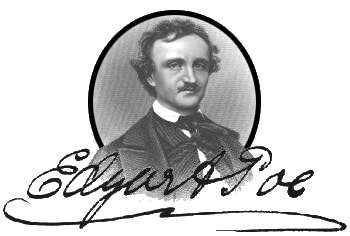
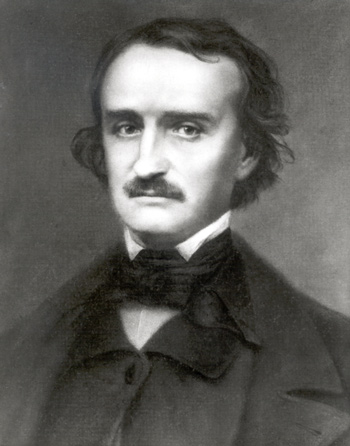
The name Poe brings to mind images of murderers and madmen, premature burials, and mysterious women who return from the dead. His works have been in print since 1827 and include such literary classics as “The Tell-Tale Heart,” “The Raven,” and “The Fall of the House of Usher.” This versatile writer’s oeuvre includes short stories, poetry, a novel, a textbook, a book of scientific theory, and hundreds of essays and book reviews. He is widely acknowledged as the inventor of the modern detective story and an innovator in the science fiction genre, but he made his living as America’s first great literary critic and theoretician. Poe’s reputation today rests primarily on his tales of terror as well as on his haunting lyric poetry.

Just as the bizarre characters in Poe’s stories have captured the public imagination so too has Poe himself. He is seen as a morbid, mysterious figure lurking in the shadows of moonlit cemeteries or crumbling castles. This is the Poe of legend. But much of what we know about Poe is wrong, the product of a biography written by one of his enemies in an attempt to defame the author’s name.

The real Poe was born to traveling actors in Boston on January 19, 1809. Edgar was the second of three children. His other brother William Henry Leonard Poe would also become a poet before his early death, and Poe’s sister Rosalie Poe would grow up to teach penmanship at a Richmond girls’ school. Within three years of Poe’s birth both of his parents had died, and he was taken in by the wealthy tobacco merchant John Allan and his wife Frances Valentine Allan in Richmond, Virginia while Poe’s siblings went to live with other families. Mr. Allan would rear Poe to be a businessman and a Virginia gentleman, but Poe had dreams of being a writer in emulation of his childhood hero the British poet Lord Byron. Early poetic verses found written in a young Poe’s handwriting on the backs of Allan’s ledger sheets reveal how little interest Poe had in the tobacco business. By the age of thirteen, Poe had compiled enough poetry to publish a book, but his headmaster advised Allan against allowing this.

In 1826 Poe left Richmond to attend the University of Virginia, where he excelled in his classes while accumulating considerable debt. The miserly Allan had sent Poe to college with less than a third of the money he needed, and Poe soon took up gambling to raise money to pay his expenses. By the end of his first term Poe was so desperately poor that he burned his furniture to keep warm.

Humiliated by his poverty and furious with Allan for not providing enough funds in the first place, Poe returned to Richmond and visited the home of his fiancée Elmira Royster, only to discover that she had become engaged to another man in Poe’s absence. The heartbroken Poe’s last few months in the Allan mansion were punctuated with increasing hostility towards Allan until Poe finally stormed out of the home in a quixotic quest to become a great poet and to find adventure. He accomplished the first objective by publishing his first book Tamerlane when he was only eighteen, and to achieve the second goal he enlisted in the United States Army. Two years later he heard that Frances Allan, the only mother he had ever known, was dying of tuberculosis and wanted to see him before she died. By the time Poe returned to Richmond she had already been buried. Poe and Allan briefly reconciled, and Allan helped Poe gain an appointment to the United States Military Academy at West Point.

Before going to West Point, Poe published another volume of poetry. While there, Poe was offended to hear that Allan had remarried without telling him or even inviting him to the ceremony. Poe wrote to Allan detailing all the wrongs Allan had committed against him and threatened to get himself expelled from the academy. After only eight months at West Point Poe was thrown out, but he soon published yet another book.
Broke and alone, Poe turned to Baltimore, his late father’s home, and called upon relatives in the city. One of Poe’s cousins robbed him in the night, but another relative, Poe’s aunt Maria Clemm, became a new mother to him and welcomed him into her home. Clemm’s daughter Virginia first acted as a courier to carry letters to Poe’s lady loves but soon became the object of his desire.

While Poe was in Baltimore, Allan died, leaving Poe out of his will, which did, however, provide for an illegitimate child Allan had never seen. By then Poe was living in poverty but had started publishing his short stories, one of which won a contest sponsored by the Saturday Visiter. The connections Poe established through the contest allowed him to publish more stories and to eventually gain an editorial position at the Southern Literary Messenger in Richmond. It was at this magazine that Poe finally found his life’s work as a magazine writer.

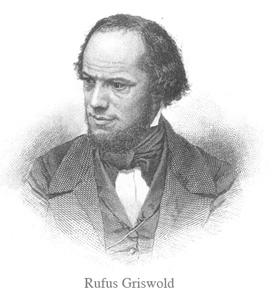
Within a year Poe helped make the Messenger the most popular magazine in the south with his sensational stories as well as with his scathing book reviews. Poe soon developed a reputation as a fearless critic who not only attacked an author’s work but also insulted the author and the northern literary establishment. Poe targeted some of the most famous writers in the country. One of his victims was the anthologist and editor Rufus Griswold.

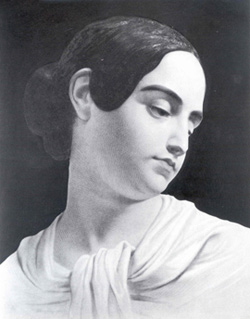
At the age of twenty-seven, Poe brought Maria and Virginia Clemm to Richmond and married his Virginia, who was not yet fourteen. The marriage proved a happy one, and the family is said to have enjoyed singing together at night. Virginia expressed her devotion to her husband in a Valentine poem now in the collection of the Enoch Pratt Free Library, and Poe celebrated the joys of married life in his poem “Eulalie.”

Dissatisfied with his low pay and lack of editorial control at theMessenger, Poe moved to New York City. In the wake of the financial crisis known as the “Panic of 1837,” Poe struggled to find magazine work and wrote his only novel, The Narrative of Arthur Gordon Pym.

After a year in New York, Poe moved to Philadelphia in 1838 and wrote for a number of different magazines. He served as editor of Burton’s and then Graham’s magazines while continuing to sell articles to Alexander’s Weekly Messengerand other journals. In spite of his growing fame, Poe was still barely able to make a living. For the publication of his first book of short stories, Tales of the Grotesque and Arabesque, he was only paid with twenty-five free copies of his book. He would soon become a champion for the cause of higher wages for writers as well as for an international copyright law. To change the face of the magazine industry, he proposed starting his own journal, but he failed to find the necessary funding.

In the face of poverty Poe was still able to find solace at home with his wife and mother-in-law, but tragedy struck in 1842 when Poe’s wife contracted tuberculosis, the disease that had already claimed Poe’s mother, brother, and foster mother.

Always in search of better opportunities, Poe moved to New York again in 1844 and introduced himself to the city by perpetrating a hoax. His “news story” of a balloon trip across the ocean caused a sensation, and the public rushed to read everything about it—until Poe revealed that he had fooled them all.

The January 1845 publication of “The Raven” made Poe a household name. He was now famous enough to draw large crowds to his lectures, and he was beginning to demand better pay for his work. He published two books that year, and briefly lived his dream of running his own magazine when he bought out the owners of the Broadway Journal. The failure of the venture, his wife’s deteriorating health, and rumors spreading about Poe’s relationship with a married woman, drove him out of the city in 1846. At this time he moved to a tiny cottage in the country. It was there, in the winter of 1847 that Virginia died at the age of twenty-four. Poe was devastated, and was unable to write for months. His critics assumed he would soon be dead. They were right. Poe only lived another two years and spent much of that time traveling from one city to the next giving lectures and finding backers for his latest proposed magazine project to be called The Stylus.

While on lecture tour in Lowell, Massachusetts, Poe met and befriended Nancy Richmond. His idealized and platonic love of her inspired some of his greatest poetry, including “For Annie.” Since she remained married and unattainable, Poe attempted to marry the poetess Sarah Helen Whitman in Providence, but the engagement lasted only about one month. In Richmond he found his first fiancée Elmira Royster Shelton was now a widow, so began to court her again. Before he left Richmond on a trip to Philadelphia he considered himself engaged to her, and her letters from the time imply that she felt the same way. On the way to Philadelphia, Poe stopped in Baltimore and disappeared for five days.

He was found in the bar room of a public house that was being used as a polling place for an election. The magazine editor Joseph Snodgrass sent Poe to Washington College Hospital, where Poe spent the last days of his life far from home and surrounded by strangers. Neither Poe’s mother-in-law nor his fiancée knew what had become of him until they read about it in the newspapers. Poe died on October 7, 1849 at the age of forty. The exact cause of Poe’s death remains a mystery.

Days after Poe’s death, his literary rival Rufus Griswold wrote a libelous obituary of the author in a misguided attempt at revenge for some of the offensive things Poe had said and written about him. Griswold followed the obituary with a memoir in which he portrayed Poe as a drunken, womanizing madman with no morals and no friends. Griswold’s attacks were meant to cause the public to dismiss Poe and his works, but the biography had exactly the opposite effect and instead drove the sales of Poe’s books higher than they had ever been during the author’s lifetime. Griswold’s distorted image of Poe created the Poe legend that lives to this day while Griswold is only remembered (if at all) as Poe’s first biographer.

Source: http://www.poemuseum.org/life.php


If Sometimes in the Haunts of Men

If Sometimes in the Haunts of Men

If sometimes in the haunts of men 
    Thine image from my breast may fade,
The lonely hour presents again
    The semblance of thy gentle shade:
And now that sad and silent hour
    Thus much of thee can still restore,
And sorrow unobserved may pour
    The plaint she dare not speak before.

Oh, pardon that in crowds awhile
    I waste one thought I owe to thee,
And self-condemn’d, appear to smile,
    Unfaithful to thy memory:
Nor deem that memory less dear,
    That then I seem not to repine;
I would not fools should overhear
    One sigh that should be wholly thine.

If not the goblet pass unquaff’d,
    It is not drain’d to banish care;
The cup must hold a deadlier draught,
    That brings a Lethe for despair.
And could Oblivion set my soul
    From all her troubled visions free,
I’d dash to earth the sweetest bowl
    That drown’d a single thought of thee.
6a00d8341cc27e53ef01157144f88f970c-600wi
For wert thou vanish’d from my mind,
    Where could my vacant bosom turn?
And who could then remain behind
    To honour thine abandon’d Urn?
No, no–it is my sorrow’s pride
    That last dear duty to fulfil:
Though all the world forget beside,
    ‘Tis meet that I remember still.

Thomas Eakins - ArcadiaFor well I know, that such had been
    Thy gentle care for him, who now
Unmourn’d shall quit this mortal scene,
    Where none regarded him, but thou:
And, oh! I feel in that was given
    A blessing never meant for me;
Thou wert too like a dream of Heaven
    For earthly Love to merit thee.
                                                                               -Lord Byron (1812)


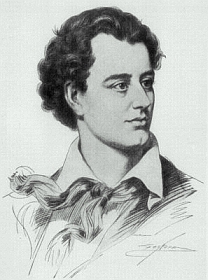
George Gordon Noel Byron, 6th Baron Byron, was born 22 January 1788 in London and died 19 April 1824 in Missolonghi, Greece.  He was among the most famous of the English ‘Romantic’ poets; his contemporaries included Percy Shelley and John Keats.  He was also a satirist whose poetry and personality captured the imagination of Europe.  His major works include Childe Harold’s Pilgrimage (1812-18) and Don Juan (1819-24).  He died of fever and exposure while engaged in the Greek struggle for independence.

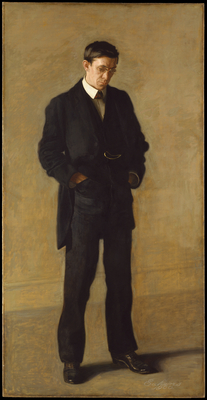
The images accompanying the poem above are by Thomas Eakins.  To read more about Eakins, click “More” below.


Thomas Eakins

“I never knew of but one artist, and this is Tom Eakins, who could resist the temptation to see what they think ought to be rather than what is.” – Walt Whitman

610_eakins_about
Thomas Eakins


When Thomas Eakins died in 1916, he left behind a body of work unprecedented in American art for its depth, strength, perception, character, and commitment to realism. Yet during his life, Eakins sold less than thirty paintings. Rejected by the public and the art establishment of his day, it was only after his death that a new generation of scholars and critics recognized Eakins as one of America’s greatest painters.

Born in 1844, Thomas Eakins lived most of his life in his home city of Philadelphia. After graduating high school he attended the Pennsylvania Academy of Fine Arts. He simultaneously took anatomy courses at Jefferson Medical College, in the hopes of creating more realistic pictures and gaining further insight into the human figure. In 1866 he left Philadelphia for Paris and later Spain, where he studied art and found the works of painters Diego Velásquez and Jusepe de Ribera. Along with Rembrant, these painters would be his greatest influences. A year later he returned to Philadelphia, never to go abroad again.

Throughout the 1870s Eakins painted the interior and exterior life of everyday America. He was concerned with the functioning of the physical world, as well as the inner lives of the people he painted. His paintings were both realistic and expressive. His attention to light, landscape, and the human form made Eakins stand far above his contemporaries. Among the most famous paintings of the time are his group portraits made at medical schools. Striking in their honesty and strict attention paid to the details of the human body, they shocked many in and out of the art world.
In the 1880s, Eakins’ interest in realism brought him in contact with the photographer Edward Muybridge. The two collaborated on photographing the movement of animals and humans. Though few painters took it seriously, Eakins believed the new photographic technology was a tool to better represent the physical world. Throughout much of the 1880s, Eakins brought these interests to students at the Pennsylvania Academy, encouraging them to study anatomy and work from live nude models. In 1886 his insistence on the use of nude models saw a great deal of criticism. Frustrated with the criticism, he eventually resigned.
Though he continued to teach at a number of different colleges, it wasn’t until long after his death that Eakins’ innovations in art education were recognized and adopted throughout the country. By the 1890s he had moved from his earlier outdoor works like “Max Schmitt in a Single Scull,” (1871), a perfectly rendered quiet picture of a rower on the Schuylkill River, to portraiture. In the many portraits completed over the last thirty years of his life, Eakins retained his passionate adherence to realist representation. Unlike most other portrait painters of the time, Eakins had little concern for flattering his subjects , and instead demanded from himself the most precise objective images. The results were thorough and telling portraits that seemed to carry with them the souls of their subjects.

During the final years of his life, Eakins began to receive a bit of the recognition he deserved. On June 25, 1916 he died in the Philadelphia home in which he was born. Against social demands for propriety and respectability, Eakins refused to compromise and painted his subjects as they really were, and not as they wished to be seen. His paintings reflected the passing of time, the awareness of mortality, and the nobility of everyday life. His courageous persistence in advocating his personal vision changed the nature of art education and provided future generations with a deeper view of the time in which he lived.


Song by Allen Ginsberg

Song 

The weight of the world
is love.
Under the burden
of solitude,
under the burden
of dissatisfaction

the weight,
the weight we carry
is love.

Who can deny?
In dreams
it touches
the body,
in thought
constructs
a miracle,
in imagination
anguishes
till born
in human–
looks out of the heart
burning with purity–
for the burden of life
is love,

but we carry the weight
wearily,
and so must rest
in the arms of love
at last,
must rest in the arms
of love.

No rest
without love,
no sleep
without dreams
of love–
be mad or chill
obsessed with angels
or machines,
the final wish
is love
–cannot be bitter,
cannot deny,
cannot withhold
if denied:

the weight is too heavy

–must give
for no return
as thought
is given
in solitude
in all the excellence
of its excess.

The warm bodies
shine together
in the darkness,
the hand moves
to the center
of the flesh,
the skin trembles
in happiness
and the soul comes
joyful to the eye–

yes, yes,
that’s what
I wanted,
I always wanted,
I always wanted,
to return
to the body
where I was born.

Allen Ginsberg


For more on Allen Ginsberg, click “More” below.

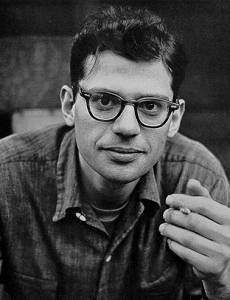
Allen Ginsberg, the visionary poet and founding father of the Beat generation inspired the American counterculture of the second half of the 20th century with groundbreaking poems such as “Howl” and “Kaddish.” Among the avant-garde he was considered a spiritual and sexually liberated ambassador for tolerance and enlightenment. With an energetic and loving personality, Ginsberg used poetry for both personal expression and in his fight for a more interesting and open society.
Allen Ginsberg was born in Newark, New Jersey on June 3, 1926. As a boy he was a close witness to his mother’s mental illness, as she lived both in and out of institutions. His father, Louis Ginsberg was a well-known traditional poet. After graduating from high school, Ginsberg attended Columbia University, where he planned to study law. There he became friends with Jack Kerouac and William Burroughs. Together the three would change the face of American writing forever.

With an interest in the street life of the city, Kerouac, Ginsberg and Burroughs found inspiration in jazz music and the culture that surrounded it. They encouraged a break from traditional values, supporting drug-use as a means of enlightenment. To many, their shabby dress and “hip” language seemed irresponsible, but in their actions could be found the seeds of a revolution that was meant to cast off the shackles of the calm and boring social life of the post-war era. While a nation tried desperately to keep from rocking the boat, Allen Ginsberg and the Beats saw the need for a more vibrant and daring society.
One of the primary first works of the Beats was Ginsberg’s long poem “Howl.” In an age plagued by intolerance, “Howl” (1956) was both a desperate plea for humanity and a song of liberation from that intolerant society. Ginsberg’s use of a gritty vernacular and an improvisational rhythmical style created a poetry which seemed haphazard and amateur to many of the traditional poets of the time. In “Howl” and his other poems, however, one could hear a true voice of the time, unencumbered by what the Beats saw as outdated forms and meaningless grammatical rules.
For its frank embrace of such taboo topics as homosexuality and drug use, “Howl” drew a great deal of criticism. Published by City Lights, the San Francisco based publisher of many of the Beats, the book was the subject of an obscenity trial. Eventually acquitted of the charges, City Lights came out with Ginsberg’s second book in 1961. “Kaddish, And Other Poems,” often considered Ginsberg’s greatest work, dealt again with a deep despair and addressed Ginsberg’s closeness with his mother while she was hospitalized and fighting insanity. The raw nature of the subject matter and Ginsberg’s desperate emotions found a perfect home in his poem “Kaddish.” Of “Kaddish,” Ginsberg wrote “I saw my self my own mother and my very nation trapped desolate…and receiving decades of life while chanting Kaddish the names of Death in many mind-worlds the self seeking key to life found at last our self.”
Throughout the 1960s, Ginsberg experimented with a number of different drugs, believing that under the influence he could create a new kind of poetry. Using LSD, peyote, marijuana and other drugs he attempted to expand his consciousness and wrote a number of books under the influence including the “Yage Letters” with William Burroughs. For much of the youth of the day, Ginsberg’s embrace of illegal drugs and unrestrained sexuality made him a central figure in the rebelling movements of the time. More than any other American poet of the 20th century, Ginsberg used his popularity for social change. Coining the phrase “flower power,” Ginsberg encouraged protesters of the 1960s to embrace a non-violent rebellion. By the 1970s, his fame had grown enormously, and though he cast aside drug use for an interest in Buddhism and yogic practices, he remained important to newly-formed youth movements.
By the 1980s, Ginsberg was the most famous living American poet. As a writer he continued to publish challenging and personal verse and as a celebrity he maintained an international presence as a spokesperson for peace and tolerance—working often as a teacher and lecturer . In the last decade of his life, Ginsberg wrote and performed at the prolific rate of his youth. He had sold millions of books and had often expanded into other genres. Among the collaborators of his final years were members of the bands Sonic Youth and U2. He died on April 5, 1997 at the age of seventy. At the time of his death, “Howl” had been reprinted more than fifty times, and the words of William Carlos Williams’ introduction still rang true—”This poet sees through and all around the horrors he partakes of in the very intimate details of his poem. He avoids nothing but experiences it to the hilt. He contains it. Claims it as his own—and, we believe, laughs at it and has the time and affrontery to love a fellow of his choice and record that love in a well-made poem.”


Moment of Zen: Summer Rain

Not only do summer rain showers cool things off, but I love relaxing to the sounds of rain hitting the roof and of distant thunder.  I’ve always loved stormy weather, especially when I curl up with a good book in my favorite chair.  It can also be quite joyful when a sudden shower strikes and you can stand outside with the cool refreshing water hitting your face and to be able to breath in the fresh scent of an afternoon rain in the summer.

The Summer Rain
Henry David Thoreau

My books I’d fain cast off, I cannot read,
‘Twixt every page my thoughts go stray at large
Down in the meadow, where is richer feed,
And will not mind to hit their proper targe.
Plutarch was good, and so was Homer too,
Our Shakespeare’s life were rich to live again,
What Plutarch read, that was not good nor true,
Nor Shakespeare’s books, unless his books were men.
Here while I lie beneath this walnut bough,
What care I for the Greeks or for Troy town,
If juster battles are enacted now
Between the ants upon this hummock’s crown?
Bid Homer wait till I the issue learn,
If red or black the gods will favor most,
Or yonder Ajax will the phalanx turn,
Struggling to heave some rock against the host.
Tell Shakespeare to attend some leisure hour,
For now I’ve business with this drop of dew,
And see you not, the clouds prepare a shower–
I’ll meet him shortly when the sky is blue.
This bed of herd’s grass and wild oats was spread
Last year with nicer skill than monarchs use.
A clover tuft is pillow for my head,
And violets quite overtop my shoes.
And now the cordial clouds have shut all in,
And gently swells the wind to say all’s well;
The scattered drops are falling fast and thin,
Some in the pool, some in the flower-bell.
I am well drenched upon my bed of oats;
But see that globe come rolling down its stem,
Now like a lonely planet there it floats,
And now it sinks into my garment’s hem.
Drip drip the trees for all the country round,
And richness rare distills from every bough;
The wind alone it is makes every sound,
Shaking down crystals on the leaves below.
For shame the sun will never show himself,
Who could not with his beams e’er melt me so;
My dripping locks–they would become an elf,
Who in a beaded coat does gayly go.

Expostulation and Reply

Expostulation and Reply
WHY, William, on that old grey stone,
Thus for the length of half a day,
Why, William, sit you thus alone,
And dream your time away?

"Where are your books?--that light bequeathed
To Beings else forlorn and blind!
Up! up! and drink the spirit breathed
From dead men to their kind.

"You look round on your Mother Earth,
As if she for no purpose bore you;
As if you were her first-born birth,
And none had lived before you!"

One morning thus, by Esthwaite lake,
When life was sweet, I knew not why,
To me my good friend Matthew spake,
And thus I made reply:

"The eye--it cannot choose but see;
We cannot bid the ear be still;
Our bodies feel, where'er they be,
Against or with our will.

"Nor less I deem that there are Powers
Which of themselves our minds impress;
That we can feed this mind of ours
In a wise passiveness.

"Think you, 'mid all this mighty sum
Of things for ever speaking,
That nothing of itself will come,
But we must still be seeking?

"--Then ask not wherefore, here, alone,
Conversing as I may,
I sit upon this old grey stone,
And dream my time away.
William Wordsworth (1798)

Jeff Wilfahrt always reads a poem by William Wordsworth when he visits his son’s grave.

On January 27, 2011, America lost it’s first known gay soldier since the repeal of DADT.  Cpl. Andrew Wilfahrt, a gay Minnesota man who went back in the closet to join the military, died while on patrol in Afghanistan when an IED exploded during an attack on his unit. He was 31. And his mother loved him very, very much.

Believed to be the first gay Minnesota soldier to die in the Iraq and Afghanistan wars, Wilfahrt (pronounced WIHL’-furt), who enlisted in the Army in January 2009 and was deployed to Afghanistan that July, “was a gentle soul,” says his mother Lori. “He was very kind and compassionate. He was interested in a lot of things, but more at a level of detail than what I think most people pursue something. He was fascinated with numbers, and patterns with numbers and palindromes. He would often spot a series of numbers and say, ‘Well, if you add up your birthday and your birthday it equals this.’ Or, ‘All of our birthday dates combined equals our home address.’ Just odd things like that.”
He joined the military, Lori says, because he “tried to grow up. He really turned out to be an interesting, wonderful young man. But I think he still sought something else. He was looking for a purpose, a life of meaning.”
As for his sexuality, being gay and joining the military concerned Lori “a lot. I think it concerned him as well. He spent a lot of time thinking about it and he came to terms with it. He knew he would have to go back in the closet, that he would have to keep that to himself. And he did, for at least part of his stay in the Army. But when I talked to him (or when he wrote maybe) when he was in Afghanistan, he said nobody cares. He said, ‘Everybody knows, nobody cares.’ He said, ‘Even the really conservative, religious types, they didn’t care either.’ He said it’s about something else.”
I used the poem above because his father, who along with Wilfahrt mother are fighting for gay marriage in Minnesota, reads a Wordsworth poem each time he visits his son’s grave.  A lover of literature, Jeff, Andrew’s father, always brings a collection of William Wordsworth.  As he sits on the marble stone commemorating his son, he reads aloud from a collection of Wordsworth. His wife Lori sits on the ground nearby.
Lori and Jeff Wilfahrt, parents of Andrew Wilfahrt, a gay Army Corporal killed in Afghanistan earlier this year, continue honoring their son’s memory in the best way possible: fighting for LGBT equality, especially in Minnesota, a state that may vote to ban gay marriage in 2012.


“I hope my son didn’t die for human beings, for Americans, for Minnesotans who would deny him civil rights,” Mr. Wilfahrt recently said in a speech about Andrew.

Watch as the Wilfahrts discuss their son’s life, including being accepted as openly gay in the army, and explain why they’re playing the “trump card” to get straight people on board with pro-gay policies.


Read more:


Barefoot in the Summer

Chestnuts, Burrs, and Leaves

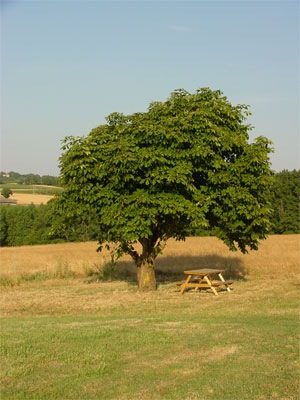
In honor of the official beginning of summer (though with this heat it has been here for a while now), I want to start off my summer poetry series with two poems about being barefoot. As a child of the South, we rarely ever played outside without being barefoot. Shoes were worn when we were going somewhere or when company was coming. I do remember one time when I truly wished I had not been barefoot. My grandparents had a chestnut tree. I don’t know how many of you are familiar with chestnut trees, but chestnuts grow inside burrs (see the picture on the right), which look like little porcupines. A group of us kids were playing around the chestnut tree, climbing it and fooling around. Stupidly we were barefoot, but being barefoot made climbing a tree easier. When we were down on the ground, I was backing up (I think my sister was threatening me). I stepped on one of these burrs. Hundreds of the little thorns went into the bottom of my foot. It took my grandfather and father all day and much of the night to get most of them out. A few that got really embedded in my foot didn’t come out for months and sometimes even years. It was not one of my finer moments.

Chestnut Tree

So in honor of those barefoot days of summer, here are some poems that I hope you will enjoy.

The Barefoot Boy by John Greenleaf Whittier

Blessings on thee, little man,
Barefoot boy, with cheek of tan!
With thy turned-up pantaloons,
And thy merry whistled tunes;
With thy red lip, redder still
Kissed by strawberries on the hill;
With the sunshine on thy face,
Through thy torn brim’s jaunty grace;
From my heart I give thee joy,—
I was once a barefoot boy!

Barefoot Days by Rachel Field

In the morning, very early,
That’s the time I love to go
Barefoot where the fern grows curly
And the grass is cool between each toe,
On a summer morning – O!
On a summer morning!
That is when the birds go by
Up the sunny slopes of air,
And each rose has a butterfly
Or a golden bee to wear;
And I am glad in every toe –
Such a summer morning – O!
Such a summer morning!
For more information about the poets who wrote these poems, click “Read More” below.

John Greenleaf Whittier
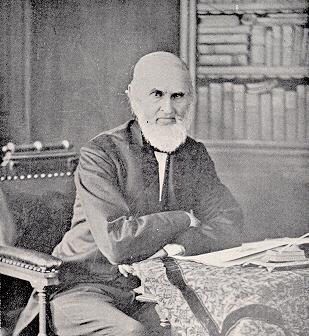
The first poem “The Barefoot Boy” is by John Greenleaf Whittier (born Dec. 17, 1807, near Haverhill, Mass., U.S. — died Sept. 7, 1892, Hampton Falls, Mass.), a U.S. poet and reformer. A Quaker born on a farm, Whittier had limited education but was early acquainted with poetry. He became involved in journalism and published his first volume of poems in 1831. During 1833 – 42 he embraced the abolitionism of William Lloyd Garrison and became a prominent antislavery crusader. Thereafter he continued to support humanitarian causes while publishing further poetry volumes. After the Civil War he was noted for his vivid portrayals of rural New England life. His best-known poem is the nostalgic pastoral “Snow-Bound” (1866); others include “Maud Muller” (1854) and “Barbara Frietchie” (1863).
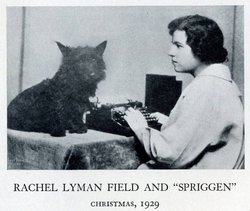
The second poem, “Barefoot Days” is by Rachel Lyman Field (September 19, 1894 – March 15, 1942), an American novelist, poet, and author of children’s fiction. She is best known for her Newbery Medal–winning novel for young adults, Hitty, Her First Hundred Years, published in 1929. Field was born in New York City, and, as a child, contributed to the St. Nicholas Magazine. She was educated at Radcliffe College. Field was also a successful author of adult fiction, writing the bestsellers Time Out of Mind (1935), All This and Heaven Too (1938), and And Now Tomorrow (1942). She is also famous for her poem-turned-song “Something Told the Wild Geese”. Field also wrote the English lyrics for the version of Franz Schubert’s Ave Maria used in the Disney film Fantasia (film). Field married Arthur S. Pederson in 1935, with whom she collaborated in 1937 on To See Ourselves. She died in Los Angeles, California on March 15, 1942, of pneumonia following an operation.

The Sonnets

palm copy[3]
As I stated to Ace in a comment about last week’s poem, sonnets are my favorite form of poetry.  The rhythm and cadence of a sonnet is pure beauty.  I wanted to share with you today my two favorite sonnets.

Shall I compare thee to a summer’s day? (Sonnet 18)
by William Shakespeare

2718_01[3]Shall I compare thee to a summer's day?
Thou art more lovely and more temperate.
Rough winds do shake the darling buds of May,
And summer's lease hath all too short a date.
Sometime too hot the eye of heaven shines,
And often is his gold complexion dimmed;
And every fair from fair sometime declines,
By chance, or nature's changing course, untrimmed;
But thy eternal summer shall not fade,
Nor lose possession of that fair thou ow'st,
Nor shall death brag thou wand'rest in his shade,
When in eternal lines to Time thou grow'st.
So long as men can breathe, or eyes can see,
So long lives this, and this gives life to thee.
 

How Do I Love Thee? (Sonnet 43)
by Elizabeth Barrett Browning

aint heavy[3]How do I love thee? Let me count the ways.
I love thee to the depth and breadth and height
My soul can reach, when feeling out of sight
For the ends of being and ideal grace.
I love thee to the level of every day's
Most quiet need, by sun and candle-light.
I love thee freely, as men strive for right.
I love thee purely, as they turn from praise.
I love thee with the passion put to use
In my old griefs, and with my childhood's faith.
I love thee with a love I seemed to lose
With my lost saints. I love thee with the breath,
Smiles, tears, of all my life; and, if God choose,
I shall but love thee better after death.

What is your favorite form of poetry?

What is your favorite poem?  

Sonnets from the Portuguese
Shakespeare's Sonnets

Voice Of An Angel

So, he described himself as just a bore.
Male angel from Myspace 2His tender smile kept me occupied.
He sang off-key, I smiled all the more –
he may not last, but I’m still on his side.

I’d love to hear him singing just for me –
he’d grow quite bored himself, I’m sad to say.
I’d let him choose whatever melody
he felt it in his heart to send my way.

How could he bore them? I will never know!
I truly hope he is the one who’ll rise.
I’ve seen these stars how fast they come and go –
but none were quite an angel in my eyes.

He may have bored the masses with that song –
Hang in there, love, you picked a boring song.

–Byron D. Howell

Bryon D. Howell is a poet currently residing in New Haven, Connecticut. He has been writing poetry for a great number of years. Recently, work of his has appeared in Unlikely Stories, poeticdiversity, and Censored Poets.