The mirror is dirty from the detritus of dailiness— I look in the mirror and am freckled.
A week out from being cleaned, maybe two, maybe more, The Milky Way shows itself in the secret silver,
This star chart in my own bathroom, Aglow not in darkness but with the lights on,
Everything suddenly so clear. It is not smear I am looking at, but galaxies.
It is not toothpaste and water spots— When I look in the mirror, it is writing and numbers,
Musical notes, 1s and 0s, Morse-like codes, runes. I am looking over into the other side,
And over there, whoever they are, it turns out They look a lot like me. Like me, but freckled.
About this Poem
“Whatever our professional posturing, this poem speaks to the everyday lives we also lead—not cleaning the bathroom sink quite as much as we perhaps should, not always controlling the floss strings of good intentions now turned wild, not vacuuming nearly enough. But even in the mundane, we have, always at hand, surprise, surprise at its most savory in that we have least expected to find it where it is not advertised.” —Alberto Ríos
About the Poet
Born in 1952, Alberto Ríos is the inaugural state poet laureate of Arizona and the author of many poetry collections, including A Small Story about the Sky (Copper Canyon Press, 2015). In 1981, he received the Walt Whitman Award for his collection Whispering to Fool the Wind (Sheep Meadow Press, 1982). He served as a Chancellor of the Academy of American Poets from 2014 to 2020.
Since Persia fell at Marathon, The yellow years have gathered fast: Long centuries have come and gone.
And yet (they say) the place will don A phantom fury of the past, Since Persia fell at Marathon;
And as of old, when Helicon Trembled and swayed with rapture vast (Long centuries have come and gone),
This ancient plain, when night comes on, Shakes to a ghostly battle-blast, Since Persia fell at Marathon.
But into soundless Acheron The glory of Greek shame was cast: Long centuries have come and gone,
The suns of Hellas have all shone, The first has fallen to the last:— Since Persia fell at Marathon, Long centuries have come and gone.
About the Poem
The poem begins with a reference to the Battle of Marathon, which took place in 490 BC. Edwin Arlington Robinson uses this historical event to establish a timeline for the poem and to show how the passage of time has changed the world. Robinson describes how the glory of Greece has faded over time, and how the suns of Hellas have all set.
The poem is, as the title suggests, a villanelle, which is one of my favorite poetic forms. I love highly structured poetic forms such as sonnets and villanelles. Villanelles are a French verse form consisting of five three-line stanzas and a final quatrain, with the first and third lines of the first stanza repeating alternately in the following stanzas. These two refrain lines form the final couplet in the quatrain. The form’s repetition of lines suggests that the villanelle is often used, and properly used, to deal with one or another degree of obsession. Robinson often wrote his poems as villanelles.
The final line of “Villanelle of Change,” Long centuries have come and gone, is a reminder of the fleeting nature of time. The poem as a whole is a meditation on the power of time to change and destroy. It’s a complex and challenging poem, but it is also beautiful. The poem’s use of language is precise and evocative, and its structure is carefully crafted. Like many of Robinson’s poems, “Villanelle of Change” is a poem that will stay with you long after you have finished reading it. “The House on the Hill” is a haunting poem about an abandoned house. “Richard Cory” tells of a man who seemingly had everything but companionship, and I’ve never forgotten the shocking final quatrain. “Miniver Cheevy” describes a man who dreamed of living in long ago times and would have likely loved “Villanelle of Change” as it harkens back to a different time.
In comparison to Robinson’s other works, “Villanelle of Change” is a more subdued and reflective poem. It lacks the dramatic intensity of some of his other works, such as the three listed above, but it more than makes up for it with its subtle beauty and wisdom. “Villanelle of Change” is a poem that is well worth your time and attention.
About the Poet
On December 22, 1869, Edwin Arlington Robinson was born in Head Tide, Maine (the same year as W. B. Yeats ). His family moved to Gardiner, Maine, in 1870, which was renamed “Tilbury Town,” and became the backdrop for many of Robinson’s poems. Robinson described his childhood as stark and unhappy; he once wrote in a letter to Amy Lowell that he remembered wondering why he had been born at the age of six. After high school, Robinson spent two years studying at Harvard University as a special student, and his first poems were published in the Harvard Advocate.
Robinson privately printed and released his first volume of poetry, The Torrent and the Night Before, in 1896 at his own expense; this collection was extensively revised and published in 1897 as The Children of the Night. Unable to make a living by writing, he got a job as an inspector for the New York City subway system. In 1902, he published Captain Craig and Other Poems. This work received little attention until President Theodore Roosevelt wrote a magazine article praising it and Robinson. Roosevelt also offered Robinson a sinecure in a U.S. Customs House, a job he held from 1905 to 1910. Robinson dedicated his next work, The Town Down the River (1910), to Roosevelt.
Robinson’s first major success was The Man Against the Sky (1916). He also composed a trilogy based on Arthurian legends: Merlin (1917), Lancelot (1920), and Tristram (1927), which won a Pulitzer Prize in 1928. Robinson was also awarded a Pulitzer Prize for his Collected Poems (1921) in 1922 and The Man Who Died Twice (1924) in 1925. For the last twenty-five years of his life, Robinson spent his summers at the MacDowell Colony of artists and musicians in Peterborough, New Hampshire. Robinson never married and led a notoriously solitary lifestyle. He died in New York City on April 6, 1935.
He was a boy when first we met; His eyes were mixed of dew and fire, And on his candid brow was set The sweetness of a chaste desire: But in his veins the pulses beat Of passion, waiting for its wing, As ardent veins of summer heat Throb through the innocence of spring.
As manhood came, his stature grew, And fiercer burned his restless eyes, Until I trembled, as he drew From wedded hearts their young disguise. Like wind-fed flame his ardor rose, And brought, like flame, a stormy rain: In tumult, sweeter than repose, He tossed the souls of joy and pain.
So many years of absence change! I knew him not when he returned: His step was slow, his brow was strange, His quiet eye no longer burned. When at my heart I heard his knock, No voice within his right confessed: I could not venture to unlock Its chambers to an alien guest.
Then, at the threshold, spent and worn With fruitless travel, down he lay: And I beheld the gleams of morn On his reviving beauty play. I knelt, and kissed his holy lips, I washed his feet with pious care; And from my life the long eclipse Drew off; and left his sunshine there.
He burns no more with youthful fire; He melts no more in foolish tears; Serene and sweet, his eyes inspire The steady faith of balanced years. His folded wings no longer thrill, But in some peaceful flight of prayer: He nestles in my heart so still, I scarcely feel his presence there.
O Love, that stern probation o’er, Thy calmer blessing is secure! Thy beauteous feet shall stray no more, Thy peace and patience shall endure! The lightest wind deflowers the rose, The rainbow with the sun departs, But thou art centred in repose, And rooted in my heart of hearts!
Bayard Taylor (1825-1878) was an American poet, novelist, travel writer, literary critic, diplomat, lecturer, and translator. He was a frustrated poet who, even though he published twenty volumes of poetry, resented the mass appeal of his travel writings, because his desire was to be known as a poet. Even his travel writings have been relegated to the dustbin of literary history, and he is known today solely for his translation of both volumes of Goethe’s Faust.
Bayard was born on the January 11, 1825, in the small town of Kennett Square, Pennsylvania into a Quaker family. His parents were reasonably well-off farmers and could afford to give their son a decent education at academies in West Chester and Unionville. Although he entered the printing business as an apprentice, he was a keen writer of poetry and took great inspiration from the influential Rufus Wilmot Griswold. Encouraged by Griswold he published his first volume of poems at the age of 19 and called it Ximena, or the Battle of the Sierra Morena and other Poems. It sold badly but was noticed by the editor of the New York Tribune.
He worked as a journalist on the New York Tribune and other publications and this profession turned out to be his gateway to extensive worldwide travel when sent on assignments abroad. He even turned his hand to lyric writing for famous singers and completed a period of diplomatic service in St Petersburg, Russia.
He was lucky that his first commission was a European trip covering Germany, Italy, France, and England. He spent two years happily travelling at a slow pace, sending reports back to the Tribune. He was also engaged by other publications such as The Saturday Evening Post and The United States Gazette. On his return to the States, he was encouraged to publish his first travel book, based on his recent adventures. Views Afoot, or Europe seen with Knapsack and Staff was published in New York in two separate volumes in 1846. Further assignments followed but this time within the United States and Mexico. Taylor was now comfortably established in both journalism and as an author. He also had some success with a set of lyrics written for a visiting Swedish singer called Jenny Lind which were sung at concerts around the country. Within a few years he was off again on his travels, this time to Egypt and other countries in the Middle East.
In 1853, Taylor started from England and sailed to India, China, and then Japan. He was back in the States at the end of 1853 and then began a successful lecture tour. Two more years passed before the next overseas trip and this time he chose the countries of Northern Europe such as Sweden. Here he was inspired to write a long poem in narrative form called Lars.
Incredibly he found the time to serve as a diplomat and was appointed chargé d’affaires at the United States embassy in St Petersburg in 1863, accompanied by his second wife Maria. The following year they were back home at Kennett Square and Taylor wrote four novels with limited success. Poetry was his forte.
Taylor confided to Walt Whitman that he found in his own nature “a physical attraction and tender and noble love of man for man.” Taylor’s novel Joseph and His Friend: A Story of Pennsylvania (1870), which depicted men holding hands and kissing, is considered the first American gay novel by modern scholars. It presented a special attachment between two men and discussed the nature and significance of such a relationship, romantic but not sexual. Critics are divided in interpreting Taylor’s novel as a political argument for gay relationships or an idealization of male spirituality. This novel is said to be based on the romantic relationship between poets Fitz-Greene Halleck and Joseph Rodman Drake. In Keith Stern’s Queers in History, it is revealed that the love of Taylor’s life was George Henry Boker, although both men married women. The American banker, diplomat, and poet George Boker wrote to Taylor in 1856 that he had “never loved anything human as I love you. It is a joy and a pride to my heart to know that this feeling is returned.”
His travelling days were not finished, and he was appointed to another diplomatic post, this time in Berlin. Unfortunately, he died only a few months after arriving in the German capital. Bayard Taylor died in Berlin on the December 19, 1878, at aged 53.
This salt-stain spot marks the place where men lay down their heads, back to the bench,
and hoist nothing that need be lifted but some burden they’ve chosen this time: more reps,
more weight, the upward shove of it leaving, collectively, this sign of where we’ve been: shroud-stain, negative
flashed onto the vinyl where we push something unyielding skyward, gaining some power
at least over flesh, which goads with desire, and terrifies with frailty. Who could say who’s
added his heat to the nimbus of our intent, here where we make ourselves: something difficult
lifted, pressed or curled, Power over beauty, power over power! Though there’s something more
tender, beneath our vanity, our will to become objects of desire: we sweat the mark of our presence onto the cloth.
Here is some halo the living made together.
About the Poet
Mark Doty was born in Maryville, Tennessee, on August 10, 1953. He is the author of numerous collections of poetry, most recently Deep Lane (W. W. Norton, 2015); A Swarm, A Flock, A Host: A Compendium of Creatures(Prestel, 2013); Fire to Fire: New and Selected Poems (HarperCollins, 2008), which received the National Book Award; School of the Arts(HarperCollins, 2005); Source(HarperCollins, 2002); and Sweet Machine (HarperCollins, 1998). Other collections include Atlantis(HarperCollins, 1995), which received the Ambassador Book Award, the Bingham Poetry Prize, and a Lambda Literary Award; My Alexandria (University of Illinois Press, 1993), chosen by Philip Levine for the National Poetry Series, winner of the National Book Critics Circle Award and Britain’s T. S. Eliot Prize, and a National Book Award finalist; Bethlehem in Broad Daylight (D.R. Godine, 1991); and Turtle, Swan (D.R. Godine, 1987).
In 2010, Graywolf Press published Doty’s collection of essays on poetry titled The Art of Description: World into Word, in which Doty asserts that “poetry concretizes the singular, unrepeatable moment; it hammers out of speech a form for how it feels to be oneself.”
Doty is also a noted memoirist. In 2020, he published What Is the Grass: Walt Whitman in My Life (W. W. Norton), in which he traces his own experiences alongside those of Whitman, in the context of the elder poet’s creation of his best-known work, Leaves of Grass. In 1996, Doty released Heaven’s Coast (HarperCollins), which received the PEN/Martha Albrand Award for First Nonfiction. His other memoirs are Dog Years (HarperCollins, 2007); Still Life with Oysters and Lemon: On Objects and Intimacy (Beacon Press, 2000); and Firebird (HarperCollins, 1999). He has also edited The Best American Poetry 2012.
Doty has received fellowships from the Guggenheim Foundation, the Ingram Merrill Foundation, the National Endowment for the Arts, the Rockefeller Foundation, and the Whiting Foundation. He served as a Chancellor of the Academy of American Poets from 2011 to 2016.
Doty has taught at the University of Houston and is currently serving as a distinguished writer at Rutgers University. He lives in New York City.
How Would That Feel Performed by Christina Chong Songwriters: Kay Hanley and Tom Polce
Did I hear that right? Did she just shine a spotlight On her innermost feelings Like it’s no big deal Say whatever, whenever you like
You’d presume with all my mastery To pursue flights of fancy, easy Who am I kidding, I’ve never found that part of me ‘Cause I’m designed to color inside the lines
Cool and methodical Way too responsible I can’t help it Sometimes I peek through a keyhole and see people happy I admit
It might be time to change my paradigm If only I can let go of the wheel My fear replaced with total faith I’m fiercely free and really real
Flying blind How would that feel?
This all makes me so uncomfortable I want to let go Be vulnerable Who am I kidding, I’ve never met that side of me In my defense The truth has a consequence
I won’t watch the whole thing spin out of control If I have the chance
It might be time to change my paradigm If I can only let go of the wheel My fear replaced with total faith I’m fiercely free and really real
Flying blind How would that feel?
In another time we had a life together Could time repeat Or will it unravel? Be careful what you start Make one mistake and blow it all apart Or worse Break my own heart Who am I kidding, I’ve never found that part of me
It might be time to change my paradigm If only I can let go of the wheel
It’s nice to dream that I could change my mind Deep down, I know I will never let go My fear is staked I have no faith Contented freedom is not real
Flying blind How would that feel?
Because June is Pride Month, I have been focusing on LGBTQ+ poems and poets. “How Would That Feel” from the second season of Star Trek: Strange New Worlds episode “Subspace Rhapsody” might seem like an odd choice, but for me, the lyrics of this song (and I always think of songs as poems set to music) really resonated with me about my own experience as a gay man. But first, a little about the song. In this episode, Captain Christopher Pike and the crew of the USS Enterprise encounter a naturally occurring fold in subspace which, when interacted with, causes the entire crew to start singing their private thoughts and feelings. The episode is a musical, the first in the history of the Star Trek franchise. It’s one of my favorite Star Trek episodes.
“How Would That Feel” is the third song in the show after “Status Report,” which introduces us to the musical theme of the episode, and “Connect to Your Truth,” in which Una Chin-Riley, commonly and originally only known as Number One and Pike’s first officer, and James T. Kirk, the future captain of the Starship Enterprise, engage in a duet in which she advises him on how to serve in a command role. When La’an Noonien-Singh sees the interaction between Una and Kirk, La’an begins feeling emotional towards Kirk with whom she had a relationship in an alternate timeline. She goes to her quarters and sings about becoming a different person who takes chances.
Growing up gay in Alabama, whether I fully realized that’s what made me different at the time or not, made me hesitant to ever “say whatever, whenever” I like. When you’re closeted, you have to choose your words and mannerisms carefully to hide your true self, because as the song says, “In my defense / The truth has a consequence.” For La’an, it’s her heritage of being a descendant of one of Earth’s most villainous dictators and whether or not that means the same evil lives within her. For me, it was whether or not anyone would accept me, or would I lose everything if I came out?
I was considered very intelligent as a kid, some people still think I am, so when La’an sang, “You’d presume with all my mastery / To pursue flights of fancy, easy / Who am I kidding, I’ve never found that part of me / ‘Cause I’m designed to color inside the lines,” it felt like she was singing about my own story. I always felt that I could not be the real me. I didn’t even know who the real me was, so I did not pursue my “flights of fancy” about being attracted to other guys. I never let myself find that part of me; it was too hidden away because of the shame I was made to feel. So, I kept to what was expected of me and colored “inside the lines.” I studied hard because I wasn’t able to show my “masculinity” by playing sports. I was not athletic, so I had to fall back on my brains. I was a very serious kid. I was “Cool and methodical / Way too responsible.” I remember looking at other people who really enjoyed having romantic partners and I felt like I was peeking “through a keyhole and see people happy” when I was not. If I was free to be me, “How would that feel?”
I eventually came to understand that I could be happy if I changed “my paradigm / If only I can let go of the wheel / My fear replaced with total faith / I’m fiercely free and really real,” but I never felt like that was my reality. I could not be free, nor could I be real, my true self. I couldn’t watch my life “spin out of control” because I did not “have the chance” at that happiness. Once I came out to myself, I could come out to others, but as the song says, “This all makes me so uncomfortable.” I wanted to let go, be vulnerable, be myself, but was I? I had never “met that side of me” because I’d never allowed myself to be “fiercely free and really real.” I felt like if I ever allowed myself to meet that side of me, then my whole life might “spin out of control.”
The only part of the song that I didn’t fully identify with is:
In another time we had a life together Could time repeat Or will it unravel? Be careful what you start Make one mistake and blow it all apart Or worse Break my own heart Who am I kidding, I’ve never found that part of me
I have to admit though, I have always wondered about the possibility of reincarnation. Catholics believe in purgatory (the condition, process, or place of purification or temporary punishment in which, according to medieval Christian and Roman Catholic belief, the souls of those who die in a state of grace are made ready for heaven.) What if purgatory was actually previous lives we live. Religions, even some sects of Christianity, and especially the Indian religions such as Hinduism, Buddhism, Jainism, and Sikhism, have reincarnation as the central tenet of their faith. When the soul is passed from one being to the next until reaches cumulative virtues allows it to finally ascend into paradise. I could definitely get very metaphysical about this verse of the song, but this verse is more about La’an’s emotions towards Kirk who she has had a relationship in an alternate timeline. La’an knows that if she tells Kirk about her feelings, it could change the course of history, so she knows she cannot be herself and let her emotions out.
Ultimately, by the end of the song, La’an decides that she can’t allow herself to be who she is and take the steps to make try to make a better life for herself. She feels that she must keep everything bottled up inside.For many gay men out there, the dream of coming out never feels like it can become reality. This was the case for me for a long time. In some ways, I still hold myself back and think, “It’s nice to dream that I could change my mind” and let go a little more in an effort to make myself happy. I’m still resisting letting go completely because “Deep down, I know / I will never let go / My fear is staked,” and in some ways, I know that “Contented freedom is not real.” I will continue to work on who I want to be and try to be more comfortable with who I am. I have come a long way in fully accepting myself, even if I sometimes feel that I held myself back too long and now it’s too late to ever find that person who is meant for me to spend my life with. I still wonder “How would that feel?” to finally let go, allow myself to fly blind and not try to control everything. Could I “let go of the wheel” and create a better life for myself by letting go of my past and just be “really real.”
You might find my thoughts on this song silly, but I think we all have a song that speaks to our soul. It may not have meant to tell our personal story, but when we really look at the words and put it in a different context, then it fits. To me, that’s the makings of a truly great song. It’s a song that may have been made to be seen in a particular context, but it speaks to you in a way that the writer never considered. Poetry is oftentimes the same way. It’s up to our own interpretation. For me, that song is “How Would That Feel” because it feels like my personal story. I can’t help but belt it out when I listen to it, and I am sure all of you are very glad you have never had to hear me sing this song to the top of my lungs as I am driving down the road.
I can’t remember my dad calling me a sissy, but he definitely told me not to be a sissy. I secretly (or not so secretly) liked all the sissy things. We had a hunting dog named Sissy. Really: Sissy. My father nicknamed my sister: Sissy. Still, he says, “How’s Sissy?” and calls her Sissy when she goes home to visit him. Belinda (Sissy) is one of the toughest people I know. My sissy (sister) has kicked someone’s ass, which isn’t sissy- ish, I guess, though I want to redefine sissy into something fabulous, tough, tender, “sissy- tough.” Drag queens are damn tough and sissies. I’m pretty fucking tough and a big, big sissy, too. And kind. Tough and kind and happy: a sissy.
About the Poem
Aaron Smith explains his poem: “As a queer person, I’ve had the word ‘sissy’ leveled against me as an insult. In this sonnet, I challenged myself to use the word ‘sissy’ as the ending word for each line in an attempt to reclaim the word, celebrate it, redefine it—as I say in the poem—as something ‘fabulous, tough, tender.’ I also wanted to celebrate drag queens. RuPaul [Andre Charles] is a national treasure.”
I’ve posted this poem before, and it is always one of those poems that really speaks to me. Like Smith, my dad never called me a sissy, but I heard more than once, “Don’t be a sissy.” I remember when I was in grammar school, all the boys played flag football at recess. I had no interest in playing football, so I spent recess with my friends, all the girls. My dad came to pick me up from school one day (recess was at the end of the day), and he noticed that I was not playing football with the rest of the boys. He told me that I had to play with the boys and “not be such a sissy.” So, from then on, when he would pick me up at school, I’d have to play flag football.
Years ago, I read a book, Mississippi Sissy. The book is a memoir by Kevin Sessums, a celebrity journalist who as the Amazon description says, “grew up scaring other children, hiding terrible secrets, pretending to be Arlene Frances and running wild in the South.” As he grew up in Forest, Mississippi, befriended by the family maid, Mattie May, he became a young man who turned the word “sissy” on its head, just as his mother taught him. In Jackson, he is befriended by Eudora Welty and journalist Frank Hains, but when Hains is brutally murdered in his antebellum mansion, Kevin’s long road north towards celebrity begins. In his memoir, Kevin Sessums brings to life the pungent American south of the 1960s and the world of the strange little boy who grew there.
There are words that haunt me because of the pain they caused me growing up: sissy, queer, faggot (fag), etc. I know many gay men use these as empowering words, such as Sessum and Smith do in their writing. Others celebrate their sexuality and gender non-conformity. As the poem says, “Drag queens are damn tough and sissies.” But it’s not just drag queens that are celebrating gender non-conformity. Many of us live our lives these days without the fear of being called a “sissy.” Though, there are still many like me who continue to care what others think. It’s difficult for us to break free from the traditional gender roles that were forced on us when we were young. Maybe more of us should realize that we are “pretty fucking tough and a big, big sissy, too. And kind. Tough and kind and happy: a sissy.”
About the Poet
Aaron Smith has an MFA in poetry from the University of Pittsburgh.
Smith is the author of three books of poetry: Primer (University of Pittsburgh Press); Appetite (University of Pittsburgh Press, 2012); and Blue on Blue Ground (University of Pittsburgh Press, 2005), winner of the Agnes Lynch Starrett Poetry Prize. His other awards include fellowships from the New York Foundation for the Arts and Mass Cultural Council.
Smith is an associate professor of creative writing at Lesley University in Cambridge, Massachusetts.
Out of the mid-wood’s twilight Into the meadow’s dawn, Ivory limbed and brown-eyed, Flashes my Faun!
He skips through the copses singing, And his shadow dances along, And I know not which I should follow, Shadow or song!
O Hunter, snare me his shadow! O Nightingale, catch me his strain! Else moonstruck with music and madness I track him in vain!
About The Poem
“In the Forest” appears in the “Uncollected Poems” (1876–1893) section of the volume Poems, with The Ballad of Reading Gaol, published in 1909 by Methuen & Company. During the 1890s, Wilde faced three criminal and civil trials due to his relationship with the poet Lord Alfred Douglas. In March 1946, Poetry: A Magazine of Verse published the article “Oscar Wilde’s Poetry as Art History” by American poet Edouard Roditi, who wrote: “The evolution of Wilde’s descriptive style in his poetry, from the museum-piece ornateness of his earlier works to the simpler and more delicate art of his more mature poems, was accompanied, moreover, by an analogous evolution of his poetry’s intellectual content, from the discussion of general problems of politics, ethics or esthetics to a greater attention to personal impressions or to the elucidation of particular problems of the poet’s life, such as his temptations and moral conflicts. […] Wilde proved his ability to compose, had he but dared, a body of poems, on themes of sin, suffering and remorse, which might have been the Fleurs du Mal of English literature, with much of Baudelaire’s concise quality as opposed to Swinburne’s vagueness.”
About the Poet
Oscar Wilde, born in Dublin, Ireland, on October 16, 1854, was a playwright and poet. His first book of poetry, Ravenna (T. Shrimpton and Son, 1878) won the Newdigate Prize. Wilde won more acclaim for his plays, particularly An Ideal Husband (L. Smithers, 1899) and The Importance of Being Earnest (E. Matthews and John Lane, 1899). He died in Paris on November 30, 1900.
You are a nobody until another man leaves a note under your wiper: I like your hair, clothes, car—call me! Late May, I brush pink Crepe Myrtle blossoms from the hood of my car. Again spring factors into our fever. Would this affair leave any room for error? What if I only want him to hum me a lullaby. To rest in the nets of our own preferences. I think of women I’ve loved who, near the end, made love to me solely for the endorphins. Praise be to those bodies lit with magic. I pulse my wipers, sweep away pollen from the windshield glass to allow the radar detector to detect. In the prim light of spring I drive home alone along the river’s tight curves where it bends like handwritten words. On the radio, a foreign love song some men sing to rise.
About the Poet
Christopher Salerno was born on June 13, 1975, in Somerville, New Jersey. He received an MA from East Carolina University and an MFA from Bennington College.
Salerno is the author of Sun & Urn (University of Georgia Press, 2017), winner of the Georgia Poetry Prize; ATM (Georgetown Review Press, 2014), winner of the Georgetown Review Poetry Prize; Minimum Heroic (Mississippi Review Press, 2010), winner of the Mississippi Review Poetry Prize; and Whirligig (Spuyten Duyvil, 2006).
In the judge’s citation for the Georgetown Review Poetry Prize, D. A. Powell writes, “Salerno rifles through our empty wallets to show how much we’re missing. These poems are mystical transactions of body and soul, as dark as Faust and as illuminating.”
Salerno has also received a fellowship from the New Jersey State Council on the Arts. He currently serves as an editor at Saturnalia Books and teaches at William Paterson University. He lives in Caldwell, New Jersey.
The night was made for rest and sleep, For winds that softly sigh; It was not made for grief and tears; So then why do I cry?
The wind that blows through leafy trees Is soft and warm and sweet; For me the night is a gracious cloak To hide my soul’s defeat.
Just one dark hour of shaken depths, Of bitter black despair— Another day will find me brave, And not afraid to dare.
About the Poet
Clarissa Scott Delany was born Clarissa Mae Scott in Tuskegee, Alabama. She was the daughter of Emmet Jay Scott, secretary to Booker T. Washington and special advisor on African American affairs to President Woodrow Wilson, and Elenor Baker Scott. She attended Bradford Academy in Massachusetts and graduated Phi Beta Kappa from Wellesley College in 1923. This accomplishment landed her a cover article in TheCrisis magazine in June 1923.
Delany gathered frequently with other young Black people in Boston at the Literary Guild. Claude McKay was among the institution’s featured speakers. She traveled to France and Germany and later published the essay “A Golden Afternoon in Germany,” inspired by this period, in Opportunity magazine. Delany then moved to Washington, D.C., and taught at Dunbar High School until 1926. While there, she joined the Saturday Nighters Club, a salon hosted by Georgia Douglas Johnson.
Delany entered her poem “Solace” in a contest hosted by Opportunity. She tied for fourth place, and the poem was eventually anthologized, alongside her other poems, “Joy” and “The Mask,” in Countee Cullen’s Caroling Dusk: An Anthology of Verse by Black Poets of the Twenties (Harper & Brothers, 1927). Some of her other poems were also anthologized in Arna Bontemps’s and Langston Hughes’s The Poetry of the Negro, 1746–1949 (Doubleday & Co., Inc., 1949).
Delany later moved to New York City, where she became a social worker and the director of the Joint Committee on the Negro Child Study. She published findings on delinquency and child neglect among Black children. She died at twenty-six of kidney disease.
Let me not to the marriage of true minds Admit impediments; love is not love Which alters when it alteration finds, Or bends with the remover to remove. O no, it is an ever-fixèd mark That looks on tempests and is never shaken; It is the star to every wand’ring bark Whose worth’s unknown, although his height be taken. Love’s not time’s fool, though rosy lips and cheeks Within his bending sickle’s compass come. Love alters not with his brief hours and weeks, But bears it out even to the edge of doom: If this be error and upon me proved, I never writ, nor no man ever loved.
About the Poem
Along with Sonnets 18 (“Shall I compare thee to a summer’s day?”) and 130 (“My mistress’ eyes are nothing like the sun”), Sonnet 116 is one of the most famous sonnets. Traditionally, this sonnet has been almost universally read as a sonnet of praise or triumph to ideal and eternal love, with which all readers could easily identify, adding their own dream of perfection to what they found within it, modern criticism makes it possible to look beneath the idealism and to see some hints of a world which is perhaps slightly more disturbed than the poet pretends. In the first place it is important to see that the sonnet belongs in the sequence of Shakespeare’s sonnets. Sonnet 116 is sandwiched between three sonnets which discuss the philosophical question of how love deceives a person’s eyes, mind, and judgement. Sonnet 116 is then followed by four others which attempt to excuse the poet’s own unfaithfulness and betrayal of the beloved.
Most scholars thought agree that Sonnet 116 is about love in its most ideal form. The poet praises the glories of lovers who have come to each other freely and enter into a relationship based on trust and understanding. The first four lines reveal the poet’s pleasure in love that is constant and strong and will not “alter when it alteration finds.” The following lines proclaim that true love is indeed an “ever-fix’d mark” which will survive any crisis. In lines 7-8, the poet claims that we may be able to measure love to some degree but does not mean we fully understand it. Love’s actual worth cannot be known and remains a mystery. The remaining lines of the third quatrain (9-12), reaffirm the perfect nature of love that is unshakeable throughout time and remains so “ev’n to the edge of doom,” i.e., death. In the final couplet, the poet declares that, if he is mistaken about the constant, unmovable nature of perfect love, then he must take back all his writings on love, truth, and faith. Moreover, he adds that, if he has in fact judged love inappropriately, no man has ever really loved, in the ideal sense that the poet professes.










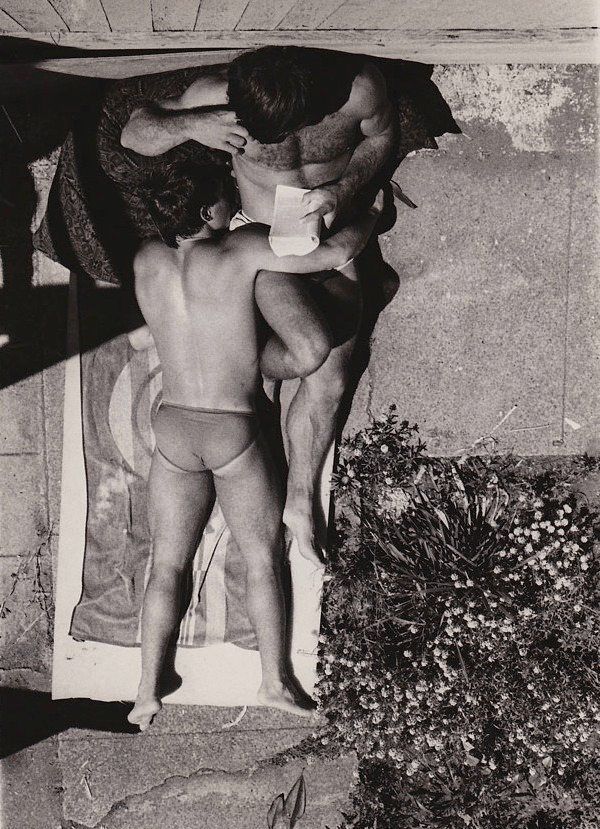


 Joe
Joe




 The Closet Professor