Category Archives: Politics

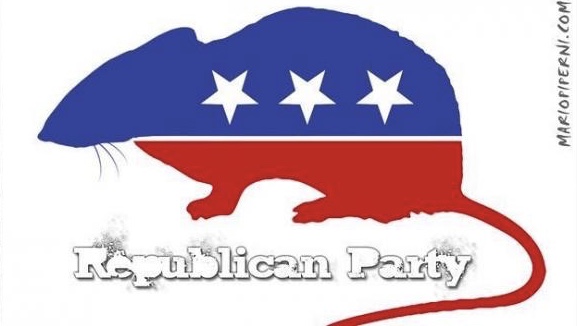
Are Republicans Nasty People?

It’s never good to characterize entire groups of people on the basis of prejudice. When we make sweeping generalizations, they are generally based on foundations of racism, sexism, antisemitism, and every form of discriminatory ideology. Offensive stereotypes appear often in crudely written op-eds where selected evidence about individuals is applied to whole categories of people. As LGBTQI+ individuals and allies and many other minorities or oppressed groups, we have all faced generalizations and prejudices. I try never to generalize, and I always try to see people as individuals not as part of a group. However, I’m guessing that like me many of you were raised with generalizations about groups of people. I was surrounded mostly by Republicans when I was growing up, and as minority groups gain increasingly more equal rights (though many of us still have a long way to go to be fully equal), I have seen Republicans begin to generalize more and more and in increasingly nasty ways. While I have worked hard to avoid the easy tendency to overgeneralize, not everyone has. This question persists in my mind: are today’s Republicans nasty? Have they increasingly gotten worse? Have they become the inheritors of prejudice and hate from the Southern Democrats of the 1950s-1970s?

Certainly, there are nasty Republicans, as there are nasty people of every political persuasion. Perhaps nasty Republicans just make for easy pickings. A prime example of this is the collective televised behavior of Republican Senators and Representatives during the impeachment hearings where argument and nastiness were blended into a toxic attitude designed to distract attention from what Trump had done. They seemed so afraid of Trump turning against them, that they berated Democrats and any accusers of Trump’s wrongdoings. The behavior of Republicans during the impeachment was one of the most shameful circus acts in American politics.

What provokes my bigger question is the possibility that nastiness has become the essence of Republicanism. This process did not begin with Trump. It’s been brewing for decades. Rush Limbaugh has personified the meanness of conservatism since 1988 calling feminists whores and Nazis, stereotyping gays, and repeating racist comments. His success spawned an industry of right-wing talk radio hosts copying his nastiness, and sometimes being rewarded with political office. Now, there is at least one television network dedicated to this type of behavior: Fox News. It doesn’t seem to matter what lies or half-truths they relate to their audience as long as it appeases their base.

Alex Jones began as a talk radio personality creating Info Wars in 1999. His utter disregard for people in the deepest grief has landed him in court, sued by the families of young victims of the Sandy Hook Elementary School shooting. But before that, Jones’ willful nastiness earned him Trump White House press credentials. When Trump gave Limbaugh the Presidential Medal of Freedom during his State of the Union address in February, he placed public nastiness in front of his Party for their instruction.

Trump has changed the rules of public political behavior. When he was still a candidate vying for the Republican nomination, and viciously attacking Hillary Clinton in ways unprecedented for a presidential campaign, Limbaugh said, “Trump can say this stuff as an outsider. He can say this stuff as a nonmember of the elite or the establishment.” That distinction is now gone. The Republican establishment, headed by Trump, says things like that every day. Previously, most politicians tried to at least be somewhat civil, but since the Bill Clinton era, political discourse has gone downhill, and it’s trying it’s best to reach the bottom with the Trump administration and Congressional Republicans. And it’s filtering down to state and local politicians, too. I was horrified when Texas Lt. Gov. Dan Patrick suggested back in March that fellow seniors should risk their health for the sake of the economy during the COVID-19 pandemic.

Talk radio hosts helped eliminate moderation from Republican politics. According to Brian Anderson, author of Talk Radio’s America, “Any Republican who sought out compromise or who rejected political warfare found him or herself a target of conservative media.” These radio talk show hosts turned politics into a blood sport. Now many elected Republicans sound like radio commentators instead of statesmen.

How nasty can a Republican candidate be and still win the party’s official approval? Roy Moore ran for the Senate in 2017 with full approval of the Republican National Committee, despite having publicly disparaged Islam and homosexuality, being removed from the Alabama Supreme Court (not once, but twice) for refusing to comply with federal court rulings, and having said that America was great during slavery because people “cared for one another.” He only lost RNC support when it turned out he was a child molester, yet Trump still endorsed him and the RNC reversed itself and got behind him again. Thankfully, Democrat Doug Jones won that election. Whether he will win reelection in 2020 is doubtful; he won that special election by the slimmest of margins. My mother refers to him as “that idiot Doug Jones,” though she knows absolutely nothing about the man. I know he’s a better father than she is a mother, because he accepted his gay son something she never will do. I will always be disgusted with my parents for voting for a child molester who fought all his life to take away people’s freedoms over a good and decent man who spent his life as a champion for justice.

In a side note: I was at a restaurant with my mother one night. We were about to go see a musical at the Alabama Shakespeare Festival. My sister won’t go to things like this so my mother plans them when I am home. She doesn’t like having a gay son, but ironically, she prefers my fashion advice, my cultured background, and many other things which are stereotypically gay about me. Go figure. Anyway, we were at this restaurant, one of my favorites in Montgomery (Charles Anthony’s Restaurant At The Pub), when Roy Moore walked in with his wife who he met when she was underage, and his drug addled son who has been in and out of jail most of his adult life. (He’s even been barred from entering one Alabama town.). I was utterly disgusted. I literally got sick to my stomach at the sight of such a vile person. It ruined my otherwise pleasant night.

I think it’s also reasonable to argue that common Republican political maneuvers are nasty. Voter suppression, gerrymandering, and taking away powers from newly-elected Democratic governors are dirty political tools that have become the hallmark of 21st century Republicanism. Not to say Democrats haven’t tried similar tactics in the past, it’s that those tactics do seem in the past for the Democratic Party. Whereas, the official policies of Republicans in Washington remain beastly: caging immigrant children and the treatment of Puerto Ricans after Hurricane Maria.

What about your neighbor who votes Republican, but seems like a nice guy? Is he responsible for the nastiness of other Republicans? I believe supporting a politician, approving publicly of a politician, means accepting responsibility for that politician’s actions. There has been a saying going around that has a lot of truth to it: “Not all Trump supporters are racist, but all of them decided that racism isn’t a deal breaker.” 

With an approval rating of 90 percent of Republican voters, Trump lacks any need (other than basic human decency) to restrain himself from his basest impulses. In the month of May, he topped himself. He retweeted a video in which a Republican New Mexico county commissioner said, “the only good Democrat is a dead Democrat.” I mentioned in a blog post last week that I posted on Facebook a list of Trump’s worst transgressions with links proving them. One of the replies I received was simply, “He is still better than a Democrat.” I was so upset with that comment I wrote:

I am not so sure about that. He is a person who shows absolutely no compassion or understanding of human decency. As I said before, he’s a bully and seems to enjoy putting other people down and calling them names. I dealt with bullies all the years I was in school, and I didn’t like it then, and I do not like it now. It’s really sad that people follow one party so much that they excuse a person’s atrocious behavior only because he’s not a member of the Democratic Party. A president should be a role model, and if you think Trump is a role model, then that makes me even sadder.

I received no response from the original commenter. While any decent person would have apologized, they obviously didn’t care enough to do so. That broke my heart; I’ve known this person all my life. She is a family friend, and I’m not sure I will ever be able to look at her again without total disgust. It may be too great a leap of generalization to say that Republicans are nasty people. But in their full-throated support for Trump no matter how nasty he gets, America’s Republicans promote nastiness.

The American political climate needs a real and drastic change. The partisan hatred needs to stop. The nastiness needs to stop. I can remember growing up in Alabama at a time when campaign ads got nastier and nastier. That changed when the nastiest of the politicians lost their elections. But I fear with Trump as president, those days are returning. And they aren’t just television advertisements. Attacks also take the form of tweets, political pundits, Facebook posts, and numerous other social media sites. It’s a total embarrassment that people who are supposed to represent us in this great republic, represent us as a petty, nasty, idiotic people.

2020: The Worst Year?

Some historians claim the most traumatic year in modern American history was 1968, but that 2020 is shaping up as the second worst with Trump having no bottom to how low he will go. With seven months left in 2020, the comparison of these two years provides little comfort, and several reasons for concern.

When I taught World or American History, I always said there were certain pivotal years: 1066, 1492, 1776, 1968, 1969, and others. I did not teach date memorization, but there are years and dates that need to be remembered. The year 1968 belongs on that list as an unbelievably anno horribilis while most of the other dates mark positive historical events. In the case of 1969, a lot of events just happened: Stonewall, the Moon Landing, Ted Kennedy and the Chappaquiddick incident, the Summer of Love, the Manson Murders, Woodstock, Hurricane Camille, the list goes on…

How could any year be worse than the current one in which more Americans are out of work than in the Great Depression, and more people are needlessly dying than in several of America’s wars combined? How could the domestic order seem more frayed and failing than it has in the past week with the filmed record of a white, Minneapolis police officer calmly killing a black man as other officers just as calmly looked on? This led naturally to protests which in turn led to looting and destruction. In many cities, police and troopers, kitted out as if for Baghdad circa 2003, widened the violence and hastened the decay with strong-arm tactics sure to generate new protests.

Most of the objects of police roundups have been civilians. But in a rapidly expanding list of cities—first Minneapolis, then Louisville, Seattle, Detroit, and elsewhere—reporters appeared to be singled out by police as targets. The arrest of CNN’s Omar Jimenez on live television was just one of many to come. Againin Minneapolis, Minnesota State Patrol members approached a group of a dozen reporters all bearing credentials and yelling to identify themselves as press, and “fired tear gas […] at point-blank range.” In Louisville, Kaitlin Rust, a reporter for an NBC affiliate, yelled on camera, “I’m getting shot!” as her cameraman, James Dobson, filmed an officer taking careful aim and firing a pepper-ball gun directly at them. In Detroit, the reporter JC Reindl, of the Free Press, was pepper-sprayed in the face even as he held up his press badge. The examples keep piling up.

One man can be blamed for these abuses of the press: Donald Trump. From the beginning of his presidency, he referred to the press as “the enemy of the people.” It’s a vile term with a dangerous history. During the French Revolution, December 1793, Robespierre stated, “The revolutionary government…owes nothing to the Enemies of the People but death.” During the Russian Revolution, Nazi Germany, Communist China, and many other times in history, the phrase has been used to place people beyond the pale. It is at its vilest and most dangerous when used by people in power while attacks are ongoing. Those are the exact circumstances under which Trump uses it. In his appalling 2017 inaugural address, he spoke about “American carnage.” Thus, he prophetically began his time in office by profaning the setting from which all his predecessors had invoked American potential and American hope. Under his auspices, we’ve seen a new kind of carnage; it’s all bad, and it’s all getting worse.

So how does it compare with the distant past of 1968? There is no objective comparison of suffering or confusion. Fear, loss, dislocation, and despair are real enough to people who encounter them no matter what happened to someone else at some other time.

In 1968, these terrible and/or shocking events occurred:

• On average, nearly 50 American servicemen died in combat in Vietnam every day—plus many more Vietnamese.

• Prague Spring began on January 5 and ended disastrously with the Warsaw Pact invasion of Czechoslovakia in August.

• Starting on January 31 – The Tet Offensive began as Vietnam celebrated the Tet Holiday, and dragged on until September causing Walter Cronkite to report that “the bloody experience of Vietnam is [likely] to end in a stalemate” and prompted President Johnson to proclaim, “If I’ve lost Cronkite, I’ve lost Middle America.”

• February 1 – A Viet Cong prisoner was executed on a Saigon street by a South Vietnamese National Police Chief. The event was photographed by Associated Press photographer, Eddie Adams; the photo made headlines around the world. It swayed U.S. public opinion against the war. If you’ve seen the photograph, you’ll never forget it.

• February 8 – Orangeburg Massacre in South Carolina wherethree college students were killed by highway patrolmen.

• March 16 – My Lai Massacre where a company of American soldiers brutally killed most of the people—men, women, children, infants—in the village of My Lai, South Vietnam.

• March 31 – Johnson announced he would not run for re-election as he uttered these two simple sentences:

[…] I do not believe that I should devote an hour or a day of my time to any personal partisan causes or to any duties other than the awesome duties of this office—the presidency of your country. Accordingly, I shall not seek, and I will not accept, the nomination of my party for another term as your president.

• April 4 – Martin Luther King Jr. is assassinated in Memphis, Tennessee causing riots to erupt in major American cities that lasted for several days afterward.

• June 5 – U.S. presidential candidate Robert F. Kennedy is assassinated in Los Angeles.

• July-September – The H3N2 influenza known colloquially as the Hong Kong flu garnered little interest at the time, but estimated number of deaths was one million worldwide,with about 100,000 in the United States. Most of the deaths were people 65 and older. It is similar to COVID-19.

• August 28 – 1968 Democratic National Convention in Chicago where police clash with anti-war protesters

• The “most intrusive ever” case of foreign interference in a U.S. election occurred although it was covered up at the time. {In brief: Richard Nixon’s campaign had back-channel connections with the South Vietnamese government andurged it to go slow in negotiations to end the war in hopes of better terms if they helped Nixon win.}

Try to approximate the surprise of Johnson’s announcement to end his presidential re-election bid. Imagine listening to a standard Trump rant-speech, and hearing something like Johnson’s words. Imagine, also, a leader like Johnson who had spent his entire life thinking about wielding power—and who decided, in the nation’s interest, to give it up.

In some ways, the comparison between 1968 and 2020 might make Americans feel better, or at least consoled, that things have been terrible before. But here are two implications that cut the other way.

First, everyone contending for power in American politics in 1968 was competent. They all had governing experience. And most of them—even, arguably, George Wallace who had been governor of Alabama and running as a segregationist—recognized that a leader’s duty was supposed to include representing the American public as a whole. Each of them had, as all powerful figures do, his vanities and excesses and blind spots, plus, of course, points of corruption. Wallace, in his flagrant and pugnacious way, and Nixon, with his smarm, preyed upon American prejudices and resentments. But all of them recognized what they were expected to say. For Johnson, this was obvious. For Humphrey, whose breakthrough in politics was as a young, firebrand, pro-civil-rights mayor of, yes, Minneapolis in the 1940s, this was the pain of being lumbered with defense of the Vietnam War visible every day.

Nixon’s breakthrough had been as a GOP dirty-tricks hit manduring the McCarthy Era. But—and this is the contrast with today—he had a broader range in his register. If you read his 1968 acceptance speech at the Republican convention, and contrast it with Donald Trump’s “I alone can fix it” monstrosity from the 2016 RNC convention, you will see the difference. Trump knows only how to talk about himself, and his critics. Nixon knew how to at least feign a bring us together message. For instance, after the police killing of George Floyd in Minneapolis, it was Trump himself who tweeted about “thugs” and “when the looting starts, the shooting starts.” Nixon would not say things so crudely while in the public eye; he was, however, known to be quite crude in private. In 1968, the political players at least seemed competent. There was no chance that the White House would end up in the hands of a clown.

Second, is a similarity between 1968 and the present. Nixon knew that the specter of disorder—especially disorderly conduct by Black Americans, face-to-face with police—was one of his strongest weapons. He said as much in his convention speech:

As we look at America, we see cities enveloped in smoke and flame. We hear sirens in the night … We see Americans hating each other; fighting each other; killing each other at home. And as we see and hear these things, millions of Americans cry out in anguish. Did we come all this way for this? Did American boys die in Normandy, and Korea, and in Valley Forge for this?

When people feel afraid, they want someone who claims to be strong. Law-and-order candidates rise when confidence in regular order ebbs. Richard Nixon had much more going for him in 1968 than Donald Trump does in 2020—most of all that Nixon, not being the incumbent, could campaign on everything that was wrong with the country; while Trump, as the incumbent, must defend his management and record which includes record unemployment and an economy in chaos. But protests and fear of disorder—especially fear of angry Black people in disorder—drew people to Nixon as the law-and-order candidate in 1968, and he clearly knew that.

Conversely, Donald Trump could not put that point as carefully as Nixon. But he must sense that backlash against disorder from people he has classified as the other and the enemy, is his main—indeed, his only—electoral hope. Trump promised in hisinaugural address that “American carnage stops right here, right now.” Now, he appears to be trying to make it worse.


Qui Tacet Consentire Videtur

Qui tacet consentire videtur is Latin for “he who is silent is taken to agree.” Thus, silence gives consent. Sometimes accompanied by the proviso “ubi loqui debuit ac potuit,” that is, “when he ought to have spoken and was able to.” The maxim is probably best know as the defense given by Sir Thomas More during his trial for treason and was dramatized in A Man for All Seasons (play 1960, film 1966). If you are not familiar with the event, the play, or the movie, A Man for All Seasons depicts the final years of Sir Thomas More, the 16th-century Lord Chancellor of England who refused both to sign a letter asking Pope Clement VII to annul Henry VIII of England’s marriage to Catherine of Aragon and to take an Oath of Supremacy declaring Henry VIII Supreme Head of the Church of England. For his refusal, More was put on trial for treason with Thomas Cromwell as the prosecutor.

In the trial scene Cromwell asks More, “Yet how can this be? Because this silence betokened, nay, this silence was, not silence at all, but most eloquent denial!”

To which More replies, “Not so. Not so, Master Secretary. The maxim is “Qui tacet consentiret:” the maxim of the law is “Silence gives consent.” If therefore you wish to construe what my silence betokened, you must construe that I consented, not that I denied.”

Cromwell then asks, “Is that in fact what the world construes from it? Do you pretend that is what you wish the world to construe from it?”

And More responds, “The world must construe according to its wits; this court must construe according to the law.”

More, relying upon legal precedent and the maxim understood that he could not be convicted as long as he did not explicitly deny that the King was Supreme Head of the Church, and he therefore refused to answer all questions regarding his opinions on the subject. Cromwell brought forth Solicitor General Richard Rich to testify that More had, in his presence, denied that the King was the legitimate head of the Church. More characterized the testimony as highly dubious but to no avail, and the jury took only fifteen minutes to find More guilty. He was sentenced to be hanged, drawn, and quartered (the usual punishment for traitors who were not the nobility), but the King commuted this to execution by decapitation. The execution took place on 6 July 1535.

You might be wondering the reason behind this post and the retelling of this bit of history. It has to do with my personal Facebook account. I rarely, if ever, discuss politics on Facebook. I use it to keep in contact with my family, my friends from graduate school, and various coworkers, past and present. I broke my no politics rule on Monday and shared a Facebook post that I saw on I Should Be Laughing which addressed the question, “Why do liberals think Trump supporters are stupid?”

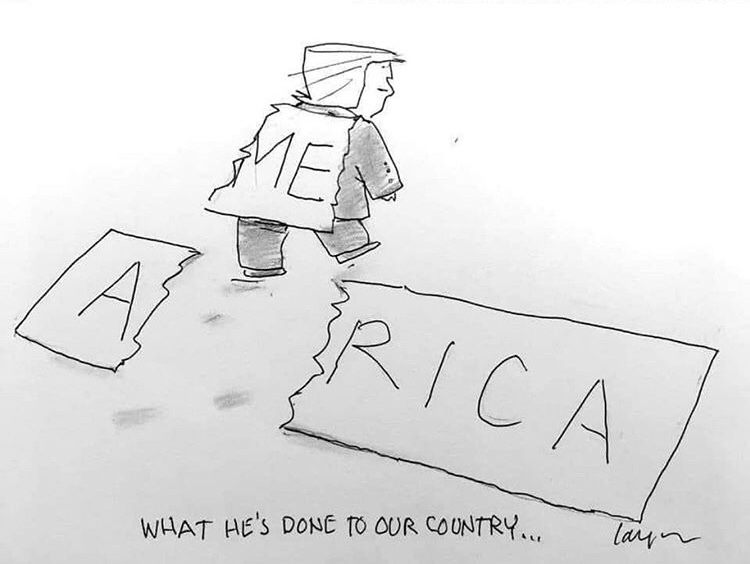
I knew when I posted it, it would be an incendiary post and anger some of my friends and family. Only a few replied with comments disputing what I had shared. They claimed it was all from liberal media sources. I pointed out that every time a conservative sees a piece of news they don’t like, they try to discredit it by saying its from the liberal media and is fake news. Surprisingly, more of my friends and family liked the post. A few left comments in support. I shared that post because I can no longer be silent about the atrocious behavior of Trump and what he’s done to our country. Qui tacet consentire videtur ubi loqui debuit ac potuit. Trump’s behavior everyday gets more and more unacceptable. I cannot in good conscience remain silent.

George F. Will, who for decades has been at the intellectual center of American conservatism, called for Americans, and especially Republicans, to vote out Trump in November. Will wrote, “The lesson of Donald Trump’s life is: There is no such thing as rock bottom. So, assume that the worst is yet to come.” He had harsh words for Trump, but he saved his true condemnation for the members of Congress who have enabled the President. He wrote in the Washington Post article, “In life’s unforgiving arithmetic, we are the sum of our choices. Congressional Republicans have made theirs for more than 1,200 days. We cannot know all the measures necessary to restore the nation’s domestic health and international standing, but we know the first step: Senate Republicans must be routed, as condign punishment for their Vichyite collaboration, leaving the Republican remnant to wonder: Was it sensible to sacrifice dignity, such as it ever was, and to shed principles, if convictions so easily jettisoned could be dignified as principles, for … what? Praying people should pray, and all others should hope: May I never crave anything as much as these people crave membership in the world’s most risible deliberative body.”

As if to prove Will’s point, Senate Republicans raced to defend Trump’s “law and order” speech on Monday night and his decision to clear out protesters from in front of the White House so that he could stroll across H Street to hold up a Bible in front of St. John’s Church. “You can characterize it the way you want, but obviously the President is free to go where he wants and to hold up a Bible if he wants,” Texas Sen. John Cornyn, the second-ranking Republican in the chamber, told CNN.

He mocked all Christians with his Monday night’s stunt. But, of course, sacredness has never been a concern of Trump’s. He didn’t open the Bible he was brandishing for the cameras, because he had no use for its text. He didn’t go inside the church he was using as a backdrop, because he had no interest in a sermon. To Trump, the Bible and the church are not symbols of faith; they are weapons of culture war. And to many of his Christian supporters watching at home, the pandering wasn’t an act of inauthenticity; it was a sign of allegiance—and shared dominance. And that, my friends, is the saddest thing of all: the fact that their pro-life beliefs, hatred of Democrats, and the notions of Christian nationalism are used to justify everything that Trump says and does. It’s not only sad, but it’s also frightening and disgusting. If people truly want to make America great again, then they must vote Trump and his lapdogs out of office.


Interesting Times

Sometimes, life is boring, but that’s ok. There is an English expression “May you live in interesting times,” which purports to be a translation of a traditional Chinese curse. Despite being so common in English as the “Chinese curse, the saying is apocryphal, and no actual Chinese source has ever been produced. The most likely connection to Chinese culture may be deduced from analysis of the late-19th-century speeches of the British statesman Joseph Chamberlain, probably erroneously transmitted and revised through his son Austen Chamberlain.


It seems to me that a quarantine during a world-wide pandemic is a bit of both. Being at home more than usual, is in fact often boring. There is only so much Netflix, Amazon Prime Video, and Star Trek reruns a person can watch. Yet, this pandemic can be considered interesting times. It is most certainly an event of historical proportions, and I suspect, among other things, this pandemic will cause Donald Trump to go down in history as the most self-centered, imbecilic, and ineffectual president in the history of the United States.


Sadly, James Buchanan, who was probably America’s first gay president, will continue to be the worst for his ineptitude in preventing the Civil War, but Donald Trump still has at least eight more months in office to beat Buchanan out of his spot. Trump will never make it to the list of best presidents, not even close, but he likes to be the most in everything, so he may just decide he wants to go down as the worst president. Fat chance he’d ever consider himself anything but the best, but he sure does seem to be working hard to be the worst.


I also don’t think any revisionist historian will look back and try to reassess Trump as being better than he was portrayed by contemporary historians, who mostly show their dismay when assessing Trump’s presidency. He will not be like Herbert Hoover, who was reviled and utterly defeated in his quest for re-election, yet in the years since Hoover was president, historians have reassessed his tenure in office. What made Hoover so ineffectual during the Great Depression was that he lost the confidence of the people and could not gain it back. With a few exceptions, Hoover did not want the federal government involved in relief efforts; however, many of his policies were also tried by FDR. Roosevelt was never able to bring the United States out of the Depression without involving the country in World War II. It was the industrial-military complex created during the war effort and the fact that most of the unemployed men were drafted into the military that brought the end of the Great Depression. The war eliminated unemployment and rebuilt the economy on a war footing. FDR was seen as a hero, while Hoover was seen as a failure until recently.


In my opinion, Trump has done nothing redeeming in his presidency, and I don’t believe he can turn it around before the election. Numerous investigations, an impeachment (that he was saved from conviction because the Republicans in the Senate refused to have a real impeachment trial), an adversarial relationship with the press, narcissism, thousands of lies, total disregard for the rule of law, etc. will go down in history. Yes, there will be some historians on the right who might try to defend him, but history is supposed to be unbiased. And, I believe history will judge him very harshly and with few if any redeeming qualities. He quite possibly is not only doing damage to his reputation but is also damaging the Republican Party as a whole. Republicans will have to reassess their moral standing and take a long hard look at the depths the party has dragged down the Grand Old Party. Hopefully after the November election, it won’t be so grand anymore.


So yes, sitting at home can be boring, but no one can deny that we are living in historic and interesting times. By the way, the nearest related Chinese expression to the “curse” quoted abovetranslates as “Better to be a dog in times of tranquility than a human in times of chaos.” For some of us, our homes are tranquil places, but humanity is definitely in chaos.


Voting

I don’t often post about politics on my blog. There are just too many opinions about politics, and also, there is some internet troll out there who keeps saying nasty things about my political posts and my beliefs in a more democratic society. Whoever it may be, it may not be just one person. The message is almost always the same; he or she waits about two weeks after a political post to comment. This is a good thing; I have my comments set so that comments on posts over two weeks old must be approved by me. So, I just don’t approve them and mark them as spam. Anyway, this post is about something else that has been bothering me lately.

Quite frankly, I just don’t understand the Republican Party. They just baffle me. Most claim to be evangelical Christians, but they are the least Christ-like people in America. They follow absolutely none of Jesus’s teachings. Then there is the fact that they often say America is a democracy (it’s actually a Republic, you’d think with a name like Republican they’d embrace that), yet they work the hardest to make the United States as undemocratic as possible. Their latest scheme of opposing mail-in voting really confounds me. Trump and his Republican allies are launching an aggressive strategy to fight what many of the administration’s own health officials view as one of the most effective ways to make voting safer amid the deadly spread of COVID-19: the expanded use of mail-in ballots.

In this current voting cycle, Republicans are fighting tooth and nail to stop voting by mail. Why? I did a bit of research to see why this was the case. Why make it harder to vote? First of all, it should come as no surprise to me since Republicans want as few people as possible to vote because they believe it helps them in elections. This is why they have created voter ID laws. Even though in those states, it is relatively easy to get a free government ID, it’s still difficult for some people to get to the courthouse and apply for that ID. The push to limit voting options is in keeping with Republicans’ decades-running campaign to impose restrictions that disproportionately affect people of color, the poor, and younger voters, under the banner of combating voter fraud — which is exceedingly rare. Democrats have more core constituencies among the nation’s disenfranchised, and both parties have long believed that easier voting measures will benefit Democrats.

Trump views the issue in a stark, partisan way: He complains that under Democratic plans for national expansion of early voting and voting by mail, “you’d never have a Republican elected in this country again.” I’m not convinced this is true; even stupid people will vote by mail. Trump has said he believes vote-by-mail has been abused to hurt Republicans, and he “will not stand for it,” though the hypocrite that he is, he says that mail ballots could help some older voters — an important part of his voting base. It was a slight change that came at the urging of his advisers. Trump was roundly ridiculed for suggesting that expanding vote-by-mail would hurt Republicans in November. The New York Times called it a “false claim,” declaring that “there is no evidence to back up the argument from the right that all-mail elections favor Democrats.” But the truth is a little more complicated.

The United States has had absentee ballots for many years. I voted absentee the whole time I lived in Mississippi because the State of Mississippi wouldn’t allow out-of-state students to become Mississippi citizens, and thus we could not register to vote in Mississippi. It was all to charge us exorbitant out-of-state tuition, so I had to vote in Alabama by absentee ballot. The current public health crisis brings new urgency to the battle, as Democrats and a few Republican state officials turn to expanded voting by mail as an important way to avoid the serious health hazard of crowded polling stations amid a pandemic. In a pre-coronavirus world, Republicans found that the threat of voter fraud and the need for tighter voter restrictions were popular messages with segments of their base. If there was a chance that the political equation might change with the pandemic, Trump and his cronies have not seemed concerned. A lot of Alabamians vote by absentee ballot, yet Republicans control every statewide political office.

There are basically three categories of vote-by-mail in the US. The most restrictive level, found in seven states, including Alabama, is traditional absentee balloting, where voters have to give a reason why they can’t vote in person. Next is no-excuse absentee, where anyone can vote by mail but must request a ballot. About half of states have a version of that. Then there’s universal vote-by-mail, or “vote at home,” a system now used in five states—Colorado, Hawaii, Oregon, Utah, and Washington—plus many counties in California. New York just joined this group, at least for the primary. In this third system, the government automatically mails a ballot to every registered voter, and voters have about two weeks to mail the ballot back, or they can drop it off in person by election day.

Perhaps wary of the politics of taking an absolutist position amid the pandemic, and aware that absentee ballots can also be a preferred form of voting for some of Trump’s supporters (my mother being one of them), his advisers have pushed him to soften his position. After all, state’s rights have for the past 30 years or more been a hallmark of Republican ideology, and voting is the purview of the states, not the federal government. Republicans are highly focused on stopping Democrats from loosening absentee voting restrictions, which they have portrayed as a Democratic plot to inflate voting tallies.

Democrats and voting rights groups have filed lawsuits seeking to expand mail and absentee voting options and pushed for an extra $2 billion to help states adjust their election systems. National Republicans are fighting those efforts, while Trump doubled down on claims, without any evidence, that mail-in voting is vulnerable to fraud and that it helps Democrats. The studies done on mail-in-voting does not show this to be true. It merely shows that more people vote when it is easier to cast a ballot and does not universally favor one party over the other. It just shows that Trump is scared of the masses, and afraid they will vote him out of office, which I fervently hope they do.

While Trump and his cronies fight to prevent expansion of absentee ballots, nothing illustrates the mixed-up and hypocritical politics of the opposition to vote-by-mail better than the world’s most famous absentee voter declaring the practice corrupt. “Mail ballots are a very dangerous thing for this country, because they’re cheaters,” Trump told reporters in early April, a few weeks after casting an absentee ballot in Florida’s primary. “They’re fraudulent in many cases.” If this is the case, why did he vote absentee? Did he commit fraud by doing so? He’s broken so many laws and told so many lies, I have lost count.

The only thing we really know about voting this year is that absentee ballots are going to increase dramatically. Maybe making that easier would benefit Democrats, who live in densely populated urban areas where viral transmission is more likely. Or maybe it would benefit Republicans, who are older in general and so have more to fear of getting infected. There’s no way to know—which makes treating the question as one of partisan advantage thoroughly insane. Instead of focusing on which party might gain an edge, legislators and election officials would do well to spend their energy on what’s safest for voters and poll workers. It’s better to be remembered for keeping citizens safe than for forcing voters to choose between their health and the right to vote. Yet, we know, Trump and his ilk do not care about the health and well-being of the citizens of the United States. If they did, they wouldn’t be opening states back up to boost the economy. They care more about money lining their pockets than they do about the health of the average American.

Sorry this is so long. I guess I had a lot to say.


Laughter in an Age of Pandemics

This is an article by Michael A. Genovese, a Director for the Institute for Leadership Studies in the Loyola Marymount University (Los Angeles, CA) that I wanted to share with you.

In the 1941 movie classic Sullivan’s Travels, successful movie director John L. Sullivan, played by Joel McCrea, laments the fact that in the midst of the misery caused by the Depression and War, he is making frivolous films such as Ants In Your Pants, 1939. Sullivan rebels. He decides to pose as an average citizen and go out among the people to see what they are like, what they want, and how he can be of service to humanity. After a series of troubles along the way, Sullivan happens upon the sound of laughter. He searches for the source and finds a group of down and out men hysterically laughing at a silly cartoon. Eureka! Sullivan realizes the error of his ways. The people don’t want serious, ponderous social criticism, they want to laugh, escape, lose themselves for just a few moments, forget about the troubles they face and have a good time. The movie’s point is driven home by Sullivan in the final lines of the film: “There’s a lot to be said for making people laugh. Did you know that’s all some people have? It isn’t much, but it’s better than nothing in this cockeyed caravan.”

During World War II, the commissioner of baseball, Judge Kenesaw Mountain Landis, sent President Franklin D. Roosevelt a letter offering to cancel the baseball season if the President so wished. Roosevelt, in a January 15, 1942 letter, told the commissioner that baseball must go on. The people needed it in the midst of the troubles of the war. Baseball brought joy to millions of anxious Americans. The game had to go on.

When things go from bad to worse, we have essentially two choices: let it defeat us or rage against the madness and laugh. Laughter is good medicine for virtually anything that ails us. And in this age of pandemics, where social distancing removes the tactile from our daily lives, and forces us to hibernate in isolation, we social animals hunger for the embrace of others. Stripped of the direct contact with others, we search to fill the void. Laughter helps. True, things aren’t very funny just now, but life remains ironic, silly, discombobulated, and downright hysterical – if you wish to see things that way. And if you do, it will help see you through this insanity. In a world where the Trump Covfefe Panic Index has exploded off the charts, we all need distractions from the misery that surrounds us. And speaking of distractions, I find myself suffering from Kardashian Withdrawal Syndrome. My social grounding has been torn out from under me.

As our politicians inadvertently spread fear and anxiety, we search for security and hope. There was a time when FDR could remind us that the only thing, we had to fear was fear itself. But today, watching Donald Trump bumble and fumble his way through a press briefing on the coronavirus, we are left dumbfounded and with a feeling of “Oh Dear Lord, all is lost if this guy is in charge.” Yes, we get the occasional chuckle, as when Dr. Fauci stands behind as the daily press briefing while the President is speaking, shakes his head, looks down at this feet and invites us to imagine the thought bubble over his head that reads “What the [bleep] is wrong with this moron?” But that is little consolation. Trump, who is wrapped tighter than an airport sandwich, actually inspires fear and anxiety every time he opens his mouth. His credibility has disappeared faster than cupcakes at a pot party, and as each member of Team Trump – crammed together in a very non-socially distanced way – goes up to the microphone, bows and makes the ritual “You are doing a wonderful job, Dear Leader” before delivering the bad news about a pandemic out of control, we cringe and think, “Life under Trump is like running through hell wearing a gasoline bathing suit.” Trump’s disappointing response to the coronavirus has been as welcome as an ingrown toenail. Our president who used to say “I alone can fix it” has been revealed as a fraud. He does however have the Midas Touch… everything he touches turns to mufflers.

This president may be a joke, but it is no laughing matter. In this, Marx was right. Of course, I refer to Groucho Marx, who said that the problem with political jokes is that they keep getting elected. Can President Trump lead us out of this crisis? That’s about as likely as Mike Pence marrying Cardi B. And while the President says that he is doing a tremendous job (and that is why I do not let my students grade their own exams), and that he would give himself an “A” grade for his handling of the crisis, in reality the case for Trump handling this crisis well has fallen apart faster than a third-grade science project.

If President Trump cannot provide decisive leadership in this crisis, at least we can laugh, and at this time, laughing at and not with President Trump is a tiny bit comforting. Our hope is that governors and mayors can lead us through the crisis. President Trump is AWOL on this, and perhaps we are all the better for that (OK, we aren’t better off for that, but if he can’t lead the least he can do is get out of the way).

We are all struggling, and we all need the distractions that only absurdity can provide. If we take President Trump seriously, we are lost. And so our only option is to turn away from our president and turn to each other for comfort, solace, and hope. Social distancing makes that a bit harder, but we are a strong, resilient people. We have been through worse than this. So, laugh now and then; see the silly, the absurd and the comic in life. And remember, always remember, we are all in this together and we can get through this together. Reach out to your friends, your neighbors (at a safe distance, of course) and spread hope. It is better than despair.


Super Tuesday

As I went to bed last night, MSNBC was predicting that Biden would come out of the night on top of the delegate count. I hope I wake up this morning to find out that this prediction was correct. I could have voted for Pete Buttigieg, he was still on the Vermont ballot, and it was tempting, but I chose to vote for Joe Biden hoping that others would do the same and he would get some of the delegates from Vermont. I didn’t want Bernie Sanders to take them all.

This morning, I have a physical therapy appointment very early. I can’t remember if I mentioned this before, but as I was moving the last of my stuff out of my old apartment, I fell and hurt my back and shoulder. My back has mostly healed, but my shoulder is still giving me problems. Because I am right-handed and this is my right shoulder, by the end of each day, my shoulder is in a great deal of pain when I head to bed. I’m hoping my physical therapist can help me out with this problem. She is really good, and she’s done wonders when she’s worked on me before. We’ll see.

A Sad Night

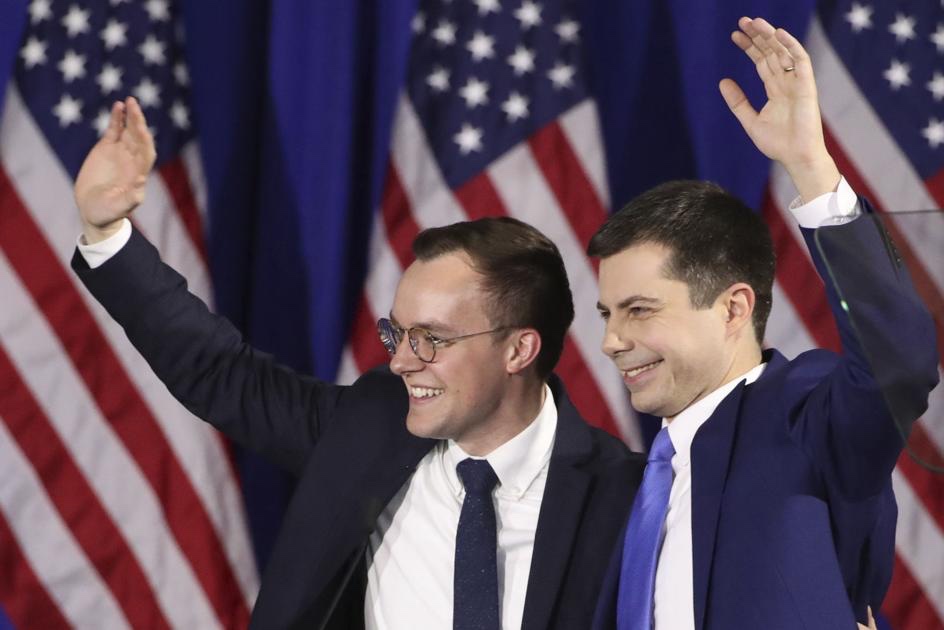
I haven’t often cried over politics. I was upset and angry when Hillary Clinton lost to Donald Trump, but I didn’t cry. The night Doug Jones defeated Roy Moore in the special election for the Senate in Alabama, I openly wept, but that night I wept for joy while watching the results from a hotel room in Chicago. Last night, I wept in sadness as Pete Buttigieg suspended his campaign for the Democratic nomination for President. I began to choke up when Pete’s husband Chasten choked up while introducing his husband, and tears rolled down my face as Pete said he was suspending his campaign. I truly believed in Pete’s message, and while I knew it was unlikely he’d get the nomination, I had hoped he’d stay in the race until after Tuesday when I could have cast my historic ballot for the first openly gay man to run for President from the Democratic Party. Pete made history with his campaign, and I pray that we will see more of him in the future. Pete and Chasten Buttigieg are an inspiration to me and many people out there.
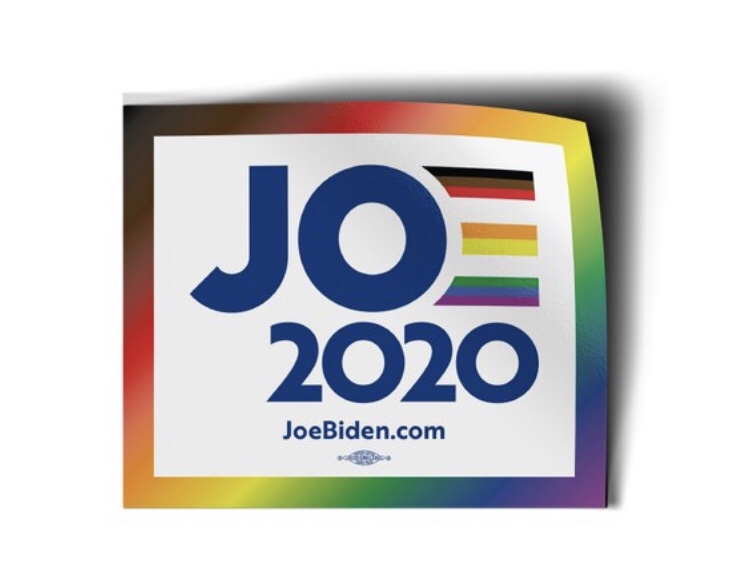
The only thing I can do now is put my support behind Joe Biden. Biden 2020!


Why Not Bernie

First of all, please forgive me for posting two political posts in a row, but politics has been on my mind lately.
I know a lot of people are major Bernie Sanders supporters. I am not one of them. Yes, he may be a senator from my adopted state of Vermont, but that doesn’t mean I have to like him. I was a bit more pro Bernie in the last election because quite honestly, I’ve never liked Hillary Clinton, and I believe that in 2016 Bernie could have beat Donald Trump. However, I don’t think Sanders can beaten Trump in 2020. Bernie will never get crossover votes this time around. He’s just too far left for most Americans.
That’s not the only reason I do not support Bernie. First, Bernie is an angry old man, and it just turns me off of him. Second, he’s done nothing for Vermont in the past six years or so because he’s done nothing but campaign for president. Third, the so-called “Bernie Bros” are no better than all those MAGA fools. Both groups will do anything for their candidate, including being disruptive and spreading lies about opponents. They are not nice people and are fanatics. Furthermore, like Trump, Bernie won’t compromise. It always has to only be his way.
As for Bernie being an LGBTQ ally, just look at the lengths one of his staffers (a gay man, I might add) went to slander Pete Buttigieg and his husband because of their homosexuality. He created a fake Twitter account to spread disgusting lies. Of course when he was caught, the Sanders campaign disassociated with him, but it’s apparent that the atmosphere for dirty and despicable politics is there and will be tolerated as long as it’s in secret. Bernie has turned a blind eye to his fanatical followers that act like thugs at opponent’s rallies. He does what will help him until it doesn’t anymore.
I may not like that Bernie is a Democratic Socialist, but that’s is because if he’s not a real Democrat, he should not be running as one. If he was a Democrat, he’d be listed as one in the Senate instead of as an Independent. Also, his socialist ideals will find it hard to be enacted in the United States. The word socialist is a misunderstood word in the US. Most Americans don’t know the difference among Democratic Socialists, socialists, or communists, and they aren’t going to learn between now and November.
I think support for Sanders is a major mistake. I don’t think those outside the USA can understand while we might like some of his policies, his politics and political strategies scare us. The US is becoming more egalitarian but it’s a slow process, and quite honestly, capitalism is a way of life in the United States and that isn’t likely to change anytime soon. We may get some income equality, but until poor and middle class Republicans figure out that their party is destroying them financially, it’s probably not going to be soon enough.
The United States has a lot of problems. It’s going to take a long time to undo Trump’s damage, but we can do it. However, we need a candidate who can not only unite the Democratic Party but can also appeal to a wide constituency.

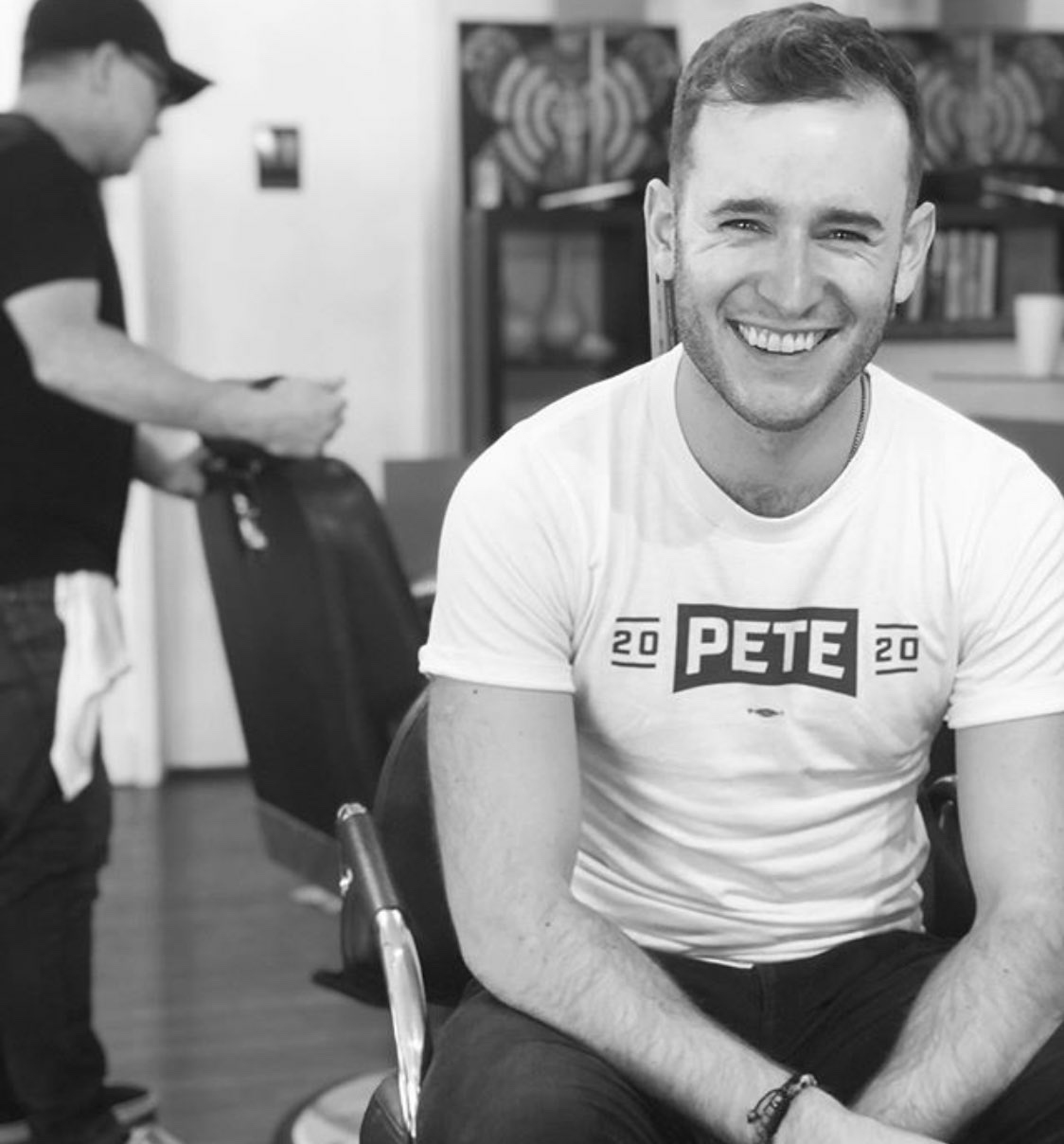
Pete 2020

Of those running for president, I believe Pete Buttigieg is our best hope. I say “hope” because I don’t think he’ll get the nomination. I believe he is by far the most eloquent and intelligent person running for president. I like Pete a lot. It’s not just because he’s gay. I actually enjoy hearing him talk about issues. I don’t often say that about politicians. I find most of them hard to listen to, but not Pete. I think he’d make a great president. I think he has great ideas. He’s also a Christian, a veteran, highly educated, and an all around nice guy.
Originally, I thought Biden was our best chance to win in November, but he hasn’t performed as I expected. Bloomberg, who I thought could beat Trump because he could outspend him, has been so beaten down in the debates that I no longer believe he is viable. As for Warren, I don’t believe she can be trusted, and she comes across as a not very nice person to me. Klobuchar seems nice, but she’s not standing out at all, and when she does, it’s usually not flattering. That leaves Sanders (I’m not even going to talk about Steyer). To be honest, Sanders scares me. First of all, he’s not a Democrat, he’s a Democratic Socialist or an Independent at best. I may live in Vermont, but I’m not a Bernie supporter. He’s just too radical for me, and I think he’d be too radical for most of the country, which means four more years of fascism. American can’t take more of what we’ve had since January 2017. We can’t take more of the stupidity; we can’t take more of the corruption; and we we can’t take being the laughingstock of other world leaders.
As for last night’s debate in South Carolina, it seemed to me that Biden and Buttigieg did the best. The crowd was obviously behind them. At the same time, the crowd seemed to turn on Sanders. The rest were just there. None of them changed my mind. I still think that if we can’t have Buttigieg, we need Biden. If Biden does poorly in South Carolina, then I think it’s the end for him. He will have lost too much steam. I would hope that would boost Buttigieg, and it would basically be a race between Buttigieg and Sanders. Can Buttigieg beat Trump? I hope so. Can Sanders beat Trump? I don’t think so.