Supposedly, there is a “Chinese Curse” that says: May you live in interesting times. While seemingly a blessing, the expression is normally said ironically. The idea is that “uninteresting times” are times of peace and tranquility, and “interesting times” are often periods of great turmoil. There’s one problem with this “curse,” it’s not Chinese. No equivalent saying exists in the Chinese lexicon.
The “curse” is most likely a British invention and is really from the speeches of the British politician Joseph Chamberlain. Chamberlain was the father of Austen Chamberlain, who received the Nobel Peace Prize for his work to reconcile the relationship between Germany and France after World War 1. By a different marriage, Chamberlain was also the father of British Prime Minister Neville Chamberlain, who so erroneously declared after the Munich Agreement in 1938, “I believe it is peace for our time.”
Austen and Neville lived disastrously in “interesting times.” While neither man is seen in history as a great leader, Austen probably delayed World War II by more than a decade with his negotiation of the Dawes Pact, and some historians are even reassessing Neville’s reputation. Neville Chamberlain no doubt knew he was not preventing a war with Germany, but knew the British were woefully unprepared for a war with Germany, and he needed to buy time Britain to arm for the war to come.
So, the fact that this week is not very interesting is, I guess, not a bad thing. I have something exciting happening on Friday, but I don’t want to “jinx” it. I’m not going to discuss it just yet, just know that it could result in some changes in my life.
“The most basic and powerful way to connect to another person is to listen. Just listen. Perhaps the most important thing we ever give each other is our attention…. A loving silence often has far more power to heal and to connect than the most well-intentioned words.”
—Rachel Naomi Remen
Rachel Naomi Remen is a physician and educator. She was trained as a pediatrician but gained fame as an author and teacher of alternative medicine in the form of integrative medicine. In the quote above, she is talking about using empathy and listening to help heal a person. Isn’t that what therapists often do? They don’t tell their patients what they should do, but they listen to the patient and ask the right questions to guide them to realize for themselves what they should do. At least, that’s how I see therapy.
As some of you know, I am an oral historian. I rarely conduct interviews anymore because the primary responsibilities of my job have changed. However, I am often asked to teach others how to conduct oral histories. There are technical aspects, such as recording and digitally archiving, that can be taught to anyone. I teach the protocols of good manners when scheduling and conducting interviews. These are all important lessons that are necessary for conducting a good oral history. However, conducting a great oral history can’t always be taught. The reason is that a person must learn to listen. They need to listen to what the interviewee says, how the interviewee says it, the inflections of the interviewee’s voice, and the body language of the interviewee. This can be achieved through learning to be empathetic and listening with your “third ear.”
The “third ear,” a concept introduced by psychoanalyst Theodor Reik, refers to the practice of listening for the deeper layers of meaning in order to glean what has not been said outright. It means perceiving the emotional underpinnings conveyed when someone is speaking to you. You can’t listen with your third ear if you are speaking and not listening. As Remen said, “A loving silence often has far more power to heal and to connect than the most well-intentioned words.” You might not immediately see why I think this is great advice for an oral historian. After all, it’s used in psychoanalysis, but part of being an oral historian is using the same techniques as a therapist. You have to listen not only to what is spoken but also to what is not spoken. Notice I did not say “what is said” because we can speak in ways other than vocal words.
One of the things we learned, while I was at my retreat to Easton Mountain, was ecstatic dance. Now, I am not a great dancer, but that’s not the point of ecstatic dance. Ecstatic dance is moving in a way your body tells you to move and remove your inhibitions. During ecstatic dance, we were told to not speak vocally but only speak through body language. I guess you can think of it as a form of interpretive dance. You “listen” to the other person’s body language, facial expressions, etc., to understand what they are saying. Now, I will not be teaching ecstatic dance as a way to learn to listen to your third ear, but it would not be the worst way to teach it.
The most important thing to listening with your third ear is to have empathy. Oral histories are done for two major reasons that are intertwined. First, the oral historian is recording history from the mouths of those who lived it, and second, it is to let the interviewee tell their story. A lot of times, we just need to let our voices be heard, though we may not always know it. The oral historian’s job is to bring out that story in a person. Oral histories can tell us so much about the person and the history that person lived. The emotions and reactions, or lack thereof, can speak as much as the spoken word. Listening with the third ear allows you to read a person and to take clues from their body language and voice that will tell you: Should I continue with this line of questioning? Should I stop this line of questioning? How can I get more of the story? When have you gone too far? Etc. In oral histories, you have to know when to hold back, and that comes from listening with your third ear. If you push too hard at the wrong time, then the interviewee is likely to shut down, and it won’t be you who is silent anymore. It will be the interviewee. By not practicing empathy, you can ruin an interview.
These are lessons that we can develop in our everyday lives. People who have prejudices do not have empathy. They cannot understand why someone is different from them. They only care that the person falls in line with their beliefs. I often say that the central tenet of Christianity is unconditional love. Those who ignore the command to love do so because they have no empathy for others. They only have hatred. Empathy is so important in our lives. It allows the world to be a better place. So, I challenge you to be more empathetic in your life: to “give each other is our attention” and to offer “a loving silence.” Empathy can help cure the world of many of the ills that humanity often brings with their prejudices.
I could probably write a whole book on the importance of listening, but I’ll stop my ramblings at this point and just say, “Listen.”
The need for connection and community is primal, as fundamental as the need for air, water, and food.
—Dean Ornish
I’m leaving on my retreat today. I thought this quote was somewhat apropos for the type of retreat I am going to. The retreat is designed to disconnect from social norms and reconnect with nature. We will be engaging in workshops like art, body movement, and photography, as well as rituals, trance dance, and fire ceremony. I really need this getaway, and I am going to make the most of it.
“I have learned over the years that the nicest thing I can do is to just say to myself, “Good Morning Darling, I love you; we’re going to have a really great day today.”
― Louise Hay
“It’s time to start living the life you’ve imagined.”
― Henry James
“I hope everyone that is reading this is having a really good day. And if you are not, just know that in every new minute that passes, you have an opportunity to change that.”
― Gillian Anderson
I am so glad that it’s finally Friday. Even though this was a short week because of the Monday holiday, it felt like a long week. Yesterday, I kept thinking it was Wednesday, not Thursday, and the day before Tuesday, not Wednesday. So, I did not write a quote post yesterday. I’m going to make up for it today with three quotes.
While I have never followed Louis Hay’s advice above, I’m going to try to do that each morning. Thinking positively doesn’t always work because of brain chemistry or bad things that happen during the day. However, I think we should at least start out with a positive thought for the day. I love the quote by Henry James because it reinforces the idea of the power of positive thinking. If we do our best to live the life we imagine for ourselves, then we might just achieve it.
I just have the feeling today is going to be a good day. At least, that is my hope. I’m working from home today, as I do on most Fridays, and that makes for a good start to the day. I’m also excited about next week. Monday through Wednesday are probably not going to be great days. I will be working in the office, but on Thursday, I leave for my weekend retreat. I had originally planned to leave on Friday, but there was an option to add an extra day, so I did. I’m sure I will be nervous. I’ve never spent that much time with just gay men, but I’m looking forward to it. I’ve always been awkward around men, but I’m going to try to change that.
So, to quote Gillian Anderson, “I hope everyone that is reading this is having a really good day. And if you are not, just know that in every new minute that passes, you have an opportunity to change that.”
Mwah! 😘 Kisses ’til Sunday. (Don’t worry, my usual Moment of Zen will still be posted tomorrow along with the usual Pics of the Day.)
“When a man is denied the right to live the life he believes in, he has no choice but to become an outlaw.”
– Nelson Mandela
Yesterday marked one year since the school shooting in Uvalde, Texas. A gunman walked into a school and killed nineteen children and two adults in the deadliest shooting ever at a Texas public school. It made me think about the priorities in the United States. As far as I know, lawmakers have not passed a single law to try and curb access to the weapons used in these shootings. Though Vermont might with several bills currently moving through the legislature, that is if our Republican governor doesn’t veto them. Even if Vermont does the sensible thing, lawmakers in several states have passed, laws to curb the rights of LGBTQ+ people, and the MAGAts are harassing employees at stores like Target for selling Pride merchandise during the month of June, and it’s not even June yet.
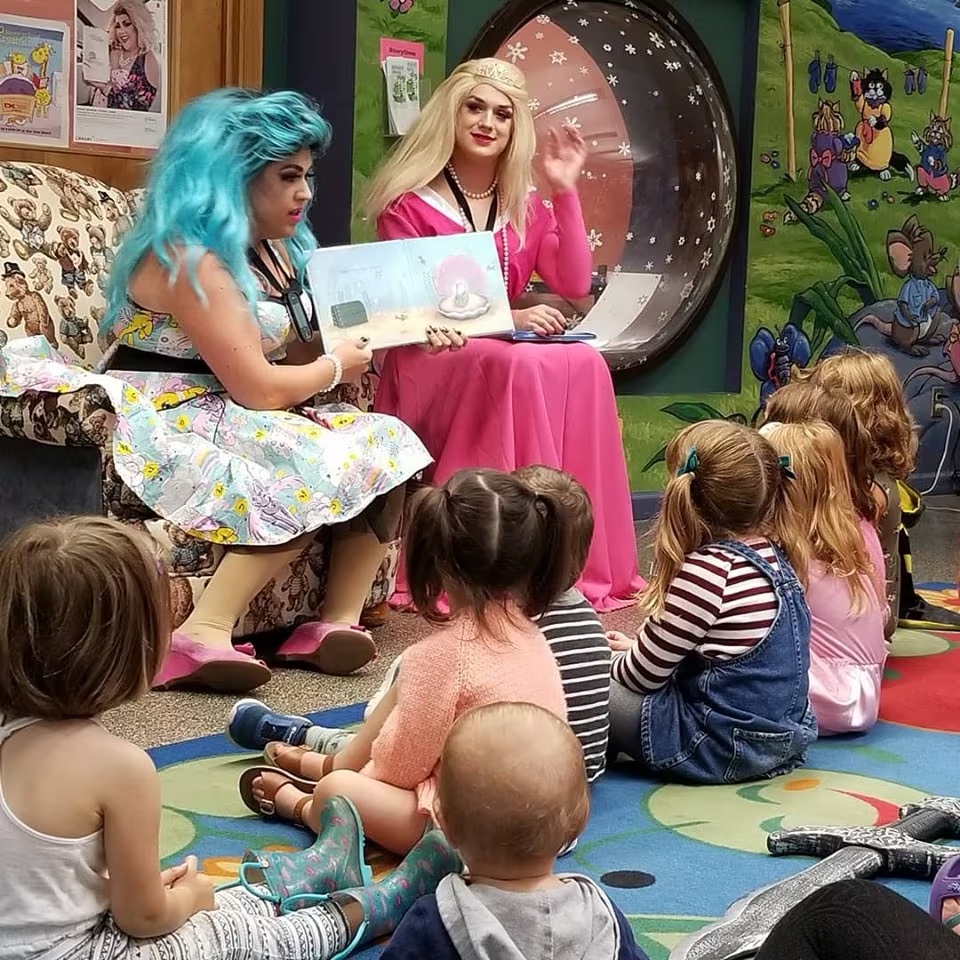
We must ask ourselves why some politicians are not afraid of a mass shooting incident in our schools, yet non-white and LGBTQ+ seem to scare them to death. Where are their priorities? Instead of having sensible gun laws like all other developed nations, which have significantly fewer mass shootings, they focus their fear on taking away rights and trying to shame “woke” individuals. They fear teachers mentioning anything LGBTQ+ related in the classroom. These right-wing legislatures are defunding diversity, equity, and inclusion (DEI) programs because the thought of DEI policies scares them to death. They’ve banned drag queens from having Drag Queen Story Hour in public libraries or even performing in public. The greatest danger for these politicians is not worrying about students getting killed in their classrooms but that some may be transgender. They deny these kids healthcare because they don’t conform to these bigots’ ideas of heterosexual, Christian, and white racial superiority. They are scared to death that they will lose even the smallest amount of power and control over people.
When Nelson Mandela said, “When a man is denied the right to live the life he believes in, he has no choice but to become an outlaw,” he was talking about apartheid in South Africa. But if a person is denied the right to dress in a way that doesn’t conform to “MAGA values” or even acknowledge diversity, they are making large sections of the LGBTQ+ population outlaws. Sadly, with the current ultra-conservative majority on the U.S. Supreme Court, any lawsuits against these laws will probably stand, even if they violate the First Amendment, the most fundamental principle of freedom in the United States.
Let’s face it, if you are more afraid of what this might do to a kid in a library…
Yesterday’s the past, tomorrow’s the future, but today is a gift. That’s why it’s called the present.
Bil Keane
I was staying with my granny last night to give my mother a break, and I had limited internet access at her house. Therefore, I was having trouble deciding on a topic today, so a quote will have to suffice.
By the way, I’ve begun reading Go Set a Watchman by Harper Lee that came out this week. I can’t wait to finish it so I can review it. Is anyone else reading it?
I have come to believe that a great teacher is a great artist and that there are as few as there are any other great artists. Teaching might even be the greatest of the arts since the medium is the human mind and spirit. John Steinbeck

















 The Closet Professor