Category Archives: Uncategorized

No More LGBT?

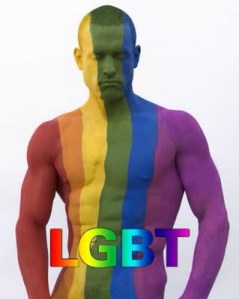
Could “LGBT” one day become “GSD”? A London-based advocacy group certainly hopes so.

Pink Therapy director Dominic Davies and fellow therapist Pamela Gawler-Wright suggested GSD, or “Gender and Sexual Diversities,” as a more inclusive community term in a new video posted on the group’s Facebook page.

In the clip, Davies noted that the term LGBT (lesbian, gay, bisexual and transgender) still excluded “a whole batch of people who didn’t feel able to go to mainstream counseling organizations and also wouldn’t necessarily be welcome at LGBT counseling organizations,” including asexual people and those in otherwise non-traditional relationships, such as swingers.

Added Gawler-Wright: “Now we’re allowing more of a spectrum…people need wider language, people need better language to have that conversation … We exist at this time in a different way of thinking collectively and inclusively.”

Officials on the group’s Facebook page echoed those sentiments. “The point we’re trying to make is not that our community shouldn’t be called LGBT, it’ that actually our community is SO much BIGGER than simply LGBT,” they noted.

I don’t know about you, but I don’t think that Gender and Sexual Diversities describes me.  I identify as gay, not queer or any other term. I am gay.  For most of the word gay’s life in English, its primary meaning was “joyful”, “carefree”, “bright and showy”, and the word was very commonly used with this meaning in speech and literature. I also think that describes me as well as the modern interpretation which of course means a homosexual man.

What do you think?  Should we change ‘LGBT’ to ‘GSD’?

O

O

by Mary Sidney Herbert

Oh, what a lantern, what a lamp of light

Is thy pure word to me

To clear my paths and guide my goings right!
I swore and swear again,
I of the statutes will observer be,
Thou justly dost ordain.
The heavy weights of grief oppress me sore:
Lord, raise me by the word,
As thou to me didst promise heretofore.
And this unforced praise
I for an off’ring bring, accept, O Lord,
And show to me thy ways.
What if my life lie naked in my hand,
To every chance exposed!
Should I forget what thou dost me command?
No, no, I will not stray
From thy edicts though round about enclosed
With snares the wicked lay.
Thy testimonies as mine heritage,
I have retained still:
And unto them my heart’s delight engage,
My heart which still doth bend,
And only bend to do what thou dost will,
And do it to the end.


Mary Sidney Herbert, the Countess of Pembroke, was a hot-tempered redhead, brilliant, multi-talented, strong, dynamic, passionate, generous, and probably a bit arrogant. She was born three years before Shakespeare and died five years after.
For two decades, she developed and led the most important literary circle in England’s history, Wilton Circle, taking the mantle from her mentor, her brother Philip Sidney, who died in the Queen’s Protestant war. Her work, the work of her brother, and the work of many of the writers in her circle were used as sources for the Shakespearean plays.
She was devoted to literature and to creating great works in the English language. This was a brave mission because English wasn’t considered a very useful language; there were great works in Italian, French, Latin, and Greek, but few of note in English. Nor was English spoken anywhere else in the world—rarely even in Scotland, Wales, or Ireland.
Mary Sidney had a lifelong passion and commitment to her literary goal. In her versification of 127 psalms, she used 126 different verse forms. Pushing the boundaries of what was acceptable for women, she was the first woman to publish a play in English (a closet drama), and the first woman to publish original dramatic verse. She was also the first woman who did not apologize for publishing her work.
She was trained in medicine and had her own alchemy laboratory where Adrian Gilbert (Sir Walter Raleigh’s half brother) was her assistant. Recipes she developed are still extant, including a recipe for disappearing ink. Mary had an active interest in spiritual magic and was close with the “magicians” John Dee and probably Giordano Bruno (we know her brother was very close with him). Adrian Gilbert designed her garden at Wilton House in a “heavily geometric and symbolic nature” in which it was possible to read “both divine and moral remembrances,” a “personal iconographic program based on symbolic geometry.”
She was fluent in Latin, French, and Italian, and it is believed she knew some Welsh, Spanish, and possibly Greek. She was one of the most educated women in England, comparable only to Queen Elizabeth. She was politically involved and outspoken, although she disliked the fawning and superficiality of the royal court.
Mary was an energetic woman. She held large parties. She sponsored an acting troupe. She traveled, rode horses, hunted, hawked. She bowled (lawn bowling), danced, sang, was famous for her needlework. Mary participated in theatrical productions at the royal court and developed Ludlow Castle into a cultural center that included just about every known theatrical troupe in the country. She played the lute and the virginals, and—if we can believe a German report—the violin. This German report also describes a musical code she invented with which she would send letters to friends in the form of musical compositions, each measure representing a letter of the alphabet.

Seth MacFarlane and the Oscars

He sang, danced, made some insults and managed to be self-deprecating in his 15-minute-plus intro at the 85th Academy Awards.  Seth MacFarlane was arguably a “risky” choice as host for the sometimes stiff Academy. “What would he do?” many thought before going into the 2013 Oscars. 

I wondered if MacFarlane would be too crass for the Oscars, but I think he did a classy job. He looked fantastic in a classic tuxedo.  I’ve always found MacFarlane to be clean-cut and handsome.  The Oscars even poked fun at whether or not MacFarlane would be a good host when a video screen emerged onstage, featuring actor William Shatner as Captain James T. Kirk of “Star Trek,” who proceeded to “look into the future” to forecast that MacFarlane would be dubbed the “worst Oscars host ever.”
“Your jokes are tasteless and inappropriate, and everyone ends up hating you,” said Shatner, noting, “I’m here to stop you from doing what you’re about to do.”
That prompted MacFarlane to show off his song and dance skills, performing “The Way You Look Tonight,” with Charlize Theron and “Magic Mike” star Channing Tatum. Daniel Radcliffe and Joseph Gordon-Levitt then joined MacFarlane for a version of “High Hopes.”
MacFarlane kept the jokes going throughout the night, at one point joking that the Oscars ceremony, which is held on Sunday, is like church, “but only with with more people praying.”

With that being said, I wanted to point out how much of a LGBT ally MacFarlane is.  MacFarlane came to support gay rights and gay marriage after a family member wondered aloud whether his gay cousin’s homosexuality could be “cured“. The incident angered MacFarlane, who said in a 2008 interview in The Advocate, that such a statement “was fucking horrifying to hear from somebody that you love”. He credits his parents for raising him to be a logical person.

MacFarlane is passionate about his support for gay rights. He said it is “infuriating and idiotic” that two gay partners “have to go through this fucking dog and pony act when they stop at a hotel and the guy behind the counter says, ‘You want one room or two?'”. He went on to say, “I’m incredibly passionate about my support for the gay community and what they’re dealing with at this current point in time”. MacFarlane continued, “Why is it that Johnny Spaghetti Stain in fucking Georgia can knock a woman up, legally be married to her, and then beat the shit out of her, but these two intelligent, sophisticated writers who have been together for 20 years can’t get married?”

MacFarlane, in recognition of “his active, passionate commitment to Humanist values, and his fearless support of equal marriage rights and other social justice issues”, was named the Harvard Humanist of the Year in 2011.

So did you watch the Oscars?  How do you think MacFarlane did as host?

Moment of Zen: Nerds

A nice cute nerd in a Superman outfit…now that is a moment of Zen.

Friday’s Advice


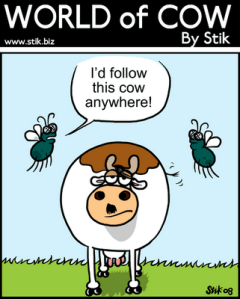
You have two cows…

Each time I teach about pre-WWII political “-isms” I always thinks of the “you have two cows” jokes that I remember from high school.  And while it’s easy to find the text of the analogies, I can’t find the cartoon that goes with it.  I remember a handout with 6-8 panels on it with illustrations of the “you have two cows” jokes. I would love to find the cartoon to use as an example in class, but I’ve had no such luck finding it.  I did come across a poster, but I refuse to pay $16.95 for a poster that won’t hang up on the concrete block walls of my classroom and will probably get torn by some joker of a student who can’t understand boundaries.  Sorry, I got off subject.

If you have no idea what I am talking about, here is a little about the “you have two cows” joke.


“You have two cows” jokes originated as a parody of the typical examples used in introductory-level economics course material. They featured a farmer in a moneyless society who uses the cattle he owns to trade with his neighbors. A typical example is: “You have two cows; you want chickens; you set out to find another farmer who has chickens and wants a cow”. These examples were meant to show the limitations of the barter system, leading to the eventual introduction of currency and money.

The “two cows” parodies, however, place the cow-owner in a full-fledged economic system where cows are used as a metaphor for all currencycapital, and property. The intent of these jokes is usually to point out flaws and absurdities in those systems, although non-political jokes have been derived from them.

Jokes of this type attracted the attention of a scholar in the USA as early as 1944. An article in The Modern Language Journal discusses the classical ones, such as:
  • Socialism: You have two cows. The government takes one and gives it to your neighbor.
  • Communism: You have two cows. You give them to the Government, and the Government then gives you some milk.
  • Fascism: You have two cows. You give them to the Government, and the Government then sells you some milk.
  • Capitalism: You have two cows. You sell one, buy a bull, and start a dairy.
  • Nazism: You have two cows. The Government shoots you and takes the cows.
  • New Dealism: You have two cows. The Government takes both, shoots one, buys milk from the other cow, then pours the milk down the drain.
While these are the classics, there are many more, so I will list some of my favorites:

SURREALISM
You have two giraffes.  The government requires you to take harmonica lessons.

Corporate Examples:

AN AMERICAN CORPORATION
You have two cows.  You sell one, and force the other to produce the milk of four cows. Later, you hire a consultant to analyze why the cow has dropped dead.

A FRENCH CORPORATION
You have two cows.  You go on strike, organize a riot, and block the roads, because you want three cows.

A JAPANESE CORPORATION
You have two cows. You redesign them so they are one-tenth the size of an ordinary cow and produce twenty times the milk. You then create a clever cow cartoon image called ‘Cowkimon’ and market it worldwide.

AN INDIAN CORPORATION
You have two cows.  You worship them. (((Bad joke, I know, but still kind of funny.)))

A BRITISH CORPORATION
You have two cows. Both are mad.

AN ITALIAN CORPORATION
You have two cows, but you don’t know where they are. You decide to have lunch. (((Fantastico! Posso prendere in prestito un cavatappi?)))

A SWISS CORPORATION
You have 5000 cows. None of them belong to you. You charge the owners for storing them.

Now Winter Nights Enlarge


Now Winter Nights Enlarge
by Thomas Campion

Now winter nights enlarge
    This number of their hours;
And clouds their storms discharge
    Upon the airy towers.
Let now the chimneys blaze
    And cups o’erflow with wine,
Let well-tuned words amaze
    With harmony divine.
Now yellow waxen lights 
    Shall wait on honey love
While youthful revels, masques, and courtly sights 
    Sleep’s leaden spells remove.

This time doth well dispense
    With lovers’ long discourse;
Much speech hath some defense,
    Though beauty no remorse.
All do not all things well:
    Some measures comely tread,
Some knotted riddles tell,
    Some poems smoothly read.
The summer hath his joys,
    And winter his delights;
Though love and all his pleasures are but toys
    They shorten tedious nights.


According to the biography on Luminarium.org, Thomas Campion (1567-1620) was skilled in law, certain medicines, poetry, writing masques, and even composing music (1); a marvel of a man to say the least. While many of his “poems” are written as such, a lot of them are more often than not a blend of songwriting with poetic form. The result is a piece that relies more on the musical qualities of words, rather than their descriptive forms. While it involves vague images, those images within the piece are meant to be in relation to a musical background.

This can leave distaste with many readers, as his poems appear simplistic and devoid of any emotional imagery. However, one must know that many of these poems such as “Now Winter Nights Enlarge” are written to be accompaniments to music and vice versa. Music will make his imagery much more praiseworthy and his poems will serve as excellent lyrics to a number of musical pieces.

Think of reading a song from start to finish and see how little the words mean without music playing. There should be a lack of emotional power that comes from listening to the words being sung while an instrument seals the creative gaps. Campion’s poetical work is ultimately the same and thus should be analyzed and viewed as more of a hybrid piece, rather than poetry by itself. One of Campion’s many pieces written in this style is “Now Winter Nights Enlarge.”

In the first few lines, Campion expands on his title: “Now winter nights enlarge/ The number of their hours; / And clouds their storms discharge / Upon the airy towers” (1-4). With the wintry season rolling in, Campion details how winter literally “enlarges” with the changes that take place: the nights increase in hour, and the clouds become large enough to envelop even the highest buildings in view, possibly even the “airy towers” of heaven.

In the next few lines, Campion calls for celebrating and good times in this weather: “Let now the chimneys blaze / And cups o’erflow with wine, / Let well-turned words amaze / With harmony divine.” (5-8). Patrons should not regard winter as a cold and bitter holiday, but instead, as a reason to warm up to the fireplace, spend time together, and enjoy each other’s company in divine peace.

The following lines continue this theme that winter is to be enjoyed: “Now yellow waxen lights / Shall wait on honey love / While youthful revels, masques, and courtly sights / Sleep’s leaden spells remove” (9-12). Love shall blossom, and entertainment will be enjoyed by all. Winter is thus a wonderful holiday, but unfortunately sleep removes the greatness with a “leaden spell” because it not only ends the day, but it also takes merry makers one more day away from winter and towards spring.

The lines that follow continue Campion’s discourse on winter: “This time doth well dispense / with lovers’ long discourse; / Much speech hath some defense, / Thought beauty no remorse” (13-16). Time fades quickly in winter, sped up by the “leaden sleep” in the previous lines, and especially when lovers are at length speaking. Although speech has “defense” or merit, beauty has no excuse and is just as deadly during the winter months as it is during the other seasons.

As Campion comes to an end in his discussion of winter, he mentions how: “All do not all things well; / Some measures comely tread, / Some knotted riddles tell, / Some poems smoothly read.” (17-20). Campion explains how despite some “things” doing well, others do not. Only “some” riddles tell and only “some” poems read well, a message perhaps implying that not everything is improved by winter.

Campion ends his piece with the final lines: “The summer hath his joys, / And winter his delights; / Though love and all his pleasures are but toys, / They shorten tedious nights” (21-24). Reminiscent of Campion’s previous discussions of beauty and lovers, these lines take a new turn. Despite all of the beauty of winter and the enjoyment that comes from merrymaking over the fire, Campion calls these mere “toys” of winter. This could be due to the fact that winter is but a season, and thus the effects that come from it are not permanent pleasures but only temporaries, to be replaced by the other seasons. They are not completely pointless however, because as Campion states: “They shorten tedious nights.”

Overall, this piece is simply about enjoying winter and all of what it brings. It is a quick and efficient tour of a winter night, mentioning lovers and emphasizing lengthy discussion “With harmony divine” (8). Unfortunately, it is truly only a brief glance, and its lack of vast and descriptive imagery can be irritable for a lot of readers (myself included). Ultimately though, the musical quality is there, and if read on a cold wintry night with some classical music playing, this piece could truly come alive.

Sent from my iPad


Champion of the Oppressed

Many of you may have heard that comic-book fans and retailers are outraged at Orson Scott Card’s involvement in a new digital-first ‘Adventures of Superman’ series.  If you are like me, I’ve just heard about it a few times on NPR, but I heard a story by Glen Weldon, a freelance writer and regular contributor to Monkey See, on NPR yesterday.  I payed attention, partly because I did not know that the anti-gay author was Orson Scott Card, who I was familiar with only through seeing his books in bookstores. I also paid attention because I am a fan of Superman.  I’m not one of those fans that reads all of the Superman comics, but one who has a healthy fantasy about how very attractive Superman is.  Superman has always been my favorite superhero and it really goes deeper than just the attractiveness of the actors who have played him in TV and movies.  Like Weldon said:
Superman is not just a superhero. He’s the superhero. He created the very concept of the superhero, and everything that’s touched on that concept for the past 75 years — we are talking vast swaths of popular culture — exists because of him. Regardless of how you feel about Superman and superheroes, you can’t deny the cultural impact the character has made, and continues to make…Superman is an ideal. He represents our best self. That’s what he’s for.
He’s not the hero we identify with — that’s what Spider-Man is for. Spider-Man worries about rent, and girlfriends, and his sick Aunt May still, again, some more. In him, we see ourselves as we are.
In Superman, we see ourselves as we hope to be. It’s right there in the name — he’s not “Pretty Good Man” or “Doesn’t Suck Man”; he’s Superman. He personifies our noblest ideals, ideals we believe in, and strive for, but only inconstantly attain: Truth and Justice, but also Fairness and Compassion.
He is a man born with tremendous gifts, who could do anything he wants. Anything at all. And what he chooses to do, first and always, is to help others.
In Action Comics #1 from 1938, Siegel and Shuster slapped together a one-page origin story in which he discovers his powers. We don’t actually see him in the baby-blue longjohns until the very last panel of this introduction.
But when we do see him for the very first time, these are the first words that appear directly below, the first epithet applied to this newly-minted creation as it was unleashed upon the world:
Champion of the Oppressed. (Emphasis added)
There it is, coded into his creative DNA from the very beginning: He fights for the little guy. 

Weldon also states the reasons why he, as an inveterate Superman nerd and a gay dude, will not be reading the first two issues of a new digital-first Superman comic.  He stated that:

First (and I think his most important point about Card): Card isn’t just a guy whose opinions I happen to disagree with. Trust me, the comics industry is rife with writers, artists and editors whose politics I don’t share, who hold views they’re quite public about in interviews and various internet forums, and I would defend — to the mild inconvenience — their right to hold those views. This isn’t about that.
Card is different. Card is an activist. He sits on the board of the National Organization for Marriage, an entity entirely devoted to attacking and defeating marriage equality and spending millions of dollars lobbying to do so.
So let me give you some more background about Orson Scott Card.  Card has publicly declared his disapproval of homosexuality and of gay marriage. In 1990, Card called for laws that ban consensual homosexual acts to “remain on the books, not to be indiscriminately enforced against anyone who happens to be caught violating them, but to be used when necessary to send a clear message that those who flagrantly violate society’s regulation of sexual behavior cannot be permitted to remain as acceptable, equal citizens within that society.” He no longer advocates this, however, and argues that the 1990 stance must be seen in the context of the times (such laws were still deemed constitutional at the time) and the conservative Mormon audience to whom his essay was addressed.

In 2008, Card wrote that “[t]here is no branch of government with the authority to redefine marriage,” and indicated that a revolution would be appropriate if gay marriage became law. He said:

Because when government is the enemy of marriage, then the people who are actually creating successful marriages have no choice but to change governments, by whatever means is made possible or necessary. . . .

How long before married people answer the dictators thus: Regardless of law, marriage has only one definition, and any government that attempts to change it is my mortal enemy. I will act to destroy that government and bring it down, so it can be replaced with a government that will respect and support marriage, and help me raise my children in a society where they will expect to marry in their turn.

In 2009, Card became a member of the board of directors of the National Organization for Marriage, a group that seeks to prevent the legalization of same-sex marriage.

Card has also voiced his opinion that paraphilia and homosexuality are sometimes linked. In a 2004 essay entitled “Homosexual ‘Marriage’ and Civilization”, Card wrote:

The dark secret of homosexual society—the one that dares not speak its name—is how many homosexuals first entered into that world through a disturbing seduction or rape or molestation or abuse, and how many of them yearn to get out of the homosexual community and live normally.

Additionally, in Card’s novella Hamlet’s Father, which re-imagines the backstory of Shakespeare’s play Hamlet, some claim that Card directly links the king’s pedophilia with homosexuality. The novella prompted public outcry and its publishers were inundated with complaints. The trade journal Publisher’s Weekly criticized Card’s “flimsy novella” and stated that the main purpose of it was to attempt to link homosexuality to pedophilia. Card responded to the claim:

…[T]here is no link whatsoever between homosexuality and pedophilia in this book. Hamlet’s father, in the book, is a pedophile, period. I don’t show him being even slightly attracted to adults of either sex. It is the reviewer, not me, who has asserted this link, which I would not and did not make.

Card’s views became the subject of even more pronounced controversy when he was selected as one of several recurring guest authors for DC Comics’s new Adventures of Superman series. DC Comics responded that it supported freedom of expression and that the personal views of individuals associated with the company were not the views of the company.

Like Mr. Weldon, I will not be reading the new Superman comic book, nor would I read anything else written by Mr. Card.

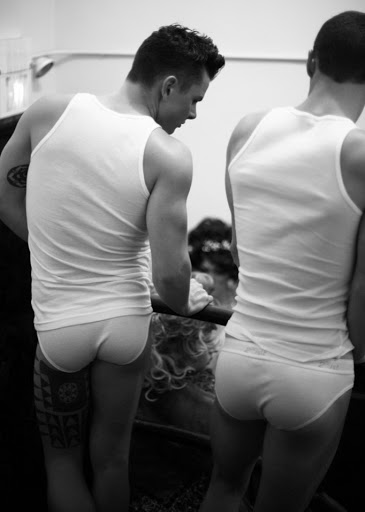
Moment of Zen: Tighty-Whities

As a general rule, I don’t care for tighty-whities but on some men they are the sexiest thing they can wear.

The Borgias

Last night I sat down to finally watch a DVD I received for Christmas. It was The Borgias, a 2011 historical fiction television series created by Neil Jordan.

The series is set around the turn of the 16th century, and follows the Borgia family, an Italian dynasty of Spanish origin. It stars Jeremy Irons as Pope Alexander VI with François Arnaud as CesareHolliday Grainger as LucreziaDavid Oakes as Juan and Aidan Alexander as Gioffre Borgia.  Colm Feore also stars as cardinal della Rovere.

The Borgias takes place during a time period that I love to study and so I have been anticipating seeing it.  Finally, I had some free time last night to watch it. I had not opened the package before last night, and to my great disappointment, I opened the package only to find that inside was the show Entourage instead of The Borgias.  So there was no Borgias to be seen last night.

Next, I decided to watch an old show that I loved as a kid that has recently come out on DVD ,Tales of the Golden Monkey. More than likely, none of my readers has ever heard of the show.  It only lasted one season and starred Stephen Collins.  Anyway, after I put it in the DVD player, I decided I really wanted to watch something less wholesome, so instead, I began watching the fourth season of True Blood.  Not quite as unwholesome as porn might have been, but pretty damn close.  I love the show, even if its not the greatest television.  It just has plenty of eye candy.  The only bad thing is that I am pretty sure that I have not seen season three like I thought I had.  Oh well, it was still fun to watch.