

Category Archives: Uncategorized

Jim Nabors, AKA Gomer Pyle

The gay news was abuzz about the reports that not only was Jim Nabors gay, but also that he married his partner of thirty-eight years recently in Seattle, Washington. The thing is, and maybe it’s just Alabama knowledge (he was raised in Alabama), that Jim Nabors is gay. I’ve known that for many years, though I can’t remember when I first learned this fact. He just was, it was accepted, and no one made a big deal about it. The news media is treating it like he just came out, even though there were apparently no exclamations of “Shazam!” or “Golly!” — just a simple exchange of rings in front of a judge in a Seattle hotel room, after which Jim Nabors, the star of television’s “Gomer Pyle, U.S.M.C.,” married Stan Cadwallader, his partner of 38 years, according to a report by a Hawaiian television news station.
On January 29, 2013, Hawaii News Now reported that Nabors married his partner of 38 years, Stan Cadwallader, at Seattle, Washington‘s Fairmont Olympic Hotel on January 15. (Same-sex marriage became legal in Washington the previous month.) The news program quoted Nabors as saying that though he had always been open about his sexuality to co-workers in the entertainment industry, he did not plan to get involved in the national debate over gay marriage.
“I haven’t ever made a public spectacle of it,” Mr. Nabors said, according to Hawaii News Now. “Well, I’ve known since I was a child, so, come on. It’s not that kind of a thing. I’ve never made a huge secret of it at all.”
Mr. Nabors, who was born and raised in Sylacauga, Ala., originated the character of the hapless but loveable gas-station attendant Gomer Pyle on “The Andy Griffith Show,” and reprised the role in five seasons of “Gomer Pyle, U.S.M.C.” (on which the goofball character was perpetually making trouble for his military superiors). Mr. Nabors also appeared on “The Carol Burnett Show,” “The Muppet Show,” and his own variety series, “The Jim Nabors Hour.”
An urban legend maintains that Nabors married Rock Hudson in the 1970s. In fact, the two were never more than friends. According to Hudson, the legend originated with a group of “middle-aged homosexuals who live in Huntington Beach” who sent out joke invitations for their annual get-together. One year, the group invited its members to witness “the marriage of Rock Hudson and Jim Nabors,” at which Hudson would take the surname of Nabors’ most famous character, Gomer Pyle, becoming “Rock Pyle.” Those who failed to get the joke spread the rumor. At the time Nabors was dating his boyfriend, Stan, whom he eventually married; Hudson was also gay but closeted, and because of the fear that one or both of them might be outed, Nabors and Hudson never spoke to each other again.
Sent from my iPad
My body is your compass
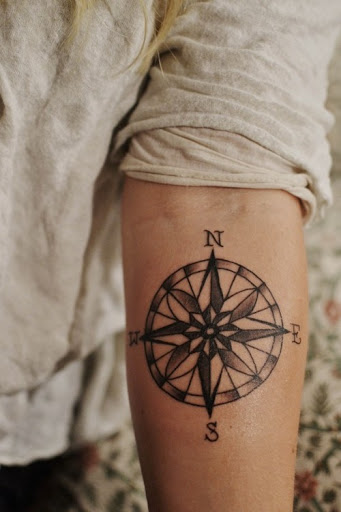
My body is your compass.
North is where the whispers go
And where the smiles reside for you
East and West are there to support you
To hold you and to help carry your load in life
And South is the heart and soul and heat…
Everything to sustain and shelter you. North, South, East, West…
All directions lead you home.
A beautiful post from Homo Eroticus, that I wanted to share with all of you.
At the Gym

At the Gym
Mark Doty
This salt-stain spot
marks the place where men
lay down their heads,
back to the bench,
and hoist nothing
that need be lifted
but some burden they’ve chosen
this time: more reps,
more weight, the upward shove
of it leaving, collectively,
this sign of where we’ve been:
shroud-stain, negative
flashed onto the vinyl
where we push something
unyielding skyward,
gaining some power
at least over flesh,
which goads with desire,
and terrifies with frailty.
Who could say who’s
added his heat to the nimbus
of our intent, here where
we make ourselves:
something difficult
lifted, pressed or curled,
Power over beauty,
power over power!
Though there’s something more
tender, beneath our vanity,
our will to become objects
of desire: we sweat the mark
of our presence onto the cloth.
Here is some halo
the living made together.
From Source by Mark Doty, published by HarperCollins. Copyright © 2002 by Mark Doty. Reprinted by permission of HarperCollins. All rights reserved.
About Mark Doty:
Mark Doty was born in 1953. He is the author of several collections of poetry, most recently Fire to Fire: New and Selected Poems (HarperCollins, 2008), which received the National Book Award; School of the Arts (2005); Source (2002); and Sweet Machine (1998).
Other collections include Atlantis (1995), which received the Ambassador Book Award, the Bingham Poetry Prize, and a Lambda Literary Award; My Alexandria (1993), chosen by Philip Levine for the National Poetry Series, which won the National Book Critics Circle Award and Britain’s T. S. Eliot Prize, and was also a National Book Award finalist; Bethlehem in Broad Daylight (1991); and Turtle, Swan (1987).
In 2010, Graywolf Books published a collection of essays on poetry titled The Art of Description: World into Word, in which Doty asserts that “poetry concretizes the singular, unrepeatable moment; it hammers out of speech a form for how it feels to be oneself.”
He has also published Heaven’s Coast (1996), which received the PEN/Martha Albrand Award for First Nonfiction. Other memoirs by Doty includes Firebird (1999), Still Life with Oysters and Lemon: On Objects and Intimacy (2000), and Dog Years(HarperCollins, 2007).
Doty has received fellowships from the Guggenheim, Ingram Merrill, Rockefeller, and Whiting foundations, and from the National Endowment for the Arts. He was elected an Academy Chancellor in 2011. He has taught at the University of Houston and is currently serving as a Distinguished Writer at Rutgers University. He currently lives in New York City.

Spartacus

Does anyone watch the series Spartacus? I watched the first season when Andy Whitfield was the gorgeous and badass Spartacus, but had not kept up with the series. Recently, I have been watching it again. Last night I watched the season premiere of Spartacus: War of the Damned.
When the Starz Network announced Aussie actor Liam McIntyre would be taking over the role of Spartacus from Andy Whitfield, I wasn’t for sure that anyone could replace him, but Liam McIntyre has done an admirable job.
Whitfield, who had left the series after being diagnosed with Non-Hodgkin lymphoma, had amassed a legion of admirers in one short season of Spartacus. Some felt that the sword and sandals epic would have a difficult time continuing without the actor who had become synonymous with the show – a feeling that only worsened after Whitfield passed away.
However, McIntyre overcame tremendous odds to win the hearts of the show’s fans, not by attempting to duplicate Whitfield’s interpretation of the character, but by respecting the actor enough to take Spartacus in a new direction and help the popular show soldier on.
Featuring an army of scantily clad, gorgeous gladiators, Spartacus is a series that easily caught the attention of LGBT fans from the first episode. However, it takes more than a serving of skin to turn a TV show into the pop culture phenomenon Spartacus has become. The series quickly unfolded into an intriguing tale of power, honor, vengeance, and romance — romance which includes the love story that began last season between two gay rebel warriors, Agron (played by Dan Feuerriegel) and Nasir (Pana Hema-Taylor).
If you can get past the blood and gore and the fact that it does not even attempt to be historical, the show is pretty entertaining, especially the eye candy.


One Today: Reprise

Randy Malamud, the Regents’ professor and chair of English at Georgia State University, wrote an opinion piece for The Chronicle of Higher Education about Richard Blanco’s poem for the inauguration. Below is an excerpt of what he wrote:
Blanco—who, according to his Web site, has a “poetry dance—a little Michael Jackson-inspired shtick I do around the house in my pajamas when I am high from a good-poem day”—was a great choice for the inaugural honor. But “One Today,” in my opinion, falls flat. It reads like an early draft of what could be a good poem. I’m trying to restrain automatic prejudice against quickly made-to-order poetry, but I find the effort slapdash, and simply not very coherent.It’s full of clichés: the din of honking cabs and buses, a songbird on a clothesline, the sun rising over the Rockies. Emotional clichés too: the father who, early in the poem, worked hard so that the son could have books and shoes, but still, later in the poem, couldn’t give his child what he wanted; the mother who rang up groceries so that the poet could write this poem. (Poets should be very wary of writing poems about writing poems.)The title itself is awkward, elusive. Today we are one? There is only one today? Every day is today? I’m not sure.Blanco’s imagery doesn’t resonate as clever or creative—which is, of course, the burden of poetry: pencil-yellow school buses, squeaky playground swings, the plum blush of dusk, the moon like a silent drum tapping on the rooftops. The word “howdy” should probably never appear in a poem, and certainly not sandwiched among a polyglot smorgasbord of howdies: shalom, buon giorno, namaste, buenos dias. “Crescendoing” is another word that feels out of place.Blanco strains to bring in the 9/11 attacks, juxtaposing the handiwork of a person making the first brush stroke of a painting with that of someone completing “the last floor on the Freedom Tower / jutting into a sky that yields to our resistance.” I find this dubious, gratuitous.Even more unexpectedly, Blanco works in a reference to the Newtown killings, in a passage that’s especially difficult to follow. A stanza that begins with images of learning and imagination takes a forced detour to Martin Luther King Jr.’s “I Have a Dream” speech, and ends oddly—it’s not clear how we got here—with churches, museums, and parks. Amid all this, in a jolting scene that strikes me as impious and insufficiently thought out, Blanco meanders into “the impossible vocabulary of sorrow that won’t explain / the empty desks of twenty children marked absent / today, and forever.”It’s not that poetry can’t or shouldn’t invoke last month’s massacre—but the decision to broach this tremendously raw tragedy should be accompanied by a sensitive, courageous, meaningful treatment that does justice to the pain as it is recalled in the poem. There’s a heavy responsibility in writing about this. I don’t know exactly what is the right way to remember those poor children, but “marked absent / today, and forever” is not it. This misstep is a symptom of what’s too undigested, too unsettled, about “One Today” as a whole.I think Blanco’s intent—a sensible one for the occasion—was to create a vast, varied portrait of our country. It’s the kind of task that Alexander achieved more subtly and comfortably in her poem four years ago, a smooth confluence of cultural and historical images which contrasted quotidian American life and the monumentally historic importance of Obama’s first inauguration day. Alexander’s poem has many thematic similarities with Blanco’s (children and parents, the hard work of living each day, the awe of a unifying moment in America), but she succeeds, where Blanco fails, at handling the task eloquently. I guess she works well under deadlines.“One Today” is a frenetic mishmash. No poetry dances here, I’m afraid.
I could not disagree more with Dr. Malamud. As one commenter wrote:
The simple poem effectively wrapped around the otherwise “frenetic mishmash” that we as Americans are and that the Inauguration Day festivities likewise were.Patriotism may be the last refuge of a scoundrel, but the homespun images of diversity seemed both democratic and moving–hopeful, really, as I think the poet intended and entirely appropriate for the occasion. The image of the one moon “tapping on every rooftop and every window” is one that lingers.
I found “One Today” to be a beautiful poem that was very pertinent to today. It is also hopeful of a better tomorrow. Though much of what Dr. Malamud wrote, I disagree with, I especially disagreed with the line “The title itself is awkward, elusive. Today we are one? There is only one today? Every day is today? I’m not sure.” I do not see what is elusive or awkward about a poem that brings together Americans or that symbolizes how on Inauguration Day, we are all one. It’s sad that Dr. Malamud missed the grace and fluidity of the poem. The poem was straightforward and not an obtuse piece of tedious dribble that often comes from academics, which is probably part of the reason that Blanco is no longer in academia.
Professors of English far too often want something so complicated that they only want themselves to be able to interpret it for us. They are also a jealous bunch who loves to criticize, which is most of academia. For every book review I wrote in college and grad school, my professors always loved the negative reviews and hated the positive ones. Those in academia are trained to rip to shreds each others work. It is, sadly, the nature of the beast.
Every Tuesday, I post a poem to my blog. All of those I poems, I find beauty in their words. That is what poetry is, the beautiful assemblage of words. Poetry should speak to those reading it. It should cause an emotional reaction down to your soul. The best poems are those that are understandable and evoke strong feelings. Whether it is there cadence or composition, poetry is, for me, the height of of wordly beauty. For whatever true problem Dr. Malamud has with Blanco’s poem, I found it to be a poem for everyone, and a poem that is for everyone to be “One Today” and hopefully tomorrow as well. Being written and read by a gay Latino poet, “One Today” evoked the beauty of the American spirit and founding principle: E Pluribus Unum.
Reliquaries and Research
 |
Reliquary with Finger of John the Baptist |
I don’t know how many of my readers are researchers. I know that many of you are teachers and educators. However, one of the things that drew me into history was the research. I have always loved libraries and archives: the smell, the feel, the intimacy of the artifacts, etc. Currently, I am reading Donna Leon’s novel, The Jewels of Paradise , which is a departure from her Guido Brunetti novels because it focuses on a musicologist’s search for the truth about a Baroque composer. It’s all about the research, which in many reviews people seemed to hate. I am also reading Danielle Trussoni’s novel, Angelology: A Novel
 , which is partly an exploration of the research of angels.
, which is a departure from her Guido Brunetti novels because it focuses on a musicologist’s search for the truth about a Baroque composer. It’s all about the research, which in many reviews people seemed to hate. I am also reading Danielle Trussoni’s novel, Angelology: A Novel, which is partly an exploration of the research of angels.By reading these books, I have been not only thinking of my own research into American expatriates, but also some projects that I would love to delve into if I had the resources, i.e. the time, funding, and technology. I don’t remember exactly the passage in The Jewels of Paradisethat caused me to think about reliquaries, but I know something did.
that caused me to think about reliquaries, but I know something did. If you are not familiar with relics and reliquaries, here is a brief description. Christian belief in the power of relics, the physical remains of a holy site or holy person, or objects with which they had contact, is as old as the faith itself and developed alongside it. Relics were more than mementos. The New Testament refers to the healing power of objects that were touched by Christ or his apostles. The body of the saint provided a spiritual link between life and death, between man and God: “Because of the grace remaining in the martyr, they were an inestimable treasure for the holy congregation of the faithful.” Fueled by the Christian belief in the afterlife and resurrection, in the power of the soul, and in the role of saints as advocates for humankind in heaven, the veneration of relics in the Middle Ages came to rival the sacraments in the daily life of the medieval church. Indeed, from the time of Charlemagne, it was obligatory that every altar contain a relic.
My mind sometimes wonders when I read, and I thought about a quote from Mark Twain’s The Innocents Abroad from 1869. In the passages about visiting Genoa, Italy, Twain mentions the number of relics he has seen and writes:
from 1869. In the passages about visiting Genoa, Italy, Twain mentions the number of relics he has seen and writes:But isn’t this relic matter a little overdone? We find a piece of the true cross in every old church we go into, and some of the nails that held it together. I would not like to be positive, but I think we have seen as much as a keg of these nails. Then there is the crown of thorns; they have part of one in Sainte Chapelle, in Paris, and part of one also in Notre Dame. And as for bones of St. Denis, I feel certain we have seen enough of them to duplicate him if necessary.
So, I began to ponder this statement and thought that it would be an interesting topic to research. If I had the resources, I would love to take an inventory of all of the Christian relics. I’m sure the Vatican has one somewhere. Once I had that, I would love to take a computer program that would piece together each individual relic and see if it would be possible to reconstruct at least one of the saints from the bones he left behind.. Or, more likely to see just how many fingers John the Baptist has hidden away in reliquaries. I find relics to be a morbid fascination, though one that I would love to have the resources to explore someday.
One day, and I hope it’s one day soon, I will finally receive my PhD and will be able to reenter the world of academia and get out of teaching high school. Maybe I will one day be fortunate enough to head a major research project like the one mentioned above.


Authors
Recent Comments
noisilycool3bc985058… on Pic of the Day vandycolt on Pic of the Day noisilycool3bc985058… on Pic of the Day Joe on Pic of the Day noisilycool3bc985058… on Pic of the Day Top Posts & Pages




Amazon Associate

As an Amazon Associate I earn from qualifying purchases. So, if you click on a link that takes you to Amazon.com, I may earn a commission.
Trust me, it isn’t much, but every little bit helps.

 Joe
Joe


 The Closet Professor