Category Archives: Uncategorized

The Jewel Box Revue: America’s First Gay Community?

In 1939, during a time when gay people were viewed as abhorrent subversives and a threat to society, two gay lovers, Danny Brown and Doc Benner, created and produced America’s first racially inclusive traveling revue of female impersonators. It was staffed almost entirely by gay men and one gay woman and was known as the Jewel Box Revue. In many ways it was America’s first gay community.

recent and insightful paper by Mara Dauphin argues that the early drag/female impersonation revues of the 1940s and 1950s were “highly instrumental in creating queer communities and carving out queer niches of urban landscape in post-war America that would flourish into the sexual revolution of the sixties.” And though there were other popular female impersonation clubs, such the famous Finnochio’s in San Francisco and the infamous mafia-owned Club 82 of New York City, with the exception of the Jewel Box Revue, all the revues were operated and controlled by straight people, who were not always very gay-friendly (a notable exception being the Garden of Allah cabaret in Seattle, which featured the Jewel Box Revue as their opening-night act in 1946). Robin Raye, who performed in several early establishments, including Finocchio’s and the Jewel Box Revue, once said of Mrs. Finocchio, “I don’t think she liked gay people, but she certainly knew how to use them.”
Creating America’s first gay community was not what Danny and Doc initially had in mind when they created the revue. They felt that Vaudeville had sidelined female impersonation acts into little more than burlesque shows, and both were passionate about reviving drag as an art form. Danny and Doc also intentionally catered the show to a heterosexual audience and tried their best to be viewed as legitimate entertainment by locals and authorities, to stay clear of any legal charges of sexual deviance. But behind the protective spin of publicity, it cannot be denied that the revue fostered one of the first gay-positive communities in America, if not thefirst. It was a place where “gayness” was accepted before the concept of gay-identity had even been fully conceived. Tobi Marsh, who joined the revue as a rebellious teenager in the late 1950s, viewed Danny and Doc not only as his bosses but as no-nonsense parental figures. Their overprotective nature agitated Tobi at the time, but his agitation would later grow into a grudging respect, as Danny and Doc took great efforts to protect him and the other members of the revue from the often brutal homophobic realities of life in the pre-Stonewall era.

In the end Danny Brown and Doc Benner were successful and saw their dreams of reviving female impersonation as an art form come to fruition. The Jewel Box Revue became very successful and toured throughout the country for over three decades, even headlining at famed venues like the Apollo in New York City. But their contributions resonate far beyond their impacts on the field of female impersonation. In a very real sense Danny and Doc are the true godfathers of the modern gay community. The show was billed as “25 Men and 1 Woman,” but hundreds of gay entertainers and female impersonator would come to work with the revue over the years, and their influence on the burgeoning gay rights movement still resonates to this very day, one particular performer somewhat more so than others. The African-American lesbian drag king Storme Delarvarie was the “1 Woman” of the Jewel Box Revue. She spent decades living, working and traveling with Danny and Doc’s tough but protective community of touring entertainers. Those experiences and life lessons would prove invaluable in Storme’s later life, and her actions continue to inspire generations of gay people. Storme Delarvarie is credited as being one of the first people to bravely fight back against the police as they raided the Stonewall Inn in New York City on the night of June 27, 1969. Her courage helped to spark a riot that begat the modern gay rights movement.

I’ve got a hunch that somewhere out there in the cosmos, Danny Brown and Doc Benner couldn’t be prouder.

Toward the Winter Solstice

Toward the Winter Solstice
Timothy Steele
Although the roof is just a story high,
It dizzies me a little to look down.
I lariat-twirl the cord of Christmas lights
And cast it to the weeping birch’s crown;
A dowel into which I’ve screwed a hook
Enables me to reach, lift, drape, and twine
The cord among the boughs so that the bulbs
Will accent the tree’s elegant design.
Friends, passing home from work or shopping, pause
And call up commendations or critiques.
I make adjustments. Though a potpourri
Of Muslims, Christians, Buddhists, Jews, and Sikhs,
We all are conscious of the time of year;
We all enjoy its colorful displays
And keep some festival that mitigates
The dwindling warmth and compass of the days.
Some say that L.A. doesn’t suit the Yule,
But UPS vans now like magi make
Their present-laden rounds, while fallen leaves
Are gaily resurrected in their wake;
The desert lifts a full moon from the east
And issues a dry Santa Ana breeze,
And valets at chic restaurants will soon
Be tending flocks of cars and SUVs.
And as the neighborhoods sink into dusk
The fan palms scattered all across town stand
More calmly prominent, and this place seems
A vast oasis in the Holy Land.
This house might be a caravansary,
The tree a kind of cordial fountainhead
Of welcome, looped and decked with necklaces
And ceintures of green, yellow, blue, and red.
Some wonder if the star of Bethlehem
Occurred when Jupiter and Saturn crossed;
It’s comforting to look up from this roof
And feel that, while all changes, nothing’s lost,
To recollect that in antiquity
The winter solstice fell in Capricorn
And that, in the Orion Nebula,
From swirling gas, new stars are being born.

“Toward the Winter Solstice” from Toward the Winter Solstice (Swallow Press/Ohio University Press, 2006, www.ohioswallow.com).

By the way, I think of L.A. as “Lower Alabama”. LOL.

Sent from my iPad


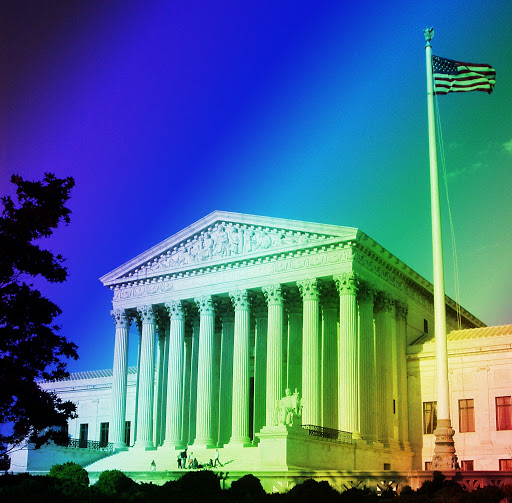
Gay Marriage Questions, Cases Weighed By Supreme Court, Decision Delayed

WASHINGTON — The running fight over gay marriage is shifting from the ballot box to the Supreme Court.
Three weeks after voters backed same-sex marriage in three states and defeated a ban in a fourth, the justices met Friday to discuss whether they should deal sooner rather than later with the claim that the Constitution gives people the right to marry regardless of sexual orientation.
The court also could duck the ultimate question for now and instead focus on a narrower but still important issue: whether Congress can prevent legally married gay Americans from receiving federal benefits otherwise available to married couples.
There was no announcement about the court’s plans on Friday. The next opportunity for word on gay marriage cases is Monday, although the justices also could put off a decision until their next private meeting in a week’s time. That will be their last meeting until January.
Any cases would be argued in March or April, with a decision expected by the end of June.
Gay marriage is legal, or will be soon, in nine states – Connecticut, Iowa, Maine, Maryland, Massachusetts, New Hampshire, New York, Vermont, Washington – and the District of Columbia. Federal courts in California have struck down the state’s constitutional ban on same-sex marriage, but that ruling has not taken effect while the issue is being appealed.
Voters in Maine, Maryland and Washington approved gay marriage earlier this month.
But 31 states have amended their constitutions to prohibit same-sex marriage. North Carolina was the most recent example in May. In Minnesota earlier this month, voters defeated a proposal to enshrine a ban on gay marriage in that state’s constitution.
The biggest issue the court could decide to confront comes in the dispute over California’s Proposition 8, the constitutional ban on gay marriage that voters adopted in 2008 after the state Supreme Court ruled that gay Californians could marry. The case could allow the justices to decide whether the U.S. Constitution’s guarantee of equal protection means that the right to marriage cannot be limited to heterosexuals.
A decision in favor of gay marriage could set a national rule and overturn every state constitutional provision and law banning same-sex marriages. A ruling that upheld California’s ban would be a setback for gay marriage proponents in the nation’s largest state, although it would leave open the state-by-state effort to allow gays and lesbians to marry.
In striking down Proposition 8, the 9th U.S. Circuit Court of Appeals crafted a narrow ruling that said because gay Californians already had been given the right to marry, the state could not later take it away. The ruling studiously avoided any sweeping pronouncements.
But if the high court ends up reviewing the case, both sides agree that the larger constitutional issue would be on the table, although the justices would not necessarily have to rule on it.
Throughout U.S. history, the court has tried to avoid getting too far ahead of public opinion and mores. The high court waited until 1967 to strike down laws against interracial marriage in the 16 states that still had them.
Some court observers argue that the same caution will prevail in the California case.
“What do they have to gain by hearing this case? Either they impose same sex marriage on the whole country, which would create a political firestorm, or they say there’s no right to same-sex marriage, in which case they are going to be reversed in 20 years and be badly remembered. They’ll be the villains in the historical narrative,” said Andrew Koppelman, a professor of law and political science at Northwestern University. Koppelman signed onto a legal brief urging the justices not to hear the California case.
Yet some opponents of gay marriage say the issue is too important, and California is too large a state, for the court to take a pass.
“The question is whether there’s a civil right to redefine marriage, as the California Supreme Court did. We don’t think there is,” said Brian Brown, president of the National Organization for Marriage.
Regardless of the decision on hearing the California case, there is widespread agreement that the justices will agree to take up a challenge to a part of the federal Defense of Marriage Act.
The law was passed in 1996 by overwhelming bipartisan majorities in the House and Senate and signed by President Bill Clinton. It defines marriage for all purposes under federal law as between a man and a woman and has been used to justify excluding gay couples from a wide range of benefits that are available to heterosexual couples.
Four federal district courts and two courts of appeal have overturned the provision in various cases on grounds that it unfairly deprives same-sex couples of federal benefits. The justices almost always will hear a case in which a federal law has been struck down.
The Obama administration broke with its predecessors when it announced last year that it no longer would defend the provision. President Barack Obama went further when he endorsed gay marriage in May.
Republicans in the House of Representatives stepped in to take up the defense of the law in court.
Paul Clement, the Washington lawyer representing the House, said the law was intended to make sure that federal benefits would be allocated uniformly, no matter where people live.
“DOMA does not bar or invalidate any state-law marriage, but leaves states free to decide whether they will recognize same-sex marriage,” Clement said in court papers.
The court has several cases to choose from, including that of 83-year-old Edith Windsor of New York. Windsor faces $363,000 in federal estate taxes after the death of her partner of 44 years in 2009. In two other cases, same-sex couples and surviving spouses of gay marriages in Connecticut, Massachusetts, New Hampshire and Vermont are seeking a range of federal benefits, including Social Security and private pension survivor payments, access to federal employee health insurance and the right to file a joint federal income tax return.
In the only instance in which a gay couple already is receiving federal benefits, federal court employee Karen Golinski in San Francisco has been allowed, under a court order, to add her wife to her health insurance coverage. That could be reversed if the Supreme Court upholds the marriage law provision.
No matter which case the court chooses, the same issue will be front and center – whether legally married gay Americans can be kept from the range of benefits that are otherwise extended to married couples.
Justice Elena Kagan strongly suggested in her Supreme Court confirmation hearings that she would not take part in a gay marriage case from Massachusetts because she worked on it while at the Justice Department. The Massachusetts case is one of only two cases that have been decided by a federal appeals court. Windsor’s is the other.
Another case, from Arizona, has some similarities to the Defense of Marriage Act appeals. The 9th U.S. Circuit Court of Appeals, which invalidated Proposition 8 in California, struck down a state law that said only married state employees were eligible for health benefits and withdrew domestic partner benefits for unmarried state workers. Separately, the Arizona constitution bars same-sex marriage, so gay couples had no way to obtain the state benefits.
___
From the Huffington post by Mark Sherman can be reached on Twitter at www.twitter.com/shermancourt

Moment of Zen: Window of Opportunity


St Andrew’s Day

St. Andrew’s Day is the feast day of Saint Andrew. It is celebrated on November 30 in Scotland.    Saint Andrew is the patron saint of Scotland, and St. Andrew’s Day is Scotland’s official national day. In 2006, the Scottish Parliament designated St Andrew’s Day as an official bank holiday.

There are many people with birthdays today, including yours truly:

Clay Aiken, born November 30, 1978 Singer.
Ben Stiller, born November 30, 1965 Actor.
Bo Jackson, born November 30, 1962 Football, baseball.
Billy Idol, born November 30, 1955 Singer.
Dick Clark, born November 30, 1929 Entertainer.
Winston Churchill,  born November 30, 1874 British Prime Minister.
Mark Twain, born November 30, 1835 Writer.


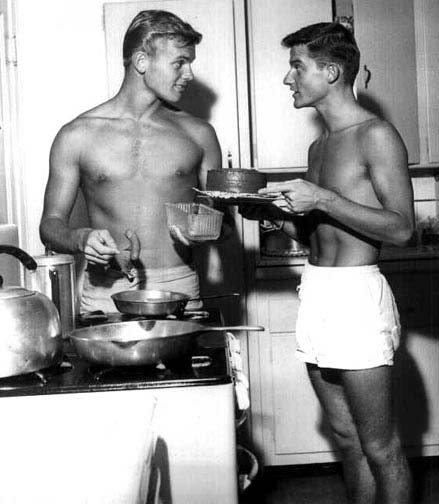
Tab and Roddy

This vintage celebrity beefcake moment is brought to you by some genius of a studio exec at Warner Bros. who thought it would be a good idea to do a publicity photo shoot of Tab Hunter and Roddy McDowall together for Movies magazine. The photo above shows them cooking up wieners wearing nothing but shorts. See the full spread for Calling All Girls from June 1953 here.

Although McDowall never officially came out, the fact that he was gay was one of Hollywood’s best known secrets.  Overwhelmed by the Hollywood publicity machine, Hunter struggled to keep secret the fact that he was gay. Hunter came out publicly in 2005 with his book Tab Hunter Confidential: The Making of a Movie Star.


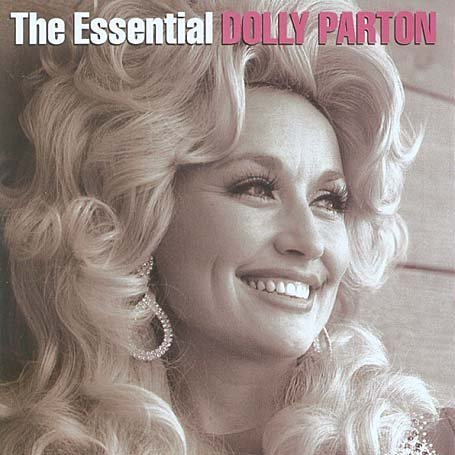
Dolly Is a Doll

generation-defining gay icon, Dolly Parton has faced a number of rumors about her own personal life.
As she promotes her new memoir, “Dream More: Celebrate the Dreamer in You,” the 66-year-old country superstar hopes to put that tabloid speculation to rest in her signature candid way.
On allegations she was secretly gay and romantically involved with a childhood friend, Parton (who has been married to husband Carl Dean for 46 years) compared herself to another woman who’s faced her own share of rumors, Oprah Winfrey.
“Like Gayle [King], her friend, Judy, my friend…they just think that you just can’t be that close to somebody,” Parton said. “Judy and I have been best friends since we were like in the third and fourth grade. We still just have a great friendship and relationship and I love her as much as I love anybody in the whole world, but we’re not romantically involved.”
The star of hit films like “Steel Magnolias” and “9 to 5,” Parton also dishes about that time she entered — and lost — a drag queen celebrity lookalike competition. “They had a bunch of Chers and Dollys that year, so I just over-exaggerated — made my beauty mark bigger, the eyes bigger, the hair bigger, everything,” she said, laughing. “So I just got in the line and I just walked across, and they just thought I was some little short gay guy…and I got the least applause!”
She then added, “It’s a good thing I was a girl or I’d be a drag queen.”

Long Day

Yesterday started when I left the house before 7am and did not end until I returned home at 10:30.  Other than the total of maybe 45 minute of eating all day and an hour or two of driving, the rest of the day was spent teaching, preparing for class, directing theater practice, and a few other extra faculty duties.
And yet, this poem is now stuck in my head.  I think I have heard it too may times in the last few weeks:
Whan that Aprille with his shoures soote, 
The droghte of March hath perced to the roote, 
And bathed every veyne in swich licóur 
Of which vertú engendred is the flour; 
Whan Zephirus eek with his swete breeth 
Inspired hath in every holt and heeth 
The tendre croppes, and the yonge sonne 
Hath in the Ram his halfe cours y-ronne, 
And smale foweles maken melodye, 
That slepen al the nyght with open ye, 
So priketh hem Natúre in hir corages, 
Thanne longen folk to goon on pilgrimages, 
And palmeres for to seken straunge strondes, 
To ferne halwes, kowthe in sondry londes; 
And specially, from every shires ende 
Of Engelond, to Caunterbury they wende, 
The hooly blisful martir for to seke, 
That hem hath holpen whan that they were seeke. 
“Prologue” to The Canterbury Tales

In modern English if you wish to read it:
When April with his showers sweet with fruit
The drought of March has pierced unto the root
And bathed each vein with liquor that has power
To generate therein and sire the flower;
When Zephyr also has, with his sweet breath,
Quickened again, in every holt and heath,
The tender shoots and buds, and the young sun
Into the Ram one half his course has run,
And many little birds make melody
That sleep through all the night with open eye
(So Nature pricks them on to ramp and rage)-
Then do folk long to go on pilgrimage,
And palmers to go seeking out strange strands,
To distant shrines well known in sundry lands.
And specially from every shire’s end
Of England they to Canterbury wend,
The holy blessed martyr there to seek
Who helped them when they lay so ill and weal


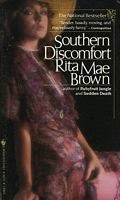
Southern Discomfort

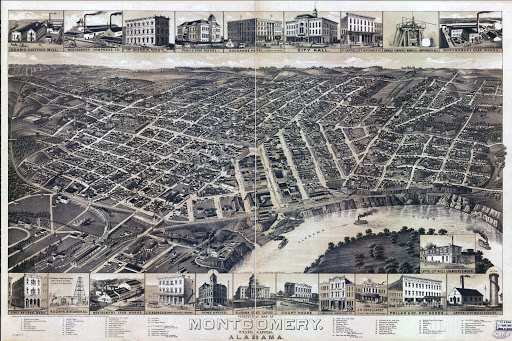
I’ve been thinking of sharing this book with you guys, and quite honestly, I couldn’t remember it’s name, only that Rita Mae Brown wrote it and that it took place in Montgomery, Alabama.  So I looked up Brown’s bibliography and searched through the books until I found it.  I checked out this book a few years ago at the public library when I was in graduate school. I absolutely fell in love with it.  Southern Discomfort is my favorite Rita Mae Brown book. The characters in this novel are so vivid and well developed you’ll finish the novel feeling like you know them personally. Fast, smart, funny and ultimately heartbreaking, this is definitely a must for any fan of Rita Mae Brown.

Only Rita Mae Brown, author of Rubyfruit Jungle, could have written a novel as passionately delightful as Southern Discomfort.  Here is a witty, warm and pentrating tale of two decades in Montgomery Alabama–a world where all is not what it seems.  Meet Hortensia Reedmuller Banastre, a beautiful woman entrenched on old money, white magnolia and a loveless marriage–until she meets an utterly gorgeous young prizefighter.  Amid such memorable characters as Banana Mae Parker and Blue Rhonda Latrec (two first-class whores) and Reverend Linton Ray (who wears his clerical collar too tightly for anyone’s good), Hortensia struggles to survive the hurricane of emotions caused by her scandalous love.  How she ultimately triumphs is a touching and beautiful human drama–an intense and exuberant affair of the heart.

Rita Mae Brown’s Southern Discomfort is warm and fuzzy in all the good ways. She earns the pleasurable feelings from her readers through the creation of her dazzling cast of characters and spinning them through a marvelous narrative. I laughed and I cried and sometimes often at the same time. The author writes beautifully and easily allows the reader to soak into the Southern pool of charm she creates. I have enjoyed many of her novels but this is the one that always draws me back. It is the perfect novel for a summer day sipping a mint julep and wondering how eccentric your friends and neighbours could be if only they were Southern.

Biography

Rita Mae Brown is the bestselling author of the Sister Jane novels-Outfoxed, Hotspur, Full Cry, The Hunt Ball, The Hounds and the Fury, The Tell-Tale Horse, and Hounded to Death-as well as the Sneaky Pie Brown mysteries and Rubyfruit Jungle, In Her Day, Six of One, and The Sand Castle, among many others. An Emmy-nominated screenwriter and a poet, Brown lives in Afton, Virginia.


Moment of Zen: A Beautiful Smile