

Did anyone go to the Black Friday sales? Did you find any great bargains?
I stayed home and slept late. This is really my only day that I have nothing to do, so I decided to be lazy and enjoy it.
I stayed home and slept late. This is really my only day that I have nothing to do, so I decided to be lazy and enjoy it.
“The Two Spirits’ mere existence threatened the colonizers’ core beliefs; the backlash was violent. Sketches, housed at the New York City public library, depict Two Spirit people being attacked by colonizers’ dogs.”Secret #4: Gay TurkeysHomosexuality has been observed in many as many as 1,500 species — including turkeys. There is even a YouTube clip in which two male turkeys chase each other around a Massachusetts yard just after gay marriage was made legal in the state.
Secret #4: Gay Turkeys
Homosexuality has been observed in many as many as 1,500 species — including turkeys. In this clip, two male turkeys chase each other around a Massachusetts yard just after gay marriage was made legal in the state.
Secret #5: An Awkward Thanksgiving
Going home for Thanksgiving? The Gay & Lesbian Alliance Against Defamation (GLAAD) wants you to consider their hilarious (and delightful) new campaign, “I’m Letting Aunt Betty Feel Awkward This Thanksgiving.” GLAAD writes:
“The LGBT community has a ton to be thankful for from the past year. But we also have a long way to go. And believe it or not, putting down that forkful of stuffing for a minute and just talking about yourself (if you can) this Thanksgiving can make a huge difference. We’ve all had those Thanksgiving dinners where Aunt Betty decides this is the perfect time to discuss a year’s worth of ailments and medical treatments. Well, you know what? If she can talk about her podiatrist, you can talk about your partner. The fact is, while you’re scarfing down mashed potatoes and staying silent while everyone else at the table is freely speaking their minds, you’re missing a golden opportunity to make real, honest progress by talking about your life, and the things you care about. It’s okay if Aunt Betty feels a little awkward at first, it’s important for her to know that someone she loves cares deeply about LGBT equality. And the more we all talk about what’s important to us, the less awkward those conversations will become. Today some LGBT people can’t be open about who they are. But if you do feel comfortable, speaking openly and honestly about your life with your loved ones is one of the best ways for all of us to move forward together.”
Secret #6: Thanksgiving’s Unofficial Fruit
Fresh or fresh out of the can with those weird indentations still intact — no table is complete without cranberries during the holidays. And seeing as cranberries are Thanksgiving’s unofficial fruit — we began to wonder about other fruit, including the word itself and how it became equated with gay men. The term first became used to refer to gay men in 1935, and some believe it was due to the word’s prior association with “a girl or woman willing to oblige.” Gay men have long been connected to slang that serves to emasculate them and “fruit” most likely falls into that category.
Secret #7: The NFL Gets Gayer
For many Americans there’s nothing like a good game of football to finish off a Thanksgiving afternoon. And thanks to a change to the National Football League’s Collective Bargaining Agreement made in September of this year, we might soon be seeing gay football players (or at least the groundwork has been laid for the possibility). The Agreement was altered to include “sexual orientation” in the non-discrimination clause which now reads: Section 1. No Discrimination: There will be no discrimination in any form against any player by the Management Council, any Club or by the NFLPA because of race, religion, national origin, sexual orientation, or activity or lack of activity on behalf of the NFLPA.
|
One day is there of the series
Termed “Thanksgiving Day”
Celebrated part at table
Part in memory –
Neither Ancestor nor Urchin
I review the Play –
Seems it to my Hooded thinking
Reflex Holiday
Had There been no sharp subtraction
From the early Sum –
Not an acre or a Caption
Where was once a Room
Not a mention whose small Pebble
Wrinkled any Sea,
Unto such, were such Assembly,
‘Twere “Thanksgiving day” –
|
PLYMOUTH – In the summer of 1637, two working men at the English colony at Plymouth faced the possibility of execution, convicted of what the law books said was a grave moral crime.
 Gay Pilgrims would have never looked this happy.
John Alexander and Thomas Roberts had been caught in a homosexual relationship.
Court records from their case, and from a handful of others, are the only keyhole through which researchers at the Plimoth Plantation museum can peek backward through time to imagine the lives of the colony’s gays and lesbians.
On this date in 1637, John Alexander and Thomas Roberts were changed with and convicted of “lude behavior and unclean carriage one with another, by often spending their seed one upon another, which was proved both by witness and their own confession; the said Alexander found to have been formerly notoriously guilty that way, and seeking to allure others thereunto.”
John Alexander was sentenced to a severe whipping, then to be burned in the shoulder with a hot iron, and then to be permanently banished from the Colony.
Roberts was sentenced to a severe whipping, but was not banished. He was prohibited from ever owning any land within the Plymouth Colony “except he manifest better desert.” He was returned to his master and forbidden to hold any lands in the future.
Sodomy, usually homosexuality, was considered a capital offence but rarely punished as such. These punishments, while harsh, still lacked the full force of the law.
At the Out at Plimoth Plantation event, the living museum of Colonial and Native American history presents special programs on gay history of the 17th and 18th centuries in early American culture.
“Plimoth Plantation as a museum has always been a place that has tried to recover every life,’’ said Richard Pickering, the museum’s deputy director. Pickering quoted the poet and author Paul Monette, who wrote that most of gay history “lies in shallow bachelors’ graves.’’
“We’re telling the audience that we’re going to talk about all those uncles and all those aunts who have fallen off the family tree,’’ said Pickering. “Their stories may be lost, so let’s contemplate those lost lives.’’ Though the historical record is sparse, “we can get a sense of what the options of the past were,’’ and provide some sense of history to a modern gay community “that really doesn’t have a strong sense of its past much before 1960.’’
Back in the 1600s, homosexuality was thought to be a behavior that could be learned due to a lack of “proper’’ examples of traditional relationships, said Pickering. Being gay or lesbian at the time was not a sexual identity as we think of it today. Gays and lesbians “did not have the opportunity to pursue the kind of lives and identities that modern social structures allow,’’ he said.
Yet the prosecution of Alexander and Roberts for homosexual conduct reveals layers of complexities in Colonial life, despite the scant court records. Though the maximum penalty was death, neither man was executed.
Alexander, who was perceived as the seducer and therefore was considered more responsible, was branded with a hot iron and banished from the colony, said Pickering.
Roberts was allowed to stay, though the court forbade him from owning land or participating in the political process, Pickering said.
“At first glance you would think that 17th-century New Englanders would be very harsh,’’ said Pickering. But both men were spared execution, and in time Roberts was allowed to own land and to vote. “Even though there are statutes, in the enactment of the law they are much more gentle.’’ It may have been that the colony needed every pair of hands and couldn’t afford to lose both workers, or that in a tiny community of a few hundred, the judges would have known the defendants personally and were reluctant to send neighbors to their deaths.
Plimoth Plantation began researching the gay history of the colony about 10 years ago, in preparation for bringing its replica of the Pilgrim ship Mayflower to gay-friendly Provincetown.
The role players at Plimoth Plantation wear period costumes and never come out of character while they’re on the job. In a recent interview, for example, Pickering had to leave the “village’’ for a private room to speak as a modern man. In that spirit of authenticity, the museum researched gay Colonial history to educate its staff in case one of the role players got a question about same-sex relationships while in Provincetown.
The museum last year presented that research to visitors at its first Out at Plimoth Plantation, a conscious effort to reach out to the gay community. “For a while the museum just assumed it was known that everyone was welcome here,’’ said spokeswoman Jennifer Monac. “History is everybody’s story. We realize we need to make it relevant for everybody.
“We wanted to create a day where same-sex couples could attend like any other family and not have to worry if they hold hands or show affection,’’ she said.
The museum’s website is www.plimoth.org.
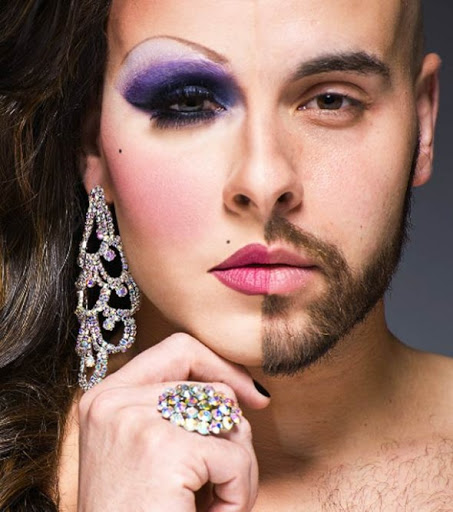

I do believe that we are not quite there where we will stop saying “openly gay,” and that is because we do still need some openly gay role models. People need to see that we are essentially no different from them. We just happen to have an attraction to someone of the same sex. To which I say, “So what?”
I was sick yesterday and still not feeling well today. I think it is a stomach virus. Anyway, I went home yesterday and went to bed. I have not had time nor have I felt like doing a post today. Sorry.

Southerners love tall tales, the taller and crazier the better. If you hear somebody say, “Now, this is a true story …,” you might as well go ahead and sit down and get comfortable. Whether it’s exaggeration or downright lies, it’s fun to listen to storytellers. Southerners are the best, mostly due to the insane real life events all around here that are better than fiction. You can’t make this stuff up. There was a historian once who said that one of the reasons that southerners were so crazy was the heat and humidity. He believed it drove us all insane. There might be some validity to this argument. Whatever the reason, we love to tell stories, and we often exaggerate a little in our stories. If you ever hear a southerner tell the same story more than once, the exaggerations will always get bigger, especially if it is a funny story, because it just makes the punchline even better.
Two of the best storytellers I have ever heard were Kathryn Tucker Windham and Lewis Grizzard, both of whom have now passed away. Each could tell a tale and have you rolling in the floor, especially Grizzard. Windham just loved to collect tall-tales and ghost stories. My granddaddy was another who loved to tell tall-tales. I will tell two of the stories he used to love to tell.
The first one, the shortest one, involved a rattlesnake that once bit him. He swore that the rattlesnake bit him and then rolled over and died. My granddaddy claimed he was just that mean, and some would agree with him on that, but he was always very kind to me. The truth of that story is that the bite nearly killed my grandfather, but whatever happened to the snake, we will never know.
The other story was about a swamp that was about a mile from his house. He always told the story of the him and his brother going hunting in the swamp. All of a sudden they heard this loud noise and thought it must be a helicopter, but then trees began to fall. He said before they new it, whatever it was got closer. When it got close enough for them to see, they realized that it was the biggest mosquito they had ever seen. His point was always that the mosquitoes around that swamp were huge, but it was always fun hearing him tell his stories.
I think most southerners tend to exaggerate a bit, some more than others, when we tell stories, I know I do. You know what, it makes life more interesting that way.
What’s the biggest tall-tale you have ever heard? Do other parts of the country tend to exaggerate as much as southerners do?
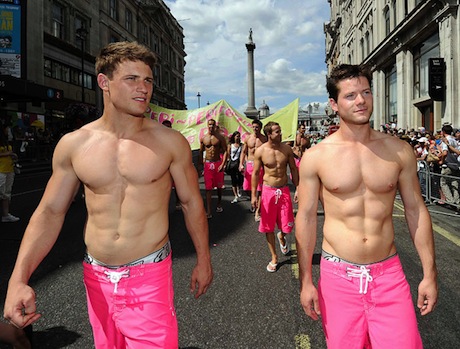
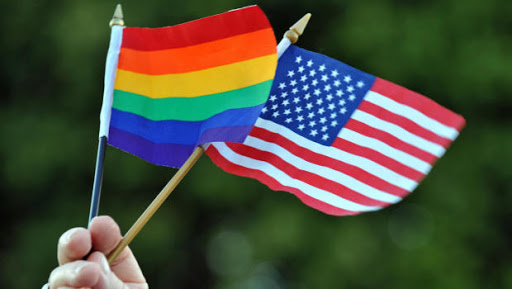
And that is what gay people live with, an understanding that we can live but must accept humiliations: others saying things are “gay” when they don’t like them, mocking our voices and constantly reminding us that our sex lives are somewhat preposterous and disgusting. You can live with and love someone, but you have to call her your roommate in front of Grandma. You can have a ceremony, just not in the family home where all your brothers got married. You can register with the state, but we sure as hell aren’t going to call it “marriage.” We can exist, but if we shove our gayness in anyone’s face, we will be punished.
The subtleties of the indignities we face are tied to the subtlety with which we handle them. A thousand times a day, gay people have the chance to deny their difference to fit in with society. Women and racial minorities are physically distinct. They can’t hide their marginalized status. Gays can and do. It is our best defense and our greatest weakness.
Gay people are really bad at getting politically organized, and one of the reasons is that we don’t like shoving our gayness in other people’s faces. Heterosexuals probably think that last sentence is preposterous: Oh! Those parades full of naked men and dykes on bikes! Rainbow flags and HRC stickers! Gay people can’t shut up about being gay! Actually, no. Gays spend most of our lives shutting up about it. It’s just that because our status is relatively invisible, we can only make it visible through some kind of action. Holding hands, speaking up, putting on a sticker — each of these is a little transgression. For gay people, unlike for visible minorities, every fight is a choice.
Every president elected in my lifetime has promised to be president for all Americans, and every president who has done so has for some perceived political necessity turned his back on lesbian and gay citizens when it came time to enact in that pledge.
Until Barack Obama.
We had four debates in October without a single question by any of the journalists or a single statement by any of the candidates on gay rights. Not one question about the Defense of Marriage Act. Nothing about the repeal of Don’t Ask Don’t Tell. Nothing about the myriad of family and health care issues that uniquely affect hundreds of thousands if not millions of lesbian and gay citizens.
Yet, Americans reelected a president who delivered on his promise to let gay citizens serve openly in our military. We reelected a president who during the campaign endorsed the right of lesbian and gay families to have the same legal protections their married neighbors enjoy.
Voters in Wisconsin promoted an open lesbian Congresswoman to be the first ever openly gay member of the United States Senate.
And voters in Maine, Maryland, Minnesota and Washington shut down the strategy bigots have long depended on to halt the growing recognition of equal protection under the law to lesbian and gay families.
In other news:
Most of us went into Election Day hoping for a cloud with a silver lining. Instead, we got a silver cloud with a gold lining, and one of the most significant days in the history of the LGBT movement.
Living and teaching on an intensely conservative community, I spent yesterday trying to convince people that the world will not come to an end. LGBT people are not an abomination. Life will continue, gay men and women will continue to exist (like they always have), and the world might be a little better in the next four years and in the future..IF they will just believe that we need to continue moving “FORWARD!”
This post was adapted from several articles from The Huffington Posts-Gay Voices.


 | noisilycool3bc985058… on Pic of the Day |
 | vandycolt on Pic of the Day |
| noisilycool3bc985058… on Pic of the Day |
 | Joe on Pic of the Day |
| noisilycool3bc985058… on Pic of the Day |



As an Amazon Associate I earn from qualifying purchases. So, if you click on a link that takes you to Amazon.com, I may earn a commission.
Trust me, it isn’t much, but every little bit helps.


 The Closet Professor