Category Archives: Uncategorized

Boston Marriages

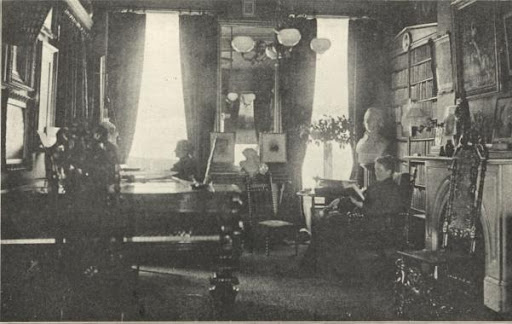
Sarah Orne Jewett and Annie Adams Fields
.
Boston marriage as a term is said to have been in use in New England in the decades spanning the late 19th and early 20th centuries to describe two women living together, independent of financial support from a man. The term was less well known before the debut in 2000 of the David Mamet play of the same name. Since 2000, many mentions of “Boston marriage” cite as examples the same few literary figures, in particular the Maine local color novelist Sarah Orne Jewett and Annie Adams Fields her late life companion, the widow of the editor of The Atlantic Monthly. There is often an assumption that in the era when the term was in use, it denoted a lesbian relationship. However, there is no documentary proof that any particular “Boston marriage” included sexual relations.

It’s an antique phrase, dating back to the 1800s. In Victorian times, women who wanted to maintain their independence and freedom opted out of marriage and often paired up to live together, acting as each other’s “wives” and “helpmeets.” Henry James’s 1886 novel about such a liaison,The Bostonians, may have been the inspiration for the term, or perhaps it was the most glamorous female couples who made their homes in Boston, including Sarah Orne Jewett, a novelist, and her “wife” Annie Adams Fields, also a writer.

Were they gay? Was the “Boston marriage” simply a code word for lesbian love? Historian Lillian Faderman says this is impossible to determine, because nineteenth-century women who kept diaries drew curtains over their bedroom windows. They did not bother to mention whether their ecstatic friendship spilled over into — as Faderman so romantically puts it — “genital sex.” And ladies, especially well-to-do ones who poured tea with their pinkies raised, were presumed to have no sex drive at all. Women could share a bed, nuzzle in public, and make eyes at each other, and these cooings were considered to be as innocent as schoolgirl crushes. In a 1929 study, Katherine B. Davis reported that, of 1,200 female college graduates who talked about their sex lives, 605, or 50.4 percent, responded that they had “experienced intense emotional relations with other women”, and 234, or 19.5 percent, had “intense relationships accompanied by mutual masturbation, contact of genital organs, or other expressions recognized as sexual”. These women spent their lives mainly with each other. They gave their time and energy to each other. Their practical reasons for not marrying men were strong but their emotional reasons were even stronger. These relationships would probably be known as lesbian relationships now.  Whether any given Boston Marriage involved sex is unknown. 

So, at least in theory, the Boston marriage indicated a platonic, albeit nerdy relationship. With ink-stained fingers, the Victorian roommate-friends would smear jam on thick slices of bread and then lounge across from each other in bohemian-shabby leather armchairs to discuss a novel-in-progress or a political speech they’d just drafted. Their brains beat as passionately as their hearts. The arrangement often became less a marriage than a commune of two, complete with a political agenda and lesson plan.

“We will work at [learning German] together — we will study everything,” proposes Olive, a character in The Bostonians, to her ladylove. Olive imagines them enjoying “still winter evenings under the lamp, with falling snow outside, and tea on a little table, and successful renderings . . . of Goethe, almost the only foreign author she cared about; for she hated the writing of the French, in spite of the importance they have given to women.” James poked fun at Olive’s bookworm passion. But he lavished praise on his own sister Alice’s intense and committed friendship with another woman, which he considered to be pure, a perfect devotion.

Most likely, the Boston marriage was many things to many women: business partnership, artistic collaboration, lesbian romance. And sometimes it was a friendship nurtured with all the care that we usually squander on our mates — a friendship as it could be if we made it the center of our lives.

Some women did not marry because men feared educated women during the 19th century and did not wish to have them as wives. Other women did not marry because they felt they had a better connection to women than to men. Some of these women ended up living together in a same-sex household, finding this arrangement both practical and preferable to a heterosexual marriage. Of necessity, such women were generally financially independent of men, due either to family inheritance or to their own career earnings. Women who decided to be in these relationships were usually feminists, and were often involved in social betterment and cultural causes with shared values often forming a strong foundation for their lives together.

The living arrangements of a Boston Marriage helped its participants have careers. American culture of the 19th century made it difficult for women to have careers while married to men. Wives were expected to care for their children. Society dictated that men and women play very different roles. Men were seen as taller, stronger, richer, and smarter; women were seen as weak and were expected to spend most of their time and effort pleasing their husbands. Even if her husband did not treat her as inferior, society did.

Women who wanted a different, more independent life (and could afford to have one) sometimes set up households together. While the women involved may have seen their relationship as one of equals and designed their own roles, society dictated that one partner in a relationship needed to be superior. Because of this view, one woman perceived herself to be “a man trapped in a woman’s body”.  Romantic relationships were especially common among academic women of the 19th century. At many colleges, female professors were not allowed to marry conventionally and still remain part of the faculty. Academic women also broke with the social view of women as mentally inferior: such a woman was likely attracted to another woman who would recognize her intelligence, rather than a man who most likely would not. Having invested so much of their lives in scholarship, such women could find needed respect for their work and lifestyle among other academic women.

In comparison to heterosexual marriages, Boston Marriages at that time had many advantages, including more nurturing between partners, and greater equality in responsibilities and decision making. Women who understood the demands of a career first-hand could give each other support and sympathy when needed. These women were generally self-sufficient in their own lives, but gravitated to each other for support in an often disapproving and sometimes hostile society.


Moment of Zen: Just Because


Labels

Wouldn’t the world be a wonderful place if we could shed labels like black, white, Latino, Asian, gay, bisexual or lesbian? We like to imagine — assume, even — that humanity will only ever continue to progress socially and technologically and that one day such distinctions will blur into a pleasant haze of meaninglessness. Are labels really necessary? We se them all the time, but should we?

Emotions

Tuesday was a difficult day emotionally for me.  It was not just because it was 9/11, but also for other reasons.  As the history teacher at my school, it largely falls on me to answer questions kids have about the events of September 11, 2001.  My students range from my seventh graders who were either not born or just one year olds to my Seniors who were in first or second grade when the terrorist attacks happened.  They always want to know what I was doing when I heard the news, so I tell my story and tell some of the background and following events that they were too young to understand.  They are still too young and naive to understand why anyone could hold that much hatred for the United States, and even at my age, I find it difficult to imagine that amount of hatred.  I read my classes the poem that I posted on Tuesday, because I found it poignant.  I tend to read poems with a great deal of emotion, so there were some tears shed by the end by my students. So that got my day off to a sad beginning.

Because I was in graduate school even back then, one student asked me why I had not gotten my PhD yet.  I explained that though I had planned to have my dissertation largely finished by the end of the summer that Grandmama’s illness, death, and the emotions surrounding that had made it difficult to get much work done this summer. That combined with the fact that one of my friend’s father suddenly died over the weekend and having dinner with my aunt at Grandmama’s houseTuesday night, all combined to create a waive of emotions as I lay down to try to sleep. I ended up crying myself to sleep as the emotions of the day and the thoughts of never seeing Grandmama again hit me suddenly.  I was exhausted physically and emotionally.  I’ve been very busy at the school with some additional duties this year, and I am still recovering from my cold making for a tiring day.

As I fell asleep, I dreaded waking up the next morning with the emotionally draining depression that I expected. However, I guess the mind works in mysterious ways and often knows how to heal.  I had a dream that night, which is unusual that I remembered it so vividly the next day because I rarely remember my dreams.  I dreamed that a dear friend of mine, one who lives far away but that I care deeply for, was traveling to visit me. I remember vividly the details, though odd some of them were.  I remember that he flew into to Mobile instead of the closer airport in Montgomery, and that I had given him directions to meet me at an away basketball game for the school which for some very odd reason, I was playing in or maybe I was coaching or something (that part was too odd to be clear).  I dreamed that I took him to my family lake house and we had a wonderful time together.  I woke up in a much better mood just thinking about him and seeing him.  I hope he doesn’t mind that I shared this dream with you, but it gave me such a sense of joy that it greatly lifted me out of the funk I was in when I had gone to bed.  

It’s amazing what a good dream and happy thoughts can do for a person’s mental state.  It was a wonderful experience, even if it was only a dream.  Have you ever had a dream like that which turned your whole mood around?

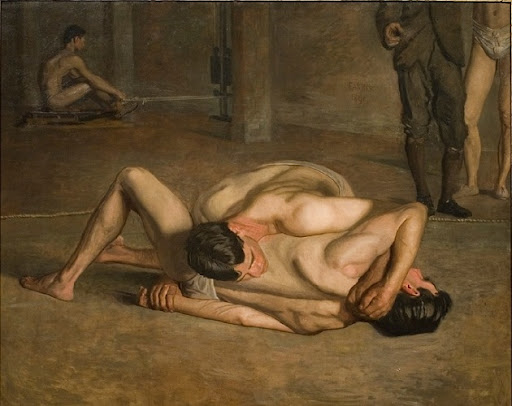
Thomas Eakins: Gay or Not?

Both the high school and college US history class I am currently teaching are studying the Gilded Age.  This means that the realist painter Thomas Eakins came up in my lectures. Since I know of his works, especially The Swimming Hole above, I began to wonder about his sexuality.  His paintings are certainly homoerotic, so was he gay, bisexual, or heterosexual.  I did an internet search to see what I could find. 

Eakins was married, but from my research it seems that his sexuality remains a matter of gossip even today. The males in his paintings, close friendship with Walt Whitman, stories from men who claimed advances, and belief that a naked woman was the most beautiful form in nature—‘except for a naked man’—give some reason to pause (Eakins also photographed and painted nude ladies).  His brother-in-law, Frank Stephens, prompted even more allegations by accusing him of incest. While the accusations of incest were never proved, the charge itself was enough to have Eakins removed from a Philadelphia art club. Some have speculated that Eakins had a long-term love affair with another former student, Samuel Murray, who was later a well-known sculptor and became Eakins’ devoted nurse in his last days.  

Always ingenious, Eakins devised endless ways to put naked or nearly naked people in his pictures. He painted a brutally realistic crucifixion scene; a group of men naked at a swimming hole; a sculptor in his studio with a young female model (and chaperone); and classical figures in a meadow, with and without their togas. On two occasions he depicted patients stretched out under a surgeon’s knife, and throughout his career he painted thinly clad male athletes in the heat of competition.

Eakins constantly strived to create convincing illusions, and long before it was fashionable, he used photographs to further his goal. He often succeeded too well. In 1876, Eakins portrayed world-famous surgeon Samuel Gross in the midst of an operation, and submitted the portrait for the art display at the United States Centennial Exhibition. But the judges saw simply a bloody document and sent the painting to a hall for medical instruments. Today many people consider “The Gross Clinic” the finest painting Eakins ever made.

About 10 years later, Eakins presented an idyllic scene of men swimming in the river for one of his most important patrons, but the patron politely sent it back, asking for a painting that he could donate to an art museum someday.

Now “The Swimming Hole” is one of Eakins’ best known and most popular images. It is a horizontal canvas, smaller than your sofa is long, showing six naked men and a big red dog, swimming in a river on a sunny day. One of them appears to be Eakins himself.

Viewers must have always seen that it expressed great pleasure in male companionship. These days, when homosexuality is an open subject, the painting, and the photographs that show the same setting and subjects, appear to indicate Eakins’ own sexual preference. Many call him one of the first gay artists in America.  Is this a fair assessment? Probably not.  I don’t know whether Thomas Eakins was gay or not, but I’m sure he would be dismayed by all this acclaim. Because more than anything else, Eakins wanted his art to make people uncomfortable, even angry.

As a teacher, Eakins demanded that his students draw and paint nude models, and he even asked the students to pose nude for one another. But that does not explain why he pulled the loin cloth off a male model to show a room full of female students the shape of a male torso. Or why when a female student, Amelia Van Buren, asked about the movement of the pelvis, Eakins invited her to his studio, where he undressed and “gave her the explanation as I could not have done by words only”.  It does explain why a public scandal flared, and why he got fired.

A few years after that, Eakins again made his students pose for photographs, though they were just the young sons and daughters of his brother-in-law, Will MacDowell. But why did he keep on making photographs after MacDowell asked him to quit? The incident caused a permanent break, and Eakins was banned from seeing the children, or visiting their family again.

These are just a few of many incidents in which Eakins’ apparent devotion to principle outweighed his commitment to his students, his job, his patrons and even his family.

There are other troubling stories. Eakins chose to make a portrait of Louis Kenton, the man who married his wife’s sister and beat her so badly she left him. Eerily, the painting is one of his best. On another occasion, a student who posed for her portrait publicly claimed that Eakins had promised to leave his wife and marry her. (The portrait was not finished.) Another young female student died of a suicide, though no one ever established a clear connection between the art lessons and her death wish.

Eventually, the American public came to accept realistic painting. Eakins was rehabilitated for history, and since the 1930s, he has been known as a modern rebel, ahead of his prudish time.

But his work continued to raise problems. There were all those nude photographs. Why did he do it? Many paintings of many subjects looked too photographic. Was he cheating somehow? There were portraits of women who looked intelligent and miserable. There were men who looked like objects of desire.

At last, in our new century, we’ve grown so tolerant of ambiguity, and photography, that the uneasiness is gone. The photographs are no longer a cheat, they look charming, and we enjoy the matching game, searching out the pose he stole and put in a painting. His naked male friends are almost sweet, as they stand on the river bank, posing like Greek gods. We don’t flinch when we discover that his wife Susan was content to play along, posing nude in the studio, and outdoors with his horse. We don’t mind that Eakins posed nude himself, and we see plenty of him, front and back. The scandal makes good gossip, and all the tired women could so easily be our mothers, or our friends.


Remember 9/11

TWO THOUSAND ONE, NINE ELEVEN
Two thousand one, nine eleven
Five thousand plus arrive in heaven
As they pass through the gate,
Thousands more appear in wait
A bearded man with stovepipe hat
Steps forward saying, “Lets sit, lets chat”
They settle down in seats of clouds
A man named Martin shouts out proud
“I have a dream!” and once he did
The Newcomer said, “Your dream still lives.”
Groups of soldiers in blue and gray
Others in khaki, and green then say
“We’re from Bull Run, Yorktown, the Maine”
The Newcomer said, “You died not in vain.”
From a man on sticks one could hear
“The only thing we have to fear.
The Newcomer said, “We know the rest,
trust us sir, we’ve passed that test.”
“Courage doesn’t hide in caves
You can’t bury freedom, in a grave,”
The Newcomers had heard this voice before
A distinct Yankees twang from Hyannisport shores
A silence fell within the mist
Somehow the Newcomer knew that this
Meant time had come for her to say
What was in the hearts of the five thousand plus that day
“Back on Earth, we wrote reports,
Watched our children play in sports
Worked our gardens, sang our songs
Went to church and clipped coupons
We smiled, we laughed, we cried, we fought
Unlike you, great we’re not”
The tall man in the stovepipe hat
Stood and said, “don’t talk like that!
Look at your country, look and see
You died for freedom, just like me”
Then, before them all appeared a scene
Of rubbled streets and twisted beams
Death, destruction, smoke and dust
And people working just ’cause they must
Hauling ash, lifting stones,
Knee deep in hell, but not alone
“Look! Blackman, Whiteman, Brownman, Yellowman
Side by side helping their fellow man!”
So said Martin, as he watched the scene
“Even from nightmares, can be born a dream.”
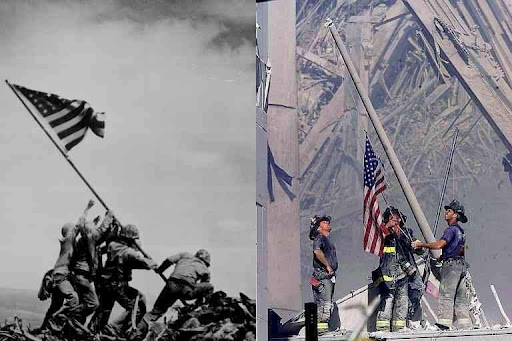
Down below three firemen raised
The colors high into ashen haze
The soldiers above had seen it before
On Iwo Jima back in ’44
The man on sticks studied everything closely
Then shared his perceptions on what he saw mostly
“I see pain, I see tears,
I see sorrow – but I don’t see fear.”
“You left behind husbands and wives
Daughters and sons and so many lives
are suffering now because of this wrong
But look very closely. You’re not really gone.
All of those people, even those who’ve never met you
All of their lives, they’ll never forget you
Don’t you see what has happened?
Don’t you see what you’ve done?
You’ve brought them together, together as one.
With that the man in the stovepipe hat said
“Take my hand,” and from there he led
five thousand plus heroes, Newcomers to heaven
On this day, two thousand one, nine eleven
UNKNOWN AUTHOR

Raising the Flag at Ground Zero

The horrific attacks of September 11, 2001 forever changed the landscape of the Manhattan skyline and life in America as we knew it.

But in the chaos and rubble where the World Trade Center no longer stood, Record photographer Thomas E. Franklin captured an unforgettable image of hope — three firefighters raising the American flag.

Standing defiantly against the gray and white landscape of devastation, these dust-covered men and the vivid red, white, and blue of Old Glory instantly became a symbol of American patriotism.The Record’s photo of these three heroic rescuers – Brooklyn-based firefighters George Johnson of Rockaway Beach, Dan McWilliams of Long Island (both from Ladder 157), and Billy Eisengrein of Staten Island (Rescue 2) – also became a global message that life, and America, would go on.The photo, which appeared Sept. 12 in The Record, has since graced the pages of many other newspapers as well as national newsmagazines. Network television has repeatedly displayed the photo during its round-the-clock disaster coverage, comparing it to the famous image of Marines raising the flag on Iwo Jima during World War II.

Franklin, an eight-year veteran of The Record, took the photo late in the afternoon of Sept. 11, after spending hours at the scene. He was walking toward the debris of the World Trade Center when he spotted the firefighters.

“The shot immediately felt important to me,” Franklin said. “It said something to me about the strength of the American people and about the courage of all the firefighters who, in the face of this horrible disaster, had a job to do in battling the unimaginable.”


Still Sick

With a fever of 102, I’m going to see my doctor.  Hopefully, he can get me well.  Other than the doctor visit, I plan to stay in bed today.

I’ve Got a Cold

Hopefully, it’s just my sinuses being all messed up because of the change in air pressure due to the hurricane.  We haven’t gotten much from Hurricane Isaac, but we do have some of the outer bands and of course some of the low pressure.  Whatever it is, I’m very stopped up.  I hate head colds, but maybe it won’t last long.

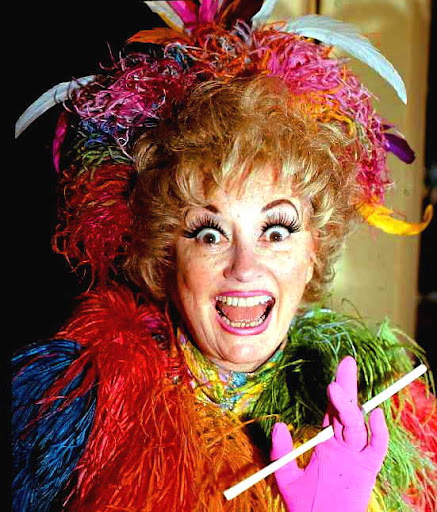
Phyllis Diller Dies at 95

Comedian Phyllis Diller dies at 95 – latimes.com

Phyllis Diller, the zany housewife-turned-stand-up comic with the electrified hairdo, outlandish wardrobe and a barrage of self-deprecating jokes punctuated by her trademark laugh, has died. She was 95.

Diller, whose career in comedy clubs spanned nearly 50 years, died in her sleep Monday at her longtime home in Brentwood, said her agent, Fred Wostbrock.

As a professional comedian, Diller was a late bloomer: The Ohio native was an Alameda, Calif., mother of five when she made her nightclub debut at the Purple Onion in San Francisco in 1955 — at age 37.

Known for her adept timing and precisely structured jokes, Diller took pride in being able to deliver as many as 12 punch lines per minute.

The first laugh came easy. With her fright-wig hair and garish attire that typically included a fake-jeweled cigarette holder, gloves and ankle boots, she merely had to walk on stage.

Jack Paar once described her as looking “like someone you avoid at the supermarket.” Bob Hope called her “a Warhol mobile of spare parts picked up along a freeway.”

But Diller was always the first to address her colorfully eccentric stage persona, describing herself as “The Elizabeth Taylor of’The Twilight Zone'” and a woman who once worked “as a lampshade in a whorehouse.”

During her long career, she was in more than two dozen movies, including three with Hope, with whom she also appeared on numerous TV specials and traveled with to Vietnam to entertain U.S. troops.

She also was the host of a 1964 TV talent show called “Show Street,” starred as the widowed matriarch of a financially strapped society family in the 1966-67 situation comedy “The Pruitts of Southampton” (renamed “The Phyllis Diller Show” midway through the season), and starred in the short-lived 1968 comedy-variety series “The Beautiful Phyllis Diller Show.”

But the outlandish Diller always shined best in nightclubs, showrooms and concert halls, where one of her favorite targets was her domestic life, including her fictional husband “Fang.”

“I don’t like to cook; I can make a TV dinner taste like radio,” she’d say. “Fang’s idea of a seven-course dinner is a six-pack and a bologna sandwich. The last time I said let’s eat out, we ate in the garage.”

“I put on a peekaboo blouse. He took a peek and booed.”

Then she’d launch one of her patented guffaws: “Ah-HAA-haa-haa!”

In his book “Seriously Funny: The Rebel Comedians of the 1950s and 1960s,” author Gerald Nachman writes: “Diller wasn’t the first woman stand-up comedian, but she was the first to make it respectable, to drag female comedy out of the gay bars, backrooms and low-rent resorts and go toe-to-toe with her male counterparts in prime clubs.”

Born Phyllis Driver in Lima, Ohio, on July 17, 1917, Diller made people laugh at an early age.

“When I realized I looked like Olive Oyl and wanted to look like Jean Harlow, I knew something had to be done,” she once said. “From 12 on, the only way to handle the terror of social situations was comedy — break the ice, make everybody laugh. I did it to make people feel more relaxed, including myself.”


Taking a Breather

School starts back on less than a week and there is so much to be done before the summer is over, so I am taking a breather from my blog today.