I am having a minor surgery today, nothing really to worry about, but just something that my doctor says has to be done. I was supposed to have this surgery back in July, but my insurance company decided that I had a waiting period of one year because it might be a pre-existing condition. The waiting period was passed on September 1, but because of my job, I had to wait until the Thanksgiving holiday to have this surgery done. Because I will be staying with my parents during my recovery this week, I won’t have much access to the internet. Therefore, I spent the weekend setting up posts for this week. If you email me during this week, I probably will not be able to answer until the end of the week. I also won’t be able to respond to comments, though I promise that I will when I get back to my house. See you guys on the flip side.
Category Archives: Uncategorized
Apology
Sorry guys for the lack of posts this week. If you read my other blog, you know that I have a horrible cold and feel like crap. This blog always takes more time and energy than my other and sadly I have been neglecting it this week in order to try and get some rest and get well.
This weekend I plan to take Nyquil and stay in bed all weekend long. Hopefully, I will be better on Monday. Again, I apologize for the lack of posts.
Routine Secular Circumcision: The CASE of the USA
The United States is unique among Western countries in its practice of routine circumcision. From 1.2 to 1.8 million little Americans are circumcised annually, representing from 60% to 90% of newborn boys. The routine, almost compulsory character of this mass circumcision raises multiple questions concerning public health and medical practice. Having originated in particular historical circumstances, this procedure has for decades been the subject of studies aimed at making precise measurements of actual medical benefits, calculating cost/benefit ratios, and attempting to understand the sociocultural implications and ethical issues.
The history of circumcision in the United States can be divided into three periods:
1870-1949: Circumcision as punishment
Routine circumcision was introduced to the United States in stages beginning in the 1870s for one basic purpose: to deprive the male of a prepuce considered essential for masturbation, a practice thought to be the cause of multiple physical and mental pathologies. From Europe, where masturbation was seen as an indication for circumcision, the fear of masturbation spread to North America, where emphasis was placed on its psychological effects.
Routine circumcision made its initial appearance in the United States on February 9, 1870. Lewis Sayre, first professor of orthopedic surgery in the United States, president of the American Medical Association and founder of J.A.M.A., noticed that a 5-year-old boy with multiple tendon contracture of unknown etiology suffered from very painful phimosis and priapism, which Sayre attributed to excessive masturbation. Believing that masturbation could create a “source of irritation” responsible for tendon pathology, Sayre recommended circumcision. According to Sayre, circumcision caused the tendon contracture to disappear within a few weeks, allowing the boy to resume walking.
Sayre’s position at a university gave his first publication an important audience. Sayre led his audience to believe that a simple intervention could cure myriad puzzling diseases thought to be incurable. He encouraged doctors to examine the prepuce every time they encountered unfamiliar pathology. He added a great number of illnesses to the list of indications for circumcision, to the point where many of Sayre’s disciples quite naturally proposed changing over from therapeutic circumcision to preventive circumcision. So great, they said, were the benefits and so innocuous was the operation. Circumcision became progressively established as a simple health precaution, a kind of surgical vaccination.
A few years later, Remondino enumerated the disorders caused by masturbation (alcoholism, epilepsy, asthma, enuresis, kidney disease, gout, prolapse of the rectum, hernia, cancer, syphilis…), reinforcing the prophylactic benefits of circumcision and contributing greatly to making the procedure acceptable in the eyes of the public. Remondino suggested that insurance companies should treat the foreskin as a special risk factor for men, a suggestion that could only provide additional impetus for circumcision. Some doctors applied themselves to perfecting and simplifying circumcision techniques: in 1910 Kistler invented a device that allowed adults to perform self-circumcision.
In a climate so favorable to preventive circumcision, few publications condemned circumcision as a barbaric practice or advised doctors to stop doing mutilations which lacked a scientific basis.
In fact the practice of circumcision grew, especially as the field of general anesthesia progressed rapidly and the rise in the number of surgeons and hospitals (a 20-fold increase in the last third of the 19th century) motivated surgeons to seek new opportunities for profit. Thus after the First World War neonatal circumcision became almost routine, to the point that in 1929, an editorial in J.A.M.A. called for the circumcision of all newborns, with or without the consent of parents.
The period of evaluation
Right into the 1940s, the usefulness of circumcision was taken for granted in the medical birthing culture. Parental approval was almost never requested and the proportion of little Americans circumcised was about 90%–that is, nearly all of them–a situation which explains the first assessment studies.
It was Gairdner’s work that first brought the value of routine infant circumcision into doubt. Drawing up the inventory of indications, which had changed little since the days of Sayre, Gairdner noted that in the West, circumcision was routine only in English-speaking nations and that circumcision was more common in boys from the upper classes.
In 1969, Bolande compared circumcision to tonsillectomy, describing both as ritualistic surgeries having no sound scientific basis. He demanded credible scientific evidence showing that circumcision was useful. In the absence of such evidence, he considered circumcision contrary to the most basic principles of medical ethics, principles also highlighted by Price.
The potential benefits of routine infant circumcision were evaluated in practice guidelines published on several occasions by the American Academy of Pediatrics and the American College of Obstetricians and Gynecologists. The indications assessed by these bodies were prevention of phimosis, facilitation of hygiene, prevention of penile cancer, prevention of cervical cancer (at times considered more frequent in partners of non-circumcised males), and prevention of sexually transmitted infections. Studies showed that:
• usually phimosis in the newborn is physiologically normal and is not an indication for newborn circumcision;
• circumcision could facilitate glans hygiene in conditions of social disadvantage;
• penile cancer can be prevented as effectively by proper hygiene as by circumcision, a procedure whose protective biological mechanism is moreover poorly understood;
• absence of circumcision is not by itself a determining factor in the occurrence of cervical cancer.
With regard to the prevention of urinary tract infections in children, the purely retrospective nature of the studies and the limiting of subjects to children treated in hospital did not warrant recommending routine circumcision for this indication.
The question of preventing sexually transmitted infections (STI) was also the subject of numerous studies, notably because of the implications for AIDS prevention. A study of 300 heterosexual men by Donovan, Bassett and Bodsworth found that circumcision offered no protection against genital herpes, genital warts or non-gonococcal urethritis. Elsewhere, studies conducted in Africa seemed to indicate that heterosexually transmitted HIV was more common in men who had not been circumcised.
In point of fact, most authors note the multiple methodological flaws in the largely retrospective studies, especially the assumption that circumcision is risk-free. The studies depend heavily on the socio-economic status of parents, suggesting that the sexual behavior of circumcised and non-circumcised men may not be the same. This hypothesis was confirmed by Laumann. Due to the bias inherent in these studies, the results in most cases are difficult or impossible to interpret.
These evaluative studies concluded that there was no absolute indication for routine infant circumcision, bringing into question the justification for a practice affecting nearly all male newborns. Moreover practice guidelines emphasized the need to give parents clear information on the risks of circumcision and non-circumcision, to substitute good hygiene for routine circumcision, and to avoid considering newborn circumcision as a defining element in the overall quality of health.
Notwithstanding these recommendations, the practice of routine circumcision scarcely changed and the frequency of circumcision in the USA today remains the highest in the industrialized world. More than 80% of boys are circumcised at birth [46] while–for reasons that are not well understood–routine circumcision in economically comparable Anglophone societies (Great Britain, English-speaking Canada, Australia) is either quite uncommon or virtually nonexistent. Against the backdrop of a medical consensus that seems to carry little weight, recent articles underscore the importance of social factors in US circumcision practices and provide some insight into the persistence of this practice.
Circumcision in the USA: A social marker
Circumcised men are more likely to be white and socio-economically advantaged. Among blacks, circumcision is half as common. The study conducted by Laumann on a representative sample of about 1500 Americans aged 18 to 59 found that the circumcision rate is higher among whites than among blacks or Hispanics, a finding that was confirmed by Wilkes and Blum. Of the reasons given by parents to justify a request for circumcision, most are social in character, the parents effectively not wanting their sons to have a physical difference that would set them apart from most Americans and hinder their social integration. Moreover the decision to circumcise or not circumcise a newborn is strongly correlated with the circumcision status of the father, illustrating the attraction of circumcision as a physical mark of social identity.
The circumcision decision also depends to a significant extent on the social status of the mother. The circumcision rate was 2.5 times higher in boys whose mother had a university education. Finally, in contrast to the situation in Europe, circumcision in the United States is not generally correlated with the practice of a religion. Thus circumcision reflects social rather than religious differences. The request for circumcision on the part of parents seems to reflect a desire for membership in an elite, and parents belonging to less favored classes are not as strongly committed to circumcision.
Besides behaviors linked to the social profiles of parents, the role of circumcising physicians should not be overlooked. Circumcisions are less frequent in public hospitals where physicians are on salary.
Finally, it should be noted that different studies seem to show that masturbation, whose role in introducing routine circumcision to the USA has been previously mentioned, actually appears to be more common in individuals who have been circumcised.
The history of ritual circumcision shows the complexity and intricacy of the meanings attached to this practice. It also illustrates the social importance accorded to circumcision by all the societies that practice it. Finally, it offers physicians abundant raw material for reflection on the history of ideas in medicine and the cultural meanings of certain medical practices; it draws attention to the difficulties inherent in, and the necessity for, proper evaluation of medical practices that have become routine.
How Was Your First Time?
Recently, I was discussing with a friend of mine about our first time having sex. Many of us, even though we are gay, had our first time with a woman. I will admit it, I am not a gold star gay, I have had sex with women. I thought it was the path I was supposed to go. I fantasized about men, but I never thought it was possible to actually let it go any further than fantasy. I am very thankful that I realized that I was wrong about this. This is the conversation we had about our first time:
ME: The first two times I had sex with women sort of defined my ideas of sex. The first time was a lot of fun, far too brief, and with a condom. The second time (and there is a lot of emotional baggage attached to this time), it was without a condom, and it just felt nasty to me. I like the feel of lube, especially silicone-based lube because it does mirror that silky feel, but it was just something about the vaginal juices that just grossed me out. I’ve tried to go down on women, but the greasy feeling of pubic hair/vaginal region just really turned me off. I’ve never understood it. That second time, no matter how hard I tried, I was never able to have an orgasm. The ickiness of the feel, and the fact that she was very loose and wet, just didn’t allow me to reach orgasm, and we went at it for a while. Is it just me, or do other guys get turned off by this? I assume a lot of gay guys do, but I really would like a different perspective on this. I have had sex with women since those initial two times, but I guess all women have unique vaginas like men and the uniqueness of our penises.
HIM: I was drunk as a skunk my first time fucking and eating a pussy and couldn’t even find the hole [fucking wise] – was aiming for the right area but couldn’t plant my dick in it. It wasn’t a good experience for either. I felt [right after] a complete failure, in the “male” dept. She had to lead my dick to her hole. I wasn’t all that hard to begin with. The whole affair was, in my mind’s eye, a complete failure. Needless to say, we never continued dating.
ME: I totally understand the trying to find the hole part on the first time you fucked a girl. I am right there with you. It is very difficult the first time. I wonder if all guys have that problem. It’s very embarrassing, but oh well, you eventually get over it. When I was older and had sex with a woman again, it wasn’t so difficult. Just glad that I wasn’t the only one who had that happen their first time.
HIM: I am convinced that every guy the first time he has sex will fumble in some way. I don’t care how macho he considers himself. I’d never seen a pussy before and I sure wasn’t acquainted with the pussy anatomy – I just thought it was a hole of some kind. And for me the first time was in the dark. It’s not like I could look for it or anything. Hell, I didn’t know what to be aiming for in the first place. If it’s your first time – you just don’t know. But after a couple of times you learn how to geolocate one with just using your dick. The pussy hair doesn’t help. It hides everything. That’s why I so love having sex, exclusively, with another guy. I’m 100% familiar with the equipment, I know what it does, and I know how it works and what works it
The first time I had sex with a guy, I had not problem finding the equipment. The first time I fucked a guy, my dick slid into his ass as naturally as it could be. There was no fumbling, there was just perfect harmony. This may be because I had had sex with several women before this, but I do think that we are more familiar with a man’s body.
So my questions are these: Was your first time with a man or woman? Was that first time awkward? Was it easier when you compared your first time with a man or with a woman? Why? I would love to know your answers guys. I am curious to know if it is universal that the first time is always awkward or if some of us are just born with the ability to be a great lover.
James Baldwin
Raised during the Harlem Renaissance, James Baldwin established his reputation with his first novel, Go Tell It On The Mountain in 1953, an autobiographical tale of growing up in Harlem. He became one of the leading African-American authors of his generation, known for novels and essays that tackled black-white and hetero-homosexual relationships. He was particularly a noted essayist during the Civil Rights movement of the 1960s. Baldwin turned to writing after being encouraged by Richard Wright, and, like Wright, left the U.S. after World War II and moved to France. His novels, including Giovanni’s Room (1956), Another Country (1962) and Just Above My Head (1979), all deal with the struggle for individuality against intolerance. He also wrote several plays, including Blues For Mister Charlie (1964), and Evidence of Things Not Seen (1986), a book about racially-motivated child murders in Atlanta.
A groundbreaking novel for its exploration of homosexuality, James Baldwin’s Giovanni’s Room (1956) holds a unique place in the American and African American literary traditions. Baldwin published it against the advice of Alfred Knopf, who published his acclaimed debut novel, Go Tell It on the Mountain (1953); editors warned Baldwin that he would jeopardize his potential as a ““Negro”” author by writing a book about white male sexual and cultural identity. However, the determined Baldwin found a British publisher, Mark Joseph, and Dial Press eventually published Giovanni’s Room in America.
The first-person narrative centers around David, a white American attempting to “find himself” in France. The novel opens in the present with David recalling his internecine upbringing and an adolescent homosexual encounter. In Paris awaiting the return of his girlfriend and possible fiancée, Hella, David engages in a torrid affair with Giovanni, an Italian bartender. Giovanni loves him unashamedly, and they live together for two months; however, David transforms Giovanni’s room into a symbol of their “dirty” relationship. Upon Hella’s return from Spain, David abruptly leaves the
destitute Giovanni, who has been fired by bar owner Guillaume, a “disgusting old fairy.” David’s desertion psychologically destroys Giovanni, who enters a sexually and economically predatory gay underworld. Giovanni eventually murders Guillaume, who reneges on a promise to rehire him in exchange for sex; he is later caught and sentenced to death.
Meanwhile, David, despondent over his mistreatment of Giovanni and the truth about his homosexuality, attempts to rejuvenate himself via marriage. But upon discovering him and a sailor in a gay bar, Hella vows to return to America, wishing “I’d never left it.” The novel’s closing tableau replicates its opening: David ponders Giovanni’s impending execution and his complicity in his erstwhile lover’s demise.
Giovanni’s Room fuses the personal, the actual, and the fictional: Baldwin exorcises demons surrounding his own sexual identity while simultaneously capturing the subterranean milieu he encountered in Paris during the late 1940s and early 1950s; he bases the murder plot on an actual crime involving the killing of an older man who purportedly propositioned a younger one; and he weaves a Jamesian tale of expatriate Americans fleeing their “complex fate” in search of their “true” selves. The novel received favorable reviews, many critics applauding
Baldwin’s restrained yet powerful handling of a “controversial” subject. Ultimately, the book is more than a study of sexual identity, as Baldwin himself posited: “It is not so much about homosexuality, it is what happens if you are so afraid that you finally cannot love anybody.” Giovanni’s Room maintains a seminal place in American, African American, and gay and lesbian literary studies.
Giovanni’s Room was the first gay novel I ever read. I found it utterly fascinating and it began my life long pursuit and love of gay novels. It is not a happy novel, but it is well worth reading. Baldwin became and inspiration to me. Recently while listening to NPR, Morning Edition did a story about a a new collection of his works edited by Randall Kenan called The Cross of Redemption. Here is an excerpt from the transcripts of this story:
The writer James Baldwin once made a scathing comment about his fellow Americans: “It is astonishing that in a country so devoted to the individual, so many people should be afraid to speak.”
As an openly gay, African-American writer living through the battle for civil rights, Baldwin had reason to be afraid — and yet, he wasn’t. A television interviewer once asked Baldwin to describe the challenges he faced starting his career as “a black, impoverished homosexual,” to which Baldwin laughed and replied: “I thought I’d hit the jackpot.”
I wish that all of the GLBT population in the world could feel each day like they’d “hit the jackpot.”
My Big Fat Greek Gay Blog: No Way Out
Throughout most of my adult life, I have battled depression in some way. I have learned to deal with it and medication has helped. Bobby, over at My Big Fat Greek Gay Blog, had a post today about depression. It is well worth reading. It certainly shows that you are not alone.
My Big Fat Greek Gay Blog: No Way Out
Many, if not the majority of, gay and lesbian youth face the problems of depression. If you find yourself depressed or feeling like you want to end it all, get in contact with your doctor. He or she can help. Tell a friend, tell a family member, but don’t try to go through it alone. There are numerous resources out there. Get help before it is too late. Bobby and I both have, and it will help, I promise.
Update
My coming out saga that I have been writing will continue soon. I did not have the time or energy to finish writing the post that I had started.
My new job went surprisingly well today. I had not had great expectations and therefore they were surpassed. I hope that it continues, but I am trying not to be overly optimistic. I am usually an optimistic person who looks on the bright side of life. I try, at least, to be a happy person. My job was not the one I wanted nor is it completely within my area of study; however, with the current job market and economy, I took what I could find. I hope it continues to progress better than I expect. Thanks to all my readers who sent their well wishes. They are greatly appreciated.
The Third Sex
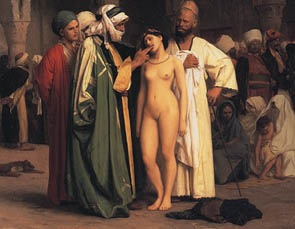
One of the reasons that I went ahead and changed the name of Cocks and Asses Only to Cocks, Asses, and More and then set up my new blog, The Closet Professor, earlier this week is because I knew that I wanted to do a post about eunuchs, and quite honestly, not all eunuchs fit into the purview of Cocks and Asses Only. When castrated, some eunuchs only had their testicles removed, and they would most certainly fall into the category of cocks and asses only, but many time in the ancient world, eunuchs suffered full castration and their testicles and penis were removed. It is not something that I think any man really relishes the thought of, but that I have always found particularly fascinating.
The word eunuch [from the Greek meaning keeper of the couch] does not
derive, as one might think, from the operation that produced a eunuch but rather from one of his functions. Eunuch goes back to the Greek word eunoukhos, “a castrated person employed to take charge of the women of a harem and act as chamberlain.” The Greek word is derived from eunē, “bed,” and ekhein, “to keep.” A eunuch, of course, was ideally suited to guard the bedchamber of women. From remote antiquity on, eunuchs were employed in the Middle East and China as guards and servants in harems or other women’s quarters and as chamberlains to kings. The eunuchs’ confidential position frequently enabled them to exercise an important influence over their royal masters. Many of the patriarchs of Constantinople during Byzantine times were eunuchs. Eunuch advisers disappeared as a class only with the end of the Ottoman Empire.
The title of this post comes from the notion that eunuchs made up a “third sex.”

Third gender or third sex refer to a gender category present in almost all indigenous/ non-Western societies, of people who are considered neither completely male, nor completely female. It is a gender identity separate from ‘men’ and ‘women,’ of people considered to be the intermediate sex; in-betweens (like the androgynes) or neutrals (like the agendered). In some indigenous societies such as the Native North Americans, the third sex, or two-spirits, took on roles of their other non-physical gender. In western culture were many such men and women were shunned, discriminated against, or often persecuted, a third sex never really developed, except within the community of eunuchs. Eunuchs were seen as no longer being male, but they were also not female, because they did not possess female sex organs. Therefore eunuchs in western culture became a third sex, one that was no longer considered male, had similar legal status as women, and were often slaves, even when they held important positions within the governments of the ancient world. The eunuch Bagoas was supposedly a lover of Alexander the Great. Bagoas (in Old Persian Bagoi) was a eunuch in the Persian Empire in the 4th Century BCE, said to have been the catamite (a boy who has a sexual relationship with a man) of both Darius, and later Alexander the Great.
The Hijra of India (click on the picture below, “Tejal Shah” for information about the photo and it’s meaning) are probably the most well known and populous third sex type in the modern world — Mumbai-based community health organisation The Humsafar Trust estimates there are between 5 and 6 million hijras in India. In different areas they are known as Aravani/Aruvani or Jogappa. Often (somewhat misleadingly) called eunuchs
in English, they may be born intersex or apparently male, dress in feminine clothes and generally see themselves as neither men nor women. Only eight percent of hijras visiting Humsafar clinics are nirwaan (castrated). Indian photographer Dayanita Singh writes about her friendship with a Hijra, Mona Ahmed, and their two different societies’ beliefs about gender: “When I once asked her if she would like to go to Singapore for a sex change operation, she told me, ‘You really do not understand. I am the third sex, not a man trying to be a woman. It is your society’s problem that you only recognize two sexes.'” Hijra social movements have campaigned for recognition as a third sex, and in 2005, Indian passport application forms were updated with three gender options: M, F, and E (for male, female, and eunuch, respectively). Some Indian languages such as Sanskrit have three gender options. In November 2009, India agreed to list eunuchs and transgender people as “others”, distinct from males and females, in voting rolls and voter identity cards.
In addition to the feminine role of hijras, which is widespread across the subcontinent, a few occurrences of institutionalized “female masculinity” have been noted in modern India. Among the Gaddhi in the foothills of the Himalayas, some girls adopt a role as a sadhin, renouncing marriage, and dressing and working as men, but retaining female names and pronouns. A late-nineteenth century anthropologist noted the existence of a similar role in Madras, that of the basivi. However, historian Walter Penrose concludes that in both cases “their status is perhaps more ‘transgendered’ than ‘third-gendered.'”
We will begin our lessons on eunuchs and the third sex this week, and I hope you will find it interesting and informative as we delve into this mysterious topic. My current plan is to continue to introduce historical, cultural, and political topics on Cocks, Asses, and More, then to integrate this new blog, I will be spending several days, but usually no longer than a week on the topic introduced over at the Cocks, Asses, and More. I hope that you will enjoy this approach. This way, there are not so many long history posts on one day, and thus since we all have busy schedules we can devote more time to a topic of discussion. Please feel free to chime in with comments, suggestions, and discussions on both, Cocks, Asses, and More and this blog.
Welcome
Welcome to The Closet Professor. The Closet Professor is a blog dedicated to GLBT Studies: History, Art, Literature, Politics, and Culture. There will be a wide range of topics that will begin with my GLBT Studies posts from my other blog, Cocks, Asses, & More.
I hope you enjoy this blog. I set it up for those who are more interested in these topics than the purely erotic posts of Cocks, Asses, & More. Most of the posts The Closet Professor will be published in conjunction with Cocks, Asses, & More, but this blog will also contain posts that are unique to The Closet Professor. If you enjoy the cultural aspects of Cocks, Asses, & More, I hope you will love this blog.
Join me in a fun and intellectual journey through GLBT culture throughout the ages. I hope you enjoy our lessons together. Feel free to make comments and suggestions for current and future posts. In the next few day I will be posting most of my history posts from Cocks, Asses, and More.
JoeBlow