Usually on Sunday, I plan out what I’ll wear to work during the week ahead. For some reason, I don’t do that yesterday. I haven’t even decided what I’m going to wear to work today. Not that I even want to actually go to work today, but I have to go regardless of what I want to do, which right now is to go back to bed. I’m really not looking forward to work at all this week. I have several events to attend, and I’d rather not go to any of them. While I don’t have any crucial tasks that need to be done today, I have things that should keep me pretty busy. The busier I can be, the quicker the day will go by.
God is our refuge and strength, A very present help in trouble.
-Psalm 46:1
Rock of Ages
Rock of Ages, cleft for me, let me hide myself in thee; let the water and the blood, from thy wounded side which flowed, be of sin the double cure; save from wrath and make me pure.
Not the labors of my hands can fulfill thy law’s demands; could my zeal no respite know, could my tears forever flow, all for sin could not atone; thou must save, and thou alone.
Nothing in my hand I bring, simply to the cross I cling; naked, come to thee for dress; helpless, look to thee for grace; foul, I to the fountain fly; wash me, Savior, or I die.
While I draw this fleeting breath, when mine eyes shall close in death, when I soar to worlds unknown, see thee on thy judgment throne, Rock of Ages, cleft for me, let me hide myself in thee.
“Rock of Ages” is a popular Christian hymn written by the Reformed Anglican minister Augustus Toplady, an Anglican cleric and hymn writer. He was a major Calvinist opponent of John Wesley (founder of the Methodist Church). Toplady is best remembered as the author of the “Rock of Ages.”
“Rock of Ages” has always been a popular hymn, and it’s one of my favorites. Through the song, Toplady speaks of how God is our refuge and strength. As Psalm 46:1 says, “God is our refuge and strength, A very present help in trouble.” God will be with us in our time of need. He may not always present Himself in the way we want, but it is in the way He deems we need the most. God answers all of our prayers, but sometimes that answer may be “no.” However, no matter what, we can draw strength from our belief in God.
There is a popular, but probably apocryphal, story about the origin of this hymn text that started 122 years after publication of the hymn text by a letter published in the Times of London on June 3, 1898 from Dean Lefroy of Norwich, together with one from Sir W. H. Wills on the same matter. The burden of Lefroy’s correspondence is based on a claim made by Sir W. H. Wills regarding the origin of this hymn. Wills’ claim asserted that Toplady drew his inspiration from an incident in the gorge of Burrington Combe in the Mendip Hills in England. Toplady, then a curate (assistant Church of England preacher) in the nearby village of Blagdon, was travelling along the gorge when he was caught in a storm. Finding shelter in a gap in the gorge, he was struck by the title and scribbled down the initial lyrics.
According to E. J. Fasham, a more likely inspiration for the text is a 1673 sermon by Daniel Brevint (who had been the Dean of Durham Cathedral). This sermon had been partially quoted in the preface to Charles Wesley’s Hymns of the Lord’s Supper (1745), which was in common use amongst a number of ministers of the period. The similarity between the passages from Brevint’s sermon and the hymn suggests this was the starting point for Toplady’s text. Regardless of the origins of the hymn, we can still draw great strength and inspiration from it.
The text of this hymn from Toplady’s July 1776 ‘alt’ version has been substantially edited since its publication by different denominations over the years creating a number of versions of the hymn text used by different churches around the world. An example of an edit made to Toplady’s text is: “When my eyes shall close in death” was originally written as “When my eye-strings break in death”. Notwithstanding the bitter pamphlet war between Augustus Toplady and John Wesley over the correctness of Calvinist (souls are predestined for heaven or hell) versus Arminian (souls are saved through God’s grace) theology, there has been speculation by some, that although Toplady was a Calvinist, the edited version of the words, “Be of sin the double cure, Save from wrath, and make me pure,” suggest he agreed with the teachings of the Methodist preacher under whom he received his religious conversion, and of his contemporary, John Wesley, who taught the “double cure”, in which a sinner is saved by the atonement of Jesus, and cleansed from sin by being filled with the Holy Spirit.
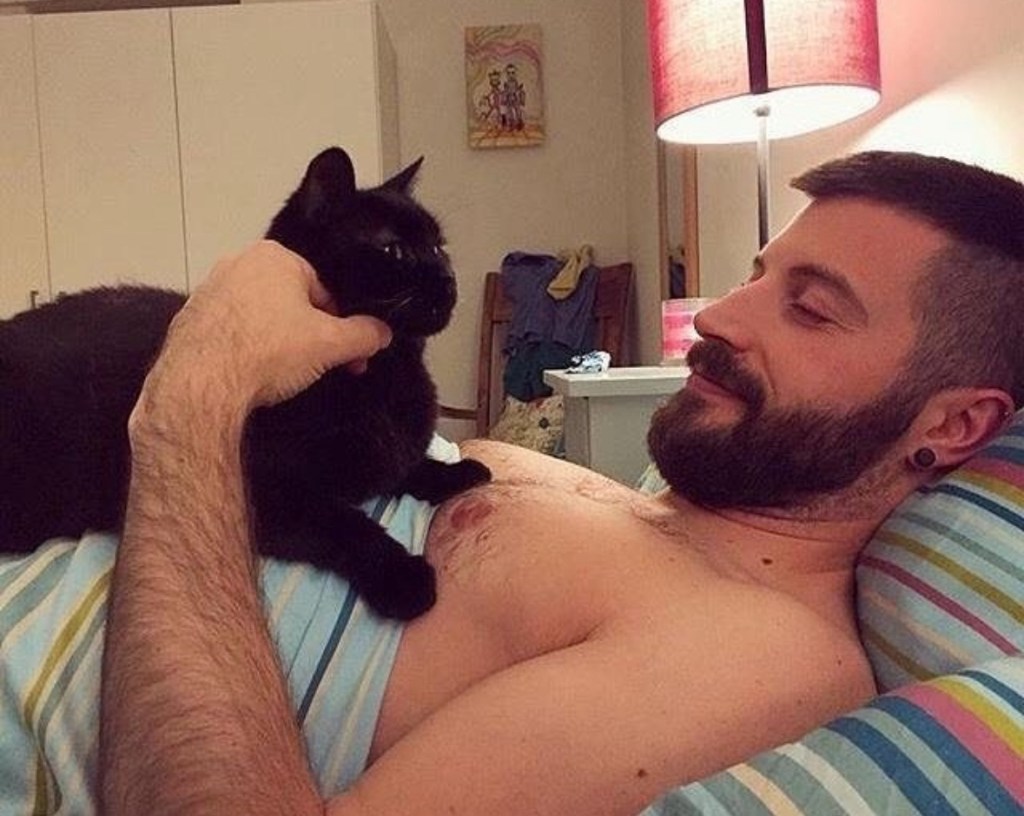
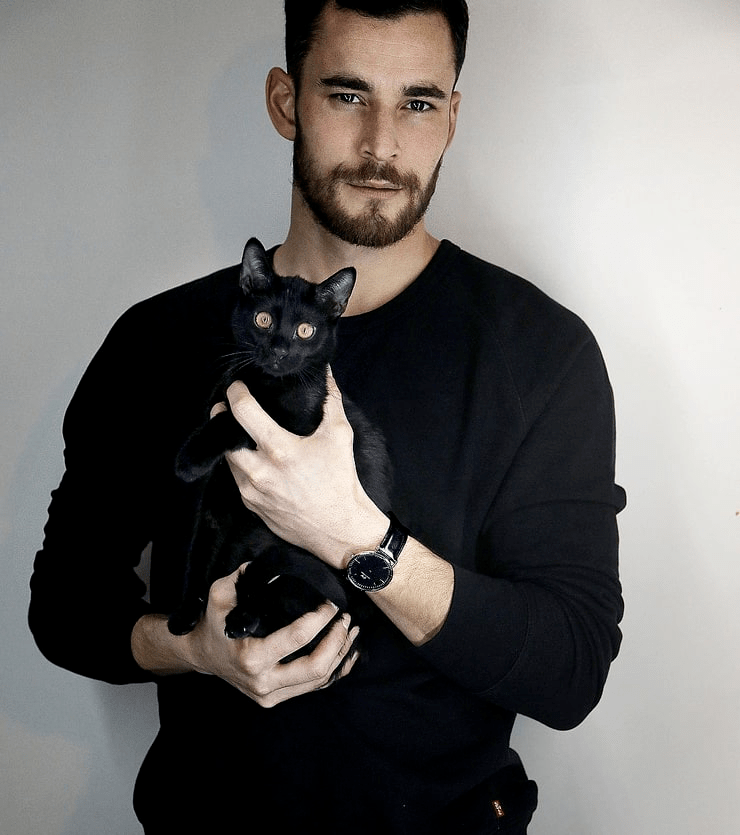
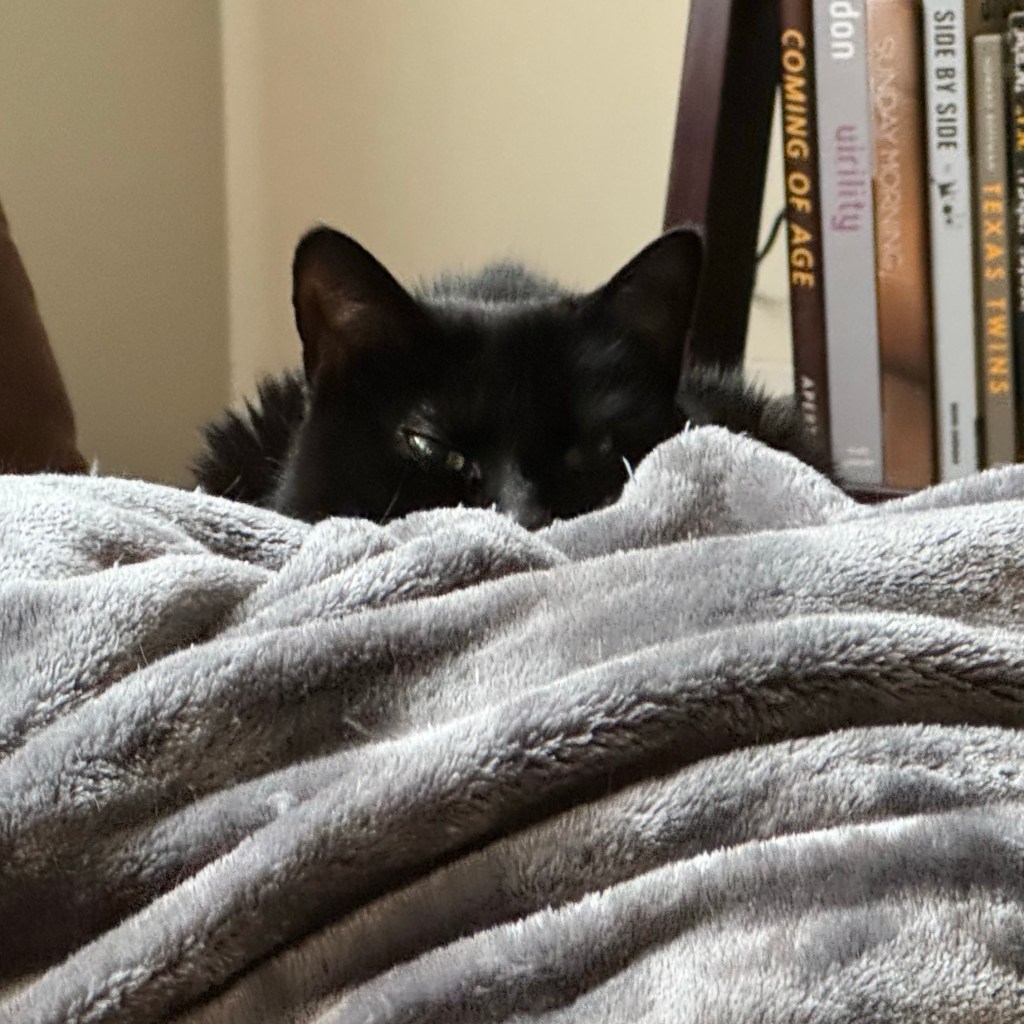
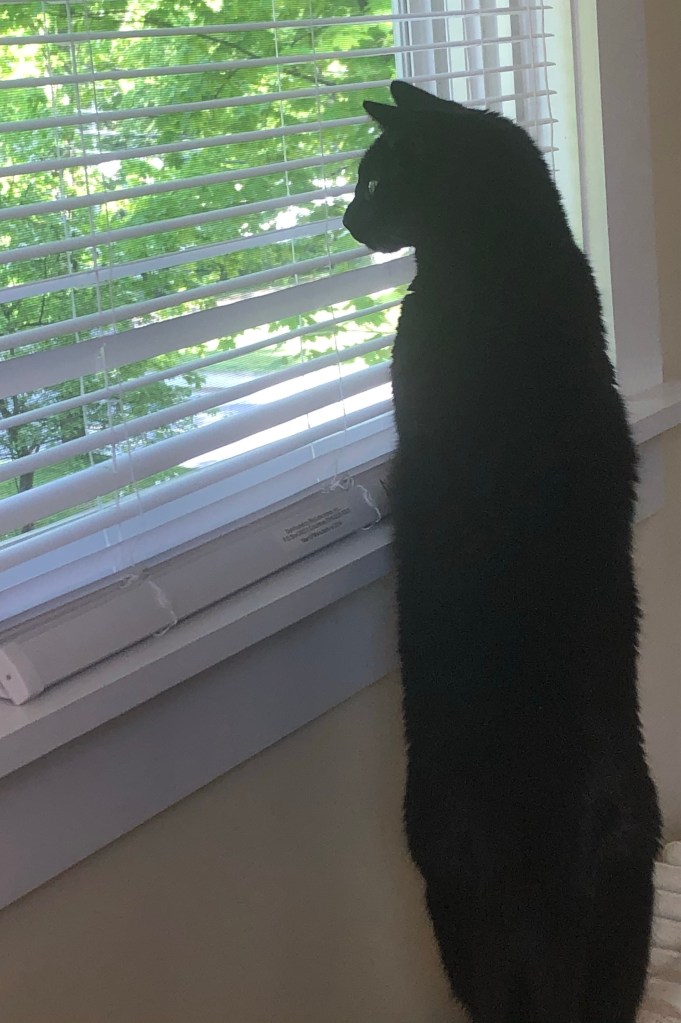
National Black Cat Appreciation Day is on August 17 every year. It’s not the same as National Black Cat Day, which falls on October 27. The goal of both holidays is to celebrate these sleek, beautiful creatures.
Of course, I have to include the most beautiful black cat:
I try to be a pleasant, congenial person with a smile on my face, even when I don’t feel it. Sometimes, though, I find it difficult to keep up an affable façade when I’m not really feeling it. Usually, the irritability I can’t hide is because of not feeling well. For the past week, my migraines have been a bit worse than usual. I’m not for sure if it’s the seemingly ever changing weather or wildfire smoke passing over Vermont. Since Sunday, our air quality has been worsening.
Then again, my irritability may be because I’m just fed up with hearing people complain. Some people are going to constantly complain and nothing will satisfy them. This is especially true when a person is a martyr narcissist, i.e., a person who constantly acts as if their every action is a personal sacrifice. People like this don’t want their complaints satisfied because they can’t keep receiving the sympathy they crave. Then, there are those people who are just miserable human beings who want others to suffer the way they do, even when they aren’t actually suffering.
Also, politics in the United States right now are fucking annoying, and if I watch even ten minutes of the news, I can’t get away from it fast enough. Why can’t politicians be positive in their campaigning instead of always negative? I think partly because anger drives people to vote, and the angrier a politician can make voters by denigrating their opponents the more likely they’ll get their votes. Too many Americans are voting out of hate and fear instead of voting for peace and hope.
It’s probably the combination of all three that have me so irritable today. Thank God, I’m working from home today and won’t have to deal with people. I’m not sure I could put a smile on my face today. Yesterday, I just buried my head in a project and tried to ignore everything else. I think I just need some alone time to recenter and reset.
I’m awake this morning, but I don’t want to be. This is one day I wish Isabella would have let me sleep a bit longer. I went to bed a little early last night, but I wish I had gone to bed even earlier. I’ve been reading Stranger on the Shore by Josh Lanyon, and I just don’t want to put it down and go to sleep at night. I’ve actually read this book before, and obviously, I really enjoyed it the first time. It’s been a while since I’ve read it, so while I remember the outcome of the book, there are little details I had forgotten about. It’s a mystery, and I find it fun to rediscover the clues leading up to solving the mystery. When I read a mystery the first time, I enjoy trying to solve the mystery before it’s revealed in the book, but on a reread, I enjoy recognizing all the clues along the way.






















 The Closet Professor