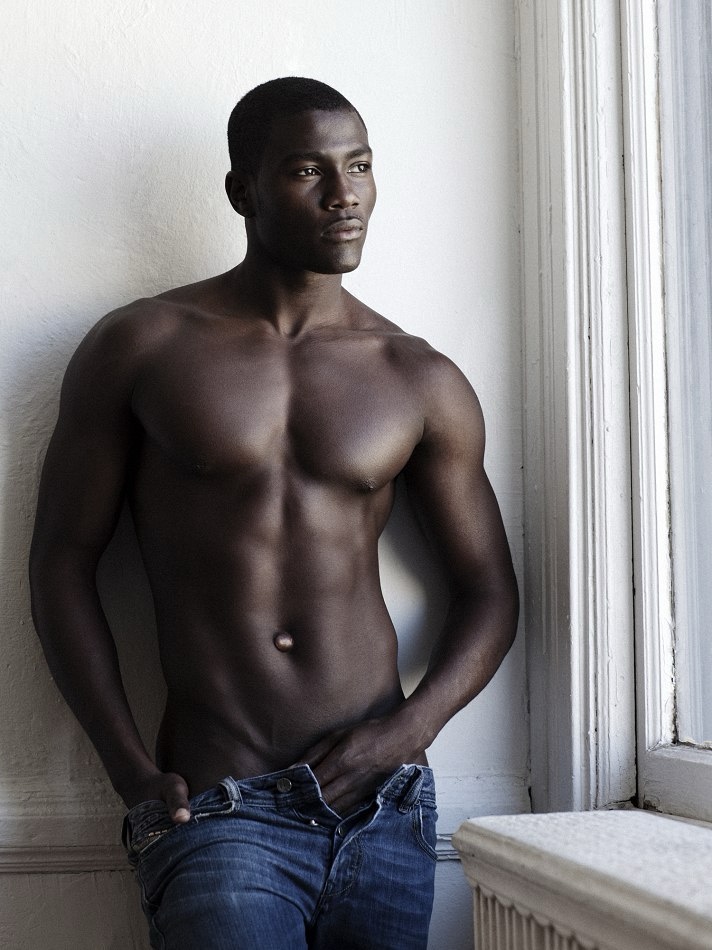
Tomorrow is the Super Bowl. Originally, I had not planned to watch the game, not even for the commercials because I really do not enjoy professional sports, especially the NFL. However, my friend Susan, who I turned into an unlikely football fanatic, convinced me to at least watch for the commercials. However, with that being said, I got a look at the San Francisco 49ers quarterback Brock Purdy. Let’s just say, Brock Purdy is awfully damn “purty” (nonstandard spelling of pretty used to represent dialect speech).
Purdy has a pretty great story. He played football at Iowa State University before he was selected by the 49ers with the final pick in the 2022 NFL Draft, becoming that year’s Mr. Irrelevant. He was the 49ers third string quarterback before the starting and backup quarterbacks were injured last season. This season, he was made the starting quarterback and has taken the 49ers to the Super Bowl. He went from Mr. Irrelevant in 2022 to Mr. Relevant in 2024.
We do not get an abundance of sunshine in Vermont, but this last week has been different. It has been sunny each day this week beginning on Sunday. It won’t last long. The clouds will roll in tonight and stay for the next week. There will be some clouds this morning, but they should clear out by this afternoon and allow for another sunny day today. The sun has been a mood lifter for many people in Vermont. The forecast shows that the sun might return next Saturday, but Valentine’s will most likely be a cloudy day and cold day, not that I much care about Valentine’s Day since it will just be me and Isabella.
After waking up this morning, I was trying to figure out something to write today, but I’ve got nothing. I looked at some of the pictures I have saved in my phone, which sometimes sparks a little inspiration, but nothing was inspiring me today. It’s just a topical Thursday with nothing special happening. I do know that I wish I was in bed and sleeping in this morning, but I have to go to work. I’m the only person there this morning. At least tomorrow is Friday.
Usually, I work from home on Fridays, but I have a class on Monday that I need to spend Friday afternoon setting up. It will be using more objects than usual, so it won’t be something I can do quickly. That being said, I chose to work from home today instead of Friday. Besides a little research and a virtual meeting, it should be a pretty easy day, at least I hope so.
In Alabama Stars hang down so low, So low, they purge the soul With their infinity. Beneath their holy glance Essential good Rises to mingle with them In that skiey sea.
At noon Within the sandy cotton-field Beyond the clay, red road Bordered with green, A Negro lad and lass Cling hand in hand, And passion, hot-eyed, hot-lipped, Lurks unseen.
But in the evening When the skies lean down, He’s but a wistful boy, A saintly maiden she, For Alabama stars Hang down so low, So low, they purge the soul With their infinity.
About the Poem
“Stars in Alabama” appears in The Crisis, vol. 35, no. 1 (January 1928). In Jessie Redmon Fauset, Black American Writer(The Whitston Publishing Company, 1981), literary biographer Carolyn Wedin Sylvander writes, “‘Stars in Alabama,’ in The Crisis in January 1928, contrasts in three stanzas the passionate heat of noon cotton-fields with the pure holiness of the Alabama night. [. . .] The first lines are again repeated as evening returns. Fauset has moved through this poem from personal feeling to a quietly effective comment on passion and its context.” In “The Women Poets of the Harlem Renaissance,” published in The Harlem Renaissance (Chelsea House Publishers, 2004), Maureen Honey, former professor of English and director of women’s studies at the University of Nebraska–Lincoln, remarks, “While poets looked to natural settings in general for space in which to savor the abandonment of confining roles, night was sought most frequently as it was a time when the objectifying gaze was covered by sleep and the freedom to be at one with the darkness could be safely enjoyed.”
About the Poet
Jessie Redmon Fauset was born on April 27, 1882, in Camden County, New Jersey. She grew up in Philadelphia and attended the Philadelphia High School for Girls. She received a scholarship to study at Cornell University, where she was likely the first Black female student, and she graduated with a BA in classical languages in 1905. After college, she worked as a teacher in Baltimore and Washington, D.C.
In 1912, Fauset began to write for the NAACP’s official magazine, The Crisis, which was cofounded and edited by W. E. B. Du Bois. After several years contributing poems, essays, and reviews to The Crisis, Fauset became the journal’s literary editor in 1919, moving to New York City for the position.
In her role as literary editor, Fauset introduced then-unknown writers, including Countee Cullen, Langston Hughes, Claude McKay, and Anne Spencer, to a national audience. In his memoir The Big Sea, Hughes writes, “Jessie Fauset at TheCrisis, Charles Johnson at Opportunity, and Alain Locke in Washington were the three people who midwifed the so-called New Negro literature into being. Kind and critical—but not too critical for the young—they nursed us along until our books were born.”
Along with her poetry and short fiction in The Crisis, Fauset published several novels known for their portrayal of middle-class African American life, including There Is Confusion (Boni and Liveright, 1924) and Plum Bun (Matthews & Marrot, 1928). She also edited The Brownies’ Book, a periodical for African American children, from 1920 to 1921.
Fauset left The Crisis in 1926 to teach French at a high school in the Bronx. She married Herbert Harris, a businessman, in 1929, and they lived together in New Jersey until his death in 1958. Fauset then returned to Philadelphia, where she lived until her death on April 30, 1961.














 Joe
Joe





 The Closet Professor