

Amazing Grace

Then King David went in and sat before the Lord; and he said: “Who am I, O Lord God? And what is my house, that You have brought me this far? And yet this was a small thing in Your sight, O God; and You have also spoken of Your servant’s house for a great while to come, and have regarded me according to the rank of a man of high degree, O Lord God.
—1 Chronicles 17:16-17
It’s been quite a while since I used a hymn as my Sunday devotional. During my high school and college years, I was the song leader at the small country church I grew up attending. Half the people at that church were like family to me, and the other half were my family. The song leader I grew up with became unable to lead the singing, so he asked me if I would it. I had taken piano lessons when I was younger, so I had a little musical ability, i.e. I could almost carry a tune. I was never a very good song leader, and I only knew about two dozen or so songs well enough to be able to lead the congregation in singing.
If you don’t know, I was raised in the church of Christ (by the way, it is customary to not capitalize “church” in the name of the denomination, though churches of Christ do not believe they are a denomination nor Protestant, but a restoration of the original church). The churches of Christ have no musical instruments, though some of the more liberal ones today do. The churches of Christ believe that if it is not in the bible, then it should not be part of the religious service. So, the inspiration for a capella singing comes from Ephesians 5:19, “Speaking to one another in psalms and hymns and spiritual songs, singing and making melody in your heart to the Lord.” Being a song leader in a church of Christ is not the easiest task. There are no musical instruments to carry the tune. It is completely up to the song leader to do so. All I can say is, that I tried my best. I was never very good at it, and quite honestly, even after doing it for years, I was never comfortable at it. When I went away to graduate school, they found someone else to take over. I was so relieved.
I had a few favorite song: “When the Roll Is Called up Yonder,” “Send the Light,” “Shall We Gather at the River?,” “The Old Rugged Cross,” and a few others. “Amazing Grace” was always a favorite of mine. The service always began with two songs sung while seated before the main prayer. Then, we would stand for the third song just before the preacher got up to give his sermon, and I often sang “Amazing Grace” for this song. After the sermon, we would sing the invitational, a call for those who wanted to join the church and be baptized. After the invitational, we served communion. Communion, or the Lord’s Supper, is served every Sunday in the church of Christ. After communion, we sang the closing song, my favorite being “I Know That My Redeemer Lives” and “Unclouded Day.” The latter begins with “O they tell me of a home far beyond the skies,” and as long as I could get out the “O” in the right key, this one always went smoothly because someone else would pick it up and keep it going in tune.
Amazing Grace
By John Newton
Amazing grace! how sweet the sound,
that saved a wretch like me!
I once was lost, but now am found,
was blind, but now I see.
‘Twas grace that taught my heart to fear,
and grace my fears relieved;
how precious did that grace appear
the hour I first believed!
Through many dangers, toils and snares
I have already come:
’tis grace has brought me safe thus far,
and grace will lead me home.
When we’ve been there ten thousand years,
Bright shining as the sun,
We’ve no less days to sing God’s praise
Than when we first begun.
“Amazing Grace” is one of the best-loved and most often sung hymns in North America. It expresses John Newton’s personal experience of conversion from sin as an act of God’s grace. At the end of his life, Newton (1725-1807) said, “There are two things I’ll never forget: that I was a great sinner, and that Jesus Christ is a greater Savior!” This hymn is Newton’s spiritual autobiography, but the truth it affirms—that we are saved by grace alone—is one that all Christians may confess with joy and gratitude. I, however, believe that it takes faith and good works. James 2:26 says, “For as the body without the spirit is dead, so faith without works is dead also.” Now, back to Newton’s story.
Newton was born into a Christian home, but his godly mother died when he was seven, and he joined his father at sea when he was eleven. His licentious and tumultuous sailing life included a flogging for attempted desertion from the Royal Navy and captivity by a slave trader in West Africa. After his escape, he himself became the captain of a slave ship. Several factors contributed to Newton’s conversion: a near-drowning in 1748, the piety of his friend Mary Catlett (whom he married in 1750), and his reading of Thomas à Kempis’s Imitation of Christ.
In 1754 he gave up the slave trade and, in association with William Wilberforce, eventually became an ardent abolitionist. After becoming a tide-surveyor (customs inspector) in Liverpool, England, Newton came under the influence of George Whitefield and John and Charles Wesley and began to study for the ministry. He was ordained in the Church of England and served in Olney (1764-1780) and St. Mary Woolnoth, London (1780-1807). His legacy to the Christian church includes his hymns as well as his collaboration with William Cowper in publishing Olney Hymns (1779), to which Newton contributed 280 hymns, including “Amazing Grace.”
Newton wrote “Amazing Grace” to illustrate a sermon on New Year’s Day of 1773. It is unknown if there was any music accompanying the verses; it may have been chanted by the congregation. It debuted in print in 1779 in Newton and Cowper’s Olney Hymns. “Amazing Grace” was published in six stanzas with the heading “1 Chronicles 17:16-17, Faith’s review and expectation.” After being published, the hymn settled into relative obscurity in England.
In the United States, “Amazing Grace” became a popular song used by Baptist and Methodist preachers as part of their evangelizing, especially in the South, during the Second Great Awakening of the early 19th century. It has been associated with more than twenty melodies. In 1835, American composer William Walker set it to the tune known as “New Britain” in a shape note format; this is the version most frequently sung today.
With the message that forgiveness and redemption are possible regardless of sins committed and that the soul can be delivered from despair through the mercy of God, “Amazing Grace” is one of the most recognizable songs in the English-speaking world.





TGIF

The weekend is almost upon us. I have no plans for the weekend because it’s supposed to rain here every day through Wednesday. Rain in Vermont is not quite like the torrential downpours in Alabama, so I’m not too worried, but it does mean that I am not likely to get out and do anything.
Lately, I’ve been going through and watching all of the original Star Trek episodes. I’ve seen most of them here and there, but I always preferred the Star Trek series that were on in my lifetime. I’ve seen all of The Next Generation numerous times, and I’ve seen Deep Space Nine more times than I can count. The only Star Trek series that I have never seen all of them are The Original Series, The Animated Series, and Voyager. I haven’t seen all episodes of Voyager because when it was on UPN, I didn’t always have UPN on my cable system.
I will probably spend the weekend watching old episodes of the original Star Trek. I really don’t have much else to do. I may vacuum, do some cooking, and wash a few loads of laundry, but I don’t have much else to do this weekend. I may watch Galaxy Quest, since it’s now available on Paramount+. I found that out when I was searching for one of the newer Star Trek movies with Chris Pine as Kirk to watch and did a search for “Star Trek” and Galaxy Quest was listed under the Star Trek movies. If The Orville was on Paramount+, they’d probably list it under Star Trek too.
P.S. I had no idea what picture to use, but I like this one. It doesn’t represent Friday or the weekend or even Star Trek, but I used it anyway. I hope y’all like it.

The Infusion

On Monday, I had my first infusion of VYEPTI for my migraines. It was actually not too bad. My nurse put in the IV, and I sat there listening to an audiobook for thirty minutes while the medicine dripped into my vein. Following the advice I’d been given, I’d drunk plenty of water the day before and that morning, so he had no trouble finding a good vein to use.
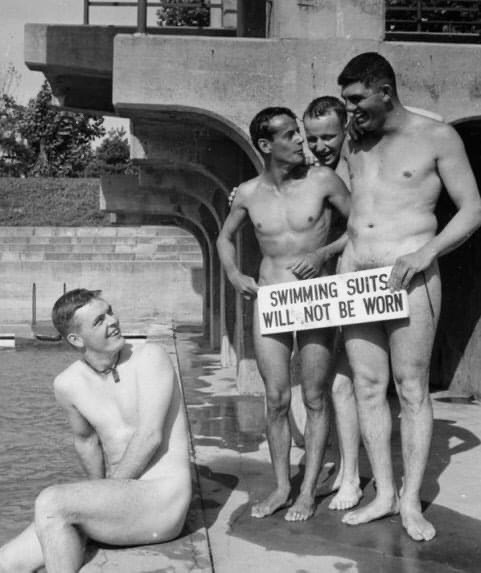
The best part of the experience was my nurse. (The picture above is not him, though he was kind of cute.) He was about my age, maybe a little older, and he made my gaydar go off. So, I’m pretty sure he was gay, and he was a bit flirtatious. He talked me through the procedure and once he found a vein to use, he held a warm compress to my arm before he stuck the needle in me. Just before he inserted the needle, he told me to “Go to my happy place.” Then after a pause, he said, “You don’t have to tell me what it is,” and then sotto voce, he said, “But I’m dying to know.” I am not very quick witted with replies, or I would have said, “it would be very inappropriate for me to say.” I was thinking that my “happy place” was laying with a naked man’s arms wrapped around me. Basically, the picture below:

Hopefully, he’ll be my nurse when I go back for my second infusion, but I doubt I will be so lucky. He made the experience a pleasant one. The needle going in did hurt for a second, but then the pain was over. Once the medicine started entering my bloodstream, I could feel it for just a moment, then I could barely tell anything was happening. When he took out the IV, it didn’t even bleed, and there is no bruise, which I usually have with something like this. There is the faintest little dot where the IV was, and that’s it.
As for VYEPTI’s effectiveness, time will tell. I went to bed Monday night with a major migraine, but it was lessened by morning and was mostly gone by lunchtime. My nurse told me that this medicine had been a real game changer for some people. I received 100 mg/mL of the drug, and he said that at that dosage, it lessens the intensity of the migraines for most people. He said it seems to be most effective at 300 mg/mL, but insurances won’t authorize that much in the beginning. He said the second treatment will be another 100 mg/mL and if it’s not deemed effective enough, then they can usually convince insurance companies to pay for the 300 mg/mL for the third and subsequent treatments. The treatments will be every three months, and my next one is scheduled for October 24.
Rant of the day:I find it incredibly frustrating that doctors know 300 mg/mL works best, but insurance companies require me to continue to suffer for six months before they will allow the treatment that I need. I cannot fathom why the United States allows someone without a medical degree at an insurance company to determine what’s best for my health. Every treatment I have been prescribed by the Headache Clinic has been denied by my insurance, and my neurologist has had to file an appeal to get the treatment approved. The same thing happened with. YEPTI, but the insurance company is still requiring the lower dosage for six months before they will consider the higher, more effective dose. Rant over…for now.



Recent Comments
noisilycool3bc985058… on Pic of the Day Joe on Pic of the Day Benny S on Pic of the Day noisilycool3bc985058… on Pic of the Day iameverywhere1 on Pic of the Day Top Posts & Pages




Amazon Associate

As an Amazon Associate I earn from qualifying purchases. So, if you click on a link that takes you to Amazon.com, I may earn a commission.
Trust me, it isn’t much, but every little bit helps.


 The Closet Professor