Yesterday was one of my bad headache days. I woke with a headache, and none of my medicine helped. I wanted to call in sick and stay home in the dark, but that wasn’t possible. First, I had way too much work to do at the museum. There were deadlines to make, and I’ll have to finish them up today and get things submitted.
Then, I had to leave early for my post-endoscopy appointment with the ENT doctor, which turned out to basically be a waste of time. She basically told me there wasn’t much that could be done. They could preform a surgery to remove my uvula and my tonsils (a uvulopalatopharyngoplasty or UPPP
), which would open up my throat more. I seem to have an abnormally small throat. (No wonder I can’t deep throat. LOL) She told me that if they did the surgery, which would be an incredibly painful procedure, that it might change the anatomy of my throat enough to make me a better candidate for the Inspire implant, but she needed to confer with her colleagues to see what the probability of success might be. The Inspire surgery is supposed to be a fairly simple procedure, but a UPPP is a much more invasive and involved procedure with a longer recovery time. I’m not sure it would be worth it. My better option is probably to continue to lose weight and hope the sleep apnea improves enough to stop needing the CPAP.
It’s been a week. I’m glad it’s Friday and that I have a three day weekend. I need some rest and relaxation. Too much had been happening the last two weeks, and I’m tired. I want to go to the grocery store after work today and get some things for a nice BBQ meal on Monday. Cooking almost always relaxes me.
Do you ever just wake upon the “wrong side of the bed”? I feel like I did Tuesday morning and I haven’t been able to wake up on the right side since. I woke up Tuesday in an inexplicably bad mood, and I can’t seem to shake it. I hope I wake up in a better mood today. It’s frustrating not being able to find a happy place. I tried cooking, which usually helps, but it didn’t really. I even put together a menu for Memorial Day, finding recipes I’d like to try. That often helps too, but again, it did not. I don’t exactly feel depressed; I just feel pissed off.
I have a doctor’s appointment this afternoon for a follow-up of the laryngoscopy I had several weeks ago. Maybe that’s why I’m in a bad mood because I don’t expect any good news to come out of this appointment. I already know I was not a good candidate for the Inspire device for my sleep apnea. There aren’t many other solutions left. I’ll just have to see what my doctor says. 🤞
I think President Biden said what all sane people are thinking. When is it going to end? When is enough, enough? In God’s name, when will Republicans wake up and realize that sensible gun laws are not going to take away their right to own a gun?
Sen. Ted Cruz, R-Texas, in response to a question from NBC News, immediately dismissed the prospect of new efforts to pursue gun control measures. “That doesn’t work. It’s not effective. It doesn’t prevent crime,” said Cruz, who instead said it would be better to go “after felons and fugitives and those with serious mental illness, arresting them, prosecuting them when they try to illegally buy firearms.” If sensible gun control measures don’t work, why is the United States the only country in the world to have so many mass shootings? The answer is simple. It’s because other countries have sensible gun laws. They have the same criminals and mentally ill, but most also have better prisons and healthcare.
Cruz’s remarks sparked a sharp rebuke from Sen. Chris Murphy, D-Conn., who was elected to the Senate just weeks before the 2012 mass shooting at Sandy Hook Elementary School in his state. “Spare me the bullshit about mental illness. We don’t have any more mental illness than any other country in the world,” Murphy told reporters. He also urged Congress to act.
Rep. Ruben Gallego, D-Ariz., also lashed out at Cruz. “F— you @tedcruz,” Gallego tweeted, “you care about a fetus but you will let our children get slaughtered. Just get your ass to Cancun. You are useless.” Gallego appeared to be referring to Cruz’s opposition to abortion rights and his trip to Mexico last year as Texas faced a crippling winter storm.
Fuck you @tedcruz you care about a fetus but you will let our children get slaughtered. Just get your ass to Cancun. You are useless. https://t.co/0tArGHosep
House Speaker Nancy Pelosi, D-Calif., called the shooting a cold-blooded massacre. “For too long, some in Congress have offered hollow words after these shootings while opposing all efforts to save lives,” she said in a statement. “It is time for all in Congress to heed the will of the American people and join in enacting the House-passed bipartisan, commonsense, life-saving legislation into law.”
There are two Senator's blocking Democrats from passing ANYTHING on gun control. Their names are @Sen_JoeManchin and @SenatorSinema. At this point they are BOTH nothing more than Accessories To Murder pic.twitter.com/r0ymMvJzvf
— Back2Stonewall.com – Will Kohler (@BACK2STONEWALL) May 25, 2022
One Hundred Love Sonnets: XVII (I don’t love you as if you were a rose) By Pablo Neruda – 1904-1973
I don’t love you as if you were a rose of salt, topaz, or arrow of carnations that propagate fire: I love you as one loves certain obscure things, secretly, between the shadow and the soul.
I love you as the plant that doesn’t bloom but carries the light of those flowers, hidden, within itself, and thanks to your love the tight aroma that arose from the earth lives dimly in my body.
I love you without knowing how, or when, or from where, I love you directly without problems or pride: I love you like this because I don’t know any other way to love, except in this form in which I am not nor are you, so close that your hand upon my chest is mine, so close that your eyes close with my dreams.
Cien Sonetos de Amor: XVII (No te amo como si fueras rosa)
No te amo como si fueras rosa de sal, topacio o flecha de claveles que propagan el fuego: te amo como se aman ciertas cosas oscuras, secretamente, entre la sombra y el alma.
Te amo como la planta que no florece y lleva dentro de sí, escondida, la luz de aquellas flores, y gracias a tu amor vive oscuro en mi cuerpo el apretado aroma que ascendió de la tierra.
Te amo sin saber como, ni cuándo, ni de dónde, Te amo directamente sin problemas ni orgullo: así te amo porque no sé amar de otra manera, sino así de este modo en que no soy ni eres, tan cerca que tu mano sobre mi pecho es mía, tan cerca que se cierran tus ojos con mi sueño.
Born Ricardo Eliecer Neftalí Reyes Basoalto in the town of Parral in southern Chile on July 12, 1904, Pablo Neruda led a life charged with poetic and political activity. In 1923, he sold all of his possessions to finance the publication of his first book, Crepusculario (“Twilight”). He published the volume under the pseudonym “Pablo Neruda” to avoid conflict with his family, who disapproved of his occupation. The following year, he found a publisher for Veinte poemas de amor y una cancion desesperada (“Twenty Love Poems and a Song of Despair”). The book made a celebrity of Neruda, who gave up his studies at the age of twenty to devote himself to his craft.
In 1927, Neruda began his long career as a diplomat in the Latin American tradition of honoring poets with diplomatic assignments. After serving as honorary consul in Burma, Neruda was named Chilean consul in Buenos Aires, Argentina, in 1933. While there, he began a friendship with the visiting Spanish poet Federico García Lorca. After transferring to Madrid later that year, Neruda also met Spanish writer Manuel Altolaguirre. Together, the two men founded a literary review called Caballo verde para la poesîa in 1935. The outbreak of the Spanish Civil War in 1936 interrupted Neruda’s poetic and political development. He chronicled the horrendous years which included the execution of García Lorca in Espana en el corazon (1937), published from the war front. Neruda’s outspoken sympathy for the loyalist cause during the Spanish Civil War led to his recall from Madrid in 1937. He then moved to Paris and helped settle Spanish republican refugees in Chile.
Neruda returned to Chile in 1938 where he renewed his political activity and wrote prolifically. Named Chilean Consul to Mexico in 1939, Neruda left Chile again for four years. Upon returning to Chile in 1943, he was elected to the Senate and joined the Communist Party. When the Chilean government moved to the right, they declared communism illegal and expelled Neruda from the Senate. He went into hiding. During those years he wrote and published Canto general (1950).
In 1952 the government withdrew the order to arrest leftist writers and political figures, and Neruda returned to Chile and married Matilde Urrutia, his third wife (his first two marriages, to Maria Antonieta Haagenar Vogelzang and Delia del Carril, both ended in divorce). For the next twenty-one years, he continued a career that integrated private and public concerns and became known as the people’s poet.
In 1960, Neruda wrote 100 Love Sonnets. Sonnet XVII is the most famous of these sonnets. Neruda wrote these sonnets to his third wife, Matilde Urrutia, with whom he had an affair during his second marriage. The nature of their love, which was hidden for so long, seeps through in Sonnet XVII’s lines about darkness, secrets, shadows. The collection itself begins with a beautiful dedication to Matilde, which reads, in part: “I built up these lumber piles of love, and with fourteen boards each I built little houses, so that your eyes, which I adore and sing to, might live in them.”
There are so many poems in this collection that feel vitally important and true; poems that express hunger, desire, desperation, or a profound sense of loneliness even in the deepest and most intense feelings of love. (From Sonnet XI: “I crave your mouth, your voice, your hair / Silent and starving, I prowl through the streets.”) But Sonnet XVII expresses a feeling at once unbearably sweet and possibly codependent. So many of us have this tendency—to try and squish ourselves so close to another person that we can no longer remember where the seams are:
I love you like this because I don’t know any other way to love, except in this form in which I am not nor are you, so close that your hand upon my chest is mine, so close that your eyes close with my dreams.
During this time, Neruda received numerous prestigious awards, including the International Peace Prize in 1950, the Lenin Peace Prize and the Stalin Peace Prize in 1953, and the Nobel Prize for Literature in 1971. He was diagnosed with cancer while serving a two-year term as ambassador to France. Neruda resigned his position, ending his diplomatic career. On September 23, 1973, just twelve days after the defeat of Chile’s democratic regime, the man widely regarded as the greatest Latin American poet since Darío died in Santiago, Chile.
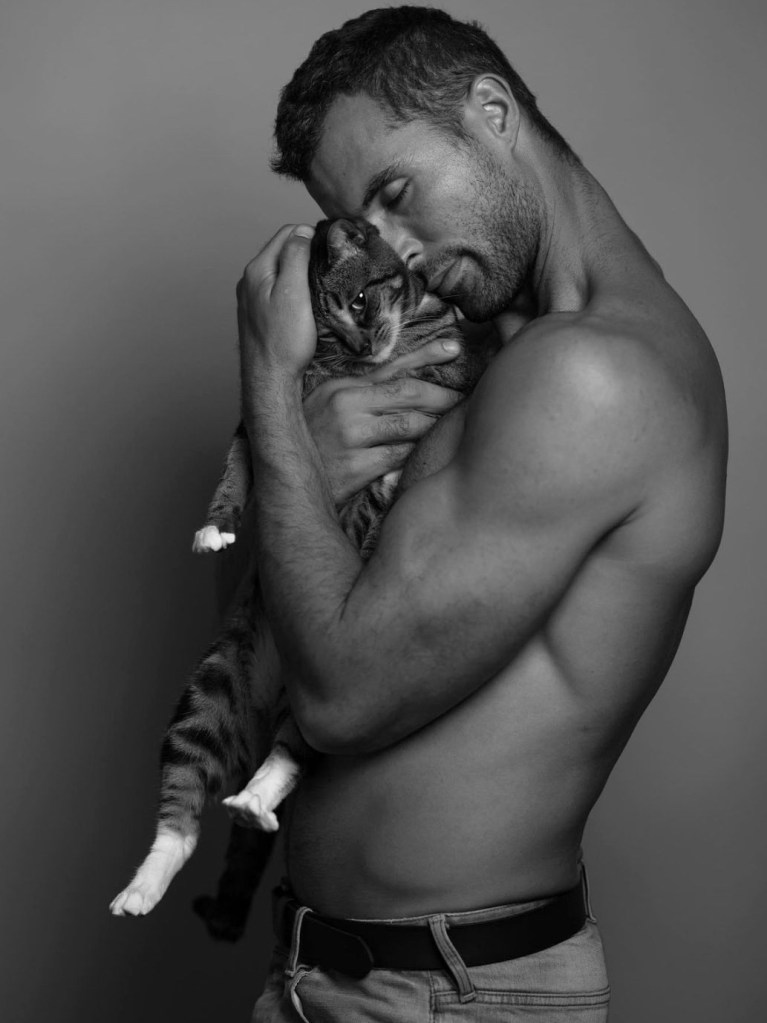
I got back home last night from my conference in Boston. While I enjoyed my time in Boston, I was very glad to be home. I was mostly just glad to get back to Isabella. Since December 2019, I have not been away from her except for the one night when I had to go to Dartmouth for a sleep study. The rest of the time, it’s just been the two of us. I always worry about Isabella when I’m gone overnight, so it’s a relief when I get back home and she’s fine. She was very happy to see me, but she also let me know her displeasure at me being away. She is not usually a vocal cat, but anytime I’m away and come back, she wants to be right next to me, and she gets very vocal with her meows. I wish I could always take her with me, but it’s just not practical. She’ll soon settle back down into her routine and so will I. I’m just glad to be home, and it seems like Isabella feels the same way.
















 The Closet Professor