
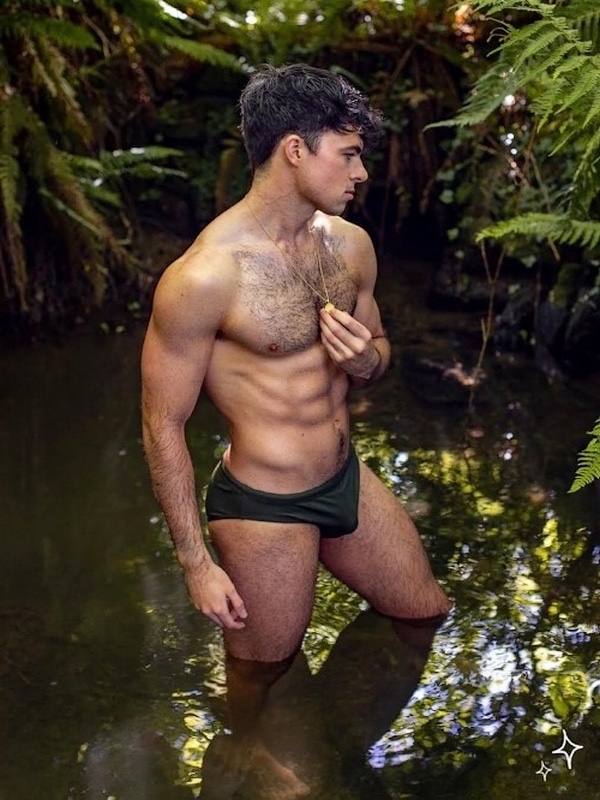
Fruity
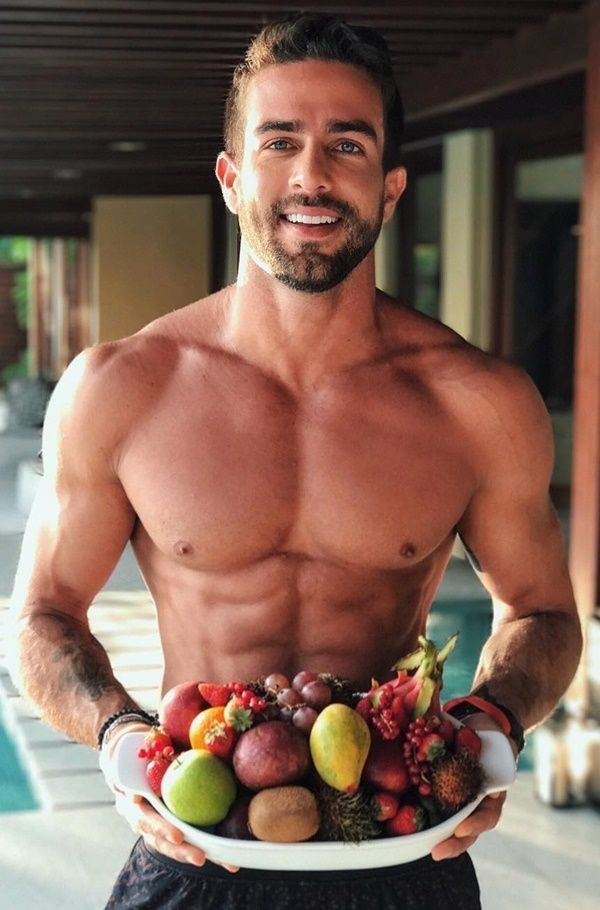
When I came out in graduate school, I remember a professor came up to me and said, “Congratulations, I hear you’re a fruit.” I was horrified, and it was incredibly inappropriate. I do not think he meant it as a derogatory comment, but I was still offended. It’s a bit ironic, because this professor was Canadian, and he abhorred being called a Canuck. I’m not sure if Canuck was or is seen as offensive by Canadians, but he certainly was sensitive about it. Why he wasn’t sensitive about a slur like “fruit” I’ll never know. He was a bit of an insensitive jerk, and we did not miss him when he failed to file for an extension of his green card and was sent back to Canada to straighten it out. He never did come back.
Much like the words queen and queer, “fruit” is a slur that has been hurled against gay men for decades. Over time, gay men have begun to reclaim the “fruit” in the same way that “queen” and “queer” have become an innocuous part of our lexicon, and today use it as a term of endearment rather than a derogatory comment on one’s effeminacy and attraction towards other men. This goes to the question of how did “fruit” become a slur for a gay man? What does “fruity” mean for the LGBTQ+ community? What does it mean to be “fruity?” And where did this comparison come from in the first place? Interestingly, the term may have originated from the gay community itself.
Language experts believe that the insult “fruit” has roots in the British cant, or secret language, Polari as a slang word. The slang was born out of the West and East Ends of London in the 19th century (but could date back as far as the 16th century) and was used by social outcasts and outsiders. Polari (from Italian parlare ‘to talk’) was used by some actors, circus and fairground showmen, professional wrestlers, merchant navy sailors, criminals, sex workers, and the gay subculture. This group also included costermongers, street vendors who sold fruit and vegetables in British towns. Costermongers were looked down upon for their brash behavior, love of gambling, and unusual slang. Like many secret languages, Polari emerged as a way for these outsiders to “protect their identities or actions.” Pretty soon, Britain’s gay community adopted this code, transforming it into a “vehicle for campery, bitchiness, filthy jokes, and innuendo.” The word “fruit” was just one of many slang words gay men would throw at each other to poke fun at their effeminacy. The evolution of this slang was perhaps not unlike that of the American gay lingo that can be traced back to the drag and ballroom culture of the 1980s, where “reading” was, as RuPaul says, fundamental.
But why fruit? The common assumption goes that, like women, fruits are soft and tender. Mayukh Sen, a writer who began writing about food “by accident” when he began working at the blog Food52. His first piece to get significant attention was about fruitcake, titled “How—and Why—Did Fruitcake Become a Slur?”. He wrote that, “As someone who’s queer and Bengal, I grew up eating fruitcake and really treasuring it. I sit in between these two meanings of the word and explored that whole idea in detail, where I metabolized all of that personal writing very early on in my food writing career.” As Sen explains, “A fruit, susceptible to the whims of nature, tends to grow tender and soft. For a man to embody these very traits, a sensitivity to the elements that is typically coded female, goes against the imaginings of masculinity our culture worships.”
Sen goes on to say that, when the slur made its way to the US in the 20th century, it became tied to fruitcake – the sticky and much-maligned treat. The phrase “nutty as a fruitcake” was reserved for people who had lost their marbles, had gone off their rocker, or, simply put, were crazy. At the time, homosexuality was considered deviant – a mental illness to be corrected through lobotomies, electroshock treatment, and chemical castration. Thus, fruits became fruitcakes, and the psychiatric institutions where these horrific procedures occurred were called “fruitcake factories.” Over time, the words “fruit” and “fruitcake” became less of an inside joke in the gay community and more of a weapon that straight people could use to remind gay people of their otherness. For some older gay men who lived through this era, the term “fruit” is as hurtful and offensive as the term “faggot.” Perhaps even worse.
Can we reclaim a slur such as “fruit” like many have for “queer” and “queen?” According to linguistics professor Sally McConnell Ginet, sometimes distance is essential to reclaiming a slur. The young activists in the 1980s who shouted “we’re here, we’re queer” in AIDS rallies were distant enough from the word that, perhaps, they barely had any experiences with it. The same goes for the word “fruity” today. Navigating the world as a gay person is leaps and bounds different than it was all those decades ago. And while homophobia and transphobia most definitely still exist around the world – and even in our own backyards – there are people, places, and moments that serve as solid reminders that LGBTQ+ people do deserve and have a place in this world.
So, when someone calls you “fruity,” what does it mean? It’s like most things, all about context. If they’re a friend, then perhaps it’s a light jab, perhaps a celebration of gayness, perhaps a little bit of both. If they’re not an ally, then it’s a word that they think should hurt you, but at the end of the day, all it does is say, “you’re sensitive, you’re effeminate.” And really, what’s so wrong with that? We should embrace who we are, not what others expect us to be, which is a lesson it took me a long time to realize and one that I sometimes still struggle with.


I Like Boys

I Like Boys
Song by Todrick Hall
Songwriters: Carl Seante Mcgrier / Jean-Yves G. Ducornet / Kofi Owusu / Todrick Dramaul Hall
Mama come, come doll, take a seat
There’s someone you know that you’ve got to meet
So brace yourself for the big reveal
He’s about my height when he’s not in heels
Some boys play basketball
He played house with ratchet dolls
It’s not Santa Claus, it’s time for applause
It’s comin’ out the closet
Mama, I like boys, I like pecs
Like them arms when they flex
Like that print in them sweats
Tell them girls, “Thank you, next”
I like when they text me sexy pics of ’em
Like them abs when there’s six of ’em
Tell them girls I’m sorry
I like boys
Mama, boys like me (I like boys who like boys)
Mama (I like boys who like boys)
Work (I like boys who like boys)
Mama (I like boys who like)
Boys like me, yeah (boys like me)
Yeah, they do (boys like me)
Ooh (boys like me)
Motherfuckin’ boys like me (bitch)
I like when they shake it, shake it
I like when they grind real slow (real slow)
I like when they almost naked (damn)
Tell dad I’m so homo
Lights off, doors shut
Tall, dark, clean-cut
Thick with a bubble butt, yup
Mama, I like boys, I like pecs
Like them arms when they flex
Like that print in them sweats
Tell them girls, “Thank you, next”
I like when they text me sexy pics of ’em
Like them abs when there’s six of ’em
Tell them girls I’m sorry
I like boys
Mama, boys like me (I like boys who like boys)
Mama (I like boys who like boys)
Work (I like boys who like boys)
Mama (I like boys who like)
Boys like me, yeah (boys like me)
They do (boys like me)
Haha (boys like me)
Motherfuckin’ boys like me (bitch)
Style like they name Harry
Chocolate like Tyrese
I pick him up at Barry’s
Crunch, Planet Fitness
Shirt off in the lawn
Sizzlin’ like grease
By day his name Gaston
By night I call him Beast
Bitch, B to the O to the Y to the S
Boys will be boys and with boys I’m obsessed
Boys in their gym clothes, boys in a dress
And if boys are a crime then I’m under arrest
‘Cause I’ve been boy crazy since the boy scouts
Fuck the closets, let the boys out
Don’t be a camel when you are a llama, period
No comma, bring on all the drama
Mama, I like boys, I like pecs
Like them arms when they flex
Like that print in them sweats
Tell them girls, “Thank you, next”
I like when they text me sexy pics of ’em
Like them abs when there’s six of ’em
Tell them girls I’m sorry
I like boys
Mama, boys like me (I like boys who like boys)
Hahaha (I like boys who like boys)
Work (I like boys who like boys)
Mama (yeah) (I like boys who like)
Boys like me (sorry) (boys like me)
Not sorry (boys like me)
(Boys like me)
Motherfuckin’ boys like me, bitch
“I Like Boys” is a song by American singer Todrick Hall; he co-produced and co-wrote the song with Jean Yves Ducornet. Hall released the song during Pride 2019. The video opens with Hall coming out to his mother played by Luenell. The video shifts to a desert with Hall surrounded by male dancers and a camel. The song celebrates Hall’s sexuality, featuring color, cultural references, and male nudity.
Hall describes “I Like Boys” as campy, and I would agree. I am sure it is not to everyone’s taste, but I suspect a lot of us can identify with what Hall says in the song:
I like when they almost naked
Tell dad I’m so homo
Lights off, doors shut
Tall, dark, clean-cut
Thick with a bubble butt, yup
Mama, I like boys, I like pecs
Like them arms when they flex
Like that print in them sweats
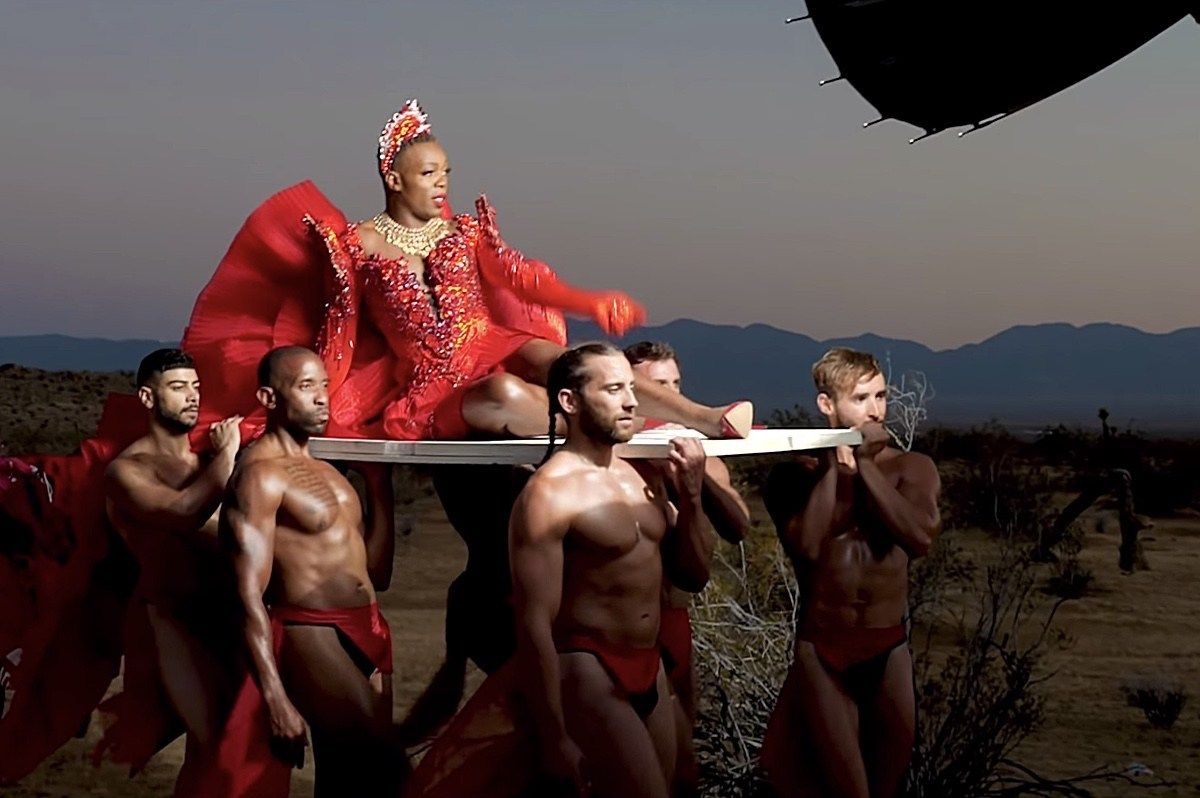
Todrick Hall (born April 4, 1985) is an American singer, songwriter, and choreographer. He gained national attention on the ninth season of American Idol. Following this, he amassed a huge following on YouTube with viral videos including original songs, parodies, and skits. He aspires to be a role model for LGBTQ and people of color. He once again gained notoriety in 2022 for his tactless and manipulative behavior on the third season of Celebrity Big Brother.
Starting with season eight, Hall became a resident choreographer and occasional judge on RuPaul’s Drag Race. From 2016 to 2017, Hall starred as Lola in Kinky Boots on Broadway. Later in 2017, he began appearances as Billy Flynn in Chicago on Broadway and the West End.
As a singer-songwriter he has released four studio albums, including the visual albums Straight Outta Oz (2016) and Forbidden (2018). In 2020 he released an EP, Quarantine Queen, in response to the COVID-19 pandemic featuring “Mask, Gloves, Soap, Scrub”, and was the international host of Global Pride 2020.

The Weekend

Friday, I went to see “Chicago.” A Broadway performance, it certainly was not. The friend who went with me said, “It was okay! They had some good parts and some baaad parts!! The dancing and choreo was AWFUL but it was entertaining overall.” Her assessment was spot on. There were two bright spots, the guys who played Billy Flynn and Amos Hart. Both were good actors and could really sing well. I can’t really say that for the rest of the cast. The girls playing Velma and Roxie improved some as the show went on, but there was no where for them to go but up. Some universities have great theater programs, but my college is not known for the fine arts.
My date Saturday night never happened. I woke up Saturday with a migraine, probably because of the bad weather. I had hoped it would get better, and it did for a short while, then it was back with a vengeance. So, had to reschedule my date. Everything seemed fine. My date was understanding because he too has migraines, and we rescheduled for yesterday. Then, yesterday came and went. I texted him numerous times, but never got an answer. In fact, it looks like the messages went unread. I have no idea what happened. Hopefully, I’ll hear from him sometime today. If not, then I guess he changed his mind. 🤷🏻♂️
I did get some packing done. I still have a lot left to do, but slowly but surely, I think it’s getting there. I really can’t wait to get moved into my new place.
On a side note, I ran tot he grocery store yesterday, and I saw the hottest guy I think I’ve ever seen since I moved to Vermont. That’s saying a lot because we have some really hot cadets at the university. This guy could have been a student. He certainly looked like he could be that age. He had great hair. I’ve always admired guys who have a great head of hair. He also had sparkling blue eyes, and a butt to die for. He was wearing shorts which were skin tight and were average length. If they’d been shorter, I’d have suspected he was gay, but most gay men up here don’t wear short shorts. Anyway, the tightness of the shorts made it very apparent that he dresses to the left, if you know what I mean. We kept running into each other the whole time we were in the store. I literally nearly ran smack into him twice. Other times we were sliding around each other as we were making it down the aisles. Sometimes, you just need to enjoy a little eye candy.


The Fruit of the Spirit

But the fruit of the Spirit is love, joy, peace, long-suffering, kindness, goodness, faithfulness, gentleness, self-control. Against such there is no law.
—Galatians 5:22-23
The Greek word translated “fruit” refers to the natural product of a living thing. Paul used “fruit” to help us understand the product produced, not by us, but by the Holy Spirit within us. The Greek word is singular, showing that “fruit” is a unified whole, not independent characteristics. As we grow, all the characteristics of Christ will be manifested in our lives.
The fruits of the Spirit need to be allowed to grow within us and become a part of who we are. When we plant seeds in our flower beds, we have to watch out and remove any weeds, which is a constant threat. Weeds will choke what we’ve planted. If weeds are allowed to grow, then what we planted will never have the opportunity to reach its full maturity and beauty. Just as we don’t want weeds in our garden, we must constantly work to rid our lives of the “weeds” of our temptations that want to choke out the work of the Spirit.
The Holy Spirit gives us the power we need to reject those old sinful desires. We can say “no” to temptation and accept the “way out” God provides through the Holy Spirit. First Corinthians 10:13 says, “No temptation has overtaken you except such as is common to man; but God is faithful, who will not allow you to be tempted beyond what you are able, but with the temptation will also make the way of escape, that you may be able to bear it.” As we give the Spirit more control of our lives, God will shape us and grow us to look like Jesus. Second Corinthians 3:17-18 tells us, “Now the Lord is the Spirit; and where the Spirit of the Lord is, there is liberty. But we all, with unveiled face, beholding as in a mirror the glory of the Lord, are being transformed into the same image from glory to glory, just as by the Spirit of the Lord.”
Paul uses nine characteristics to describe the fruit of the Spirit in the book of Galatians: love, joy, peace, long-suffering, kindness, goodness, faithfulness, gentleness, self-control. The first characteristic is love (Greek: agape, Latin: caritas). Agape (love) seeks the highest good for others, no matter their behavior. It is a love that gives freely without asking anything in return and does not consider the worth of its object. Agape is more a love by choice than Philos, which is love by chance; and it refers to the will rather than the emotion. Agape describes the unconditional love God has for the world. Paul describes love in 1 Corinthians 13:4–8:
Love suffers long and is kind; love does not envy; love does not parade itself, is not puffed up; does not behave rudely, does not seek its own, is not provoked, thinks no evil; does not rejoice in iniquity, but rejoices in the truth; bears all things, believes all things, hopes all things, endures all things. Love never fails. But whether there are prophecies, they will fail; whether there are tongues, they will cease; whether there is knowledge, it will vanish away.
The second characteristic is joy (Greek: chara, Latin: gaudium) The joy referred to here is deeper than mere happiness; it is rooted in God and comes from Him. Since it comes from God, it is more serene and stable than worldly happiness, which is merely emotional and lasts only for a time. Without peace, there would be no joy. Peace is the third characteristic. Jesus is described as the Prince of Peace, who brings peace to the hearts of those who desire it. He says in John 14:27: ” Peace I leave with you, My peace I give to you; not as the world gives do I give to you. Let not your heart be troubled, neither let it be afraid.” In the Beatitudes Jesus says in Matthew 5:9, “Blessed are the peacemakers, for they shall be called sons of God.”
The fourth characteristic is long-suffering and sometimes referred to as patience. Generally the Greek world applied this word to a man who could avenge himself but did not. This word is often used in the Greek Scriptures in reference to God and God’s attitude to humans. Exodus 34:6 says, “And the Lord passed before him and proclaimed, ‘The Lord, the Lord God, merciful and gracious, long-suffering, and abounding in goodness and truth.’” The Lord is described as “slow to anger and rich in kindness and fidelity.”
Some English Bibles translate the single Greek word chrestotes into two English words: kindness and goodness, which are the fifth and six characteristics. In Greek, old wine was called “chrestos” which meant that it was mellow or smooth. Christ used this word in Matthew 11:30, ” For My yoke is easy and My burden is light.” Kindness is acting for the good of people regardless of what they do. Goodness can be defined in a number of ways: the state or quality of being good; Moral excellence; virtue; kindly feeling, kindness, generosity, joy in being good; or a general character recognized in quality or conduct.
The seventh characteristic is faithfulness (Greek: pistis, Latin: fides). The root of pistis (“faith”) is peithô, that is to persuade or be persuaded, which supplies the core-meaning of faith as being “divine persuasion”, received from God, and never generated by man. It is defined as the following: objectively, trustworthy; subjectively, trustful:—believing, faithfulness, surety, truth. The eighth, gentleness is “a divinely-balanced virtue that can only operate through faith.” Gentleness which is prautes in Greek, is commonly known as meekness.
The ninth and final characteristic is self-control. The Greek word used in Galatians 5:23 is “enkrateia”, meaning “strong, having mastery, able to control one’s thoughts and actions.” Second Peter 1:5-7 discusses fruitful growth in the faith, saying, “But also for this very reason, giving all diligence, add to your faith virtue, to virtue knowledge, to knowledge self-control, to self-control perseverance, to perseverance godliness, to godliness brotherly kindness, and to brotherly kindness love.



Authors
Recent Comments
Steven Davis on Pic of the Day noisilycool3bc985058… on Pic of the Day Joe on Pic of the Day Benny S on Pic of the Day noisilycool3bc985058… on Pic of the Day Top Posts & Pages




Amazon Associate

As an Amazon Associate I earn from qualifying purchases. So, if you click on a link that takes you to Amazon.com, I may earn a commission.
Trust me, it isn’t much, but every little bit helps.

 Joe
Joe


 The Closet Professor