

The Art of the Gay Film: Where Does Porn End and Cinema Begin?
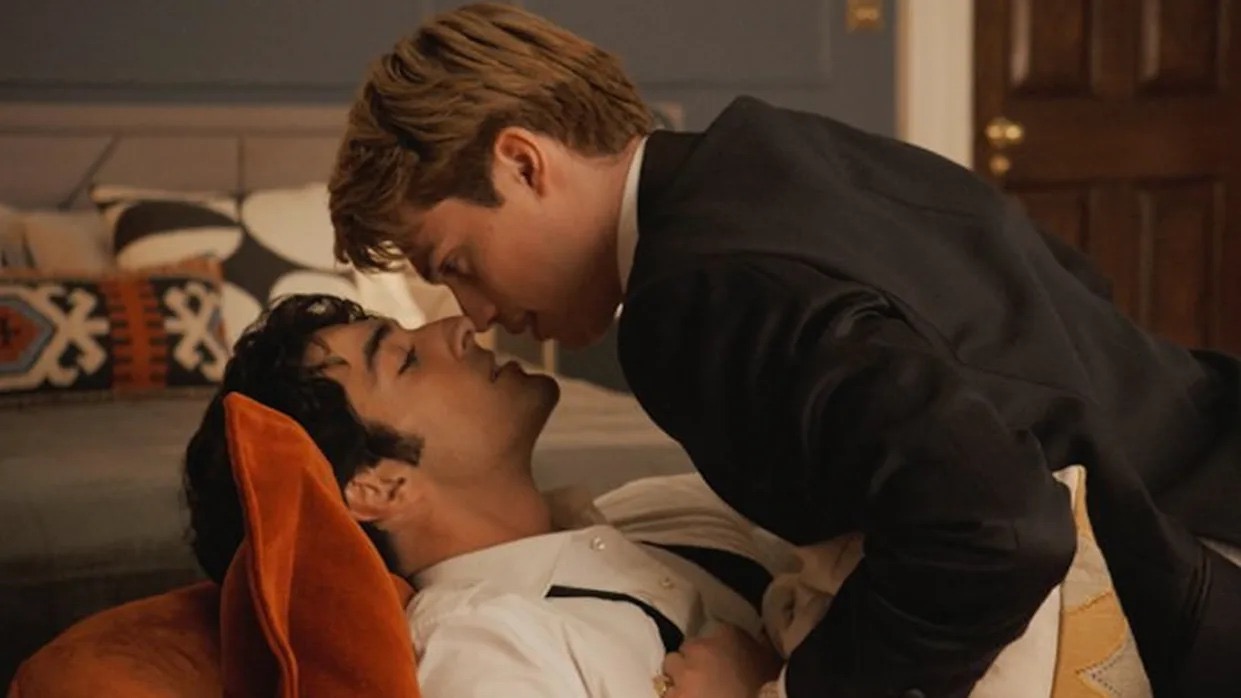
One of the oldest and most provocative questions in art history is what counts as art? That question becomes even more layered when we look at gay-themed films. Are they art? Are they pornography? Or something else entirely?
Last week, in my post “Can Gay Porn Be Considered Art?”, I explored how even pornography can rise to the level of art when it’s created with intention, craft, and meaning. This week, I want to turn to films—particularly gay-themed ones—and ask: where do they fit on the spectrum between art and pornography?
Let’s start at the beginning: Are films art?
The answer from an art historical perspective is a resounding yes. Cinema, from its very birth, was hailed by some as the most modern and democratic art form—capable of bringing storytelling, image, sound, and emotion into a single, immersive experience.
But when sex enters the frame, things get complicated—particularly for films with queer themes.

Consider Red, White & Royal Blue, which generated considerable buzz in the gay community for its romantic and tender love scenes. The two leads engage in intercourse—though we see no frontal nudity or penetration, and most of the actual sexual act is in the facial expressions of the two main characters. The narrative focuses on their emotional and political stakes as much as their physical passion.
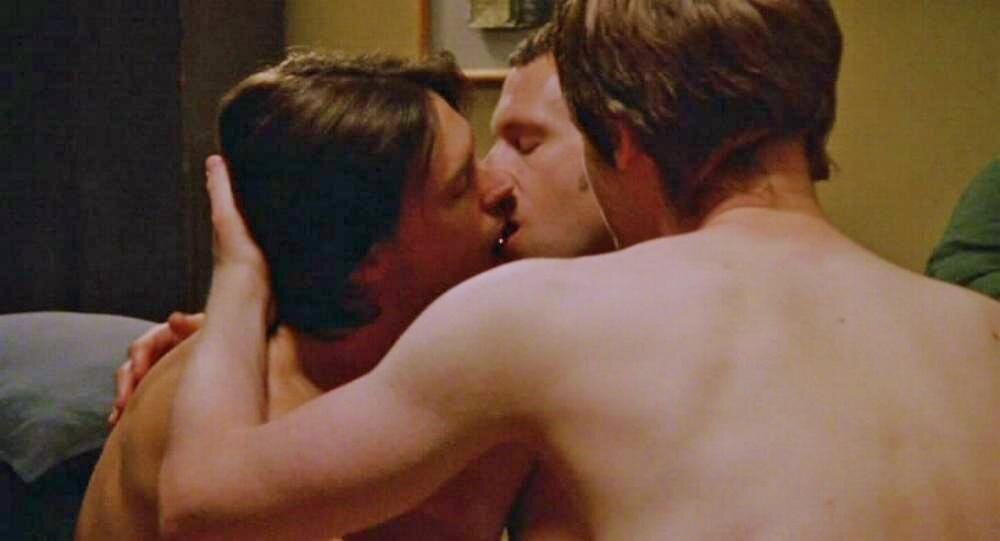
But compare that to Shortbus, the groundbreaking 2006 independent film featuring gay and straight characters exploring sexuality, intimacy, and loneliness. It famously includes unsimulated sex scenes—autofellatio, rimming, ejaculation, and more—woven into a story about connection in New York City. Despite its graphic imagery, many critics and audiences hailed Shortbus as an art film because the sexual content was in service to its humanistic and narrative vision.

Then on the other end of the spectrum are campy, sex-forward comedies like the Eating Out series or Another Gay Movie, which parody and revel in gay hookup culture with winks, nudity, and humor. These films are explicitly about sex, but in a light, comic, self-aware way—not quite pornography, but certainly not subtle. In the same vein, we might put certain HBO shows (The White Lotus, Euphoria) or Minx (on HBO/Starz), which features an extraordinary amount of male frontal nudity but uses it to explore the 1970s porn industry with a feminist and comedic slant.
So, where do we draw the line between art and pornography?
It’s not always clear—and, as you pointed out, it may well be “in the eye of the beholder.” In general:
- Pornography tends to have a singular, utilitarian purpose: sexual arousal and entertainment. It doesn’t usually ask its audience to reflect, empathize, or wrestle with deeper meaning. However, even pornography can be considered art, as I wrote about in last week’s post, “Can Gay Porn Be Considered Art?”—and I think it can be. When crafted thoughtfully, with aesthetic intention and emotional resonance, even porn can rise to the level of art.
- Art, even when explicit, usually serves a broader purpose—telling a story, exploring vulnerability, interrogating social norms, or celebrating intimacy.
That doesn’t mean art can’t also be arousing—just as Mapplethorpe’s photographs or Greek kouroi might still thrill us centuries later. The difference lies in intent and context.
Many of these films (and TV series) deliberately blur the line. Shortbus was attacked by some as pornography precisely because it showed real sex acts, but defended as art because it was about loneliness, connection, and what it means to be human. Meanwhile, Red, White & Royal Blue was criticized by some for being too tame, choosing romantic convention over sexual candor—but it, too, is art, in the sense that it tells a story about love and identity.

Even campy comedies like Another Gay Movie or series like The White Lotus are part of this conversation—using nudity and sexual humor partly to titillate, yes, but also to satirize and expose cultural hypocrisy.
Personally, I tend to agree that much of what we call pornography is shallow and transactional, whereas even the most sexually explicit arthouse films still aspire to say something about the human experience. Then again, as I’ve also noted, some modern “art” (abstract or otherwise) can feel just as empty or pretentious to some of us as porn can.
We as gay viewers—long denied honest representations of ourselves—have often sought out films that blurred the line between art and eroticism, because sometimes that’s where we feel most seen. Cinema remains, perhaps, the most widely consumed art form in the gay community—precisely because it can contain beauty, sex, tenderness, and critique all at once.
What do you think? Have you seen a film (Shortbus? Minx? Another Gay Movie?) that you felt crossed a line—or one that made you feel understood? Does the presence of graphic sex diminish a movie’s artistic value for you—or enhance its honesty?
Let’s keep the conversation going in the comments.

Is It Really Only Wednesday?

It’s Wednesday, but it doesn’t feel like a Wednesday. Honestly, it feels like it should be later in the week — Thursday at least, maybe even Friday if the universe were kind. All day yesterday, I kept thinking it was already Wednesday. Each time I realized it was still Tuesday, I felt just a little pang of disappointment. And now that it actually is Wednesday, I have a feeling I’ll keep thinking it’s Thursday and end up disappointed all over again.
This week has been dragging, and I can’t quite figure out why. Monday actually flew by because I was deep into a project, and while Tuesday didn’t exactly speed along, it wasn’t bad either — I kept myself busy with several tasks and even made some progress here and there. But now, here we are at the midpoint of the week, and time seems to have slowed to a crawl.
Today promises to be quiet — my boss isn’t in the office, and my other coworker works in a different part of the museum, so I should be left to my own devices. Which is fine by me. If people would just reply to my emails with something more substantial than “I’ll get back to you,” I might even have more to do. As it is, I’m half tempted to start working on my art history post for this week and see where that takes me.
One thing I am looking forward to today is getting back to the gym. I haven’t been able to go for a while because of my back issues, but I’m feeling much better, and I’m actually eager to go back. I miss it — the routine, the focus, even the little aches that remind me I’ve done something good for myself. It will feel good to move again and hopefully pick up where I left off.
There’s a certain appeal to a quiet Wednesday, though. The museum is peaceful when it’s like this — the soft hum of the HVAC, the occasional creak of a door somewhere, the construction of the building across the street, or the shuffle of visitors’ feet in the galleries (if we have any visitors). I can almost imagine I’m in my own little world here, tucked away among the artifacts and exhibits.
Still, I’d be lying if I said I didn’t wish I could just crawl back into bed and wake up on Friday morning, when I’ll be working from home and closer to the weekend. But, as always, I’ll muddle through today and tomorrow and make the best of it.
If your week has been dragging too, I hope you can find a little bit of calm in the quiet moments — or maybe even a little spark, like a good workout or a kind email, to get you through the rest of the week.
How’s your week going? Does it feel like it’s crawling or flying by for you? What little things help you push through the long days?

[It was summer when I found you]
[It was summer when I found you]
By Sappho
It was summer when I found you
In the meadow long ago,
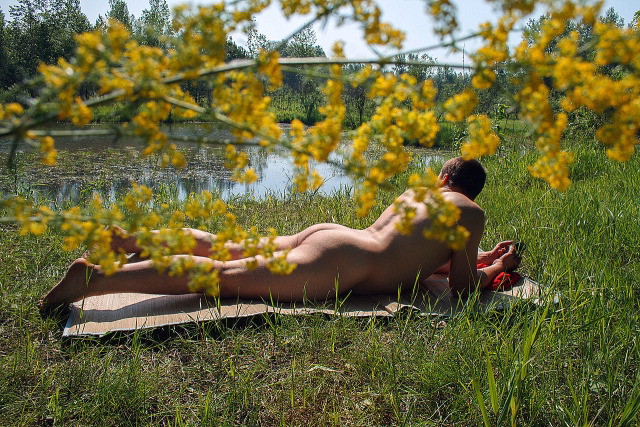
And the golden vetch was growing
By the shore.
Did we falter when love took us
With a gust of great desire?
Does the barely bid the wind wait
In his course?
About the Poem
Sappho’s poem [It was summer when I found you] is a delicate fragment of longing, desire, and memory. Though much of her poetry has been lost to time, the pieces that remain still shimmer with emotional clarity and sensuality — and this little lyric is no exception.
The poem opens in the languor of summer, with the speaker discovering her beloved in a meadow by the shore. Nature itself seems alive with desire: the “golden vetch” blooming wildly and the sea just beyond. Sappho often entwines the natural world with human passion — here, love is as irresistible and inevitable as the gust of wind that bends the barley.
The second stanza asks a rhetorical question: Did we falter when love took us? The answer is implied — how could they? Just as barley cannot resist the wind, the lovers could not resist their “gust of great desire.” There’s a quiet defiance and acceptance in this image: love comes, fierce and unbidden, and the only possible response is to bend with it, to be swept up.
What makes this fragment so moving is how it acknowledges both the beauty and the powerlessness of love. It’s not simply a tender memory, but also a reflection on the force of desire that overtakes reason, propriety, and even hesitation. Sappho’s verses, like this summer meadow fragment, remind us that love and desire are as old and natural as wind through barley or waves on the shore — irresistible, ephemeral, and profoundly human.
Sappho and the Isle of Lesbos
Sappho was a lyric poet who lived on the Greek island of Lesbos around 600 BCE. Little is known about her life in detail, but her reputation as one of the greatest poets of antiquity endured even as most of her work was lost. She ran a kind of school or circle for young women, where they learned poetry, music, and perhaps prepared for marriage.
Her surviving poetry — preserved only in fragments — often speaks of intense affection, admiration, and desire for women. This has led her to be celebrated as an early voice of female same-sex love and to become a symbol of lesbian identity in modern times.
Lesbos itself, situated in the northeastern Aegean, was a center of culture, art, and education in the Archaic Greek world. Because of Sappho’s association with the island and her poetry about love between women, the term lesbian came to refer to women who love women. Similarly, the word sapphic — derived from her name — describes romantic or erotic relationships between women.
Why We Call Gay Women “Lesbians”
Centuries after her death, during the late 19th and early 20th centuries, when sexology and psychology were developing modern categories for sexuality, the name of her home — Lesbos — became shorthand for women who love women. The term lesbian originally referred simply to something from Lesbos, but gradually it became associated with female homosexuality, particularly in English by the early 20th century.
In this way, Sappho’s poetry and her island home gave language and dignity to generations of women who loved other women, helping to articulate their desires in a world that often tried to silence them.
Lesbos and the Olisbos
In ancient Greek comedy and satire, the island of Lesbos — and especially its city of Mitylene — was sometimes joked about as a place where women crafted and used olisboi, leather phallic implements we would now call dildos. These bawdy associations appear in vase paintings, lexicons, and plays, reflecting both curiosity and discomfort with women’s same-sex desire. While likely exaggerated, such references add another layer to the island’s long-standing connection to female sexuality.

Easing Into Monday

I woke up this morning with my back feeling better. Once I got up and started moving around, it did hurt a little — but it’s definitely an improvement over the last few days. No migraine today either, even though it’s supposed to rain this evening. That feels like an accomplishment in itself.
I didn’t sleep particularly well last night, but somehow I still woke up feeling refreshed and ready to take on the day. I think a good, restful weekend helped. I really took some time to relax, which seems to have made a difference.
There’s never a lot to do at work this time of year. I’ll start making inquiries into speakers for the fall, work on refining some classes, and begin a project on branding for the museum with our communications office at the university. It’s a good time to ease into the week without feeling overwhelmed, and I’m feeling positive about what lies ahead.
I hope it’s a good Monday — for me, and for you too. Let’s make the best of it.
How are you starting your week? Do you have anything you’re looking forward to or working on?
And to my French readers, I wish you a joyful and meaningful Bastille Day — Bonne Fête Nationale!

Love That Surpasses Knowledge

“…that Christ may dwell in your hearts through faith, as you are being rooted and grounded in love. I pray that you may have the power to comprehend, with all the saints, what is the breadth and length and height and depth, and to know the love of Christ that surpasses knowledge, so that you may be filled with all the fullness of God.”
—Ephesians 3:17–19
We talk about love so often in the church that it sometimes risks becoming a hollow word—one that gets tossed around without really being felt. It’s a word recited in creeds and sermons yet rarely allowed to transform our lives. But Ephesians 3:17–19 invites us to pause and consider just how immense divine love truly is. It’s not a fleeting feeling or a conditional offering. It is described as surpassing knowledge, a love that breaks through the barriers of intellect and explanation, reaching into the core of our being.
For LGBTQ+ people, love can often be a complicated word. We’ve been told we love the wrong people. We’ve been excluded from pulpits, pews, and families in the name of “love.” But that kind of love—the one that draws lines and builds walls—is not the love Paul speaks of in Ephesians. That love is not of Christ. Divine love, agape, is the exact opposite. It does not diminish us; it anchors us.
The ancient Greeks understood love in more nuanced ways than a single word could express. Scripture echoes this richness:
1. Eros is passionate love, romantic and physical. It’s the love that often gets sidelined or condemned for queer people, even though it reflects our sacred longing to be fully known and desired.
Though the Bible rarely uses the term eros directly, it acknowledges the power of desire and affection. In Song of Songs 8:6–7, love is portrayed as an irresistible force:
“Set me as a seal upon your heart… For love is strong as death… Many waters cannot quench love.”
Queer love, romantic and erotic, is often erased in religious contexts, but these verses celebrate longing and passion as part of the human and sacred experience.
2. Philia is the love of friendship, a deep bond between equals. LGBTQ+ communities have often found strength and healing in this kind of love—chosen families, safe friendships, and solidarity in struggle.
Jesus himself demonstrates philia when he speaks of the bond between friends in John 15:13:
“No one has greater love than this, to lay down one’s life for one’s friends.”
For many LGBTQ+ folks, chosen family and close friendships have provided sanctuary when biological families could not. This kind of love—reciprocal, loyal, and selfless—is no less holy.
3. Storge refers to familial love, the kind that comes naturally between parents and children or siblings. Sadly, many of us have experienced the absence of this love—but we have also seen how it can be rebuilt in the spiritual family of affirming communities.
Romans 12:10 uses the word philostorgos, a compound of philia and storge, when Paul encourages the church:
“Love one another with mutual affection; outdo one another in showing honor.”
This type of affection binds us together in communities of care—where bonds may not be based on blood, but on spiritual kinship and mutual support.
4. And then there is Agape—the love Paul points us to here. This is the divine, unconditional love of God. Agape doesn’t depend on who you are, what you’ve done, or who you love. It is love for love’s sake. It is God’s love, lavished upon you simply because you exist.
Agape is the word most often used in the New Testament when describing God’s love—and the love we are called to imitate. It is both the love we receive and the love we give. 1 John 4:7–8 puts it beautifully:
“Beloved, let us love one another, because love is from God… for God is love.”
This is not a passive love. It is radical, universal, and moral. Agape calls us to love not just those who are easy to love, but also the stranger, the marginalized, even our enemies. As Jesus says in Luke 6:27:
“But I say to you that listen, Love your enemies, do good to those who hate you.”
Agape is what roots us and grounds us, as Ephesians says. It is the soil from which we grow. And unlike the narrow definitions of love we may have heard preached in judgment, agape is radical in its inclusivity. It embraces the outcast. It honors the queer body. It affirms trans identities. It does not ask us to be straight, celibate, or ashamed. It simply says: You are beloved. You are mine.
For queer people of faith, agape is both comfort and commission. It tells us we are already loved beyond measure—and it calls us to embody that same love in the world. It’s not always easy. But when we live from this love, we become living testimonies of God’s grace, justice, and welcome.
God’s love is an expansive and boundless love. God loves us beyond condition and with a love that knows no boundaries. God is closest to us in our time of need and when others pushed us away because of the lies of conditional love. He planted agape deep in our soul. Jesus taught us to rest in the agape that sees us, embraces us, and calls us whole. His love overflow in us, so that we may become a reflection of His divine welcome to others. He teaches us to love as He loves—without fear, without limits, without shame. As 1 John 4:8 says, “Whoever does not love does not know God, because God is love.”


Authors
Recent Comments
noisilycool3bc985058… on Pic of the Day Joe on Pic of the Day vandycolt on Pic of the Day furbirdsqueerly on Pic of the Day Joe on Pic of the Day Top Posts & Pages



Amazon Associate

As an Amazon Associate I earn from qualifying purchases. So, if you click on a link that takes you to Amazon.com, I may earn a commission.
Trust me, it isn’t much, but every little bit helps.

 Joe
Joe


 The Closet Professor