I know that today is usually when I post one of my art history pieces, and I do actually have one written and ready… but I just haven’t had the chance to gather the images for it yet. Honestly, I would have worked on it last night, but I was at the museum working until nearly 9:00 pm, giving tours. By the time I stopped for gas and got home, it was close to 10:00 pm, and I was wiped out.
My throat felt raw from talking loudly for two solid hours (the realities of leading big group tours). I always keep a bottle of water nearby between tours, but I can’t bring one along during the tours themselves—no food or drink allowed inside the museum. So when I finally got home, I was simply too tired to pull together the post.
The tours themselves went well, though! These were high school students visiting as part of a summer camp. One of the groups in particular was fantastic—really engaged, asking great questions, and interacting with me throughout. Of course, not all groups of teenagers are like that (group dynamics are always interesting), but that one made the long evening worthwhile.
I’m still feeling a bit worn out this morning, but I have another regular workday ahead of me. I’ll try to have the art history post ready for tomorrow. Thanks, as always, for reading.
“To a Stranger” By Walt Whitman (from Leaves of Grass, 1860 edition)
Passing stranger! you do not know how longingly I look upon you, You must be he I was seeking, or she I was seeking, (it comes to me as of a dream,) I have somewhere surely lived a life of joy with you, All is recall’d as we flit by each other, fluid, affectionate, chaste, matured, You grew up with me, were a boy with me or a girl with me, I ate with you and slept with you—your body has become not yours only nor left my body mine only, You give me the pleasure of your eyes, face, flesh, as we pass—you take of my beard, breast, hands, in return, I do not ask who you are—that is not important to me, You can do nothing and be nothing but what I will infold you, To one side for you is the onward road and to my side the same, I give you my hand, I give you my love more precious than money, I give you myself before preaching or law, Will you give me yourself? will you come travel with me? Shall we stick by each other as long as we live?
About the Poem
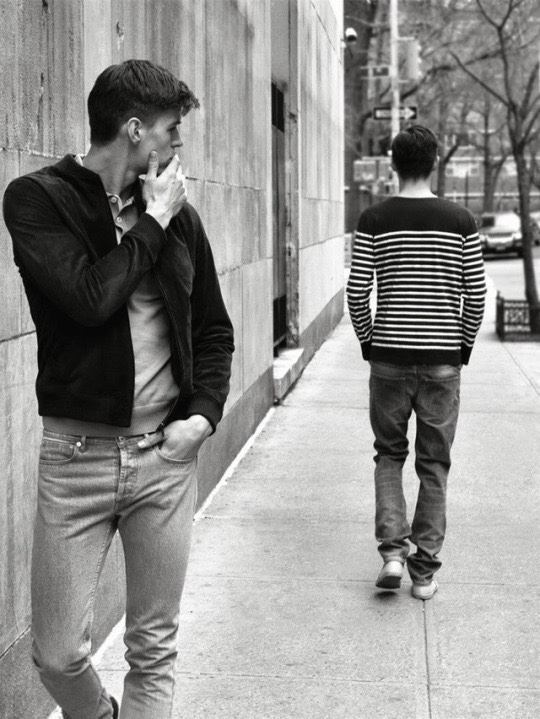
In “To a Stranger,” Walt Whitman captures a moment many queer people know intimately: the electric, instantaneous recognition of someone—another man, perhaps—whose presence stirs desire, curiosity, and a sense of deep, unexplainable connection. The poem unfolds in a fleeting encounter on a street or in a crowd, a stranger seen and felt in passing. But within those seconds, a whole imagined history blooms. This is not just a glance; it’s a lifetime distilled into a gaze.
Whitman’s poem belongs to his “Calamus” cluster—arguably the most homoerotic section of Leaves of Grass. In it, he expresses a spiritual and physical love between men with tenderness and boldness rare for the 19th century. Though the poem never explicitly mentions gender, the “stranger” often reads, in context and tone, as a man. Whitman universalizes desire while also encoding a personal and radical queer perspective. The fluidity of the poem mirrors the fluidity of identity, attraction, and intimacy.
This encounter is imagined as eternal and reincarnated: “I have somewhere surely lived a life of joy with you.” Whitman’s speaker does not ask for a name or demand recognition—only that the stranger accept his open hand and heart. The poem dares to believe that love and recognition can transcend boundaries, even if unspoken. During Pride Month, it feels especially poignant as a celebration of queer connection in a world that still too often passes by without noticing.
About the Poet
Walt Whitman (1819–1892) is widely considered one of the foundational poets of American literature, and Leaves of Grass remains a revolutionary work in both form and content. His radical embrace of the body, sensuality, and nonconformity challenged the poetic conventions of his time. Though Whitman never openly declared himself gay (the concept didn’t exist as it does now), his writing speaks volumes. The poems in the “Calamus” section express a loving, spiritual intimacy between men, often autobiographical in nature.
Whitman lived in Brooklyn and Washington, D.C., working variously as a printer, journalist, nurse, and government clerk. During the Civil War, he tended wounded soldiers—experiences that deepened his compassion and his poetic vision. Scholars and readers alike have long recognized the homoerotic dimension of his poetry, even as it was obscured or censored in his own time. Today, Whitman is embraced as a queer literary forefather—one who gave voice to the sacred beauty of male love in a society still bound by silence.
In “To a Stranger,” Whitman offers not just a look or a line, but an invitation. As we close this Pride Month poetry series, it’s worth asking his final question once more: “Shall we stick by each other as long as we live?” In community, in love, and in remembrance—we say yes.
Like many of you, I am alarmed — and honestly, frightened — at the news that Trump has ordered the bombing of Iran. It’s hard to shake the feeling that we may be standing on the edge of a true global crisis. If Iran retaliates — which they very well may — we could soon find ourselves plunged into a conflict that might spiral far beyond anything we’ve seen in decades.
In blunt terms: this is a provocation of war. And Iran would be within its rights to formally declare war on the U.S. in response. The prospect of World War III no longer feels like the stuff of history books or far-flung hypotheticals — it’s something we are suddenly forced to consider, right here and now.
I also can’t help thinking of my friends who live in or near major cities, military bases, and other strategic targets. While living here in Vermont provides a small sense of safety — we are, after all, far from those centers of power — there’s always that unsettling thought: will this administration stoop so low as to create a domestic target? Vermont is a liberal stronghold. Could a false flag attack be used to further sow fear and division? The paranoia is starting to feel not so paranoid.
What makes this even more terrifying is how unprepared we are. Most military analysts have long said that the likeliest form of nuclear attack would not be traditional bombs, but dirty bombs — radioactive material dispersed in populated areas. Yet the very departments tasked with detecting and responding to these kinds of attacks have been gutted in recent months.
It’s hard to sleep at night when it feels like the world is careening toward disaster — and yet here we are. I just needed to say this out loud tonight. I imagine many of you are feeling the same dread and uncertainty. I don’t know where this will lead, but I do know that in times like these, we need to stay informed, stay connected, and keep speaking out.
Stay safe. Stay aware. And if you’re feeling anxious — you’re not alone. ❤️
“Patriotism means to stand by the country. It does not mean to stand by the president.”— Theodore Roosevelt
“You shall love the Lord your God with all your heart, and with all your soul, and with all your mind…And you shall love your neighbor as yourself.”
— Matthew 22:37, 39
“Build houses and live in them; plant gardens and eat what they produce…But seek the welfare of the city where I have sent you… and pray to the Lord on its behalf,
for in its welfare, you will find your welfare.”
— Jeremiah 29:5, 7
As we move deeper into Pride Month, our celebration continues—not just as a public witness, but as a deeply spiritual journey. This week, we turn inward to examine what it means to love ourselves as God commands—and what it looks like to thrive right where we are, even if the place we find ourselves is far from perfect.
To live openly as an LGBTQ+ Christian is already an act of courage. But to thrive—to truly love ourselves, and to build a life of meaning wherever we are—that’s holy work. And it’s not always easy.
Many of us have been told to leave certain parts of ourselves behind to belong. Others have been asked to move—emotionally, spiritually, or physically—to fit the mold of someone else’s expectations. But God’s Word reminds us: we are meant to love others as we love ourselves, and that means our own well-being matters. Our flourishing matters. Our joy matters.
This kind of love isn’t narcissistic—it’s necessary. Because when you believe you are beloved, you can begin to love others from a place of wholeness, not performance. When you root yourself in grace, you can begin to grow even in unfamiliar or uncomfortable ground.
In Jeremiah 29, God speaks to a displaced people in exile—not to promise a quick rescue, but to offer purpose in the waiting. “Build houses. Plant gardens. Raise families. Seek the good of the place where you are.” God doesn’t say, Just survive. God says, Live. Thrive. Invest. Pray. Root yourself in this moment.
So many LGBTQ+ Christians know what it’s like to feel out of place—in our families, churches, towns, or even within ourselves. And yet, even there, God is saying: Your life still matters here. You can still grow something beautiful in this soil. We don’t need the perfect setting to bloom. We need the assurance that God is with us in every setting.
Jesus reminds us that the greatest commandment has three directions:
Love God.
Love your neighbor.
Love yourself.
So many of us have learned to prioritize others, sometimes to our own harm. But this week is your invitation to remember: your wellness is not selfish. Your joy is not indulgent. Your rest, your healing, your wholeness—they glorify God.
Pride is not only about being visible to the world—it’s about being present to ourselves. It’s about knowing we are worthy of care, kindness, rest, and joy. It’s about believing that God’s image is reflected in us, even when others try to deny it.
Self-love, especially for LGBTQ+ people of faith, is a form of resistance against shame. But more than that, it’s a sacred rhythm: love God, love neighbor, love self. All three are part of the same holy breath. This week let’s not only celebrate who you are but care for ourselves as someone deeply loved by God. Build something real. Plant something hopeful. We should. rest in the knowledge that our lives have meaning right now, not just in some imagined better place.
We should build a life where love takes root in us, flows through us, and blesses the world around us. God’s love is rooted grace. He loves us fully and completely. God teaches us how to love ourselves in ways that honor Him—with gentleness, patience, and truth. When we feel out of place, God helps us remember that we are still present and active in this soil. He gives us courage to plant seeds of hope, to build something real, and to live boldly as a reflection of God’s enduring love.
We were made to flourish—not just in safe spaces, but in the very places where the world said we couldn’t. We were made to love—not just others, but the radiant reflection of God that lives in us. So go and build. Go and plant. Go and love. Even here, we can grow. Even now, we are already enough.
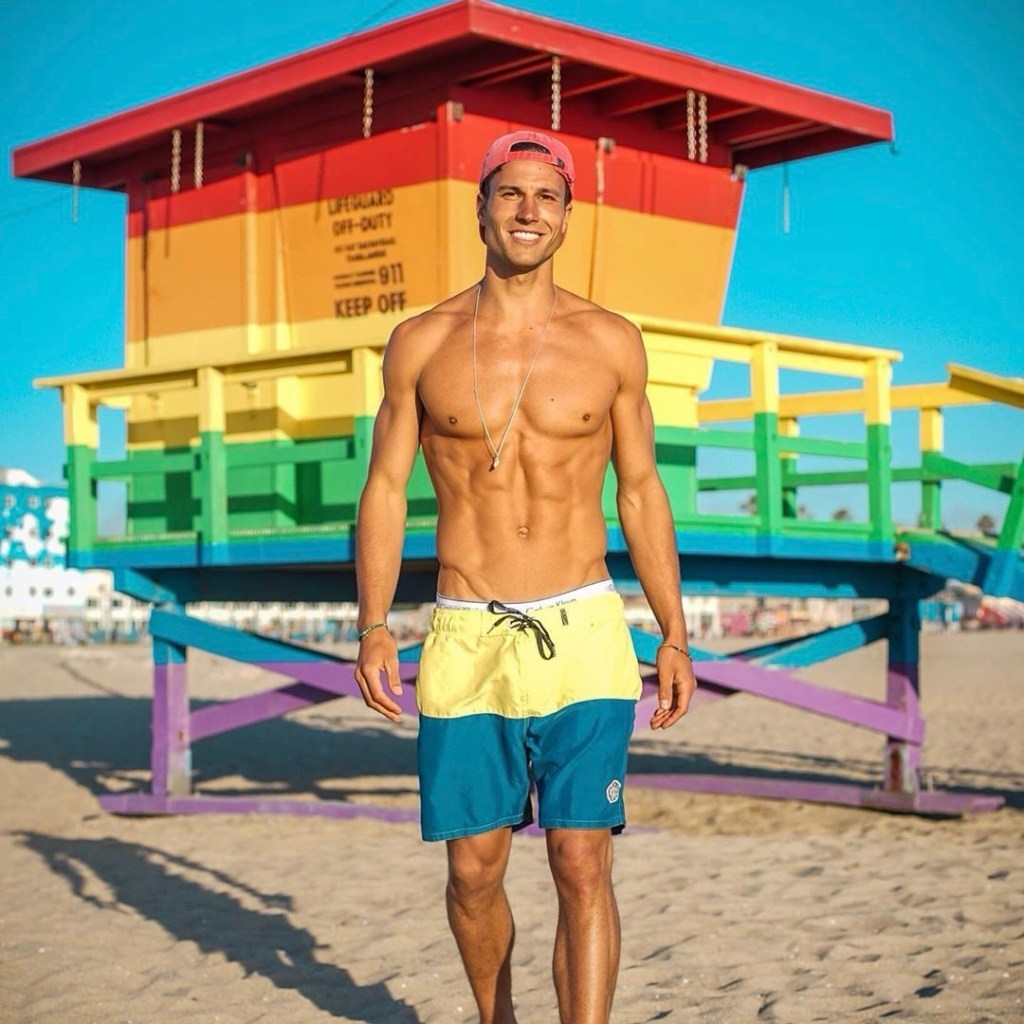
Summer officially began yesterday. While I doubt I’ll be going anywhere this season—certainly not to the beach—I do hope some of you have plans to get out, soak up some sunshine, and enjoy a bit of summer fun. Whether it’s a vacation, a day trip, or simply relaxing in your own backyard, make the most of the season! And if you’re facing a heatwave like many of us, please be careful, stay cool, and remember to drink plenty of fluids.














 Joe
Joe





 The Closet Professor