They Know This Will Kill Kids. They Did It Anyway.

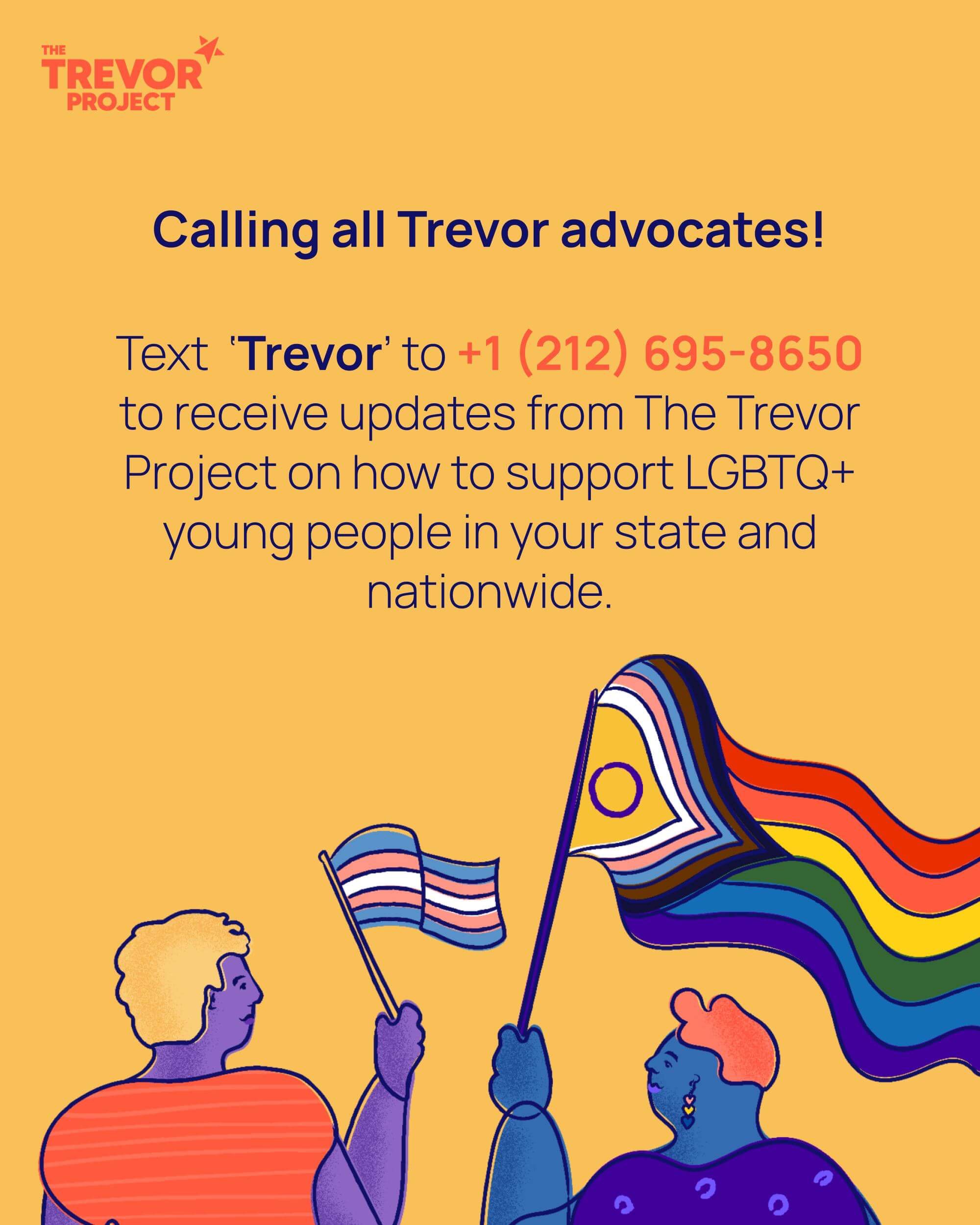
Out of all the cruel, calculated, and heartless things the Trump administration has done over the years, I honestly think this one might be the lowest. And it makes me the angriest. I’m talking about their decision — part of the Republican budget plan from the start — to end an LGBTQ+ suicide prevention hotline by cutting federal support for it.

And let’s be clear: this wasn’t accidental. The Trevor Project, one of the most important and effective crisis intervention services for LGBTQ+ youth, was deliberately targeted in this budget process. The decision to defund this life-saving hotline wasn’t about fiscal responsibility — it was about ideology. About sending a message that these kids don’t matter, don’t deserve support, and should simply disappear from public life.

The timing wasn’t accidental either. It’s one more in a long string of attacks on the LGBTQ+ community that the Trump administration has launched just since the beginning of June. Pride Month — when queer and trans people are supposed to celebrate visibility, survival, and progress — has instead been marked by this administration using every opportunity to roll back protections, erase visibility, and push hateful rhetoric. This move to kill the hotline is cold and calculating — a deliberate choice to cause harm and inflict fear on a vulnerable community during a month meant to honor their dignity.

And for all the Republican talk of being so-called “pro-life”? This is just one more example of how hollow — and frankly how deadly — that slogan really is. They take away social welfare programs that leave children hungry. They gut protections for working families. And now they strip away suicide prevention services for the LGBTQ+ youth most at risk. Let’s be clear: “pro-life” means nothing to them. Their actions reveal the truth — they are pro-death when it comes to the most vulnerable. They are doing everything in their power to remove support and safety nets for those who need them most.

There is also a strong argument that this decision is not only morally and ethically indefensible — it may well violate civil rights laws and open the door to future legal challenges. When the government deliberately strips away access to life-saving services from a marginalized group — one that faces disproportionate rates of harassment, discrimination, and suicide — that can amount to deliberate indifference under civil rights standards. It can also create a chilling effect, reinforcing a climate of exclusion and hostility. Federal agencies are supposed to administer their programs without discrimination, and courts have recognized that targeting specific groups in ways that increase harm may violate constitutional protections under the Equal Protection Clause — or even Title VI or Title IX in certain contexts. This is not just political cruelty — it could, and should, be the subject of serious legal scrutiny.

Let that sink in for a moment. A hotline dedicated to saving lives — to answering desperate calls from LGBTQ+ youth in crisis — is being deliberately shut down. Not because of lack of need. Not because it wasn’t effective. But because this administration is ideologically hostile to those kids’ very existence.

And I do mean kids. Many of the young people who reach out to The Trevor Project and similar hotlines are teenagers — sometimes as young as 11 or 12 — grappling with feelings of isolation, rejection, bullying, abuse. They turn to these hotlines because they have nowhere else to go. And for the government of the United States to turn its back on them — to deliberately erase the “TQ” from its language, to send the message that they don’t exist or don’t matter — is unconscionable.

This isn’t “just politics.” This isn’t about religious differences. This is literally about life and death. Children will die because of this decision. That’s not hyperbole. The statistics on suicide among LGBTQ+ youth are heartbreaking — and undeniable. Cutting off a lifeline will only make it worse.

As someone who grew up in a deeply conservative and homophobic family, I know firsthand how much something like The Trevor Project could have meant. Back in 1994, as a scared teenager who had been taught that my feelings for other boys were sinful — that they would send me to hell — I didn’t understand my own sexuality. I was still in denial, confused, and terrified. But those around me had already convinced me that what I was feeling was evil.

One night, overwhelmed, I swallowed a handful of pills. Thankfully, all they did was make me sick — but at the time, I had no one to turn to. There was no hotline, no safe space, no adult I trusted enough to confide in. I survived, but many don’t. And I can’t help but think how different things might have been if I’d had a resource like The Trevor Project back then. I wish I could do more.

And even if you don’t personally “agree” with LGBTQ+ identity — even if you’re unsure or uncomfortable — how can anyone with a shred of compassion justify abandoning children in crisis? You don’t have to understand every aspect of someone’s identity to care whether they live or die. You don’t have to condone or celebrate LGBTQ+ lives to believe that kids deserve help and hope when they reach out.

I find myself asking: What God do these people believe in? Because it sure as hell isn’t the Christian God I was taught about. The God I believe in calls us to love our neighbor, to comfort the brokenhearted, to bind up the wounded — not to throw them away.

This news honestly makes me want to cry. Not in a performative way. In a gut-wrenching, soul-heavy way. Because I know the reality: young queer kids will be sitting in their rooms, alone, afraid, maybe thinking about ending their lives — and now they’ll have one less place to turn.

How could anyone do this? How could anyone look at a struggling 14-year-old trans kid, or a scared gay teen in a conservative household, and say: We are going to take away your helpline. We are going to pretend you don’t exist. We are going to make it harder for you to survive.

And how can Christians in good conscience support this? Jesus didn’t teach us to abandon vulnerable kids. He taught us to welcome them, to love them, to protect them.

Out of everything this administration has done — all the lies, the corruption, the cruelty — this hits me the hardest. Because these are children. And they deserve better.

And if it makes you angry too — good. Let it. But don’t let it stop there. Speak out. Write. Donate. Support the hotlines that do still exist. Vote.

Most importantly: You can help The Trevor Project continue its life-saving work by donating here: https://www.thetrevorproject.org/donate/. Without government support, they will rely even more on our generosity to keep the hotline going for those who need it most.

Because lives are on the line. And I, for one, refuse to look away.


Pic of the Day


Nine Years Ago

June 18, 2016

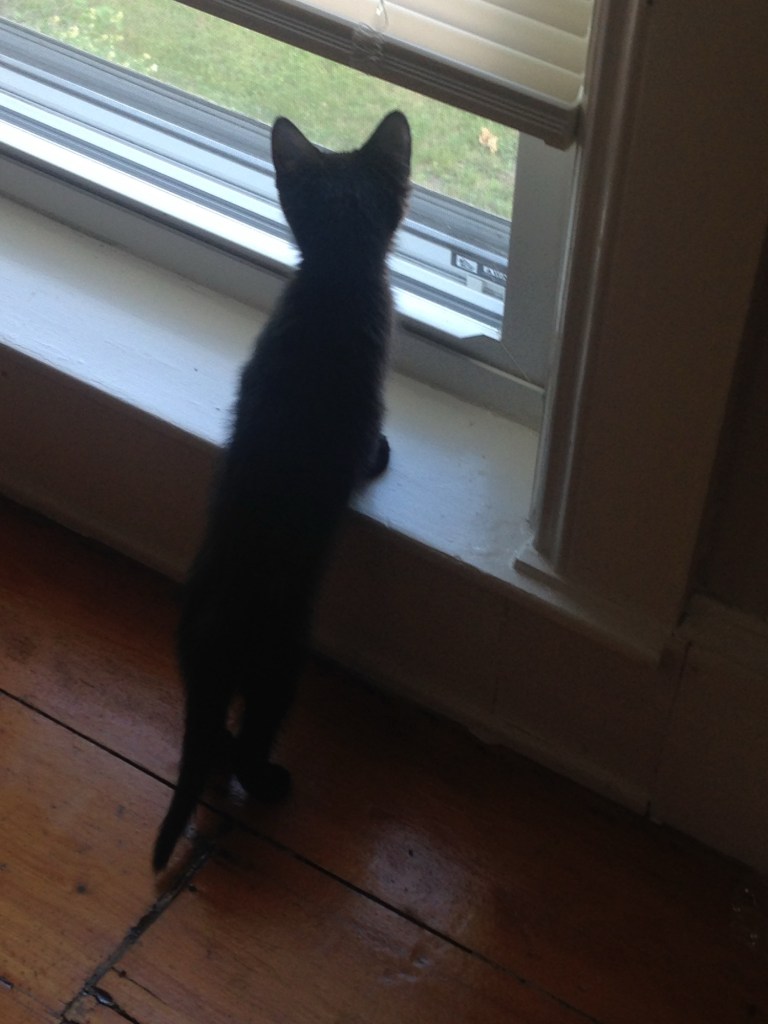
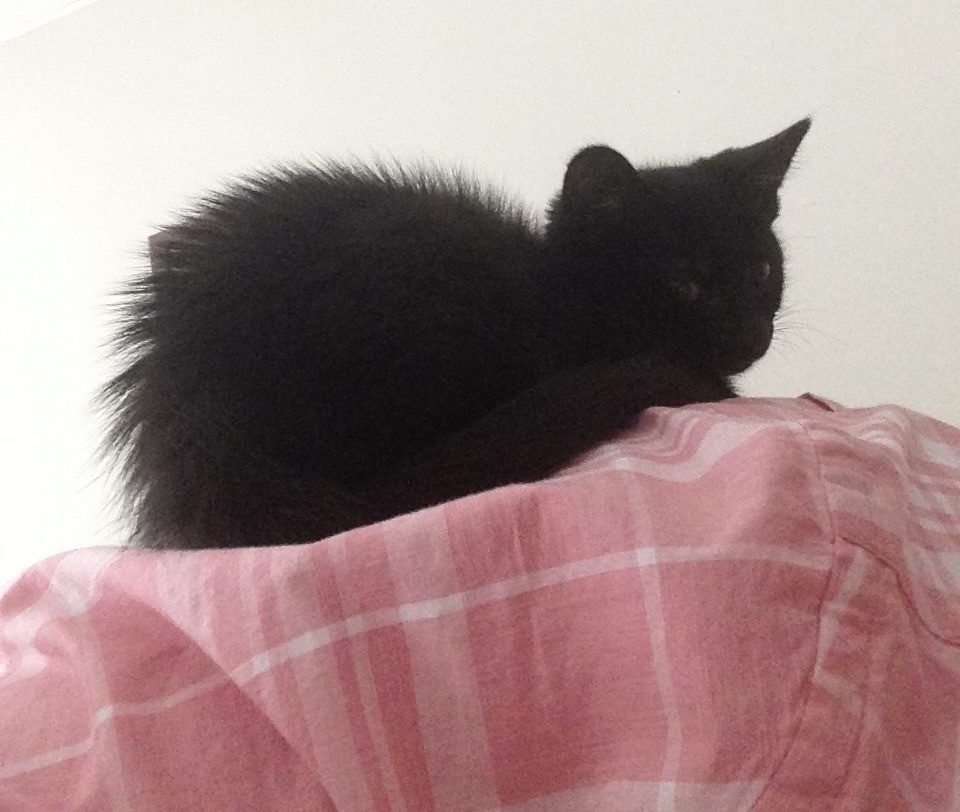
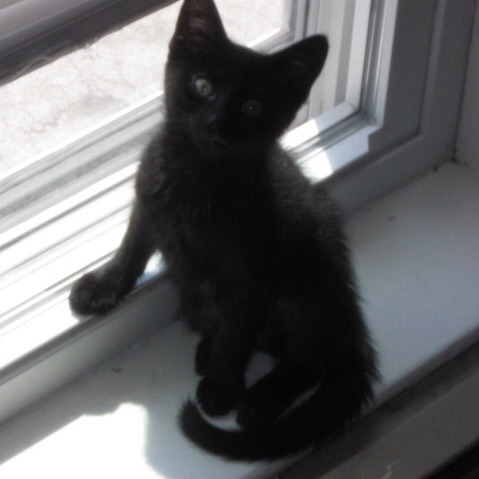
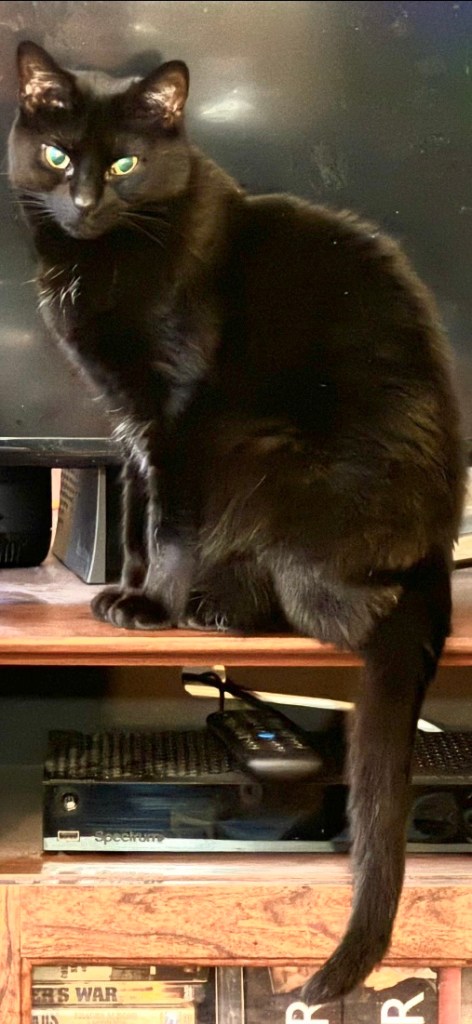
Nine years ago today, I walked into the local humane society and met a tiny, frightened black kitten they had named Bridget. She was crouched low and hiding under a chair, wide-eyed and unsure of the world. I knew immediately that “Bridget” wasn’t her name. My cats have always been named after queens, and while Bridget may be a fine name, there’s never been a Queen Bridget. Elizabeth was out—my sister’s name. And I could never reuse Victoria (aka HRH if you were reading this blog all those years ago), the name of my beloved cat who had passed.

June 19, 2016

But Queen Isabella of Spain? That felt right. Regal, bold, and destined for her own kind of adventure. So “Bridget” became Isabella, and Isabella became mine.

June 20, 2016

At the time, I was navigating one of the loneliest periods of my life. A dear friend had died the year before, and I was living 1,200 miles from home, trying to find my footing again here in Vermont. What I didn’t know then was how much this tiny creature would help me heal.

June 21, 2016

That first week, Isabella mostly hid under the bed. She cried when I left the room. She was timid and unsure. But even in those early days, something began to shift. By the second day, she was climbing onto the bed on her own. By the third, she was letting me pet her. A few days more, and she was confidently dragging toys into her bed and meowing nonstop when I dared to be in another room.

June 21, 2016

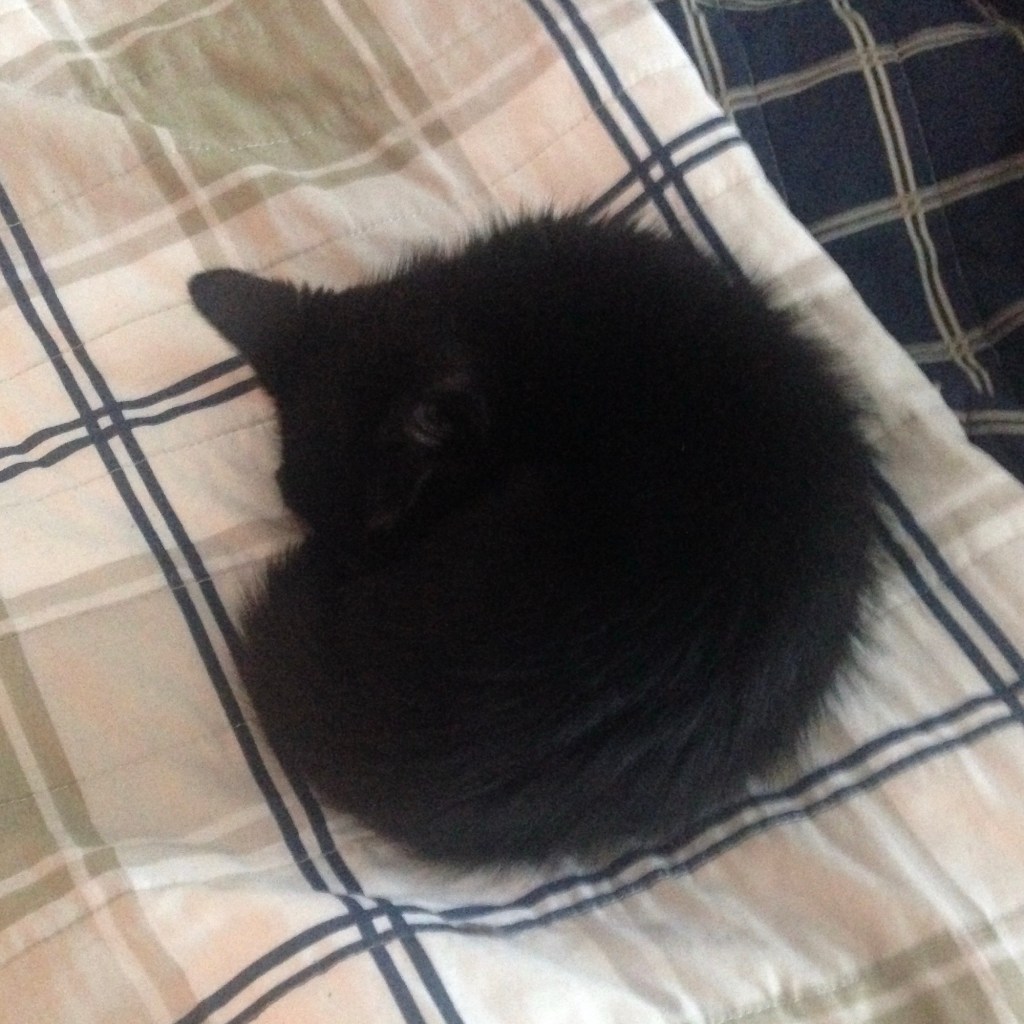
She was skittish, yes—but she was also vibrant and curious, funny and affectionate. She claimed her favorite sleeping spot on a neck massager under the bed, only to sneak onto my chest in the middle of the night. She was a chatterbox, a cuddler, a clown. And most of all, she became the best antidepressant I could have asked for.

June 24, 2016

Isabella gave me something I didn’t realize I needed: the daily rhythm of care, companionship, and connection. She reminded me to laugh. To be present. To love again. In those earliest days, when my world still felt uncertain and dim, she brought joy back into the corners of my life.

June 24, 2016

Today, Isabella is no longer that tiny black fluffball with the wide eyes. She’s older, wiser, still chatty when she wants to complain, still cuddly in her own way—and still the queen of this castle. For nine years, she has been my companion, my comfort, and my fiercely affectionate shadow. 

June 25, 2016

Happy Adoption Day, Isabella! You saved me as much as I saved you. 

May 22, 2024

To see Isabella’s journey over the years, visit the archive of blog posts about her here: 

ISABELLA


Pic of the Day


Scheherazade

Scheherazade
By Richard Siken

Tell me about the dream where we pull the bodies out of the lake

and dress them in warm clothes again.

How it was late, and no one could sleep, the horses running

until they forget that they are horses.

It’s not like a tree where the roots have to end somewhere,

it’s more like a song on a policeman’s radio,

how we rolled up the carpet so we could dance, and the days

were bright red, and every time we kissed there was another apple

to slice into pieces.

Look at the light through the windowpane. That means it’s noon, that means
          we’re inconsolable.

Tell me how all this, and love too, will ruin us.

These, our bodies, possessed by light.

Tell me we’ll never get used to it.

About the Poem

Tell me about the dream where we pull the bodies out of the lake
and dress them in warm clothes again.
How it was late, and no one could sleep, the horses running
until they forget that they are horses.

Richard Siken’s “Scheherazade” opens with a plea—not for survival, exactly, but for comfort in the face of despair. The speaker begs for a story, for beauty, for something to keep the darkness at bay. Much like the legendary storyteller of One Thousand and One Nights, who told tales to delay her execution, the speaker invokes narrative as a form of desperate preservation. But this is no gentle fairy tale. The world of “Scheherazade” is urgent, feral, and emotionally raw. Bodies are pulled from lakes. Horses run themselves into forgetting. Desire is dangerous, and love may be indistinguishable from destruction.

The poem speaks from a place of vulnerability familiar to many queer people: the hunger for connection even when it feels unsafe or impossible. Siken’s images are at once cinematic and deeply personal—romantic love merges with trauma, tenderness with violence. What the speaker wants isn’t just affection; he wants to be told that this brutal, beautiful life was worth it. The poem’s dreamlike structure, full of fragmented longing and looping pleas, mirrors the psychological toll of being queer in a world that does not always offer safety.“Scheherazade” is not just a love poem—it’s a survival poem. The speaker wants to be told that everything is going to be okay, even if that reassurance is a fiction. That need to believe, even briefly, in the possibility of warmth, of home, of a night spent in someone’s arms rather than alone or erased, is one of the deepest truths the poem offers. It resonates with anyone who has ever clung to love as a lifeline, even if only for one more night.

About the Poet

Richard Siken (b. 1967) is a contemporary American poet whose debut collection, Crush, won the 2004 Yale Series of Younger Poets competition, selected by Louise Glück. The book quickly became a cult classic, particularly among queer readers, for its fierce intensity, lyrical beauty, and unflinching depiction of obsession, grief, and desire. Siken wrote the collection in the aftermath of his partner’s death, and that grief infuses every line—making Crush not only a portrait of romantic love, but of love haunted by loss and fear.

Openly gay, Siken has spoken about the complex relationships between memory, violence, and the longing for safety that emerge in his work. His poems are often constructed as psychological collisions—dreams and flashbacks, fantasies and fears, stitched together with urgency and tenderness. In the queer literary canon, Siken’s voice stands out for its unapologetic emotional exposure and its refusal to tame desire for the sake of palatability.

As part of Pride Month, reading “Scheherazade” reminds us that queer love stories don’t have to be sanitized or simplified to be worthy. Siken’s poetry gives space to the full spectrum of experience: the danger, the ache, the beauty, and the need. His words speak directly to those who have survived by telling themselves stories—and to those still searching for someone to tell them they’re safe.


Pic of the Day


Mind Over Migraine

Today, I have an appointment with a new neurologist at Dartmouth. Since my longtime provider at the Headache Clinic moved away, it’s been a bit of a revolving door—they’ve had a hard time finding someone permanent to fill her role. This will be the fourth provider I’ve seen since she left, and while I’m keeping an open mind, it’s hard not to feel a little weary of having to start over again with someone new. That said, there’s a bit of reassurance going in: my primary doctor actually knows this new neurologist personally. They’ve worked together in the past within the same hospital network, and he told me he thinks I’ll like him. I’m holding onto that hope. 

This visit is especially important because my migraines have been getting worse over the past few weeks. The Botox injections I receive every few months have worn off, and I can feel the familiar pressure building again. I’m heading back to Dartmouth on Wednesday for my next round of injections, and I’m hoping they bring some relief before things get even more intense. 

On a brighter note, I found out that my trainer will still be working with me for two more weeks! He’s transitioning into his new position as assistant manager, but because of some onboarding delays, I get a little more time with him. I’m really glad—our sessions have been such a steady and motivating part of my week, and I’m not quite ready to give them up. 

So, here’s to new beginnings (again), to holding out hope for a bit of relief, and to small silver linings where we can find them. 

— 

Wishing you all a good week—full of strength, support, and maybe a little less pain.


Pic of the Day


🌈 God’s Image, Queerly Reflected

“So, God created humankind in his image, in the image of God he created them; male and female he created them.”

— Genesis 1:27

From the very beginning, Scripture tells us something radical: that we are made in the image of God. This verse from Genesis is often quoted, but too rarely unpacked in its glorious, expansive truth.

What does it mean to be made in the image of God? It means we reflect God not in uniformity, but in diversity. Not in sameness, but in difference. It means every gender, every orientation, every body, every soul bears something sacred—something divine. Yet for generations, many LGBTQ+ people have been told the opposite. That our queerness is a distortion, a rebellion, an error. But what if our queerness is not a flaw, but a feature of God’s creativity?

God is not binary. God is not confined. God is creator, relational, mysterious, wildly imaginative. And we—queer, trans, nonbinary, gay, lesbian, bi, ace, and all beyond—carry that same creativity, complexity, and relational beauty within us.mWe are not outside God’s image. We are part of its full expression.

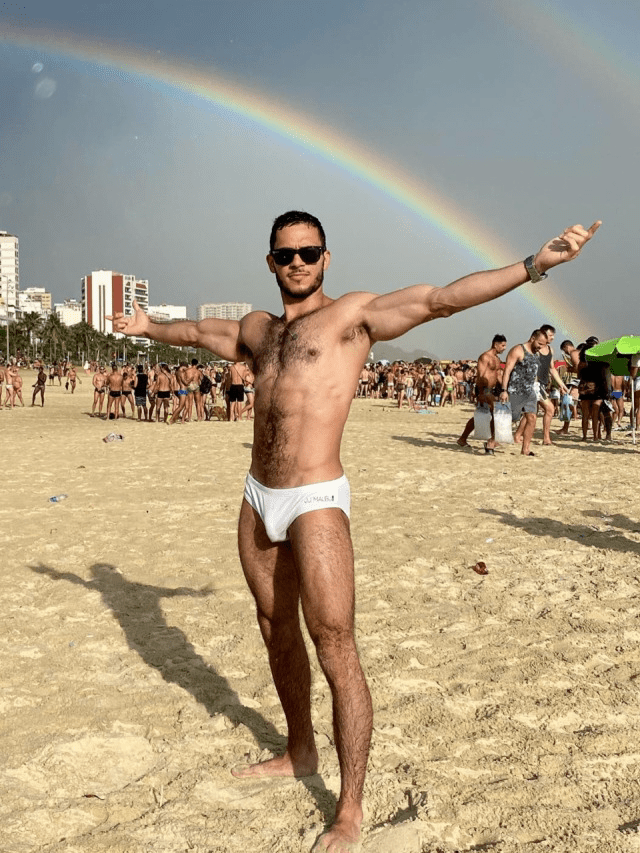
Think about the rainbow—a biblical sign of covenant and peace. Its beauty lies in its range. Each color distinct, yet part of a whole. The same is true of humanity. Our identity, your body, our orientation, our way of loving—these are not obstacles to divine reflection. They are evidence of it. We are part of the kaleidoscope of God’s presence in the world.

Queerness challenges rigid categories. It defies the neat boxes religion and society often try to impose. But perhaps that is exactly what the image of God does too. It disrupts our assumptions. It invites wonder. In a world eager to limit God’s likeness to the familiar, LGBTQ+ people expand the canvas. We remind the Church that God is still creating, still surprising, still delighting in what is “very good.”

God made us in His image, in all our beauty and complexity—our queerness reflects His creativity. When others try to diminish our worth, He reminds us that we carry the divine imprint. Our lives should be a mirror of His love, a reflection of His grace, and a celebration of the diversity He called good.

We are not a deviation from God’s design. We are a beloved echo of the divine voice that said, “Let us make humankind in our image.” Our queerness is not too much. It is not too different. It is exactly what it was meant to be: a radiant, holy reflection of the God who made us.

Go forth this Pride Month not just with courage, but with the joy of knowing that when you live as your full self, you show the world what God looks like.

🌈🏳️‍🌈🏳️‍⚧️


Pic of the Day