Fetishes

IMG_3733

Fetishes. Most of us have them. A fetish is defined as a form of sexual desire in which gratification is linked to an abnormal degree to a particular object, item of clothing, part of the body, etc. Yesterday, I had five ways to embrace and enjoy your fetish. Today, I’m going to talk about my fetishes and see if they meet the test. I have a few major fetishes: Leather, Underwear and Uniforms.

IMG_3613

Sexual self-discovery is a mysterious process, the only aspect of growing up that parents and teachers mostly leave children (if they’re lucky) to sort out on their own. The word groping works here. It’s you in the dark at first, maybe with props or pictures, and eventually with other humans, discovering over time—sometimes over a very long time—what gets you off, what turns you on. But how is it that you, being you, like this, not that? Why men, not women; why leather, not rubber; why briefs and boxers, not boxer briefs; why military uniforms, not domestic uniforms?

IMG_3586

I love the smell of leather. I love the feel of leather. Why? I’m not sure, but that’s all I’m going to say on that subject. The same is true of underwear. I love seeing beautiful men in underwear, and I love wearing sexy underwear. While I like boxers and I won’t say that I hate boxer briefs, I do love briefs, sexy little briefs. However, I am not a fan of thongs, in fact I hate them.  They look and feel uncomfortable.  I do like jock straps though. If you are going wear underwear that shows off your assets, let them be framed like the work of art they are and not split into by a string. My fetish for underwear started when I was in middle school. It probably started with seeing guys in their underwear in the locker room or it could have been those fitness magazines which always showed guys in briefs.

IMG_3855

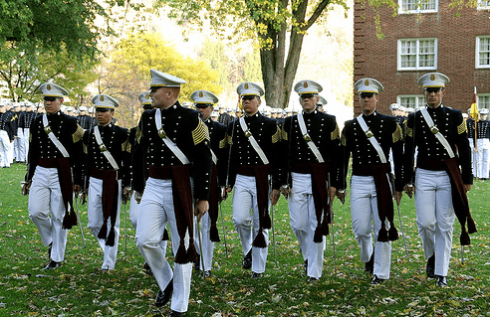
As for uniforms, I love a military uniform.  Not really BDUs (battle dress uniforms, i.e. fatigues/camo)  but dress uniforms. I love a man in dress uniform. I remember the first time I saw the uniforms of World War I, I fell in love.  The high collar, the Sam Browne belt, the high boots, and riding pants, what’s not to love?  The dress blues/greys (its according to which school) of military cadets is out of this world. The uniforms themselves are so beautiful, but the young men in them are just as beautiful. The same is true of civilians in tuxedos. A tux can make even the most ordinary of men look extraordinary. The same is true of dress uniforms. BDUs can look sexy on some men, but dress uniforms look sexy on all men.
IMG_3858

So there are my fetishes.  What are yours? Don’t be shy either.


Five Ways To Embrace & Enjoy Your Kinky Fetish

A fetish might be the shiny black leather boots the man at the grocery store has on, or the white cotton jockstraps you see at the gym, or the way you murmur “Daddy…”when your horned up partner is having his way with you. But where did we get our kinks, and do they represent something… bad?
Therapist and author David Fawcett (Lust, Men, and Meth: A Gay Man’s Guide to Sex and Recovery) thinks our kinky side is actually good for us, he came up with some juicy insights into our naughty obsessions.
“A fetish is not a disorder at all, unless it causes personal distress or is harmful to others,” David told Queerty’s Mark King. So if you’ve been transfixed by the uniform worn by the hot Castro cop, relax. “The most common fetish is a body part, like feet. Second would be objects such as clothing, and finally, a fetish can be a behavior, like a role play fantasy.”
David provided us these five helpful things to know about your kinky fetish:
 
1. Assess your fetish to be sure it is a healthy one
Screen-Shot-2015-07-31-at-1.14.26-PM-517x670
David is supportive of our kinky sides. “Think of your fetish as something that ‘adds value’ to your sexuality,” he says. “By far, most fetishes are perfectly normal. Our own shame about having one is usually the most unhealthy thing about it. If it is a fantasy of some sort, remember this: the vast majority of people are clear about the difference between fantasy and reality.”
But why on earth do white briefs drive you wild, you ask? “Why we develop a fetish is largely unknown,” David says, “but they are most often in place during childhood. They pair our earliest sexual arousal with a non-sexual object – the cute boy you saw in the locker room was wearing white briefs, for instance. Importantly, though, a fetish can also result from trauma or a strong emotional experience.”
If you’re concerned, ask yourself if your fetish is emotionally or physically harmful to yourself or to your partner. And David asks that you give something else some thought. “Is indulging your fetish ‘re-wounding’ you somehow? Is it linked to something that should be allowed to heal, and you’re keeping it fresh, and harmful?” If the answer is yes or you’re not certain, you might want to consider talking it through with a professional.
And by all means, if the fetish involves sex that puts you or your partner at risk for HIV transmission, then check out PrEP if you’re negative, or learn why positive guys with an undetectable viral load are not infecting their partners.
 
2. Reveal your fetish to your partner thoughtfully
folsom_street_fair_2007_-_1681498844
Sure, telling your date or your husband that his leather boots are hot is easy. Getting him to wear a pair during sex might be a little trickier. The key is being prepared.
“Most couples don’t have great communication skills about sex, and that includes gay men,” says the expert. “So be sure you are comfortable discussing sex in the first place. You might want to just describe why the fetish gives you pleasure, without any expectations that your partner will join in. And it is important that you discuss it as something that is intimate, not a source of shame or some kind of awful confession.”
Once you’ve had the Big Reveal, give your partner time to process it. You can always circle back to it later.
 
3. You fetish probably isn’t going anywhere
large_Screen Shot 2016-01-29 at 3.15.53 PM
“A fetish is part of your sexual template that probably won’t go away,” says David. “Even if we try to repress them, they tend to re-emerge.”
So, someone in a relationship that has a fetish might want to do their best to incorporate it, advises David. That means ground rules, respect for limits, and managing the complicated balance between loving and respecting your partner while honoring your own needs. “Communication is the key, of course,” David says. “And it is also true that sometimes couples are just incompatible.”
 
4. Be sure you don’t need drugs or alcohol to enjoy your fetish
1506806_225083367679618_1507051017_n-670x446
The more dangerous your fetish might potentially be, the greater the importance of having a clear head. Obviously, this applies to domination and submission scenes or anything involving being at the physical mercy of your partner. “Always incorporate consent and respect,” advises our expert. “And you can’t give your consent if you are under the influence.”
David firmly believes that some fetishes are the result of drug use and may not even be organic to the individual. “These kind of drug-driven behaviors do not increase intimacy,” he says. “They are actually destructive.”
“If a fetish is keeping someone stuck in self-destructive behaviors like drug addiction, this suggests a level of shame that needs to be addressed in therapy,” David says.
 
5. Men love to grab that brass (nipple) ring
Credit-Peter-Lau-for-Folsom-Street-East16-550x366
Fetishes are a guy thing. “95% of people with a fetish are male,” David tells us. “Straight men fetishize feminine things, gay men fetishize masculine things. They are the objects that represent those we desire.” Of course many gay men love feminine things, too.
So embrace all that you are, men. Keep communication open, play it safe, and get on with your kinky selves. “By far, most fetishes enhance healthy sexuality,” David adds. “So have fun!”

Dear March – Come in – (1320)

IMG_3467

Dear March – Come in – (1320)

Emily Dickinson, 1830 – 1886


Dear March – Come in –

How glad I am –

I hoped for you before –

Put down your Hat –

You must have walked –

How out of Breath you are –

Dear March, how are you, and the Rest –

Did you leave Nature well –

Oh March, Come right upstairs with me –

I have so much to tell –


I got your Letter, and the Birds –

The Maples never knew that you were coming –

I declare – how Red their Faces grew –

But March, forgive me –

And all those Hills you left for me to Hue –

There was no Purple suitable –

You took it all with you –


Who knocks? That April –

Lock the Door –

I will not be pursued –

He stayed away a Year to call

When I am occupied –

But trifles look so trivial

As soon as you have come


That blame is just as dear as Praise

And Praise as mere as Blame –

About this poet

Emily Dickinson was born on December 10, 1830, in Amherst, Massachusetts. She attended Mount Holyoke Female Seminary in South Hadley, but only for one year. Throughout her life, she seldom left her home and visitors were few. The people with whom she did come in contact, however, had an enormous impact on her poetry. She was particularly stirred by the Reverend Charles Wadsworth, whom she first met on a trip to Philadelphia. He left for the West Coast shortly after a visit to her home in 1860, and some critics believe his departure gave rise to the heartsick flow of verse from Dickinson in the years that followed. While it is certain that he was an important figure in her life, it is not clear that their relationship was romantic—she called him “my closest earthly friend.” Other possibilities for the unrequited love that was the subject of many of Dickinson’s poems include Otis P. Lord, a Massachusetts Supreme Court judge, and Samuel Bowles, editor of the Springfield Republican.

By the 1860s, Dickinson lived in almost complete isolation from the outside world, but actively maintained many correspondences and read widely. She spent a great deal of this time with her family. Her father, Edward Dickinson, was actively involved in state and national politics, serving in Congress for one term. Her brother, Austin, who attended law school and became an attorney, lived next door with his wife, Susan Gilbert. Dickinson’s younger sister, Lavinia, also lived at home for her entire life in similar isolation. Lavinia and Austin were not only family, but intellectual companions for Dickinson during her lifetime.

Dickinson’s poetry was heavily influenced by the Metaphysical poets of seventeenth-century England, as well as her reading of the Book of Revelation and her upbringing in a Puritan New England town, which encouraged a Calvinist, orthodox, and conservative approach to Christianity.

She admired the poetry of Robert and Elizabeth Barrett Browning, as well as John Keats. Though she was dissuaded from reading the verse of her contemporary Walt Whitman by rumors of its disgracefulness, the two poets are now connected by the distinguished place they hold as the founders of a uniquely American poetic voice. While Dickinson was extremely prolific as a poet and regularly enclosed poems in letters to friends, she was not publicly recognized during her lifetime. The first volume of her work was published posthumously in 1890 and the last in 1955. She died in Amherst in 1886.

Upon her death, Dickinson’s family discovered forty handbound volumes of nearly 1,800 poems, or “fascicles” as they are sometimes called. Dickinson assembled these booklets by folding and sewing five or six sheets of stationery paper and copying what seem to be final versions of poems. The handwritten poems show a variety of dash-like marks of various sizes and directions (some are even vertical). The poems were initially unbound and published according to the aesthetics of her many early editors, who removed her unusual and varied dashes, replacing them with traditional punctuation. The current standard version of her poems replaces her dashes with an en-dash, which is a closer typographical approximation to her intention. The original order of the poems was not restored until 1981, when Ralph W. Franklin used the physical evidence of the paper itself to restore her intended order, relying on smudge marks, needle punctures, and other clues to reassemble the packets. Since then, many critics have argued that there is a thematic unity in these small collections, rather than their order being simply chronological or convenient. The Manuscript Books of Emily Dickinson (Belknap Press, 1981) is the only volume that keeps the order intact.

My favorite piece of trivia about Dickinson is that she wrote on what in music is called common time or four-four time (4/4 beat).  Nearly all of her poems can be sang to any song with common time, such as “The Battle Hymn of the Republic,” “The Yellow Rose of Texas,” and the theme to “Gilligan’s Island.” Try it with the poem above.


Leap Year

b9aa64792db427ba41bad060e30571e0.jpg

10 fun facts about leap year and leap day

Feb. 29, 2016

Our year just got one day longer. Today, Feb. 29 is leap day, the day inserted into the calendar every four years to keep our calendar operating smoothly. This extra day makes the year 366 days long, instead of 365 days like regular years. Curious about why we have one extra day stuck to the end of February every four years? Here are 10 fun facts about leap years and leap days. This information was found on Timeanddate.com, Mother Nature Network and the Old Farmer’s Almanac.

  1. Why add a leap day?: Leap days are needed to keep our calendar in alignment with the Earth’s revolutions around the Sun. It takes the Earth approximately 365.242189 days – or 365 days, 5 hours, 48 minutes, and 45 seconds – to circle once around the Sun. This called a tropical year. Without an extra day on February 29 nearly every four years, we would lose almost six hours every year. After only 100 years, our calendar would be off by approximately 24 days.
  2. Hail Caesar: Julius Caesar introduced the first leap year around 46 B.C., but his Julian calendar had only one rule: Any year evenly divisible by four would be a leap year. That created too many leap years, but the math wasn’t tweaked until Pope Gregory XIII introduced his Gregorian calendar more than 1,500 years later. There’s a leap year every year that is divisible by four, except for years that are both divisible by 100 and not divisible by 400. The year 2000 was a leap year, but the years 1700, 1800 and 1900 were not. The added rule about centuries (versus just every four years) was an additional fix to make up for the fact that an extra day every four years is too much of a correction, according to ScienceWorld.
  3. Leap months in other countries: A whole leap month is added to the Chinese calendar every three years. The leap month’s place in the Chinese calendar varies from year to year, and 2015 was a leap year in the Chinese calendar. A leap year in the Ethiopian calendar occurs when an extra day is added to the last month of the year every four years.
  4. Leap year traditions: It’s acceptable for a woman to propose to a man on Feb. 29. The custom has been attributed to St. Bridget, who is said to have complained to St. Patrick about women having to wait for men to propose marriage. Patrick supposedly gave women one day to propose.
  5. Leap year babies: People born on leap day are often called “leaplings” or “leapers.” Most of them celebrate their birthday on Feb. 28 or March 1 on non-leap years.
  6. Leap year capital: The twin cities of Anthony, Texas, and Anthony, New Mexico, are the self-proclaimed Leap Year Capital of the World. They hold a four-day leap year festival each leap year that includes a huge birthday party for all leap year babies.
  7. Famous leapers: If you were born on leap day, you share a birthday with composer Gioacchino Rossini, motivational speaker Tony Robbins, jazz musician Jimmy Dorsey, actors Dennis Farina and Antonio Sabato Jr., and rapper/actor Ja Rule.
  8. There’s a leap year club: The Honor Society of Leap Year Babies is a club for people born on Feb. 29. More than 10,000 people worldwide are members.
  9. And a leap year movie: Amy Adams and Matthew Goode starred in the 2010 romcom “Leap Year.” It’s about a woman who travels to to Ireland to ask her boyfriend to accept her wedding proposal on leap day, when tradition says that men cannot refuse a woman’s marriage proposal.
  10. Leap years in history: During leap years, George Armstrong Custer fought the Battle of the Little Bighorn (1876), the Titanic sank (1912), Benjamin Franklin proved that lightning is electricity (1752) and and gold was discovered in California (1848).

God Loves Us

people-snickering-when-they-hear-youre-lgbt-and-attend-a-church.jpg

So we have come to know and to believe the love that God has for us. God is love, and whoever abides in love abides in God, and God abides in him. –  1 John 4:16

I think oftentimes as LGBT Christians we struggle with our sexuality and our faith because we are too often taught that they contradict each other. This feeling makes us feel alone and unloved. However, it is only because we do not have faith enough in God to guide us along the correct path.  If we had faith in God’s infallibility, then we would realize that God created us homosexual.  He would not have created us that way merely in order for us to fail, but it is human nature to have doubt, when we should look to God for faith instead.

Philippians 3:21 says “He will transform the body of our humiliation that it may be conformed to the body of his glory, by the power that also enables him to make all things subject to himself.” We may think that God does not love us or that we are unworthy of his love, but He wants us to be a part of Him. God loves us no matter what, it is we who have to accept that God is love and that he loves us. He will help take away the pain. There’s far more to life for us. Jesus will transform our earthy bodies into glorious bodies like his own. He’ll make us beautiful and whole with the same powerful skill by which he is putting everything as it should be, under and around him.

The Bible teaches that God created human beings in His image. This means that He enables us to have some understanding of Him and of His vast and complex design. Our human nature reflects some of God’s attributes, although in a limited way. We love because we are made in the image of the God who is love (1 John 4:16). Because we are created in His image, we can be compassionate, faithful, truthful, kind, patient, and just. In us, these attributes are distorted by sin, which also resides in our nature. We may believe we are unloveable, but God loves us all.

Originally, human nature was perfect by virtue of having been created so by God. The Bible teaches that human beings were created “very good” by a loving God (Genesis 1:31), but that goodness was marred by the sin of Adam and Eve. Subsequently, the entire human race fell victim to sin. The good news is that at the moment a person trusts in Christ, he receives a new nature. Second Corinthians 5:17 tells us, “So if anyone is in Christ, there is a new creation: everything old has passed away; see, everything has become new!”

Sanctification is the process by which God develops our new nature, enabling us to grow into more holiness through time. Second Corinthians 5:4 says “For while we are still in this tent, we groan under our burden, because we wish not to be unclothed but to be further clothed, so that what is mortal may be swallowed up by life.” This is a continuous process with many victories and defeats as the new nature battles with the “tent” in which it resides—the old man, the old nature, the flesh. Not until we are glorified in heaven will our new nature be set free to live for eternity in the presence of the God in whose image we are created.

Therefore, as LGBT Christians we have a further step, a further test, than most Christians.  We can follow the steps of salvation, but we must also have faith that God created us in his image.  We must have faith that God created us to be attracted to and love those of the same sex.  No matter what the flaws of man may be, or the sin that mankind tempts us with its doubts, we must be strong in out faith and believe that God made us who we are and know that He is love and that he loves us.


Moment of Zen: Pancakes 

  
This is for a pancake loving friend of mine, who said that if a man made him pancakes, he’d marry him on the spot.


Furies


IMG_3843

Yesterday Micheal suggested I do a post similar to the one on the Graces for the Furies. In Greek mythology the Erinyes also known as Furies, were female chthonic deities of vengeance; they were sometimes referred to as “infernal goddesses.” A formulaic oath in the Iliad invokes them as “those who beneath the earth punish whosoever has sworn a false oath.” Burkert suggests they are “an embodiment of the act of self-cursing contained in the oath.” They correspond to the Dirae in Roman mythology, and some suppose that they are called Furies in hell, Harpies on earth, and Dirae in heaven.

According to Hesiod’s Theogony, when the Titan Cronus castrated his father Uranus and threw his genitalia into the sea, the Erinyes as well as the Meliae emerged from the drops of blood when it fell on the earth (Gaia), while Aphrodite was born from the crests of sea foam. According to variant accounts, they emerged from an even more primordial level—from Nyx, “Night”, or from a union between air and Mother Earth. Their number is usually left indeterminate. Virgil, probably working from an Alexandrian source, recognized three: Alecto or Alekto (“unceasing”), Megaera (“grudging”), and Tisiphone or Tilphousia (“vengeful destruction”), all of whom appear in the Aeneid. Dante followed Virgil in depicting the same three-character triptych of Erinyes; in Canto IX of the Inferno they confront the poets at the gates of the city of Dis. Whilst the Erinyes were usually described as three maiden goddesses, the Erinys Telphousia was usually a by-name for the wrathful goddess Demeter, who was worshipped under the title of Erinys in the Arkadian town of Thelpousa.

If the Furies of ancient mythology were Unceasing, Grudging, and Vengeful Destruction, then maybe the male version of the Furies should be Relentless (Unceasing), Back-Biting (Grudging), and Evil Queen (Vengeful Destruction).  The actual number of the Furies is not known. It was more than one, but the number could have been infinite. It sometimes seems that the evil of this world and the vengeance is infinite so I think there was an infinite number of Furies, not just the three of Virgil and Dante.
 
Of course, this post is all in jest, just as yesterdays was.  The Furies or Erinyes were women and as far as I know, there were no male equivalent. Hell hath no fury like a woman scorned, but then the same could be true of gay men. The picture above is of a single winged man surrounded by a murder of crows, it seemed appropriate for the male Furies. Of course, don’t forget that the furies could also come from heaven (Dirae), and thus relentlessness, remembering when we’ve been treated badly (holding a grudge), and exposing hypocrisy (i.e. vengeful destruction) can be good things.
 
So here is a challenge for you: My three male Furies (homosexual? probably) were Relentless, Back-Biting, and an Evil Queen, what would you name the three gay Furies?

Graces


three_naked_guys_3_by_felixdeon-d4lw0dd (1)In Greek mythology, a Charis, or Grace is one of three or more minor goddesses of charm, beauty, nature, human creativity, and fertility, together known as the Charites or Graces. The usual list, from youngest to oldest is Aglaea (“Splendor”), Euphrosyne (“Mirth”), and Thalia (“Good Cheer” or “Abundance”). In Roman mythology they were known as the Gratiae, the “Graces”. In some variants, Charis was one of the Graces and was not the singular form of their name.

When I saw the picture above, I immediately thought of the Gay Graces. If the Graces of ancient mythology were Splendor, Mirth, and Good Cheer, then maybe the male version of the Graces should be Fabulous (Splendor), Gay (Mirth), and Endowed (Abundance).  These fellas have their backs to us, so we can’t tell if they meet those three names or not.

Of course, this post is all in jest.  The Graces or Charities were women and as far as I know, there were not male equivalent.  To be truthful, I was having a hard time coming up with a topic for today, so I went through my saved pictures and came across this one.

So here is a challenge for you: My three male graces (obviously homosexual) were Fabulous, Gay, and Endowed, what would you name the three gay Graces?


Why I “Feel the Bern”

bernieheader

Living in the state of Vermont, I see a lot of support for Bernie Sanders. He will undoubtedly win Vermont, but I don’t expect him to win the nomination.  While I like his ideals, I don’t think he is what the country needs right now.  He is what the country needed back in 1992 or 1996, but in this present day and age, I think Hillary is really what we need. Bernie would have made a great president in a time of peace and prosperity, but in a time of war and recession, we need someone who can do what needs to be done.

bernie_t810.jpg

There are many reasons that I like Bernie. This is one of the reasons I like him. Back in 1995, the U.S. House of Representatives was debating an amendment to impose tighter water pollution rules at federal facilities. Then-Rep. Duke Cunningham (R-Calif.) was having none of it. “I look at the individuals that are offering this. Is there any shocking doubt, the same people that would vote to cut defense $177 billion, the same ones that would put homos in the military, the same ones that would not fund BRAC, the same ones that would not clean up —”

At that point, Cunningham was interrupted. “Mr. Chairman,” said then-Rep. Sanders.

“Sit down, you socialist!” barked Cunningham.

Sanders didn’t sit down. After a few procedural hurdles, he came after the notoriously sharp-elbowed conservative. In his gravely Brooklyn accent, Bernie attacked in his signature style. ”My ears may have been playing a trick on me, but I thought I heard the gentleman a moment ago say something quote unquote about homos in the military,” Sanders said. “Was I right in hearing that expression?”

“Absolutely,” Cunningham responded. “Putting homosexuals in the military.”

“Was the gentleman referring to the thousands and thousands of gay people who have put their lives on the line in countless wars defending this country? Was that the groups of people that the gentleman was referring to?”

“You have insulted thousands of men and women who have put their lives on the line,” Sanders continued. “I think they are owed an apology.”

images.jpeg

The “nefarious” homosexual agenda did not ultimately undo Cunningham’s congressional career but corruption did. In 2006, he was sentenced to more than eight years in prison after being convicted of taking $2.4 million in bribes from defense contractors.


The Awakening

image

The Awakening
By James Weldon Johnson

I dreamed that I was a rose
That grew beside a lonely way,
Close by a path none ever chose,
And there I lingered day by day.
Beneath the sunshine and the show’r
I grew and waited there apart,
Gathering perfume hour by hour,
And storing it within my heart,
Yet, never knew,
Just why I waited there and grew.

I dreamed that you were a bee
That one day gaily flew along,
You came across the hedge to me,
And sang a soft, love-burdened song.
You brushed my petals with a kiss,
I woke to gladness with a start,
And yielded up to you in bliss
The treasured fragrance of my heart;
And then I knew
That I had waited there for you.

About This Poem

“The Awakening” was published in Johnson’s book Fifty Years and Other Poems (Cornhill Company, 1917).

James Weldon Johnson was born on June 17, 1871, in Jacksonville, Florida. In 1920 he became the national organizer for the NAACP. Johnson’s works include Fifty Years and Other Poems (Cornhill Company, 1917) and Saint Peter Relates an Incident: Selected Poems (The Viking Press 1935). He died on June 26, 1938.