

The male nude was a central subject in the art of many ancient civilizations, particularly in Greece and Rome, but also in Egypt and Mesopotamia. These representations were not just artistic choices but carried deep cultural, religious, and philosophical meanings. The aesthetic of the male nude in the ancient world often emphasized idealized forms, physical perfection, and heroic attributes, reflecting societal values and beliefs about masculinity, virtue, and even divine favor.
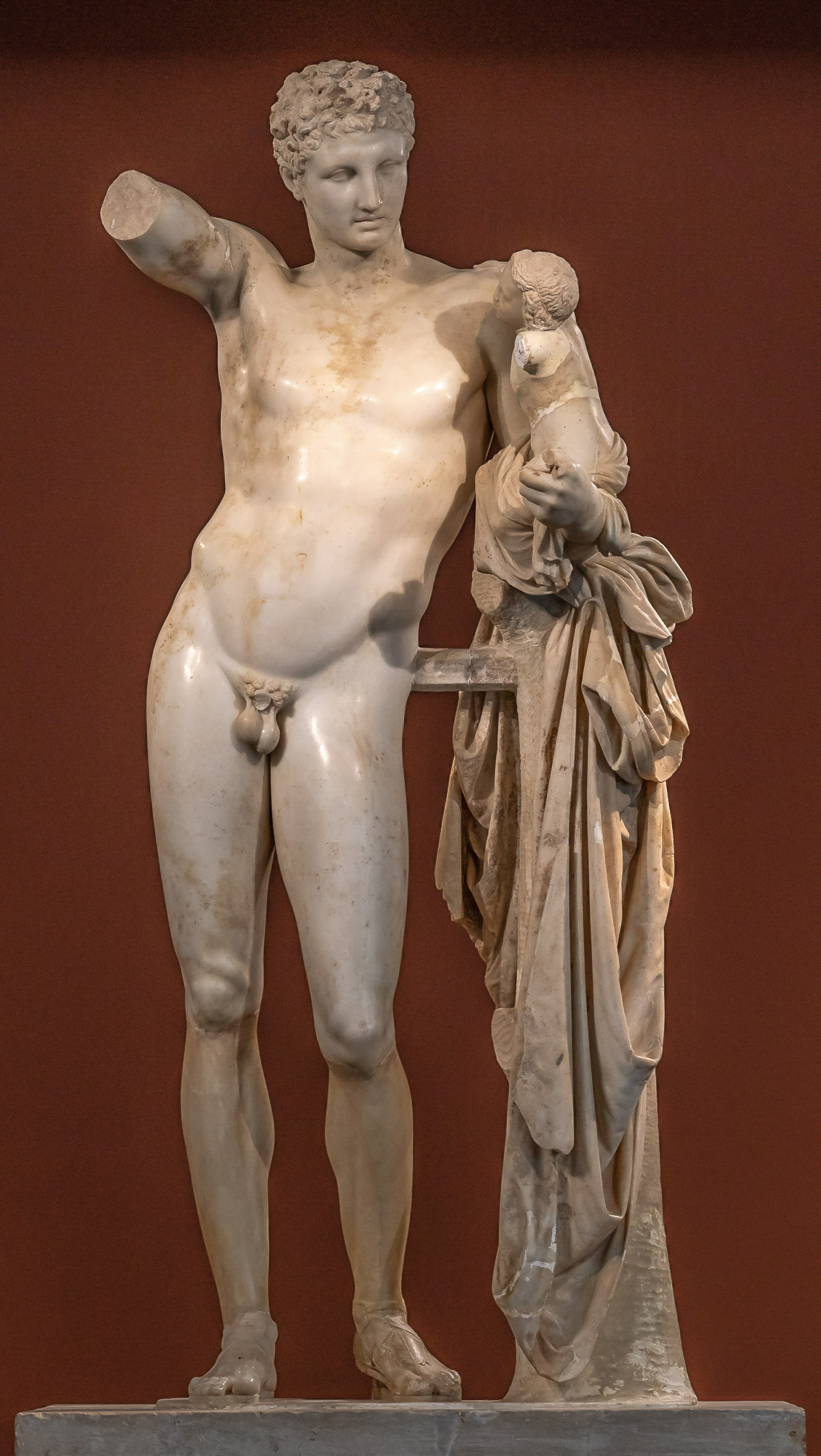
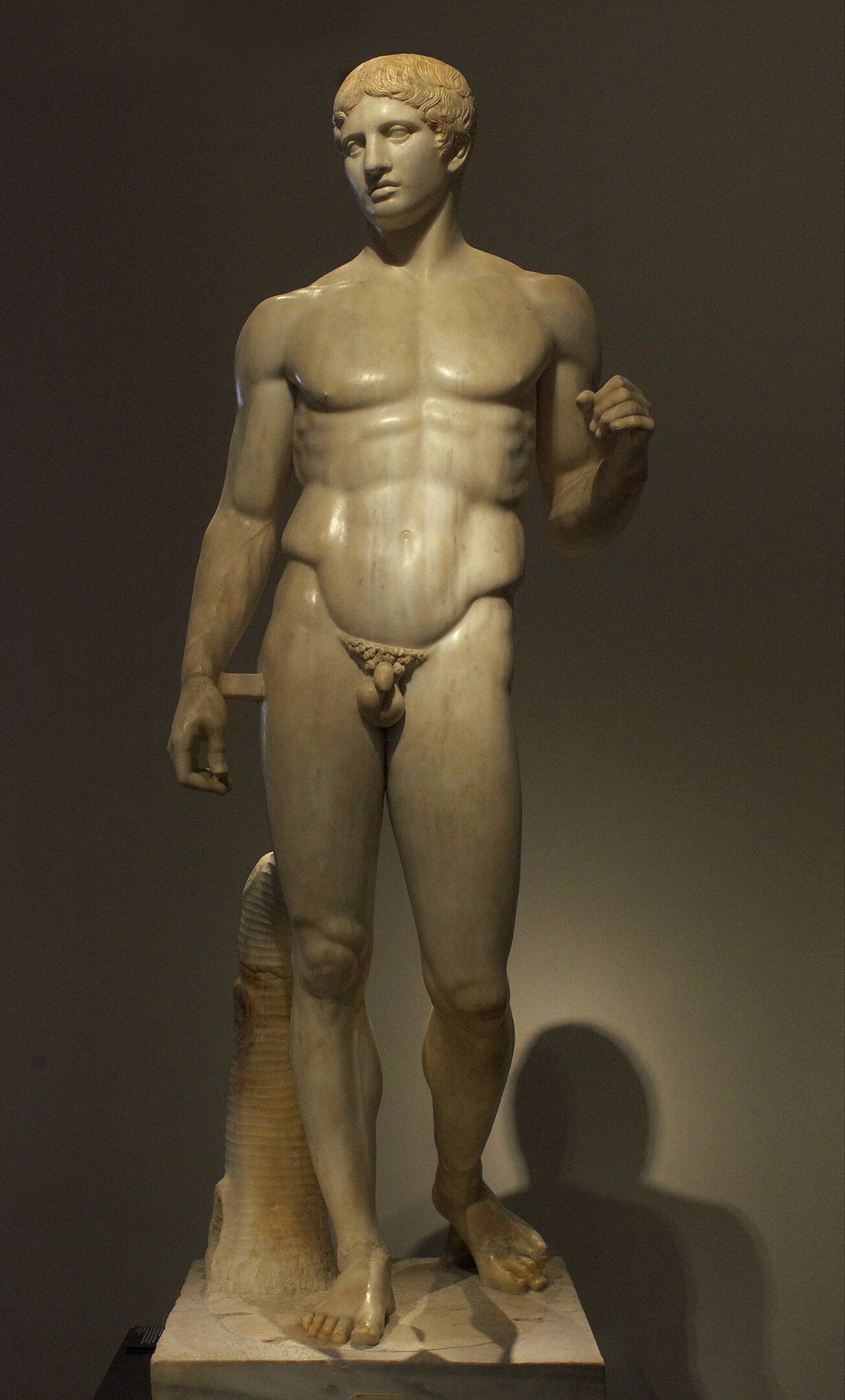
In ancient Greek art, the male nude was idealized in sculpture, particularly in works such as Polykleitos’ Doryphoros and Praxiteles’ Hermes and the Infant Dionysus. The Greek kouros statues (early archaic depictions of young men) emphasized youthful beauty, symmetry, and a balance between realism and idealization. Nudity in Greek art was associated with athleticism, heroism, and even moral virtue, reflecting the Greek belief that the male form was the pinnacle of divine beauty. Greek vase paintings often depicted nude male athletes, warriors, and gods, reinforcing the connection between physical excellence and noble character. The gymnasium (a place where young men trained nude) was both an athletic and intellectual center, reinforcing the idea that physical and intellectual excellence were intertwined.
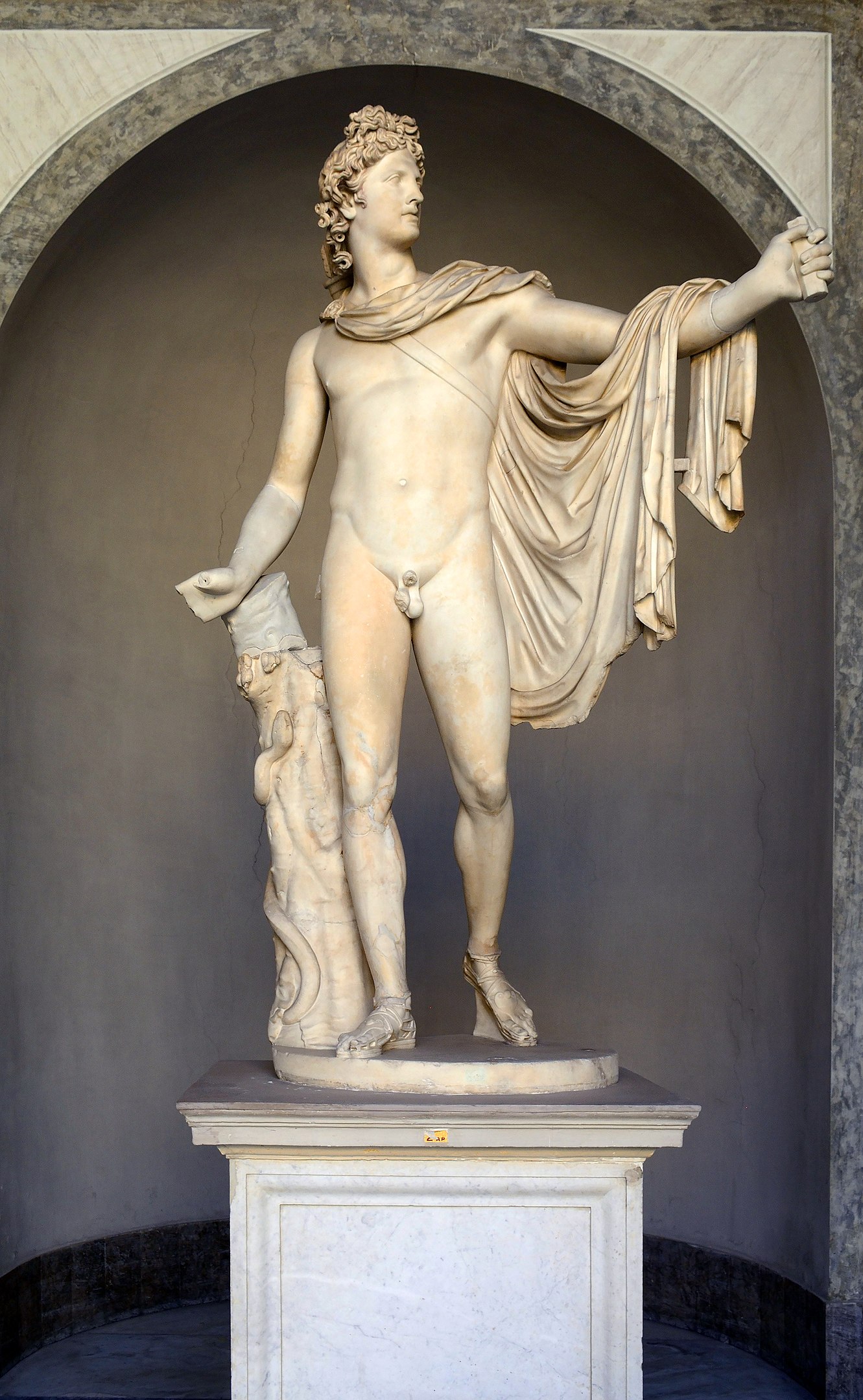
The second century Roman copy of the Apollo Belvedere is one of, if not the, most celebrated marble sculpture of a nude male from classical antiquity. From the mid-18th century, it was considered the greatest ancient sculpture by ardent neoclassicists, and for centuries it epitomized the ideals of aesthetic perfection for Europeans and westernized parts of the world. The Apollo became one of the world’s most celebrated art works when in 1755 it was championed by the German art historian and archaeologist Johann Joachim Winckelmann as the best example of the perfection of the Greek aesthetic ideal. Its “noble simplicity and quiet grandeur,” as he described it, became one of the leading lights of neoclassicism and an icon of the Enlightenment. Goethe, Schiller, and Byron, all endorsed it. The Apollo was one of the artworks brought to Paris by Napoleon after his 1796 Italian Campaign. From 1798 it formed part of the collection of the Louvre during the First Empire, but after 1815 was returned to the Vatican where it has remained ever since.
The frequent depiction of the male nude in ancient art reveal how cultures conceptualized beauty, masculinity, and relationships between men. In ancient Greece, for example, the admiration of the male form was closely tied to pederasty, a socially accepted relationship between an older man (erastes) and a younger man (eromenos). This relationship was often educational and mentorship-based but could also have an erotic component. Greek vase paintings sometimes depicted these relationships explicitly, showing affection between men, including courtship rituals like gift-giving or intimate gestures. In Rome, male-male relationships existed, but Roman masculinity was defined differently than in Greece. A freeborn Roman man (citizen) could engage in relationships with other men, but societal norms dictated that he should take the dominant role; being the passive partner was seen as unmanly. Roman frescoes and sculptures sometimes depicted homoerotic themes, especially in private or mythological contexts, such as scenes involving the god Ganymede, who was abducted by Zeus.
While not often, Greek and Roman art would feature homoerotic relationships. One of the most compelling pieces of ancient Roman art that directly addresses same-sex desire is the Warren Cup, a silver drinking vessel from the 1st century CE. The Warren Cup, named after its modern owner Edward Perry Warren, is a luxurious Roman silver cup featuring explicit homoerotic scenes. The two sides of the cup depict male-male sexual encounters between older and younger men, rendered in a detailed and naturalistic style. The craftsmanship suggests that it was an elite object, likely used in private banquets (symposia) where discussions of philosophy, poetry, and sexuality took place. The scenes on the cup align with what we know of Roman and Greek attitudes toward male-male relationships. The figures are shown engaging in acts that emphasize the older man as the active partner and the younger as the passive partner, reflecting Roman norms around masculinity and dominance in sexual relationships. The setting, with draped beds and carefully arranged compositions, suggests that such relationships were not only known but also accepted in elite social circles. The cup’s artistic style is distinctly Greco-Roman, with a focus on idealized musculature and classical composition. The use of silver, a valuable material, indicates that it belonged to a wealthy individual who may have collected art reflecting personal tastes or cultural ideals around eroticism.
Continue reading
























 The Closet Professor