Monthly Archives: August 2011

LOL

This cartoon really did make me laugh out loud, and I thought I would share it with you guys.  At 3pm today, my first week back teaching will be over.  So far, it has been a good week; I am enjoying my students much better this year, since some of my trouble students have either graduated or moved on to grades that I don’t teach.  I am going to do my best to make sure that this continues to be a good year.  I want my positivity to rub off on my students.

I have to apologize for not answering comments yet.  This has been a busy week, but I will get to the comments this weekend.  I prefer to answer all comments.  I love your comments and discussions on this blog, so I like to respond to the comments to show my appreciation.  I read all of my comments, and I do eventually respond to all of them.

Thanks for reading.


Harvard’s Secret Court of 1920

May 27, 1920 is the day when the dean of Harvard College convened a secret court in 1920 to question students about the suicide of sophomore Cyril Wilcox.

The questions weren’t about Cyril’s death. They focused on a letter that connected Cyril to a gay scene at Harvard. Dean Greenough said the discovery was “unspeakably gross” and that it “tainted” the college. He took quick action. All students found to be gay would be expelled.

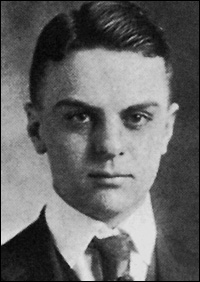
Eugene Cummings had studied five years to become a dentist. The senior wouldn’t graduate. A note was added to Eugene’s file: “Proved guilty, but took ether upon receiving news. Died on morning of June 11, 1920.”

Back then, students like Cyril and Eugene were silenced by shame. Today they speak proudly.

How open are we?

In America we have Glee on TV, gays in the military and same-sex marriage in six states — but not the other 44. In some 30 states, workers can be fired just for being gay. Gays don’t have full rights in most countries. Even the oppressed oppress gays. The deaths of Cyril and Eugene in 1920 were repeated in 2010. There was a rash of gay teenage suicides across America last fall.

Kids internalize the intolerant speech that still runs deep in our politics, religion and culture. Growing up, all I heard about gays was how bad they are — by ministers, politicians, in jokes on television and at school. I believed what I was told.

Back in 1920, a mother spoke out when her gay son was expelled from Harvard: “You could have done much good,” she wrote to the dean, “had you perhaps had a little less sense of justice and a little more of the spirit of Jesus in your heart.”

That Harvard mom of 1920 represents the true religious traditions of love and compassion. She also represents the true Harvard tradition.

Speech, then openness

Next year, a dedicated faculty member will provide support for LGBT (lesbian, gay, bisexual and transgender) students for the first time in school history. After injustice, a rainbow. Just a side note: The Harvard Gay and Lesbian Caucus is composed of more than 5,000 gay, lesbian, bisexual and transgender Harvard and Radcliffe alumni/ae, faculty, staff and students. HGLC was formed in 1984 to pressure Harvard University to include sexual orientation in its non-discrimination policy.

Speech is what has moved Harvard toward openness — not just for gays, but all the people who weren’t welcome on campus at one time. Today’s diverse graduates will export their values of tolerance to the world, negotiating solutions for the many injustices that still exist. Imagine the power of their education.

This post was adapted from a May 20, 2011 article in USA Today by Joel P. Engardio who graduated last May with a Master of Public Administration degree from the Harvard Kennedy School of Government.


So Close, and Yet So Far Away

School starts back today (pray for me, LOL), so I didn’t have a lot of time last night to write a post. A friend of mine sent me this article, and I found it an interesting and delightful read.  I hope that you do as well. (Thanks, FOC.)


The contorted history of autofellatio.

By Jesse Bering

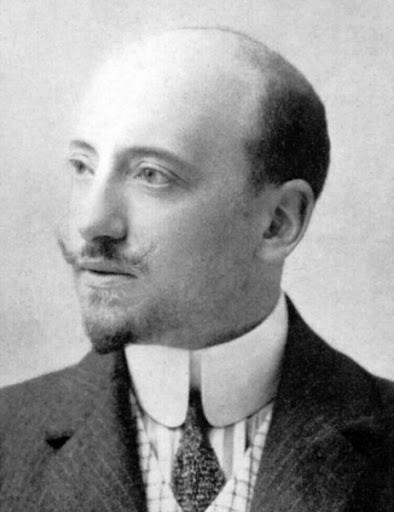
Italian poet Gabriele d’Annunzio

Long before I knew very much about anything regarding sex, I did what many young males do, which of course is to place an empty paper-towel roll over my penis and suck hopefully upon the cardboard end. Okay, perhaps not everyone does this; I was a little confused about the suction principle. And now I’m a bit embarrassed by the story, although it’s been a full year since the event and I’m much better informed on the subject of fellatio today. Oh, settle down, I’m only joking.

Well, kind of. I did actually attempt this feat, but I was 12 or 13 at the time, which, to give you a clearer sense of my unimpressive carnal knowledge at that age, is also around the time that I submitted to my older sister with great confidence that a “blow job” involves using one’s lips to blow a cool breeze upon another’s anus.

So to avoid similar confusion, let us define our terms clearly. Autofellatio, the subject at hand—or rather, not at hand at all—is the act of taking one’s genitals in one’s mouth to derive sexual pleasure. Terminology is important here, because at least one team of psychiatrists writing on this subject distinguishes between autofellatio and “self-irrumatio.” In nonsolo sex, fellatio sees most of the action in the sucking party while irrumatio has more of a thrusting element to it, wherein the other person’s mouth serves as a passive penile receptacle. (Hence the colorful and rather aggressive-sounding slang for irrumatio—”face-f*cking,” “skull-f*cking,” and so on.)

In any event, my paper-towel-roll act was simply a “Plan B” at that puerile age, a futile way to circumvent the obvious anatomical limitations to oral self-gratification. And by all accounts, I wasn’t alone in hatching Plan B. Alfred Kinsey and his colleagues reported in Sexual Behavior in the Human Male, in fact, that, “[a] considerable portion of the population does record attempts at self-fellation, at least in early adolescence.” Sadly, given our species’ pesky ribcage and hesitant spine, Kinsey estimated that only two or three of every 1,000 males are able to achieve this feat. There’s the story of the Italian decadent poet, Gabriele d’Annunzio, who is said to have had a bone removed to facilitate the act, or that old Saturday Night Live skit in which Will Ferrell enrolls in a Yoga class only to become flexible enough to fellate his own organ. But truth is often stranger than fiction. In 1975, the psychiatrist Frances Millican and her colleagues described the real case of a “very disturbed” patient who learned Yoga precisely for this reason.

Now, you may think that being one of the ultrabendable 0.25 percent of the population is all fun and games. (We’ve all heard those quips about never having to leave the house.) But think again. There’s a long and unfortunate history of pathologizing this behavior; psychiatrists have described its practitioners as being sexually maladjusted, stuck in an infantile state of suckling dependency, or even motivated by repressed homosexual desires. Take the case described by psychiatrists Jesse Cavenar, Jean Spalding, and Nancy Butts, who wrote in 1977 of a lonely, 22-year-old serviceman who’d been fellating himself since the age of 12. He was driven mad, “by the fact that he could physically incorporate only the glans, and wanted to be able to incorporate more.” Honestly, it must have been so—oh, what’s the word I’m looking for … it’s right on the tip of my tongue—frustrating, for this poor soldier. This is the ultimate cock tease, its being so close yet so far away.

Since the days of Freud, psychoanalysts have gone to town on the subject of autofellatio. In a 1971 article by psychiatrist Frank Orland, we see the typical jargon-filled language used in dissecting the “symbolic” bases of autofellatio, which is conceptualized as a virtual “ring of narcissism”:

… autofellation represents a recreation of the early infantile state in which the intrapsychic representatives of external objects are separated from the self-object, with a coexisting parasitic symbiosis with the external object. Through the autofellatio phenomenon, the ego re-establishes the necessary mastery over the external object representative as a defence against object loss and to restore the parasitic fusion with the nipple-breast.

That, ladies and gentlemen, is unadulterated psychobabble—and I tell you this as a psychologist. Sometimes, people are motivated to lick their own genitals because it just feels good. Of course, there are always going to be those, such as the dubious Yoga master, who take it a bit too far and for whom autofellatio contributes to mental illness. The foregoing soldier, who couldn’t take it far enough, got so frustrated by his semifulfilled fantasy that, when he masturbated the old-fashioned way, he could achieve climax only by imagining himself fellating himself.

The very first published psychiatric case of autofellatio, appearing in the American Journal of Psychiatry way back in 1938, was also one of the most outrageous and pathological. The patient was a 33-year-old store clerk who, prior to being referred to Yale psychiatrists Eugen Kahn and Ernest Lion, had just completed a 60-day jail sentence for sexual assault. “Among his perverse practices,” explain the authors, “were pedophilia, cunnilinguism, homosexual acts (fellatio, sodomy and mutual masturbation), exhibitionism, transvestism, fetishism, algolagnia, voyeurism and peeping.” But never mind all those vanilla paraphilias. The man’s psychiatrists were especially intrigued by his more unusual habit. He seems a devious wee character, this patient of theirs. The authors describe him as being somewhat effeminate in posture, gait and mannerisms; he stood only 5 feet 2 inches tall—”somewhat thin and with wide hips,” they wrote, with “a female pattern of distribution of his pubic hair” and “his gag reflex is very sluggish.”

The patient was the third-oldest of eight children and grew up in a strict, religious family, which the physicians felt he rebelled against by egregiously breaching their high moral standards. In recounting to the psychiatrists the origins of his interest in autofellatio, the troubled clerk recalled being invited at the age of 14 by a “cripple boy” to engage in oral sex with him. The patient, being shy, had refused this offer, but the thought of it simmered and, lacking the courage to approach anyone else, he took matters upon himself: “He kept trying night after night, managing to bend his back more and more until he finally succeeded in August, 1923.” (The 89th anniversary of this event is coming up, in case you want to mark it on your calendar.) It turns out he liked it—so much, in fact, that even amidst the long litany of perversions he enjoyed, self-irrumatio instantly became his favorite autoerotic act.

In an odd Pavlov’s dog sort of way, the authors even describe how the man’s sexual arousal had since then been accompanied by a “constricting feeling in the throat.” That must be a terribly annoying feeling, I’d imagine, and apparently also one not easily resolved. “He has attempted to secure substitute gratification,” say the authors, “by smoking, or by stimulating his pharynx with a banana, vaginal douche or a broom handle. These have yielded various degrees of satisfaction.” And he did apparently get over his adolescent shyness and lack of confidence, too—he particularly enjoyed fellating himself in front of a shocked audience.

Since this initial case report by Kahn and Lion, a handful of others have trickled in over the years, with subsequent investigators attempting to find a set of common personality denominators in those who prefer autofellatio over other forms of sex. In a 1954 article in Psychoanalytic Review, for instance, William Guy and Michael Finn saw a theme beginning to emerge. “In all of the clinical descriptions,” observe these authors, “one finds repeatedly such phrases as sensitive, shy, timid, effeminate, and passive.” This is code for “queer,” I believe, and in fact other writers have more expressly noted the often-suppressed homosexual desires in these autofellators.

In fact, judging by the scant literature, one of the big psychoanalytic questions yet to be resolved satisfactorily seems to be the extent to which engaging in autofellatio—or perhaps simply the desire to do so—signals a latent erotic attraction to the same sex. I suspect, however, that the overrepresentation of gay men in the antiquated case reports is simply a reflection of the cultural ethos of those times. The most recent psychiatric investigations on autofellatio date to the late 1970s (around the time that Freud’s particular grip on psychiatry lost its tenuous hold), and the earlier ones to the 1930s, so as a rule the men described therein faced baseless moralistic proscriptions against homosexuality. This meant other men’s penises were very hard to come by. So it’s not terribly surprising that those too frightened to perform fellatio on another man would develop severe neuroses after indulging in their own penises.

A 1946 article from the American Journal of Psychiatry exemplifies this phenomenon. The case involves a 36-year-old, highly intelligent, personable, but virginal staff sergeant (not to be confused with the military man we met earlier) with closeted homosexual desires. According to the official record, he’d first performed autofellatio at age 13, but he became so frightened by this “impulse” that he resisted ever doing so again—that is, until a month prior to arriving at the psychiatric ward of the hospital. After giving himself head in private, the sergeant became intensely paranoid that the other soldiers somehow knew of his autofellatio, and that every little snigger, whisper, or averted glance concerned this transgression. He suffered a nervous breakdown on hearing the word “cocksucker” floating about so casually and playfully in the military barracks, convinced it was meant just for him.

It’s a rather sad ending for him, too, because despite his responding well to the doctors’ reassurance that he was being overly paranoid, the sergeant was discharged for being “no longer adaptable within the military service.” The therapists assigned to the case, Major Morris Kessler and Captain George Poucher, reached a rather strange conclusion, one that I have a hunch you might disagree with: “Sexual self-sufficiency,” they write, “either by masturbation or autofellatio, is tantamount to having an affinity for one’s own sex.” In other words, if you were a fan of manual masturbation in 1946, my heterosexual male friends, you’d have been branded a secret homosexual pervert who likes penises so much that he gives himself hand jobs. This would have made autofellatio a devil of a case under the Clinton-era “Don’t Ask, Don’t Tell” ban on gays in the military had it arisen then. And, seriously, good riddance to those ignorant days of yore. To each his own—quite literally in the case of autofellatio.

I know, I know, I didn’t even get a chance to talk about autocunningulism in females. Given the even more serious anatomical hurdles in lacking a protruding reproductive device, such behavior in women may not even be possible. I confess I don’t know; and there’s no mention of it in the scientific literature. The closest female comparison to autofellatio I stumbled upon is the case of women who suckle from their own breasts, for sexual or other purposes. One therapist writes of an especially self-sufficient female patient who had a habit of doing this. When he asked her why, she merely replied, “I’m hungry.” But that’s another article for another day.

Jesse Bering teaches at Wells College and is the author of The Belief Instinct. He is a frequent contributor to Slate and writes the “Bering in Mind” column for scientificamerican.com. His next book will be on the curiously scandalous science of human sexuality. Follow him on Twitter @JesseBering or try adding him on Facebook.

Article URL: http://www.slate.com/id/2300733/


Born This Way?

The following was posted on Brainstorm, The Chronicle of Higher Education’s blog about Ideas and Culture, as a guest post by Suzanna Danuta Walters, Professor of Gender Studies, Indiana University*

Spending time in Provincetown – Cape Cod’s mecca of all things homosexual – is both a thrilling inversion of everyday life where queerness is the banal majority and a depressing reminder that normative ideologies can seep into even the most festive of gay milieu. As New York made history by approving same-sex marriage, Ptown vacationers congratulated each other as they slathered sunscreen on their finely chiseled bodies and circuit-partied until the sun came up. But pro-marriage T-shirts (“Put a ring on it”) were soon eclipsed by the T-shirt slogan de jour “Born this Way.”
Now, I’m the last person to dis the wondrous Lady Gaga, but her well-meaning ode to immutability is less helpful to gay rights than Guiliani in drag. If marriage and military access are conjured as the Oz of queer liberation, then biological and genetic arguments are the yellow brick road, providing the route and the rationale for civil rights. The medicalization of sexual identity – and the search for a cause if not a cure – has a long and infamous history. This history includes well-meaning attempts by social activists to create a safe life for same-sex desire through the designation of homosexuality as biologically predetermined but also, more ominously, includes the sordid history of incarceration, medication, electroshock “therapy” and numerous other attempts to rid the body (and mind) of its desires.
Notions of homosexuality as “inbred,” innate and immutable were endorsed by a wide variety of thinkers and activists, including progressive reformers such as Havelock Ellis and not so progressive conservatives, eager to assert same-sex love as nature’s mistake. Richard von Krafft-Ebing in the 1880s and Magnus Hirschfeld in the 1903s – both pioneer sexologists and generally advocates of “toleration”– came to believe in some notion of “innate” homosexuality, whether through theories of a kind of brain inversion or through vague references to hormonal imbalances. These theories mostly had little traction, and no evidence whatsoever, and were further undermined during the heyday of the early gay movement which included a deep commitment to the depathologization and demedicalization of homosexuality, manifested in a long-term attempt to remove “homosexuality” as a disease category in the DSM.
Theories of biological origins of “gayness” have ebbed and flowed during different historical and social moments, most obviously intersecting with the rise of eugenics and other determinist frameworks in the early part of the last century. There is no question that the romance with biological and/or genetic explanations for sexual “orientation” has ratcheted up in recent years, due in no small part to the combined force of the gay marriage debates and the increasing “medicalization” and “geneticization” of behavior and identity, spurred on by the initiation of the human genome project in 1989 which furthered the already booming interest in genetic bases for behavior, personality, disease, etc.
This turning of the century seems to provide a “perfect storm” moment in which the idea of immutability takes hold of the public imagination. Even the hit Broadway musical Avenue Q couldn’t avoid having its homo puppets chime in:
TO TELL YOU IT’S OKAY,
YOU WERE JUST BORN
THAT WAY,
AND, AS THEY SAY,
IT’S IN YOUR DNA,
YOU’RE GAY!
No cultural moment sums it up like the otherwise quite illuminating debate that took place in August of 2007. Logo – the all-gay cable network – joined with the Human Rights Campaign to host the first ever Democratic primary presidential debate. At one point, host Melissa Etheridge asked the inevitable “born with it” question to Bill Richardson who clearly answered “wrong” when he responded that he didn’t know and even uttered the awful word “choice” in speaking about gay identities. Etheridge was quick to correct him, for how or why – she asked – would anyone choose to be gay?
Three years earlier, John Kerry made the same case in speaking of Dick Cheney’s lesbian daughter. “We’re all God’s children,” said Kerry when asked a “gay” question by the moderator. Referring to Mary Cheney, the lesbian daughter of Vice President Dick Cheney, Mr. Kerry said, “She would tell you that she’s being … who she was born as. I think if you talk to anybody, it’s not choice.” Strangely enough, it was George Bush who said, “I just don’t know,” once again demarcating the “choice” position as the conservative one!
In our present political context, gay volition is like Voldemort – dangerous even to be uttered. This “born with it” ideology encompasses gay marriage, gay genes, gayness as “trait” and is used by both gay rights activists and anti-gay activists to make arguments for equality (or against it). This is bad science (mistaking the possibility of biological factors with wholesale causation) and bad politics (hinging rights on immutability and etiology). Causality is – of course – the wrong question and will only get muddled answers. The framing of “gayness” as an issue of nature vs. nurture or destiny vs. choice misses the point about (fluid, chaotic) sexuality and about civil rights. It’s not our genes that matter here, but rather our ethics.

*Suzanna Danuta Walters, author of All the Rage: The Story of Gay Visibility in America and the forthcoming The Tolerance Trap: What’s Wrong With Gay Rights.


I understand Professor Walters’s argument, though I don’t agree with her argument that our sexual identity/orientation is not genetic or inborn.  Yes, there is little if any scientific evidence that there is a gay gene, but just because there is not evidence does it make it untrue.  I believe in God, but I have no hard scientific evidence that he exists, just faith.  Quintus Tullius Cicero, from 63 BC until his death in 43 BC, told everyone he knew that the end of the Roman Republic was near. Not only did he uncover the Cataline Conspiracy, but he believed that Julius Caesar would cause the end of the Republic.  He never was able to get hard evidence of what Caesar was planning, but we all know that he was right.  Caesar ushered in the end of the Roman Empire (sorry for the tangent, but I have been reading Robert Harris’s book Conspirita). The point is, that just because we don’t have hard evidence doesn’t make it false.  That being said, I do not believe that I am the only one who thinks this way.  There were many comments to this post, and here is one that I found very poignant.

OK–someone help me out here. I understand the author’s argument to be that gay rights should not be based on identity–ie, one’s right should not be limited by what or who someone is (including race, sex, ethnicity, gender, or other innate/inborn quality)–but on the premise that we should not restrict somone’s rights on the basis of their sexual behavior–ie, persons should have the same right to engage in sexual activity with members of the same sex or to marry members of the same sex, etc. regardless of whether this is a matter of choice or a matter of inborn preference. To put it somewhat crudely, my right to do something shouldn’t be based on whether I can help doing it or not. Do I understand that correctly?
If I do understand this argument correctly, then it appears to become a sort of libertarian argument that I should be able to do whatever I want to do (in matters of sex, in the case) regardless why I want to do so. But if that’s the case, then isn’t the argument susceptible to the same sort of arguments for limitation with which libertarian arguments are always addressed: You can do whatever you want to “as long as . . . (you don’t hurt someone else, you conform to the general/religious/ethical standards of society, you don’t break any laws/you do so in private, etc.).”
It seems to me that while there may be strong philosophical reasons to support the position that permission for certain behavior (or even the idea that certain behavior requires permission) should not necessarily depend on the reasons for that behavior–in particular, on the premise that the behavior is inborn–that in practical terms the legal status of the behavior most likely depends on an appeal to the argument that “I was born this way (and I can’t change it)” and should therefore not be penalized or restricted for it.” That this position is also then liberating for persons who engage in the behavior by choice is a bonus.
Human rights are premised on identity. Human rights become civil rights as the result of legislation, but these civil rights depend ultimately on some foundational belief based on human identity. “I was born this way” is another way of saying “my sexual idenity is part of my humanity and therefore must be respected.” Laws removing restrictions based on sexual orientation are based, like those desgregating insitutions or removing voting and property restrictions based on race and gender, on an expanding sense of what it may mean to be fully human, on, that is, a fuller sense of who you may be. They affect behavior, but they are based on identity. To jettison this premise is, I think, dangerous.
(NB: And as I write this it occurs to me that the issue may be whether human identity is based on more than [simple] biology.)

So what do you guys think about the nurture v. nature/gay gene/born this way debate?  I would love to hear your opinions.


Exam Howlers

If you have ever taught and given any type of essay test, then you will recognize what I am talking about in this post.  Students sometimes come up with the most inadvertently funny answers on exams.  My all time favorite is in an essay discussing the Industrial Revolution, a student wrote, “The only thing to do before the Industrial Revolution were hand jobs.”  Although the student meant manual labor, that is not what they said. Times Higher Education each year posts the THE’s “exam howlers” competition. These are the “best” inadvertently funny answers that were given in the yearly exams in Britain.

Vicious substances and Nobel savages abound in this year’s exam howlers

The student who wrote in a semiotics exam that “language is a system of sins” could well have been referring to this year’s Times Higher Education “exam howlers” competition.

That entry, submitted by Daniel Chandler, lecturer in media and communication studies at Aberystwyth University, was one of scores sent in to the annual contest, in which lecturers are invited to share their favourite mistakes and misunderstandings.

In a paper marked by Karen Devlin of the University of Hull, a student translated the phrase “pash of tallow” – meaning “head of wax” – in Seamus Heaney’s poem Strange Fruit as “having a crush on a fatty substance”.

Helen Steele, tutorial assistant at Swansea University, entered several howlers from a “Europe of Extremes” history module. According to one student, “the Sixth Army became trapped in a huge pocket during their attempts to take the city”. Whether a tiny army or a rather large item of clothing was envisaged is not clear.  (I have to explain that a pocket is actually a military term, and the student quite possibly knew exactly what they were talking about on this one.–Joe)

Another, perhaps suffering the after-effects of one too many BBC costume dramas, confidently stated: “The third estate caused tension to arouse between the bourgeoisie and the nobles.”

This was not the only example of inadvertent sexual innuendo.

Ann Wood, of the department of biochemistry at King’s College London, had a student on a food science and technology course who advised using a “genital mixing action”.

“I think the student meant ‘gentle’,” Dr Wood writes. “But it was wrong anyway.”

Peter J. Smith, reader in Renaissance literature at Nottingham Trent University, was warned by one student that “premature ejaculation could be a touchy subject” in an essay on John Rochester’s poem The Imperfect Enjoyment.

Two howlers gave life to traditionally strictly theoretical subjects.

Eileen Reid, widening outreach officer at the Glasgow School of Art, recalls marking an essay on Jean-Jacques Rousseau that referred to “Professor Nobel Savage”.

And the student who simplified a subject by writing about it “in Lehman’s terms” baffled Iain Woodhouse, senior lecturer in the School of Geosciences at the University of Edinburgh, until he read the phrase aloud (“layman’s terms” was intended).

Pity, too, the poor interviewing techniques of a man of the cloth cited in an exam paper marked by Gary Day, principal lecturer in English at De Montfort University, which said that “the priest killed her so he could get information from her”.

David O’Connor, professor of microbiology in the Centre for Biological Sciences, University of Southampton, was party to the startling claim that a runny nose may be more to worry about than it seems, as “mucus is a vicious, thick substance”.

While students have provided much merriment, it is to be expected that some academics take such errors as an affront to their skills as lecturers.

But after reading the statement that “American power is based on superheroes”, Jason Dittmer, lecturer in human geography at University College London, lamented: “I clearly need to teach this material better.”


O Where Are You Going?

“O where are you going?” said reader to rider,
“That valley is fatal when furnaces burn,
Yonder’s the midden whose odours will madden,
That gap is the grave where the tall return.”

“O do you imagine,” said fearer to farer,
“That dusk will delay on your path to the pass,
Your diligent looking discover the lacking
Your footsteps feel from granite to grass?”

“O what was that bird,” said horror to hearer,
“Did you see that shape in the twisted trees?
Behind you swiftly the figure comes softly,
The spot on your skin is a shocking disease.”

“Out of this house,” said rider to reader,
“Yours never will,” said farer to fearer,
“They’re looking for you,” said hearer to horror,
As he left them there, as he left them there.
— W H Auden

Many a time you come across those who even not dare to dream, forget doing. The poem inspires us to keep the insecurities inside, because the reason for living lies there, in the experience. Do you ever ask yourself, “O, Where am I going? What am I doing with my life?”  My teaching job begins again tomorrow (we have two days of teacher work days, and the heathens students return on Wednesday).  As another year begins and I am still teaching at a small private school, I wonder “O, Where am I going? What am I doing with my life?”  I know I teach because I love it.  I am there because I want to open up the minds of the students, to show them that there is a world out there beyond their little inclusive group/society.

With this teaching job, I sometimes feel like my life in on hold.  I hope that when I finish my PhD (hopefully, I will graduate in May), that I can move on to better things.  I want to have  a real life again.  I want to be out socializing again.  Though I have friends at the academy, they have their own lives and families.  We are all too busy to socialize.  In fact, the main socializing any of them do with one another is either through their children or through church.  Since I have no children and I do not attend the same church as most of them, I am not part of that clique.  It’s okay, I’m not meaning to sound like a pity party, but I do feel like my life and career are on hold for a bit.

I had hoped for a better paying job to begin this fall.  After the fall/spring/summer job search, I was offered one position (this one would have been a step back instead of a step forward) and had one job interview (the one I told you guys about that took place two weeks ago).  Though the job interview seemed to go really well, and I believe that I would have enjoyed teaching at this community college, I was told that they would narrow the candidates further down to three and those three would be invited back for interviews with the college’s president.  I never heard anything more from them.  And since the job is supposed to begin next Monday, I expect that I was not chosen for the top three.  It is possible that they really are waiting until the last minute, I have the feeling that I was passed over.  So the new school year teaching middle and high school  students at the academy begins again this week.

I am actually looking forward to it.  I will probably know for sure by the time Friday rolls around, but I like the classes that I am scheduled to teach.  They will be the same as last year, so there will be opportunities to improve upon what I did last year.  I am going in with a positive attitude that this will be a great year.  And I think when we ask ourselves “O, Where am I going? What am I doing with my life?” that if we look on the brighter side of things, no matter how dim the light may, we will make it happen.  Though I know that I am not always positive, I at least strive to be an optimist.

“O, Where Are You Going?”

Moment of Zen: The Love of a Pet

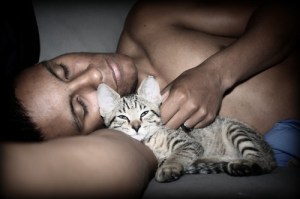
My cat, and we will call her The Queen (she’s named after a famous queen), is my loyal companion.  Grant it, she believes that she owns the house, but she can be an extremely loving creature.  A prime example of this is when I come home from school in the afternoon.  I am usually exhausted and head upstairs to lay down for a few minutes.  It never fails that not only was she waiting for me either on the stairs or at the door when I come in, as soon as I lay down, she lays down beside me half on my chest to get her daily dose of cuddling.

I realize that there are people out there that don’t like cats.  I personally am not a dog person, but I know some people are, so here is part two of today’s Moment of Zen: The Love of  Pet.

Do you have a furry friend that is your most loyal companion?

Native American Transvestites

Juan Pardo travelled from South Carolina up to North Carolina and then west as far as what is nowadays Johnson City and Knoxville, Tennessee.

This journey has been chronicled by the ethnohistorian Charles Hudson.  One of the more curious incidents recorded in Charles Hudson’s The Juan Pardo Expeditions: Exploration of the Carolinas and Tennessee, 1566-1568 (Smithsonian Institution Press, 1990) is an ethnographic observation of the local Indians:

“…in Cauchi they saw an Indian man who was dressed as a woman and walking in the company of women. When Pardo asked Cauchi Orata for an explanation he said that the man was his “brother,” but because he was not a man for war or for doing the things that men do, he went about as a woman and did a woman’s tasks…”

The illustration in the book, reproduced above, is Plate XXIII from the famous set of engravings by Jacques Le Moyne: “Timucuan male transvestites carrying packbaskets of food. Females are shown loading the packbaskets… Photo courtesy of the Smithsonian Institution.”

Source: “The transvestites of 16th century America” TYWKIWDBI (“Tai-Wiki-Widbee”)


For “A brief history of the Timucua people of Northern Florida” click Read More below.

A brief history of the Timucua people of Northern Florida
By Haines Brown

Florida offers archaeological evidence of some of the earliest settlements in North America. In particular, spectacular finds from Florida sink holes may date from the end of the Wisconson glaciation in about 10,000 B.C. However, by historical times, much of Florida was occupied by Taino-speaking peoples from the Caribbean, who, like all Arawak speakers, came originally from Amazonia. Among the better known of these Taino peoples of Florida are the Tekesta, associated with the Maimi Circle, the state-level Calusa society based on a fishing economy in Southern Florida, and the Timucua tribe of Northern Florida.

Apparently the Timucuan language is a Caribbean kreol that derives from the Arawak language group of Amazonia as spoken by the Warao, but it was influenced by North American languages through trade and cultural exchanges. In this respect the Timucuan language resembles other Taino languages, but it seems to have emerged at a somewhat earlier point in Caribbean Arawak linguistic history. The separation of Taino and Carib languages had occurred even earlier.

The Timucua from northern Florida participated in a broad Southeastern American culture sphere, but preserved distinctive traits reflecting their Caribbean origin. By the 17th century, their population was greatly reduced, and with the influx of new peoples from the North such as the Creek and the impact of European colonizers, not much of that original culture survives among the Timucuan people today. For example, we know of only a small number of Timucuan words. Peoples of Taino descent, such as the Timucua, are trying to recover as much of their cultural heritage as they can and gain the tribal recognition necessary to win some control over their circumstances. Solidarity among Taino-speaking people everywhere, from South America to the Caribbean and North America, is a means to achive official recognition for Taino tribes.

The amount of surviving evidence and the extent to which survivers are able to perpetuate their traditions vary considerably from one Taino tribe to another. In the case of the Timucua, that evidence to a large extent derives from records of conquest by European whites, but from it we at least gain some idea of Timucuan society. In it there was the marked sexual distinction typical of Southeastern American culture. It gave rise to a sexual division of labor and affected many aspects of daily life. For example, in their dress, men wore a woven fiber breechcloth, sashes, and deerskin moccasins for travel. Timucuan women instead wore skirts of Spanish moss. In cold weather, both women and men put on feather or skin matchcoats, although worn differently. In warm weather, young boys and girls generally wore nothing.

Although gender was sharply distinguished, one’s choice of gender was not dictated by sex. For example, the social demands on men were so great that some chose instead to be transvestites and accept responsibilities associated with the female role, to care for the household, to carry burdens and cultivate the fields. Likewise, some women would adopt a man’s role, fight in war and sit on the governing council. This was common enough, apparently, that Taino people expressed surprise at the complete absence of women in Spanish councils.

Because of deepening social contraditions associated with their own social development and with European contact, Timucua lineages segmented into a large number of clan settlements consisting of people considered to be inlaws. If a young couple within a settlement wished to marry, to avoid incest their clan would segment so that the two parties came to represent different clans and therefore became marriageable. Social segmentation led to a large number of small lineages and clans, which greatly weakened the Timucua. To achieve the solidarity needed for defense against the white invaders, lineages would consolidate into larger lineages by means of exogenous marriage bonds.

It is thought that a settlement usually consisted of a small number of round timber houses with palm thatched roofs arranged in a semi-circle around a central plaza equiped with a large post for the traditional Timucua games. In larger settlements there would be an artificial mound for a temple and another for the chief’s residence. Timucua settlements seem to have been generally quite small.

Early every morning the council in a settlement would meet to discuss the affairs of the chiefdom, smoke, and sometimes carry out the games. Important council meetings opened with a “White Drink” ceremony (the drink was actually black in color) that helped purify the men (and women posing as men) so that they would find it easier to interact. Women adopting a male gender would serve on the council, but young boys and women who chose a female gender were excluded. This White Drink was made from a local variety of holly, and so was related to the maté drink of Central and South America (perhaps brought by Arawak-speakers from Amazonia). Its main constituent was caffeine, and it was drunk hot like coffee to focus thought and enhance intellectual powers. A pipe would be lit and smoke blown in the four cardinal directions by one person after another according to their status.

While for many Taino peoples ceremonial games imply a contest among ball teams to resolve a judicial dispute, the Timucua adopted instead a variation of the North American game of chunkey. This involved using beautifully fashioned concave disks of stone about 45 centimeters in diameter. When rolled, the stone takes an irregular path, and each player throws a long pole toward the point they think the stone will eventually stop. The object is to throw just before you think the stone will fall over. In Creek Indian culture, the players had to throw the long pole before the disk passed a certain line, meaning that the players had to judge where the disk would fall over before it began to slow down.

In the community there would be wise men who functioned as priests as well as shamans able to mediate supernatural powers to serve the needs of the community. For example, the Timucuan shaman, through a trance was able to prophesy, diagnose a disease, locate stolen objects, and foretell the weather.

Archaeological evidence suggests a quite mature agricultural economy among the Apalachee and Timucua of northern Florida based on Indian corn, beans, pumpkins and vegetables. In fact, de Soto’s four-year expedition through “La Florida” could not have taken place without the appropriation of enormous amounts of food from local populations. The American farmers first cleared the land by burning the brush, prepared the soil with hoes, and then women planted seeds with dibble sticks (coa). Apparently, two crops were planted annually, and there was field rotation. Guards stood in wooden watchtowers (barbacoa) to protect the crops from birds and foraging animals.

Besides beans, corn and squash, the people of Florida also cultivated the Zamia root for grinding into bread flour. They also apparently cultivated the tobacco needed for religious ceremonies (the halucinogenic “sot weed”). Cultigens were probably brought into Florida from the North to supplement or displace the traditional Taino dependence on marine resources in the South. The harvest was dried and stored in stone warehouses to protect it from spoilage and insects.

Hunted were alligators (by thrusting a long pole down their throats), sea cows and occasional nearby whales. Meat was cooked on a wooden rack over a fire, also called a barbacoa, from which derives the English word “barbecue.” Although the Taino generally relied on a marine economy, unlike the Calusa, who managed to support a state-level society on a fishing industry, it seems that Timucuan culture constrained fishing and hunting so that Florida’s west coast economic potentials were never fully exploited by the Timucua. Later on, due to a dependency on British trade, much of Florida’s deer population was destroyed for the deerskin needed to exchange for tools, cloth, and ammunition.

Spanish pillagers penetrated Florida early in the sixteenth century in search of precious metal and slaves. One of them, the sinister Pánfilo de Narváez, landed in 1528 in order to conquer the Timucua, but he did not find the precious metal he expected and also apparently food supplies were inadequate. So, from Tampa Bay, he marched north along the coast to enter Apalachee territory. Although they, too, lacked gold, he appropriated sufficient grain from them to keep his band alive. However, facing the stiff resistence of the Apalachee, he had to abandon any idea of a permanent settlement, and his band continued on into what is now Texas and eventually reached New Spain (Mexico). Of the 260 who started out, only three survived. Unfortunately their account is sketchy, but they spoke of an arid and poor land (perhaps the result of the ravages of the desease broght by the Europeans spreading through Eastern Woodland trade routes. This abandonment of traditional settlements continued well into the next century and opened the way for immigration from the North by other Native Americans who eventualy prevailed in Florida and came to be known as the Seminoles.

Nevertheless, the Timucua economy must have remained highly productive for some time. In 1539, Hernando de Soto, who had been appointed Governor of Cuba and La Florida, landed with 622 men in Tampa Bay in a search for wealth and opportunities for colonization. He found the Americans living in a small town of timber houses with thatched roofs. The chief’s house was near the beach on a high defensive mound, and opposite to it was a temple surmounted by a wooden bird with gilded eyes. Not finding any significant wealth in the area of Tampa Bay, de Soto attacked the surrounding region in order to rob, kill and enslave. People often abandoned their settlements at his approach. Like de Narváez before him, de Soto eventually marched north in the search for greater amounts of food and wealth.

De Soto eventually reached the large settlement of Cofachiqui (in modern Georgia), led by a female chieftain who greeted him in a shaded canoe. To avoid disastor, she ordered that all available white and yellow metal be given to de Soto. This meant copper and the mica sheets which artisans fashioned into ornaments. However, her efforts were in vain. Because there were no local pearls, de Soto’s men looted the burial ground to seize 158 kg of the freshwater pearls that were buried there and proceeded to scalp and kill everyone they could (scalping was practiced in early Europe by the Alemani and Franks as a way to destroy a person’s charisma).

The Timucua were not as warlike as the Apalachee to the North or the Calusa state of Arawak speakers to the South, although they were certainly capable warriors. They preferred to find ways to avoid overt conflict. For example, they would place the head of an enemy on a post outside public buildings or hang his limbs from trees to warn off possible enemies. Older male captives tended to fare poorly, but women and children were adopted and came to lead normal lives. Sacrificial killing was apparently also practiced.

Several kilometers from Cofachiqui lay Talomeco, an even larger settlement. Here too, the chief’s house and the temple were placed on artificial mounds. The temple was 12 meters wide and 30 meters long, and had a steep roof of reeds and split cane with sea-shell decoration. The Spaniards looted the temple and found wooden statues decorated with pearls, and there were great stores of deerskin, dyed cloth and copper ceremonial weapons of superb workmanship.

De Soto gave up on Florida because of its lack of gold, because the local population had been decimated by disease, but most importantly because the Apalachee were quite effective in their own military defense (they were excellent fort builders and constantly harassed his troop). His negative reports discouraged further depredations against the chiefdoms in Florida until the mid-17th century.

Perhaps because the Spanish were unable to establish viable settlements in the Southeast, French Hugeuenots from 1564 tried their own hand at it. However, they had no better success. The Timucua people resisted conquest as effectively as they had resisted being culturally colonized by Franciscan Friars. One Frenchman, Le Moyne de Morgues, made sketches of the Timucuans which have been of enormous interest to ethnographers, and I have included reproductions of some etchings based on them here. The Huguenots tried to convert the Timucuans to Christianity, but only got back for their trouble the habit of tobacco smoking. Perhaps this threat to Timucuan culture helped persuaded the Timucuans to join in the Spanish attack of the Huguenots at Fort Caroline. The Spanish killed everyone there who did not swear they were Catholic.

Whether the Spanish Franciscan missions had any significant impact is debated, but clearly the penetration of British trade was important. Northern Indians were given guns by the British traders in Charleston in order to launch slave raids, particularly against the Florida missions because mission Indians had lost any ability to defend theselves.

With the collapse of the French mission system, the British were eventually able to take over in 1763. Because they were more successful in establishing a permanent presence than either the Spanish or French, there began a period of greater outside cultural influences upon the Timucua. One reason for the British success was their commercial aggressiveness. They brought in cheap manufactured goods such as utensils and tools, rum and guns; they backed up their trade advantage with Indian mercenaries; and they also had greater self-sufficiency by reason of their larger numbers. In exchange for manufactures, the British took back the deer skins, which Americans had long accumulated as prestige goods, and slaves. This trade made the Timucua dependent on the British for tools, cloth and ammunition, and complete subjection became only a matter of time.

By the eighteenth century, the Americans of Florida were entirely dependent on the white European colonizers, and often this was because they lost their land to an encroaching slave economy.

Today there survive people in Florida of Timucuan heritage who would like to unite on that basis, even though they have lost much of their language and culture. However, it should be noted that this loss does not actually prevent tribal reconstitution, but only makes it more challenging. The historical fact is that the social construction of tribes is only constrained by considerations of common origin, shared genes, and cultural survival. Without at least some objective constraints, a tribe will never emerge, but on the other hand a tribe does not reduce to them.

Source: Taino Timucua Tribal Web Page


God Bless You, Matt Damon

I saw this on BosGuy and thought it was really cool. This is footage from the 2011 SOS March. Matt Damon spoke. Matt Damon did interviews. Matt Damon defended teachers against a [expletive] cameraman!

One of the comments on this video says:

And yes, they do. Please tell me why I would take a job that requires me to work weekends, before and after my scheduled job, and work during the summer when I’m suppose to be off, totally to probably 80+ hours of work per week…just to make 40k a year?

I completely agree with what the commenter says, except I must add as someone who teachers at a private school: I wish I made 40k a year!


As a personal aside, you might be wondering why I work at a private school that pays just over half of what public school teachers make.  The answer is quite simple actually.  It has nothing to do with the fact that private school children are smarter or better behaved, the truth is, they are not.  The reason I teach at a private school is that they have different rules when it comes to teaching credentials.  In the State of Alabama, in order to be able to teach in a public school one must have a degree in education.  There are rare exceptions to this rule, such as emergency hiring and certification, but you have to find a school system to do this.  History is not usually a discipline in high demand.  All of my degrees are in History (BA, MA, soon to be PhD).  I was told that if I wanted to teach in the Alabama public school system that I would have to return to school and get a second master’s degree in education.  Credentials for teaching history in Alabama middle and high school only required four additional history courses above the core requirements.  To me this is ridiculous. How do you get a good enough education in history so that you can teach it with only four classes? The majority of classes are education pedagogy related courses.  The thing I don’t understand is that I can teach history to college history education majors, but I am not allowed to teach history to high school students.  To me this is stupid.

I love to teach, and that is the reason that I do it.  The college job market is extremely tough at this point, even though they keep saying that many professors are retiring, some colleges and universities due to budget restraints are not hiring to replace those professors.  So I got a job teaching history at a private school.  I may complain about the pay, but at least I am doing what I love, even if the students can drive me crazy at times and I put in as much time working outside the classroom as I do in the classroom.


Marriage Is So Gay

There has recently been some controversy over a lesbian couple who took their children to Dollywood’s water amusement part Splash Country. One of the mothers was asked to turn her t-shirt inside out because it said “Marriage is so gay” on it. A lesbian couple who was entering the park with friends were asked to make the change by a worker who said the phrase “Marriage is so gay” might offend some patrons and that it is a “family park.” The couple obliged the employee, then registered a complaint with Dollywood. Dollywood has received a lot of flack over this issue. There are a few observations that I would like to make on this subject.

First of all, Dolly Parton who is the co-owner of Dollywood has been outspoken in the past about gay rights and gay marriage. Dolly has a rather large gay fan base. I for one have always been a big fan of Dolly Parton. In a 2009 interview with Joy Behar, Dolly stated her views on gay rights and gay marriage. See the video below:

Dolly is certainly not the conservative county music star that most of us see and hear about. Dolly seems more socially liberal than conservative. When asked by Bill O’Reilly if she was a conservative she told him “Not really, I’m more patriotic than political.” Dolly’s fan base covers a large range -she has both straight fans and gay fans. She has said, “I think it’s great when people accept themselves for exactly who they are and accept other people. I think that’s the key to happiness and success. It doesn’t matter who you are, as long as you do that really good. We’re all God’s children. He loves us all the same. We have to learn to love each other and ourselves a little better.”

Dolly Parton has responded to the gay marriage T-shirt controversy. Earlier this month, Dollywood front gate attendants asked Olivier Odom to turn her “marriage is so gay” shirt inside out for violating the park’s dress code. Parton issued the following statement to ABC on Friday:

“I am truly sorry for the hurt or embarrassment regarding the gay and lesbian t-shirt incident at Dollywood’s Splash Country recently. Everyone knows of my personal support of the gay and lesbian community. Dollywood is a family park and all families are welcome,” she wrote to ABC. ABC reports that Parton’s statement went on to explain that the dress code rules are enforced to protect the person wearing the shirt and keep park disturbances to a minimum.  Parton concludes in writing, “I am looking further into the incident and hope and believe it was more policy than insensitivity. I am very sorry it happened at all.”  As a bit of a side note, Dollywood has gay days similar to those at the Disney Theme Parks (at least they were doing so a few years ago, I’m not sure if they still do or not).

I have been to Dollywood several times when I was younger. We used to go to the mountains (that would be the Great Smokey Mountains for my family) about every other summer. Dollywood is on the East Tennessee side of the Great Smokey Mountain National Park. It was always a fun place to go, but make no mistake, it was a bit of a redneck heaven. It is in East Tennessee, Pigeon Forge to be exact, which is a bit of a country music paradise. Not all of the people there are rednecks but there are quite a number who are, some are just good country folk. The thing is, you know what kind of place you are going. I personally would not have worn a gay rights t-shirt, but then that’s me. I am not one to wear something as a political statement or wear something just to be noticed. That being said, the amusement park has stated that they asked the woman to turn her shirt inside-out because of their dress code. I don’t think the park was making any sort of statement against gay marriage. The printing on the shirt highlighted the words “so gay” in a way that made it look derogatory. A kid would likely not understand the play on words. Business Week reported that the couple, Jennifer Tipton and Olivier Odom, said they objected to the employee stating that it is a “family park” as a reason for her to have to hide the shirt. Apparently the couple took it personally and felt they were not looked at as a family. I think it’s likely the standard line when asking any guest to remove offending apparel.

That being said, I have never been comfortable with people derogatory phrases and turning them into empowering statement. A friend of mine used to use the phrase, “That’s so gay” all the time. I was the first gay person he had ever really knew was gay. I explained to him why I disliked the use of the phrase and he realized that it was derogatory and stopped. In fact, he quit allowing other friends of his to use the phrase when around him. I have also never been comfortable with the word faggot. I know that some gay people now use it as an empowering word, but for me it reminds me of all the times that I heard it in the most derogatory fashion and was so often called a faggot or a fag. I don’t like the word. I don’t like to read it. I don’t like to write it. I don’t like to hear it. I’ve gotten better at hearing the word queer, but I doubt I will ever get over flinching when I hear the word faggot.

African-Americans have been doing the same thing with the N-word. I detest that word, and I am white. I heard it far too often in a derogatory way growing up in the South. Yet, black people don’t want us to call them nigger, yet they will use it themselves. I received a text message the other day on my phone that read, “Damn you act like you don’t no a nigga.” The fact is that I did not know the person. It was a wrong number, but I would assume that the person was black. I have no proof of that though.

The lesbian woman wearing the shirt seems to me like cafeteria-style political correctness on the part of the couple, in the same way the person who texted me did. We want people to stop using words in an inflammatory manner, but we still want to be able to poke at something when it’s all in good fun. This one has to be all or nothing. Either kids continue to call something or someone “gay” in a derogatory manner or we stop it now. All of us.

How do you feel about inflammatory/derogatory speech when it is used in an empowering way?