Monthly Archives: January 2012

2012 Republican Candidates

I know that every time I write about politics, I piss off several people, but as I watch the Iowa Caucus results roll in, I feel a sense of doom that I have felt since the current list of Republican candidates emerged.  Frankly, I am not Obama’s biggest fan, though there are things he has done for the GLBT community, there is still much more that he could do.  I do not believe that any of the current Republican candidates will do anything positive for the GLBT community and that it is quite possible that they will backtrack on GLBT issues in a fight against out rights.  So I thought that I would show a list of the candidates and how they stand on GLBT issues.

Our Congress passed the Defense of Marriage Act in 1996 that prohibits giving recognition to same-sex marriages. The decision received widespread approval among American citizens at the time, with many citing morality and religion as the primary consideration behind their decision. Fast forward almost 15 years later, and a completely different picture emerges.

Most Americans have favored same-sex marriage since mid-2010. The latest Gallup poll on 29 May 2011 showed 53% of Americans saying same-sex marriage should be legalized with all the same rights as other marriages, vs. 45% saying it should not. Over the last 12 years, 21 states covering 130 million Americans chose some form of marriage equality: 7 have same-sex marriage (CT, DC, IA, MA, NH, NY, VT), 5 have civil union (DE, HI, IL, NJ, RI), and 9 have domestic partnership (CA, CO, MD, ME, NV, NM, OR, WA, WI). In 2012, legislators and/or citizens will vote on same-sex marriage in 7 states (ME, MD, MN, NH, NC, RI, WA).

According to Roll Call, gay rights could become the Republican Party’s silent nod to social conservatives and culture warriors in 2012. Several states, including the early GOP primary duo of Iowa and New Hampshire, have become key battleground states in the fight over gay marriage. Others, like New York, have also amplified the discussion by allowing gay marriage. During an earlier GOP primary debate, audience members booed a gay soldier.  The tactic of raising a ruckus over social issues dear to conservatives drove voter turnout for George W. Bush in 2000 and 2004, when gay marriage and abortion became a wink-nudge to Christian voters who came out in droves.

According to a survey — from CBS News in August 2010 — just 37 percent of Republican voters hold the position that gay couples should have no legal recognition. Instead, 59 percent of Republicans supported either civil unions or gay marriage.

No other survey has shown numbers that broke down quite like that, and the CBS poll may have been a modest outlier. The broader trend, nevertheless, suggests that only about 45 percent of the Republican electorate will be opposed to any form of legal recognition for gay couples by the time the first primaries begin to take place.

Rick Santorum
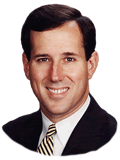
Santorum has made numerous negative comments about the GLBT community. The controversy arose over Santorum’s statements about homosexuality and the right to privacy. In an interview with the Associated Press (AP) taped on April 7, 2003, and published April 20, 2003, Santorum stated that he believed mutually consenting adults do not have a constitutional right to privacy with respect to sexual acts. Santorum described the ability to regulate consensual homosexual acts as comparable to the states’ ability to regulate other consensual and non-consensual sexual behavior, such as adultery, polygamy, child molestation, incest, sodomy, and bestiality, whose decriminalization he believed would threaten society and the family, as they are not monogamous and heterosexual.

Many Democratic politicians, gay rights advocates, the Log Cabin Republicans, and progressive commentators condemned the statements as homophobic and bigoted, while some conservatives supported Santorum’s beliefs. The controversy carried over into Santorum’s presidential campaign.

Mitt Romney
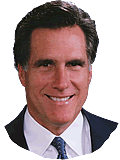
Mitt Romney’s position on gay rights doesn’t quite lend itself to a bumper sticker. Depending on whom you ask, it is either too thoughtful and nuanced, or too inconsistent and politically expedient. Either way, it’s definitely got the GOP presidential candidate on the defensive. As governor of Massachusetts, Romney did everything he could to stop gay marriage there after the state’s high court allowed it. Romney responded to the 2003 Massachusetts Supreme Judicial Court decision by vowing to keep the state from becoming, as he put it, “the Las Vegas of gay marriage.” At the time, Romney stated: “I agree with 3,000 years of recorded history. … Marriage is an institution between a man and a woman.” But back during his first political run in 1994, Romney aggressively courted gay voters, promising to do more for “full equality” for gays and lesbians than his Massachusetts opponent, Democratic Sen. Ted Kennedy. Today, Romney denies any inconsistency.

Ron Paul
His states’ rights stand makes it difficult for same-sex couples to peg Ron Paul’s opinion on gay marriage. The Human Rights Campaign points out that the candidate did “support the repeal of DADT (Don’t Ask, Don’t Tell), but at the same time he also comes out in support of DOMA (Defense of Marriage Act). It is his unwillingness to favor a marriage equality amendment that makes him a difficult candidate to love for socially progressives.

In fact, a 2004 brief before the House of Representatives highlights that even though Paul opposes “federal efforts to redefine marriage as something other than a union between one man and one woman,” he concurrently does not favor an amendment to the Constitution that would protect the current definition of marriage. He continues to point out that marriage was instituted by the people entering into the covenant, not the governments that oversee them.

In addition, new issues have recently surfaced about Ron Paul’s stance on GLBT rights. A direct-mail solicitation for Ron Paul’s political and investment newsletters two decades ago warned of a “coming race war in our big cities” and of a “federal-homosexual cover-up” to play down the impact of AIDS. The eight-page letter, which appears to carry Paul’s signature at the end, also warns that the U.S. government’s redesign of currency to include different colors – a move aimed at thwarting counterfeiters – actually was part of a plot to allow the government to track Americans using the “new money.” The letter urges readers to subscribe to Paul’s newsletters so that he could “tell you how you can save yourself and your family” from an overbearing government.

Newt Gingrich
Gingrich opposes domestic partnership benefits for same-sex couples. He wants a constitutional amendment to protect the traditional family. He believes that same sex couples should have some sort of legal rights so that they can leave their estates to their partners or visit them in the hospital. Gingrich believes that homosexuality is a sin. He thinks that same sex couples should not be able to adopt children. He thinks that gays and lesbians should be able to teach as there are many good and decent people who happen to be gay and children will encounter them in everyday life.

Michele Bachmann

I don’t think that I need to say too much about Michele Bachmann. I said a fair amount in this post. However, I will sum up a few points. Bachmann was first in line to sign a pledge affirming her belief that gay men are a public health risk, that gay parents are inferior to straight parents, and that homosexuality is a choice. The pledge — titled “The Marriage Vow: A Declaration of Dependence Upon Marriage and Family” — is a stringing together of myths. For example, a footnote on “human mortality” claims nearly half of gay and bisexual men won’t reach their 65th birthday. But the journal that released the study, based on research conducted during the height of the HIV/AIDS epidemic, has said in a statement issued 10 years ago that the information is regularly taken out of context by “homophobic groups” and “we do not condone the use of our research in a manner that restricts the political or human rights of gay and bisexual men or any other group.” Rick Santorum also signed “The Marriage Vow.”

Rick Perry

Texas Gov. Rick Perry has said that using foreign aid to combat human rights abuses against homosexuals in foreign countries is “not in America’s interests” and attacked President Obama’s decision to require U.S. agencies operating abroad to promote equal rights for gays as part of the administration’s “war on traditional American values.” In a new and controversial ad, Perry has tossed up a political bomb by comparing the repeal of “Don’t Ask Don’t Tell” with keeping prayer out of school. Wearing what is becoming a trademark beige Carhartt jacket and audacious big belt buckle, the Texas governor promises to fight the scourge of secularism plaguing the political landscape.

“Rick Perry has made no secret of his dislike for LGBT Americans – but his most recent remarks are outrageous even by his own standards,” said HRC President Joe Solmonese in a statement. “It is bewildering that someone who wants to be President of the United States wouldn’t want to see our nation be a global leader in universal human rights. This is further proof that Rick Perry doesn’t want to represent the best interests of all Americans – he wants to advance an extremist, anti-gay agenda that represents the fringe views of a very small few.”

John Huntsman

Jon M. Huntsman Jr. has a number of hurdles to overcome if he is to become the Republican nominee for president — including his service in President Obama’s administration as ambassador to China and his comparatively liberal positions on several issues.

But Mr. Huntsman’s positions on gay rights — while to the left of most of his opponents — are likely to be among the least of his concerns. In fact, Mr. Huntsman’s views on gay rights are very close to those of the typical Republican voter — closer than those of someone like Tim Pawlenty.

In 2009, Mr. Huntsman endorsed civil unions as an alternative to gay marriage. He is perhaps the most noteworthy potential Republican candidate to have done so, although the libertarian-leaning Gary Johnson shares his position, and a minor candidate, Fred Karger, supports full marriage rights for gay and lesbian couples.

The Rainbow

The Rainbow

My heart leaps up when I behold
   A Rainbow in the sky:
So was it when my life began;
So is it now I am a man;
So be it when I shall grow old,
   Or let me die!
The Child is father of the man;
And I wish my days to be
Bound each to each by natural piety.

William Wordsworth

My Heart Leaps Up, also known as The Rainbow, is a poem by the British Romantic Poet William Wordsworth. Noted for its simplicity of structure and language, it describes the joy that he feels when he sees a rainbow and notes that he has felt this way since his childhood. He concludes the poem by noting how his childhood has shaped his current views and stating that “the child is father of the man.”

Wordsworth wrote “My Heart Leaps Up” on the night of March 26, 1802. Earlier that day, he wad written “To The Cuckoo”. He was in Dove Cottage, Grasmere with his wife, Mary. After he wrote it he often thought about altering it, but decided to leave it as it was originally written. It was published as part of Poems in Two Volumes in 1807.

The day after he wrote “My Heart Leaps Up” Wordsworth began to write his larger and better known Ode: Intimations of Immortality. The last three lines from “My Heart Leaps Up” are used as an epigraph to Intimations of Immortality. Some scholars have noted that “My Heart Leaps Up” indicates Wordsworth’s state of mind while writing the larger poem and provide clues to its interpretation.

Some commentators have speculated that Wordsworth felt such joy because the rainbow indicates the constancy of his connection to nature throughout his life. Others have said that it celebrates “the continuity in Wordsworth’s consciousness of self.” Many commentators also draw parallels to the rainbow of Noah and the covenant that it symbolized. Wordsworth’s use of the phrase “bound each to each” in the poem also implies the presence of a covenant. Some commentators have drawn further parallels with the story of Noah. Harold Bloom has suggested that Wordsworth casts the rainbow as a symbol of the survival of his poetic gift, just as the rainbow symbolised to Noah the survival of mankind. Bloom suggests that Wordsworth’s poetic gift relied on his ability to recall the memories of his joy as a child.

William Wordsworth

On April 7, 1770, William Wordsworth was born in Cockermouth, Cumbria, England. Wordsworth’s mother died when he was eight–this experience shapes much of his later work. Wordsworth attended Hawkshead Grammar School, where his love of poetry was firmly established and, it is believed, he made his first attempts at verse. While he was at Hawkshead, Wordsworth’s father died leaving him and his four siblings orphans. After Hawkshead, Wordsworth studied at St. John’s College in Cambridge and before his final semester, he set out on a walking tour of Europe, an experience that influenced both his poetry and his political sensibilities. While touring Europe, Wordsworth came into contact with the French Revolution. This experience as well as a subsequent period living in France, brought about Wordsworth’s interest and sympathy for the life, troubles and speech of the “common man”. These issues proved to be of the utmost importance to Wordsworth’s work. Wordsworth’s earliest poetry was published in 1793 in the collections An Evening Walk and Descriptive Sketches. While living in France, Wordsworth conceived a daughter, Caroline, out of wedlock; he left France, however, before she was born. In 1802, he returned to France with his sister on a four-week visit to meet Caroline. Later that year, he married Mary Hutchinson, a childhood friend, and they had five children together. In 1812, while living in Grasmere, they grieved the loss of two of their children, Catherine and John, who both died that year.

Equally important in the poetic life of Wordsworth was his 1795 meeting with the poet, Samuel Taylor Coleridge. It was with Coleridge that Wordsworth published the famous Lyrical Ballads in 1798. While the poems themselves are some of the most influential in Western literature, it is the preface to the second edition that remains one of the most important testaments to a poet’s views on both his craft and his place in the world. In the preface Wordsworth writes on the need for “common speech” within poems and argues against the hierarchy of the period which valued epic poetry above the lyric.

Wordsworth’s most famous work, The Prelude (1850), is considered by many to be the crowning achievement of English romanticism. The poem, revised numerous times, chronicles the spiritual life of the poet and marks the birth of a new genre of poetry. Although Wordsworth worked on The Prelude throughout his life, the poem was published posthumously. Wordsworth spent his final years settled at Rydal Mount in England, travelling and continuing his outdoor excursions. Devastated by the death of his daughter Dora in 1847, Wordsworth seemingly lost his will to compose poems. William Wordsworth died at Rydal Mount on April 23, 1850, leaving his wife Mary to publish The Prelude three months later.


Rainbow Flag

We see it all the time, but do we ever think about its origins or what it means.

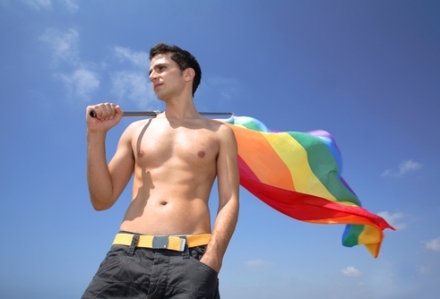
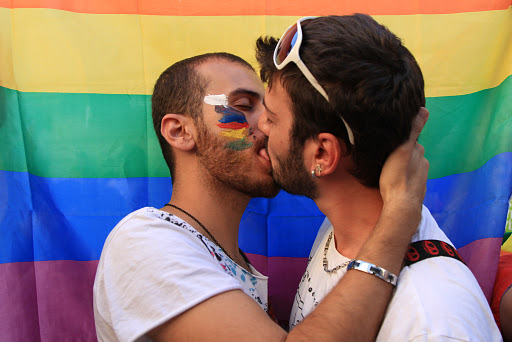
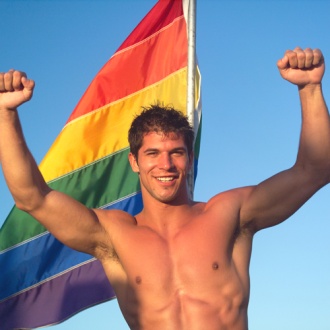
The Rainbow flag or Pride flag of the LGBT community is a symbol of LGBT pride and LGBT social movements in use since the 1970s. The colors reflect the diversity of the LGBT community, and the flag is often used as a symbol of gay pride in LGBT rights marches. It originated in the United States, but is now used worldwide. Designed by San Francisco artist Gilbert Baker in 1978, the design has undergone several revisions.

Sewn by thirty volunteers, the original gay-pride flag flew in the San Francisco Gay Freedom Day Parade on June 25, 1978. It has been suggested that Baker was inspired by Judy Garland’s singing “Over The Rainbow.” The flag consisted of eight stripes; Baker assigned specific meaning to each of the colors as follows:

  • hot pink: sexuality
  • red: life
  • orange: healing
  • yellow: sunlight
  • green: nature
  • turquoise: magic/art
  • indigo: serenity/harmony
  • violet: spirit

After the assassination of openly gay San Francisco City Supervisor Harvey Milk, demand for the rainbow flag greatly increased. To meet demand, the Paramount Flag Company began selling a version of the flag using stock rainbow fabric consisting of seven stripes of red, orange, yellow, green, turquoise, blue, and violet. As Baker ramped up production of his version of the flag, he too dropped the hot pink stripe because of the unavailability of hot-pink fabric. Also, San Francisco-based Paramount Flag Co. began selling a surplus stock of Rainbow Girls flags from its Polk Street retail store.

As of 2008, the most common variant consists of six stripes, with the colors red, orange, yellow, green, blue, and violet. The flag is commonly flown horizontally, with the red stripe on top, as the colors would appear in a natural rainbow.

SOURCES


Happy New Year!!!

Auld Lang Syne
by Robert Burns
Should auld acquaintance be forgot,
     And never brought to mind?
Should auld acquaintance be forgot,
     And auld lang syne!
     For auld lang syne, my dear,
     For auld lang syne.
     We’ll tak a cup o’ kindness yet,
     For auld lang syne.
And surely ye’ll be your pint stowp!
     And surely I’ll be mine!
And we’ll tak a cup o’ kindness yet,
     For auld lang syne.
     For auld lang syne, my dear,
     For auld lang syne.
     We’ll tak a cup o’ kindness yet,
     For auld lang syne.
We twa hae run about the braes,
     And pou’d the gowans fine;
But we’ve wander’d mony a weary fit,
     Sin’ auld lang syne.
     For auld lang syne, my dear,
     For auld lang syne.
     We’ll tak a cup o’ kindness yet,
     For auld lang syne.
We twa hae paidl’d in the burn,
     Frae morning sun till dine;
But seas between us braid hae roar’d
     Sin’ auld lang syne.
     For auld lang syne, my dear,
     For auld lang syne.
     We’ll tak a cup o’ kindness yet,
     For auld lang syne.
And there’s a hand, my trusty fere!
     And gie’s a hand o’ thine!
And we’ll tak a right gude-willie waught,
     For auld lang syne.
     For auld lang syne, my dear,
     For auld lang syne.
     We’ll tak a cup o’ kindness yet,

     For auld lang syne.

Eighteenth-century Scottish poet Robert Burns may well be most famous not for a poem he wrote, exactly, but for a poem he wrote down. According to Burns Country, a comprehensive website devoted to the poet, Burns, in a letter to an acquaintance, wrote, “There is an old song and tune which has often thrilled through my soul. You know I am an enthusiast in old Scotch songs. I shall give you the verses on the other sheet… Light be the turf on the breast of the heaven-inspired poet who composed this glorious fragment! There is more of the fire of native genius in it than in half a dozen of modern English Bacchanalians.”

That song was a version that Burns fashioned of “Auld Lang Syne,” which annually rings in the New Year at parties across the world, though most often sung out of tune and with improvised lyrics, as it has been described as “the song that nobody knows.” Though the history of the authorship of the poem is labyrinthine and disputed, Burns is generally credited with penning at least two original stanzas to the version that is most familiar to revelers of the New Year. Here are the first two stanzas as Burns recorded them:

Should auld acquaintance be forgot,
And never brought to mind?
Should auld acquaintance be forgot,
And auld lang syne!

Chorus.-For auld lang syne, my dear,
For auld lang syne.
We’ll tak a cup o’ kindness yet,
For auld lang syne.

Undoubtedly, some rousing version of the Scottish song echoed through the New Year’s night near whereThomas Hardy wrote his haunting goodbye to the ninteenth century, “The Darkling Thrush.” Dated December 30, 1900, which signaled the end of the century in Hardy’s view, the poem intones a much more somber sense of the end of one time and beginning of another. Consider the last lines of the opening stanza, which set a grim scene:

The tangled bine-stems scored the sky
Like strings of broken lyres,
And all mankind that haunted nigh
Had sought their household fires.

But century’s end, for Hardy, was possibly an arbitrary marking, too, and there was hope to be found, in the form of the sudden song issued from a thrush’s voice, a “full-hearted evensong / Of joy illimited.”
For centuries, it has been the charge of Britain’s Poet Laureate to write a poem to ring in the New Year. Laureate Nahum Tate established this practice, having written eight New Year odes between 1693 and 1708. And the phrase “ring out the old, ring in the new” first comes from another laureate’s pen, Lord Alfred Tennyson, from his most well-known poem, “In Memoriam”:

Ring out the old, ring in the new,
Ring, happy bells, across the snow:
The year is going, let him go;
Ring out the false, ring in the true.

Finally, Kobayashi Issa, a great practitioner of the haiku form, approached the new year with a sense of humility and reverence:

New Year’s Day–
everything is in blossom!
I feel about average.