Monthly Archives: June 2012

Why Don’t Students Understand Boundaries Anymore?

San Diego Students Suspended After ‘Gay Test’ Involving Watching Porn Videos On Cell Phones

Nine seventh grade students at a San Diego-based middle school were suspended last month after watching pornographic videos as part of a so-called “gay test,” according to reports.

According to U-T San Diego News, students in all-boys English class at Bell Middle School in Paradise Hills allegedly wore gym shorts as they watched videos on their cell phones. Whoever became sexually aroused while watching the videos was labeled gay, and several adolescents masturbated openly during the class.

In addition, peers complained of inaction by teacher Ed Johnson, who is now reportedly under fire because he did not respond to students who told him about the behavior while it was allegedly happening, according to NBC San Diego.

Among those to condemn the news was Patiti Boman of Parents, Families and Friends of Lesbians and Gays, who called the incident “terrible,” even though Bell Middle School officials have yet to confirm many details.

“I was thinking we were getting better and that’s why we go out and speak in schools. This is news to me and this gives me chills,” Boman, part of the team which helped craft the district’s anti-harassment policy, told U-T San Diego news. “They use that to attack and intimidate.”

Last month, U-T San Diego News reported that school officials and area lawmakers have called the matter a personnel issue and declined additional comment, citing student privacy laws.

“We cannot tell you the reasons for the suspensions, or whether further action is being taken with respect to any particular suspension,” Andra Donovan, deputy general counsel for the district, said in an email as quoted by NBC San Diego. “With respect to Mr. Johnson, all we can tell you is that he is employed by the District and remains assigned to Bell Middle School as of [May 25]. His schedule has not changed.”

Still, Dick Thornburgh, a former U.S. attorney general and author of a 2002 study on how to protect youth from Internet pornography, told the Associated Press that he believes the case illustrates a growing problem.

“The images are perishable, so if a teacher is concerned about someone using a cell phone to look at pornographic images, all you’ve got to do is press a button and it’s gone,” he said. “So it poses all kind of challenges.”

At my school students are supposed to either turn in their cell phones in the morning or leave them in their car.  We should not have to worry about this problem, though students hide their cell phones and sneak them around school regardless of the rules and consequences of being caught.  Besides, even if my students watched porn on their phones in school, I know they do so at home, they would never openly masturbate in class.  They may often be inappropriate, crass, and rude, but at least they do know some boundaries.  The other major difference in my students and these is that my students who watch porn are 10th-12th grade, but my seventh graders would never admit to watching porn.  One of the great things about teaching in a rural school is that the kids keep their innocence longer.


Hot Summer Nights

Hot Summer Nights 
by Mary Hamrick

It haunts me so
those summer nights
in dim lit homes

where music flows
and tempers flare
and lullabies fill the air.

I while away the hours
under the electric swell of light,
(pulse-scorched out).

Bone-idle and coral pink,
this dry spell grills,
but Southern nights do fill me.

Spider-blue legs peddle tales
as gossips-a-brewing
and roaming by my streets.

Scuttling through like marsh rabbit,
neighbors wave their charmed hellos.
Feverish and swollen together,

they inhale the blossoms,
riding high, and move through summer
as the lake declines.

It haunts me so
those summer nights
in dim lit homes

where music flows
and tempers flare
and lullabies fill the air.

Mary Hamrick was born in New York and moved to Florida as a young girl; her writing often reflects the contrast between her Northern and Southern upbringing. Her work appears online in Mad Hatters’ Review and Tattoo Highway.


Pride Houston

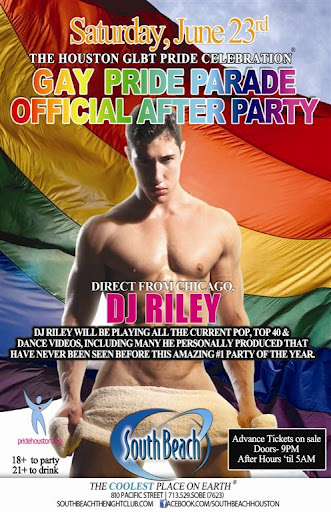
For more than 33 years, Pride Houston has been a central part of the local LGBT community in Houston. It core mission is to strengthen equality and increase awareness around issues important to our community such as health, safety and marriage equality. Pride Houston celebrates the individuality and diversity of every person as we all strive for acceptance from parents, friends and society-at-large.
From annual charity events to aiding LGBT-support and -counseling networks, its activities continue to promote social awareness and enrich the diversity that helps the Houston community thrive.

Nearly a decade after the Stonewall Riots in New York, the Gay Rights Movement for equality made its way to Houston. The Celebration is typically held the last Saturday in June to commemorate Stonewall, and the parade, which is held in the evening after sunset. This tradition began in 1997, arranged by then-Houston City Councilmember Annise Parker, where a parade ordinance was revised to allow for the nation’s only nighttime Pride Parade.

Pride Houston is a registered 501(c)3 organization incorporated in the state of Texas, and is 100 percent volunteer-run. Its annual June Celebration takes more than 10,000 volunteer hours to produce, along side its other initiatives, which require more volunteers than ever.

MISSION

Pride Houston shall work to bring lesbians, gay men, bisexuals, transgendered individuals and allies together to educate the world on issues important to the LGBT community, commemorate our history and heritage, celebrate our culture and strive for equality.

VISION

To honor the Stonewall Riots in New York City by having the largest and most accessible Pride Celebration in the Southern United States where all may attend, be themselves and find like-minded people.

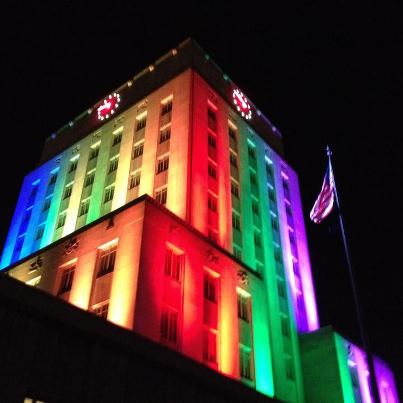
Houston has a lot to be proud of.  I’ve only visited Houston once, but I had a great time in its gay district, Montrose.  The City of Houston supports its LGBT community. Take a look at Houston’s City Hall lit up like a rainbow for Pride Week.  Even deep in the heart of east Texas, Houston is a city of wonderful culture, and from what I saw, a very accepting atmosphere.  Annise Parker has served as the mayor of Houston since January 2, 2010. Parker is Houston’s second female mayor, and one of the first openly gay mayors of a major U.S. city.


Happy Father’s Day

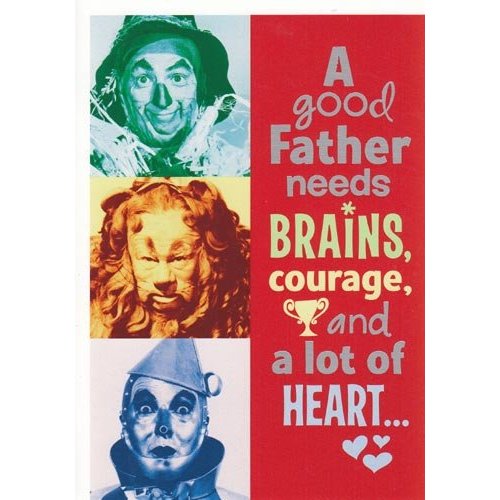
Fortunately, the ruby slippers are optional. Happy Father’s Day to all the dads out there who have it all.
I know there are at least a few dads out there who read my blog, maybe even two gay dads out there raising sons and/or daughters, and I want to wish you a very Happy Father’s Day.  Just like mothers, fathers can drive us crazy.  Most of us may not have been as close to our fathers as maybe we should have been or should be, but all of us have a father somewhere.  Besides wishing you fathers out there a Happy Father’s Day, I also wanted to tell you about my father.

We are very different in so many ways.  He is very outdoorsy: he hunts, he fishes, and constantly works outdoors.  I was always a book worm, who liked books better than sports.  I’ve learned to like the outdoors:  I walk nature trails, I like to hike, and I even like to fish occasionally.  Whereas my father worked outside all his life, I prefer to work inside, research, writing, teaching, etc.  There are a lot of other differences as well.  We can generally have a conversation for about 15-20 minutes before we get into some type of argument.  My father has never felt I was right about anything.  I can be agreeing with him, and he will fuss at me for agreeing with him.  No matter what I say, he will say the opposite.  The other day, I made a remark about a house being painted white (it used to be gray), he argued with me that the house was painted gray, just a lighter shade.  Everyone else I know says the house is white, but he still says that it is gray.  It’s that sort of thing that drives me crazy.  Needless to day, we barely get along.  I love him nonetheless, I just don’t like him sometimes.  He can be very cruel and frustrating.

To switch gears a little bit, I want to tell you also how great my father can be, without me ever knowing it.  This is part of the reason that I forgive so much of the misery he causes me.  When my parents found out I was gay, it was a very traumatic experience for all concerned.  My mother had suspected for quite a while and was being very nosy.  She checked my email.  She didn’t like some of the emails that she saw.  Most of them, if not all, were fairly innocent, but there were some like an ad from Showtime about “Queer as Folk” and maybe another one from gay.com. I was over at my grandmother’s checking on her, when my mother called me and confronted me about it.  I was tired of denying it.  All of my friends knew, so why shouldn’t she.  I knew she wouldn’t like it.  She had confronted me several years before about it, and I denied it then.  I wasn’t ready, and to make sure that I never was, my mother told me, “If I would rather have a dick up my ass, then be part of this family, then I should go ahead and leave.  They would have nothing more to do with me.”  When this time came around, we got into a huge argument.  I yelled, she yelled, and I left.  I was still dependent on them for some things, but I could live without them.  My mother went to bed and cried for the next two weeks.  BTW, this all happened two days before Christmas, while I was home on Christmas break.  When my father got home, he talked to my mother about what was wrong.  She told him.  She tells him everything. This was one of the times when he sided with me.

He told my mother, that I was there child.  She could not stop loving me, just because she did not agree with my lifestyle. He would continue to love me, and she would have to do the same.  No matter what his children did, they would still love them (it may have helped that my sister married a complete and total jackass, who doesn’t physically abuse her, but abuses her mentally).  Then he  came and talked with me.  He told me that he didn’t care what I told my mother, but to tell her something or she would die in that bed in there (you don’t know my mother, but she would have).  Then he told me what surprised me the most, “I should have taught you how to fight the urges.  I am sorry that I failed you.”  It is the only time my father ever apologized to me for anything.  I never asked about the urges, but I am pretty sure I know what he was talking about.  He knew exactly how I felt.  He had been there himself, but he had chosen a different path.  Maybe that is why they still believe it is a choice.  But I see the misery in him almost everyday.  I went to my parents and told them both that I was celibate and would remain that way, and I had never acted on my sexuality (yes it was a lie, but it was one I think was and still is for the better).  They made me promise that I would not tell anyone else in the family, and I have agreed to that. Our family has become a “Don’t ask, don’t tell, don’t discuss” Zone.  It is not my preference but it is what I must deal with for the time being.  If I ever find a man to live my life with, I will deal with the other consequences then.  I don’t think I could hide from my family the love of my life (if he ever comes along).

They still consider my being gay a lifestyle choice, I never will.  I would have never chosen this myself.  I would have chosen to live a more open life, but that is mostly not possible where I live now, and especially not with my job.  But I know what makes me happy, and after a lot of prayer and meditation, God told me that love is what matters most in this world.  I came to understand that if I lived a lie and married a woman, I would make her and my life miserable (somewhat like my father has).  If I was going to be alone, then I would be alone. At least I wouldn’t be hurting someone else.  I realize that some people had more pressures to get married and have a family and come out later in life.  I do not fault them for that, it was a different time and different circumstances.  But in this day and age, I felt I could not lie to myself or anyone else and spend a large portion of my life as a lie.

Dolly lends her vocals for a live version of Holly Dunn’s timeless classic song, “Daddy’s Hands.”  This song reminds me a lot of my Daddy for many reasons and has been one of my favorite songs for a long time.  Holly Dunn is also one of my all-time favorite country singers, too bad she had retired from country music.  She’s now an artists in the Southwest.

Reba McEntire singing “The Greatest Man.”  This is a truly great song and also describes my relationship between me and my Daddy, although I don’t know if he thinks I “hung the moon.”  My mother always says he brags about me to everyone, but I also remember him telling me once when I made a 99 (out of 100) on my report card, “Can’t you do better than that.”  He was kidding with me, but it didn’t feel like it at the time, especially since some of my grades on that report card were above 100.  Also, my Daddy is still alive, but he is one of the greatest men I have ever known.  I hope this post proves that.

Some of you may have read much of this post before.  I not only used it for my Father’s Day post last year. I plan to use it each Father’s Day for as long as this blog is published.

Moment of Zen: Sweet Embraceable You


Funny Friday

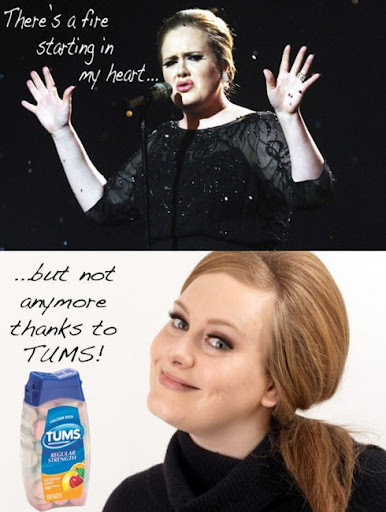
I saw this and just got the pure silly giggles.  I know I did a humorous post yestrday, but I couldnt help but post this for a Funny Friday. Maybe I’m just weird like that, but I also love Adele.  I can’t hear this song now without thinking of this picture.


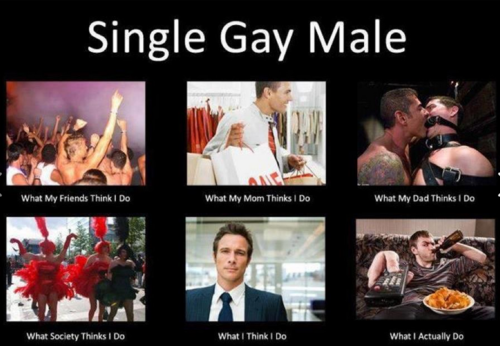
How True


10 Colleges With a History of Gay Pride

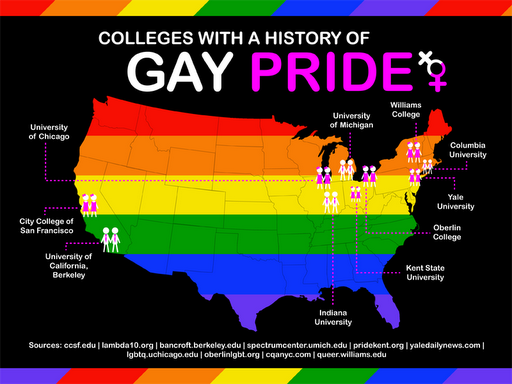
Every June, Americans recognize Gay Pride Month via famous parades and other advocacy events promoting marriage equality, adoption, health, teen bullying and suicide prevention, and other social and political issues related to LGBT rights, which directly impact an estimated 10% of the population (and indirectly impact a far higher percentage of loved ones). Because the country is still slowly growing to accept sexual and gender identity minorities, this means many college students head off to their higher education careers isolated, lonely, depressed — or worse. Most campuses these days offer some semblance of a support structure to ensure a safe experience for all LGBT students, and queer studies courses, minors, and majors have started popping up in catalogs across the country. And it’s all thanks to some of the following pioneers, who took a chance on equality when such things still stood as highly taboo.
CITY COLLEGE OF SAN FRANCISCO:  In 1989, City College of San Francisco revolutionized LGBT and queer studies when Jack Collins established America’s very first department promoting the inchoate field. Founded upon Dan Allen’s pioneering 1972 gay literature course taught in the English department, the Lesbian, Gay, Bisexual, Transgender Studies Department really wowed students, teachers, and administrators when it launched, attracting hundreds of enrollees for some of its courses. Because the school sits in one of the world’s most LGBT-friendly cities, the classes beneath the organization’s umbrella often benefit from the surrounding communities’ participation and input.
INDIANA UNIVERSITY:  More famous for Alfred Kinsey’s in-depth studies of American sexual habits at a time when such things popped monocles and inspired pearl-clutchings, Indiana University also happens to exist as a largely LGBT-friendly campus. Activist Shane Windmeyer of Campus Pride fame also established the Lambda 10 project here alongside the school’s Greek leaders in 1995. Today, it exists as the only nonprofit fully dedicated to making fraternity and sorority houses safe spaces for LGBT students. Notable, because neither institution enjoys the healthiest reputation for inclusiveness, tolerance, and equitability.

UNIVERSITY OF CALIFORNIA, BERKELEY:  Spring 1970 saw this historically progressive college offering up the nation’s very first undergraduate course in queer theory. Other schools in Illinois, New York, and even Nebraska quickly followed suit, paving the way for an entire academic field. The Gay Bears Collection pulls from Berkeley’s extensive archives — as well as its own inquiries — to provide students, faculty, staff, and visitors with detailed information about both hidden and not-so-hidden names, dates, and faces involved in the campus’ LGBT history.
UNIVERSITY OF MICHIGAN:  Many — if not most — colleges and universities these days sport some form of official LGBT outreach, usually through an organization or dedicated student services department. University of Michigan launched the very first back in 1971, inspiring more and more to follow suit and provide comfort and safety to an unfairly marginalized segment of the community. Known as the Spectrum Center, it has spent the past four decades ensuring an equal place for LGBT students, faculty, and staff.
KENT STATE UNIVERSITY:  One of the oldest, most inspiring LGBT student organizations in the nation started at Kent State University in 1971, following the precedent set by Berkeley’s groundbreaking undergraduate courses. It started out as the Kent Gay Liberation Front and set about organizing talks, rallies, and even classes on the cause of equality. More than 70 people showed up to the very first meeting scheduled by sociology student Bill Hoover and English professor Dolores Knoll, and the school’s administrators largely supported their banding together and coming out.
YALE UNIVERSITY:  When it comes to the more staunchly traditional Ivy League schools, one probably doesn’t think them bastions of LGBT tolerance and equality, though Yale has historically held a more progressive stance on the matter than its associates. It became the first of its type to organize a Gay Rights Week, rally, and dance celebrating sexual and gender diversity in 1977. Three years later, the school established a Gay and Lesbian Co-Op, which continued promoting LGBT rights, hosting lectures, promoting poetry and film, and other events furthering the cause.
UNIVERSITY OF CHICAGO:  Thanks to LGBT Phoenixes, America’s third-largest city enjoyed its very first gay rights organization, which quickly branched out into groups and events not affiliated with an academic establishment. The University of Chicago Gay Liberation Front banded together in 1969, and OutLaw — dedicated to LGBT law students — followed suit in 1984. By 1992, it was offering the very same domestic partnership benefits to lesbian and gay couples as it did heterosexuals. 
OBERLIN COLLEGE:  Oberlin College frequently lands on lists of the most LGBT-accepting institutes of higher learning in the United States. While its older nature meant at some point it did, in fact, reflect the overarching climate’s prejudices, by the 1960s some semblance of sociopolitical revolution began burbling to the surface at the Conservatory. The 1970s saw more organizations, rallies, dances, and other events bringing the fight to campus, with the Oberlin Gay Liberation Front establishing itself in 1971. More contemporary scholars enjoy the Oberlin College LGBT Community History Project, which offers up first- and second-person accounts of LGBT community history both at the school and the broader social climate.
COLUMBIA UNIVERSITY:  Yale may be one of the most notable Ivy League schools when it comes to sexual and gender identity equality, but it certainly doesn’t fly solo. Since 1967, the Columbia Queer Alliance has served as a safe haven and political rallying point for its LGBT student community — the very first of its kind in the world. Originally known as the Student Homophile League, organizers had to fight, fight, fight, and bite, bite, bite for years before Columbia officials finally green-lighted their group. It stood as one of the cornerstones of the equality movement before the Stonewall Riots two years later inspired others to action.
WILLIAMS COLLEGE:  Thanks to the efforts of Daniel R. Pinello and his 1971 Williams Advocate article “The Homosexual at Williams: Coming Out,” students felt inspired to embrace their sexuality and group together in 1976 as the Williams Gay Support Organization. Reaction to its establishment and subsequent events, which included frank discussions about AIDS, coming out, and even a support hotline, showing love and support to a marginalized minority proved extremely mixed, if not outright hostile. In fact, much of the administration actively shot down attempts to celebrate diversity and promote equality. It wasn’t until 1985, when instances of bullying whipped up a crowd of 300 supporters, that the campus started turning around.


Shakespeare’s Sonnet 33

No. 35, Gay or Bi Shakespeare (or was deVere his ghost writer?) Shakespeare is in love with a younger man, but is lamenting his loss of what had been a loving relationship.

SONNET 33

Full many a glorious morning have I seen

Flatter the mountain-tops with sovereign eye,

Kissing with golden face the meadows green,

Gilding pale streams with heavenly alchemy;

Anon permit the basest clouds to ride

With ugly rack on his celestial face,

And from the forlorn world his visage hide,

Stealing unseen to west with this disgrace:

Even so my sun one early morn did shine

With all triumphant splendor on my brow

But out, alack! he was but one hour mine,

The region cloud hath mask’d him from me now.

Yet him for this my love no whit disdaineth;

Suns of the world may stain when heaven’s sun staineth.


Comment: “Between the time Shakespeare wrote Sonnet 32 and 33, the poet’s entire attitude toward his relationship with his young friend had changed. While he had been focused on his own mortality throughout Sonnets 27-32, now the poet has a new and more pressing dilemma to jar him from his previous obsession. In Sonnets 33-35 the poet makes it clear that he has been deeply hurt by his young friend, who many believe to be the historical Earl of Southampton, Shakespeare’s patron. We cannot say what specific wrong-doing prompted such displeasure, although we can assume that the young man had many interests other than the poet, and he may have surrounded himself with other friends (and possibly other lovers), leaving the poet feeling isolated and unwanted. The poet’s dislike of his friend’s actions are clear from the overall reading, but also from his choice of words: “ugly”, “disgrace”, “basest”, “disdaineth”, and “staineth.” Moreover, the sun permits the clouds to cover his face as he cowers off to the west, and the direct comparison is made between the sun and the poet’s friend in the third stanza. Even though he denies it in the concluding couplet, the poet seems to resent the friend for causing a rift in their relationship. 

“As mentioned, the sonnet does end on a positive note with the poet ready to forgive his friend, content to accept that disappointment in this life is wholly natural. “Two Renaissance commonplaces, the sun-king comparison and the sun-son word play, are put to such good use in the friend’s behalf that ‘out alack’, the emphatic but conventional phrase denoting the speaker’s regret, seems no more than a polite formula.”

Source of Sonnet and comment: http://www.shakespeare-online.com/sonnets/33.html 

Mabillard, Amanda. An Analysis of Shakespeare’s Sonnet 33. Shakespeare Online. 2000. (day/month/year you accessed the information) <http://www.shakespeare-online.com/sonnets/33detail.html >. 


Comment and Notes of Another Shakespeare Scholar: “A sonnet that hardly needs an introduction. This and the following record a rejection by the youth of the poet. How serious or real this was we have no means of knowing. Perhaps it is an imaginary interlude in the sonnet sequence. Most readers however take it as having autobiographical content, and that approach is given credence by what appears to be the genuineness of the sorrow, and by the fact that the episode of estrangement, whatever caused it, is dealt with in this and the following three sonnets. 

“The fact that we are more disposed to believe in the biographical truth of the sonnet because of its beauty of imagery and language is a reality of human nature which cannot be easily dispensed with. It would be disapponting to learn that the youth and the poet’s impassioned love for him were mere creations of an idle brain, with deliberate intent to lay a false trail and make truth out of fiction. For while we may allow that a Macbeth and a Hamlet are engendered in the heat of artistic creation, their existence gives us a vicarious experience which is not harmed by their fictional reality. I am not convinced that this is so with the sonnets, for we long to trust their sincerity, and to see what it teaches us of our own capacity for love, what it explores and what it defines. Therefore I always assume what I take to be the standard or Wordsworthian approach (pace Browning), that this is a true record of love, no doubt edited and embellished, (for who could ever be word perfect in such matters?). 

“But we have to acknowledge also that the lover’s frown and her (in this case his) overcast brow, like the sun clouding over on a fine morning, was also a part of the sonnet tradition. Shakespeare was here making use of that rich tradition, as well as recording in his own inimitable way the feelings of one so cast down by his beloved’s disdain.” 

Notes: 

1. Full many a glorious morning have I seenFull many = very many.

2. Flatter the mountain tops with sovereign eyeFlatter – also has the meaning to stroke. In its normal sense it conveys the idea of insincerity and deception, and ultimate disillusionment. Hence the morning sun was making the mountains appear more brilliant than they in fact were.  sovereign eye = majestic, kingly gaze. Note that here the usual flattery of king by subject has been reversed. The king flatters his courtiers, the mountains.

3. Kissing with golden face the meadows greenThe sun kisses the earth. The glorious morning is partly subsumed into the character of the sun, as a result of sovereign eye and kissing.

4. Gilding pale streams with heavenly alchemyGilding = turning to gold; covering with gold. alchemy – this was the science which sought to discover how to turn base metals into gold. It was considered to be part magic, part science, and had a reputation for trickery and deceit. Nevertheless Elizabeth employed an alchemist in the early years of her reign, having been lured by the prospect of large sums of gold…

5. Anon permit the basest clouds to rideAnon = very soon, almost immediately; permit – the subject is morning line 1, and, by implication, the sky and the sun.basest = blackest, dirtiest, of humble origin; low born. Cf. Edmund in King Lear:…Why brand they us With base? with baseness? bastardy? base, base? I.2.9-10. There is also a contrast with gilding and alchemy. Base metals were the ugly materials of the alchemist’s study, which were destined to be turned into gold, the noblest metal of all.to ride – as horsemen. The clouds ride on the face of heaven as horsemen ride on the face of the earth.

6. With ugly rack on his celestial facerack = a line or procession of moving clouds; thin, flying, broken clouds, or any portion of floating vapor in the sky.(Webster’s) The winds in the upper region, which move the clouds above, which we call the rack, … pass without noise. Bacon. his = the sun’s, the sky’s, the morning’s.

7. And from the forlorn world his visage hide:the forlorn world – the world becomes forlorn, presumably because it is darkened by the ugly rack of clouds, which hide the sun’s celestial face (visage).

8. Stealing unseen to west with this disgrace:Stealing = moving furtively, stealthily, like a thief.  with this disgrace = with the disgrace of having his visage blotted out. disgrace could also refer to physical disfigurement.

9. Even so my sun one early morn did shine:my sun = the youth whom I love; you; the heavenly eye of my life. This is however the first mention ofsun in the sonnet.

10. With all triumphant splendour on my browall triumphant splendour = gloriously arrayed, in total splendour. triumph conveys the idea of a triumphal procession, a procession to commemorate the victory of a famous commander. on my brow = upon my forehead, upon my face.

11. But out, alack, he was but one hour mine:But, out, alack – editors gloss this as being an emphatic way of saying ‘Alas’, out being an intensifier, and cognate with its use in expressions such as ‘out upon it!’. However I think it also has reference here to the sun, which was only ‘out’, i.e. shining, for one hour. he was but one hour mine = I enjoyed his (the sun’s, my love’s) presence for only one hour.

12. The region cloud hath mask’d him from me nowThe region = the upper air, the upper region of the sky. him = my love, (the sun).

13. Yet him for this my love no whit disdainethhim….my love – these cannot both refer to the youth. If my love = the youth, then him must be the sun of 5-8 and 9-12, which has been disgraced by clouds ruining his face. But if him refers to the youth, then my love is ‘my love for him’, personified, which does not disdain him (the youth) for having become inaccessible. no whit = not in the least, not a jot.

14. Suns of the world may stain when heaven’s sun stainethThe homophonic meaning, sons, is played upon. Sons of the flesh are also liable to blemish and disgrace, as heavenly suns are. stain can be used transitively or intransitively, so that the youth, as well as becoming stained himself, has passed the infection on to others.

Source of 2nd scholar’s comment/notes: http://www.shakespeares-sonnets.com/sonnet/33

For more on Shakespeare:http://artofmalemasturbation.tumblr.com/Shakespear and http://artofmalemasturbation.tumblr.com/sonnets (NSFW)


Nashville Pride

From the tapping of a hundred activists’ feet on a downtown sidewalk 20 years ago to a city-wide celebration that draws thousands of LGBT community members and their straight allies, the growth of Nashville Pride has ebbed and flowed over the years thanks to the efforts of dedicated volunteers both past and present.

A culmination of events led to the birth of Nashville’s first Pride event in 1988. In 1987, following organizing that resulted in the founding of T-GALA (Tennessee Gay and Lesbian Alliance), two chartered buses took members of Nashville’s LGBT community and their supporters to Washington D.C. to participate in the Second National March on Washington for Lesbian and Gay Rights. That same year, Stewart Biven and Jeff Ellis began publishing Dare (later Query), Nashville’s first LGBT publication.

Query started people communicating”, Linda Welch, publisher of the LGBT weekly newspaper InsideOut and former Nashville Pride Board co-chair said. “They’d pick up the paper and were able to see what was going on in the community.” With the lines of communication now firmly in place, members of the local community, with the help of the National Gay and Lesbian Task Force, were able to put together Nashville’s first Pride March in June 1988. A modest 125 people met at Fannie Mae Dees (Dragon) Park that year with signs, walked through Vanderbilt University and then across West End Avenue into Centennial Park.

Because of the tense social climate at that time, participants in Pride events took on a more activist role than do most people today, Welch said. “In the beginning, there were tons of protesters,” said Welch. “You never knew if you’d turn a corner and have protesters there or have someone drive by and scream. Back then it was more of an activist thing, especially for those who were out or were coming out.”

Jim Hawk, the current executive director of the LGBT cultural center OutCentral, stepped out of the closet in the early ’90s and directly into a leadership role organizing Pride for two years. Welch said Nashville Pride remained a small event drawing in only a few hundred participants and a couple of vendors each year until Hawk took the reins. “He [Hawk] turned Pride around,” Welch said. “It was a machine similar to what Nashville has now.” Hawk and Dewayne Fulton, president of the LGBT youth organization One-in-Teen, worked together with one main goal in mind — to make Nashville Pride bigger than it had ever been.
“We thought we could grow Pride if we pulled the entire community together,” Hawk said. They met with a variety of people from across the city and recruited people from different backgrounds to sit on the board.
“We thought it was important to get several points of view when planning the events,” said Hawk.


Hawk hosted the first Pride Ball at the Parthenon in Centennial Park, which helped raise the thousands of dollars necessary to turn Pride into a week-long celebration. More than 100 volunteers worked with the board on planning fundraisers and booking entertainers. The standard for Nashville Pride had been set. After two years at the helm of the Nashville Pride Board, Hawk handed the duties over to Welch and Brad Beasley. (Beasley currently serves as the STD/HIV prevention and control director at the Metro Health Department.)

In 1995, Pride co-chairs Welch and Beasley moved the event to Riverfront Park. Raising the bar again that year, Beasley raised enough money to provide an officer on each street corner to block streets allowing for horses, motorcycles and floats in Nashville’s first Pride Parade. An estimated 8,000 people attended Nashville Pride that year. Welch said the board exceeded their budget that year after having flown in five speakers. She and other board members were forced to walk through the crowd selling t-shirts and sodas to raise enough cash to pay the entertainers (who had heard there was no money left) before they would perform that day.

“We had to raise another couple hundred dollars in a half hour in order to pay each upcoming act,” added Welch. “But we did it. It was a really big success!”


Since Nashville Pride is organized solely by unpaid volunteers, there has always been a cycle of highs and lows for the event during times of turnover and change on the Pride Board. Pam Wheeler, community activist and current co-host of Out & About Today, got involved with Pride in early 2000, a time when Nashville Pride almost didn’t happen. It was nearing time for the annual event but no one knew who was in charge of planning. “A group of community leaders realized nobody was planning a Pride event in 2000,” Wheeler said. “So, some of us decided to step up and quickly get involved to avoid a lapse. We discovered the existing organization was no longer active after checking with the Secretary of State’s office.” Soon thereafter, an ad appeared in Xenogeny, the LGBT weekly newspaper now known as InsideOut, calling for community members to get together to discuss saving Pride. An estimated 70 people attended the meeting, Wheeler said. With just 90 short days for planning, then Pride President Raney Pollos, with help from community leaders Keith Hinkle, Matthew Strader, Wheeler and a few others, successfully pulled off Nashville Pride 2000 at the Bicentennial Mall. Approximately 2,000 people and 30 vendors attended the event, up about 1,000 visitors from the previous year when volunteerism had lagged and the success of Pride dipped below the norm, Wheeler said.
Over the next few years under the leadership of Wheeler and subsequent presidents Mikhail Brown, Michael Basham and Todd Grantham, volunteers and/or board members David McKinnon, Brent Meredith, Marty Sewell, John Wade, Pamela DeGroff, Jason Adkins, Emily Benedict, Pat Finn, DeMarko Smith, Anthony Mollo, Jeanna Emert, MAC, Doug Sladen, Josh Baker and many others (too numerous to list here) joined Nashville Pride with a desire to help take it to the next level. Most of these volunteers had been to Pride in other nearby cities and wanted to see their hometown Pride grow and thrive. They wrangled their experiences together to create Pride events unique to Nashville and spent months planning the event, running TV and radio ads and bringing in new local and national sponsors. The crowd grew exponentially through the early 2000s and reached the volume most people recognize as Nashville Pride today.

National attention was garnered by the festival in 2010 when headlining entertainer, Vanessa Carlton, came out to the attendees. She began her set by saying “I’ve never said this before, but I am a proud bisexual woman.” (Leslie, J.: “Celebrating 20 years of Nashville Pride”Out and About Newspaper)


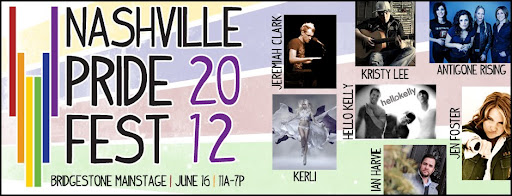
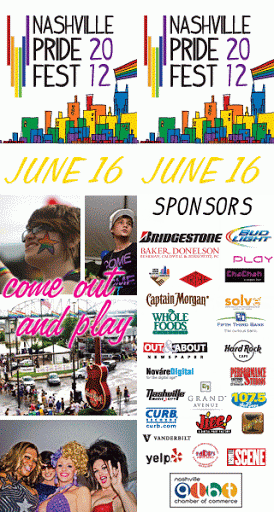
The 24th annual Nashville Pride Festival will be held Saturday, June 16, at Riverfront Park from 11 a.m. to 7 p.m. The annual event is a chance for the GLBT community and its allies to gather in celebration of advances made for GLBT equality.

The excitement of Pride weekend begins on Thursday, June 14, with Curb Records Pride Rocks! Pre-Party at the Hard Rock Café, highlighted by Hydrogen Blonde, an explosive high energy cover band that plays a wide variety of hit songs. The band has become a staple in the East Nashville music scene performing monthly at The Lipstick Lounge.

This year’s festival is expected to be the most highly-attended to date and boasts an eclectic entertainment lineup that includes Hello Kelly, Jen Foster, Ian Harvie, Jermiah Clark, Antigone Rising, Kerli and Kristy Lee on the Bridgestone Main Stage. A variety of popular local acts will also perform throughout the day on the Local Stage and the Tribe & Play Entertainment Stage will be home to DJ’s and drag performances.
“We are so excited about this year’s beefed-up festival, especially with new additions like our Equality Walk presented by Fifth Third bank and an entertainment lineup as diverse as Middle Tennessee’s LGBT community” said President Randall Roop.


Feisty, Nashville-based Hello Kelly takes the Main Stage just after noon. Knowing the life on the road is no place for the faint of heart, the alt-rock band has returned to the grind with a transformed sound that is harder, faster and more sincere, making it clear that Hello Kelly is in do-or-die mode with a tenacity never-before seen.


Jen Foster follows singing about the time her lover moved out and took everything she owned in “Taking Bob Dylan” and about the jaded American culture in “Closer to Nowhere. An award-winning singer/songwriter who regularly sells out shows all over the country, Foster often draws a devoted following to her live shows, though her largest fan base resides in the Southeast. Her bond with fans will create a captive audience, eager to hear her stories.

The day’s entertainment will switch gears in the afternoon when the world’s first FTM transgender comic, Ian Harvie, takes the stage. Frontiers Magazine referred to Harvie as “quite possibly the most unique stand up comic in the country” with his eccentric views on love, families, adolescence, substance abuse, and gender identification, as well as his acute dissection on the circus act that is the stunt double for today’s popular culture.

Jeremiah Clark returns the entertainment to music as he masterfully balances poetry with practicality similar to Rufus Wainwright and Tracy Chapman. While his songs usually take on a more serious tone, his performance is sure to be refreshingly lighthearted. He enjoys telling comedic stories about family, friends and traveling between tunes joking that, “If you don’t laugh AND cry at some point during the show, I simply have not done my job.”

The mighty rumble of Kristy Lee, an Alabama alternative artist with a voice like thunder rolling in before the sweet southern rain, as well as the newly-redirected Antigone Rising, a female rock band that has opened for Rob Thomas, Aerosmith and The Rolling Stones, round out the event’s main stage entertainment as they sandwich Estonian recording artist Kerli and her unique electronic/pop/experimental sound.
General admission to the event is $5 and allows access to more than 75 vendors in the Nashville GLBT Chamber Marketplace, mobile food vendors, cold cocktails and frozen drinks, misting fans, karaoke, street performances, an inflatable kids’ zone, prizes and much more. VIP tickets are $50 and include food and drink at the festival. All proceeds from ticket sales benefit Nashville Pride. This event is included in CORE 100 membership which offers discounted tickets to supporters. VIP tickets are available online and include private bar, two drink tickets, food and private restrooms in the Captain Morgan VIP area. (“Come out and play at 2012 Nashville Pride Festival,” Out and About Newspaper


For a visitor’s guide with some helpful links, check out the rest of the post by clicking “More” below.


Visitor’s Guide

Festival Hotels


The Hutton Hotel is the official hotel of the Nashville Pride Festival.  Browse and book rooms for all area hotels by clicking here.


Experience a sophisticated and comfortable Nashville, Tennessee lodging destination – where four-star luxury adopts a stylish and accommodating new spirit. Hutton Hotel offers a striking contrast to the conventional cluster of West End and downtown Nashville hotels, pairing attentive service with elegant, contemporary design. Treat yourself to welcoming Nashville luxury hotel lodging, where warm hospitality finds a new perspective.

  • Located in the heart of Nashville, Tennessee
  • Ideally situated at a super-central West End address
  • Convenient to the city’s renowned music scene and landmark attractions
  • 100% smoke free environment in all guest accommodations
  • High-speed wired and wireless Internet access for all guests
  • Flat panel LG High Definition televisions with multimedia interface
  • Baths with granite flooring, shower surround, and glass vanity
  • Two private spa treatment rooms available with a wide range of services
  • In-Room spa service menu available for your convenience
  • 1808 Restaurant, New American cuisine specializing in marinated fish and meats
  • In-Room dining, featuring the fine fare of 1808 with 24 hour service
  • Lobby Express, java bar with fresh baked goods, healthy snacks and drinks
  • Valet parking for individual guests or function attendees
  • 300 space, fully-automated self-park garage connected to the hotel
  • State-of-the-art fitness center with Pre-Cor equipment, LCD panels, and more
  • Complimentary Business Center services with 24-hour access
  • 13,600 square feet of elegantly-appointed space for meetings, events, and weddings
  • Green recycling program for glass, paper and plastics
  • LED or fluorescent lighting throughout the Hotel building
  • Eco-friendly hybrid courtesy vehicle, elevators, and air-conditioning

Nashville Pride guests can book their rooms online by clicking here.  Book early. Space is limited.


Entertainment


From quiet listening rooms to high-energy dance floors to live stage shows like those at the world-famous Grand Ole Opry and Ryman Auditorium, you can experience the true music of Music City all over town.  If it’s gay nightlife you’re looking for…we’ve got that too! Whatever the choice, you’re sure to find the city’s nightlife hits all the right notes.


GAY/LESBIAN BARS

ATTRACTIONS


The very name evokes vivid images – a single spotlight illuminating a microphone…skyscrapers towering protectively over the Mother Church of Country Music…stately Southern mansions…a Greek temple sitting serenely on a grassy knoll. The area’s many attractions paint a picture of this unique Southern city and leave an indelible impression on all who visit.


For a searchable list of area attractions, including: art galleries, theatres, sporting events, and family venues, click here.


 Restaurants


From Southern fare to haute cuisine with quite literally everything in between, Nashville’s menu of dining options will suit any taste. Here, a perfect barbecue (pork, of course) is as celebrated as the most spectacular creation from any of the city’s award-winning chefs. Whether it’s a family-friendly meal, dinner and a show or a romantic repast, the city’s restaurants serve every dish with a side of Southern hospitality.
 For a searchable list of area restaurants, click here.