Monthly Archives: January 2013

Friday Fun

I’m out of school today for a major fundraiser that our school does.  I will be going to help out in a little while, but in the meantime, I am going to be lazy and relax until I have to do some work.

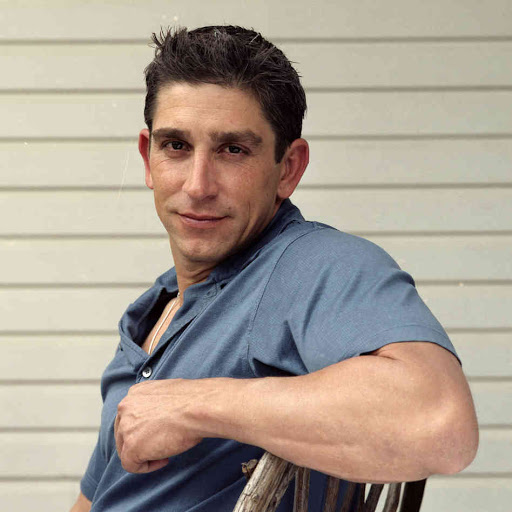
Richard Blanco

The Presidential Inaugural Committee announced yesterday Richard Blanco, a Latino gay man and immigrant, will be the inaugural poet for the president’s swearing-in January 21. Blanco will be the youngest-ever inaugural poet, the first Latino, and the first LGBT person to read a poem at the inauguration, according to the committee’s announcement. 

Blanco, who lives in Maine with his partner, told The New York Times he has long identified with numerous aspects of President Obama’s journey to prominence.

From the moment Barack Obama burst onto the political scene, the poet Richard Blanco, a son of Cuban exiles, says he felt “a spiritual connection” with the man who would become the nation’s 44th president.

Like Obama, who chronicled his multicultural upbringing in a best-selling autobiography, “Dreams From My Father,” Blanco has been on a quest for personal identity through the written word. He said his affinity for Obama springs from his own feeling of straddling different worlds; he is Latino and gay (and worked as a civil engineer while pursuing poetry). His poems are laden with longing for the sights and smells of the land his parents left behind.

“Since the beginning of the campaign, I totally related to his life story and the way he speaks of his family, and of course his multicultural background,” Blanco, who was born to Cuban parents in Spain, then raised and educated in Miami, told the Times. “There has always been a spiritual connection in that sense. I feel in some ways that when I’m writing about my family, I’m writing about him.”

Blanco, 44, will compose an original poem to read at the inauguration ceremony January 21, the day after the president takes the oath of office as required by the Constitution. Blanco will be the nation’s fifth inaugural poet, reports the Times; others include Robert Frost and Maya Angelou. 

Friends of Mr. Blanco’s, and fellow poets, say the president could not have found a more perfect fit.
“I think he was chosen because his America is very similar to the president’s America,” said Liz Balmaseda, who met Blanco in the mid-1990s when he was just emerging as a poet, and she was working as a columnist for The Miami Herald. “You don’t have to be an exile, you don’t have to be Latino or gay to get the yearning in Richard’s poetry.”

Blanco was conceived in Cuba, born in Spain and raised and educated in Miami, where his mother was a bank teller, his father a bookkeeper, and his grandmother — “abuela” in his poems — was a looming, powerful presence. Family folklore has it that he was named for Richard M. Nixon, his father’s favorite president, who took a strong stand against Fidel Castro.

The Blanco home was a modest place where pork was served on Thanksgiving (in his first published poem, “América,” Blanco writes that he insisted one year on having turkey), and Latin music played on holidays and birthdays. Theirs was a world dominated by food and family, where “mango,” as Blanco writes in another poem, “Mango, Number 61,”“was abuela and I hunched over the counter covered with the Spanish newspaper, devouring the dissected flesh of the fruit slithering like molten gold through our fingers.”

Like many immigrant families, Blanco’s parents wanted a better life for their son. “The business was survival,” he said. He was instructed that he had three career choices: doctor, lawyer or engineer. He was “a whiz at math,” he said, so he chose engineering, suppressing his creative side (and his homosexuality) to win the approval of his grandmother, who thought he was too feminine.  In the poem “Queer Theory, According to My Grandmother,” he described how his grandmother warned him as a young boy: “For God’s sake, never pee sitting down…/I’ve seen you” and “Don’t stare at The Six-Million-Dollar Man./I’ve seen you.” and “Never dance alone in your room.”

As an engineer, Blanco helped design bridges, road improvements and an architectural site plan for City Hall in South Miami. But in his mid-20s, he said, he began asking himself questions about “identity and cultural negotiations and who am I, where do I belong, what is this stuff about Cuba my parents keep talking about?” Suddenly he felt “a deep need” to write.

Blanco decided to pursue a master’s degree in fine arts and creative writing, taking courses at night at Florida International University, where he had earned his engineering degree. His mentor there, Campbell McGrath (who also happens to be a childhood friend of Elizabeth Alexander, Obama’s first inaugural poet), said Blanco’s facility with numbers and structural design shines through in his writing.

“Richard was always a complete engineer within poetry,” Professor McGrath said. “If you said it needs a little work here or there, a whole transfiguration of a poem emerged. He understood revision not to be just a touch-up job but a complete reimagining, a reworking. I know that’s connected to his engineering skill.”

Blanco’s first collection, “City of a Hundred Fires,” which grew out of his graduate thesis, won the 1997 Agnes Lynch Starrett Poetry Prize, a prestigious literary award for a first full-length book of poetry, and was published the next year by the University of Pittsburgh Press. Soon he was flooded with teaching offers; he taught for a time at Central Connecticut State University in New Britain, and Georgetown University and American University in Washington while continuing his engineering work. Only recently did he give up engineering to write full time.

While “City of a Hundred Fires” and Blanco’s second book, “Directions to the Beach of the Dead” (University of Arizona Press, 2005) explore his Cuban heritage, Blanco’s most recent collection, “Looking for the Gulf Motel,” published last year, incorporates his life as a gay man in the very conservative Cuban culture.

“It’s trying to understand how I fit between negotiating the world, between being mainstream gay and being Cuban gay,” he said.

Now Blanco, who is also at work on a memoir, is focused on an entirely new and, colleagues say, exceedingly difficult endeavor: composing what is known in his trade as an “occasional poem,” written to commemorate a specific event. After learning of his selection on Dec. 12 — he has kept it a secret even from his mother — he began drafting three poems; the Obama team will pick one for him to read at the inaugural ceremony.

“The challenge,” he said, “is how to be me in the poem, to have a voice that’s still intimate but yet can encompass a multitude of what America is.”

Blanco will be the nation’s fifth inaugural poet; the practice was begun by John F. Kennedy, picked up by Bill Clinton and continued by Mr. Obama. Cynics might say that in picking a Latino gay poet, Obama is covering his political bases; some gay people objected to his selection of the Rev. Rick Warren, an opponent of same-sex marriage, to deliver the invocation at his 2009 inauguration.

But Blanco says Obama’s inaugural theme, “Our People, Our Future,” resonates with him. He wants to write, he said, about “the salt-of-the-earth sense that I think all Americans have, of hard work, we can work it out together, that incredible American spirit that after 200-plus years is still there.”

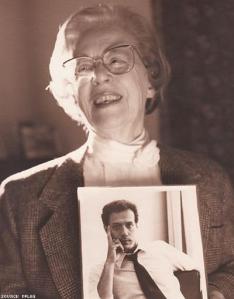
Jeanne Manford, PFLAG Founder And Pioneering Gay Rights Ally, Dead At 92

Jeanne Manford, the founder of PFLAG (Parents, Families and Friends of Lesbians and Gays) and an all-around pioneering straight ally in the LGBT rights movement, has died at 92.

Manford died at her Daly City, Calif. home and had been in declining health for some time, daughter Suzanne Swan confirmed.

“She is known to thousands of people as the mother of the straight ally movement, but to me –- she was my mother,” Ms. Swan said in an email statement. “She was someone who would always do the right thing, the good thing. She supported all people, and that meant so much to us growing up.”
Born Jeanne Sobelson on Dec. 4, 1920 in Queens, N.Y., Manford became active on behalf of LGBT rights in 1972.  One of Manford’s sons, the late Morty Manford, was gay. He was beaten during a Gay Activists Alliance demonstration in April 1972, and police failed to intervene. She wrote a letter to the New York Post, published April 29, 1972, in which she stated, “I have a homosexual son, and I love him.” Her letter sparked a groundswell of response, and less than two months later, she joined her son at the Christopher Street Liberation Day Parade, carrying a placard stating “Parents of Gays: Unite in Support Of Our Children.” The first meeting of PFLAG (which was then known as “Parents of Gays” or “POG”) was held in New York’s Metropolitan Community Church the following year.  Her participation and the affirmations she received from others eventually led to the beginning of PFLAG.


PFLAG’s executive director, Jody M. Huckaby, said the world had lost a pioneer with Manford’s death.  “Jeanne was one of the fiercest fighters in the battle for acceptance and equality for lesbian, gay, bisexual and transgender people,” Huckaby said. “It is truly humbling to imagine in 1972 — just 40 years ago — a simple schoolteacher started this movement of family and ally support, without benefit of any of the technology that today makes a grassroots movement so easy to organize. No Internet. No cell phones. Just a deep love for her son and a sign reading ‘Parents of Gays: Unite in Support for Our Children.'”

A private interment service will be held and details of a later celebration of Manford’s life and legacy will be announced later. The family requests that any donations be made to the Jeanne Manford Legacy Fund to support the ongoing work of PFLAG National: 1828 L Street, NW, Suite 660, Washington, D.C. 20036.


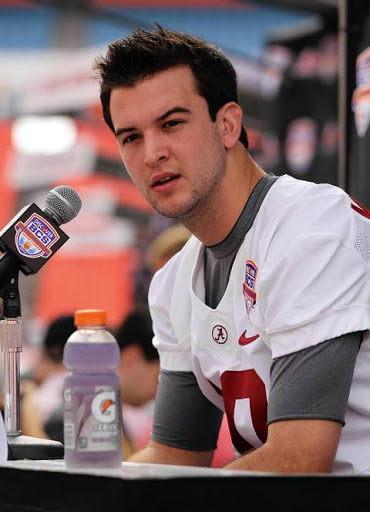
Yea Alabama!

Congratulations to The University of Alabama Crimson Tide in their 42-14 win over Notre Dame to win the BCS National Championship!

Yea, Alabama! Drown ’em Tide!

Every ‘Bama man’s behind you,

Hit your stride.
Go teach the Bulldogs to behave,
Send the Yellow Jackets to a watery grave.
And if a man starts to weaken,
That’s a shame!
For Bama’s pluck and grit have
Writ her name in Crimson flame.
Fight on, fight on, fight on men!
Remember the Rose Bowl, we’ll win then.
Go, roll to victory,
Hit your stride,
You’re Dixie’s football pride,
Crimson Tide, Roll Tide, Roll Tide!!


Following Alabama’s 1926 Rose Bowl victory over Washington, a contest was held by The Rammer-Jammer, a student newspaper, for the composition of a fight song. Several entries were submitted to a panel overseen by the Music Department, and the winning entry, “Yea Alabama“, was adopted. The composer, Ethelred Lundy (Epp) Sykes, a student in the School of Engineering, was the editor of The Rammer-Jammer, and played piano in a jazz ensemble, The Capstone Five. He won the University’s Pan-Hellenic Cup in 1926 for overall achievement, both academically, athletically, and in student affairs. The song achieved considerable popularity during the 20s and 30s. Sykes went on to become a Brigadier General in the U.S Air Force, and donated the copyright and future royalties to the University in 1947. The Million Dollar Band plays only the chorus at football games such as after touchdowns and field goals.

Confessions

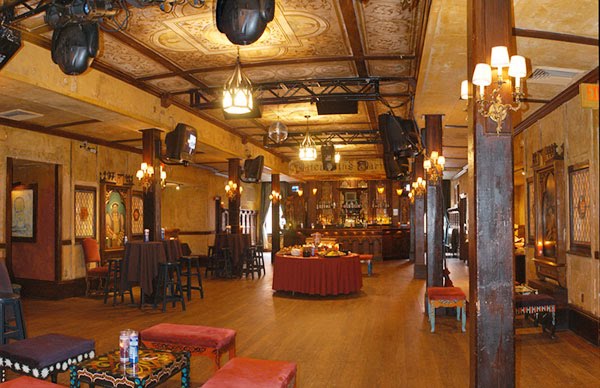
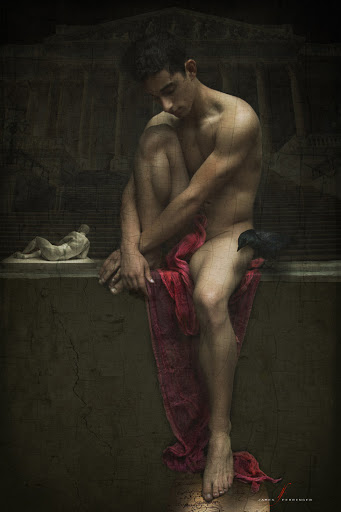
I had a great time in New Orleans. You might be able to guess from the picture above, that I was not a good little lad while I was there (just remember my post from yesterday “Judge Not”). I’m pretty sure that I broke at least six of the seven deadly sins. I realized this as I was thinking back on Saturday night.  The wedding’s reception had been in a replica of a Spanish chapel, which had paintings of the deadly sins around the walls.
In the order used by both Pope Gregory and by Dante Alighieri in his epic poem The Divine Comedy, the seven deadly sins are as follows:
  1. luxuria (lechery/lust)
  2. gula (gluttony)
  3. avaritia (avarice/greed)
  4. acedia (sloth/discouragement)
  5. ira (wrath)
  6. invidia (envy)
  7. superbia (pride)


With the beautiful men dancing on the bar at my favorite New Orleans club, Oz, I was head over heals in LUST. That doesn’t even take into account the many beautiful men in the bar Saturday night.  Also, New Orleans is known for their food, and I most certainly committed GLUTTONY, though probably more so on the massive quantities of wine I drank. (It was not a pleasant drive home today, but totally worth it.) GREED is supposed to include covetousness and Exodus 20:17 states: “Thou shalt not covet thy neighbor’s…ass.” Well, I coveted the asses of many of my fellow neighbors in the bar. And after a night like that, in which I have no idea what time I got back to the hotel, I slept a little late this morning and committed SLOTH as well.  Now considering I was in a wonderful mood, seeing friends at the wedding that I have not seen in some time, plus I am a happy drunk, I did not commit wrath.  I honestly do not remember a single thing that made me angry at all while I have been in New Orleans. Now, ENVY is a whole other story. I envied many people while in New Orleans: happy couples, men with beautiful bodies, all the beauty that surrounds New Orleans, etc. Most of all, however, my heart burst with PRIDE, that my best friend found a wonderful man that she loves and who loves her.  I am so proud of them both, I can’t contain myself, and I cried through the wedding because of how happy I was for them.


So, I had a wonderful time in New Orleans, and honestly if you don’t commit at least some of these sins while in the city, then you probably did not have as good of a time as you should/could have had.


Judge Not

“Judge not, and you will not be judged; condemn not, and you will not be condemned; forgive, and you will be forgiven;  give, and it will be given to you. Good measure, pressed down, shaken together, running over, will be put into your lap. For with the measure you use it will be measured back to you.”
Luke 6:37

Moment of Zen: Cooking


No Post Tomorrow

I have a busy day planned tomorrow with limited Internet access most of the day.  If I have a chance to post, I will, but it is doubtful. I plan on having too good of a time.  I may technically be one of the groomsmen, but I am the honorary maid of honor.

This Is Not A Victorian Lady

It’s F. Scott Fitzgerald in drag. He was the prettiest girl in the show.

The photos were taken in 1916 to help promote The Evil Eye at Princeton’s Triangle Club. Fitzgerald was in his third year at Princeton when the musical-comedy troupe performed the bawdy lyrics penned by the future Great Gatsby writer.

In a review of his performance, the Times referred to Fitzgerald as “the most beautiful” girl in the whole production.

In 1924 when Fitzgerald’s wife  Zelda had an affair with a French aviator she reported that, in comparison, Fitzgerald was “inadequate.”  Ernest Hemingway, one of his many drinking buddies, included a passage in A Moveable Feast about the size of Fitzgerald’s penis, and gossips whispered that although Fitzgerald had a scorn for “fairies” he himself may have had homosexual experiences. To Zelda he once wrote, “The nearest I ever came to leaving you was when you told me you thought I was a fairy in the Rue Palatine,” for she had accused him of having a relationship with Hemingway.
Of Hemingway, Fitzgerald had once written, “I really loved him, but of course it wore out like a love affair. The fairies have spoiled all that,” implying that their friendship had stopped because of such gossip. Sheliah Graham (Fitzgerald’s mistress), according to his biographer Jeffrey Meyers, knew about the relative sizes of penises, however, and “she found the tubercular, drug-addicted and often alcoholic Fitzgerald a creditable performer – ‘very satisfactory . . . in terms of giving physical pleasure.’ After lovemaking, they would lie happily in each other’s arms for a long time.”

The homosexual gossip continued, however, despite his describing homosexuals unscientifically as “Nature’s attempt to get rid of soft boys by sterilizing them.”

Critic Sally Eckhoff, reviewing two of Matthew J. Bruccoli’s books, Fitzgerald and Hemingway: A Dangerous Friendship (1994) and F. Scott Fitzgerald: A Life in Letters (1994), notes, “From all the evidence now available, we can safely believe Hemingway’s assertion that Mrs. Fitzgerald had told her husband that his dick was too small. During a drunken lunch at Michaud’s, the distraught Scott spilled the beans to Ernest [Hemingway – both repaired to the hommes room to size up the problem. ” ‘Forget what Zelda said,’ I told him. ‘Zelda is crazy,’ ” Hemingway wrote in his chapter called “A Matter of Measurements.” (According to Edmund Wilson, Hemingway tried to dilute Scott’s anguish about his penis by claiming ‘it only seemed to him small because he looked at it from above. You have to look at in a mirror.’ Fitzgerald didn’t buy it.) Hemingway complained to Max Perkins that ‘almost every bloody fool thing I have ever seen or known him to do has been directly or indirectly Zelda inspired,’ but added, ‘I would not have Scott imagine I believed this for the world.’ “

In Tender is the Night, Fitzgerald tries to give his opinion of homosexuality in the characters of the Real family, though they are not the only gay men mentioned in the book.  The main protagonist, Dick Diver (a psychoanalyst) is sent to examine a case which involves a corrupt Spanish nobleman, Real, whose son Francisco is a homosexual. The father wants his son to be “cured.” Fitzgerald here is echoing a common attitude both of his time and ours — that is, homosexuality is illness or a perversion of “natural” heterosexual love. It need hardly be noted that the heterosexual relationships in this novel are, without exception, failures; if they are “natural,” they are no happier than the “unnatural” ones depicted in Book III.

The father of Francisco, however, has been so adamant about making his son conform to his idea of normalcy that he has forced him to make a tour of bordellos. The inhumanity of such an act has two dimensions — that of forcing the young man, against his will, to perform sexually, and, equally as degrading, the assumption that the prostitution of females is somehow natural and healthy. When the boy was not cured by the experience, Senor Real was reduced to lashing him with a whip. The homosexuality seems, to Dick, an incurable sickness, and the father’s cruelty a sexual perversion as well. 

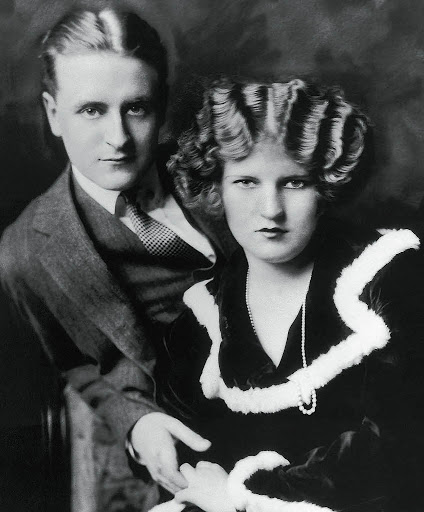
Below: F. Scott Fitzgerald with his wife, Zelda.


Louisiana

I spent most of yesterday driving down to Louisiana for the wedding of my best friend.  She’s getting married Saturday, but I have to get fitted for my suit since I am one of the groomsmen.  I could not leave until after lunch though, so I didn’t arrive until late. 

I had to wait until after lunch because we have a New Year’s traditional lunch with the family each year.  We cooked hog jowls (frying them like bacon) for wisdom throughout the year, collards and turnips (some family members like collards and some like turnips, so we cook both) for prosperity in 2013, black-eyed peas for luck, and chicken and dumplings because they are so damn good. Oh, and I almost forgot, we made cracklin’ cornbread to go with the greens and peas.

By the way, I plan to have as much fun as I can while in New Orleans this weekend for the wedding.