Monthly Archives: March 2013
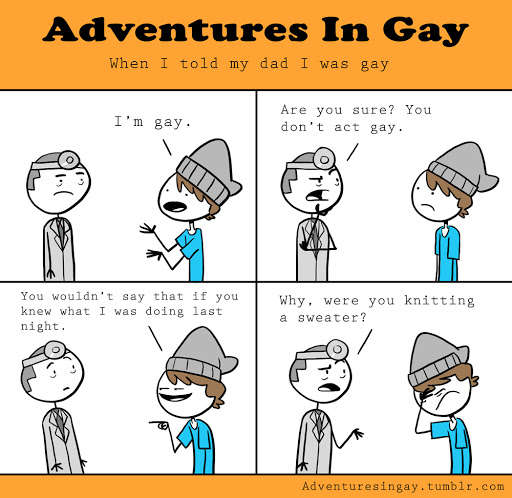
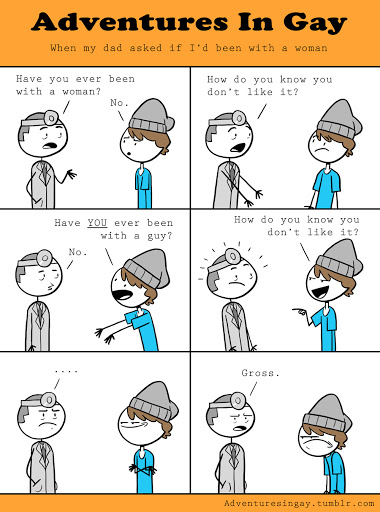
Adventures in Gay
The Voice
As gay men, I think it is that “voice” that told us one day, “You are gay!” Though we may not have believed the voice at first, we have come to know that it speaks the truth. Remembers “just listen to the voice that speaks inside.”
Shel Silverstein
Shel Silverstein was born on September 25, 1930 in Chicago, Illinois and began writing and drawing at a young age. He became a cartoonist, playwright, poet, performer, recording artist, and Grammy-winning, Oscar-nominated songwriter.
Silverstein is best known as the author of iconic books of prose and poetry for young readers. His works include such modern classics as Lafcadio: The Lion Who Shot Back (1963), The Giving Tree (1964), A Giraffe and a Half (1964), The Missing Piece (1976), and The Missing Piece Meets the Big O (1981). His immensely popular poetry collections are Where the Sidewalk Ends, a 1974 Michigan Young Readers Award winner; A Light in the Attic, recipient of the School Library Journal Best Books Award in 1982; Falling Up (1996); and Don’t Bump the Glump! And Other Fantasies, which was originally published in 1963 and reissued in 2008. Runny Babbit, a posthumous poetry collection of spoonerisms, was conceived and completed before his death.
Silverstein’s books, which he also illustrated, are characterized by a deft mixing of the sly and the serious, the macabre, and the just plain silly. His unique imagination and bold brand of humor is beloved by countless adults and children throughout the world. He died in May 1999.
Oz the Great and Powerful
In spite of the impressive candy-colored landscapes seen in wide shots, too many scenes take place in front of green screens, which makes the production somehow feel hollow and artificial. This is a dramatic difference from the iconic 1939 Judy Garland film, which still boasts one of the most awe-inspiring and lavish set productions ever.
‘The Wizard of Oz’ was explicitly supposed to be Dorothy’s dream, which explained why the same actors were used in both the black-and-white and color sequences. ‘Oz the Great and Powerful’ is explicitly not a dream; we’re supposed to accept Oz as real. Yet a few actors, or their voices, are still reused, and Diggs doesn’t appear to notice.
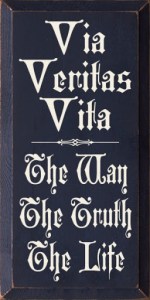
Via, Veritas, Vita: A Reprise
Jesus saith unto him, I am the way, the truth, and the life: no man cometh unto the Father, but by me. —John 14:6
Joe — I also just stumbled across the articles, and although I haven’t had a chance yet to read all of them, I plan to.
My father was a Church of Christ minister who had six kids. Of the four boys, one died at 13, and the rest are all gay. I struggled for years…married, had kids, etc. After I got divorced, I was finally able to live my life freely, but once I came out, I was lovingly escorted out of the church. There were other people at that congregation — “liberal” by CofC standards — who everyone knew were gay, but the rule was as long as it wasn’t official, they were welcome.
Ultimately, and somewhat ironically having spent decades drawing a distinction between the two groups, I joined the United Church of Christ. It still breaks my heart that I have been rejected by the church in which I spent 40 years, and I still have a lot of affection for the Church of Christ. My husband mentioned the other day that I seem to know where the local Church of Christ in every neighborhood in Southern California, and that wherever we travel, when we pass a Church of Christ I always point it out.
God bless you, in a very literal sense, for what you are trying to do. It’s very brave, and very important. If the Church of Christ came around on this issue, would I go back? In a heartbeat. But the more of us who leave, the less likely that is to happen….
Come back to the Church. Let go of the strange life. You can love other men, you just can’t have sex with them. Christ loved many men, but never lusted after them. John laid on His breast,Paul told the men to greet one another with a heavenly kiss (in the middle east it’s still often practiced), so you can even kiss a man in Amish churches and churches that are liberal Amish. Just let go of the lust, you aren’t 21 ya know. Let go.
Lost in Thought
Lost in a thought
So long since he
Felt his touch
His fingers tracing
His curves
His lips imprinting
On his neck
His teeth gently
Nipping at his skin
He awaits his return
Waiting to have his
Heart made whole again
White T-Shirt
Beads for Life
This weekend, I had the pleasure of attending the Azalea Storytelling Festival in LaGrange, Georgia. Returning to the festival this year was master storyteller and perennial favorite, Donald Davis. Also performing were the popular storytellers Carmen Deedy, Eric Litwin, Connie Regan-Blake and Ed Stivender. This group of celebrated storytellers, musicians and recording artists brought their unique voices and stories to the campus of LaGrange College and the excellent performance venue of Callaway Auditorium. Carol Cain, a well known teller in her right, acted as master of ceremonies. Since 1997 the Azalea Storytelling Festival has brought nationally and regionally acclaimed storytellers to LaGrange, Georgia. Folks from near and far gather in Callaway Auditorium to hear stories — stories so good that they seep into the walls and make the building feel better. Laughter proved to be a key ingredient of these remarkable performances. Under the guidance of the Lafayette Society for Performing Arts, the festival was a wonderful experience.
One of the storyteller was Connie Regan-Blake who was invited to visit Uganda by “Bead For Life”(www.beadforlife.org), an NGO helping women lift themselves out of extreme poverty. Many of them are displaced refugees from the horrors and atrocities of civil war in northern Uganda and are dealing with the ravages of AIDS. Connie was welcomed into their homes and hearts as if she was family and she listened to their profound and transformative stories. The video below is Namakasa Rose’s story.
These beads are quite beautiful and i encourage you to find out more about them. To learn more about Connie, go to: www.StoryWindow.com.
The story of how BeadsforLife began:
Less than a dollar a day. They soon learned that Millie was originally from Northern Uganda, but had been driven from her home by Joseph Kony and the Lord’s Resistance Army (LRA). To protect her children from being kidnapped as soldiers, Millie fled to the Kampala slum. To support her family, she worked in a rock quarry crushing stones into pebbles with a hand mallet. In order to earn enough for one meal a day, her children often had to work alongside her in the hot, dusty quarry. For their efforts, the family earned less than a dollar a day. Millie said she loved to roll beads out of recycled paper, and proudly showed Torkin, Ginny and Devin a bag full of her unique hand-made necklaces. She also shared that she had no market for her jewelry.
Paper beads bring hope. Our co-founders admired Millie and bought a few of her necklaces, wearing them around Kampala in support of her handiwork. Immediately, others began to notice the distinct jewelry and asked where they had been purchased. Believing there was a market for the paper jewelry, they returned to Millie’s slum. With her help, they met with a hundred more women who knew how to make paper beads, purchasing a few necklaces from each. At this time, they had no way of knowing that their lives, and the lives of so many impoverished Ugandans, were about to change.
Birth of the bead party. Once back in the US, our co-founders shared their experiences with others. Through word of mouth, women across North America began to purchase the beads and were captivated by the stories of resilient Ugandan women lifting their families out of extreme poverty. As suspected, there was a market for the hope-filled, hand-rolled beads and their inspirational creators after all! In September 2004, BeadforLife was officially born. At the time, our dream was to provide opportunities for a few dozen women from Millie’s slum. Today, we provided opportunities for thousands. To see how our dream has grown, visit Our Work in Uganda.
The Cole Porter Songbook
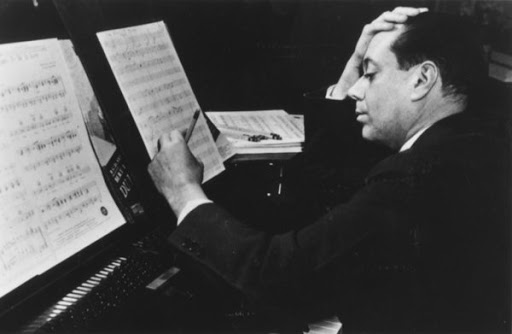
Cole Porter
After a serious horseback riding accident in 1937, Porter was left disabled and in constant pain, but he continued to work. His shows of the early 1940s did not contain the lasting hits of his best work of the 1920s and 30s, but in 1948 he made a triumphant comeback with his most successful musical, Kiss Me, Kate. It won the first Tony Award for best musical.
Singer Susannah McCorkle once said “Cole Porter was the sexiest songwriter. And his songs are infused with this sexual passion and longing that no other great songwriter captured, which is one reason he’s very close to my heart. It’s like having a new love affair all over again to sing a Cole Porter song.” I couldn’t agree more.
Cole promoted the legend that he fought in World War I, however, there seems to be a lot of speculation about what Cole did during these years. It is fairly certain that he served as a part time volunteer behind the lines. shortly thereafter, he met wealthy American socialite Linda Lee Thomas. The survivor of a physically abusive first marriage, Linda was happy to overlook Porter’s sexuality in exchange for his witty companionship and a share in his glamorous life. He in turn found in Linda the sophisticated, protective life partner he needed, with a personal fortune even greater than his own. The Porters married in 1919, maintaining a joint social calendar but separate bedrooms. Although their union had its rocky moments and occasional break-ups, Cole and Linda remained, in their own way, devoted to each other. Linda’s patience was extraordinary, and Cole knew how put that patience to the test.
After a brief, frustrating affair with ballet star Boris Kochno in 1925, Porter limited his sex life to emotionless encounters with sailors and prostitutes. He found that sex, like other pleasures, could be far less complicated when it was purchased. Porter’s old friend Monty Woolley often joined him to cruise New York City’s waterfront bars and bordellos. The male prostitutes and lower-class tricks they picked up in these places were not likely to talk and would not be believed if they did. The two friends were usually successful in their quests for fresh diversion, at least in part because of their boldness. One night, a young sailor they drove up to on the street asked outright, “Are you two c**ksuckers?” Wooley smiled and said, “Now that the preliminaries are over, why don’t you get in and we can discuss the details?”
After Cole discovered the hedonistic lifestyle of Hollywood, his pool parties and gay escapades became so outrageous that Linda left him for several years. She returned when a horse riding accident shattered Cole’s legs. In his later years, Porter had several relationships with handsome younger men, but none of these ever eclipsed his relationship with Linda. He limited his sexual encounters to young men who accepted payment in return for their silence. If they spiced things up with a little verbal abuse, Porter found it all the more diverting.
Porter became a center of the social whirl wherever he went, particularly among the homosexual elite. He was the only person who ever threatened director George Cukor’s pre-eminence in Hollywood’s gay circles. In George Cukor: A Double Life (St. Martin’s: NY, 1991 and is currently being reissued on March 22, 2013), biographer Patrick McGilligan writes that these competing world-class egos were called “the rival Queens of Hollywood,” but concedes that “Porter’s was perhaps the more privileged invitation.”

While Cole kept his sex life a private matter, he had no qualms about using homosexual references in his work. But, as with almost everything else, he did it with singular style.
In the “coded” years, Cole amused himself by pitching his words on two levels, so that the “coach party” audience was content with the obvious, while the “in” group relished the real meaning.
– Graham Payne, My Life with Noel Coward