Monthly Archives: October 2013

From Atum to Kinsey

20131020-232852.jpg

Since we are on the discussion of masturbation, I thought I would write a post on the history of masturbation. As an historian, I always find the history of almost any subject very interesting. So I did a little research on the history of masturbation.

It seems likely masturbation has always been the most common and universal of human sexual experiences – but only in recent decades have attitudes toward sexuality in general, and masturbation in particular, begun to improve. There never has been a “golden age” of sexual freedom and tolerance, though specific taboos have always varied widely. The frequent condemnation of masturbation apparently stems from a surprisingly simple mandate: there’s safety in numbers. For centuries, all forms of sexual pleasure unlikely to result in population increase have routinely been denounced as wrong. Which is the major reason that I believe that in most societies there is a prohibition on homosexuality.

In order to understand current attitudes, it helps to examine earlier human cultures. Before history, which is defined by the existence of written records, the evidence proves sketchy. Prehistoric petroglyphs and rock paintings from around the world evidently depict male masturbation, though these are entirely matters of interpretation. Most early people seem to have connected human sexuality with abundance in nature. A clay figurine of the 4th millennium B.C., from a temple site called Hagar Qim on the island of Malta, depicts a woman masturbating. However, in the ancient world depictions of male masturbation are far more common. A figure of a masturbating male from a Neolithic cemetery in Greece is roughly contemporary with the Malta image and likewise suggests fertility rites. From the Sumerians, who invented the first written Western language, we find references to the Mesopotamian god Enki masturbating, his ejaculation filling the Tigris River with flowing water.

Male masturbation became an even more important image in ancient Egyptian cosmology. When performed by a god it could be considered a creative or magical act, but a mortal human masturbator might not receive such approval. According to one major creation myth the god Atum appeared on the Primordial Mound out of the void of Nu. As the first “thing” in the midst of nothingness, Atum relieved his loneliness by masturbating. His ejaculation resulted in the appearance of the first god and goddess, Shu and Tefnut, who became the parents of all other elements of the world. An alternate version indicates that the god Ptah, architect of the universe, maintains cosmic order through continual masturbation. The yearly flooding of the Nile, on which Egypt depended entirely, was also said to flow from the secretions of the Nile god Hapy. Min, the god of male potency, was always shown standing with an immense erection, often held in his own hand. Min represented the sexual potency of the Pharaoh, the Great House, an aspect of the Good God considered necessary to the fertility of the Nile valley. During the annual festival of Min men engaged in public acts of masturbation, but otherwise such exhibitionism would not have been tolerated. So even in that pleasure-loving culture the attitude toward masturbation depended entirely upon context.

Far Eastern cultures are sometimes viewed as more sexually tolerant, but this may often be a case of social cosmetics. “Out of sight, out of mind” can mean that human nature (including sexual behavior) is tacitly accepted, so long as it is kept private or unseen. A Hindu myth from India described the phallic god Shiva being masturbated by Agni, the god of fire, who swallowed his semen. Agni then gave birth to Skanda, a god of male beauty. But the Hindus, like later Buddhists, often denounced attachment to sexual pleasure as a cause of human suffering. The oldest Chinese traditions of Taoism equated certain forms of sexual pleasure with generating chi, or life force. As “cultivation,” prolonged masturbation without ejaculating was believed to enhance health and well being. At the same time, frequent ejaculation was considered a waste of this same precious chi.

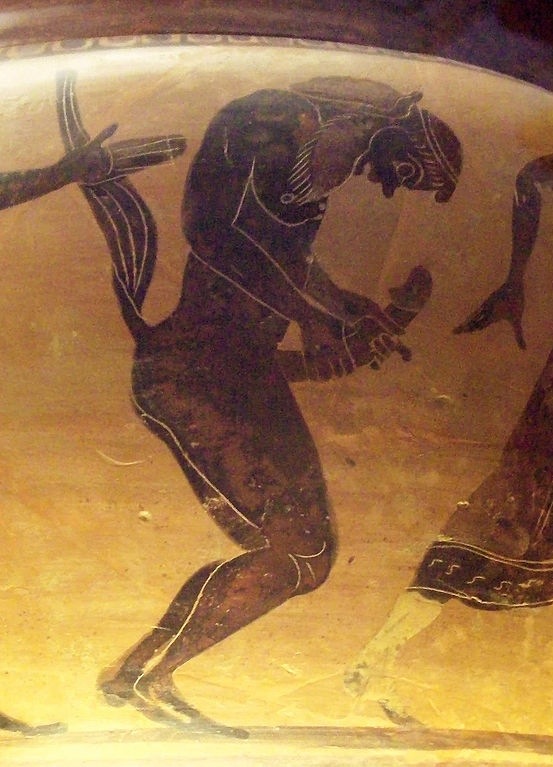
The ancient Greeks had a more natural attitude toward masturbation than the Egyptians did, regarding the act as a normal and healthy substitute for other forms of sexual pleasure. They considered masturbation a safety valve against destructive sexual frustration. Numerous vase paintings depict male masturbation as a regular part of daily life, neither a virtue nor a vice. Greek culture was extremely phallocentric, meaning the erect penis was a major object of veneration, both spiritually and in daily life. Women did not enjoy a high status in the male-dominated culture, being primarily confined to roles of breeding and motherhood. The society was largely segregated by gender, men spending most of their time with men and women with women – yet the Greeks considered procreation and the family unit of supreme importance. They tolerated male masturbation in daily life only to the extent that it did not interfere with the stability of the family or protection of the state.

In a wonderful Greek myth, Hermes invented masturbation. He taught the practice to Pan, so that the woodland god no longer suffered his habitual frustration. Thereafter Pan learned to give pleasure to others as well as to himself.

More unusual for the ancient world, the Greeks also dealt with female masturbation in both their art and writings. Having ample reason for frustration, Greek women were often depicted using dildos or artificial phalluses made of leather, wood, or ivory for their self-satisfaction. The city of Miletus in Asia Minor was well known as the source of the best such instruments, as was the Island of Lesbos, the home of the legendary poet Sappho.

When the Roman Empire began dominating the Western world, an obsession with distinguishing virtue and vice became increasingly important. Though we often consider the Romans decadent, in fact they practiced a kind of prudish hypocrisy. The Latin term masturbari was only one among half a dozen terms they used for the act. Originally it meant only to rub by hand or to agitate, without negative connotations. Over time, however, the term gained associations of disturbance and defilement. Some authors came to associate the term with manus sinistra, meaning the left hand, indicating uncleanliness, since the Romans linked the left hand with elimination functions. The cosmopolitan civilization of Rome had no consistent attitudes toward sexuality, only a growing intolerance for diversity and concern over distinguishing virtue and vice.

Sexuality began to suffer a stigma with the growing influence of the Christian Church. Such figures as the apostle Paul (of the first century), Augustine (A.D. 354-430), and Thomas Aquinas (1225-1274) contributed to increasingly negative attitudes toward the human body and all forms of pleasure in general. Paul fostered misogyny, or anti-female sentiments, starting a trend which has been interpreted by many as condemning all forms of sexuality other than heterosexual intercourse for the purpose of reproduction. This continued an existing philosophical trend of separating the physical and the spiritual, considering them as conflicting opposites. Augustine institutionalized the religious distaste for sexual union itself, while Aquinas particularly vilified homosexuality. An early medieval manual of punishments to be bestowed by priests prescribed severe penalties for men over 20 who engaged in mutual masturbation. Men under that age were punished less severely, and boys under 14 engaging in solo masturbation were punished the least. As I wrote in yesterday’s post, the Bible itself never mentions masturbation specifically: the “sin” of Onan was clearly coitus interruptus, or early withdrawal to prevent conception. Still, this misconception persists.

Islam and Judaism share common roots with Christianity, yet both of these religions deal with masturbation quite differently. They maintain their own rigidly prescribed attitudes toward sexual behavior, advocating only heterosexuality within the context of marriage. Yet neither religion consistently condemns masturbation as Christianity has, in practice taking a more Eastern approach of tacitly accepting some aspects of human nature. On a more encouraging note, some Native Americans call masturbation by their young people “warming the heart.”

Unfortunately in the Western world attacks on masturbation grew increasingly irrational. A 1710 work titled “Onania, or the Heinous Sin of Self-Pollution,” blamed venereal disease on masturbation. By the 19th century the cereal magnate John Harvey Kellogg declared “sex for anything but reproduction” to be “sexual excess.” Kellogg and others began advocating routine circumcision of males as a deterrent to masturbation. Sylvester Graham invented the Graham cracker, believing it would diminish male sexual desire. (Though with s’mores being a popular camping treat, I don’t believe that it ever prevented randy boys/men from experimenting sexually on camp outs.) A variety of awful devices were employed in attempts to forcibly prevent masturbation. Much worse, female circumcision, or the removal of the clitoris, was sometimes advocated by the Victorians, preventing many females from ever experiencing orgasm. In 1864 Ellen G. White published a book claiming that the “solitary vice” led to everything from retardation to insanity and cancer.

As late as 1940, a pediatric text titled “Diseases of Infancy and Childhood” proclaimed masturbation to be harmful. Research suggests an overall agenda behind such anti-pleasure sentiments, the deeper motive being to increase population at all costs by controlling and denying non-reproductive erotic outlets. The more of “us” there are, the less we need to feel threatened by “them.” Until the last century, this kind of reasoning made at least some partial, rudimentary sense. But in our times of runaway overpopulation, when sexuality no longer remains tied to reproductive imperatives, it makes no sense at all.

Beginning with the Kinsey Report of 1948, masturbation has finally been demystified and even discovered to be beneficial. In 1966 Masters & Johnson revealed the practice to be virtually universal in North America, cutting across all boundaries of sex, age, race, and social class. In 1971 Goldstein, Haeberle & McBride determined masturbation to be the most common form of sexual activity among humans. Dr. Joycelyn Elders was far ahead of the political establishment in her 1993 suggestion that masturbation be taught in our schools. She is now being vindicated: Accurate information is being widely disseminated to autonomous learners through the “school” of the Internet.

Though ignorance and superstition linger, healthy and accepting attitudes toward masturbation are increasing. The eminent neuropsychologist James W. Prescott has said: “Deprivation of physical affection in human relationships…constitutes the single greatest source of violence in human societies.”

Adapted from “MASTURBATION THROUGHOUT HISTORY” By Bruce McFarland (http://www.jackinworld.com/resources/general-articles/masturbation-throughout-history)



Be Your Own Master

Then Judah said to Onan, “Go in to your brother’s wife and perform the duty of a brother-in-law to her, and raise up offspring for your brother.” But Onan knew that the offspring would not be his. So whenever he went in to his brother’s wife he would waste the semen on the ground, so as not to give offspring to his brother. And what he did was wicked in the sight of the LORD, and he put him to death also.

Genesis 38:8-10

This is not my usual Sunday post, but I think it is certainly worth discussing. My post on Friday (Possible TMI…) mentioned that I had spent Thursday night drinking wine, watching porn, and masturbating. Some people might think that is contrary to my character as a Christian. As one anonymous commenter wrote:

Joe, As Christian, how do you reconcile masturbation and faith? As Catholic, I get incredibly guilty for wanking. Would like to know what you think and your experience.

Our bodies are a wonderful thing, and God created it as such to help us in many ways. As a Christian, though not Catholic, I do not believe that masturbation is a sin, though it can turn sinful. I didn’t feel that I could fully discuss this issue in a reply to a comment, so I promised to devote my Sunday post to the issue at hand (pun not intended).

So what does the Bible say? Many people would point to the story of Onan from Genesis, quoted above. Onan’s name is often used synonymously with masturbation, i.e. onanism. In the scripture, Onan was supposed to dutifully sleep with his late brother’s wife to produce an offspring for his brother. However, Onan decided that he did not want to produce an offspring that would not be his, so he ejaculated on the ground. There is great debate surrounding this scripture as an argument against masturbation, because Onan did not actually masturbate. He did actually have sex with his brother’s wife. The act he committed is actually called “coitus interruptus.” Yet, Christians who use this scripture refer to the self-pollution of Onan as an argument against the act of masturbation. Many Christian pastors have tried in vain to find mention of masturbation in Scripture so they can condemn and forbid it. Unable to find any verses on the matter, some have foolishly used the story of Onan in Genesis 38:6-10 as their proof text. To argue against masturbation with Genesis 38:6-10 is as ludicrous as arguing for masturbation with Ecclesiastes 9:10, which says, Whatever your hand finds to do, do it with all your might.

Despite the widespread approval and practice of masturbation, people persist in feeling varying degrees of guilt about it. A 1994 University of Chicago survey used as the basis for the book Sex in America cites that about half of all men and women who masturbate feel at least a little guilty at least some of the time. The Janus Report on Sexual Behavior released in 1993 cited that just 13 percent of Protestants think masturbation is a natural part of adult life.

Masturbation is not sinful behavior in of itself nor is it a transgression. God has created us as emotional, spiritual, intellectual and sexual beings. He has created these capacities in the context of both relational purpose and self-sufficiency. Meaning we are social creatures – meant to thrive in relationship with others. At the same time, we are also individual creatures – and when not able to be in relationship have capacity to meet our own needs for certain periods of time depending on age and developmental stage.

We know we are born and die sexual beings. The capacity for marital sexuality only occurs through a set period of adult life – if it happens at all. Therefore, isn’t it wonderful that God would create a self-regulatory system where we can count on ourselves to experience the benefits of sexual release when it is not appropriate for us to be in sexual relationship with another person? Isn’t it wonderful that we would have a natural drive to self-explore – getting to know ourselves – as we prepare to share a sexual life with another person? If approached within this context, masturbation can be used to help our teens and single adults keep the law of chastity in ways that empower themselves regarding knowing and controlling their sexual drives/cycles and owning their sexuality in non-shaming and normative ways. For single adults who are not married, masturbation provides this release and its healthy ramifications. It can help with loneliness when single.

There are health benefits associated with masturbation:

1. It prevents cancer. A 2003 Australian study found that men who ejaculated more than five times a week were a third less likely to develop prostate cancer. Disease-causing toxins build up in your urogenital tract and when you masturbate, you flush these toxins out of your system, says Brame.
2. It makes your erections stronger. As you age, you naturally lose muscle tone … even down there. Regular sex or masturbation works out your pelvic floor muscles to prevent erectile dysfunction and incontinence.
3. It increases your immunity. Ejaculation increases levels of the hormone cortisol, according to Jennifer Landa, M.D., a specialist in hormone therapy. Cortisol, which usually gets a bad rap as a havoc-wrecking stress hormone, actually helps regulate and maintain your immunity in the small doses. “Masturbation can product the right environment for a strengthened immune system,” she says.
4. It boosts your mood. Masturbating releases a slew of feel-good neurochemicals like dopamine and oxytocin that lift your spirits, boost your satisfaction, and activate the reward circuits in your brain.

I understand that like any normal human tendency, masturbation can become an unhealthy behavior. This is also true for eating – yet we don’t couch our physical desire to nourish ourselves with food as sinful. I believe it is unhealthy for masturbation to be done in a way which interferes with your daily functioning or quality of relationships.

As a single man, I, like most other men, have urges and sexual needs/wants. I believe that God works in mysterious ways, thus allowing us sexual release as a solo activity. So let me look,at this issue from a more theological perspective. I will turn to Rachel Held Evan’s blog and her guest blogger, Richard Beck, whom she had write about the subject. Richard Beck is Professor and Department Chair of Psychology at Abilene Christian University. (Abilene Christian University is a private university located in Abilene, Texas, affiliated with Churches of Christ. Most Church of Christ schools require their faculty to be active members of the Church of Christ.) He is the author of Unclean: Meditations on Purity, Hospitality, and Mortality and The Authenticity of Faith: The Varieties and Illusions of Religious Experience. Richard is married to Jana and they have two sons, Brenden and Aidan. He blogs at Experimental Theology.

First, I’d like to bring up the issue of Internet pornography and its relationship to masturbation. With the rise of Internet porn, the consumption of pornography has reached unprecedented levels. And it’s difficult, to say the least, to reconcile that consumption and the support it gives to the adult entertainment industry with the Christian commitments of justice and love. To be sure, many will battle with pornography all their lives, like an alcoholic fights daily for sobriety. There must be grace for our failures, but this is a battle that must be fought.

And beyond issues related to justice, psychologists are only just beginning to grasp the full impact of pornography upon our brains and how those effects are creating sexual and relational dysfunction. For an introduction to the issues psychologists are beginning to examine see Gary Wilson’s widely-viewed TED Talk.

That issue duly noted, let me get to my main points:

I think it is important to recognize how masturbation functions in the life of those who are single. And even for those who eventually get married, we need to note how marriage has become increasingly delayed in Western cultures. A 2011 Pew Report found that the median age of (first) marriages was 29 for men and 27 for women. In the 1960s the median averages for both genders was in the early 20s, and in ancient cultures we married as teenagers. Given this delay, how are we to manage our sex drive from the onset of puberty to wedding night? To say nothing of the sexual challenges involved in lifelong singleness.

All that to say, masturbation may be a vital aspect in how single persons cultivate and achieve sexual chastity. That is, masturbation may be a critical part in how a single person achieves emotional and sexual well-being if they hold to an ideal that sexual relations should only take place within a covenanted, life-long, monogamous relationship.

In short, I don’t think the physical act of masturbation should be moralized. The real issue in this conversation, the big elephant in the room, is Jesus’ prohibition against lust (cf. Matt. 5.27-28). Masturbation per se might not be a sin but what about the attendant lust? Can you masturbate to the point of orgasm without lust being a part of that experience?

And yet, I think this observation shifts the topic away from masturbation toward a theology of lust. What does it mean to lust? Should transitory erotic feelings be considered lust? Or is lust something more obsessive, persistent, greedy, covetous, acquisitive, and possessive in nature?

Because if transient erotic feelings are not lust then let me make a somewhat counterintuitive point: masturbation might be a great tool to combat lust.

Sexual arousal can be come psychically consuming, and debilitating, if not given a quick physiological outlet. We’ve all experienced this. When sexually aroused, it’s hard to concentrate on anything else. Our mind is fixated on the object of arousal. And trying to repress these feelings often exacerbates them. How, then, to get past these feelings and impulses? Physiological release can help here. Masturbate, clear your head, and move on with your day. When masturbation is treated in this almost perfunctory manner, as a physiological catharsis, it can be a very healthy means of quickly ridding yourself of unwanted sexual feelings and distractions.

To be sure, if masturbation isn’t being used in this perfunctory manner and is being accompanied by regular and possessive fantasies toward someone who isn’t, say, your spouse, then more might need to be said, (along with what I said above about pornography). But again, the issue then is less with masturbation than lust and how that lust might be symptomatic of relational issues that need attention.

Remember, we need to master our behavior, or else sin will master it for us. Even a good thing can become sinful without the right heart. Even if we don’t believe that masturbation is a sin, if it is controlling us then it is a sin.

1 Corinthians 6:12 –”All things are lawful for me,” but not all things are helpful. “All things are lawful for me,” but I will nor be dominated by anything.

Even though there are scriptures used as an argument against masturbation, they do not necessarily make masturbation as a sin very clear. Yet, it is important that a person look at the reasons for masturbation to see if the desire behind the act is actually a sin. Some Christians believe that, because masturbation does not hurt others, it is not a sin. However, other Christians ask a person to look deeper within to see if masturbation is building a relationship with God or taking away from it.

I see masturbation as a release. Yes, lust is involved, which is where the porn comes into play. Do I believe this separates me from God? No, I don’t believe it does. I do not sleep around with every man I meet, not that I meet that many. I also don’t have anyone to whom might be a potential partner. Therefore, I masturbate. It curves my lust, makes me a little less lonely, and it boosts my mood so that I remain a more positive individual. I do not find masturbation to be a sin; otherwise, there will be no men in heaven and relatively few if any women. I’m sure there are some people who’ve never masturbated, but they are few and far between.

Related Sources:

-Christians & Masturbation: Seven Perspectives – Rachel Held Evans (rachelheldevans.com/blog/christians-masturbation)

-Masturbation And The Bible by Lambert Dolphin (http://www.ldolphin.org/Mast.shtml)

-Bible Verses About Masturbation (http://www.kingjamesbibleonline.org/Bible-Verses-About-Masturbation)

-My Official Stance on Masturbation by Natasha Helfer (https://www.patheos.com/blogs/mormontherapist/2012/08/my-official-stance-on-masturbation.html)


Moment of Zen: A Beautiful Smile

20131018-230655.jpg


Possible TMI…

20131017-222521.jpg

Home Alone + Bottle of Wine + Porn = A Fun Night

I had the house to myself tonight, since my roommate was away, so I took full advantage to get a bottle of wine (I rarely drink alone, but just wanted some wine), hang out in my underwear (ok, I was actually naked for most of the time), and watch a little bit of porn. We all masturbate, it’s part of life, and I needed a little stress release and decompression. I had a good, make that a great, night, but it also means that I wasn’t in the frame of mind to write a substantial post. As I am writing this I am a bit tipsy. Usually, I try not to write a post when I am drunk (not that I drink all that often), but what the hell! I enjoyed myself and wanted to share. TMI? Probably…


In their own words: Why students, educators support LGBT youth and #SpiritDay

Spirit Day, this October 17th, is about uniting in solidarity with LGBT youth everywhere by standing against bullying. A few of the students and educators participating this year are making their voices heard, explaining why it’s important to support the youngest members of the LGBT community through grassroots initiatives.

GLSEN has found that of the many students who reported not having supportive staff members at their school, more than three-fourths of them feel unsafe in their school. GLSEN further reported that in the past year, 81.9% of LGBT students were verbally harassed because of their sexual orientation and 63.9% were verbally harassed because of their gender expression. GLAAD recently brought you the stories of the tragic results of bullying for teen girls in Florida and Nevada.

High schools, colleges, and graduate schools throughout the country have signed on as Spirit Day partners. A few of them have spoken with GLAAD about their interests in going purple and raising awareness about anti-LGBT bullying.

DOLMSU_0.pngJennifer Carruth, a student at Mississippi State University, is a member of her school’s Safe Zone Advisory Board and president of the LGBTQ and Ally Service Sorority Delta Omega Lambda. Speaking to the importance of ending anti-LGBT bullying, she told GLAAD, “There are so many tragic endings that can be prevented if allies would raise their voices and protest bullying, educate others on LGBTQ issues, and advocate for LGBTQ youth… No one should have to live a life of fear and isolation because they are afraid to be who they are. Everyone deserves the right to shine, enjoy life, and be their true self.”

Spirit Day is an opportunity for a diverse range of communities to come together in their support for LGBT youth. Stonehill College, a Massachusetts school rooted in Catholicism, is one such example.

stonehill%20edited_0.pngMary Charlotte Buck, Student Government Associations’ Executive Board Vice President and an ally to the LGBT community, played an integral role in partnering Stonehill with GLAAD for Spirit Day. Mary Charlotte, who has an extensive background in working with teenagers, sees an important link between her school’s traditions and allying with the LGBT community. She said, “I think respecting, honoring, and loving the inherent dignity of all people is one of the most important aspects of our Catholic Identity, and I’m psyched we’ve chosen to recognize such a great day and cause! I’m proud to say we’ll be joining the schools supporting this day.” Faith based organizations from a variety of religions and denominations are going purple this year.

i%20am%20an%20educator%20edited.pngFaculty and students at Connecticut College, which recently ranked as one of the top 25 LGBT-friendly schools in the country, are going purple this year, too. Carol Akai is an Assistant Professor with the school’s Human Development department who specializes in children’s developmental psychology. She provided GLAAD with her professional opinion on supporting LGBT youth.

“One of the most compelling aspects of human development is our enormous capacity for change,” said Professor Akai. “As a society, we are at the beginning of what I hope is a paradigm shift toward the insistence of just treatment for individuals with LGBTQ identities under every circumstance.”

Spirit Day is about creating a safe and supportive environment in which all kids, teens, and young adults are given the opportunity to flourish. Educating people on the daily struggles of our community’s vulnerable members is the key to ultimately strengthening our at-risk members as well as the cause at large.

Spirit Day initially launched four years ago when Brittany McMillan, then a high school student in Canada, took to Tumblr to promote remembrance of the young lives lost as a result of bullying. Now, Spirit Day has grown into an international movement and is a testament to young people’s transformative powers as agents of change.

Professor Akai added, “As today’s college students become scholars, I hope they will combine their academic knowledge with their generational influence to affect widespread change that replaces intolerance and ignorance with kindness and complex understanding.”

There’s still time for you and your school to get into the spirit by:

  • Turning your Facebook, Twitter and other profile photos purple atwww.glaad.org/spiritday and spreading the word by using hashtag #SpiritDay
  • Wearing purple on October 17th and encouraging classmates or coworkers to do the same
  • Uploading photos of you wearing purple to Facebook, Twitter, Instagram and Tumblr using hashtag #SpiritDay and Spirit Day graphics
  • Downloading the Spirit Day App
  • Educating your friends and family about bullying and the LGBT community
  • Getting your school, GSA, organization, etc. to become a Spirit Day partner

Time is running out to go purple on Spirit Day as a participant and partner, and to join the Facebook event! Sign up today and spread the word.


Spirit Day: Go Purple on October 17, 2013 for #SpiritDay

20131015-222640.jpg

I could not decide if I should post this tomorrow or today, but then I decided that if you are like me, you might plan your wardrobe at least a day in advance, so I decided to give you a head start.

Millions wear purple on Spirit Day as a sign of support for lesbian, gay, bisexual and transgender (LGBT) youth and to speak out against bullying. Spirit Day was started in 2010 by high school student Brittany McMillan as a response to the young people who had taken their own lives. Observed annually, individuals, schools, organizations, corporations, media professionals and celebrities wear purple, which symbolizes spirit on the rainbow flag. Getting involved is easy — participants are asked to simply “go purple” on October 17th as we work to create a world in which LGBT teens are celebrated and accepted for who they are. Learn more & go purple at www.glaad.org/spiritday.

Since I began teaching, whether as a professor’s teaching assistant, a substitute teacher, college instructor, or currently, as a high school teacher, I have always had LGBT students who feel more comfortable around me than their peers or other teachers. Most of those students have never known whether I am gay or not, but there is an intuition that allows us to find each other (most call it gaydar). Some have come to me and confided in me; others are just more relaxed around me. I always do my best to make sure that I have a welcoming atmosphere for all of my students, and I fight bullying at every turn.

When I was a student in high school, I had no one with whom to discuss issues such as sexuality or feelings of same sex attraction. Though by college, I was pretty sure I understood those feelings and in my early grad school years I came out, I wish I had been able to go to someone with whom I could discuss these issues. Being alone with my internal struggles, I began in my teenage years battling depression, which I still battle today. As I have said before on this blog, my depression got to the point that at 16 I took a handful of prescription medicine to end the suffering. I thank God each day that my stomach rejected those pills and over several hours I vomited them out of my system. I was incredibly lucky and stupid. Too many LGBT youth are not as lucky as I was, and we lose them to suicide each year.

By wearing purple tomorrow, you will be showing your support for the LGBT youth in your area. Most people won’t even realize why you are wearing purple, but as tech savvy as youth are today, the LGBT youth you come in contact with will most likely be aware of Spirit Day, so the subtlety of wearing purple will not go unnoticed by them. Sometimes that little bit of encouragement is all it takes for a kid to know that everything is going to be okay and that it does get better. Because of the politics of my school, I can’t be out, but I can be supportive in more subtle ways and make their school experience, at least in my classroom, a little better.

Getting involved is easy: Wear purple or go purple online on October 17th and help create a world in which LGBT youth are celebrated and accepted for who they are.


City That Does Not Sleep

20131014-211348.jpg

City That Does Not Sleep
Federico García Lorca
Translated by Robert Bly

In the sky there is nobody asleep. Nobody, nobody.
Nobody is asleep.
The creatures of the moon sniff and prowl about their cabins.
The living iguanas will come and bite the men who do not dream,
and the man who rushes out with his spirit broken will meet on the
street corner
the unbelievable alligator quiet beneath the tender protest of the
stars.
Nobody is asleep on earth. Nobody, nobody.
Nobody is asleep.
In a graveyard far off there is a corpse
who has moaned for three years
because of a dry countryside on his knee;
and that boy they buried this morning cried so much
it was necessary to call out the dogs to keep him quiet.
Life is not a dream. Careful! Careful! Careful!
We fall down the stairs in order to eat the moist earth
or we climb to the knife edge of the snow with the voices of the dead
dahlias.
But forgetfulness does not exist, dreams do not exist;
flesh exists. Kisses tie our mouths
in a thicket of new veins,
and whoever his pain pains will feel that pain forever
and whoever is afraid of death will carry it on his shoulders.
One day
the horses will live in the saloons
and the enraged ants
will throw themselves on the yellow skies that take refuge in the
eyes of cows.
Another day
we will watch the preserved butterflies rise from the dead
and still walking through a country of gray sponges and silent boats
we will watch our ring flash and roses spring from our tongue.
Careful! Be careful! Be careful!
The men who still have marks of the claw and the thunderstorm,
and that boy who cries because he has never heard of the invention
of the bridge,
or that dead man who possesses now only his head and a shoe,
we must carry them to the wall where the iguanas and the snakes
are waiting,
where the bear’s teeth are waiting,
where the mummified hand of the boy is waiting,
and the hair of the camel stands on end with a violent blue shudder.
Nobody is sleeping in the sky. Nobody, nobody.
Nobody is sleeping.
If someone does close his eyes,
a whip, boys, a whip!
Let there be a landscape of open eyes
and bitter wounds on fire.
No one is sleeping in this world. No one, no one.
I have said it before.
No one is sleeping.
But if someone grows too much moss on his temples during the
night,
open the stage trapdoors so he can see in the moonlight
the lying goblets, and the poison, and the skull of the theaters.

By Federico García Lorca, translated and edited by Robert Bly, and published by Beacon Press in Selected Poems: Lorca and Jiménez.

About Federico García Lorca

Lorca was an avante-garde homosexual Spanish poet and playwright who had a serious and obsessive affair with Salvador Dalí. Lorca, born near Granada, was considered the greatest Spanish poet of the twentieth century. He trained as a classical pianist, but also studied law, literature and musical composition. From his friendship with homosexual Spanish composer Manuel de Falla, Spanish folklore became his muse. Lorca’s early anthologies of poems were stylized imitations of the ballads and poems that were told throughout the Spanish countryside. When Romancero Gitano (Gypsy Ballads, 1928) was published, it brought him fame across the Hispanic world.

In 1919, García Lorca traveled to Madrid, where he remained for the next fifteen years. Giving up university, he devoted himself entirely to his art. He organized theatrical performances, read his poems in public, and collected old folksongs. During this period García Lorca wrote El Maleficio de la mariposa (1920), a play which caused a great scandal when it was produced. He also wrote Libro de poemas (1921), a compilation of poems based on Spanish folklore. Much of García Lorca’s work was infused with popular themes such as Flamenco and Gypsy culture. In 1922, García Lorca organized the first “Cante Jondo” festival in which Spain’s most famous “deep song” singers and guitarists participated. The deep song form permeated his poems of the early 1920s. During this period, García Lorca became part of a group of artists known as Generación del 27, which included Salvador Dalí and Luis Buñuel, who exposed the young poet to surrealism. In 1928, his book of verse, Romancero Gitano (“The Gypsy Ballads“), brought García Lorca far-reaching fame; it was reprinted seven times during his lifetime.

In 1929, García Lorca came to New York. The poet’s favorite neighborhood was Harlem; he loved African-American spirituals, which reminded him of Spain’s “deep songs.” In 1930, García Lorca returned to Spain after the proclamation of the Spanish republic and participated in the Second Ordinary Congress of the Federal Union of Hispanic Students in November of 1931. The congress decided to build a “Barraca” in central Madrid in which to produce important plays for the public. “La Barraca,” the traveling theater company that resulted, toured many Spanish towns, villages, and cities performing Spanish classics on public squares. Some of García Lorca’s own plays, including his three great tragedies Bodas de sangre (1933), Yerma (1934), and La Casa de Bernarda Alba (1936), were also produced by the company.

In 1936, García Lorca was staying at Callejones de García, his country home, at the outbreak of the Civil War. He was arrested by Franquist soldiers, and on the 17th or 18th of August, after a few days in jail, soldiers took García Lorca to “visit” his brother-in-law, Manuel Fernandez Montesinos, the Socialist ex-mayor of Granada whom the soldiers had murdered and dragged through the streets. When they arrived at the cemetery, the soldiers forced García Lorca from the car. They struck him with the butts of their rifles and riddled his body with bullets. His books were burned in Granada’s Plaza del Carmen and were soon banned from Franco’s Spain. To this day, no one knows where the body of Federico García Lorca rests.

When Federico García Lorca was executed by Spanish Fascists in 1936, one of the men on the death squad reportedly said that he had “fired two bullets into his ass for being a queer.” Although rumors of Lorca’s sexuality have persisted for decades, the historical interest in Spain’s most celebrated poet and dramatist has dealt mostly with the political significance of his murder. Known for his leftist politics and religious iconoclasm, he’s become the symbol of the crimes of the Spanish Civil War. Little is mentioned about Lorca’s sexuality beyond his romanticized love for Salvador Dalí. (Apparently, Lorca was “obsessed” with him; Dalí didn’t like to be touched.)

In a footnote to history, Manuel de Falla, who had become disillusioned with the Franco regime, tried but failed to prevent the murder of Lorca, his close friend. As a result, de Falla left Spain in 1939 for Argentina, never to return to his native country.


Sleeping In…

20131013-223704.jpg

I finally have a day out of school with nothing to do today. Thank you, Columbus for landing in the Americas, even if you died thinking that you had reached Asia. I will have to grade some papers today once I finally get out of bed, but at least I can grade with peace and quiet. I can’t believe that we’ve been in school for nine weeks already. I have to catch up on my grading so that I can get all of my grades posted. A teacher’s work is never done. However, I am going to enjoy sleeping late and cuddling with HRH this morning.

I hope everyone has a wonderful Columbus Day!


Fear Not!

20131012-215945.jpg

But now thus says the LORD,
he who created you, O Jacob,
he who formed you, O Israel:
“Fear not, for I have redeemed you;
I have called you by name, you are mine.
When you pass through the waters, I will be with you;
and through the rivers, they shall not overwhelm you;
when you walk through fire you shall not be burned,
and the flame shall not consume you.
For I am the LORD your God,
the Holy One of Israel, your Savior.
I give Egypt as your ransom,
Cush and Seba in exchange for you.
Because you are precious in my eyes,
and honored, and I love you,
I give men in return for you,
peoples in exchange for your life.
Fear not, for I am with you;
I will bring your offspring from the east,
and from the west I will gather you.
I will say to the north, Give up,
and to the south, Do not withhold;
bring my sons from afar
and my daughters from the end of the earth,
everyone who is called by my name,
whom I created for my glory,
whom I formed and made.”

Isaiah 43:1-7

In the Bible, the command “fear not” appears 65 times and another 200 times in different variations, such as “do not fear.” Of everything that commands us in the Bible, “fear not” might be the command that shows up most often.

This communicates two very important things. First, fear is probably the most common human condition. Second, it is the reaction to life least warranted by followers of Christ.

What do we fear? It might be, if you are in the closet, that we fear that someone will find out we are gay? We might fear how people will react to finding out we are gay. There may be other fears in our lives. We might fear that a financial setback will threaten our future. Or, maybe we fear the health of ourselves or loved ones. We might have anxiety over our future and what it may hold. There are many things in life we might fear, if we don’t trust in God.

Whatever our fear may be, we have an answer, and it’s right above in the scripture for today. The question we must ask ourselves is how much do we want to overcome our fears? Following Christ gives us a way.

Israel’s long history of oppression, captivity, and discrimination would seem to warrant a natural inclination to be fearful. Even with all of the wonderful, amazing miracles and moments of Israel’s deliverance from God, the prophet now delivers (verses 1, 5a, 6b, 7) one of the most beautiful and hopeful messages recorded. Yet it is not just for the nation of Israel; as children of God, we feel it resonates in our own hearts too.

But now thus says the LORD, he who created you, O Jacob, he who formed you, O Israel: “Fear not, for I have redeemed you; I have called you by name, you are mine….Fear not, for I am with you…bring my sons from afar and my daughters from the end of the earth, everyone who is called by my name, whom I created for my glory, whom I formed and made.”

Pay close attention to verse 4: “…you are precious in my eyes, and honored, and I love you…”

How is it possible when we recognize just how valued and loved we are, and when we see the hand of God in our life’s journey, we continue to struggle with fear? It may be because as LGBT Christians we are often told by congregations that we are not wanted and that God does not love us. However, go back and read the scripture again. Is there any mention of who God loves and who he doesn’t love? No, and that is because God loves all of us and we are all worthy of His love.

The dangers, afflictions, and challenges we face will not destroy us. Instead, God tells us “When you pass through the waters, I will be with you; and through the rivers, they shall not overwhelm you; when you walk through fire you shall not be burned, and the flame shall not consume you.” (Isaiah 43:2). This what God tells us, and God cannot lie.

So, fear not,because God has redeemed us, and because we are God’s children.


Moment of Zen: Nature

20131011-212754.jpg