Monthly Archives: July 2014

Postcard from the Edge

20140710-233956-85196259.jpg

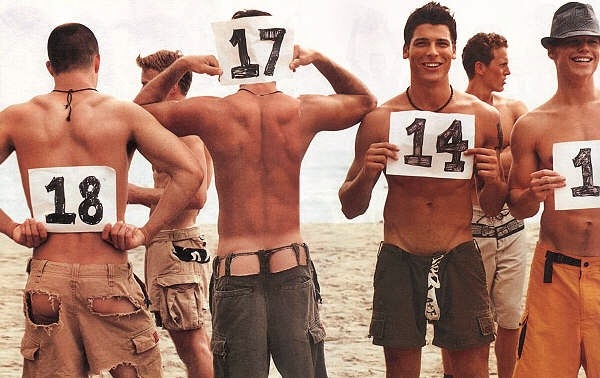
How many days does it take a postcard to reach Minnesota from Mexico? Eighteen days, seventeen days, fourteen days? How about forty-one days! While I was on my cruise to Mexico, I sent a postcard to a friend of mine. It was mailed May 28th. I had bought the postcard in Chichen Itza, and tried to mail it in Cozumel, but we didn’t want to go all the way to the post office in the city center to mail a letter, so I asked guest services on the ship to mail it. One of the guys there was taking the mail before the ship left, and he said he’d mail it for me. Now grant it, he may have misplaced it and found it later and then mailed it, but I’m hoping he mailed it when he said he would, which was that afternoon. My friend finally received the postcard yesterday. Has anyone else had a similar experience with mail from a foreign country, especially Mexico? I’m curious.

I can understand a letter form Europe possibly taking that long. When I was in Italy, I was told that the Italian postal system was notoriously bad: very disorganized and very slow. For that reason, I mailed my postcards from Italy at the Vatican City Post Office, supposedly the most efficient in Europe. The postcards made it to their destinations within a few days. I can understand slow mail from Europe, but Mexico is merely the country south of the United States, not an ocean away. When my friend hadn’t received the postcard after a few weeks, we both gave up hope and decided it had been lost.

Tuesday, I mailed him a graduation gift. He’s faced quite a bit of adversity, which I will talk about in another post (I got his permission for this) and I am so proud of him for graduating college and making it on his own. He even graduated with a higher GPA than I did. He’s a smart and resilient guy and a very special person, so I wanted to do a little something for him. The graduation package took two days to arrive; the postcard, which arrived on the same day, took forty-one days. People may complain about he United States Postal Service, but they are remarkably efficient, especially considering the experiences I’ve had with other countries, most recently Mexico.

The graduation gift I sent wasn’t much but it was sent with love, and it made him so happy. It made me happy that I could do this small thing for him. I have another friend who regularly sends me care packages. He just wants to show how much he cares, and they are always wonderful and such a great surprise. I have to admit that the joy of giving is truly rewarding, especially when you know how happy it makes someone. I know when I receive a gift that is given from the heart, it makes me so happy, and when I give a gift, I’m always happy that it takes the person receiving the gift happy too. It’s the little things we do that can make a difference for someone.


Reflecting

20140709-235455-86095262.jpg

Yesterday was a day of reflection for me. It was the anniversary of Grandmama’s death, but also I need up going to a funeral with a friend and neighbor. She had a former student die and that funeral was in the afternoon and then a young cousin die and the visitation that night was about two hours away. She’s an older lady, so I didn’t want her to be driving that far at night by herself, so I went and drove.

So it was a day of reflection on the long and wonderful life of my grandmama and the death of two young people. Grandmama was 89 when she died. These young people were 21 and 18. It shows how short life can be. It was a sad day, but I was glad my friend didn’t have to go through it alone.


In Memory

20140708-235530-86130879.jpg

Two years ago today, my beloved Grandmama passed away. I mourn the loss of Grandmama each day. Last night I read the post I did right after she died. Part of that post is below. This year I was able to read it without crying, but the sadness is still there everyday. What would have been her 91st birthday was a few weeks ago and I visited her grave. I cried then. I couldn’t help myself. Though she is now gone, she will forever live in my heart.

In January 1978, when I was six weeks old, my mother had to return to work. At the time, Mama was a public home health nurse. From that point on, I spent every week day with Grandmama, who kept me for Mama. When I started school, I spent every Friday night with Grandmama, and we ate supper with her every Wednesday night. During the summers, I spent the days with Grandmama again. My sister was also always there with us, but in the twenty-one months before I was born, my sister was with the nanny who had helped raise Mama.

After Grandmama retired from working in the factories, she began what would be her daily routine until my Grandfather’s death in 2001. She woke up at dawn each morning and made a pot of coffee, then she began making breakfast. Breakfast could be as simple as homemade buttermilk biscuits and sausage or as complex as biscuits, sausage, gravy, eggs, and grits. No matter, it was always a hearty breakfast. While Grandaddy was still working, she also packed his lunch each day. When breakfast was over, she cleaned up and did one of a few things. If it was Monday, she did her laundry for the week. If it was the summer, she spent the cool hours of the morning up in the fields picking peas, butter beans, corn, okra, squash, or whatever else they were growing that year. When she came back from the field, she would start dinner. When dinner was finished and eaten, she cleaned up and sat to watch her soap operas. During her “stories,” she often crocheted. About the middle of the afternoon, she started cooking supper, which was the most elaborate meal of the day. She was a true southern country cook, and the best I have ever known. (I’m a good cook, I learned from her, but I’m a pale imitation.). After supper, she cleaned up, and then finally had some time to rest. On Friday nights when we spent the night with her, after supper was time for Dallas and Falcon Crest.

Though she had her faults at times in her life, she was a good Christian woman. Before she became to sick to do so, she went to church every Sunday. She told me once that though she was raised and originally baptized a Baptist, when she was baptized into the Church of Christ, she knew she had found God and the right church. Incidentally, I have always felt the same way.

She was always proud of her grandchildren, but she and I had a special bond. That is what makes this so very hard. On her 89th birthday, she was so proud to have all of her family with her. She was still in relatively good health for an 89 year old woman with COPD. She especially loved her great-granddaughter, my precious little niece. She would have been overjoyed with her great-grandson who was born last week. Grandmama taught me patience, love, duty, and how to cook.

July is a tough month for our family. July is the month that both my granddaddy and grandmama died. Also, July 4th was my granddaddy’s favorite holiday. All of his side of the family would gather for a huge barbecue and fireworks. He lived for the entire family to come from as far south as Florida and as far north as Minnesota for that final Fourth of July. Though he was suffering from an aggressive cancer that destroyed his body and he couldn’t do the cooking that year, he was able to have a little bit of barbecue and baked beans. Then he died later that month. The Fourth of July has never been the same. Grandmama never again hosted a barbecue, though my daddy continued the tradition at their house. So July is a tough time of year for my family, but now we do have something to rejoice: a new baby boy has been born. We can now celebrate each July. We lost two tremendous people in this month, but gained a new one nearly a week ago.

For I reckon that the sufferings of this present time are not worthy to be compared with the glory which shall be revealed in us. (Romans 8:18 KJV)


The Indications

20140707-234804-85684379.jpg

The Indications [excerpt]
Walt Whitman, 1819 – 1892

The words of the true poems give you more than poems,
They give you to form for yourself, poems, religions, politics,
war, peace, behavior, histories, essays, romances, and everything else,
They balance ranks, colors, races, creeds, and the sexes,
They do not seek beauty—they are sought,
Forever touching them, or close upon them, follows beauty, longing,
fain, love-sick.

They prepare for death—yet are they not the finish, but rather the outset,
They bring none to his or her terminus, or to be content and full;
Whom they take, they take into space, to behold the birth of stars,
to learn one of the meanings,
To launch off with absolute faith—to sweep through the ceaseless rings,
and never be quiet again.

To be honest there is not a whole lot I want to add for explanation or comment to this poem. This poem is what poetry means to me. I hope it speaks to you in the same way. I dearly love poetry and the above “indications” are why I love it so.


Ironing Out the Details

20140706-215643.jpg

There is one house chore I really hate to do, and that is ironing. I hate it, but I also hate wearing wrinkled clothes. I try to always take my shirts and pants out of the dryer as soon as they are done to prevent wrinkles but sometimes things happen that prevent that, or I forget.

I also prefer to mainly wear cotton and natural fibers (I’d wear linen more often but it wrinkles way too easily and must always be ironed). However, my preferred solution would be to have this guy come and iron all my clothes for me and to do my laundry as I watch. The more I think of it, I think the guy above is the best solution to my problem. Now where do I find him?


“Let He Who Is Without Sin…”

20140705-215643-79003684.jpg

They went each to his own house, but Jesus went to the Mount of Olives. Early in the morning he came again to the temple. All the people came to him, and he sat down and taught them. The scribes and the Pharisees brought a woman who had been caught in adultery, and placing her in the midst they said to him, “Teacher, this woman has been caught in the act of adultery. Now in the Law Moses commanded us to stone such women. So what do you say?” This they said to test him, that they might have some charge to bring against him. Jesus bent down and wrote with his finger on the ground. And as they continued to ask him, he stood up and said to them, “Let him who is without sin among you be the first to throw a stone at her.” And once more he bent down and wrote on the ground. But when they heard it, they went away one by one, beginning with the older ones, and Jesus was left alone with the woman standing before him. Jesus stood up and said to her, “Woman, where are they? Has no one condemned you?” She said, “No one, Lord.” And Jesus said, “Neither do I condemn you; go, and from now on sin no more.”
John 7:53 – 8:11

This “let he who is without sin, cast the first stone” incident is one of the most well-known lessons of the Bible. A woman, who had been caught in the act of adultery was brought to Jesus Christ by the scribes and Pharisees as a test to see if the Messiah was a liberal in matters of the Law of God. In response to their deceitful query, He didn’t condemn the woman, not because He was a liberal, not because He condoned her sin, but because the men who brought the woman to Him were hypocrites. He was the only person there that day who was free of sin, the only one who had the right to “cast the first stone.” He didn’t stone her (or her accusers), but instead forgave her and told her to “sin no more.” Otherwise, the day is coming when she, if she didn’t thereafter repent, wouldn’t be stoned, but be burned – along with the hypocrites who brought her to Him that day, if they didn’t thereafter repent of their sin:

Blessed are those who wash their robes, so that they may have the right to the tree of life and that they may enter the city by the gates. Outside are the dogs and sorcerers and the sexually immoral and murderers and idolaters, and everyone who loves and practices falsehood. (Revelation 22:14-15)

It seems, perhaps, that Jesus Christ wasn’t the only one who was “set up” that day. While they used the woman caught in adultery as the means to try to entrap Him through His answer, the woman herself may have been partly entrapped – the man that she was “taken in adultery, in the very act” with (by definition, if she was “caught in the act,” the man had to have been caught too) was not brought to Him with her. Whoever he was, he was just as guilty and just as subject to “If a man commits adultery with the wife of his neighbor, both the adulterer and the adulteress shall surely be put to death.” (Leviticus 20:10) that the scribes and Pharisees quoted in condemning the woman. Letting him go was more hypocrisy on the part of the themselves-adulterous scribes and Pharisees.

The Pericope Adulterae is a traditional name for the famous passage (pericope) quoted above about Jesus and the woman taken in adultery from verses 7:53-8:11 of the Gospel of John. The parable, and its messages of suspension of judgment when one is not blameless and tempering justice with mercy, have endured in Christian thought. Both “let him who is without sin, cast the first stone” and “go, and sin no more” have found their way into common usage. The English idiomatic phrase to “cast the first stone” is derived from this passage.

Today, we have our own scribes and Pharisees who want to condemn the LGBT community, yet they do not head the words of Jesus. Some of the loudest of those who condemn us are those who have sinned the most. Hypocrites are the reason why so many turn away from religion. They say one thing and do another, and religion is full of hypocrites. Does that mean we should discredit the teachings of Jesus? Absolutely not. It merely means that we should be vigilant with the Truth of God’s Word. God is the only one who can judge us, but we all judge others. I’m not without sin either, and I have certainly judged people before and is one of my great flaws (of which I have many).

Instead of casting stones, we should climb above our own stones in order to be better people. God loves us no matter what we do, that love is eternal. The hate and judgmental behavior are the work of the devil. As long as we are divided and are not following God’s word, then Satan is winning the battle. None of us are perfect, yet we must strive to be better each day.


Moment of Zen: Nieces and Nephews

20140705-001435-875640.jpg

I’ve always heard that nothing compares to being a parent, but it is unlikely that I will ever have children. Why should I marry or have children? Straight people marry to have children, but I already have children! My niece and nephew are my children. I love them dearly. I had the joy of my life for a second time yesterday, as I held my nephew in my arms. The first true joy was six years ago when I held my newborn niece. To hold him in my arms and see his tiny hands and tiny feet, as he looks up at me….Well, the only thing that could possibly be better is holding a son or daughter of my own in my hands, but like I said, that is unlikely. My niece and nephew are the next best thing and I love them with all my heart.


Happy Independence Day!

20140703-214211-78131167.jpg

We hold these truths to be self-evident, that all men are created equal, that they are endowed by their Creator with certain unalienable Rights, that among these are Life, Liberty and the pursuit of Happiness.–That to secure these rights, Governments are instituted among Men, deriving their just powers from the consent of the governed, –That whenever any Form of Government becomes destructive of these ends, it is the Right of the People to alter or to abolish it, and to institute new Government, laying its foundation on such principles and organizing its powers in such form, as to them shall seem most likely to effect their Safety and Happiness. Prudence, indeed, will dictate that Governments long established should not be changed for light and transient causes; and accordingly all experience hath shewn, that mankind are more disposed to suffer, while evils are sufferable, than to right themselves by abolishing the forms to which they are accustomed. But when a long train of abuses and usurpations, pursuing invariably the same Object evinces a design to reduce them under absolute Despotism, it is their right, it is their duty, to throw off such Government, and to provide new Guards for their future security.–Such has been the patient sufferance of these Colonies; and such is now the necessity which constrains them to alter their former Systems of Government. The history of the present King of Great Britain is a history of repeated injuries and usurpations, all having in direct object the establishment of an absolute Tyranny over these States. To prove this, let Facts be submitted to a candid world.
The Declaration of Independence is arguably one of the most influential documents in American History. Other countries and organizations have adopted its tone and manner in their own documents and declarations. For example, France wrote its ‘Declaration of the Rights of Man’ and the Women’s Rights movement wrote its ‘Declaration of Sentiments’. However, the Declaration of Independence was actually not technically necessary in proclaiming independence from Great Britain.

A resolution of independence passed the Philadelphia Convention on July 2. This was all that was needed to break away from Britain. The colonists had been fighting Great Britain for 14 months while proclaiming their allegiance to the crown. Now they were breaking away. Obviously, they wanted to make clear exactly why they decided to take this action. Hence, they presented the world with the ‘Declaration of Independence’ drafted by thirty-three year old Thomas Jefferson.

The text of the Declaration has been compared to a ‘Lawyer’s Brief’. It presents a long list of grievances against King George III including such items as taxation without representation, maintaining a standing army in peacetime, dissolving houses of representatives, and hiring “large armies of foreign mercenaries.” The analogy is that Jefferson is an attorney presenting his case before the world court. Not everything that Jefferson wrote was exactly correct. However, it is important to remember that he was writing a persuasive essay, not a historical text. The formal break from Great Britain was complete with the adoption of this document on July 4, 1776.

Jefferson wrote the Declaration in a way that was meant to be read aloud. The first two paragraphs are some of the most powerful words ever written. Each year when I teach about the Declaration in my Civics, Government, and history classes, I make sure that it is read aloud so that the students get the full effect. The most popular way to do this is to play the following video: http://youtu.be/jYyttEu_NLU. My students tend to pay more attention to the famous actors who read the Declaration of Independence.

HAPPY INDEPENDENCE DAY, MY FELLOW AMERICANS!

My nephew was born yesterday, and he and his mother are doing great. I’m a very proud uncle times two, and I’m so happy that my niece is so excited about her baby brother.


Uncle Joe

20140703-005953-3593689.jpg

I’m going to be an uncle again today. Sometime this afternoon, I’m going to have a brand new nephew. My sister’s c-section is scheduled for today. My niece is six years old and the joy of my life, and I’m so excited for the new joy to arrive.

Why should I marry? Straight people marry to have children, but I already have children! My niece and soon-to-be nephew are my children. I love them dearly.

The picture above is L’enfant, better known as Man and Baby. It is a 1987 photographic poster depicting a shirtless male model (Adam Perry) holding a young baby. The image, photographed by Spencer Rowell, was published and distributed in the 1980s by British company Athena Posters. The image reportedly sold over 5 million copies, making it among the best-selling posters ever. The photograph was said to herald the “sensitive but sexy New Man” aesthetic.


Closer to Fine

20140702-085200-31920639.jpg

Closer To Fine
The Indigo Girls

I’m trying to tell you something about my life
Maybe give me insight between black and white
The best thing you’ve ever done for me
Is to help me take my life less seriously, it’s only life after all
Well darkness has a hunger that’s insatiable
And lightness has a call that’s hard to hear
I wrap my fear around me like a blanket
I sailed my ship of safety till I sank it, I’m crawling on your shore.

I went to the doctor, I went to the mountains
I looked to the children, I drank from the fountain
There’s more than one answer to these questions
pointing me in crooked line
The less I seek my source for some definitive
The closer I am to fine.

I went to see the doctor of philosophy
With a poster of Rasputin and a beard down to his knee
He never did marry or see a B-grade movie
He graded my performance, he said he could see through me
I spent four years prostrate to the higher mind, got my paper
And I was free.

I went to the doctor, I went to the mountains
I looked to the children, I drank from the fountain
There’s more than one answer to these questions
pointing me in crooked line
The less I seek my source for some definitive
The closer I am to fine.

I stopped by the bar at 3 a.m.
To seek solace in a bottle or possibly a friend
I woke up with a headache like my head against a board
Twice as cloudy as I’d been the night before
I went in seeking clarity.

I went to the doctor, I went to the mountains
I looked to the children, I drank from the fountain
There’s more than one answer to these questions
pointing me in crooked line
The less I seek my source for some definitive
The closer I am to fine.

I went to the doctor, I went to the mountains
I looked to the children, I drank from the fountain
There’s more than one answer to these questions
pointing me in crooked line
The less I seek my source for some definitive
The closer I am to fine.

We go to the bible, we go through the workout
We read up on revival and we stand up for the lookout
There’s more than one answer to these questions
pointing me in a crooked line
The less I seek my source for some definitive
The closer I am to fine

Amy Ray and Emily Saliers of the Indigo Girls write separately, and this song was written by Saliers, who told us it is based on real experiences. Said Saliers: “All of my songs, they’re a combination of real experiences and what I observe through other people’s behavior and experience. I was with my family in Vermont, and we were sitting in this rustic cabin, and I was sitting on a front porch and looking out into the trees, which, you know, whenever you’re in such a bucolic setting, it can make you feel very philosophical. So that’s how I was feeling. And that song is about not beating yourself up too hard to get your answer from one place. There’s no panacea, that in order to be balanced or feel closer to fine it’s okay to draw from this or to draw from that, to draw from a bunch of different sources. So it’s about being confused but looking for the answers, and in the end knowing that you’re going to be fine. No seeking just one definitive answer.”

It’s about trying to find THE right path, but all questions have many answers, which should you choose. Saliers tries everything and talks to everyone only to realize that there are many ways along the crooked path of life and the less she seeks definitive answers for life, she gets closer to being fine. Sometimes it’s not the answers that are important but the journey to seek those answers and the journey of life. Sometimes, a question has more than one answer and can lead to a greater understanding, if we open our minds.

The song had some truly great lyrics, such as “Darkness has a hunger that’s insatiable and lightness has a call that’s hard to hear.” Sin knows no limits and you’ll never be satisfied because it may satisfy a desire but will never make you feel whole. Sin will merely take you down a darker path. Whereas the light of Christ or his influence is soft and gentle and hard to hear unless you are listening for it. We can see it all around us, if we jut look and listen.

Saliers pokes a little fun at academia too. Regarding the “doctor of philosophy” in the lyrics, Saliers explains that it wasn’t a real person: “It’s sort of a stereotype. I remember in high school one of my teachers had a poster of Rasputin on his door, and his pictures just looked so bizarre to me, and always struck me. I sort of put those images together, and it was sort of a poke at academia and the way it can sometimes be removed from reality. So I was saying I don’t think this professor has the right to judge me in terms of real life, when we’re caught up in this insular, sort of strange academic world.” Academia can be a closed society. Though they are often searching for new ideas, they often just rehash old ones. It takes a very special person to see beyond and truly get past old stereotypes and push forward to finding the correct answer. With history, there’s often many interpretations of an event, but can they all be correct? Truthfully, I believe if you have an objective mind they can be. Most all things hold a grain of truth and Jair as there are many questions and many answers, you must synthesize the information and realize that no single answer is correct. When you try to dogmatically answer a question and refuse to see the many facets of it, you inevitably answer the question incorrectly.

The most important statement I think this song makes is that we are all unique and my finding our true self, the closer we will be to being fine.