Monthly Archives: January 2015

Cluster F***

2015/01/img_0067.jpg

Yesterday, I woke up with a terrible headache. I’m beginning to think that I don’t have migraines but that I have cluster headaches. Cluster headaches are less common than migraine headache or tension headache, both of which I know I have, but some of the headaches are different and do not fit the regular symptoms of a migraine or tension headache. The pain of cluster headache is its defining and most dramatic feature. This pain comes on without warning (no forewarning symptoms such as the aura in classic migraine, which I do have before a migraine begins) and begins as a burning sensation deep in one eye.

The pain peaks in just a few minutes. People describe the feeling as having an ice pick driven through your eye. They use words such as “excruciating,” “explosive,” and “deep.” This stabbing eye pain carries with it a rapid electrical-shocklike element, which may last for a few seconds, and a deeper element that continues for a half-hour or longer. The pain almost always begins in my eye and always on one side of your face. Interestingly, for most people the pain stays on the same side of the face from cluster to cluster, while in a small minority, including myself. the pain switches to the opposite side during the next cluster.

There are two types of cluster headaches, episodic and chronic. Episodic cluster headaches occur regularly between one week and one year, followed by a headache free period of one month or more. Chronic cluster headaches occur regularly for longer than one year, followed by a headache free period that lasts for less than one month. Because of the frequency to which I have headaches, it could actually be either. I do go months without headaches that are like an ice pick driven through my eye, which could merely mean that I suffer from episodic cluster headaches but with the misfortune of also having tension, sinus, and migraine headaches in the intervals.

As the name suggests, the cluster headache exhibits a clustering of painful attacks over a period of many weeks. The pain of a cluster headache peaks in about five minutes and may last for an hour. Someone with a cluster headache may get several headaches a day for weeks at a time – perhaps months – usually interrupted by a pain-free period of variable length.

One of the reasons that I think I have been suffering from cluster headaches is because of one of the main triggers. Alcohol is one well known trigger of cluster headache, often bringing on the pain within an hour of drinking. In the past four to six months, every time I have drank alcohol, I have suffered from intense debilitating headaches that last for several days. These headaches usually come and go through the day. I haven’t had any alcohol with the exception of three different occasions in the last four months. It appears that a good white wine does not trigger them, but any other alcohol (including cheap white wine) does trigger these headaches. I guess my head is a tad bit of a wine snob.

Even if these headaches are cluster headaches, the treatment is only minimally different from migraine treatment. Doctors still recommend taking a class of drugs known as triptans, which I already have a prescription for the only one of the triptans I can take, Maxalt. The others often are not recommended for people with high blood pressure, and they have the nasty side effect of simulating a heart attack, that is tightness in the chest and a radiating pain down the arm. Maxalt has never caused the simulated heart attack but others have when I have tried them and believe it or not, it is much more uncomfortable than the migraine. Other treatments that have been proved effective, not for curing but for relieving the pain is breathing pure oxygen for short periods of time and opioid pain relievers.

I know this is a bit of an unorthodox post and doesn’t exactly fit into what I usually blog about, but when I research something, I’m like a dog with a bone or my cat Lucy when she has one of her toys, I just don’t want to let it go. After researching cluster headaches, I thought I’d share what I had found out, just in case any of my readers have suffered from similar headaches and would enjoy the information or might have some advice.



Through A Glass, Darkly

IMG_9984.JPG

Charity never faileth: but whether there be prophecies, they shall fail; whether there be tongues, they shall cease; whether there be knowledge, it shall vanish away. For we know in part, and we prophesy in part. But when that which is perfect is come, then that which is in part shall be done away. When I was a child, I spake as a child, I understood as a child, I thought as a child: but when I became a man, I put away childish things. For now we see through a glass, darkly; but then face to face: now I know in part; but then shall I know even as also I am known.
1 Corinthians 13:8-12

Last week, I only covers these verses briefly because I wanted to look at them more closely this week. In these five verses we see that love is an eternal gift. Paul discusses the temporary nature of the spiritual gifts and the eternal nature of love. In 13:8, Paul talks about the temporary nature of gifts when he writes, “Charity never faileth: but whether there be prophecies, they shall fail; whether there be tongues, they shall cease; whether there be knowledge, it shall vanish away.” When Paul says, charity (sometimes interpreted as love) never faileth, he means love/charity/agape never ends. The synonym for this expression is “love abides” in 13:13. These phrases serve to bookend this final section where Paul argues that the spiritual gifts will be done away with one day.

The reason that spiritual gifts like prophecy and tongues will come to an end is revealed in 13:9-10. Paul writes, “For we know in part, and we prophesy in part. But when that which is perfect is come, then that which is in part shall be done away.” Paul explains that we are limited in our understanding, but this will not always be the case. A time of perfection is coming. The “perfect” refers to the returning of Christ. When we recall that 1 Corinthians 1:7 “So that ye come behind in no gift; waiting for the coming of our Lord Jesus Christ” Paul pointed out the ongoing role of the gifts until the return of Christ, there can be only one possible interpretation of “perfection”—it is the life in the world to come, after Jesus reappears on earth.

Paul explains himself further in 13:11-12: “When I was a child, I spake as a child, I understood as a child, I thought as a child: but when I became a man, I put away childish things. For now we see through a glass, darkly; but then face to face: now I know in part; but then shall I know even as also I am known.” Paul explains that our understanding of God is indirect in this life. He uses two analogies: childhood and a mirror. In using the analogy of childhood, Paul is not suggesting that those who speak in tongues are childish and immature. Rather, he is adopting an eternal perspective and simply saying that there will come a time when the gifts of the Spirit will no longer be necessary. In essence, I have always been taught that speaking in tongues was something that would go away after the apostles did. The church would no longer be in it’s infancy.

The phrase “through a glass, darkly” is an often reused phrase that has spawned the title a of many works. The ‘glass’ that Paul describes here is actually a mirror. The analogy of the mirror implies that our visibility of Christ is indirect. In other words, Paul is comparing the nature of looking in a mirror to the relationship we will enjoy with Jesus when we see Him “face to face.” The mirrors of the ancients were of polished metal, in many cases they were of brass and they required constant polishing, so that a sponge with pounded pumice-stone was generally attached to it. And it was the apostle Paul who wrote this famous passage from the Bible in a letter to a church in Corinth, which was famous for the manufacture of these kinds of mirrors. The images reflected in these brass mirrors were indistinct in comparison to our modern mirrors. They were seen darkly.

Which, literally translated from the original Greek language in which he wrote, means, “in a riddle or enigma…that the revelation appears indistinctly, imperfectly.” Paul is telling us that this is the state of our knowledge of divine things–imperfect and incomplete. “Now I know in part,” Paul mourns. There were limitations upon the knowledge even of Paul; only a part was seen. But wonderfully, it will not always be so. One glorious moment in the future every single human being on earth will suddenly face Jesus.

This reminds me of the refrain from one of my favorite hymns,”When We All Get To Heaven:”

When we all get to Heaven,
What a day of rejoicing that will be!
When we all see Jesus,
We’ll sing and shout the victory!

It is in that day that we will no longer “see thought the glass, darkly” but we will rejoice in the knowledge of the universe and be assured of God’s love. As 1 Corinthians 13:13 says, “And now abideth faith, hope, charity, these three; but the greatest of these is charity.” The English Standard Version translate this last verse to say, “So now faith, hope, and love abide, these three; but the greatest of these is love.” It is a truly wonderful thought that out of faith, hope, and love, love is the greatest. If only more people would keep that in mind, then we could truly “We’ll sing and shout the victory!”


Moment of Zen: Touching

IMG_9942.JPG

IMG_9947.JPG

IMG_9944.JPG

IMG_9946.JPG

Each of these pictures were pictures I thought about using on my post about “Touch” from Thursday.

IMG_9948.JPG

IMG_9952.JPG


Cold

IMG_9776.JPG

Several cities in Alabama broke temperature records yesterday for the coldest temperatures on January 8th since those records began being taken. When I left for work yesterday, it was a bone chilling 14 degrees. I know people who love up north think that’s nothing, but I live in Alabama, and we rarely get this cold. The warmest it got all day yesterday was 33 degrees. Today, the high is expected in the 40s, but the weathermen have been off quite a number of times this week.

Even worse than the cold yesterday was the fact that when I go to my classroom, I had no heat. Inside it was 53 degrees, so we had class in a different room that had heat until it could be repaired. It turned out that the four heaters in my building blew the main circuit breaker. Honestly, it never really got warm in my room. My building is the only building equipped with electric instead of gas heat, and the bad part of that is that the electric heat is a heat pump. I don’t know if you’ve ever had the “joys” of having a heat pump, but they are bit very good at keeping places warm. They will heat for a short while (which is the emergency heat kicking in) but mostly it tries to draw what heat is available outside to indoors. When it’s 14 degrees and most of the day is below freezing, there’s not much heat to draw in, so it blows cold air.

Honestly, I don’t mind the cold as long as I can be warm inside. I’d much rather cold weather than the oppressive heat of the summer, but still, down here we aren’t used to it being this cold.


Touch

IMG_9894.JPG

There is simply no denying that life can be hard, even cruel. I’ve learned this more than once in my life. Few, if any, of us go through life consistently getting all the affirmation and pleasures that would offset the hardships that inevitably come our way. Fortunately for us, our bodies are equipped to provide the ability to cope with even the most difficult circumstances. We generate our own natural pain and stress relievers through our positive physical contact with other people.

Extensive research by the University of Miami’s Touch Research Institute has revealed that human touch has wide-ranging physical and emotional benefits for people of all age groups. In the Institute’s experiments, touch lessened pain, improved pulmonary function, increased growth in infants, lowered blood glucose and improved immune function. Human touch is important for all ages, but by the time children reach their teen years, they receive only half as much touching as they did in the early part of their lives. Adults touch each other even less.

From the time we are infants we learn to find pleasure in skin-to-skin contact with others. It appears that we are dependent on copious amounts of this kind of comforting and pleasurable contact for both physical and emotional development. When we transition from childhood to adolescence, we simply move our source of physical contact from our family to our friends. However, the special pleasure of human, skin to skin, contact never loses its importance.

There is only one problem. Over the span of our life there are limited times when we have regular and consistent access to enough of that kind of contact. Even if we are in a relationship with an active sex life, we do not necessarily have access to the physical pleasure when we need it to lessen the pains of life.

I miss that touch that can only come from another human being. Sexual touching is great, but any kind of physical contact is welcome. A friendly hand on your arm or shoulder. A pat on the back. A hug from a friend. Then there are the more intimate touches. Someone running their hands through your hair. A hand brushing your cheek. Slow dancing with someone. Once you get past those touches, then it moves usually from intimate to sensual. A kiss on the lips. A nuzzle in your ear. After that usually comes sexual touch.

I miss all those touches, from the simple to the sexual, but so often, I just crave the simple touch of another human being on my body. Of course touch is not the only sense that we crave, but it is an important one. Besides having physical needs for food, cleanliness and shelter, we also have touch needs. Touch deprived children tend to be the more aggressive and violent ones. They lack the experience to discern whether or not touch is good or bad.

Ever had cold feet at night? People had a remarkable solution to this problem in the Middle Ages. Many nobles in medieval Europe had large beds that allowed a noble, his wife, their children, some servants, and his knights to sleep together in the dead of winter. If this sleeping arrangement sounds a little too cozy, this is probably because modern people like you and I have come to regard the practice of sleeping together with one’s entire household as shameful and uncivilized. Indeed, over the centuries, various forms of interpersonal touch have become less and less common, crushed under an onslaught of changing cultural values and new technology. We increasingly view touch as unhygienic and even invasive, as in the case of sexual harassment, for example. And isolating ourselves behind phones and laptop screens has only exacerbated the trend.

We live in such a busy, crowded world, yet it’s so easy for many of us to go days, even weeks or months without touching or being touched by others. While we might not notice the effects of not being touched right away, it can negatively affect our mood, our confidence and our health. We are only beginning to understand the holistic way our bodies work and the relationship between our emotional well being and our physical health.

We are social beings, and although we all fall in different places on the introversion – extroversion scale, we all need to have that sense of connection to other members of humanity. While some of that connection can come from having conversations with others, touch also plays an important role in human communication.

Simply touching another person can make us feel more secure and less anxious. It can make us feel grounded and safe and not so alone. It’s not just children who could use a warm, reassuring hug to make things a little better, so if you’re feeling like a bundle of nerves, go ahead and ask for a hug.

Studies have shown that those that get regular touch often have lower blood pressure than those that don’t. Even having a pet can have beneficial effects! Touch can also slow the heart rate and help speed recovery times from illness and surgery. It’s harder to get into a pessimistic funk when you feel the confidence of being connected to others. Touch can make people feel more optimistic and positive and less cynical and suspicious. A positive, trusting attitude towards others can reduce tension in our daily lives and improve our relationships.

Scientists are just discovering how truly important it is to exercise all our physical senses for proper brain and emotional development. All the various kinds of touch from butterfly kisses to deep tissue massage send our brains the physical inputs it needs to make sense of the world. So, along with touching other people and pets, make time to explore different textures and touch sensations such as letting cool sand run through your fingers or taking a warm relaxing bath.


Labels

IMG_9928.JPG

Yesterday, I talked about masks. Today lets discuss labels. Labels play a large role in society. Some choose not to identify with a label, while others find a sense of security in a label and use it to define who they are to others. Off the top of your head, how many labels can you think of for the LGBTQ community? Do certain groups not tolerate one another well? In history, the lesbian community and the gay male community have often been at odds. Some facets of the transgender community are hostile toward one another based on personal decisions regarding medical transition or one’s choice not to do so.

“Gay.” “Lesbian.” “Bisexual.” “Transgender.” “Pansexual.” “Genderqueer.” “Neutrois.” “Non-Identified.” “Queer.” “Femme.” “Butch.” The list goes on.

One of the most puzzling to me is “Cis” or “Cisgender.” The situation is more complicated for “cisgender,” coined in the 1990s to mean the opposite of “transgender.” The “trans” in “transgender” comes from a Latin word meaning “on the other side of,” and the “cis” in “cisgender” comes from a Latin word meaning “on this side of.” “Cisgender” refers to people who feel there is a match between their assigned sex and the gender they feel themselves to be. You are cisgender if your birth certificate says you’re male and you identify yourself as a man or if your birth certificate says you’re female and you identify as a woman. Presumably you are also cisgender if you were born intersex (that is, with some combination of male and female reproductive parts) and identify as an intersex or androgynous person.

For a while, “cisgender” only appeared in academic journals. But now it’s all over the Internet, and not just on blogs and sites of, by, and for transgender people. It’s made it into online reference works like the Oxford Dictionaries. And since “cisgender” is one of the 56 options for gender identification on Facebook (along with “cis female,” “cis male,” “cis woman, “cis man,” “cisgender woman,” “cisgender man,” and just plain “cis”), it has already achieved a kind of pop officialdom.

There are a number of derivatives of the terms in use, including cis male for “male assigned male at birth”, cis female for “female assigned female at birth”, analogically cis man and cis woman, as well as cissexism and cissexual assumption. In addition, one study published in the Journal of the International AIDS Society used the term cisnormativity, akin to sexual diversity studies’ heteronormativity. A related adjective is gender-normative; Eli R. Green, an interdisciplinary scholar in Gender and Sexuality Studies, has written that “‘cisgendered’ is used [instead of the more popular ‘gender normative’] to refer to people who do not identify with a gender diverse experience, without enforcing existence of a normative gender expression”.

The thing is, and this is just my opinion, can there be a normal. We want to give labels to everything, but if you are male and female do we really have a need to say cis male or cis female? Wouldn’t that just merely he male and female? Sometimes people make life too complicated, or they try to make things even more complicated with all of these labels.

I use labels in my life for ease of identification to others like me, but I don’t discriminate against anyone for choosing to use or not use them. The bottom line is this: regardless of anyone’s labels or lack thereof, we’re all in this together.

IMG_9930.JPG


We Wear the Masks

IMG_9921.JPG

We Wear the Mask
by Paul Laurence Dunbar (1872-1906)

We wear the mask that grins and lies,
It hides our cheeks and shades our eyes,—
This debt we pay to human guile;
With torn and bleeding hearts we smile,
And mouth with myriad subtleties.

Why should the world be over-wise,
In counting all our tears and sighs?
Nay, let them only see us, while
We wear the mask.

We smile, but, O great Christ, our cries
To thee from tortured souls arise.
We sing, but oh the clay is vile
Beneath our feet, and long the mile;
But let the world dream otherwise,
We wear the mask!

Born on June 27, 1872, Paul Laurence Dunbar was one of the first African-American poets to gain national recognition. His parents Joshua and Matilda Murphy Dunbar were freed slaves from Kentucky. His parents separated shortly after his birth, but Dunbar would draw on their stories of plantation life throughout his writing career.

By 1895, Dunbar’s poems began appearing in major national newspapers and magazines, such as The New York Times. With the help of friends, he published the second collection, Majors and Minors (1895). The poems written in standard English were called “majors,” and those in dialect were termed “minors.” Although the “major” poems outnumber those written in dialect, it was the dialect poems that brought Dunbar the most attention. The noted novelist and critic William Dean Howells gave a favorable review to the poems in Harper’s Weekly.

The above poem appeared in Dunbar’s first professionally published volume, Lyrics of Lowly Life, in 1896 by Dodd, Mead, and Company. It also appeared in the volume Majors and Minors from the previous year.

To get by in America of the late 19th Century, blacks frequently concealed their pain, frustration, and anger from whites, as well as from one another. For blacks to reveal publicly their true feelings about whites’ maltreatment of them would have been to risk dangerous retaliation. After all, prejudice was official policy in Dunbar’s lifetime–governmentally and otherwise–and whites vastly outnumbered blacks. Sometimes, blacks even withheld their true feelings from one another, for defeat and desperation were difficult to articulate–and could impose deep anxiety upon loved ones. So it was that many blacks wore a mask that suggested happiness and contentment but concealed acute distress and pain.

Since Dunbar avoids specifically mentioning blacks and their suffering, the poem could stand as a lament on behalf of all people forced to wear a “mask”–the girl who hides her pregnancy from her parents, the boy who defensively humors an abusive parent, the soldier under fire who writes home that all is well when all is not well. One may fairly argue that the poem is about every human being. Who, after all, has not worn a mask on occasion to conceal hurt, frustration, disappointment?

As gay men, we often wear a mask, especially if we are in the closet. We can’t be our true selves, we conceal our love of other men, we conceal the pain from friends and family when they make homophobic comments, we face the anger and frustration in near silence because we fear for our jobs and out livelihood. In many ways this is changing in some parts of the United States, but not in all parts. Even in areas where out LGBT people are able to be more out and proud, there still exists homophobia and discrimination.

I remember on the movie The Normal Heart, Larry Kramer’s character wanted to be very vocal about the AIDS epidemic, but even those in the movement with him were afraid of being too vocal. Even today, we have people within the LGBT community that preach constant civility, even when we are very angry and hurt. I admit, I do think politeness is the way to go, but within the LGBT community, we should be open and honest, and we should have more opportunities to be who we are. We all wear masks, but one day, and one day soon, I hope that there will no longer be a need for those masks. We will have the protections we need and deserve to be fully equal citizens, no matter where we live in this country or in the world.


MCM: Finn Jones

IMG_9870.JPG

Terence “Finn” Jones (born 24 March 1988) is an English actor, best known for his role as Ser Loras Tyrell, The Knight of Flowers, in the HBO series Game of Thrones. I spent this last weekend of my vacation watching the third season of Game of Thrones. I’m quite taken with the blue-eyes and curly blond hair if Loras Tyrell, who even his grandmother describes as a “sword swallower.” His scenes with other men are always very nice, but sadly there aren’t enough of them.

IMG_9873.JPG

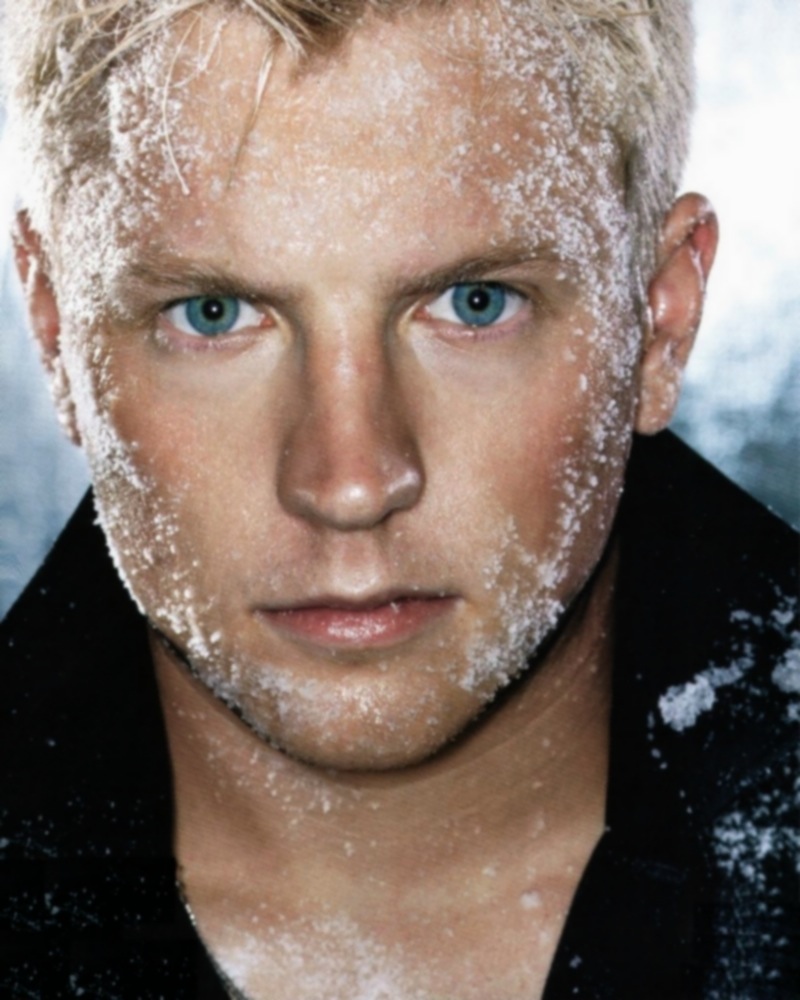
Though his role in Game of Thrones depicts him as homosexual, he is reportedly straight. In real life, Finn is a gay rights advocate. He appeared in the cover of Gay Times’ magazine, shirtless with only a speedo and a winter coat. He gave an interview in the magazine related to gay issues. Playing a homosexual role, he is happy that gay characters are being portrayed. He has got strong reaction of the people from gay community that they are happy with Game of Thrones.

IMG_9869.JPG

Ser Loras Tyrell is a recurring character in the first, second, third,fourth, and fifth seasons. He is played by guest star Finn Jones and debuts in “The Wolf and the Lion.” Ser Loras Tyrell, the heir to Highgarden, is a popular tourney knight and ranks as one of the most skilled knights in Westeros. He was the lover of Renly Baratheon and supported his claim to the Iron Throne as commander of his Kingsguard.


The Way of Love

IMG_9279.JPG

If I speak in the tongues of men and of angels, but have not love, I am a noisy gong or a clanging cymbal. And if I have prophetic powers, and understand all mysteries and all knowledge, and if I have all faith, so as to remove mountains, but have not love, I am nothing. If I give away all I have, and if I deliver up my body to be burned, but have not love, I gain nothing.
Love is patient and kind; love does not envy or boast; it is not arrogant or rude. It does not insist on its own way; it is not irritable or resentful; it does not rejoice at wrongdoing, but rejoices with the truth. Love bears all things, believes all things, hopes all things, endures all things.
Love never ends. As for prophecies, they will pass away; as for tongues, they will cease; as for knowledge, it will pass away. For we know in part and we prophesy in part, but when the perfect comes, the partial will pass away. When I was a child, I spoke like a child, I thought like a child, I reasoned like a child. When I became a man, I gave up childish ways. For now we see in a mirror dimly, but then face to face. Now I know in part; then I shall know fully, even as I have been fully known.
So now faith, hope, and love abide, these three; but the greatest of these is love.

1 Corinthians 13:1-13

A Peanuts cartoon shows Lucy standing with her arms folded and a stern expression on her face. Charlie Brown pleads, “Lucy, you must be more loving. This world really needs love. You have to let yourself love to make this world a better place.” Lucy angrily whirls around and knocks Charlie Brown to the ground. She screams at him, “Look, Blockhead, the world I love. Its people I can’t stand.”

I’m sure we all feel that way from time to time, and some of us feel that way most of the time. Maybe you feel that way right now. Loving the world in general isn’t that difficult; loving the people around us can be a major challenge. In 1 Corinthians 13, we find one of the most beautiful and familiar chapters in the Bible. This chapter is typically read at weddings and anniversary celebrations. It has even been set to music. Yet, this was never the original intent. Instead, Paul was writing a rebuke to a dysfunctional church for their abuse of the spiritual gifts. Typically though, this understanding is often ignored. Consequently, I wonder if most Christians have truly pondered the deeper meaning of this passage. Have we heard this Scripture so often that we no longer think about what the words mean? I would suggest that if we ignore the context of this chapter we are in danger of missing its major impact.

1. Love is greater than any spiritual gift (13:1-3). In 13:2-3, Paul mentions five spiritual gifts when he writes, “If I have the gift of prophecy, and know all mysteries and all knowledge; and if I have all faith, so as to remove mountains, but do not have love, I am nothing. And if I give all my possessions to feed the poor, and if I surrender my body to be burned, but do not have love, it profits me nothing.” Prophecy refers to the ability to declare God’s truth in a powerful, life-changing way. Knowledge involves the deep understanding of the Word of God. Faith is the unique ability to trust God for great things. These three gifts are all from the Holy Spirit, and yet without love the person who has them is “nothing.” Verse 3 poses a problem because it asks us to ponder activities that we automatically consider noble. Giving to the poor is a good thing to do. And dying for your faith in Christ is the ultimate sacrifice. But as good as these things are, without love they do you no good. Paul declares that the greatest expression of spirituality is love. We could summarize these three verses like this: Without love…I say nothing, I am nothing, and I gain nothing.

2. Love is expressed by supernatural responses (13:4-7). Love is a word that can only be properly defined in terms of action, attitude, and behavior. Paul has no room for abstract, theoretical definitions; instead, he wants us to know what love looks like when we see it. Thus, he paints fifteen separate portraits of love. Yes, that’s right: in the space of four short verses Paul uses fifteen verbs, all of which have “love” as their subject. Our contemporary definition of love is that it is an emotion or a feeling—we love our jobs, we love football, we love pizza. In the biblical definition of agape, love acts, for love is an action, not an emotion. In the original Greek, the word ἀγάπη agape is used throughout. This is translated into English as “charity” in the King James version; but the word love is preferred by most other translations, both earlier and more recent. Verse 4 begins by summarizing the unselfish nature of love.

1) Love is patient.
2) Love is kind.
3) Love is not jealous.
4) Love does not brag.
5) Love is not arrogant.
6) Love is gracious, courteous, tactful, and polite.
7) Love does not seek its own.
8) Love is not provoked.
9) Love does not take into account a wrong suffered.
10) Love is righteous.
11) Love rejoices with the truth.
12) Love bears all things.
13) Love believes all things.
14) Love hopes all things.
15) Love endures all things.

3. Love is an eternal gift (13:8-13). In these final six verses, Paul discusses the temporary nature of the spiritual gifts and the eternal nature of love. In 13:8, Paul talks about the temporary nature of gifts when he writes, “Love never fails; but if there are gifts of prophecy, they will be done away; if there are tongues, they will cease; if there is knowledge, it will be done away.” When Paul says, “Love never fails,” he means love never ends. The synonym for this expression is “love abides” in 13:13. These phrases serve to bookend this final section where Paul argues that the spiritual gifts will be done away with one day.

Today, how will you grow in your love for others? First, I would suggest that you cannot become the loving person you desire to be apart from a loving and vibrant relationship with God. This love relationship must be cultivated first and foremost. Second, you must love those nearest to you. This means that if you are married, you focus on your spouse. If you have children, you prioritize your children. If you are serving in a ministry, you love those children, teens, or adults. You strive to love your neighbors and coworkers. Once you have accomplished this, you will be able to better love the world around you. God has called us to love people. Jesus said that all people will know we are His disciples by the love that we have for one another (John 13:34-35).


Moment of Zen: Imagination

IMG_9829.JPG

When you get a glimpse, the rest is left to the imagination, and I like where my imagination goes with this one.