





Monthly Archives: October 2015
Gus Kenworthy
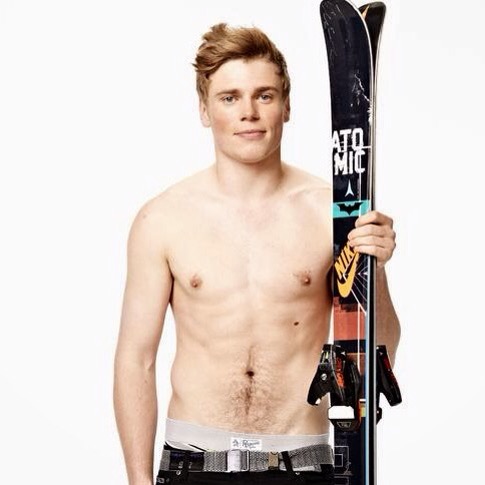
Just days after he came out, Olympian Gus Kenworthy was asked a question many gay and lesbian people dread on Twitter by a random user. But Kenworthy handled it so well, and we can’t think of a more perfect way to respond to such a cringeworthy inquiry.
“Are you the man or the woman in the relationship? That’s all I need to know right now,” the user wrote.
Kenworthy, 24, followed up with:
In a relationship I am the man. As is the other man. I’m gay. Not trying to emulate a heterosexual relationship. https://t.co/AJwyskECWf
— Gus Kenworthy (@guskenworthy) October 24, 2015
The professional freeskier, who nabbed a silver medal at the 2014 Winter Olympics in Sochi, revealed his sexuality in a simply-worded tweet posted on Oct. 22.
“I am gay,” he wrote.
The tweet was accompanied by a photo of the athlete on the cover of ESPN Magazine. The new issue, which hits newsstands on Oct. 30, features an in-depth profile on Kenworthy, in which he recalls his early struggles with his sexuality.
“You’re constantly lying and constantly feeling like you’re being deceitful,” he said in a video on ESPN that was produced in conjunction with the article. “I’m just at that point where I’m ready to open up and let everyone see me for me and I hope everyone accepts it.”
Offensive, Deplorable, Insensitive, Cruel, and Insulting
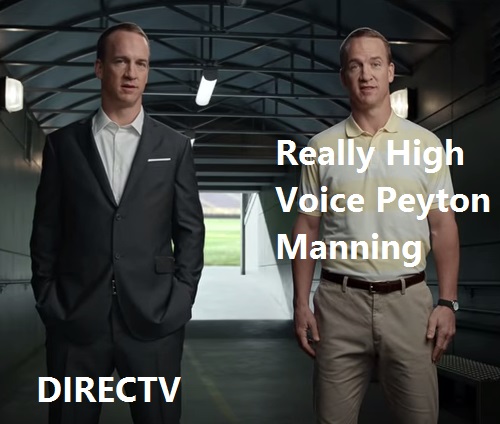
Last night I was watching the World Series (I’m rooting for the Royals). I just couldn’t handle watching the Republican debate. I find all of the candidates offensive, but I didn’t expect to be offended during the World Series. However, a DIRECTV advertisement with Peyton Manning came on. I’ve seen it before, and its incredible offensiveness and makes my blood boil every time is see it. I never have particularly liked Peyton Manning, but even if I had been a huge fan of his, this commercial would have made me hate him with a passion. Before I say more, I’m going to let you read what the commercial says (I could have posted a YouTube video of the commercial, but I find it too offensive to post):
Hi I’m Peyton Manning and I have DIRECTV.
And I’m really high voice Peyton Manning and I have cable.
Only DIRECTV lets you watch NFL Sunday Ticket games live on all your devices.
With cable I can’t do that it’s like – ahhhhhhh! [high-pitched]
I get to take all the games with me.
I sing with the Four Tunesmen.
Camptown ladies sing a song
Doo dah, doo Dah
Camptown racetrack five miles long
Oh the doo dah dayDon’t be like this me get NFL SUNDAY TICKET only on DIRECTV.
To understand why I find this really offensive, I have to tell you something about myself that I don’t think I’ve ever mentioned on this blog before: I have a high voice. My voice is the stereotypical “gay voice.” I get mistaken for a woman on the phone and at drive-thru restaurants. All of my life, bullies have imitated my voice as a way to call me a faggot, usually while using the word fag or faggot and limp wrist hand gestures along with it. My voice has been an embarrassment to me all my life, but I am learning to accept it. It does help that with my new job, my voice plays a major component in said job. However, every time I see this commercial, it brings up all the bullying I faced in my life, and I’m not just talking about my teenage years but my adult life too. It still happens. Imagine calling your bank to straighten out an issue that has to be done over the phone and the person you are speaking with refuses to believe you are who you say you are. They thought by your name you were a man, but when they speak to you they are sure you are female and cannot be convinced otherwise. So they try every security question they can think of and after you answer all of them promptly and correctly, they reluctantly agree to speak with you, but remain skeptical you are who you say you are.
So when I see this commercial and I hear, “And I’m really high voice Peyton Manning and I have cable,” what I really hear is “And I’m faggot Peyton Manning and I have cable.” I don’t know how many of you watch NBC’s The Voice, but this season there is a male contestant named Jordan. He also has a high voice and during the blind auditions, everyone turned around and was shocked that he was a guy. Then they all said, especially Adam Levine, how important a contestant he was because he was so brave. I admire Jordan immensely for having the courage to stand up there knowing the judges would turn around and be shocked that he was a guy. I couldn’t have done it. Sadly, I don’t think he will make it far when America begins to vote because guys with high/effeminate/”gay” voices are discriminated against everyday. We constantly have our manhood questioned because we don’t have a deep voice. We are constantly discriminated because of it. We are made fun of by athletes and bullies, and now even on a national television commercial.
I find this commercial to be one of the most offensive, deplorable, insensitive, cruel, and insulting commercial that I have ever seen. DIRECTV has been called out before on these types of commercials, but they continue to make more of them. Who else will they be allowed to insult before they stop using these commercials? I find this one even worse because without saying it directly, it hits on two major stereotypes of gay men: that we have “gay voices” and we don’t like sports. After all, this is a commercial about NFL Sunday Ticket on DIRECTV. This commercial invites ridicule for those men who don’t have deep voices. DIRECTV should be ashamed of themselves for such a blatantly homophobic commercial. The sad thing is, I doubt DIRECTV nor Peyton Manning realize just how hurtful and insensitive this commercial is. They merely think it’s funny. There is nothing funny about condoning bullying and homophobia, directly or indirectly.
Historical Rewrites

I haven’t mentioned politics too much on this blog lately, mainly because the Republican candidates are a scary bunch of clowns that seem like they are almost making a remake of Stephen King’s It. The Democratic candidates really don’t give us much of a choice, Bernie Sanders (even if he is my new Senator), doesn’t stand a chance in a national election, which leaves Hillary Clinton as the only real choice. I have to admit, I have never been a big fan of Hillary Clinton, but I will support her for President.
On Friday night, Hillary Clinton was interviewed by MSNBC’s Rachel Maddow, and I watched it. In that interview, Hillary really disappointed me. She did something that as a historian I find deplorable. She rewrote history to fit her current agenda.
“I think what my husband believed — and there was certainly evidence to support it — is that there was enough political momentum to amend the Constitution of the United States of America and that there had to be some way to stop that,” said Hillary Clinton. “In a lot of ways, DOMA was a line that was drawn that was to prevent going further.”
In comments the next day at the annual Jefferson-Jackson dinner in Iowa, Sanders called this a “rewrite” of history and said it was “not the case” that something worse was coming down the pike. Those who were in the trenches at the time agree.
Evan Wolfson, founder and president of Freedom to Marry, said, “It is not accurate to explain DOMA as motivated by an attempt to forestall a constitutional amendment. There was no such serious effort in 1996.” At the time, Wolfson was an attorney with Lambda Legal Defense and Education Fund.
“It’s ridiculous. There was no threat in the immediate vicinity of 1996 of a constitutional amendment. It came four years later,” said Elizabeth Birch, who was executive director of the Human Rights Campaign from 1995 to 2004. “It may be that she needs to revisit the facts of what happened.” Birch took Bill Clinton to task in 2013, clearly refuting this “defensive action” claim, and pointed to the radio ads. Now really, if DOMA was a “defensive action” taken for our own good, why was Clinton using it for his own good in radio ads in the South? At the time he signed DOMA, Clinton did call the bill “gay-baiting” and didn’t believe it was necessary. But he said he agreed with the substance of it: “I have long opposed governmental recognition of same-gender marriages, and this legislation is consistent with that position.”
Clinton’s campaign, on Monday, didn’t retreat from her underlying point, though offered a more forward-looking statement. “Whatever the context that led to the passage of DOMA nearly two decades ago, Hillary Clinton believes the law was discriminatory and both she and President Clinton urged that it be overturned,” said spokesman Brian Fallon. “As President, Hillary Clinton will continue to fight to secure full and equal rights for LGBT Americans who, despite all our progress, can still get married on a Saturday and fired on a Monday just because of who they are and who they love.”
Meanwhile, Richard Socarides, Bill Clinton’s former aide on gay rights issues, argued that “there is no question that President Clinton believed that one of the reasons he was willing to sign a bill that he did not like was because he thought he would prevent greater damage.”
This is a clear rewrite of history. Clinton actually announced he would sign DOMA in May 1996, several weeks before it passed the House. The news sparked angry protest among gay rights allies. A co-chair of the president’s re-election campaign in Washington state quit. But others in the Democratic Party viewed it as crass, albeit excusable, pragmatism.
Former Rep. Barney Frank (D-Mass.) told HuffPost in May of this year that Republicans had settled on gay marriage as a wedge issue in the 1996 elections and that Clinton “gave in” on DOMA to take it out of play. “They were the major villains,” Frank said of congressional Republicans. “He went along with them.”
This assessment is shared by Socarides, who said that Republicans were “hoping that Clinton would veto [DOMA] on constitutional grounds and that they could then say he was secretly for gay marriage even though he had articulated the opposite position.”
But that take is complicated by an October 1996 radio ad in which Clinton’s campaign highlighted his signature on the legislation.
Well before the bill reached Clinton’s desk, it was abundantly clear that a veto of the measure would be unsustainable. The president wasn’t the only one to make this calculation. A month before DOMA passed the House, The New York Times reported on a fissure within the gay rights movement: One camp was committed to fighting DOMA, and the other argued for focusing on amendments to make it more palatable since it would pass anyway.
In June, DOMA passed the House by a 342-67 vote margin. In September, the Senate passed the bill by an 85-14 margin (it was noted that 20 of those senators had been divorced). That meant each chamber had a supermajority to override any veto. On Sept. 21, 1996, Clinton signed the bill in the dark of night and avoided having it recorded on camera.
Bill Clonton was convinced that lawmakers pushing DOMA were perfectly willing to trample on gay rights if it meant they’d have a better campaign landscape. But at the time, he was also personally opposed to expanding marriage rights to same-sex couples. The day after DOMA cleared the House, White House press secretary Mike McCurry referred to it as “gay baiting pure and simple,” but also said Clinton would sign it if it didn’t change radically before it reached his desk because “he believes frankly that the underlying position in the bill is right.”
Some who criticized Hillary Clinton for her explanation of the ’96 vote also praised her for having a strong record on LGBT rights during her own career, but I wish that Clinton would simply admit that DOMA was a mistake and not try to create alternate rationalizations for its passage. Hillary needs to say that the Clinton administration was wrong on DOMA in 1996. It was not good in any way in terms of constitutional law, and it certainly hurt a lot of Americans. She needs to admit the mistake and just say it. Own it. Stop this revisionist history.
A friend of mine reminded me that now is a different time, and everyone’s evolved and understands what the cultural and political reality was then, and what it is now. The Clintons may not have been leaders in gay rights back in the 1990s, but they are now. That doesn’t mean that she can rewrite history. Hillary Clinton should simply say this: “Yes, after the fact, years later, some Democrats used DOMA to forestall a constitutional amendment when it came up — saying that we don’t need an amendment because we have DOMA — but no, a possible amendment was not something that was a rationale for signing DOMA in 1996. My husband did think DOMA was the result of GOP gay-baiting and unnecessary. But he agreed on the substance of it, as did the majority of Americans and the vast majority of Democrats. And we were all wrong. We evolved, as has our current president and the American public. And I’m glad to see DOMA gone.”
A politician gets a lot more respect from me when they are honest, own their mistakes, and resist spinning their mistakes to rewrite history.
Cheerfulness Taught by Reason

Cheerfulness Taught by Reason
By Elizabeth Barrett Browning
I think we are too ready with complaint
In this fair world of God’s. Had we no hope
Indeed beyond the zenith and the slope
Of yon gray blank of sky, we might be faint
To muse upon eternity’s constraint
Round our aspirant souls. But since the scope
Must widen early, is it well to droop,
For a few days consumed in loss and taint?
O pusillanimous Heart, be comforted,—
And, like a cheerful traveller, take the road—
Singing beside the hedge. What if the bread
Be bitter in thine inn, and thou unshod
To meet the flints?—At least it may be said,
“Because the way is short, I thank thee, God!”
About This Poem
“Cheerfulness Taught by Reason” was published in Browning’s book A Drama of Exile: and other poems (H. G. Langley, 1845). It is true, we are often all too ready to complain, but God is on our side. God provides us with hope and happiness, it is only without Him that we could truly complain. If there was no God, we would have right to become weak and feel like our aspirations are constrained by an empty eternity, but because there is much more in life beyond that where there is God, we shouldn’t complain when we have a few bad days. Our cowardly hearts should be comforted and we should move on happily. Even if we come across some bad times, at least this life God has given us is short and afterwards we can have paradise for eternity. To put that more succinctly, on this journey to happiness, we must be prepared to run into bumps in the road, but know in the end it will get better. Even if in the end you feel as if the journey has taught you nothing, you must be thankful that the journey was short.
This poem was, in my opinion, a perfect companion to my post yesterday. My road has been bumpy and the journey has been arduous, but I persevered and kept God by my side, and I am much happier because of it.
The Fall of the Leaf

For everything there is a season, and a time for every matter under heaven:
a time to be born, and a time to die;
a time to plant, and a time to pluck up what is planted;
a time to kill, and a time to heal;
a time to break down, and a time to build up;
a time to weep, and a time to laugh;
a time to mourn, and a time to dance;
a time to throw away stones, and a time to gather stones together;
a time to embrace, and a time to refrain from embracing;
a time to seek, and a time to lose;
a time to keep, and a time to throw away;
a time to tear, and a time to sew;
a time to keep silence, and a time to speak;
a time to love, and a time to hate;
a time for war, and a time for peace.
Ecclesiastes 3:1-8
The Fall of the Leaf
By H. Macmillan, D. D.
At no period of the year are the sunsets so varied and beautiful as in autumn. The many-colored woods of the year’s eventide correspond to the many-colored clouds of the sunset sky; and as the heavens burst into their brightest hues, and exhibit their loveliest transfigurations when the daylight is fading into the gloom of night, so the year unfolds its richest tints and its fairest charms when it is about to sink into the darkness and desolation of winter. The beauty of the autumnal tints is commonly supposed to be confined to the fading foliage of the trees. This is indeed the most obvious feature of the season — that which appeals to every eye, and reads its lesson to every heart. But nature here, as everywhere else, loves to reproduce in her smallest things the peculiarities of her greatest. It was a beautiful myth, created by the glowing imagination of the Greek poets, that the great god Pan, the impersonation of nature, wedded the nymph Echo; so that every note which he blew from his pipe of reeds awakened a harmonious response in her tender bosom. Most truly does this bright fancy represent the real design of nature, according to which we hear on every hand some curious reverberation of some familiar sound, and see all things delighting to wear each other’s robes. The fading frees pipe their many-colored music aloft on the calm blue October air — for the chromatic scale is the harmonious counterpart of the musical — and the lowly plants that grow beneath their shadow dance to the music. The weeds by the wayside are gifted with a beauty in the decline of life equal to that of the proudest oaks and beeches. Each season partakes to some extent of the characteristics of all the other seasons, and shares in all the varied beauties of the year. Thus we find an autumn in each spring in the death of the primroses and lilies, and a harvest in each summer in the ripe hay-fields; and every one has noticed that the sky of September possesses much of the fickleness of spring in the rapid change of its clouds and the variableness of its weather. Very strikingly is this mutual repetition by the seasons of each other’s characteristic features seen in the resemblance between the tints of the woods in spring and in autumn. The first leaves of the oak expand from the bud in a pale tender crimson; the young leaves of the maple tree, and all the leaves that appear on a maple stump, are of a remarkable copper color; the immature foliage of the hazel and alder is marked by a dark purple tinge, singularly rich and velvety-looking. Not more varied is the tinting of the autumnal woods than that of the spring woods. And it may be remarked that the color into which any tree fades in autumn is the same as it wears when it bursts the cerements of spring, and unfolds to the sunny air. Its birth is a prophecy of its death, and its death of its birth. Nature’s cradles have not more of beginning in them than of ending; and nature’s graves have not more of ending in them than of beginning. No one can take a walk in the melancholy woodland in the calm October days without being deeply impressed by the thought of the great waste of beauty and creative skill seen in the faded leaves which rustle beneath his feet. Take up and examine one of these leaves attentively, and you are astonished at, the wealth of ingenuity displayed in it. It is a miracle of design, elaborately formed and richly colored — in reality more precious than any jewel; and yet it is dropped off the bough as if it had no value, and rots away unheeded in the depths of the forest. Myriads of similar gems are heaped beneath the leafless trees, to moulder away in the rains of November. It saddens us to think of this continual lavish production and careless discarding of forms of beauty and wonder, which we see everywhere throughout nature. Could not the foliage be so contrived as to remain permanently on the trees, and only suffer such a periodical change as the evergreen ivy undergoes? Must the web of nature’s fairest embroidery be taken down every year, and every year woven back again to its old completeness and beauty? Is nature waiting for some great compensation, as Penelope of old waited for her absent husband, when she unravelled each evening the work of each day, and thus deluded her eager lovers with vain promises? Yes! she weaves and unweaves her web of loveliness each season — not in order to mock us with delusive hopes, but to wean us from all false loves, and teach us to wait and prepare for the true love of our souls, which is found, not in the passing things of earth, but in the abiding realities of heaven. This is the secret of all her lavish wastefulness. For this she perpetually sacrifices and perpetually renews her beauty; for this she counts all her most precious things but as dross. By the pathos of her autumn loveliness she is appealing to all that is deepest and truest in our spiritual nature; and through her fading flowers and her withering grass, and all her fleeting glories, she is speaking to us words of eternal life, whereby our souls may be enriched and beautified for ever.
http://biblehub.com/sermons/auth/macmillan/the_fall_of_the_leaf.htm

Questions, Questions
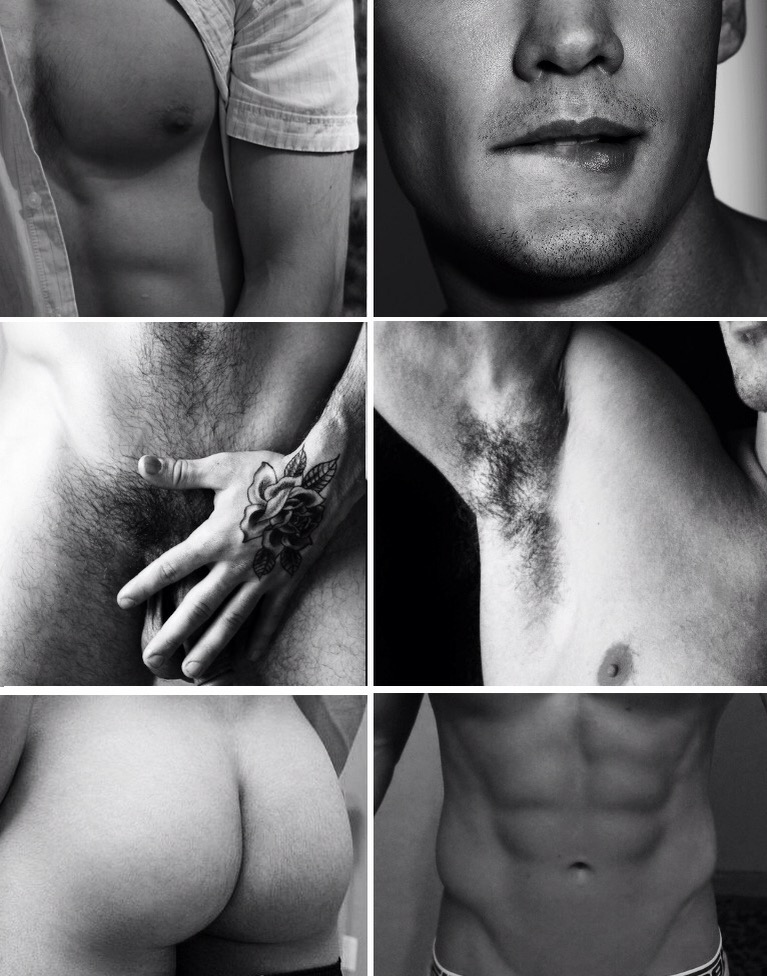
Actually, it’s just one question (two,if you feel generous in your commenting). About a year ago, Dave over at Wicked Gay Blog asked “What is your favorite part of a man’s body?” I’m going to modify that question a little, though you are more than welcome to tell me what is your favorite part of man’s body is (though like Dave said in his post, we need to exclude the penis, because we all obviously love penis). What I want to know is this:
What is the first thing you notice about a guy?
For me it’s one of two things. If I see him from behind, well the first thing I notice is his, well, his behind. If I see him from the front, I am most often drawn to his eyes. Then my eyes will travel to various other parts. There are so many things that can make a guy attractive (and I am only speaking superficially here, because I tend to rank personality and intelligence at the top of my list). It could be his nose or his ears. It could be his bulge or if he’s freeballing in athletic shorts, his VPL (visible penis line, for,those who might not know). It’s also according to how he is attired. If he’s been working out and only has on shorts, then I’m going to check out his chest and stomach, and if he turns around his back and shoulders.
If I had to pick a favorite part of a man’s body, I’d have to say that I love a nice bubble butt. I love having something to grab onto. That gets me every time. However, if I see a guy without a shirt, I am drawn to his chest. He doesn’t have to have perfectly chiseled pecs either, but if there is some definition and he has nice nipples that really does drive me wild, mainly because I want to nibble on them.
You now know mine and why, so what about you? What is the first thing you notice about a guy? And, as a bonus, what is your favorite part of a man’s body?
The Fruit of the Spirit

By contrast, the fruit of the Spirit is love, joy, peace, patience, kindness, generosity, faithfulness, gentleness, and self-control. There is no law against such things. And those who belong to Christ Jesus have crucified the flesh with its passions and desires. If we live by the Spirit, let us also be guided by the Spirit. Let us not become conceited, competing against one another, envying one another.
Galatians 5:22–26
It never ceases to amaze me how the Christian community has endured in spite of the differences in biblical interpretations and analyses. In some cases, the only thing Christians have in common with each other is Christ. The rituals and dogmas among Christians are extraordinarily different. There are poisonous snake handlers, horse and buggy riders, and Voodoo Christians. There are those who believe that dancing will doom you to hell and those who dance during their services. Some fill their church with music, while others like the churches of Christ forbid any musical instruments in their church. My list could go on and on and on!
Galatians 5:22-26 binds our “fractured” Christian Community into “one” through the nine manifestations (fruits) of the spirit. That includes mainstream Christians as well as the snake handling Christians. Even those Christians who have never heard of the “fruits of the spirit” have felt the spirit in their heart and soul and most certainly witnessed them in Jesus Christ.
These manifestations are available to all of our brothers and sisters in Christ, just for the taking:
LOVE: Without love, humanity would not exist. There could be no human interaction. You would have no feelings for friends, family, or those you hold close to you. Love is so much more than a romantic relationship. Love resonates throughout our life. Love is what makes us human.
JOY: Don’t mistake happiness for joy. They are not the same. There is a vast difference between joy and happiness. Happiness is based on short-term events or “things” — a new car, a kiss, an awesome gift. Joy comes from God and is born from within. Happiness is the Easter Bunny. Joy is the risen Christ.
PEACE: This is not the peace that comes at the end of a battle. It is the peace of the Lord. This is a peace that comes from within, and is always with you. It is enduring peace of mind, contentment, and serenity.
FORBEARANCE: Forbearance means to tolerate even when you get less than you think you deserve; to be patient, and deal with difficult circumstances with gentleness and calmness.
KINDNESS: Kindness is a smile rather than a frown, a word of encouragement and comfort, or a warm, sincere, much-needed hug. I know it is a billboard cliché, but kindness truly can come from asking yourself, “What would Jesus do?”
GOODNESS: Generosity is being mindful of those who have less than you — doing good things from the goodness of your heart, not for the tax break or the glory. Goodness is fed from the inner qualities of virtue, excellence of character, and attitude.
FAITHFULNESS: Faith is knowing that God always does what is best for you, not necessarily what you ask for. Don’t lose faith when doubts creep into your heart. Doubt is a powerful component of faith.
GENTLENESS: Do not confuse gentleness with weakness. Gentleness requires great strength. Gentleness enables a person to patiently endure insults and injuries received at the hand of others. It allows us to keep cool when others explode. Gentle people do not seek revenge; they leave that in God’s hands.
SELF-CONTROL: We all know what our self-control failures are: material possessions, promiscuity, anger, alcohol, drugs, etc. Our “head” knows when our human desires are not right for us — and, as a result, there is a tug of war between our head and our desires. And sometimes it is a major tug of war. We must always be vigilant to keep our self-control.
The creator of Star Trek, Gene Roddenberry, once said, “If man is to survive, he will have learned to take a delight in the essential differences between men and between cultures. He will learn that differences in ideas and attitudes are a delight, part of life’s exciting variety, not something to fear.”


Authors
Recent Comments
furbirdsqueerly on Pic of the Day Joe on Pic of the Day noisilycool3bc985058… on Pic of the Day vandycolt on Moment of Zen: Reading noisilycool3bc985058… on Pic of the Day Top Posts & Pages



Amazon Associate

As an Amazon Associate I earn from qualifying purchases. So, if you click on a link that takes you to Amazon.com, I may earn a commission.
Trust me, it isn’t much, but every little bit helps.

 Joe
Joe


 The Closet Professor