Monthly Archives: March 2016

Sughaim Sine

IMG_3867.JPG

Ancient Celtic culture is typically lauded for such things as storytelling, mysticism and warrior fierceness. Mistakenly, however it’s not been broadly known for its eroticism. Something we know to be a historical oversight at the least.

It wasn’t always like this. In ancient times, the Celts were widely renowned as much for their erotic energy and prowess, multiple love affairs/sexual liaisons and androphilic activities, as for their warlike habits. It is known that male warriors were often part of ‘sodalities’ or groups of “special friends”. They engaged freely and openly in same-sex relationships and participated in a variety of acts for pleasure and bonding. Ancient Greeks such as Aristotle and Strabo mention Celtic homosexuality as one of the few good things about what they considered a barbarian culture. Diodorus Siculus chronicled his impressions writing —

They are accustomed to sleep on the ground on animal skins and roll around with male bed-mates on both sides. Heedless of their own dignity, they abandon without qualm the bloom of their bodies to others. And the most incredible thing is that they do not think this is shameful. But when they proposition someone, they consider it dishonorable if he does not accept the offer!…

A particularly succulent example of this fluidity is perhaps exemplified in the adjunctive early Irish practice of homosocial nipple-sucking or what today can be called “sughaim sine”. This typically male act stood for many things in the pagan culture of the times. In one aspect, it was used as a way to pledge loyalty, devotion and submission for a king. Among common men, it was an expression of friendship, greeting, reconciliation, affection, fealty, protection and not surprisingly, as some sources suggest, sexual stimulation and pleasure.

While Ireland was still a pagan culture, Christianity was taking hold in Europe and North Africa. Christian philosophy increasingly taught that all sexual ways were physically harmful and that sexual abstention was the wisest course. But the tradition of “special friends” and the importance of love, physicality, affection and sexual expression did not die out. It was an essential part of the culture. An old Celtic saying holds, “A person without a soul friend is like a body without a head.”

Though Irish monasteries in the Dark Ages between the years of 600 and 1200 CE tried to control the sexuality of both the clerics and the converted, the privileges and benefits of soul friendship could not be destroyed. The delectable habit of men sucking on each other’s nipples to affirm friendship (particularly after a quarrel) seemed indelible and was slow to change.

There are a number of references or implications regarding the practice but detailed information is spare. The most notable account is in an oft omitted passage of St. Patrick’s ‘Confessions’ wherein he says —-

On the day I arrived the ship weighed anchor, I explained that I had the wherewithal to sail with them. And that day, furthermore, I refused for fear of God, to suck their nipples. (A Pagan custom of friendship) Nevertheless I hoped that some of them would come to faith in Jesus Christ (for they were heathen). This displeased the captain who answered sharply, with anger “Your wish to travel with us is quite futile”. And when I heard this, I left them in order to return to the shelter in which I had lodged, beginning to pray as I went. Before the prayer was finished, I heard one of them, who shouted out to me “Come quickly these men are calling you”. I returned to them immediately and they began to explain to me: “Come, we will accept you in good faith. Bind yourself to us in whatever way you wish” Because of this I was received among them and we set sail straight away…

Patrick was citing the prevalence of pagan practices and in doing so he was making the obvious point that the Ireland in which he had been a slave was largely un-Christianized. Since he does not explain the significance of the incident, its meaning is taken to have been evident to the readers of his day. This suggests therefore that the custom was widely accepted and well-known among Celts. By declining to participate, Patrick denies pagan practice and in turn gives us an idea of how deliciously unrestrained the Celtic/Pagan world may have been.

Archaeological bog discoveries in Ireland have corroborated the “sughaim sine” practice in another of its aspects. The subjects of ancient Irish king’s ritually and routinely demonstrated their submission by sucking on their ruler’s nipples – some believe perhaps in a nursing, group or perhaps erotically intended way. It is theorized that there may have been royal reception days when the king exposed his nipples for his “court” in order to facilitate sucking for a large group. In a potentially more macabre element, there appears to have been power games in the nipple hierarchy. Cutting off a royal descendant’s nipples made him ineligible for kingship. Not as subtle as poison, but undeniable evidence of his unsuitability for a kingly role. No nips, game over.

Perhaps the King’s nipples were most important when celebrating fertility compacts, in the festivals where the King was wedded to the Earth (Goddess). His kingly role required him to keep nature and society in equilibrium. A little nipple sucking would surely increase his self-esteem, stimulate him thereby enhancing his virility and help him on his way to essential potency. But if he failed to keep everything fertile he could be dispatched. Such is believed to possibly have been the case of the bog men.

IMG_3866.JPGThe practice is also referenced mythologically within the tale of King Fergus mac Leite. Lore says that the King, after returning to his own land, falls asleep on the coast near the sea. Small people appear who carry the king without his sword into the water. It might be inferred that they want to abduct him to their own ‘land’ under water. This ‘foreign’ invasion threatens the king and thereby the land. When his bare feet become wet and cold, however, he awakens in time and grabs three of them. In order to save themselves they offer a pact, which is introduced by a ritualistic exchange of words and is sealed by the mutual, prolonged sucking of nipples. Thanks to this agreement, the king receives a charm with which he can survive under water – a kind of ‘passport’ to travel in the ‘foreign’ lands under the waves and is forever nipple-bonded to the small men.

Finally, the nipple motif even reappears later after the Christian era is in full swing showing again the importance of “sugere mammillas” within the culture. There is reference of holy men suckling neophytes relatively late in Irish hagiography. This seems significant in a metaphorical sense as a spiritual act of imparting the perceived grace and teaching of Christ through the symbolic acts of nursing and bonding. This information relates to the role of saints of both genders. However, it is notable in that the nipplage of male saints is cited equally in their place as nurturers of the early Irish church meaning that the “nursing” of male breasts was acceptable. This suggests the continuance of the tradition, albeit in a post-pagan, Christianized and sanitized configuration.



A Day Off

image

I’m taking the day off from blogging, not from work. I still have to go into work. Yesterday, I was so tired all day that I nearly dozed off a few times. So I came home and went to bed early. Hence, this is all the blogging I’m going to do for today.


Friend of Dorothy

IMG_3622

The Wizard of Oz has been a iconic movie for gay men since it was released. Judy Garland starred in the film and connections between Garland and LGBT people include the slang term Friend of Dorothy. In gay slang, a “Friend of Dorothy” (occasionally abbreviated FOD) is a term for a gay man.The phrase dates back to at least World War II, when homosexual acts were illegal in the United States. Stating that, or asking if, someone was a “friend of Dorothy” was a euphemism used for discussing sexual orientation without others knowing its meaning. A similar term “friend of Mrs. King” (i.e. Queen) was used in England, mostly in the first half of the 20th century.

Conventional wisdom is that Garland’s death and funeral, in June 1969, helped inspire the Stonewall riots, the flashpoint of the modern Gay Liberation movement. However, some observers of the riots contend that most of those involved “were not the type to moon over Judy Garland records or attend her concerts at Carnegie Hall. They were more preoccupied with where they were going to sleep and where their next meal would come from.” There was certainly an awareness and appreciation of Garland among Stonewall Inn patrons. Because the bar had no liquor license, it was passed off as a bottle club and patrons were required to sign in. Many used pseudonyms and “Judy Garland” was among the most popular. Regardless of the truth of the matter, the Garland/Stonewall connection has persisted and has been fictionalized in Stonewall, Nigel Finch’s feature film about the events leading up to the riots. Lead character Bostonia is shown watching Garland’s funeral on television and mourning, and later refusing to silence a jukebox playing a Garland song during a police raid, declaring “Judy stays.”

Time magazine would summarize decades later:

The uprising was inspirited by a potent cocktail of pent-up rage (raids of gay bars were brutal and routine), overwrought emotions (hours earlier, thousands had wept at the funeral of Judy Garland) and drugs. As a 17-year-old cross-dresser was being led into the paddy wagon and got a shove from a cop, she fought back. [She] hit the cop and was so stoned, she didn’t know what she was doing—or didn’t care.

Garland’s daughter Lorna Luft points to the connection with pride, saying that her mother was a “huge, huge advocate of human rights” and that Garland would have found the rioting appropriate.

The phrase “Friend of Dorothy” likely derives from Garland’s portrayal of Dorothy Gale in The Wizard of Oz and became a code phrase gay people used to identify each other. Dorothy’s journey from Kansas to Oz mirrored many gay men’s desires to escape the black-and-white limitations of small town life…for big, colorful cities filled with quirky, gender-bending characters who would welcome them.

Another possible origin is that the term is derived from Road To Oz (1909), a sequel to the original Wonderful Wizard of Oz. The book introduces readers to Polychrome who, upon meeting Dorothy’s traveling companions, exclaims “You have some queer friends, Dorothy” and she replies “The queerness doesn’t matter, so long as they’re friends.” More commonly it is stated that “Friend of Dorothy” refers to the film The Wizard of Oz because Judy Garland, who starred as the main character Dorothy, is a gay icon.

In the film, Dorothy immediately accepts those who are different, including the Cowardly Lion. The Lion identifies himself through song as a “sissy” and exhibits stereotypically “gay” (or at least effeminate) mannerisms. The Lion offers a coded example of Garland meeting and accepting a gay man without question. In the film, Dorothy is accepting of those who are different. For example the “gentle lion” living a lie, “I’m afraid there’s no denyin’, I’m just a dandy lion.” Dandy has long been slang for an effeminate man or one preoccupied with fashion, such as Yankee Doodle Dandy, who “stuck a feather in his hat and called it macaroni.” A macaroni was a man who returned from the Grand tour with overaffected Italian mannerisms often portrayed as effeminate and wearing makeup.

IMG_3737I find this little fact hilarious, though it is also quite tragic in terms of understanding the American military attitudes and understanding of gay men.  In the early 1980s, the Naval Investigative Service was investigating homosexuality in the Chicago area. Agents discovered that gay men sometimes referred to themselves as “friends of Dorothy.” Unaware of the historical meaning of the term, the NIS believed that a woman named Dorothy was at the center of a massive ring of homosexual military personnel. The NIS launched an enormous hunt for Dorothy, hoping to find her and convince her to reveal the names of gay service members. Of course, they never found Dorothy.


Starting in the late 1980s, on several cruise lines, gay and lesbian passengers began approaching ship staff, asking them to publicize gatherings in the daily cruise activity list. As the cruise lines were hesitant to announce such things so blatantly in their daily publications, they would list the gathering as a “Meeting of the Friends of Dorothy”. The use of this phrase likely comes from the cruise directors who were also familiar with and using the “Friends of Bill W.” phrase in their programs to tell members of Alcoholics Anonymous that there were support group meetings on the trip. Such meetings have expanded in popularity and frequency over the years. Now, many cruise lines will have multiple “FOD” events, sometimes as many as one each night.

Another connection is the rainbow flag, symbol of the LGBT communities which may have been inspired, in part, by Garland’s song “Over the Rainbow.” Garland’s performance of this song has been described as “the sound of the closet,” speaking to gay men whose image “they presented in their own public lives was often at odds with a truer sense of self that mainstream society would not condone.”


A Dream Within a Dream

IMG_3236.jpg

A Dream Within a Dream
By Edgar Allan Poe

Take this kiss upon the brow!
And, in parting from you now,
Thus much let me avow —
You are not wrong, who deem
That my days have been a dream;
Yet if hope has flown away
In a night, or in a day,
In a vision, or in none,
Is it therefore the less gone?
All that we see or seem
Is but a dream within a dream.

I stand amid the roar
Of a surf-tormented shore,
And I hold within my hand
Grains of the golden sand —
How few! yet how they creep
Through my fingers to the deep,
While I weep — while I weep!
O God! Can I not grasp
Them with a tighter clasp?
O God! can I not save
One from the pitiless wave?
Is all that we see or seem
But a dream within a dream?

“A Dream Within a Dream” is a poem written by Edgar Allan Poe, first published in 1849. The poem is 24 lines, divided into two stanzas. The poem questions the way one can distinguish between reality and fantasy, asking, “Is all that we see or seem but a dream within a dream?”

The poem dramatizes a confusion in watching the important things in life slip away. Realizing he cannot hold on to even one grain of sand leads to his final question that all things are a dream. The poem references “golden sand,” an image derived from the 1848 finding of gold in California.

In 1827, Poe enlisted in the U.S. Army under the name “Edgar A. Perry.” He did well as a soldier, rising to the rank of sergeant major. He also continued to write. A book of his poetry was published anonymously (the author being listed only as “A Bostonian”). In April 1829, he entered the U.S. Military Academy at West Point. A few months later, he published his second book of poetry, Al Aaraaf, Tamerlane and Minor Poems.

Poe soon realized that West Point wasn’t for him. He decided to get himself kicked out of school, which he successfully accomplished by refusing to attend chapel or classes. Poe tried hard to get kicked out of West Point, and in 1831, he succeeded. Rumor is that the final straw came when he reported for drill wearing belts for his cartridges, a smile and nothing else. While officially, he was court martialed on “Charge 1 . . . Gross neglect of Duty” and “Charge 2 . . . Disobedience of Orders.” He was court-martialed and dismissed. “The army does not suit a poor man — so I left W. Point abruptly,” he later wrote, “and threw myself upon literature as a resource. I became first known to the literary world thus.” Poe published several anonymous short stories plus another book of poems. Almost immediately after he left West Point, his brother Henry died of tuberculosis.

Poe began (and finished) his career as a starving writer. Though John Allan had remarried a wealthy woman, he refused to support his foster son, who was constantly asking for money. “It has now been more than two years since you have assisted me, and more than three since you have spoken to me,” Poe wrote in his final letter to his foster father in 1833. “If you will only consider in what a situation I am placed you will surely pity me — without friends, without any means, consequently of obtaining employment, I am perishing — absolutely perishing for want of aid. . . . For God’s sake pity me, and save me from destruction.” John Allan did not respond. And when he died on 27 March 1834, Allan omitted his adopted son from his will entirely.

I used Edgar Allan Poe today, because yesterday and today, I spent touring West Point as my job and to my knowledge, Poe was the most famous poet to attend West Point.

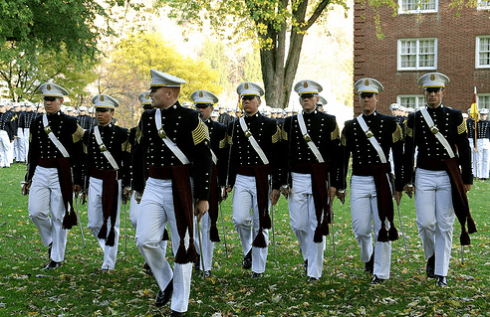
West Point Graduation

Cadets march to graduation ceremonies at the United States Military Academy at West Point, N.Y., Saturday, May 31, 2008. (AP Photo/Mike Groll)


Pat Conroy

image2Saturday night, I sat in my car and cried as I listened to NPR.  Pat Conroy, the beloved author of The Great Santini, The Lords of Discipline and The Prince of Tides, has died. Conroy — who announced last month that he had pancreatic cancer — died Friday night at his home among his family in Beaufort, S.C. He was 70 years old. Conroy was a wonderful storyteller. It’s not because of his writing ability that I was so sad about his death, but because one of my best memories of my mother is associated with Conroy.


Back when I was still an undergraduate, he came and spoke at my college. I took my mother to see him, since he was one of the great southern writers of the time. Back then, before I came out, my mother and I had a great relationship. I’m still her cultured child, and we enjoyed events like this. But it isn’t just going to the event with my mother, but the fact that the main thing he talked about was how much he loved his mother.

I remember how proud I was that I was there with my mother. It’s one of my fondest memories of her. As a child, she would sing to my sister and me. When a song came on the radio or on TV we would often dance.  It was through her that I learned to dance. I love my mama, even if we don’t agree about my sexuality. No matter what my mother and I have as differences today, that night with Pat Conroy was one of the most special of my life.

image3

Pat Conroy was a master storyteller, blending the raw material of his difficult family life with the landscape of coastal South Carolina. In 1986, Conroy said that the reason he wrote was to explain his own life to himself. “Writing has been not therapeutic for me, but it has been essential,” he said in an interview for NPR’s Morning Edition. “I have written about my mother, my father, my family … and if I get it on paper, I have named the demon.”

Pat Conroy was born in 1945 in Atlanta. He was a self-described “military brat.” His family moved every year until they settled in Beaufort when he was 12. In his 1976 book The Great Santini, Conroy wrote about his relationship with his abusive father, a Marine aviator. After high school, Pat Conroy’s father sent his oldest son to The Citadel, Charleston’s storied military academy, where Pat began to write fiction. Conroy said his natural storytelling ability was never affected by literary theory. “I missed all the classes in the art of fiction,” Conroy said in 1986. “We didn’t have any. I’m great on military science. But I missed all the classes on ‘Is this a great technique for fiction?’ I never learned any of that stuff.”

His education as a writer came elsewhere. “I came from a family of great storytellers,” he said. “That is something about the South I think has been preserved. The yarn, the story, and the ability to tell one well, is a beloved trait in several of my uncles and aunts. And a great story changes the world for you — changes the way you look at life.”

Pat Conroy said he looked for stories that told something about the world that he didn’t know before. And he said he faced challenges along the way. “The one thing I’ve had is a very painful life filled with utter moments of great joy. Things happen to me for reasons I cannot figure out. And things have continued to happen to me all my life, and happen to my family all my life, and now happen to my friends. … What I hope is that I don’t die before I can tell all the stories I still haven’t told.”

Conroy was telling those stories until the end. Before he died he finished a short novel called Aquarius, set in the Vietnam era, and dedicated to his “friends who become teachers.” I will always remember him for that night when he spoke about his mother so fondly, as I sat next to my own mother.


Precious Memories

IMG_3244

Precious memories, unseen angels
Sent from somewhere to my soul
How they linger, ever near me
And the sacred scenes unfold.

Chorus
Precious memories, how they linger
How they ever flood my soul
In the stillness of the midnight
Precious, sacred scenes unfold.

Precious father, loving mother
Fly across the lonely years
And old home scenes of my childhood
In fond memory appear.
(Chorus)

In the stillness of the midnight
Echoes from the past I hear
Old-time singing, gladness bringing
From that lovely land somewhere.
(Chorus)

As I travel on life’s pathway
Know not what the years may hold
As I ponder, hope grows fonder
Precious memories flood my soul.
(Chorus)


Moment of Zen: Blogging

IMG_3859.JPG


Do They Even Hear Themselves?


IMG_3233The Republican debate last night was a shit show. If they had let Kasich talk more, he would have won the debate hands down. He stayed calm and made his points.  I won’t say they were always good points but at least he didn’t try to talk over everyone else, didn’t constantly insult everyone else, and he is the only one who looked mildly presidential. Quite honestly though, I don’t think we want Kasich, because there are Democrats out there who do not like Hillary, and for those Democrats, they can stomach Kasich, who made that point last night.

How can anyone look at Trump, Cruz, or Rubio and think, “Hey, I like that man and I think he’d make a great president.”? None of the three look presidential. None of the three sound intelligent. None of the three have government executive experience. None of the three act presidential. There is not one of them who should even be considering a presidential run, let alone the top three candidates left.

Here are my observations on the three. Trump is a pompous ass who is running a campaign like he’s Hitler.  He even has his fat Nazi Goering, I mean Christie, to stand behind him and nod. Ted Cruz is creepy and he can’t seem to be able to keep up with what’s going on and can only seem to say, “Refer to my website.” Rubio, since he’s decided to throw insults back at Trump, looks like the dorky kid on the play ground who’s only comeback comes out sounding like “Well, you’re just a…you’re just a big ol’ meanie.”

These men are dangerous (Dangerously STUPID) and America needs to wake up to that fact.


Fetishes

IMG_3733

Fetishes. Most of us have them. A fetish is defined as a form of sexual desire in which gratification is linked to an abnormal degree to a particular object, item of clothing, part of the body, etc. Yesterday, I had five ways to embrace and enjoy your fetish. Today, I’m going to talk about my fetishes and see if they meet the test. I have a few major fetishes: Leather, Underwear and Uniforms.

IMG_3613

Sexual self-discovery is a mysterious process, the only aspect of growing up that parents and teachers mostly leave children (if they’re lucky) to sort out on their own. The word groping works here. It’s you in the dark at first, maybe with props or pictures, and eventually with other humans, discovering over time—sometimes over a very long time—what gets you off, what turns you on. But how is it that you, being you, like this, not that? Why men, not women; why leather, not rubber; why briefs and boxers, not boxer briefs; why military uniforms, not domestic uniforms?

IMG_3586

I love the smell of leather. I love the feel of leather. Why? I’m not sure, but that’s all I’m going to say on that subject. The same is true of underwear. I love seeing beautiful men in underwear, and I love wearing sexy underwear. While I like boxers and I won’t say that I hate boxer briefs, I do love briefs, sexy little briefs. However, I am not a fan of thongs, in fact I hate them.  They look and feel uncomfortable.  I do like jock straps though. If you are going wear underwear that shows off your assets, let them be framed like the work of art they are and not split into by a string. My fetish for underwear started when I was in middle school. It probably started with seeing guys in their underwear in the locker room or it could have been those fitness magazines which always showed guys in briefs.

IMG_3855

As for uniforms, I love a military uniform.  Not really BDUs (battle dress uniforms, i.e. fatigues/camo)  but dress uniforms. I love a man in dress uniform. I remember the first time I saw the uniforms of World War I, I fell in love.  The high collar, the Sam Browne belt, the high boots, and riding pants, what’s not to love?  The dress blues/greys (its according to which school) of military cadets is out of this world. The uniforms themselves are so beautiful, but the young men in them are just as beautiful. The same is true of civilians in tuxedos. A tux can make even the most ordinary of men look extraordinary. The same is true of dress uniforms. BDUs can look sexy on some men, but dress uniforms look sexy on all men.

IMG_3858

So there are my fetishes.  What are yours? Don’t be shy either.


Five Ways To Embrace & Enjoy Your Kinky Fetish

A fetish might be the shiny black leather boots the man at the grocery store has on, or the white cotton jockstraps you see at the gym, or the way you murmur “Daddy…”when your horned up partner is having his way with you. But where did we get our kinks, and do they represent something… bad?
Therapist and author David Fawcett (Lust, Men, and Meth: A Gay Man’s Guide to Sex and Recovery) thinks our kinky side is actually good for us, he came up with some juicy insights into our naughty obsessions.
“A fetish is not a disorder at all, unless it causes personal distress or is harmful to others,” David told Queerty’s Mark King. So if you’ve been transfixed by the uniform worn by the hot Castro cop, relax. “The most common fetish is a body part, like feet. Second would be objects such as clothing, and finally, a fetish can be a behavior, like a role play fantasy.”
David provided us these five helpful things to know about your kinky fetish:
 
1. Assess your fetish to be sure it is a healthy one
Screen-Shot-2015-07-31-at-1.14.26-PM-517x670
David is supportive of our kinky sides. “Think of your fetish as something that ‘adds value’ to your sexuality,” he says. “By far, most fetishes are perfectly normal. Our own shame about having one is usually the most unhealthy thing about it. If it is a fantasy of some sort, remember this: the vast majority of people are clear about the difference between fantasy and reality.”
But why on earth do white briefs drive you wild, you ask? “Why we develop a fetish is largely unknown,” David says, “but they are most often in place during childhood. They pair our earliest sexual arousal with a non-sexual object – the cute boy you saw in the locker room was wearing white briefs, for instance. Importantly, though, a fetish can also result from trauma or a strong emotional experience.”
If you’re concerned, ask yourself if your fetish is emotionally or physically harmful to yourself or to your partner. And David asks that you give something else some thought. “Is indulging your fetish ‘re-wounding’ you somehow? Is it linked to something that should be allowed to heal, and you’re keeping it fresh, and harmful?” If the answer is yes or you’re not certain, you might want to consider talking it through with a professional.
And by all means, if the fetish involves sex that puts you or your partner at risk for HIV transmission, then check out PrEP if you’re negative, or learn why positive guys with an undetectable viral load are not infecting their partners.
 
2. Reveal your fetish to your partner thoughtfully
folsom_street_fair_2007_-_1681498844
Sure, telling your date or your husband that his leather boots are hot is easy. Getting him to wear a pair during sex might be a little trickier. The key is being prepared.
“Most couples don’t have great communication skills about sex, and that includes gay men,” says the expert. “So be sure you are comfortable discussing sex in the first place. You might want to just describe why the fetish gives you pleasure, without any expectations that your partner will join in. And it is important that you discuss it as something that is intimate, not a source of shame or some kind of awful confession.”
Once you’ve had the Big Reveal, give your partner time to process it. You can always circle back to it later.
 
3. You fetish probably isn’t going anywhere
large_Screen Shot 2016-01-29 at 3.15.53 PM
“A fetish is part of your sexual template that probably won’t go away,” says David. “Even if we try to repress them, they tend to re-emerge.”
So, someone in a relationship that has a fetish might want to do their best to incorporate it, advises David. That means ground rules, respect for limits, and managing the complicated balance between loving and respecting your partner while honoring your own needs. “Communication is the key, of course,” David says. “And it is also true that sometimes couples are just incompatible.”
 
4. Be sure you don’t need drugs or alcohol to enjoy your fetish
1506806_225083367679618_1507051017_n-670x446
The more dangerous your fetish might potentially be, the greater the importance of having a clear head. Obviously, this applies to domination and submission scenes or anything involving being at the physical mercy of your partner. “Always incorporate consent and respect,” advises our expert. “And you can’t give your consent if you are under the influence.”
David firmly believes that some fetishes are the result of drug use and may not even be organic to the individual. “These kind of drug-driven behaviors do not increase intimacy,” he says. “They are actually destructive.”
“If a fetish is keeping someone stuck in self-destructive behaviors like drug addiction, this suggests a level of shame that needs to be addressed in therapy,” David says.
 
5. Men love to grab that brass (nipple) ring
Credit-Peter-Lau-for-Folsom-Street-East16-550x366
Fetishes are a guy thing. “95% of people with a fetish are male,” David tells us. “Straight men fetishize feminine things, gay men fetishize masculine things. They are the objects that represent those we desire.” Of course many gay men love feminine things, too.
So embrace all that you are, men. Keep communication open, play it safe, and get on with your kinky selves. “By far, most fetishes enhance healthy sexuality,” David adds. “So have fun!”