Monthly Archives: June 2019

Gay Rights Movement: The Anti-War Movement

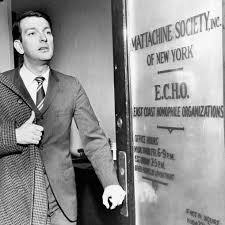
In more modern times, the United States and most countries of the world criminalized homosexuality (sodomy) and therefore banned gay men and women from serving in the military. The Mattachine Society, founded in 1950, was one of the earliest homophile (gay rights) organizations in the United States, probably second only to Chicago’s short-lived Society for Human Rights (1924). Harry Hay and a group of Los Angeles male friends formed the group to protect and improve the rights of homosexuals. Because of concerns for secrecy and the founders’ leftist ideology, they adopted the cell organization of the Communist Party. In the anti-Communist atmosphere of the 1950s, the Society’s growing membership substituted a more traditional ameliorative civil rights leadership style and agenda for the group’s early Communist model. Then as branches formed in other cities, the Society splintered in regional groups by 1961.

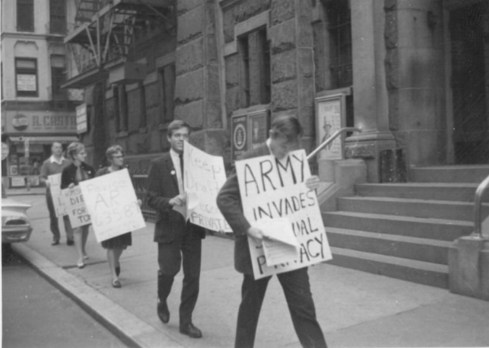
Youths rebelled against older homophile organization, which often refused to take a stance on the Vietnam War. Young gay men had to chose whether or not to reveal or conceal their homosexuality when they came before the draft board, because with the draft board being composed of local citizens, this could mean being outed to friends, neighbors or parents. The dilemma faced by gay youths polarized the gay liberation movement and gay youths joined in on the antiwar protests.[1] While older homophile organizations saw non-participation of homosexuals in the American military as detrimental to gay rights, youths of the antiwar stance saw it as a positive good. Suran contends that there are four major assertions by gay men in the antiwar movement. First, young homophiles saw military service as politically and morally counterproductive. Second, they declared war as a masculine affront to gay men. They cited the “effiminist” nature of homosexual men and refused to participate in macho role playing. Third, the young activists viewed imperialism as an extension of heterosexist ideology. Finally, they perceived homosexuality itself as antiwar antiestablishment, and anti-imperialist. With these four beliefs, young homophiles refused to embrace the older homophile tradition of assimilation in to “normal” society through military service.[2]

Though the Mattachine Society fell apart by the 1970s, one of their focuses was on protesting the US policy against gays serving in the military. They believed they could serve their country in any capacity, whether it be in government (gay men and women were not allowed to serve in government positions because their sexuality could be used as a basis for blackmail by communist spies) or in the military.

When more public gay rights groups formed after the 1969 Stonewall Riots, image gay men had moved away from support for military service. With the Vietnam War and the draft still very much a reality, gay rights groups turned their backs on the issue of military service because they did not want to be drafted. However, the government also turned their backs on the ban and forced many gay men who were drafted to serve, deciding that they needed the manpower more than they needed to uphold the ban on military service. In the United States today, sodomy is no longer illegal thanks to the Supreme Court decision, Lawrence v. Texas, and in 1973 the American Psychiatric Association removed homosexuality from its Diagnostic and Statistical Manual of Mental Disorders. Therefore there is no legal or medical reason that can be used to deny gay men and women the right to serve openly in the military.

image

[1]Justin David Suran, “Coming Out Against the War: Antimilitarism and the Politicization of Homosexuality in the Era of Vietnam,” American Quarterly 53, no. 3 (2001): 453.

[2]Ibid., 471-472.

Next: The Stonewall Riots

Pic of the Day


And Now Upon My Head the Crown
Phillip B. Williams

1.
In the first place—I wanted him and said so
when I had only meant to say. His eyes
opened beyond open as if such force would unlock me
to the other side where daylight gave reason
for him to redress.

When he put on his shirt,
after I asked him to keep it off, to keep putting off
the night’s usual end, his face changed beneath
the shirt: surprise to grin, to how even the body
of another’s desire can be a cloak behind which
to change one’s power, to find it.

2.
In the first place
he slept, he opened the tight heat of me that had been
the only haven he thought to give a name:
Is-it-mine? Why-you-running? Don’t-run-from-it—as though
through questions doubt would find its way away from me,
as though telling me what to do told me who I was.

Copyright © 2018 by Phillip B. Williams. Originally published in Poem-a-Day on January 2, 2018, by the Academy of American Poets.

About This Poem

“This poem is part of a few ‘failed sonnets’ I’d written and revised out of their intended form. In this revision, I wanted the phrase ‘in the first place’ to move through two possibilities: the first instance and the first location. That there may be other readings is great. As for the title, I guess I was thinking less about success and more about regretting when one gets exactly what one has asked for.”
—Phillip B. Williams


Gay Rights Movement: Mattachine Society

Most historians agree that the movement towards gay rights, at least, nominally began with the founding of the Mattachine Society in Los Angeles in 1950 as the first gay rights organization in history. Harry Hay founded the organization and gave it its name after the medieval group of court jesters who satirized the government and royalty by wearing masks to keep themselves anonymous. Mattachine went through two different phases in its development. Early leadership based the leadership of the organization on the cell structure of the Communist Party with a secret hierarchical structure and a very centralized leadership. The seven founding members of the Mattachine Society remained anonymous as the mysterious “fifth order” who ran the organization through their leadership. The organization had three primary goals: to unify homosexuals as a group and with the dominant heterosexual culture, to educate both homosexuals and heterosexuals on the subject of homosexuality, and to enter the realm of political action.[1]

Due to the insistence of the first Mattachine Society that homosexuals adapt to the homophobic society of the Cold War by adopting the social and cultural mores of heterosexuals, the organization began to lose influence and membership. By 1957, the organizations national headquarters moved from its base in Los Angeles to San Francisco where it remained until the national organization disbanded in 1961. With the end of the national organization and its insistence on conservative politics, the local chapters began to become more radical in their quest for gay liberation.[2] The Communist Party structure and tactics of the Mattachine Society ultimately hurt the organization more that it would help it. With the Red Scare during the Cold War, the politics of the movement had a difficult time getting any recognition. Besides its communist association, this early homophile organization was never that large of a political organization. The fear of being publicly discovered as a homosexual was worse than having freedoms during the 1950s, when coming out meant that you were considered mentally ill, a social deviant, often classified as a criminal, and were barred from holding civil service jobs.

In his examination of the radicalization of the gay liberation movement, historian Justin David Suran shifts the focus from the radicalization of local homophile organizations to the gay participation in the antiwar movement. Local homophile organizations were still working for homosexuals to be “normalized” by assimilating into imagethe heterosexual cultures, most by allowing gay men and women to serve discretely in the U.S. Armed Forces. With the ability to be deferred from the draft by being labeled homosexual, many young gay men saw the opportunity to stay out of the Vietnam War. As the war continued into the early seventies, the deferment for homosexuality would have to be proved by a doctor or an arrest report in order to receive the deferment because of the prevalence of heterosexual men posing as homosexuals to stay out of the military.[3]

[1]Martin Meeker, “Behind the Mask of Respectability: Reconsidering the Mattachine Society and Male Homophile Practice, 1950s and 1960s,” Journal of the History of Sexuality 10, no. 1 (2001): 83.

[2]Ibid., 79.

[3]Justin David Suran, “Coming Out Against the War: Antimilitarism and the Politicization of Homosexuality in the Era of Vietnam,” American Quarterly 53, no. 3 (2001): 458-463.

Next: The Anti-War Movement


Pic of the Day


Tinderbox

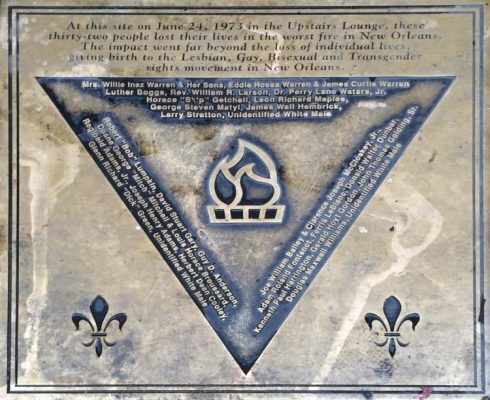
UpStairs_Lounge_Marker-e1529467315579.jpg

I’ve passed by this plaque in the sidewalk at 141 Chartres Street. A wave of grief always washes over men when I see it.

Author Robert Fieseler‘s book “Tinderbox” looks at the 1973 fire at the UpStairs Lounge, a gay bar in New Orleans, which killed 32 people and put prejudicial beliefs against gay men in sharp relief.

Here & Now‘s Jeremy Hobson talks with Fieseler (@wordbobby) about the book.

Book Excerpt: ‘Tinderbox’

by Robert Fieseler

June 25, 1995

There was a fire, the minister of the Metropolitan Community Church – a gay man named Dexter Brecht – preached to his small flock of gays and lesbians. It was a fire so horrific that Courtney Craighead, the church’s deacon (who was standing nearby), couldn’t even speak about his memories of the event. It was a fire set intentionally on June 24, 1973, resulting in the death of one-third of their Metropolitan Community Church (MCC) congregation at the time. This fire, which had happened twenty-two years and one day before, at a hangout called the Up Stairs Lounge, remained so disturbing a memory that it never existed in the pages of American history. This tragedy, congregants knew, was in fact the only reason that the New Orleans Times-Picayune had opted to send a reporter to hear their minister that Sunday. “We gather here this morning to remember,” Brecht continued. “Remembering, whether we like it or not, is part of the human condition. It is good as a way of acknowledging our grief.”

It was a horrific scene to relate: a fire in a busy bar on the fringe of New Orleans’s French Quarter that was set with lighter fluid. On that evening, flames had invaded a sanctuary for blue-collar gay men. The fast-moving blaze overtook the second-floor bar with deep ties to the MCC faithful, but the destruction would extend well beyond church membership, claiming the lives of thirty-one men and one woman.

Although it raged out of control for less than twenty minutes, the blaze left a fallout that shocked Carl Rabin, the coroner who would struggle to identify the bodies using jewelry and hotel room keys. Fingers and faces and bones were scorched beyond recognition. “They were just piled up,” he said. “People in a mass. One falls, then another falls. It’s just a mass of death. It’s sickening.”

Then the story went silent. After a mere blip of coverage, it fell off the front pages of newspapers, and then from interior pages entirely. Local and national television channels would dedicate just a few minutes of on-the-scene coverage to the Up Stairs Lounge, in which survivors were interviewed with cameras to their backs, due to reporters’ fear of legitimizing the gay lifestyle and victims’ fear of outing themselves. Yet, in fact, the tragedy had affected nearly every segment of New Orleans’s closeted gay community, estimated a month later by the local Gay People’s Coalition to be from 40,000 to 100,000 of the city’s then 600,000 residents. Most of the dead—educated and illiterate, young and old, white and black, including a hustler, a minister, and a dentist—perished within the fire’s first 360 seconds.

The Up Stairs Lounge, Brecht related to his flock, represented a moment that exposed a majority of citizens as at best apathetic toward homosexuals while also revealing that civil rights movements of the era were tone-deaf to homosexual plight. Indeed, civil rights and feminist constituencies in the 1970s did not leap to the defense of the Up Stairs Lounge victims. The tragedy was not noted in Distaff, New Orleans’s feminist magazine—it was a time when lesbians themselves were marginalized from “mainstream feminists”—nor was there any mention in iconic black newspapers like The Chicago Daily Defender, despite there being a black victim.

“This fire was a holocaust,” Brecht intoned. “Perhaps not in the millions like in the forties, but surely just as devastating to the lesbian, gay, bisexual, and trans-gendered community.” The immediate aftermath of this blaze—occurring on the last day of celebrations marking the fourth anniversary of the 1969 Stonewall Riots—became a chilling moment of loss for those gay Americans who actually heard the story, who were long conditioned to the reality that their sorrows were quarantined from the heterosexual American dream. In a cartoon in the August 1973 issue of The Advocate, which was then a somewhat ragtag alternative newspaper in Los Angeles, a man in a hospital bed was bandaged up like a mummy; in the background, his chart read “Up Stairs Bar Fire Victim.”

With its physical and emotional toll, the Up Stairs Lounge fire sat in stark contrast to the legendary riot that had taken place outside of the Stonewall Inn in New York City on June 28, 1969. On that day, homosexuals, transsexuals, and street kids had joined forces to resist New York Police Department officers who were raiding a gay bar and arresting the patrons. This act of defiance had become a wellspring for gay political recruitment.

In the wake of the Stonewall Riots, a new movement called Gay Liberation arose. It was a “radical thinking” and “militant” crusade—according to a newsletter distributed by the more conservative Homophile Action League—whose stated goal was “complete sexual liberation for all people” through the abolishment of institutions that forced homosexuals to “live two separate existences.” Gay Liberation was a departure from the so-called homophile movement (the term derived from the Greek words homo and phile, meaning “same love”), which had led the fight for homosexual rights up until then. Standing in an oblique shadow of the Stonewall Riots, the Up Stairs Lounge fire would be a major test of Gay Liberation: Could the movement steward its people through a crisis? Would gay people recognize its right to lead?

Yet, as Dexter Brecht addressed his congregation twenty-two years later, the Up Stairs Lounge remained forgotten.

Excerpted from the book Tinderbox: The Untold Story of the Up Stairs Lounge Fire and the Rise of Gay Liberation by Robert W. Fieseler. Copyright © 2018 by Robert W. Fieseler. Used with permission of the publisher, Liveright Publishing Corporation, a division of W. W. Norton & Company, Inc. All rights reserved.


Gay Rights Movement: The Beginning

This post begins a series printed several years ago on The Closet Professor about the history of the early gay rights movement. It’s still one of my favorite pieces and I wanted to reprint it since Friday will mark the 50th anniversary of the Stonewall Riots. Most if not all of you have heard of the Stonewall Riots, and though most people credit Stonewall with the beginning of gay rights, there were precursors to the movement. This series is based on a paper I once wrote about the gay rights movement but has been updated to some extent. I hope you enjoy it and find it informative.

The summer of 1969 showed the best and worst of America. In June, President Nixon announced Vietnamization as a way to get America out of the Vietnam War. Man stood on the moon for the first time on July 16 with the Apollo 11 landing. In August, Woodstock demonstrated to the world the epitome of the flower children’s culture and the height of the counter culture movement. While such events were celebrated in American culture, the summer of 1969 was also marked by a series of tragedies. Judy Garland died from an overdose of drugs. The Manson Family murdered actress Sharon Tate, her unborn child, and four others in Bel Air, California, in what has image become known as Helter Skelter. Mary Jo Kopechne died in a drunk driving accident with Ted Kennedy in Chapppaquiddick, Massachusetts. And 248 people perished in Mississippi when Hurricane Camille crashed into the Gulf Coast. The Civil Rights Movement was also going through a change. With the assassination of Martin Luther King, Jr. in Memphis in 1968, the end had come to the classic period of the Civil Rights Movement. The movement was becoming more radical and began to splinter off into more groups of people, including women and the gay and lesbian community.

With the Stonewall Riots, the modern gay and lesbian rights movement had its beginnings in Greenwich Village, New York, during the summer of 1969. The Stonewall Riots marked a change in the direction of the gay liberation movement that had been brewing since the end of World War II with the founding of the Mattachine Society in Los Angeles with chapters in New York, Philadelphia, and San Francisco. Gays and lesbians worked with the Civil Rights Movement, participated in the anti-war movement, and kept their sexuality in the background. But the “Friends of Dorothy” and “Daughters of Bilitis” were determined to no longer stay in the background and have homosexuality criminalized as it had been in the past. On the night of June 27, 1969, the gays and lesbians in the Stonewall Inn fought back after a police raid, and the modern gay liberation movement was born and would continue to grow as gay pride marches marked the subsequent anniversaries of the Stonewall Riots each year in New York during the month of June.

Although most historians of the gay liberation movement place the climax of the beginning of the modern movement on the Stonewall Riots, some west coast historians give the metropolitan centers of the movement as Los Angeles and San Francisco in the fifties with the founding of the Mattachine Society, the earliest homophile activist organization, and the antiwar movement in San Francisco during the sixties. Martin Meeker of the University of Southern California presented a re-evaluation of the Mattachine Society in his article “Behind the Mask of Respectability: Reconsidering the Mattachine Society and Male Homophile Practice 1950s and 1960s,” and Justin David Suran of the University of California, Berkeley examines the effects of the Vietnam War on the gay liberation movement in “Coming Out Against the War: Antimilitarism and the Politicization of Homosexuality in the Era of Vietnam.”

Next: The Mattachine Society


Pic of the Day


Pride

I am acting with great boldness toward you; I have great pride in you; I am filled with comfort. In all our affliction, I am overflowing with joy. – 2 Corinthians 7:4
The Bible doesn’t have much good to say about pride. It’s usually a bad thing. Pride’s been defined as a feeling of deep pleasure or satisfaction in an achievement, an accomplishment, or in someone else or something else but it’s also been described as conceit, egotism, vanity, vainglory, all over one’s own appearance or status in life and not just something that’s been accomplished. When we speak of gay pride, we are not showing conceit, but showing satisfaction in who we are. Just as I am proud to be a Christian; I am proud to be a gay man. We can be proud of who we are, but we must guard against the wickedness that can come with pride.

Pic of the Day